The Great Forgiveness

March 20, 2026
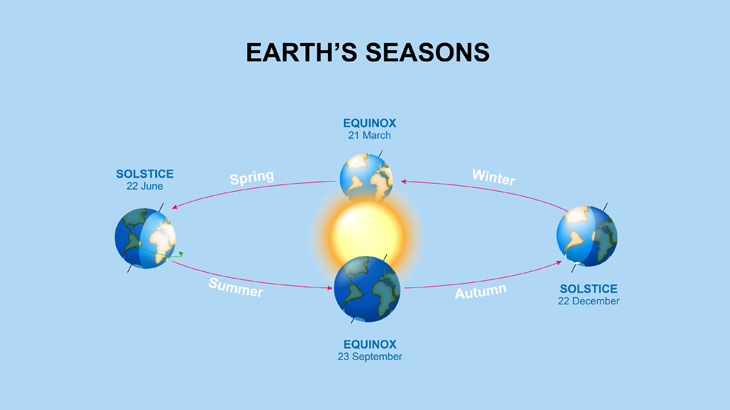
Spring Equinox


Forgiveness is the conscious choice
to release resentment and a desire for vengeance,
while still acknowledging the wrong done,
and is rooted in God’s mercy and grace.
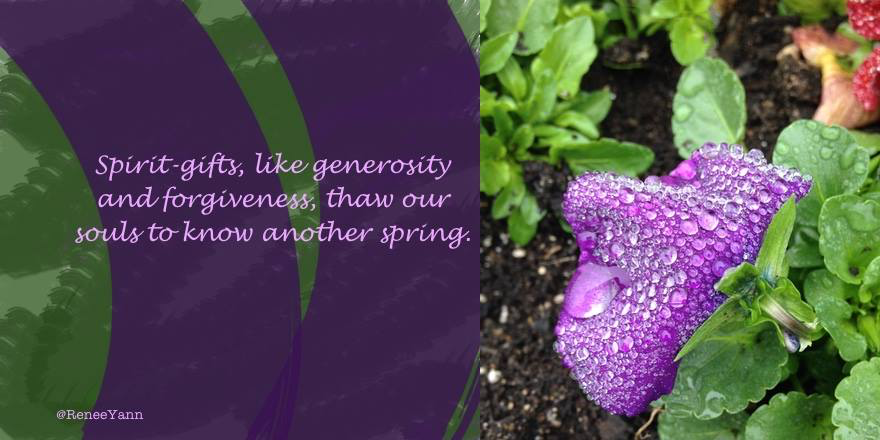

Ah, Equinox – respite from the cold!

Today our Earth will put away her winter jewels, her cold snow pearls and glistening ice diamonds stored until distant December. With them, she lays aside her cool reserve, the stark elegance of silhouetted trees against a white landscape. She says, “I have finished my silent retreat.”

Instead, Lady Earth unveils her costume jewelry – that improbable mix of pinks, purples, greens, and yellows. Even if this morning, she wraps them in a silver cashmere fog, we know it hides a riotous, tumbling April.

Every year, we wonder if those bare trees and barren hillsides will ever green again. But they do! Spring is the act of “Great Forgiveness”. It is the time when Nature mirrors the Infinite Mercy of her Creator and says, “Fear not, Winter. I am deeper than your cold. My resilience has redeemed us both for another chance at life.”


We, too, as human beings, are capable of such resilience. I remember my mother’s infinite patience with a sometimes-annoying neighbor. Edna’s seemingly innocent conversation harbored veiled references to her economic superiority. Little wintry comments like, “It’s a shame you can’t get a Hoover. It would make your life so much easier”. Even as a child, (who had no idea what a Hover was) I was nettled beyond tolerance by the insensitivity of the statement.

But my mother, who was no pushover and who did not suffer fools gladly, was patient and faithful. She knew Edna, though careless in her opinions, didn’t mean to hurt or shame her.

Such thoughtless remarks could have hung like icicles in mid-air, but my Mom clipped them with her wonderful capacity for humorous honesty. “Eddie,” she said, “you can bring your Hoover over and do my rugs every Friday.” Edna laughed at herself, rescinding the tactless comment with an “I’m sorry, El. You know I didn’t mean anything by it.”

My mother taught me to live from the “Great Forgiveness” which can warm any cold. She left a great space for people before ever closing in with judgement.


At one point when I was still very young, my mother became quite ill and after a long hospitalization, returned home for an extended recuperation. During that time, Edna came every day to cook for our large working family. Weekly, she cleaned our house with the same decrepit vacuum she had earlier criticized.

Without a word, Edna challenged me to learn another lesson about the nature of fidelity and true friendship and the commitment to give it voice without words.


Years later, I read a quote that captured these lessons: “Always be kind. We never know the battles someone else is fighting.” These are lessons I remember with gratitude today in this equinox of another “Great Forgiveness”. Forgiveness is a largesse we can imitate if we simply remember the mercies we ourselves have received.

Blessings to you all and a joyous Spring!


Music: Forgiveness – Matthew West

Suggested Reading: Psalm 19


For Your Reflection:

  • What feelings or reactions do I have after reading this reflection?
  • Do my feelings or reactions remind me of any passage or event in scripture, especially in the life of Christ? 
  • What actions might I take today because of my response to these readings?
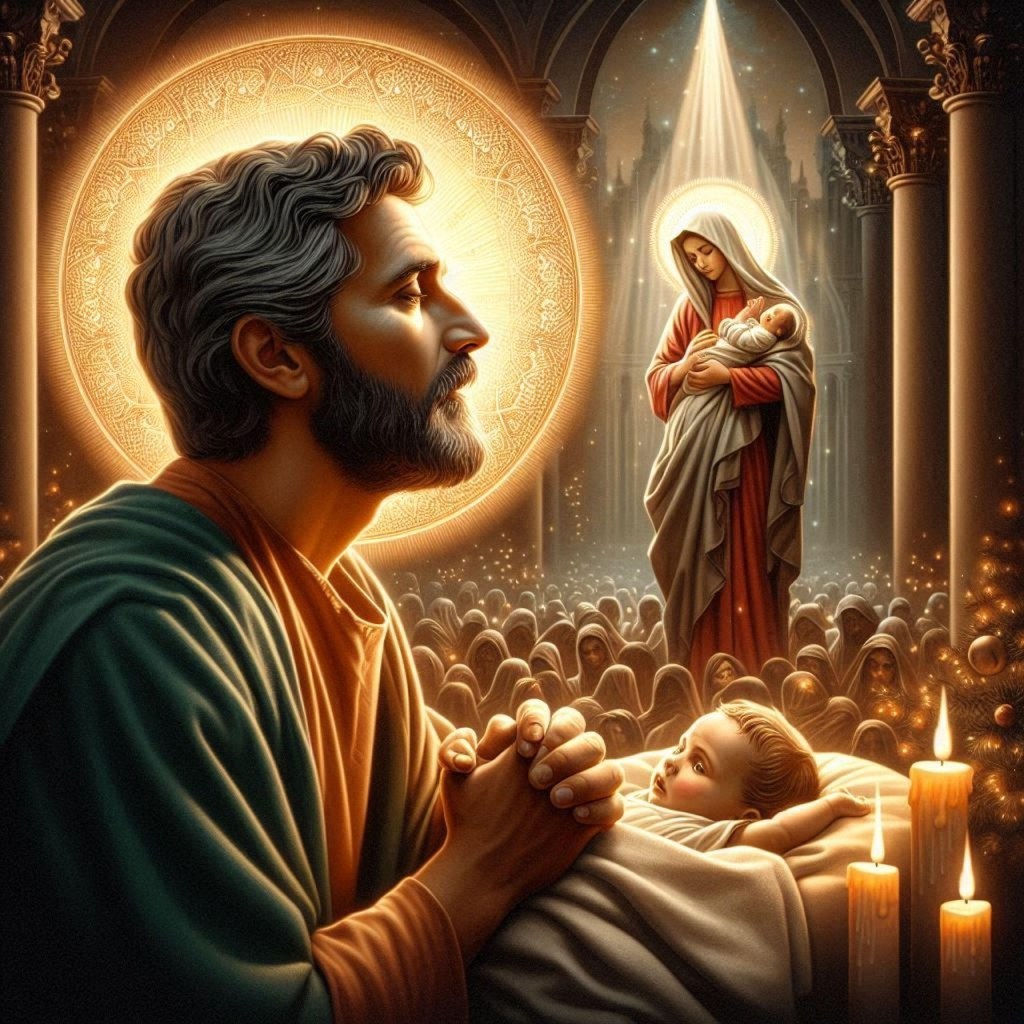
The Gentle Face of God

Feast of St. Joseph
March 19, 2026


Filial Piety is the virtue of deep respect and tenderness
for one’s parents, elders, mentors, and ancestors


How Jesus must have loved Joseph – this man so holy that he gave his whole life over to the nurturing of God!

But Joseph’s choice was not easy.


The choice was confusing.

This is how the birth of Jesus the Messiah came about: His mother Mary was pledged to be married to Joseph, but before they came together, she was found to be pregnant through the Holy Spirit. Because Joseph her husband was faithful to the law, and yet did not want to expose her to public disgrace, he had in mind to divorce her quietly.

Matthew 1:18-19

The choice took courage.

When they had gone, an angel of the Lord appeared to Joseph in a dream. “Get up,” he said, “take the child and his mother and escape to Egypt. Stay there until I tell you, for Herod is going to search for the child to kill him.”

Matthew 2:13

The choice took patience.

After the festival was over, while his parents were returning home, the boy Jesus stayed behind in Jerusalem, but they were unaware of it. Thinking he was in their company, they traveled on for a day. Then they began looking for him among their relatives and friends. When they did not find him, they went back to Jerusalem to look for him. After three days, they found him in the temple courts, sitting among the teachers, listening to them and asking them questions. Everyone who heard him was amazed at his understanding and his answers. When his parents saw him, they were astonished. His mother said to him, “Son, why have you treated us like this? Your father and I have been anxiously searching for you.”

Luke 2:43-48

The choice took humility.

After the above incident in the Temple, we do not hear of Joseph again. We can assume that for the remaining decade before Jesus’s public ministry, he worked side by side with Joseph to sustain their little family. In the Divine Plan, it appears that Joseph’s role is humbly and silently concluded by a quiet death in Nazareth before Jesus turns thirty.


Most of all, the choice took immense and sustained faith.

Joseph’s faith sustained his life, protected and companioned Mary, taught and nurtured the Son of God. That was one extraordinary faith! Yet, in many ways, it is a faith we ordinary believers are also all called to:

  • to hear God’s call
  • to step into salvation history with trust and courage
  • to do what needs to be done without braggadocio
  • to end in quiet grace, acknowledging that it all belonged to God

Music: Hymn to St. Joseph

Christum Dei Filium qui putari
dignatus est filius Joseph:
Venite adoremus.
O come, let us adore Christ the Son of God,
Who deigned to be
thought to be the son of Joseph!
Blessed be the eyes that have seen what thou hast seen,
Blessed be the ears that have heard what thou hast heard.
Blessed be the arms that have held thy Creator.
Blessed be the hands that have labored for the Word.
Blessed is thy Heart all aflame with ardent love,
Chosen and Beloved by the Holy Trinity.
Blessed be thy Virgin spouse entrusted unto thee.
Bless all, dear Joseph, who love and honor thee.


For Your Reflection:

  • What feelings or reactions do I have after reading this reflection?
  • Do my feelings or reactions remind me of any passage or event in scripture, especially in the life of Christ? 
  • What actions might I take today because of my response to these readings?
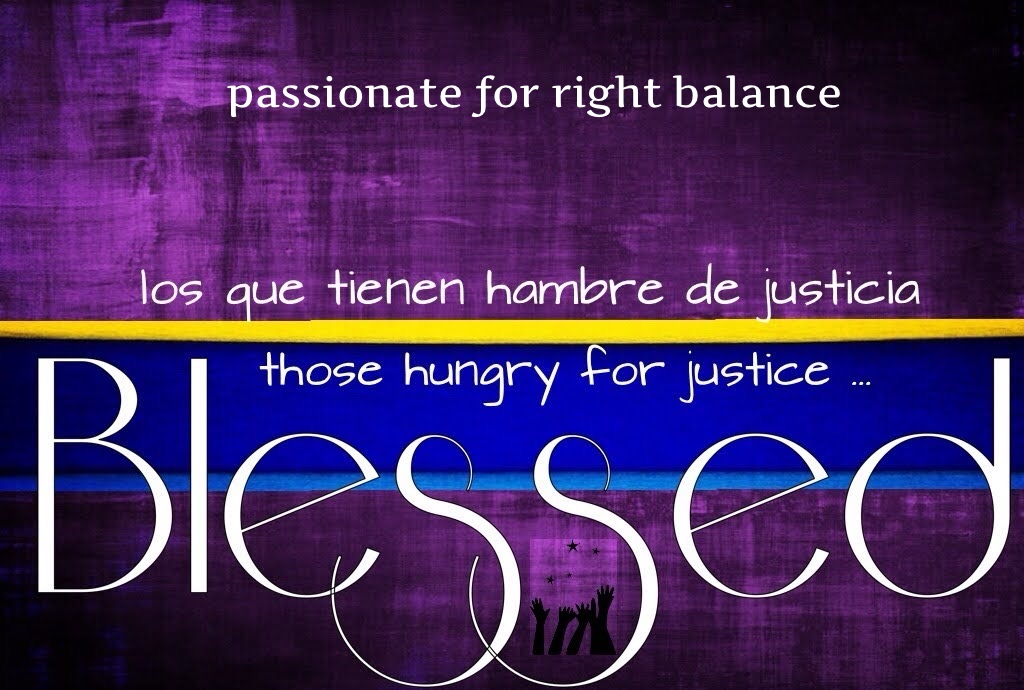
Love’s Balance

March 1, 2026
Second Sunday of Lent

What does it mean to hunger and thirst for justice? The Greek word translated here as “justice” is dikaiosune, a term that refers to personal righteousness as well as to social justice. Those who hunger and thirst for dikaiosune have a deep yearning for things to be right in their individual lives and in society. This will happen when God’s kingdom comes completely and creation is restored to God’s original intention.
~ from the website theologyofwork.org

In our readings during this second week of Lent, we are encouraged to let go of guilt, to “remember not the things of the past”. We hear the story of Joseph, who was sold by his brothers, only to “redeem” them by his forgiveness. We are challenged to change the “season” of our hearts and embrace the full life of the Paschal Mystery. Our hunger for justice is truly the deep desire, not for any kind of reprisal, but for right balance in our lives with God and with all Creation, as seen in this story.


Can you let this not be about you?” the chaplain asked, as Jane tried to explain her resistance and guilt. Evening darkened the small office just outside the tumultuous ER. There had been a building collapse, and Jane’s mother had been nearly crushed. Jane was the only relative, a long-alienated daughter. “But I’ve wanted to be reconciled”, she wept. “I just never had the courage to face her. Now it may be too late.”

Over several hours, the chaplain patiently encouraged Jane along a path of self-awareness, helping her realize that it was herself she needed to face. Her mother’s situation, while tragic, offered Jane a catalyst to confront the years of excuses and denials that had paralyzed her. Slowly, the hope of reconciliation washed over her.

When her mother finally stabilized, Jane leaned close to her battered face. Her mother summoned the strength to whisper, “I have never stopped loving you.” That forgiving whisper breathed a vital courage into both women. Each would survive a particular kind of death that day.

Despite our best hopes and intentions, life can collapse around us. Broken promises, unfulfilled dreams and soured relationships can litter our landscapes. We may even lose God in the rubble. This week, Isaiah offers us God’s forgiving invitation, “Come now, let us set things right”, says the Lord. “Though your sins be like scarlet, they will become white as snow.”

God will never stop loving us. God longs to embrace our repentant hearts. Let us listen to and believe God’s whisper.


Music: Remember Not the Things of the Past – Bob Hurd

Suggested Reading: Psalm 33:4-22


For your reflection:

  • What feelings or reactions do I have after reading this reflection?
  • Do my feelings or reactions remind me of any passage or event in scripture, especially in the life of Christ? 
  • What actions might I take today because of my response to these readings?

Candlemas: A Seasonal Anchor

Feast of the Presentation
February 2, 2026

Candlemas,
also known as the Feast of the Presentation of Jesus Christ,
the Feast of the Purification of the Blessed Virgin Mary,
or the Feast of the Holy Encounter,
is a Christian feast day commemorating

the presentation of Jesus
at the Temple by Joseph and Mary.
It is based upon the account in
Luke 2:22–40.


How do the great trees die and come to life again? It’s a question we might ponder every winter as the bare, black branches fill with ice. Their stark emptiness seems a place from which there is no return. But we know otherwise. In the relentless cold of every February, our experience whispers the hope for April. Our liturgical year is filled with lynchpins to stabilize and orient us in this hope.


The Feast of Candlemas (February 2), an ancient celebration of hope, is one of the seasonal anchors Medieval people used to ground their faith through its various seasons. The Feast commemorates Mary’s Purification and the Presentation of Christ to the world – thus the candles!

Other ancient and seasonal feasts were:

May 3: Roodmas – celebrating the discovery and veneration of the True Cross (called “Rood” in Middle English)
Aug 1: Lammas – Originating from the Old English hlafmaesse (“loaf-mass”), it involved blessing loaves made from the new crop, signifying gratitude for the summer’s bounty and preparation for the coming winter.
Sept 29 Michealmas – Festival of St. Michael the Archangel, known as the protector against evil and leader of heaven’s armies
Nov 11 Martinmas – a festival celebrated on November 11th, marking the end of the harvest and the start of winter, honoring St. Martin of Tours, a soldier famous for sharing his cloak with a beggar, symbolizing light and charity as days grow shorter
Dec 25 Christmas – the ultimate celebration of hope in the Light of Jesus Christ


Like nature, each one of us has our seasons. Our lives contain the cycles of our youth and aging, birth and death. Our daily experiences turn in both the warm and the chilly intervals of our lives.

  • We have blossomed with the expectant life of spring: a new job, relationship, adventure.
  • We have cultivated love over warm summers of dedication and growth – our faith, families, friends, and ministries.
  • We have reaped the autumnal returns of our efforts, walking away from a red and golden field carrying a well-earned harvest – graduations, anniversaries, promotions, retirements.
  • Certainly, each of us has known our own winters, when cold has threatened and dark has isolated – and yet, like the trees – we have survived.

As we experience the depths of “Winter 2026”, Candlemas seems an opportune time to review the lessons of the season – especially the chapters on deep roots, inner quiet, and a hidden spiritual warmth that defies freezing.

In the winters of our lives, we learn what truly sustains us. We are called to delve into the power of endurance, resilience, forgiveness, honesty, loyalty, and faithfulness. These are the winter virtues that preserve life deep under the surface of any paralyzing storm. These are the salts that keep life’s highways passable, allowing us to stay connected to all that keeps us vibrant.

On any given day of the year, we can experience “winter”. Think of the times you have received (or given) the “cold shoulder. Remember when your explanations have been given an icy reception? Haven’t there been conversations where you were frozen out? Can’t you still see the frosty stare you got from someone who thought you were beneath them? We have all known some sub-zero responses when we were really looking for a warm word. We have all received some chilly greetings when we needed not to feel like an isolated stranger.


Hospitality is not listed as a Fruit of the Holy Spirit. Nevertheless, it is the melding of many of them. Hospitality is a radical welcome rooted in God’s love. It is the perfect antidote to all our methods of freezing one another out. It is the human anti-freeze that reminds us that we need one another’s warmth to survive the treacheries of life. It is a virtue to be deeply pondered in this societal age of frigid inhumanity to those we judge to be “alien”.

If there is someone in your life that you have exiled to the Arctic, consider reaching out in hospitality, care, forgiveness, or honesty. This winter, let go of the glacial grudges, silences, and harbored hurts that sometimes freeze our souls and kill our hope of returning life. Listen to the voice of the dark February nights. It is telling us how to move toward spring.


Music: We Are Called to Welcome Strangers – Jubilate

Suggested Scripture: 1 Peter 4:7-11

For Your Reflection:

  • What feelings or reactions do I have after reading this reflection?
  • Do my feelings or reactions remind me of any passage or event in scripture, especially in the life of Christ? 
  • What actions might I take today because of my response to these readings?
Healing

October 2, 2025


Artwork by Judy Ward, RSM

Today, for your reflection, a poem I wrote decades go. I offer it today in memory of Judy Ward, RSM who passed away on September 27, 2025. Her life will be celebrated on October 2nd in a Mass of Christian Burial in the chapel at Mt. St. Mary, where Judy attended school, became a Sister of Mercy, and taught for many years.

Judy, a gifted artist, did so much to encourage me and to illustrate and promulgate my work. I will miss her generous kindness and her friendship.


October is a time when nature changes clothes.
Leaves, like miniature volcanoes, flare up and die, ashes at the foot of a silent, seemingly immortal tree.
Geese, having dawdled all summer in veiled expectation, suddenly leap into the clouds and disappear.
These solemn miracles may incline us to consider our own impermanence and the gossamer phenomenon we call life.


Healing


Music: A Playlist of Autumn Music

For Your Reflection

  • What feelings or reactions do I have after reading this reflection?
  • Do my feelings or reactions remind me of any passage or event in scripture, especially in the life of Christ? 
  • What actions might I take today because of my response to these readings?
Suggested Scripture: Psalm 104

Autumn Begins

September 22, 2025

I hope that, where you live, it is a glorious day – a perfect vestibule to a season of amazing beauty.  In the northern hemisphere, Nature prepares to shed the plush accretions of summer in a multi-colored ritual of leave-taking. It is time to return to the essentials – back to the branch, back to the buried root, back to the bare, sturdy reality that will anchor us in eventual winter.

Each day, some green leaf or blade will ignite like a phoenix – a blaze of scarlet or gold, only to extinguish that flame for a long winter’s sleep. Nature knows when things are finished.  It knows when it has had enough.  It knows its need for a season of emptying, for a clearing of the clutter, for the deep hibernation of its spirit.

But we humans often ignore the need for an “autumning” of our spirits.  We try to live every moment in the high energy of summer – producing, moving, anticipating, and stuffing our lives with abundance.  

But simplicity, solitude, and clarity are necessary for our spirit to renew itself.  Autumn is the perfect time to examine prayerfully the harvest of our lives – reaping the essentials and sifting out the superfluous. In the quiet shade of a rusting tree, we may discover what we truly love, deeply believe, and really need to be fully happy.

Take time on these crystal days to ask yourself what is essential in your life.  If something besides them inhibits you, let it go.

Nurture your “essentials” with attention and care.  Don’t take them for granted.  After the flare of life’s summer has passed, these are the things that will sustain you: a strong faith, a faithful love, and a loving compassion. Tend them in this season of harvest


Music: The Four Seasons: Autumn – Antonio Vivaldi

For Your Reflection

  • What feelings or reactions do I have after reading this reflection?
  • Do my feelings or reactions remind me of any passage or event in scripture, especially in the life of Christ? 
  • What actions might I take today because of my response to these readings?

Suggested Scripture: James 5:7-8

Live Like a Weasel

September 4, 2025

Annie Dillard is a Pulitzer Prize-winning American author who writes soul-stirring narrative non-fiction. Her book, A Pilgrim at Tinker Creek, was almost a second Bible for me when I studied literature in college.

One wonderful section has become part of my own philosophy of life. In it, Annie describes an encounter with a weasel. She portrays the experience in intricate and inspiring detail, using it to present her own theories on the value of intense dedication, clarity of purpose, and “the dignity of living without bias or motive.” In other words, she talks about living life openly and purely, of honoring the world around you, and of striving for simplicity.

She recounts the story of a farmer who shot an eagle and found, affixed to its throat, the dried-out skull of a long-dead weasel. This weasel, even as it died, seized the hope of life and fought to hold on to it. The story always makes me consider the question, “What in my life is important enough for me to hold on to it even to the death?” In other words, what are my very deepest values? So often we say we value something but we fail to make the choices it requires. We “value” exercise, but we never take the time to do it. We “value” health, but we continue habits that are not healthy. We “value” life, but we drink and drive, fail to wear our seatbelts and speed.


But like Dillard’s weasel, if we really value something, we sink our teeth into the very heart of it and we don’t let go, no matter what. Those kinds of radical values define who we are in the world. People see through to our hearts. They know if we have sunk our teeth into honesty or insincerity, into compassion or self-interest, into the common good or self-promotion. No matter what we “say”, our true values always show.


Our families, communities, and friends depend on us to be a person with strong values. Every day we are challenged to put these values first in our decisions and our behaviors. It’s not always easy. Sometimes we must be like the weasel clinging to the throat of the eagle. Nevertheless, we are asked to have the same intensity and clarity about our choices as responsible members of the human family.


Test yourself. What choice would you make in the face of the “eagle’s talon”? When people look into your heart, what do they see shining there? With sincere focus and right intention, we can live with purity of heart. Annie Dillard puts it this way: “We could, you know. We can live any way we want. … The thing is to stalk your calling in a certain skilled and supple way, to locate the most tender and live spot and plug into that pulse. This is yielding, not fighting. A weasel doesn’t “attack” anything; a weasel lives as he’s meant to, yielding at every moment to the perfect freedom of single necessity.”

How blessed our lives are when we live in such perfect freedom!


If you would enjoy reading more about Annie’s weasel, here is a short essay she wrote on the subject:

https://www.dailygood.org/story/1490/living-like-weasels-annie-dillard/


Music: The Wind – Cat Stevens/Yusuf Islam

For Your Reflection

  • What feelings or reactions do I have after reading this reflection?
  • Do my feelings or reactions remind me of any passage or event in scripture, especially in the life of Christ? 
  • What actions might I take today because of my response to these readings?

Suggested Scripture: 1 Timothy 4:13-16

Fresh Ground Pepper

September 1, 2025

September has barely poked its nose through the door, but already we see signs of Autumn. A slight gold shimmers on the trees. Geese gather in noisy expectation. Early morning sheds its night veil in slower layers of magenta and blue. There have even been a few sweet nights when we can open the windows wide and sleep in the suggestively crisp air. All the signs are there — it is a new season – “The Season of Freshness”.

“Fresh” is a powerful word. Who can resist the crisply-aproned waiter suggesting, “Fresh ground pepper?” Who can ignore the aroma of fresh baked bread? Some of us even remember with appreciation the scent of linens fresh from our mother’s clothesline.

Let this beautiful season remind us that each day the Creator shakes out a fresh beginning for every one of us. With every radiant morning, the slate is clear with mercy. The opportunity to re-create the world awaits us. Our lives, our work, our relationships are the fresh bread of God’s hope for us. Within them, we are invited to reveal the powerful grace which runs just under the visibility of the ordinary. It whispers to us, “You are Beloved, and I want your life to be a fountain of joy.”

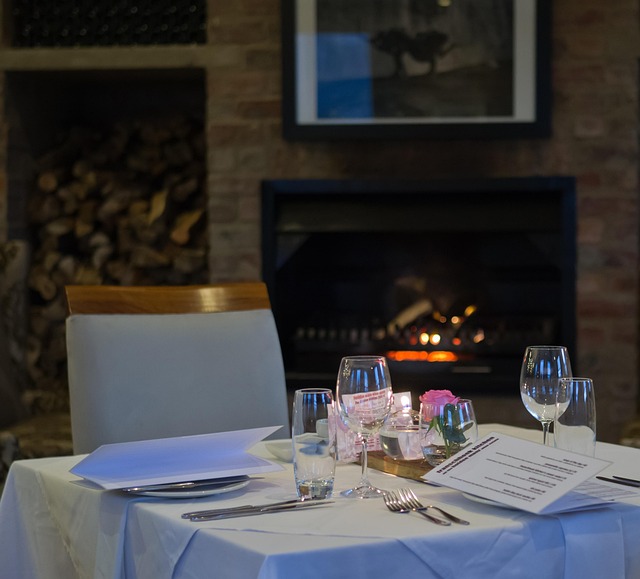
September is for fresh beginnings: a sparkling season, an unmarked semester, a turning of the garden, a clean page. It is nature’s way of saying forgiveness is possible, life is resilient, hope is eternal. Imagine September as the white-aproned waiter inviting you to freshness. At the Creator’s table, the tablecloth is clean and the sacred menu is forgiveness, hope, mercy and renewed beginnings. Don’t miss this opportunity to assess what needs refreshment in your life. Feast on September’s graces! They can be life-changing!


Music: September Song – Alexis Ffrench

For Your Reflection

  • What feelings or reactions do I have after reading this reflection?
  • Do my feelings or reactions remind me of any passage or event in scripture, especially in the life of Christ? 
  • What actions might I take today because of my response to these readings?
Suggested Scripture: Psalm 92

A Crane in the Desert

August 6, 2025

Today is the 80th anniversary of the bombings of Hiroshima and Nagasaki

Dona Nobis Pacem – Yo-Yo Ma and Illia Bondarenko

On a hot August 6th over 40 years ago, I sat quietly in the Nevada desert just outside Las Vegas. Most maps call the place the Nevada Test Site. Established as the Atomic Energy Commission’s on-continent proving ground, the Nevada Test Site has seen multiple decades of nuclear weapons testing.

But to the native peoples, the land is known as Newe Sogobia (Earth Mother), or the Western Shoshone homelands.

I had come to the place with over 200 other peace activists to pray for the end of nuclear wars, bombings and weapons proliferation. As part of our prayer, each one of us found a private spot in that massive desert where we could sit alone to meditate. I rested by a low bush to capture its small shady triangle in the dry, threatening heat even of that early morning.

At first, to the unappreciative eye, the desert seems a monochromatic place. The earth, the few stones, the sparse vegetation all appear to wear a beige garment of anonymity – almost as if they are saying, “Don’t see me. Don’t change me by noticing me.” But after many minutes of peeling away the multiple blindfolds we all carry, I became aware of muted majesty breaking from that desert like tender life from an egg.

A tiny hummingbird, the color of slate and sand, hovered inches from my hand. It drew my eyes to another small white object hidden under the lowest branches of the bush. It was a perfectly executed origami crane, no bigger than my thumb. I learned later of the Japanese activists who had preceded us into the desert, and whose custom it was to leave behind these beautiful “peace cranes” as mute reminders of the horrors of Hiroshima and of the hope for universal peace.

Later that evening, thinking about the cranes, I found myself straddling a confusing range of emotions. In the late 40’s and 50’s, I had grown up in a household that despised Japan. On my mother’s birthday in 1945, her 19 year old brother had been killed at Iwo Jima. It was a scar my mother bore the rest of her life.

But as with many scars we have earned or inherited in life, the years had taught me that there is an inner grace to every pain. Holding one of the delicate cranes, I thought about the innumerable Japanese lives – mostly innocent civilians – that had been lost or disfigured on August 6, 1945. I thought about the fact that life is never served by war – whether that war is global, local or personal. War serves only death.

The quest for peace is a complicated and endless pursuit. I ask myself – and each of you – to renew that quest today by harboring peace in our own lives. Refuse to solve conflicts by aggression. Look beyond the battle to the person. Be an agent of mutuality not of domination. Resist the normalization and glorification of violence and war, and defend their victims.

Eighty years after Hiroshima, we still see abominable inhumanity exploding in Gaza, Ukraine, Haiti, Sudan, and the immigrant communities of the Americas. We cannot be silent in the face of what we see. We are called to witness for peace and justice by our words, our attitudes, our votes, and our advocacy.

God knows our world – our streets – need this from us. If we unfold the wings of our own hearts, perhaps the crane of peace can be freed to change the world.


Music: Peace Train – Cat Stevens

For Your Reflection

  • What feelings or reactions do I have after reading this reflection?
  • Do my feelings or reactions remind me of any passage or event in scripture, especially in the life of Christ? 
  • What actions might I take today because of my response to these readings?

Suggested Scripture: John 14:23-27

Pimple Balls

June 8, 2025

David Lanz – Return to the Heart

The neighborhoods of my youth were safe playgrounds. On a summer morning, a score of sparkling kids would tumble out onto the bricks like polished marbles rolling to their sparsely equipped games. Occasionally, some kid would have a new pimple ball, prompting an hours-long boxball game, guttered corners serving as bases.

When, over the weeks, that ball grew smooth and airless, we cut it in half, grabbed a doctored broomstick, and hit the halfball up over the electric wires fringing our city street. Top one wire, a single; top two, a double. Lose it on the roof and you had to find a four-inch length of hose to replace it. This until the next kid lost a tooth, got a dime from the tooth fairy, and contributed a new ball.


On those afternoons, the surrounding porches and stoops were dotted with grandparents in folding chairs, escaping the swelter of the unairconditioned houses. They served to arbitrate any particularly sticky play, precursors of instant replay. Behind the houses, our mothers held council together over their billowing clotheslines.

By the time our dads came home, carrying their empty black lunch pails, we shiny kids were dusty with city soot. The beach-chaired elders had solved all the problems of world affairs and our moms had rendered the house ready for the daily family dinner liturgy.

These were such simple times, so simple that they may seem even naïve in today’s complex society. But their symbols assure me that, though things change, they remain the same. The shared play, the community of conversation, the neighborly support group, the evening gathering to home – these were the holy anchors that fed our spirits and honed our souls.

The outline of these sacramentals may look different today, but their substance must remain if we are ever to be happy people – people who live in the world as playmates, neighbors, friends, and family. That, dear friends, is what we were created to be.


Music: Won’t You Be My Neighbor?


For Your Reflection:

  • What feelings or reactions do I have after reading this reflection?
  • Do my feelings or reactions remind me of any passage or event in scripture, especially in the life of Christ? 
  • What actions might I take today because of my response to these readings?

Suggested Scripture: Mark 12:28-29