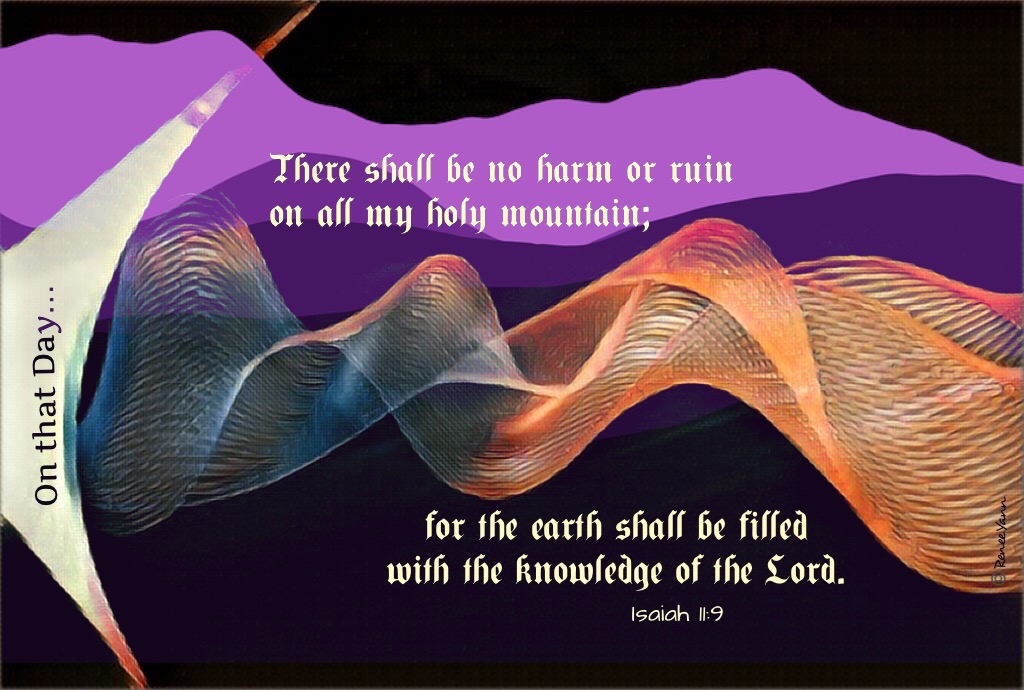
O Constant Creator!

Memorial of Saint Ambrose, Bishop and Doctor of the Church
December 7, 2022

Today’s Readings

https://bible.usccb.org/bible/readings/120722.cfm

Today, in God’s Lavish Mercy, we pray with Psalm 103 which bursts with music even as we silently read it!

Bless the LORD, O my soul;
and all my being, bless God’s holy name.
Bless the LORD, O my soul,
and forget not all God’s benefits.

Psalm 103:1–2

Our psalm rests today between two Advent readings that pick up its melody of grace and mercy.

In our first reading, Isaiah has just finished praising the Creator in the magnificence of nature. Today’s verses continue that praise and awed wonderment. As we read, we can picture God, robed in glory, marching out the sun, moon, stars …

Lift up your eyes on high
and see who has created these things:
He leads out their army and numbers them,
calling them all by name.
By his great might and the strength of his power
not one of them is missing!
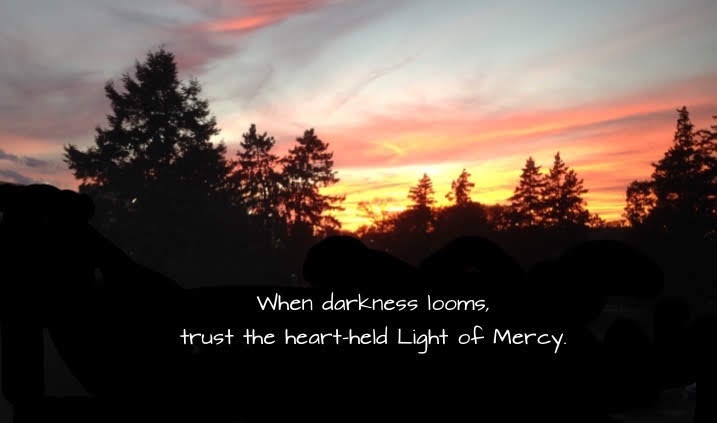
Isaiah 40:26

When we take the time to appreciate a sunrise or sunset, or to trace the constellations across the dark December sky, we are doing what Isaiah encourages his listeners to do – trusting our all-powerful God. If our Creator can hold the heaven’s together in eternal beauty, we can expect the same to be done for us who are the most cherished of God’s creatures.

Do you not know
or have you not heard?
The LORD is the eternal God,
creator of the ends of the earth.
He does not faint nor grow weary,
and his knowledge is beyond scrutiny.
He gives strength to the fainting;
for the weak he makes vigor abound.

Isaiah 40:28-29

In our Gospel, Jesus puts God’s abiding promise into a comforting invitation:

Jesus said to the crowds:
“Come to me, all you who labor and are burdened,
and I will give you rest.
Take my yoke upon you and learn from me,
for I am meek and humble of heart;
and you will find rest for yourselves.
For my yoke is easy, and my burden light.

Matthew 11:28-30

As we continue our Advent journey with Isaiah and Jesus, maybe we might like to catch a sunset or sunrise … or go out and look up at the winter stars. Doing so, let’s give ourselves fully in faith to our Creator’s promise to be with us in every rising and setting of our lives. Let us act as people who fully hope and believe:

They that hope in the LORD will renew their strength,
they will soar as with eagles’ wings;
They will run and not grow weary,
walk and not grow faint.

Isaiah 40:31

Poetry: Come – Christina Rossetti 

‘Come,’ Thou dost say to Angels,
To blessed Spirits, ‘Come’:
‘Come,’ to the lambs of Thine own flock,
Thy little ones, ‘Come home.’

‘Come,’ from the many-mansioned house
The gracious word is sent;
‘Come,’ from the ivory palaces
Unto the Penitent.

O Lord, restore us deaf and blind,
Unclose our lips though dumb:
Then say to us, ‘I will come with speed,’
And we will answer, ‘Come.’


Music: On Eagle’s Wings – Michael Joncas

The Holy Way

Monday of the Second Week of Advent
December 5, 2022

Today’s Readings:

https://bible.usccb.org/bible/readings/120522.cfm

Today, in God’s Lavish Mercy, Isaiah describes a beautiful hike through a desert turned verdant and lush. Usually that’s not the way we picture a desert, but the phenomenon is real.


A desert bloom is a climatic phenomenon that occurs in various deserts around the world. The phenomenon consists of the blossoming of a wide variety of flowers during early-mid spring in years when rainfall is unusually high. The blossoming occurs when the unusual level of rainfall reaches seeds and bulbs that have been in a latent or dormant state, and causes them to germinate and flower in early spring. It is accompanied by the proliferation of insects, birds and small species of lizards. (Wikipedia)

Bloom in Chilean Desert – photo by Javier Rubilar

Isaiah preached during tough times — real “desert” times for Israel. He uses the image of the luxuriant desert bloom to encourage his listeners that, despite their dire circumstances (the Assyrian occupation followed by the Babylonian captivity), there is hope.

But it is hard to hope and believe when you haven’t yet seen the flowers, right? Some of Isaiah’s audience may have seemed a little “weak kneed” about launching out on the journey when the horizon still looked pretty dry and lifeless.


    Strengthen the hands that are feeble,
        make firm the knees that are weak,
    Say to those whose hearts are frightened:
        Be strong, fear not!
    Here is your God,
        Who comes with vindication;
    With divine recompense
        God comes to save you.

Isaiah 35:3-4

I know I’ve felt weak-kneed at times, both literally and figuratively — those times when we are afraid to walk, to step forward or back, to move around or toward what we should. I’ll bet some of you have felt that way too.

At those times, we’re a little bit like the paralyzed man in today’s Gospel. We need courage, the help of good friends, and faith in God in order to stand up and walk on our own. Jesus wants to help us just like he helped this young man.

That you may know
that the Son of Man has authority on earth to forgive sins”–
Jesus said to the one who was paralyzed,
“I say to you, rise, pick up your stretcher, and go home.” 

He stood up immediately before them,
picked up what he had been lying on,
and went home, glorifying God. 

Luke 5:24-25

Advent invites us to journey
into deep faith and spiritual freedom,
to trust the desert for its flowers,
to believe that God lovingly wills
our vigor and wholeness.
 

The LORD himself will give his benefits;
    our land shall yield its increase.
Justice shall walk before him,
    and salvation, along the way of his steps.

Today’s Psalm 85: 13-14

Poetry: I Walked in a Desert – Stephen Crane

I walked in a desert.
And I cried,
“Ah, God, take me from this place!”
A voice said, “It is no desert.”
I cried, “Well, But —
The sand, the heat, the vacant horizon.”
A voice said, “It is no desert.”

Music: Desert Flower – Biljana Obradovic Bixy

Both Felt and Yet Awaited …

Second Sunday of Advent
December 4, 2022

Today’s Readings:

https://bible.usccb.org/bible/readings/120422.cfm

Today, in God’s Lavish Mercy, Isaiah paints the vision of Shalom.

“Shalom” is a Hebrew word commonly translated to English as “peace”.

In Hebrew, words are built on “roots”, generally of three consonants. When the root consonants appear with various vowels and additional letters, a variety of words, often with some relation in meaning, can be formed from a single root. Thus from the root sh-l-m come the words shalom (“peace, well-being”), hishtalem (“it was worth it”), shulam (“was paid for”), meshulam (“paid for in advance”), mushlam (“perfect”), and shalem (“whole”).


Our passage from Isaiah indicates an even deeper concept of shalom – one in which there is such right-balance among all creatures that:


When I first get up each morning, I glance through the news on my iPad while my tea is steeping. It’s a bad habit that I have trouble resisting because I want to make sure the world is all in one piece before I really start my day.

And, you know what? It never is. It’s a mess – with people shot, carjacked and bombed; with puppies abandoned, idiots in government, and tornadoes all over the place. There is little or no peace typed across the top of CNN.


The morning news is never going to blast the headline:
A shoot has sprung from the Jesse’s root! 
God’s spirit rests on him!

See, here’s the thing. This “Jesse news” is what we are meant to set our mornings by, to set our lives by – because we are people of faith, and we have been taught the true meaning of “shalom”. Shalom is something that will never be found in our “apparent” world. Shalom is only to be found within each of us who live the promise of Isaiah fulfilled in Jesus.


Advent is about pondering how to live “shalom” in an often corrupt world. It is a time to ask ourselves if we really believe the Promise to which Advent points:

On that day, a shoot shall sprout from the stump of Jesse,
and from his roots a bud shall blossom.
The spirit of the LORD shall rest upon him:
a spirit of wisdom and of understanding,
a spirit of counsel and of strength,
a spirit of knowledge and of fear of the LORD,
and his delight shall be the fear of the LORD.
Not by appearance shall he judge,
nor by hearsay shall he decide,
but he shall judge the poor with justice,
and decide aright for the land’s afflicted.

Isaiah 11:1-4

While acknowledging the often leaden toxicity of our culture, our redeemed hearts will not be caught in it. We will live by and in the Promised Light because we understand that Isaiah’s “Day” started this morning when we decided to pray. We will live in the beautiful world that both has felt and yet awaits the touch of an Incarnate God.


Poetry: A World of Light – Elizabeth Jennings

Yes when the dark withdrew I suffered light
And saw the candles heave beneath the wax,
I watched the shadow of my old self dwindle
As softly on my recollection stole
A mood the senses could not touch or damage,
A sense of peace beyond the breathing word.
Day dawdled at my elbow. It was night
Within. I saw my hands, their soft dark backs
Keeping me from the noise outside. The candle
Seemed snuffed into a deep and silent pool:
It drew no shadow round my constant image
For in a dazzling dark my spirit stirred.
But still I questioned it. My inward sight
Still knew the senses and the senses' tracks,
I felt my flesh and clothes, a rubbing sandal,
And distant voices wishing to console.
My mind was keen to understand and rummage
To find assurance in the sounds I heard.
Then senses ceased and thoughts were driven quite
Away(no act of mine). I could relax
And feel a fire no earnest prayer can kindle;
Old parts of peace dissolved into a whole
And like a bright thing proud in its new plumage
My mind was keen as an attentive bird.
Yes fire, light, air, birds, wax, the sun's own height
I draw from now, but every image breaks.
Only a child's simplicity can handle
Such moments when the hottest fire feels cool,
And every breath is like a sudden homage
To peace that penetrates and is not feared.

Music: Beautiful World – Louis Armstrong

Our Splendid God

Wednesday of the Thirty-third Week in Ordinary Time
November 16, 2022

Today’s Readings:

https://bible.usccb.org/bible/readings/111622.cfm

Today, in God’s Lavish Mercy, we move deeper into the final weeks of Ordinary Time. Our readings continue to offer us images about what it will be like at the end of time.  

In our passage from Revelation, we are given an ornate and exuberant description of how the author envisions God’s “headquarters”, so to speak. With all its gems and thrones and crowns and flaming torches, the passage can be a little overwhelming. But what is the core message? I think it is this:

God is the Splendid Creator. Despite time’s destruction, Creation will be ultimately perfected by our Perfect God. Believing this, we are called to awe-filled worship and gratitude, as spoken in these two verses from the passage:

“Holy, holy, holy is the Lord God almighty,
who was, and who is, and who is to come.”

Revelation 4:8

“Worthy are you, Lord our God,
to receive glory and honor and power,
for you created all things;
because of your will they came to be and were created.”

Revelation 4:11

Today’s Gospel about the talents reminds us that we each have been given particular gifts with which to build up God’s Creation. Like the watchful Master, God expects – and needs – us to use these gifts, and to increase their value by sharing them with our sisters and brothers.

Sometimes we think we have no real gifts to give. But the witness of a simple, faithful, generous life is beyond price.

We may want to spend some prayer time reflecting on the many gifts we have been given – by God and by those who love us, and how we might offer these in worship to our Splendid Generous God.


Poetry: Advice to a ProphetRichard Wilbur (1921 – 2017) was an American poet and literary translator. One of the foremost poets of his generation, Wilbur’s work, composed primarily in traditional forms, was marked by its wit, charm, and gentlemanly elegance. He was appointed the second Poet Laureate Consultant in Poetry to the Library of Congress in 1987 and received the Pulitzer Prize for Poetry twice, in 1957 and 1989.

In Wilbur’s poem, we get a different vision of what the end of times might be like, and how we might respond to the prophet who describes such times.

When you come, as you soon must, to the streets of our city,
Mad-eyed from stating the obvious,
Not proclaiming our fall but begging us
In God's name to have self-pity,

Spare us all word of the weapons, their force and range,
The long numbers that rocket the mind;
Our slow, unreckoning hearts will be left behind,
Unable to fear what is too strange.

Nor shall you scare us with talk of the death of the race.
How should we dream of this place without us?—
The sun mere fire, the leaves untroubled about us,
A stone look on the stone's face?

Speak of the world's own change. Though we cannot conceive
Of an undreamt thing, we know to our cost
How the dreamt cloud crumbles, the vines are blackened by frost,
How the view alters.  We could believe,

If you told us so, that the white-tailed deer will slip
Into perfect shade, grown perfectly shy,
The lark avoid the reaches of our eye,
The jack-pine lose its knuckled grip

On the cold ledge, and every torrent burn
As Xanthus once, its gliding trout
Stunned in a twinkling.  What should we be without
The dolphin's arc, the dove's return, 

These things in which we have seen ourselves and spoken?
Ask us, prophet, how we shall call
Our natures forth when that live tongue is all
Dispelled, that glass obscured or broken

In which we have said the rose of our love and the clean
Horse of our courage, in which beheld
The singing locust of the soul unshelled,
And all we mean or wish to mean.

Ask us, ask us whether with the worldless rose
Our hearts shall fail us; come demanding
Whether there shall be lofty or long standing
When the bronze annals of the oak-tree close.

Music: We Have Gifts to Share – Susan Kay Wyatts – This is a childlike song, but the point is profound. For those with young children and Grands, you might like to share this song with them.

Holy Longing

Saturday of the Thirtieth Week in Ordinary Time
October 29, 2022

Today’s Readings:

https://bible.usccb.org/bible/readings/102922.cfm

Today, in God’s Lavish Mercy, we pray with Psalm 42, oh and what a lovely gift it is!

As the deer longs for the running waters,
so my soul longs for you, O God.Psalm 42:2

Dear friends, hasn’t every one of us known this longing – just to understand, to see, to be at one with the ways of God in our lives, our world….


Paul, in today’s passage to the Philippians, is feeling tremendous pressures of persecution and fatigue. He seems to share that deep longing for certainty and peace:

I long to depart this life and be with Christ, …. 
Yet this I know with confidence,
that I shall remain and continue 
in the service of all of you 
for your progress and joy in the faith…Philippians 3:23-24


As we pray with Psalm 42 today, we might ask God to come into our deepest longing, to open our hearts to the Divine Presence in those desires, to help us to find the Face of God in our daily experience, to love that Face, and to rest in the peace in its Presence:

Athirst is my soul for God, the living God.
When shall I go and behold the face of God?


Poems: Poems I wrote on two past retreats:

Location
This wood on this morning;
these birds singing;
these plaintive calls
from boats along the Mississippi,
through this crystal Sunday air;
 
This moment among all others,
which You have known eternally,
when I would pause,
and You,
like a deer in stillness,
shedding camouflage,
would step out
to gaze at me.

Love Gaze
Caught in the ferocious wind
of my own inadequacies,
I cling by finest web
to the energy You are,
fixing my soul on yours
in that precarious holding.
 
You are the magnet, gathering
all my emptiness beyond itself.
As if my fears were only stones
to tread upon, You come into the marshes
of my life as stillness, paused
and vibrating like a deer
among the reeds in half-light.
 
I cannot word what it is
to swim in the deep pool of your Eyes.
All the universe, and all my understanding
turn aside in reverent silence.

Music: As the Deer – David Nevue

Heaven in My Window

Tuesday of the Thirtieth Week in Ordinary Time
October 25, 2022

Today’s Readings:

https://bible.usccb.org/bible/readings/102522.cfm

Edited in Prisma app with Trophy

Today, in God’s Lavish Mercy, Jesus begins a lesson to the disciples by asking a question many of us ask ourselves:

What is the Kingdom of God like?

As he so often does, Jesus uses nature to help his listeners understand the otherwise incomprehensible Love he has come to reveal.

Jesus said, “What is the Kingdom of God like?
To what can I compare it?
It is like a mustard seed that a man took and planted in the garden.
When it was fully grown, it became a large bush
and the birds of the sky dwelt in its branches.”


In the northern hemisphere, nature slowly rolls toward winter. The gentle downward path through autumn is lined with glory bursting from the trees and splashed against October’s brilliant blue skies. I think if Jesus were preaching in my front yard today, he might say something like this:

Look at that maple tree! Look at that chestnut! Just as their colors explode in beauty, so God’s love washes over you every moment of your lives. That love is the Kingdom of Heaven — and it is right here within you waiting to be recognized. Let the trees teach you! Let the skies teach you!


Each one of you, dear readers, may be experiencing your own season – either in nature or in your spirit. in Australia, it is spring! Jacarandas and wildflowers blossom across the land as koala and kangaroo joeys begin to venture out of their mothers’ pouches for the first time. In Peru, October spring is a “shoulder season”, slowly moving from its beautiful dry days toward the wet winter.

At the same time, no matter where we live, our hearts may experience their own seasons as our inner world rotates through our life experiences. Still, no matter the season, each displays something of the abiding mystery of God’s love and presence.


Jesus recognized these inner seasons too. Sometimes, like the baker in his lesson, we have to work a little to find the hints of grace around us. She had to take the latent yeast and mix it with the unleavened flour. She had to reach for the graces available to her.

To what shall I compare the Kingdom of God?
It is like yeast that a woman took
and mixed in with three measures of wheat flour
until the whole batch of dough was leavened.

Through our prayer and silent hopeful presence to God, we ready ourselves for the “yeast” of sacred grace. We open our unleavened lives to the wonder of the Kingdom of Heaven already living within us

Perhaps today, we might take a little walk outside — or a stroll through our heart — to appreciate the season we are in, to let it open our spirits to the power of God’s life around and within us. As Mary Oliver describes her contemplative experience:

FOOLISHNESS? NO, IT’S NOT – from A Thousand Mornings by Mary Oliver (2021, Penguin)

Sometimes I spend all day trying to count leaves on a single tree. To do this I have to climb branch by branch and write down the numbers in a little book. So I suppose, from their point of view it’s reasonable that my friends say: what foolishness! She’s got her head in the clouds again!

But it’s not. Of course I have to give up, but by then I am half crazy with the wonder of it – the abundance of the leaves, the quietness of the branches, the hopelessness of my effort. And I am in that delicious and important place, roaring with laughter, full of earth-praise.


Poetry: Autumn Fires – Robert Louis Stevenson

In the other gardens
   And all up in the vale,
From the autumn bonfires
   See the smoke trail!

Pleasant summer over, 
   And all the summer flowers,
The red fire blazes,
   The grey smoke towers.

Sing a song of seasons!
   Something bright in all!
Flowers in the summer,
   Fires in the fall! 


Music: Flowers in October – Tim Janis

An Honest, Humble Spirit

Thirtieth Sunday in Ordinary Time
October 23, 2022

Today, in God’s Lavish Mercy, in our readings:

  • Sirach assures us that the prayer of the humble reaches the ear of God
  • Paul readies himself for death
  • Jesus gives us one of his most memorable parables. 

The thread running through all of these? Humility- that beautiful virtue which allows us to be who we truly are before God and humanity.

Jesus addressed this parable
to those who were convinced of their own righteousness
and despised everyone else. 
“Two people went up to the temple area to pray;
one was a Pharisee and the other was a tax collector. 
The Pharisee took up his position and spoke this prayer to himself,
‘O God, I thank you that I am not like the rest of humanity —
greedy, dishonest, adulterous — or even like this tax collector. 


Oh my goodness friends, how many times – at meetings or dinners — have we been with “the Pharisees”, such as Jesus describes? They are so unsure and unaware of their true value in God, that they begin to create an illusion of their greatness to protect their fear.

We know the statements (or attitudes) by heart. Sometimes, they’re harmless, and our listeners see through them right away.

fish

But there are other statements, such as the Pharisee’s, that are not harmless. By falsely aggrandizing the self, these statements and attitudes degrade and dehumanize the other. But perhaps most importantly, they delude the speaker himself so that his ability to see his true worth in God is blocked by his false pride.

Paul, sensing the death’s approach, has a much more honest and humble self-evaluation:

I have competed well; I have finished the race;
I have kept the faith.
From now on the crown of righteousness awaits me,
which the Lord, the just judge,
will award to me on that day, and not only to me,
but to all who have longed for his appearance.


It’s really sad to miss the whole point of one’s true greatness: that we are beloved and redeemed by God – just like every Creature! That we are called, in that belovedness , to serve God in our sisters and brothers. Knowing this inalienable truth is the source of all humility, courage, joy, and perseverance in faith. It is the whole reason we were created. What a tragedy to, like the Pharisee, never realize how divinely great we really are!


Let us pray with Paul and the humble tax collector today. “O God, be merciful to me a sinner – a redeemed, grateful, and joyful sinner.”

Let us use for our poetry today’s beautiful Psalm 34.

I will bless the LORD at all times;
whose praise shall be ever in my mouth.
Let my soul glory in the LORD;
the lowly will hear me and be glad.

The LORD confronts the evildoers,
to destroy remembrance of them from the earth.
When the just cry out, the LORD hears them,
and from all their distress they are rescued.

The LORD is close to the brokenhearted;
and those who are crushed in spirit God saves.
The LORD redeems the lives of these servants;
no one incurs guilt who takes refuge in our God.


Music: Miserere Mei – Gregorio Allegri 

Share this:

Power in Fragility

Memorial of Saints John de Brébeuf and Isaac Jogues, Priests, and Companions, Martyrs
October 19, 2022

Today’s Readings:

https://bible.usccb.org/bible/readings/101922.cfm

Today, in God’s Lavish Mercy,  Paul proclaims his mission to the Gentiles, announcing that through the Gospel, salvation is offered to all people. He says that, by grace, he became a minister of this Gospel – called to preach “the inscrutable riches of Christ”.

Lk12_48 much given

And Paul certainly did an extraordinary job. He had been given much by God, and he gave it back wholeheartedly.

In the Gospel, Jesus talks about that same kind of investment. In answer to Peter’s confusion about the call to be ready for God, Jesus tells the story of wily steward.

This servant had been given much: trust, responsibility, power and probably higher pay. But when the master is away, the trusted servant fails him, acting cruelly and greedily in his own interest.

Jesus ends the story with a pronouncement that has always shaken me a little: 

For unto whomever much is given,
much will be required. 

I know I’ve been given a stunning abundance by God: faith, family, friends and a thousand other graces.  But my will and ability to give back sometimes feels as fragile as a decaying leaf. Ever feel like that?

It turns out that even Paul, great Apostle to the Gentiles, felt that way too. He says so in his letter to the Corinthians. Paul asks God to remove his fragility.

But He said to me,
“My grace is sufficient for you, 
for my power is made perfect in weakness.” 

Let’s pray today to be good stewards of the amazing riches God has given us – in Creation, Faith, Grace and Community. Let us invite God’s power to perfect our weakness, all for the sake of God’s glory.

Even a lacy leaf can be beautiful when it is filled with Light.


Poetry: To Autumn – John Keats

Season of mists and mellow fruitfulness,
  Close bosom-friend of the maturing sun;
Conspiring with him how to load and bless
  With fruit the vines that round the thatch-eves run;
To bend with apples the moss'd cottage-trees,
  And fill all fruit with ripeness to the core;
    To swell the gourd, and plump the hazel shells
  With a sweet kernel; to set budding more,
And still more, later flowers for the bees,
Until they think warm days will never cease,
    For summer has o'er-brimm'd their clammy cells.
Who hath not seen thee oft amid thy store?
  Sometimes whoever seeks abroad may find
Thee sitting careless on a granary floor,
  Thy hair soft-lifted by the winnowing wind;
Or on a half-reap'd furrow sound asleep,
  Drowsed with the fume of poppies, while thy hook
    Spares the next swath and all its twined flowers:
And sometimes like a gleaner thou dost keep 
  Steady thy laden head across a brook;
  Or by a cider-press, with patient look,
    Thou watchest the last oozings, hours by hours.
Where are the songs of Spring? Ay, where are they?
  Think not of them, thou hast thy music too,--
While barred clouds bloom the soft-dying day,
  And touch the stubble-plains with rosy hue;
Then in a wailful choir the small gnats mourn
  Among the river sallows, borne aloft
    Or sinking as the light wind lives or dies;
And full-grown lambs loud bleat from hilly bourn;
  Hedge-crickets sing; and now with treble soft
  The redbreast whistles from a garden-croft,
    And gathering swallows twitter in the skies.

Music: My Grace is Sufficient for You – Keith and Amy Amano 

The Divine Song of Light and Dark

Monday of the Twenty-eighth Week in Ordinary Time
October 10, 2022

Today’s Readings:

https://bible.usccb.org/bible/readings/101022.cfm

Today, in God’s Lavish Mercy, we pray with Psalm 113, a prayer of praise and thanksgiving, focusing our praise on the Name of the Lord.

Praise, you servants of the LORD,
praise the name of the LORD.
Blessed be the name of the LORD
both now and forever.Psalm 113:1-2


A particularly beautiful dynamic emerges in the following verse:

From the rising to the setting of the sun
is the Name of the LORD to be praised.
High above all nations is the LORD;
above the heavens is his glory.Psalm 113:3-4

Praying this verse, we might picture the sun slowly lighting and darkening the contrapuntal curves of the earth.

Within that inverse yet complementary rhythm, the morning and evening prayers of believers encircle the globe. The whole Church, the Communion of Saints, each takes up its part in the prayerful caress of our world.

As I go to sleep at night, I know someone is waking on the other side of the world with the Holy Name on her lips. When I rise in the morning, I lift that song from the semi-darkness to offer my part to the Great Embrace.

Each morning and evening, I pray for my blog followers, thinking of their moment in this universal prayer. I imagine that prayer dawning near St. Barbara Catholic School in Guam, then drifting westward to Australia, Uzbekistan, Rome, and the little village of Hampstead Norreys, England.

I see it reach the shores of the Americas, deepening as it resounds in various languages through Rio de Janeiro, Haiti, Guyana, and Chulucanas, Peru.

I feel the warm healing of God’s Name prayed over my own country from Silver Spring, MD to McAllen, TX; from Dubuque, IA to Sacramento, then on again over the Pacific.

As each of us joins this global song of praise, let us be aware of the Infinite Power Who holds us all within the Divine Song – beyond time, beyond borders, beyond space, beyond any comprehension but Love.

Praise the Lord,
the Unnamable, the All-Perfect, the Inconceivable, 
who, higher than the highest heavens, 
stoops to the lowest of the low, 
who raises the poor from the dunghill 
and lifts the wretched from the dust, 
who grants them an infinite abundance 
and showers them with all good things.

from A Book of Psalm Selections Adapted from the Hebrew by Stephen Mitchell

Music:  Praise the Lord, Psalm 113 – Blanca Vega and Roby Duke

A Gallery of Sinners!

Tuesday of the Twenty-third Week in Ordinary Time
September 6, 2022

Today’s Readings:

https://bible.usccb.org/bible/readings/090622.cfm

Today, in God’s Lavish Mercy, Corinthians might leave us thinking, “Wow, maybe I’m a sinner but I’m sure not as bad as those guys!”

Their Names Have Been Changed to Protect the Innocent 🙂

Paul generates quite a list of reprobates, doesn’t he!

Do not be deceived;
neither fornicators nor idolaters nor adulterers
nor boy prostitutes nor sodomites nor thieves
nor the greedy nor drunkards nor slanderers nor robbers
will inherit the Kingdom of God.

The list is so compelling that we might be blinded by it and miss the message that the reading has for us. And I think the message is this – what do Paul’s miscreants have in common?

They have violated and scorned
the sanctity of
RELATIONSHIP
which demands commitment, trust,
reverence and integrity.


When, in our prayer, we examine our conscience and honestly place before God the best we have done with our day, how does it look in terms of right-relationship?

How committed, honest, respectful and caring
have we been toward those God has given us
in the circle of our lives?

Paul’s catalogue of sinners use others for their own selfish purposes. There is no mutuality, responsibility or investment in one another’s good. And while our wrongdoings may not make Paul’s Most Wanted List, they will be characterized by the same failings.


The question Paul offers us is this: how reverent, honest, respectful, merciful and loving am I in each of my relationships – with God, myself, Creation, my immediate and larger world?
Or whom might I instead “write off” as fodder for my contempt, gossip, judgements, disregard, indifference or exclusion?

NAMASTE

Maybe we don’t mean to do these things, but I think we might be surprised if we really took a good look at ourselves — myself included.

In calling the  Corinthians to get it together, Paul is also calling me.


Poetry: When I Am Among the Trees – Mary Oliver

When I am among the trees,
especially the willows and the honey locust,
equally the beech, the oaks and the pines,
they give off such hints of gladness.
I would almost say that they save me, and daily.
I am so distant from the hope of myself,
in which I have goodness, and discernment,
and never hurry through the world
but walk slowly, and bow often.
Around me the trees stir in their leaves
and call out, “Stay awhile.”
The light flows from their branches.
And they call again, “It's simple,” they say,
“and you too have come
into the world to do this, to go easy, to be filled
with light, and to shine.”

Music: We Are All One –