Seeing Clearly

February 16, 2022
Wednesday of the Sixth Week in Ordinary Time

Today, in God’s Lavish Mercy, our readings are around the theme of our spiritual senses.

James tells us to listen, look, see, and act on the Word planted within our hearts. Once again, he gives us great images to help our understanding.

For if anyone is a hearer of the word and not a doer,
he is like a man who looks at his own face in a mirror.
He sees himself, then goes off and promptly forgets
what he looked like.

James 1:3-24

If anyone thinks he is religious
and does not bridle his tongue
but deceives his heart, his religion is vain.

James 1: 26

In our Gospel, once again our dear, earthy Jesus heals someone in a deeply human way. Jesus takes the blind man aside, holding his hand to lead him. As he did in a passage recently, Jesus spits on his fingers and massages the blind man’s eyes.

The man tries to work with Jesus, exclaiming that he sees “people like trees walking”.

I’ve always loved that line because it makes me feel like I’m right there, in that little dusty village of Bethsaida, listening like the rest of the stunned crowd to the man’s amazement!


As we pray this morning, we might wonder what Jesus said back to that overwhelmed man as they sat together, helping him to learn how to see. What might Jesus say to us as he lifts one of our many blindnesses from our hearts?


Prose: from Pilgrim at Tinker Creek by Annie Dillard

(This passage is from one of my all-time favorite books written by Annie Dillard whom I think of as the “Mary Oliver” of prose. Here’s the way wikipedia describes the book:)

Pilgrim at Tinker Creek is a 1974 nonfiction narrative book by American author Annie Dillard. Told from a first-person point of view, the book details an unnamed narrator's explorations near her home, and various contemplations on nature and life. The title refers to Tinker Creek, which is outside Roanoke in Virginia's Blue Ridge Mountains. Dillard began writing Pilgrim in the spring of 1973, using her personal journals as inspiration. Separated into four sections that signify each of the seasons, the narrative takes place over the period of one year.
The book records the narrator's thoughts on solitude, writing, and religion, as well as scientific observations on the flora and fauna she encounters. Touching upon themes of faith, nature, and awareness, Pilgrim is also noted for its study of theodicy and the inherent cruelty of the natural world. The author has described it as a "book of theology", and she rejects the label of nature writer.

I think this is a great book to pick up at the beginning of any season of nature or life. The excerpt I chose for today, in honor of the Gospel, is from a chapter entitled ” Seeing”:

A fog that won’t burn away drifts and flows across my field of vision. When you see fog move against a backdrop of deep pines, you don’t see the fog itself, but streaks of clearness floating across the air in dark shreds. So I see only tatters of clearness through a pervading obscurity. I can’t distinguish the fog from the overcast sky; I can’t be sure if the light is direct or reflected. Everywhere darkness and the presence of the unseen appalls. We estimate now that only one atom dances alone in every cubic meter of intergalactic space. I blink and squint. What planet or power yanks Halley’s Comet out of orbit? We haven’t seen that force yet; it’s a question of distance, density, and the pallor of reflected light. We rock, cradled in the swaddling band of darkness. Even the simple darkness of night whispers suggestions to the mind.

The secret of seeing is, then, the pearl of great price. If I thought he could teach me to find it and keep it forever I would stagger barefoot across and hundred deserts after any lunatic at all. But although the pearl may be found, it may not be sought. The literature of illumination reveals this above all: although it comes to those who wait for it, it is always, even to the most practiced and adept, a gift and a total surprise. I return from one walk knowing where the killdeer nests in the field by the creek and the hour the laurel blooms. I return from the same walk a day later scarcely knowing my own name. Litanies hum in my ears; my tongue flaps in my mouth Ailinon, alleluia! I cannot cause light; the most I can do is try to put myself in the path of its beam. It is possible, in deep space, to sail on solar wind. Light, be it particle or wave, has force: you rig a giant sail and go. The secret of seeing is to sail on solar wind. Hone and spread your spirit till you yourself are a sail, whetted, translucent, broadside to the merest puff.

Music: I Can See Clearly Now – Jimmy Cliff

Sailing home…

February 7, 2022
Monday of the Fifth Week in Ordinary Time

Today, in God’s Lavish Mercy, our readings are woven through with the theme of “coming home”.

In 1 Kings, Solomon believes he has constructed the perfect home for God:

Then Solomon said, “The LORD intends to dwell in the dark cloud;
I have truly built you a princely house,
a dwelling where you may abide forever.”

1 Kings 8:13

Psalm 132 invites God to dwell in that home, and in the home of the psalmist’s heart:

Lord, go up to the place of your rest!

Psalm 132: 8

And in our Gospel, Jesus sails toward a quiet, homey place for peace and quiet:

After making the crossing to the other side of the sea,
Jesus and his disciples came to land at Gennesaret
and tied up there.

Mark 6:53

Thinking of home, and sailing, and sea, my prayer this sunny morning is filled with thoughts of Ann. We, with fifty other young and vibrant souls, entered the convent together almost 60 years ago.

Among us, Ann was probably the only one who had ever sailed a boat. She was the child of surf and sand while most of us were children of bricks and trolley tracks.

She told me way back then how much she loved and missed the sea spray anointing her face as she sailed. She was then, and remained, a ray of freedom and delight.

Ann died a week ago after a Sunlit Life in God’s Mercy. I can almost see her grave from my window behind the Motherhouse, especially on this brilliant morning.

Reading Mark today, and picturing Jesus tie up his boat at the golden shore, I think of Ann on heaven’s morning – Spirit’s seaspray and sunlight come fully home.

Poem: Prayer – Renee Yann, RSM

You wait for me
to find morning’s
Eternal Edge.

Coiled prayer
slowly unwinds
within and around.

I see that You
sail forever
toward me.

Come,
tie up now
at my heart.

Music: Sailing

The Beloved One

January 9, 2022
The Baptism of the Lord

Today, in God’s Lavish Mercy, we celebrate the Baptism of Jesus, that moment in time when Christ entered into his ministry, announced by the thundering voice of Divine Infinity.

Maybe you’re not like me in this, but I must confess to sometimes letting the scriptures become very ordinary and pedantic. These passages have been read at me in church, sometimes well, often poorly, for seven decades. They have been plastered on billboards, bumper stickers and Church marquees for just as long. All that mundane exposure has demystified some of the most amazing words ever written.


But just think about what today’s Gospel describes.

Think about the greatest prophet of both the Old and New Testament standing waist-deep in the Jordan, eyes locked on Christ.

Think about Jesus, perfectly communed with the Father, walking slowly past the bird-filled trees and bushes to a moment that had been waiting for Him since all eternity. Did not those works of the Creator’s hands sing in worship as he passed?

Think about the pulsing sky already filled with the Creator’s waiting breath, ready to burst with the proclamation of the Son – this Son who said “Yes” to the greatest act of love in history!

For a few moments this morning, let yourself be there. Be filled with nature’s orchestra. Be filled with the pulsing colors of God’s astonishing revelation. Be filled with the Baptist’s profound reverence. Be filled with Christ’s omnipotent freedom and joy.

Let us enter with gratitude and celebration into the Baptism of Jesus!

The Baptism Of Jesus is a painting by Jeff Haynie For purchase, see:https://fineartamerica.com/featured/the-baptism-of-jesus-jeff-haynie.html

Poetry: Jesus’ Baptism – Malcolm Guite

Beginning here we glimpse the Three-in-one;
The river runs, the clouds are torn apart,
The Father speaks, the Spirit and the Son
Reveal to us the single loving heart
That beats behind the being of all things
And calls and keeps and kindles us to light.
The dove descends, the spirit soars and sings
‘You are belovèd, you are my delight!’

In that quick light and life, as water spills
And streams around the Man like quickening rain,
The voice that made the universe reveals
The God in Man who makes it new again.
He calls us too, to step into that river
To die and rise and live and love forever.


Music: Jesus the Lord – Roc O’Connor

Refrain:
Jesus, Jesus
Let all creation bend the knee to the Lord.

  1. In Him we live, we move and have our being;
    In Him the Christ, In Him the King!
    Jesus the Lord.
  2. Though Son, He did not cling to Godliness,
    But emptied Himself, became a slave!
    Jesus the Lord.
  3. He lived obediently His Father’s will
    Accepting His death, death on a cross!
    Jesus the Lord!

Rain Down, Lord!

December 15, 2021
Wednesday of the Third Week in Advent

Today, in God’s Lavish Mercy, we pray with Isaiah and Luke who both offer us passages in which God self-describes in displays of omnipotence and tenderness.

In Isaiah, we meet the powerful Creator Who dispenses both justice and mercy.

In Luke, we meet the merciful Savior Who tenderly uses that power to heal.

With our psalm response from Isaiah, we voice our longing to be healed by God’s infinite power – a power which finds the world’s brokenness, seeps into it like rain, transforms it with love.


Poetry: I Rain by Hafiz

The poem came to mind when I prayed the verse:
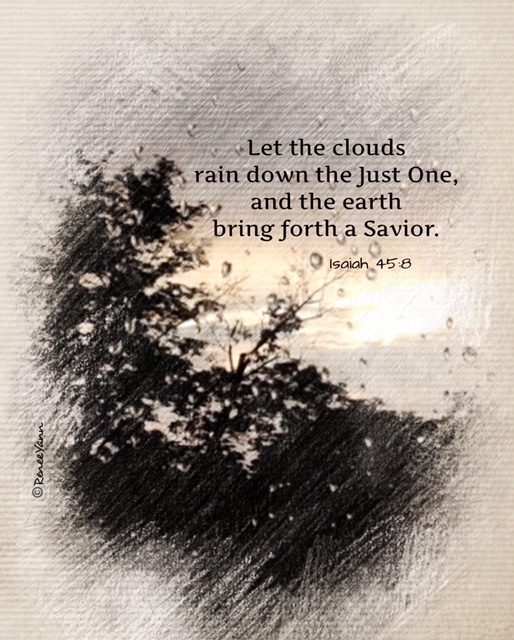
Let the clouds rain down the Just One, and the earth bring forth a Savior.

I rain
Because your meadows call
For God.

I weave light into words so that
When your mind holds them

Your eyes will relinquish their sadness,
Turn bright, a little brighter, giving to us
The way a candle does
To the dark.

I have wrapped my laughter like a gift
And left it beside your bed.

I have planted my heart’s wisdom
Next to every signpost in the sky.

A wealthy one, seeing all this,
May become eccentric,

A divinely wild soul
transformed to infinite generosity

Tying gold sacks of gratuity
To the dangling feet of moons, planets, ecstatic
Midair dances, and singing birds.

I speak
Because every cell in your body
Is thirsty
For God.

Music: Waiting for the Rain – Kathryn Kaye

Find Your Star

December 13, 2021
Monday of the Third Week of Advent
Memorial of St. Lucy

Today, in God’s Lavish Mercy, we pray with the beautiful, humble Psalm 25. Pastor Christine Robinson interprets the prayer in this way:

I put my trust in you, O God, as best as I am able. 
   May I be strong. May I not be afraid
May all who open their hearts
  hear your voice and know your love.
Lead me, teach me, help me to trust.

You are gracious to us, O God
You guide us, you forgive our clumsy ways
You help us prosper.

When I am sad and anxious
  I school my heart to trust
I act with integrity and uprightness
  And hope to feel your touch in my heart.
May it be so for all the peoples of the earth
  Who call you by many names.

Psalms for the New World – Christine Robinson

The psalm anchors our other readings today to suggest a theme of searching for Light in the darkness. Certainly, this was the quest of St. Lucy whose memorial we also mark today.

Lucy is the patroness of the blind. She was a brave young woman, martyred during the persecutions. Her name meaning “Light”, she has been venerated for millennia as one who can bring clarity and insight to places of darkness.


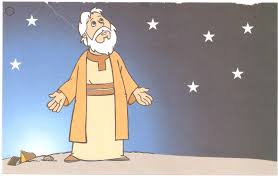
In our first reading, we hear the first messianic prophecy of the Bible. It is offered by a source perhaps unfamiliar to us — a teller of the future, Balaam.


Balaam is a diviner in the Torah (Pentateuch) whose story begins in Chapter 22 of the Book of Numbers. Every ancient reference to Balaam considers him a non-Israelite, a prophet, and the son of Beor.King Balak of Moab offered him money to curse Israel (Numbers 22–24), but Balaam blessed the Israelites instead as dictated by God. Nevertheless, he is reviled as a "wicked man" in both the Torah and the New Testament. (Wikipedia)

That story is the one we read today, and it contains a beautiful prophecy to be fulfilled fifteen hundred years after its utterance:

The utterance of Balaam, son of Beor,
        the utterance of the man whose eye is true,
    The utterance of one who hears what God says,
        and knows what the Most High knows,
    Of one who sees what the Almighty sees,
        enraptured, and with eyes unveiled.
    I see him, though not now;
        I behold him, though not near:
    A star shall advance from Jacob,
        and a staff shall rise from Israel.

Sometimes we just need to be pointed toward that star, don’t we? We kind of “see God – but not now; behold God — but not near”. It’s not always easy to believe, to trust.

We all have painful situations, unanswered hopes, lingering fears.   Let us bring them out of the shadows today with the help of St. Lucy and our Brilliant God who made the stars to give us hope.

As the year moves closer to its time of deepest darkness, may we know God’s brightness in our hearts. May we sense God lighting, once again, the dark places in our lives and in our world — leading us to a “Christmas Resurrection”.


Prose: from The Seaboard Parish by George Macdonald

The world ... is full of resurrections...
Every night that folds us up in darkness
is a death; and those of you that have
been out early, and have seen the
first of dawn, will know it -
the day rises out of the night like
a being that has burst its tomb
and escaped into life.

Music: Creator of the Stars of Night

Toward Thanksgiving…

November 23, 2021
Tuesday of the Thirty-fourth Week in Ordinary Time

Today, in Mercy, our readings echo the end-time themes we have been considering for several days. And we may continue to pray with these as we approach Advent.


But as we approach Thanksgiving, I want to shift gears and offer you some reflections I have written over the years in celebration of this holiday. For these next few days, I will focus on these. In the past, readers have used them for their prayer and at their own Thanksgiving tables. I hope you find them beneficial.

You’re Welcome

Bill was a big Mid-western guy with the boots and belt buckles to prove it. His wife of thirty years was a patient in our east coast cancer wing. Hearing of a break-through experimental treatment, they had come seeking a cure despite every indication of its hopelessness.

Being away from home, Bill had a lot of empty time outside of visiting hours. He spent much of it observing things that would ordinarily go unnoticed in the bustle of his regular life: weather, nature and human idiosyncrasies.

During one cafeteria lunch, over a bowl of hot soup, he observed, “People around here don’t say ‘You’re welcome’. They hold a door. You say ‘Thank you’. They just say ‘Uh huh’”.  Bill didn’t like that. It made him feel invisible. He said it was like one hand clapping.

In this season of Thanksgiving, it’s something to consider. Thanks are not offered in a vacuum. They are given to benefactors, both human and Divine, on whom we depend for a reciprocity of love, companionship, care and courage. Bill, at such a vulnerable, lonely place in his life, was infinitely sensitive when his thanks received no answer.

During this special time, we may hear a “Thank You” offered to us. In this cold age of our digital distractions, can we receive it consciously? Can we return it with a mutuality of gratitude that says, “You’re welcome! You are welcome in the embrace of my life. I see you as a unique and precious life and I rejoice at any kindness I can give you.”? A simple, sincere smile can say all that. Such is the power of our conscious spirits!

Doing this, we might even hear the Creator’s whisper, saying the same thing to us as we offer our Thanksgiving prayers: “I have created you from an abundance of love. You are precious to me and I believe in you. I hear your “Thank You” and you are welcome in the embrace of my infinite love.”


Poetry/Prayer


Music:  Thanksgiving Classical Playlist (You may want to play this hour-long compilation during your Thanksgiving meal.)

The Heart’s Temple

November 19, 2021
Friday of the Thirty-third Week in Ordinary Time

Today, in God’s Lavish Mercy, we pray with a passage from Chronicles as our Responsorial Psalm:

Yours, O LORD, are grandeur and power,
    majesty, splendor, and glory.
For all in heaven and on earth is yours.

1 Chronicles 29:11

This passage inclines us to worship God whose “temple” is all of Creation.


Both readings today speak about the “Temple”. After the victory of Judas Maccabeus, the Jewish people restore their physical Temple with exuberant celebration, recognizing it as a symbol of God’s Presence with them.


In today’s Gospel. Jesus also “restores” the Temple by driving out the merchants who have diverted the Temple’s purpose as representative of God’s Presence.


Our bodies too are temples of the Holy Spirit. Paul, in his letter to the Corinthians tells us:

Do you not know
that your bodies are temples of the Holy Spirit,
who is in you, whom you have received from God?
You are not your own; you were bought at a price.

1 Corinthians 6:19

Through our Baptism into the Passion, Death and Resurrection of Christ, the Holy Spirit dwells in us. We are called to be transformed by this Indwelling. As in any relationship, this transformation is accomplished through transparency, communication, listening and acting on behalf of the Beloved.


Poetry: Go Not to the Temple – Tagore

Go not to the temple to put flowers upon the feet of God,
First fill your own house with the Fragrance of love…

Go not to the temple to light candles before the altar of God,
First remove the darkness of sin from your heart…

Go not to the temple to bow down your head in prayer,
First learn to bow in humility before your fellowmen…

Go not to the temple to pray on bended knees,
First bend down to lift someone who is down-trodden. ..

Go not to the temple to ask for forgiveness for your sins,
First forgive from your heart those who have sinned against you.


Music: In the Temple Garden – Aaron Kenny

Sacred Tears

November 18, 2021
Thursday of the Thirty-third Week in Ordinary Time

Today, in God’s Lavish Mercy, we pray with Psalm 50, “a prophetic imagining of God’s judgement on the Israelites”. (Wikipedia)

Our first reading from the Book of Maccabees introduces us to Mattathias, revered leader of the Jews in the city of Modein. He violently refuses the Greek Seleucid command to worship their gods, thus initiating the Maccabean Revolt. The wars lasted nearly a decade. Final victory is commemorated in the Feast of Hanukkah:

The Jewish festival of Hanukkah celebrates the re-dedication of the Temple following Judah Maccabee’s (Mattathias’s son)victory over the Seleucids. According to tradition, victorious Maccabees could find only a small jug of oil that had remained pure and uncontaminated by virtue of a seal, and although it contained only enough oil to sustain the Menorah for one day, it miraculously lasted for eight days, by which time further oil could be procured. (Wikipedia)

Our first reading is really describing the beginning of civil and intercultural wars by which dedicated Jews sought to establish both their religion and their nation. Core to their motivation was the desire to be in relationship with their one God according to their own custom and law.


In our Gospel, Jesus has come as the full manifestation of that One God. He has invited the Jewish people to a new and complete relationship with God, but they have resisted.

Now, as he nears his final fate in Jerusalem, Jesus realizes that his dream for the People will not be fully realized. They will experience a destruction like the one once feared by Mattathias. The reality causes Jesus to weep.

Are the passages only about the Jews, their religion and their history?

For us, these passages are about choosing a faithful,
evolving relationship with God
– a relationship that will demand truth,
action and at times suffering
as we pursue ever deeper understanding
of God’s Presence in our lives.

Our world and its culture place many godless choices before us, choices that could make Jesus weep because of the suffering they cause others. These choices are not as easy to identify as they were in the time of Mattathias. They don’t come dressed as a pagan soldier ready to quash our resistance.

They come in the large subtleties of politics, economics, human rights, global relationships. These choices show themselves in the small exercise of our respect, care, and reverence for all Creation. But they do come to us in every moment and they demand our witness.

Jesus wants the new Kingdom to rise in us when we open our hearts to his Word. It is an ongoing and daily Resurrection. Let’s pray for the courage for it!


Poetry: The World Is Too Much with Us – William Wordsworth

Wordsworth wrote this poem during the Industrial Revolution when he felt the complexities of the world were inhibiting our appreciation of the sacredness of nature.

The world is too much with us; late and soon,
Getting and spending, we lay waste our powers;—
Little we see in Nature that is ours;
We have given our hearts away, a sordid boon!
This Sea that bares her bosom to the moon;
The winds that will be howling at all hours,
And are up-gathered now like sleeping flowers;
For this, for everything, we are out of tune;
It moves us not. Great God! I’d rather be
A Pagan suckled in a creed outworn;
So might I, standing on this pleasant lea,
Have glimpses that would make me less forlorn;
Have sight of Proteus rising from the sea;
Or hear old Triton blow his wreathèd horn.

Music:  When Jesus Wept – William Billings

One of the most well-known of the early American canons, originally appeared in the New England Psalm Singer. It was written in 1770 by William Billings, a self-taught singing-school teacher and composer who served as choir leader at Old South Church in Boston.

(Lyrics below)

When Jesus wept, the falling tear
In Mercy flowed beyond all bound;
When Jesus groaned at rambling fear
Seized all the guilty world around.

Per a valued friend:

There is a statue in Oklahoma City called “Jesus Wept.”  It is on the grounds of St. Joseph Church in the city – which is right across from where the Oklahoma City Federal Building had been located.  The people of the parish wanted to erect the statue on their grounds because the memorial on the federal property couldn’t be religious.  It is a very moving statue.

Good Ending

Today, in God’s Lavish Mercy, we pray with Psalm 19, a prayer of awe as we see the magnificence of God’s Creation:

The heavens declare the glory of God,
    and the firmament proclaims his handiwork.
Day pours out the word to day,
    and night to night imparts knowledge.

Psalm 19: 2-3

It is a steadying psalm that we might need because our scripture message is blunt (if not downright scary!). If yesterday’s sweet words from Wisdom were like “the rich colors of a vibrant Autumn or Spring day”, today’s are more like a dark, cold winter!


Basically our first reading says “Yes”- creation is magnificent, but not as magnificent as its Creator! You, learned humans, how could you have gotten stuck only half-way to that truth? How did you end up making gods from the very things that were supposed to show you the one true God?


In our Gospel, Jesus speaks even more starkly. He describes the “end times” when “one will be taken and the other left”. That reading always scared me as a child and, to be honest, still scares me a little. The popular “rapture literature” has monopolized on that fear. Nobody likes the idea of their buddy, sitting right beside them eating ice cream, suddenly disappearing, right?


And I guess Jesus actually was trying to strike a little healthy fear into his listeners too. He told them the vultures were already gathering. It’s late in the game. Get your act together.

Early Christians thought a lot about the end times. They expected them to come quickly after the Resurrection. Well, 2000 years later, our obsession may have cooled somewhat. 

Nevertheless, an end will come to this life as we know it. And wouldn’t it be a shame if we had spent our precious worship on false and distracting gods like money, fame, power, luxury and self-aggrandizement?

“Wouldn’t it be a shame”, as one of our venerable Sisters once said, “to come to the end of your life and realize you had missed the whole point?”


Poetry: The Second Coming – W. B. Yeats

Turning and turning in the widening gyre   
The falcon cannot hear the falconer;
Things fall apart; the centre cannot hold;
Mere anarchy is loosed upon the world,
The blood-dimmed tide is loosed, and everywhere   
The ceremony of innocence is drowned;
The best lack all conviction, while the worst   
Are full of passionate intensity.

Surely some revelation is at hand;
Surely the Second Coming is at hand.   
The Second Coming! Hardly are those words out   
When a vast image out of Spiritus Mundi
Troubles my sight: somewhere in sands of the desert   
A shape with lion body and the head of a man,   
A gaze blank and pitiless as the sun,   
Is moving its slow thighs, while all about it   
Reel shadows of the indignant desert birds.   
The darkness drops again; but now I know   
That twenty centuries of stony sleep
Were vexed to nightmare by a rocking cradle,   
And what rough beast, its hour come round at last,   
Slouches towards Bethlehem to be born?


Music: Abide with Me – Sean Clive

Catch the Word!

October 29, 2021
Friday of the Thirtieth Week in Ordinary Time

Today, in God’s Lavish Mercy, we pray with Psalm 147 which calls upon Israel to praise God for gifts received.

God has not done for others what has been done for you;
the Divine Way God has not made known to them. Alleluia.

Psalm 147: 20

The psalm gives us deeper insight into our reading from Romans. In Romans, chapters 9-11, Paul focuses on Israel’s quintessential place in the unfolding of salvation history.

In today’s passage, Paul laments the recalcitrance of some of his kin to open their hearts to the Gospel:

I have great sorrow and constant anguish in my heart. 
For I could wish that I myself were accursed and cut off from Christ
for the sake of my own people,
my kindred according to the flesh. 
They are children of Israel…

Romans 9: 2-3

Paul’s lament is not a condemnation. Rather he mourns the fact that his fellow Israelites, who are uniquely blessed by God, choose not to accept the new and transformative Gift offered them in the person of Jesus Christ.


The lesson for us when praying with this psalm and reading? Perhaps this:

God is always doing something new and wonderful in us and in Creation. God is always inviting us deeper into the relationship of love and mercy.

The path to that sacred depth is laid out for us in the Gospel where we learn to imitate Christ.


Sometimes we too are recalcitrant. We like things to be ordered and controlled, just like today’s Gospel Pharisees liked to control the Sabbath.

But the God of the Sabbath is not to be controlled by our fears, demands, or securities. That God will continue to challenge, invite, surprise, and love us into deeper relationship.

Our work is to stay open and responsive to this dynamic God Whose graces are “new every morning” – in fact, every moment…

Who sends forth the command to the earth;
Whose Word runs swiftly!

Psalm 147: 15

Poetry: He Comes Ever Again – Rowan Williams

He will come like last leaf’s fall.
One night when the November wind
has flayed the trees to bone, and earth
wakes choking on the mould,
the soft shroud’s folding.

He will come like frost.
One morning when the shrinking earth
opens on mist, to find itself
arrested in the net
of alien, sword-set beauty.

He will come like dark.
One evening when the bursting red
December sun draws up the sheet
and penny-masks its eye to yield
the star-snowed fields of sky.

He will come, will come,
will come like crying in the night,
like blood, like breaking,
as the earth writhes to toss him free.
He will come like child.

Music: Blue Dream – Fiona Jay Hawkins