Covenant of Mercy

Memorial of Saint Paul Miki and Companions, Martyrs
Tuesday of the Fifth Week in Ordinary Time
February 6, 2024

Today’s Readings:

https://bible.usccb.org/bible/readings/020624.cfm


Today, in God’s Lavish Mercy, our readings might lead us to consider what we pay attention to in our spiritual lives and why.

In our first reading, Solomon prays simply and sincerely before the presence of God. It is the prayer of one who is spiritually vulnerable to God’s grace in whatever way it comes.

Solomon stood before the altar of the LORD
in the presence of the whole community of Israel,
and stretching forth his hands toward heaven,
he said, “LORD, God of Israel,
there is no God like you in heaven above or on earth below;
you keep your covenant of mercy with your servants
who are faithful to you with their whole heart.

1 Kings 8:22-23

Solomon’s focus in prayer is to honor and acknowledge God and to ask mercy for himself and the people for whom he is responsible.
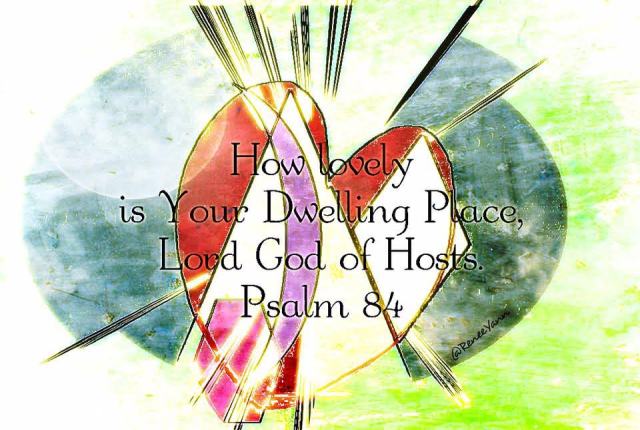
Today’s Responsorial Psalm 84


The Pharisees, on the other hand, fear the presence of God in Jesus because he threatens the collapse of their false religionism. To protect their man-made securities, they have constructed an elaborate maze of rules and judgments which hardens them to renewing grace.

Rather than listen to Jesus who offers them redemption, they focus on the lifeless particularities of the Law:

When the Pharisees with some scribes who had come from Jerusalem
gathered around Jesus,
they observed that some of his disciples ate their meals
with unclean, that is, unwashed, hands.

Mark 7:1-2

The Pharisees’ recalcitrance disappoints and angers Jesus:

He responded,
“Well did Isaiah prophesy about you hypocrites,
as it is written:

This people honors me with their lips,
but their hearts are far from me;
In vain do they worship me,
teaching as doctrines human precepts.

You disregard God’s commandment but cling to human tradition.”
He went on to say,
“How well you have set aside the commandment of God
in order to uphold your tradition!

Mark 7:6-8

We live our lives always in the Presence of God. Do we even realize this? Do we pray, like Solomon, with an open heart for the grace to grow ever closer to God in every circumstance that is offered to us? 

Do we ask for the grace to see where judgments, measurements, and definitions limit our spiritual growth?


As I read today’s Gospel, I think of Pope Francis’s recent decision to allow the blessing of same-sex couples. Francis looked beyond traditional constraints to offer healing mercy to those seeking God’s love. Some people, caught in strictures similar to those of the Pharisees, have not only resisted but condemned the Pope for his decision.

The situation is not dissimilar from that of today’s Gospel. What can we learn about our own attitudes and spiritual openness as we pray with these readings? What can Solomon teach us about sincere, humble, and transparent prayer?


Poetry: Peace Is This Moment Without Judgment – Dorothy Hunt

Do you think peace requires an end to war?
Or tigers eating only vegetables?
Does peace require an absence from
your boss, your spouse, yourself?…
Do you think peace will come some other place than here?
Some other time than Now?
In some other heart than yours?

Peace is this moment without judgment.
That is all. This moment in the Heart-space
where everything that is is welcome.
Peace is this moment without thinking
that it should be some other way,
that you should feel some other thing,
that your life should unfold according to your plans.

Peace is this moment without judgment,
this moment in the Heart-space where
everything that is is welcome.

Music: Heart of Gold – Nicholas Gunn

I think this song can be like a prayer asking God’s warmth and mercy in our judgments and prayers.
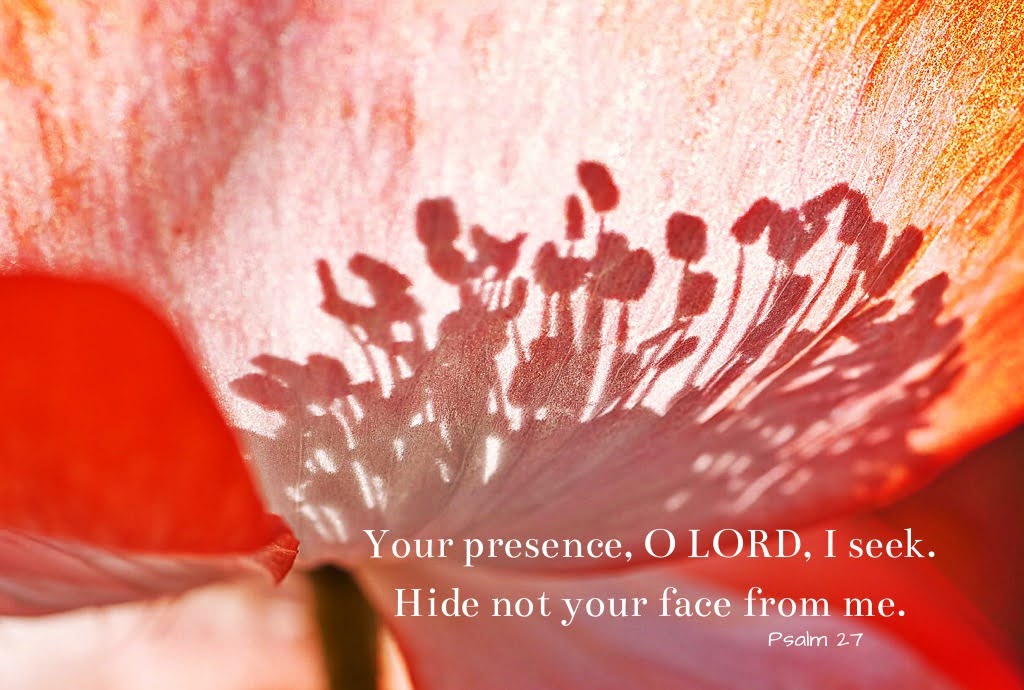

Presence

Memorial of Saint Agatha, Virgin and Martyr
Monday of the Fifth week in Ordinary Time
February 5, 2024

Today, in God’s Lavish Mercy, both our readings lead us to pray with the mystery of God’s Presence.

In the passage from Kings, Solomon has completed his most memorable task – the rebuilding of the Temple in Jerusalem. Today’s verses describe the transfer of the Ark of the Covenant from its holding place to its permanent home in the Temple.

Upon the completion of that festive transfer, the Divine Presence is manifested by a cloud which fills the Holy of Holies.

When the priests left the holy place,
the cloud filled the temple of the LORD
so that the priests could no longer minister because of the cloud,
since the LORD’s glory had filled the temple of the LORD.
Then Solomon said, “The LORD intends to dwell in the dark cloud;
I have truly built you a princely house,
a dwelling where you may abide forever.”

1 Kings 8:10-11

In Mark’s Gospel today, the townspeople of Gennesaret become aware that Jesus is present in their vicinity. They have heard about his miracles. As Mark puts it, they scurry to gather all their needy friends and relatives into Christ’s healing Presence.

After making the crossing to the other side of the sea,
Jesus and his disciples came to land at Gennesaret
and tied up there.
As they were leaving the boat, people immediately recognized him.
They scurried about the surrounding country
and began to bring in the sick on mats
to wherever they heard he was.
Whatever villages or towns or countryside he entered,
they laid the sick in the marketplaces
and begged him that they might touch only the tassel on his cloak;
and as many as touched it were healed.

Mark 6:53-56

As we pray these passages, we might long for the tactile presence of God in the cloudiness of our own lives. Sometimes God seems far away, hidden somewhere beyond the stars – disconnected from the flesh-and-bone challenges of our existence.

But as we pray today we might remind ourselves that we are a Temple. God dwells in us as truly as God dwelt in the Holy of Holies. Any felt distance is not on God’s part, it is on ours and our restrained and anxious faith.

May these readings inspire us to be as sincere in our prayer as were the Gennesarenes – to scurry to the hem of Christ’s garment, to grasp its tassel in the fullness of faith, hope, and love.


Thought:

‘The mystery of God hugs you
in its all-encompassing arms.”-

Hildegard von Bingin

Music: Invocation: Hildegard von Bingen ~ Written by Emma Bergen, sung by Anonymous 4

Traditionally the Hebrew term Shekinah שכינה means ‘dwelling’, as a way of describing the Presence of the Divine. As the term is feminine, it also has come to be used to describe the feminine aspect of the divinity: the Divine Feminine.

Emma Bergen writes: “I came to learn about the Shekinah while I was writing about the Gnostic Sophia, and was inspired to write my ‘Invocation’ as a way, both of expressing what such a contact means to me personally, and to reach out in the spirit (and within myself) to what has been described as ‘the feminine face of God’. Oppression has many faces, some serious, and others so subtle that they might remain unnoticed by others. I invite you to join me in this invocation, written for all women everywhere, in whatever circumstances they might find themselves.”

(To see the words more clearly in the video, click on the little white square in the lower right-hand corner of the YouTube screen.)

Selflessness

Saturday of the Fourth Week in Ordinary Time
February 3, 2024

Today’s Readings:

https://bible.usccb.org/bible/readings/020324.cfm


Today, in God’s Lavish Mercy, our readings offer us insights into the ministry of leadership. They are insights worth pondering for at least these two reasons:

  • We are all called to be leaders in some way in our lives, be it as parent, teacher, supervisor, team captain, committee lead, board chair … you name it.
  • We need to be able to recognize good leaders in order to follow wisely, otherwise we are following self-interested fools determined to re-create us in their likeness.

In both our readings, leadership is characterized by this key element: selflessness.

Solomon, when given the chance to ask for anything he wants, asks for a gift that will benefit the community.


Give your servant, therefore, an understanding heart
to judge your people and to distinguish right from wrong.

1 Kings 4:9

Jesus and the disciples, exhausted from the press of the crowd, still respond in mercy to their relentless needs

Jesus said to the disciples,
“Come away by yourselves to a deserted place and rest a while.”
People were coming and going in great numbers,
and they had no opportunity even to eat.
So they went off in the boat by themselves to a deserted place.
People saw them leaving and many came to know about it.
They hastened there on foot from all the towns
and arrived at the place before them.

When Jesus disembarked and saw the vast crowd,
his heart was moved with pity for them,
for they were like sheep without a shepherd;
and he began to teach them many things.

Mark 6: 30-34

As we daily focus our lives on becoming more like Christ, the practice of selflessness can be tricky – how to live selflessly without losing one’s self; how to foster common and individual good without depleting one’s own spiritual strength. To my mind, these things are important:

Honesty: I think the grounding virtue of a good leader is honesty – with others and with self. Once a leader starts to pretend, deceive, equivocate, feign ignorance, or outright lie, (even to themselves), they are no longer fit to lead.

Spiritual Discipline: When we look at Jesus’s life, we see that he practiced a cycle of ministry and prayer. Several times in the Gospel, Jesus withdraws to commune with the Father. Although Christ was in union with the Father at all times, he exercised his ministry around a personal discipline of solitude and prayer.

Discernment: Solomon understands the importance of this gift. What Solomon actually prays for is the sensitivity to practice the “cardinal virtues” that we learned long ago in catechism class. Remember? Prudence, Justice, Fortitude, and Temperance.


Prose: Remember the Baltimore Catechism? Well, maybe some of you are too young to remember, Here’s how wikipedia defines it:

A Catechism of Christian Doctrine, Prepared and Enjoined by Order of the Third Council of Baltimore, or simply the Baltimore Catechism, was the national Catholic catechism for children in the United States, based on St. Robert Bellarmine’s 1614 Small Catechism. The first such catechism written for Catholics in North America, it was the standard Catholic school text in the country from 1885 to the late 1960s. From its publication, however, there were calls to revise it, and many other catechisms were used during this period. It was officially replaced by the United States Catholic Catechism for Adults in 2004, based on the revised universal Catechism of the Catholic Church.


Throughout my adult life, I have retained an appreciation for what I learned from the now-defunct edition of the Baltimore Catechism. While it conveyed the impression that a recipe for holiness could be compacted into a small manual, its inimitable Thomistic logic left valuable lessons with me to which I often return. Here are a few that informed my prayer today as I reflected on “selflessness”:

Besides the theological virtues of faith, hope, and charity there are other virtues, called moral virtues.

These virtues are called moral virtues because they dispose us to lead moral, or good lives, by aiding us to treat persons and things in the right way, that is, according to the will of God.

The chief moral virtues are: prudence, justice, fortitude, and temperance; these are called cardinal virtues.

These virtues are called cardinal virtues because they are like hinges on which hang all the other moral virtues and our whole moral life. The word “cardinal” is derived from the Latin word “cardo” meaning hinge.

  • Prudence disposes us in all circumstances to form right judgments about what we must do or not do.
  • Justice disposes us to give everyone what belongs to them.
  • Fortitude disposes us to do what is good despite any difficulty.
  • Temperance disposes us to control our desires and to use rightly the things which please ourselves.

Music: Song of Solomon – Martin Smith

Now It’s Your Turn

Thursday of the Fourth Week in Ordinary Time
February 1, 2024

Today’s Readings:

https://bible.usccb.org/bible/readings/020124.cfm

Today, in God’s Lavish Mercy, as February’s deep season unrolls, we are just about two weeks away from the beginning of Lent. Our first readings during this time will give a little taste of 1 Kings and then briefly shift to James’s epistle before we pick up the treasured readings of the Lenten Season.


The passage today bears a royal gravity. After preparing his son Solomon for kingship, David solemnly dies.

Keep the mandate of the LORD, your God, following his ways
and observing his statutes, commands, ordinances, and decrees
as they are written in the law of Moses,
that you may succeed in whatever you do,
wherever you turn, and the LORD may fulfill
the promise he made on my behalf….

… David rested with his ancestors and was buried in the City of David.
The length of David’s reign over Israel was forty years:
he reigned seven years in Hebron
and thirty-three years in Jerusalem.

Solomon was seated on the throne of his father David,
with his sovereignty firmly established.

1 Kings 2; 3-4;10-12

David’s advice to Solomon is basically this: there is work to be done for God and God’s People. And now it’s your responsibility. Keep the course!

In our Gospel, Jesus gives the same sort of mandate to this disciples:

Jesus summoned the Twelve and began to send them out two by two
and gave them authority over unclean spirits.
He instructed them to take nothing for the journey but a walking stick
–no food, no sack, no money in their belts.

Mark 6:7-8

The disciples are ready. It is now their turn to spread the Gospel and to continue the ministry that they have learned at Jesus’s side:

So they went off and preached repentance.
The Twelve drove out many demons,
and they anointed with oil many who were sick and cured them.

Mark 6:12-13

If any of us are wondering what we are supposed to do today for the Reign of God, our answer may be somewhere in these readings as we pray them with an open heart.


Poetry: The Poem of Tecumseh – Tecumseh (1768 –1813) was a Shawnee chief and warrior who promoted resistance to the expansion of the United States onto Native American lands. A persuasive orator, Tecumseh traveled widely, forming a Native American confederacy and promoting intertribal unity. Even though his efforts to unite Native Americans ended with his death in the War of 1812, he became an iconic folk hero in American, Indigenous, and Canadian popular history. (Wikipedia)


Music: Heal the World – Michael Jackson

Rejected at Nazareth

Memorial of Saint John Bosco, Priest
Wednesday of the Fourth Week in Ordinary Time
January 31, 2024

Today’s Readings:

https://bible.usccb.org/bible/readings/013124.cfm


Today, in God’s Lavish Mercy, David gets himself in trouble once again.

King David said to Joab and the leaders of the army who were with him,
“Tour all the tribes in Israel from Dan to Beer-sheba
and register the people, that I may know their number.”
Joab then reported to the king the number of people registered:
in Israel, eight hundred thousand men fit for military service; 
in Judah, five hundred thousand.

Afterward, however, David regretted having numbered the people,
and said to the LORD:
“I have sinned grievously in what I have done.
But now, LORD, forgive the guilt of your servant,
for I have been very foolish.”

2 Samuel 24: 2;10

In the later years of his kingship, David is pretty impressed with himself. The kingdom has grown exponentially. There is peace and prosperity. David wants a census taken so that he can assess his capacity for new expansion.

So why does God get so mad about this census? The Book of Exodus sets out that a person has the right to number only his own belongings. The People belong to God, not to David. David’s pride and self-satisfaction has taken him over.

Ps32_deep waters

However, as usual, David repents. This is probably the best lesson we can learn from him. Then, in a greatly allegorized treatment, God gives David a choice of three punishments.


Passages like this can confuse us if we interpret them literally. Does God really interact and punish like this? 

It helps to remember the purpose of these writings — not to relay a factual history, but rather to tell a story that helps us grow in relationship with God.

What I believe happened here is that a pestilence did fall upon the country. At the same time, David realized that his heart had grown selfish and graceless. He took the natural event as a sign to turn back to God. And then the writers told the story in a way that the ancient peoples could relate to – with a metaphorical image of a God that forgives but gets even.


In our Gospel, Jesus preaches a clearer and true vision of God – a vision of Complete Mercy, especially toward the vulnerable, weak, and sinful. That pretty much includes all of us.

Jesus releases the power of this Divine Mercy by his words and miracles. But his own family and neighbors reject him. They are more comfortable with a God who behaves like they do – meting out more judgement and punishment (preferably toward others!😉) than mercy and inclusive benediction.


In this Gospel, we begin to see Jesus as One who asks not only for repentance but for conversion – for a new way of being with God and neighbor, the way of Love.

How might we have responded had we been in that neighborhood synagogue? How are we responding today?


Film Excerpt from The Chosen: Jesus is rejected at Nazareth


Music: Today’s Responsorial Psalm 32 – Marty Goetz ( Lyrics below)

Psalm 32 – Marty Goetz

These are periled times we live in, trouble everywhere
Weary hearts will often give in to this world’s despair
But high and over all, our Father knows our every care
And in His Book, if you will look, you’ll find His promise there

(Chorus)
He who trusts in the Lord
Mercy shall surround him
He who trusts in the Lord
Mercy shall surround him
Be glad in the Lord and rejoice
You upright in heart, lift up your voice
For great is His mercy toward all who trust in the Lord

Soon will be the time when we will see the Holy One
Oh how sweet to know that He’ll complete what He’s begun
And blessed is the man who stands forgiven in God’s son
And blessed are they who in that day will hear Him say, “Well done”

(Chorus)

Gracious is He and slow to anger
His loving kindness has no end
With love to embrace both friend and stranger
Reaching out to one and all, who upon His name will call

(Chorus)

Mercy is His reward
For all who trust, for the pure and just
Who put their trust in the Lord
For all who trust for the pure and just who put their trust in the Lord

Listen Tenderly

Fourth Sunday in Ordinary Time
January 28, 2024

Today’s Readings:

https://bible.usccb.org/bible/readings/012824.cfm


Today, in God’s Lavish Mercy, we pray with Psalm 95, once again a call to a holy tenderheartedness – that mix of love, discernment, and generosity that magnetizes us into dynamic relationship with God.

Oh, that today you would hear his voice:
    “Harden not your hearts as at Meribah,
    as in the day of Massah in the desert,
Where your fathers tempted me;
    they tested me though they had seen my works.

Psalm 95: 7-9

Our other Sunday readings, which Psalm 95 anchors, clarify the reason we seek this tenderheartedness. It is so that we might not only hear, but really listen and respond to the Truth of God in our lives.

Those who will not listen to my words 
which a prophet speaks in my name,
I myself will make them answer for it.

Deuteronomy 18:18

In our first reading from Deuteronomy, the people were confused. They were passing into a new land with lots of rivaling religions and spiritualities. Moses was nearing the end of his life and leadership over them. They wanted to know who to listen to and how to behave in order to stay in God’s favor.

God promises that God’s voice will come through a prophet like Moses:

I will raise up for them a prophet like you from among their kin,
and will put my words into his mouth;
he shall tell them all that I command him.

Deuteronomy 18:19

In our Gospel, we see Jesus – the fulfillment of the Deuteronomic Promise. The people witnessing his power are amazed. They struggle with whether they can believe in him when he seems just one of them, a Nazarene, Joseph’s son.

But some could believe – readily. Some, like the disciples, discerned quickly the Truth Jesus was. They heard, listened, believed and obeyed the Word.

Our psalm suggests that such readiness, such tenderheartedness comes from the consistent practice of relationship with God through praise, witness, thanksgiving, prayer, worship, humility, and obedience.


To me, it boils down to this:

  • let your life unfold in God’s Presence
  • be silent under God’s loving gaze
  • thank God for all you have been given
  • realize you are nothing without God
  • listen to your life as God speaks it to you
  • act on what you hear
Come, let us sing joyfully to the LORD;
    let us acclaim the rock of our salvation.
Let us come into God’s presence with thanksgiving;
    let us joyfully sing psalms to the Lord.
R. If today you hear God’s voice, harden not your hearts.
Come, let us bow down in worship;
    let us kneel before the LORD who made us.
For the Lord is our God,
    and we are the people God shepherds, the flock God guides.

Poetry: Rumi

I keep telling my heart,
“Go easy now.
I am submerged in golden treasure.”
It replies,
“Why should I be afraid of love?”

Music: Soften My Heart – by Music Meets Heaven

A Striking Light!

Feast of the Conversion of Saint Paul, Apostle
January 25, 2024

Today’s Readings:

https://bible.usccb.org/bible/readings/012524.cfm


The Conversion of St. Paul – Caravaggio

Today, in God’s Lavish Mercy, we have the thrilling story of the conversion of St. Paul.

“On that journey as I drew near to Damascus,
about noon a great light from the sky suddenly shone around me.
I fell to the ground and heard a voice saying to me,
‘Saul, Saul, why are you persecuting me?’
I replied, ‘Who are you, sir?’
And he said to me,
‘I am Jesus the Nazorean whom you are persecuting.’

Acts of the Apostles 22; 6-8

God was not subtle with Paul! And it’s a good thing because Paul wasn’t subtle. He was the kind of guy who lived on the edge of life, always pushing the limits of his existence. He reminds me of a spiritual “Evel Knievel”.

God had to make a real impression in order to get Paul’s attention and turn his life around. When a lightning bolt knocks you off your horse, you tend to notice!


Our Gospel summarizes Jesus’s choice of his twelve apostles. Again, there was some pretty dramatic divine intervention used to get these men to take heed:

  • Andrew heard a voice from the sky sanctify Jesus’s Baptism in the Jordan
  • Nathaniel was miraculously observed under the fig tree
  • Peter and his fishing buddies caught an incredible, net-breaking haul
  • Philip asked, “What’s for dinner?’ and got twelve baskets of leftovers
  • Thomas placed his fingers in the resurrected wounds
  • Matthew got the grace to make an astounding career change
  • and John, in the first Eucharistic moment, rested his ear against God’s heart

God’s daily call to us may come in softer garments. We all have a few dramatic moments in our lives, when we must grasp our faith to make it through. But for the most part, life may seem hypnotizingly ordinary. Our readings today encourage us to pay attention to grace — to open ourselves to God’s eternal promptings even in their ordinary costumes. Every sunrise offers such an invitation. How blessed we are when we recognize them!


Poetry: The Conversion of St. Paul – Christopher Smart (1722-1771)

Each line in he poem refers to a miracle in the scriptures. The son of Nun was Joshua who opens the poem.

Thro ' him, the chief, begot by Nun,
Controul'd the progress of the sun;
The shadow too, through him, retir'd
The ten degrees it had acquir'd.
The barren could her fruit afford,
The woman had her dead restor'd,
The statesman could himself demean
To seek the river, and be clean.
At his command, ev'n Christ I Am,
The cruse was fill'd, and iron swam;
The floods were dry'd to make a track,
And Jordan's wave was driven back.
All these in ancient days occurr'd,
The great atchievements of the Word,
By Joshua's hand, by Moses' rod,
By virtue of the men of God.
But greater is the mighty deed
To make a profligate recede,
And work a boist'rous madman mild,
To walk with Jesus like a child.
To give a heart of triple steel
The Lord's humanity to feel;
And there, where pity had no place,
To fill the measure of his grace;
To wash internal blackness white,
To call the worse than dead to light;
To make the fruitless soil to hold
Ten thousand times ten thousand fold.
To turn a servant of the times
From modish and ambitious crimes;
To pour down a resistless blaze,
‘Go, persecutor, preach and praise.’

Video: Instead of music today, I’ve included this video analysis of Caravaggio’s painting “The Conversion of St. Paul on the Road to Damascus”. It is one of at least two paintings by Caravaggio on the same subject. The other famous painting, “The Conversion of St. Paul” is seen at the top of this blog post.

I found that the video spoke to both art appreciation and spirituality. I hope you enjoy it.

Just Listen!

Memorial of Saint Francis de Sales, Bishop and Doctor of the Church
Wednesday of the Third Week in Ordinary Time
January 24, 2024

Today’s Readings:

https://bible.usccb.org/bible/readings/012424.cfm


Today, in God’s Lavish Mercy, Jesus tells us the parable of the sower and the seed.

And he taught them at length in parables, 
and in the course of his instruction he said to them, 
“Hear this! A sower went out to sow.
And as he sowed, some seed fell on the path, 
and the birds came and ate it up.
Other seed fell on rocky ground where it had little soil.
It sprang up at once because the soil was not deep.
And when the sun rose, it was scorched and it withered for lack of roots. 
Some seed fell among thorns, and the thorns grew up and choked it 
and it produced no grain.
And some seed fell on rich soil and produced fruit.
It came up and grew and yielded thirty, sixty, and a hundredfold.”
He added, “Whoever has ears to hear ought to hear.”

Mark 4: 2-9

How many times have we heard or read this passage over the years? Maybe so many times that we’ve become a little impervious to it. Maybe we can hear something too much.

For example, as a group of us watched the 76ers basketball game last night, the commercials seemed endless. At one point Anne Marie asked me, “Would you ever buy that?”. Although I was staring at the commercial, I had no idea what it was saying. I had tuned it out and was looking right through it!

Here’s the thing: I could hear the commercial, but I wasn’t listening to it.


I think it’s like that with today’s parable and other scripture passages as well.

We’re probably not farmers. If you’re like me, the best you’ve done is to plant an orange seed in a ten-cent flower pot when you were kindergartners! So the parable might not catch our hearts when we hear it for the 100th time unless we have learned to listen as well as hear!


But when we listen to this parable we might realize that, maybe, for us:

  • the seed fell on the path and got devoured by birds that time when we let up on our dedicated prayer time and took up some useless distraction
  • the seed fell on rocky ground when we failed to study a politically charged issue in the light of the Gospel and instead got caught in a media-spun theory
  • the seed fell among thorns when we allowed our morality to be influenced by gossip, cheap judgments, self-serving agendas, or biased opinion
  • the seed fell on rich ground when we gave our spirits quiet time, prayer, good spiritual reading, the companionship of graced friends, and all the other holy kindnesses that can make us better persons

As I write this blog, it’s so cold where I live that, unless you had a jackhammer, you couldn’t even plant a seed. We don’t want our hearts to be like that. We want supple hearts, ready for the amazing graces God scatters over our lives daily. Let’s do the work to be ready.


Poetry: The Sower – William Cowper (1731 – 1800) was an English poet and Anglican hymnwriter.

One of the most popular poets of his time, Cowper changed the direction of 18th-century nature poetry by writing of everyday life and scenes of the English countryside. In many ways, he was one of the forerunners of Romantic poetry. Samuel Taylor Coleridge called him “the best modern poet”, whilst William Wordsworth particularly admired his poem “Yardley-Oak”.

Cowper’s religious sentiment and association with John Newton (who wrote the hymn “Amazing Grace”) led to much of the poetry for which he is best remembered, and to the series of Olney Hymns. His poem “Light Shining out of Darkness” gave English the phrase: “God moves in a mysterious way/ His wonders to perform.” (Wikipedia)


Ye child of earth prepare the plough,
Break up your fallow ground;
The sower is gone forth to sow,
And scatter blessings round.
The seed that finds a stony soil
Shoots forth a hasty blade;
But ill repays the sower's toil,
Soon wither'd, scorch'd, and dead.
The thorny ground is sure to balk
All hopes of harvest there;
We find a tall and sickly stalk,
But not the fruitful ear.
The beaten path and highway side,
Receive the trust in vain;
The watchful birds the spoil divide,
And pick up all the grain.
But where the Lord of grace and power
Has bless'd the happy field,
How plenteous is the golden store
The deep-wrought furrows yield!
Father of mercies, we have need
Of thy preparing grace;
Let the same Hand that give me seed
Provide a fruitful place!

Music: Amazing Grace

Time Passes

Third Sunday in Ordinary Time
January 21, 2024

Today’s Readings:

https://bible.usccb.org/bible/readings/012124.cfm


Today, in God’s Lavish Mercy, each of our readings speaks to us of time.

The concept of time has always fascinated me. I remember being aware of the fascination as a very little girl walking beside my mother and aunt along the Wildwood boardwalk arcade.

Some of you who live locally may remember the spot, an extension of the seaside boardwalk at Oak Avenue. Its main attractions were bumper cars and a booth where little piglets ran along a path, picking a random door that, for a nickel, might earn you a stuffed animal.

On that particular summer day, about 1950, there was a new booth – Miranda, the Fortune Teller. Miranda read Tarot cards, an exercise Mom and Aunt Peg were unfamiliar with. Nevertheless, they decided to try it, and each went separately into the tiny veiled room to learn her future as I stood completely entranced by the piglet race.


Later, as the three of us sauntered side-by-side in the salted air, I heard Aunt Peg ask Mom, “Did she tell you how old you will be when you die?”. My ears leaped to attention! What? My mom could die???? And that lady knew when????

I heard my thirty-three year old mother answer, “She said when I am seventy-two.”

“Oh, God! How soon is that?”, I wondered. My little five-year-old mind tried to calculate the expanse of time but failed. However, the prediction planted itself inextricably in my heart.


Decades later, when Mom did pass away (just before her 72nd year) the memory returned to me. And the nearly forty years in between seemed compressed into an incomprehensible moment that had passed as quickly as that sweet seaside breeze.


How many times do we ask the Universe this unanswerable question, “Where did the time go?” It is a question that has a thousand answers and no answer, much like the question, “Who is God?”.


In our readings today, Jonah, Paul, and John the Baptist want us to think about time in relationship to God.

  • For Jonah, time is captured in the forty days of grace to seek repentance.
  • For Paul, time – in the worldly sense – is running out, requiring us to turn our attention to eternity.
  • For Jesus, it is the time of fulfillment – a fulfillment that can be achieved by living the Gospel.

Praying with today’s readings, we might ask ourselves, “What time is it for me?

  • Are there places in my life requiring “repentance“, a turning of my heart away from selfishness and toward the mercy of God?
  • Do I need to widen my perspective with a deeper awareness of eternal rather than worldly values?
  • Am I making a choice every day to live a life patterned on the Gospel?

Poetry: Endless Time – Rabindranath Tagore

Time is endless in thy hands, my lord.
There is none to count thy minutes.
Days and nights pass and ages bloom and fade like flowers.
Thou knowest how to wait.
Thy centuries follow each other perfecting a small wild flower.
We have no time to lose,
and having no time we must scramble for a chance.
We are too poor to be late.
And thus it is that time goes by
while I give it to every querulous person who claims it,
and thine altar is empty of all offerings to the last.

At the end of the day I hasten in fear lest thy gate be shut;
but I find that yet, with you, there is always time.


Music: What’s It All About, Alfie? – written by Burt Bacharach, sung by Dionne Warwick this modern song seems to deal with the timeless questions.

What’s it all about Alfie
Is it just for the moment we live

What’s it all about
When you sort it out, Alfie
Are we meant to take more than we give
Or are we meant to be kind?

And if, if only fools are kind, Alfie
Then I guess it is wise to be cruel
And if life belongs only to the strong, Alfie
What will you lend on an old golden rule?

As sure as I believe there’s a heaven above
Alfie, I know there’s something much more
Something even non-believers can believe in

I believe in love, Alfie
Without true love we just exist, Alfie
Until you find the love you’ve missed
You’re nothing, Alfie

When you walk let your heart lead the way
And you’ll find love any day Alfie, Alfie

Can God Do It?

Memorial of Saint Anthony, Abbot
Wednesday of the Second week in Ordinary Time
January 17, 2024

Today’s Readings:

https://bible.usccb.org/bible/readings/011724.cfm


Today, in God’s Lavish Mercy, both our readings are electric with emotion.

In our first reading, Israel is mortally threatened by the Philistines. We see Saul, their King, fearful and drained of courage. And we see David, their hope, filled with confidence in God’s presence and power.

David spoke to Saul:
“Let your majesty not lose courage.
I am at your service to go and fight this Philistine.”
But Saul answered David,
“You cannot go up against this Philistine and fight with him,
for you are only a youth, while he has been a warrior from his youth.”

David continued:
“The LORD, who delivered me from the claws of the lion and the bear,
will also keep me safe from the clutches of this Philistine.”
Saul answered David, “Go! the LORD will be with you.”

1 Samuel 17: 32-33;37

Young David engages God’s power with the confidence generated by innocence and goodness. This is the same confidence that Jesus has as he lives out his call. He knows what the Divine desire for us – our healing and wholeness. He is one with that desire.


In today’s Gospel, Jesus sees a man suffering from a withered hand. He knows he has the power to heal this man and that the Father desires such healing. But the Pharisees, who are afraid of Jesus’s power, invoke the Law in an attempt to control him.

The Pharisees watched Jesus closely
to see if Jesus would cure the man on the sabbath
so that they might accuse him.
He said to the man with the withered hand,
“Come up here before us.”
Then he said to the Pharisees,
“Is it lawful to do good on the sabbath rather than to do evil,
to save life rather than to destroy it?”

Mark 3:2-4

But the Pharisees didn’t even have the guts to answer Jesus. This angered him. He was disgusted with their small-hearted selfishness. Rather than be filled with wonder at this man restored to wholeness, “… they went out and plotted against Jesus.”


We often encounter this kind of fearful smallness in our lives … sometimes even in ourselves. What can we learn from David and Jesus about confidently living a larger life, held within the power of God?


Prose Poem: West Wind 2 – Mary Oliver

You are young. So you know everything. You leap
into the boat and begin rowing. But, listen to me.
Without fanfare, without embarrassment, without
any doubt, I talk directly to your soul. Listen to me.

Lift the oars from the water, let your arms rest, and
your heart, and your heart’s little intelligence, and listen to 
me.

There is life without love. It is not worth a bent
penny, or a scuffed shoe. It is not worth the body of a 
dead dog nine days unburied.

When you hear, a mile
away and still out of sight, the churn of the water
as it begins to swirl and roil, fretting around the
sharp rocks — when you feel the mist on your mouth
and sense ahead the embattlement, the long falls
plunging and steaming—then row, row for your life
toward it.


Music: Confidence – by Sanctus Real