Today, in God’s Lavish Mercy, our readings are all about making and keeping promises.
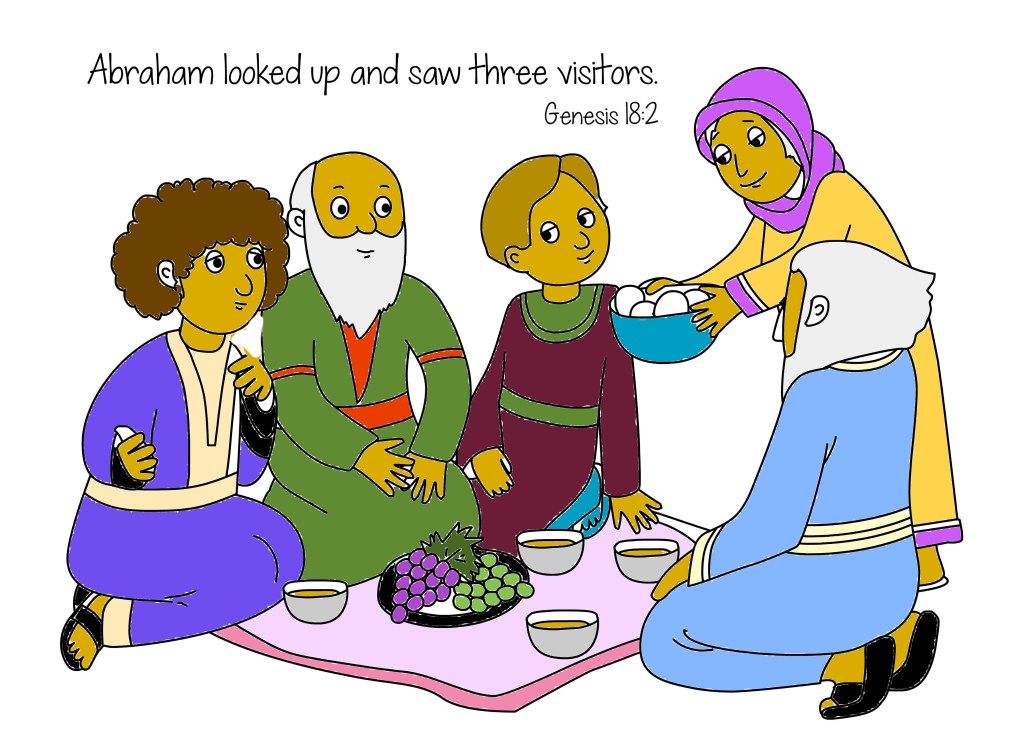
Our first reading refers to Genesis and God’s promise to Abraham of land and posterity. Through his hospitality to three disguised angels, Abraham secures God’s promise to bless Sara and him with a child.
In today’s second reading from Colossians, Paul assures us that God has brought that promise to its full completion in the gift of Jesus Christ living in us.
…the mystery hidden from ages and from generations past has now been manifested to his holy ones, to whom God chose to make known the riches of the glory of this mystery among the Gentiles; it is Christ in you, the hope for glory.
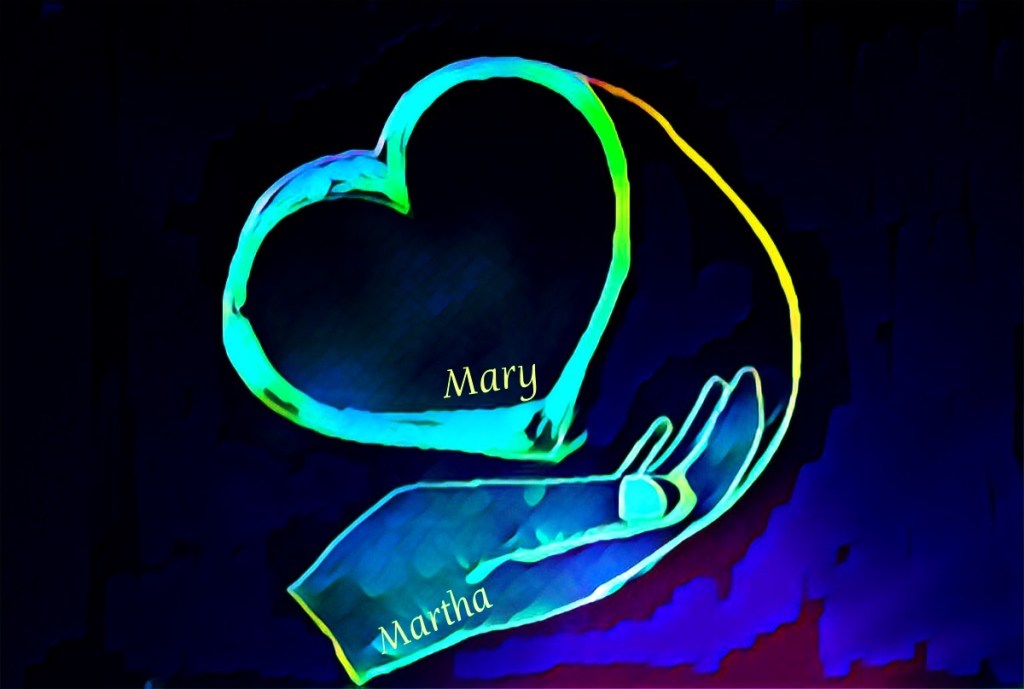
In our Gospel, Jesus encourages Martha to give her attention to the presence of this promise revealed in her life. Mary sees the promise fulfilled in Jesus, the living presence of God. She gives her full heart to it. Martha, maybe like us sometimes, is preoccupied by other distractions.
Our readings invite us to rejoice in God’s promise to us of “land” and “posterity”. In Jesus, we are brought home to God. In Jesus, the fruitfulness of our life is eternally secured.
We make promises to God too.
When our Sisters die, our vows rest near us for our wakes – a profound symbol of promises given and promises fulfilled. Today, as we pray about God’s faithful promises to us, we might want to reflect on and deepen the commitments of our Baptism, our religious profession, our marriage, our covenants to communities of faith and service.
Like Martha, we might hear Jesus encourage us to give our fullest heart to that which is most important.
As Jesus taught the gathered brothers and Martha boiled and baked their dinner, Mary eavesdropped in the anteroom between the great hall and the kitchen. Her dying mother’s warning words clanged clearly in her memory— “Obey your sister. She has learned the ways and duties of a woman.”
She’d learned her sister’s lessons well and knew a woman’s place was not to sit and listen and be taught. But when she heard the voice of Jesus call to her above the din of Martha’s boiling pots and pans, she made her choice decisively— took off her apron and traditions, and walked in.
Alleluia, alleluia. My sheep hear my voice, says the Lord; I know them, and they follow me.
Today, in God’s Lavish Mercy, our readings are woven through with themes of life and death, time and eternity. These are fundamental realities at the core of our lives. Yet they are so huge in scope that they elude our comprehension.
How often do we ask ourselves, “Where did the time, the day, the years go”?
Despite all our acts of faith, aren’t we still undone by death and bereavement in our lives?
When we try to imagine heaven, doesn’t the image slip through our efforts like a wet sunfish lost back to the sea?
In our first reading, Hezekiah faces the same kind of bewilderment. Informed that he is about to die, he laments:
“O LORD, remember how faithfully and wholeheartedly I conducted myself in your presence, doing what was pleasing to you!” And Hezekiah wept bitterly.
Hezekiah’s pleading gains him another fifteen years. (Would that our prayers could so prevail!) His bonus is delivered accompanied by a sign:
This will be the sign for you from the LORD that he will do what he has promised: See, I will make the shadow cast by the sun on the stairway to the terrace of Ahaz go back the ten steps it has advanced.
In our Gospel, Jesus doesn’t need bonuses or signs. Jesus himself is the embodiment of Life over death, Eternity over time. In today’s passage, the Pharisees try to judge and limit Jesus’s spiritual freedom by invoking the old law against him:
Jesus was going through a field of grain on the sabbath. His disciples were hungry and began to pick the heads of grain and eat them. When the Pharisees saw this, they said to him, “See, your disciples are doing what is unlawful to do on the sabbath.”
Jesus tells them clearly that he is the new law of mercy and love. He is beyond time, death, and the judgments of human law:
I say to you, something greater than the temple is here. If you knew what this meant, I desire mercy, not sacrifice, you would not have condemned these innocent men. For the Son of Man is Lord of the sabbath.
Let’s pray today with our God Who is greater than time, death or human judgments. Let us trust that God has power over any shadow that might darken our lives.
Poetry: The Shadow of Thy Wing – Susan Dickinson (Emily’s sister-in-law)
Weary of life's great mart, its dust and din,
Faint with its toiling, suffering with its sin,
In childlike faith my heart to Thee I bring.
For refuge in "the shadow of thy wing."

Like a worn bird of passage, left behind
Wounded, and sinking, by its faithless kind,
With flight unsteady, seeking needed rest,
I come for shelter to Thy faithful breast.

Like a proud ship, dismantled by the gale,
Her banners lost and rifted every sail,
In the deep waters to Thy love I cling,
And hasten to the refuge of Thy wing.

O Thou, thy people's comforter alway,
Their light in darkness, and their guide by day,
Their anchor 'mid the storm, their hope in calm,
Their joy in pain, their fortress in alarm!

We are all weak, Thy strength we humbly crave;
We are all lost, and Thou alone canst save;
A weary world, to Thy dear arm we cling,
And hope for all a refuge "'neath Thy wing."

- "Original Poetry." Springfield Daily Republican, March 1, 1862
Today, in God’s Lavish Mercy, our Alleluia Verse evokes the tender image of Jesus with innocent little children.
Alleluia, alleluia. Blessed are you, Father, Lord of heaven and earth, you have revealed to little ones the mysteries of the Kingdom.
The verse is so gentle that it may seem out of place following a ferocious first reading. Without exegeting that passage from Isaiah, let’s just say it is all about PRIDE and ARROGANCE toward God’s Will. These two vices are the downfall of the spiritual life.
Their corrective is diagnosed into today’s Gospel. It is to have the simplicity and trust that makes us spiritually childlike – not “childish” – childlike.
This means to recognize that our life is a gift which belongs to our Creator.
It means to trust in that Gift Giver to care for us the way a parent cherishes their child.
It means to be faithful even when we don’t understand and to seek to deepen in our understanding through prayer.
It means to mature to a deep relationship of mutual love with God.
I give praise to you, Father, Lord of heaven and earth, for although you have hidden these things from the wise and the learned you have revealed them to the childlike.
Matthew 11: 25-26
We may wish to pray today considering the simple beauty of the children in our lives. Here are my “grand” inspirations:
Today, in God’s Lavish Mercy, our Alleluia Verse repeats one of the treasured yet challenging Beatitudes:
Alleluia, alleluia. Blessed are they who are persecuted for the sake of righteousness, for theirs is the Kingdom of heaven.
Sometimes, the word “righteous” can fall harshly on the mind. Over the years, it has acquired a tinge of Bible-banging fundamentalism. Even in secular culture, a “self-righteous” person is repellent.
But the “righteousness” which is our heritage from both the Hebrew and Christian scriptures is a caring and dynamic discernment born of Wisdom and Mercy. It is a virtue the disciple seeks in imitation of the Beloved.
Israel’s characteristic grammar in speaking of Yahweh, governed by active verbs, regularly insisted that Yahweh is a major player in Israel’s life and in the life of the world. Yahweh’s characteristic presentation in Israel’s rhetoric is that Yahweh acts powerfully, decisively, and transformatively. Yahweh is morally serious and demanding, so that Yahweh is endlessly attentive to distinctions of good and evil, justice and injustice. Indeed, it is palpable power and moral seriousness that distinguish Yahweh from all rival gods, who have no power to act decisively and no capacity for moral distinctions.
In our first reading, we meet this righteous God who is fed up with the people’s dissembling.
When you come in to visit me, who asks these things of you? Trample my courts no more! Bring no more worthless offerings; your incense is loathsome to me.
Isaiah 1: 12-13
Instead, Isaiah’s God states clearly what makes one righteous:
Put away your misdeeds from before my eyes; cease doing evil; learn to do good. Make justice your aim: redress the wronged, hear the orphan’s plea, defend the widow.
Isaiah 1: 16-17
Jesus tells us that it’s not easy to be such a person. You’re going to suffer for your acts of justice and mercy because we live in a world that honors vengeance and oppression instead. You’re going to be insulted, mocked and ostracized for your righteousness – for your desire to “right-balance” life for all human beings.
Brueggemann tells us that, nevertheless, this is our call:
The purpose of human life, a life of vocation, fellowship, and witness is to attest the truth of God’s solidarity with is, that is in justice, righteousness, compassion, steadfast love, and faithfulness.
Poetry: A Psalm of Life – Henry Wadsworth Longfellow
Anyone with a little interest in English poetry, must have had this poem etched into memory; hence no guesses about Longfellow’s best poem. Such is its evocative eloquence, such is its superior effect on every person regardless of class, religion and nationality that it transcends the boundaries of a mere song, and in the right sense, transforms into a psalm – a path to be followed for glorified and righteous life. Recited at Senate meetings, public gatherings and even at churches, this poem is sometimes speculated to have inspired Longfellow after he had come across a board in a German graveyard. Certainly his greatest, ‘Psalm of Life’ seems to have varied ideas where each quatrain is a guideline in itself. (from classical poets.org)
A Psalm of Life – (1839) What the Heart of the Young Man Said to the Psalmist
Tell me not, in mournful numbers, Life is but an empty dream! For the soul is dead that slumbers, And things are not what they seem.
Life is real! Life is earnest! And the grave is not its goal; Dust thou art, to dust returnest, Was not spoken of the soul.
Not enjoyment, and not sorrow, Is our destined end or way; But to act, that each to-morrow Find us farther than to-day.
Art is long, and Time is fleeting, And our hearts, though stout and brave, Still, like muffled drums, are beating Funeral marches to the grave.
In the world’s broad field of battle, In the bivouac of Life, Be not like dumb, driven cattle! Be a hero in the strife!
Trust no Future, howe’er pleasant! Let the dead Past bury its dead! Act,—act in the living Present! Heart within, and God o’erhead!
Lives of great men all remind us We can make our lives sublime, And, departing, leave behind us Footprints on the sands of time;
Footprints, that perhaps another, Sailing o’er life’s solemn main, A forlorn and shipwrecked brother, Seeing, shall take heart again.
Let us, then, be up and doing, With a heart for any fate; Still achieving, still pursuing, Learn to labor and to wait.
Music: I just had to offer a beautiful song from the Righteous Brothers on this “righteous” day. 🙂
I believe for every drop of rain that falls A flower grows I believe that somewhere in the darkest night A candle glows I believe for everyone who goes astray Someone will come To show the way I believe, I believe
I believe above a storm the smallest prayer Can still be heard I believe that someone in the great somewhere Hears every word
Every time I hear a new born baby cry Or touch a leaf or see the sky Then I know why, I believe
Today, in God’s Lavish Mercy, our readings take us on a centuries-long journey from Sinai nearly to the foot of Calvary.
Our guideline for the pilgrimage is the Word:
given first to Moses
cherished in Psalms
and finally revealed in the full glory of the Incarnated Christ.
Throughout the ages, each of us receives the same direction to holiness as that given by Moses thousands of years ago:
If only you would heed the voice of the LORD, your God…
The young man in today’s Gospel requests such direction straight from the mouth of Jesus. And he receives it in the form of an iconic story which holds in simplicity all the ponderous theology of the ages:
Which of these three, in your opinion, was neighbor to the robbers’ victim?” He answered, “The one who treated him with mercy.” Jesus said to him, “Go and do likewise.”
With this story, Jesus translates into action that age-old Biblical Word:
Hear Mercy
Love Mercy
Do Mercy
Become Mercy
Poetry: Ramadan – Erik K. Taylor
It was the month of Ramadan,
the month when Muslims fast.
From the day’s first light,
when they could tell a white thread from a black one,
until evening hid the difference again,
they did not eat, did not drink, and
– here in rural Liberia –
did not even swallow their own spit.

We were three thousand miles from home
when the telegram came.
My mother’s father had died.

From Gbapa, three miles away,
five dark-skinned Mandingo men
came walking to our house.
Students from her English class,
a class in a building with mud-brick walls
and a tin roof that pinged in the rain.
She drove to them several nights each week,
teaching them to write “hut” and “mat” and “cat,”
drawing little pictures beside the words.

But this day, they came to her,
walking over dusty, rust-colored roads,
under the African sun.
They came to sit with her,
to offer what comfort they could.

We could not offer them water or coke or tea.
For a few hours they sat, talking in soft voices,
stepping out occasionally to spit.
Then home again…
waiting for black and white to merge back into one.

Someone once asked Jesus
what it meant to love our neighbor.
He said it was to be those men.
Today, in God’s Lavish Mercy, our Alleluia Verse makes an amazing promise.
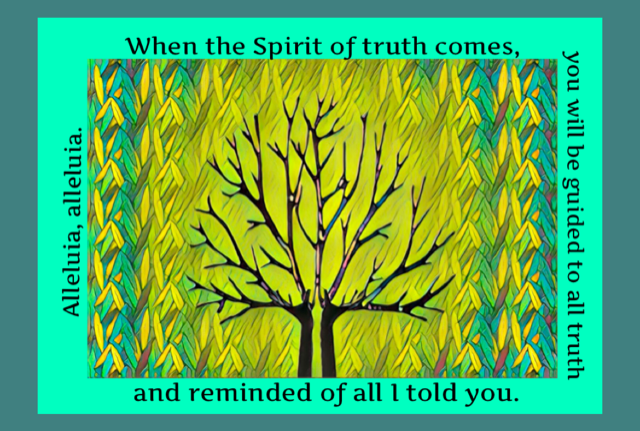
Alleluia, alleluia. When the Spirit of truth comes, you will be guided to all truth and reminded of all I told you.
John 16:13-14
We will be guided and re-minded by the Spirit of God! We will have a refreshed mind and sense of sacred purpose!
Perhaps like Hosea’s community, we have been exhausted, “collapsed” from a lack of grace and spiritual vitality. The lack may be within or around us, from our own negligence or from a world too heavy with evil. But Hosea proclaims that, if we turn to God with our “words” – our prayer – God will respond:
I will be like the dew for my beloved: who shall blossom like the lily; who shall strike root like the Lebanon cedar, and put forth abundant shoots. My dear one’s splendor shall be like the olive tree with a fragrance like the Lebanon cedar.
Hosea 14: 6-7
Jesus continues and fulfills that promise in his own time and in ours. We live in a world still plagued by the sinfulness Jesus describes for his disciples in today’s Gospel. It is an overwhelming darkness at times and we can become heavy with it. We may feel we have no strength to stand against it, nor words to speak for change.
Jesus assures us that the refreshing “dew” of Hosea is abundantly available to us through our life in the Holy Spirit.
Do not worry about how you are to speak or what you are to say. You will be given at that moment what you are to say. For it will not be you who speak but the Spirit of your God speaking through you.
Matthew 10:19-20
Let’s not take that amazing gift and promise for granted. Let’s not fail to believe that the Spirit of Truth is with us to guide and remind us of our immense power for good.
Poetry: The World Is Too Much With Us – William Wordsworth
The world is too much with us; late and soon,
Getting and spending, we lay waste our powers;—
Little we see in Nature that is ours;
We have given our hearts away, a sordid boon!
This Sea that bares her bosom to the moon;
The winds that will be howling at all hours,
And are up-gathered now like sleeping flowers;
For this, for everything, we are out of tune;
It moves us not. Great God! I’d rather be
A Pagan suckled in a creed outworn;
So might I, standing on this pleasant lea,
Have glimpses that would make me less forlorn;
Have sight of Proteus rising from the sea;
Or hear old Triton blow his wreathèd horn.
Today, in God’s Lavish Mercy, our Alleluia Verse encapsulates the message of the readings: Christ is the Source of our peace and our abundance.
Alleluia, alleluia. Let the peace of Christ control your hearts; let the word of Christ dwell in you richly.
Colossians 3:15-16
Isaiah describes that peace and abundance like this:
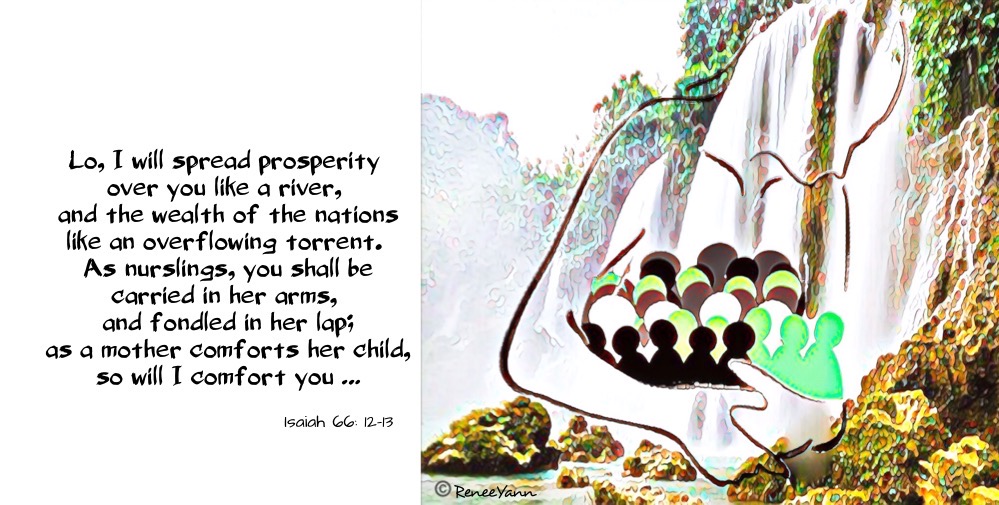
For thus says the LORD: Lo, I will spread prosperity over Jerusalem like a river, and the wealth of the nations like an overflowing torrent. As nurslings, you shall be carried in her arms, and fondled in her lap; as a mother comforts her child, so will I comfort you; in Jerusalem you shall find your comfort.
Isaiah 66: 12-13
In Galatians, we meet a community that has been arguing over a few things, but especially whether circumcision should continue to be a mark of faith. Paul sounds a little frustrated with the argument.
He claims his “peace and abundance” from the marks of his long ministry and what he has suffered for Christ:
From now on, let no one make troubles for me; for I bear the marks of Jesus on my body.
Galatians 6:17
In Luke, Jesus indicates that “peace and abundance” will be spread in the New Creation through the sometimes difficult ministry of his disciples:
Go on your way; behold, I am sending you like lambs among wolves. Carry no money bag, no sack, no sandals; and greet no one along the way. Into whatever house you enter, first say, ‘Peace to this household.’ If a peaceful person lives there, your peace will rest on him; but if not, it will return to you.
Luke 10: 3-9
The Gospel message meant to bring peace will, no doubt, bring fear and judgement to those hostile to it:
The kingdom of God is at hand for you.
If we sincerely open our hearts to this message, how might it affect our daily lives? Peace and abundance? A frantic need for repentance? Or maybe just an angry, indifferent, or deaf ear?
Alleluia, alleluia. Let the peace of Christ control your hearts; let the word of Christ dwell in you richly.
Poem: one of my favorite poems, The Heart Cave by Geoffrey Brown
The Heart Cave
I must remember
To go down to the heart cave
& sweep it clean; make it warm
with a fire on the hearth,
& candles in their niches,
the pictures on the walls
       glowing with a quiet light.
       I must remember
To go down to the heart cave
       & make the bed
with the quilt from home,
strew
the rushes on the floor
hang
lavender and sage
         from the corners.
         I must go down
Today, in God’s Lavish Mercy, our Alleluia Verse paints the dynamic picture of Christ’s relationship with those who follow him. With due respect to the ancient “shepherd” image, the verse might speak to us better like this:
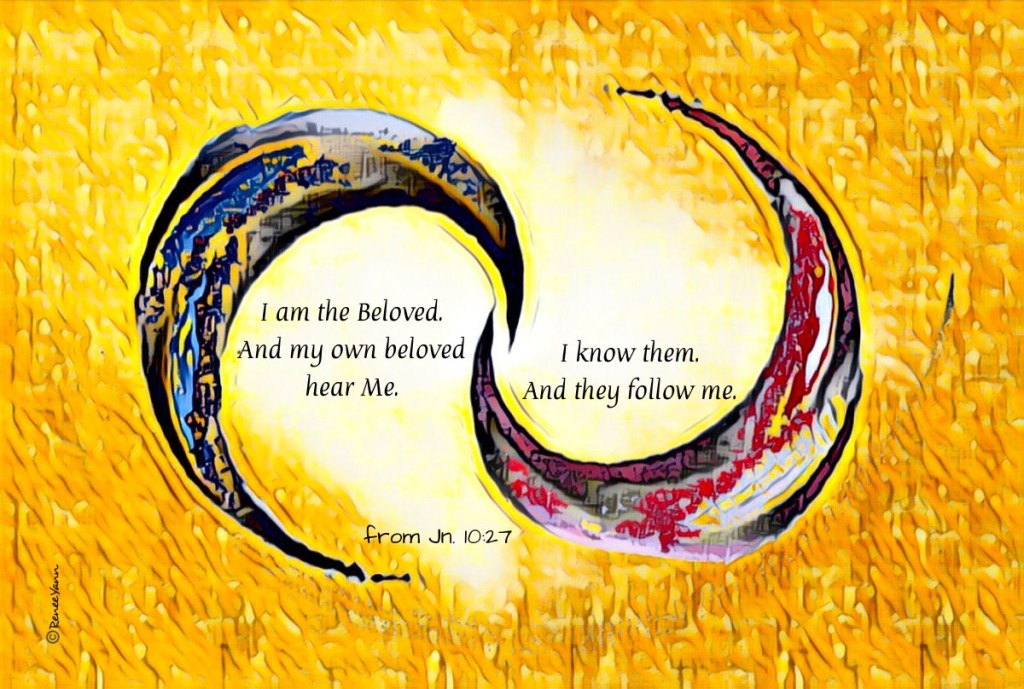
Alleluia, alleluia. My beloved hear my voice, says the Lord; I know them, and they follow me.
In our readings today, we see the cycle of grace and resistance worked out in the lives of the ancients. Our passage from Amos talks about the full restoration of Israel to a place in God’s favor. Our Gospel shows that those with closed hearts cannot receive the lavish mercy of God given to us in the gift of Jesus.
What about us? Can we open ourselves to that powerful grace? Can we respond in reciprocity to this Divine invitation:
I am the Beloved. And my own beloved hear Me. I know them. And they follow me.
Poetry: TO LIVE WITH THE SPIRIT – Jessica Powers
To live with the Spirit of God is to be a listener. It is to keep the vigil of mystery, earthless and still. One leans to catch the stirring of the Spirit, strange as the wind’s will.
The soul that walks where the wind of the Spirit blows turns like a wandering weather-vane toward love. It may lament like Job or Jeremiah, echo the wounded hart, the mateless dove. It may rejoice in spaciousness of meadow that emulates the freedom of the sky.
Always it walks in waylessness, unknowing; it has cast down forever from its hand the compass of the whither and the why.
To live with the Spirit of God is to be a lover. It is becoming love, and like to Him toward Whom we strain with metaphors of creatures: fire-sweep and water-rush and the wind’s whim. The soul is all activity, all silence; and though it surges Godward to its goal, it holds, as moving earth holds sleeping noonday, the peace that is the listening of the soul.
Alleluia, alleluia. You are Peter and upon this rock I will build my Church, and the gates of the netherworld shall not prevail against it.
I, Paul, am already being poured out like a libation, and the time of my departure is at hand. I have competed well; I have finished the race; I have kept the faith.
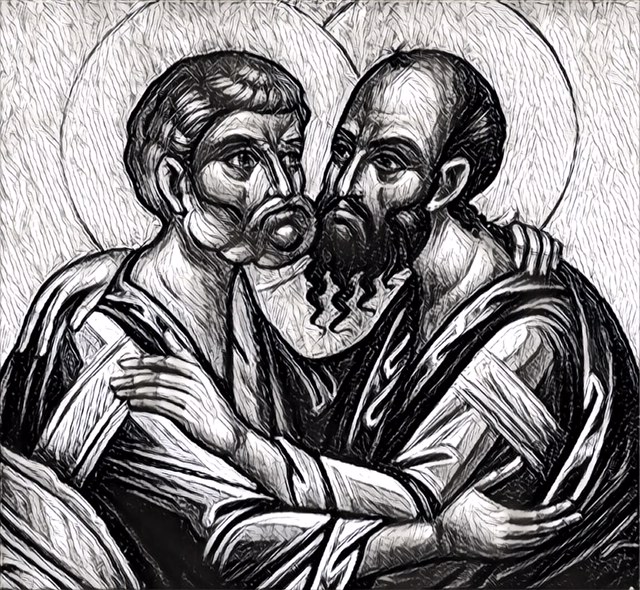
Today, in God’s Lavish Mercy, we celebrate the great Apostles Peter and Paul. The stories of these men embody all the hills and valleys of a Christian life, albeit to majestic scale: call, conversion of heart, ministry, miracles, sacrifice, suffering, failure and glory.
Every human being passes through these hills and valleys. Why do some emerge as saints for the ages and others not?
Today’s readings would suggest this answer: they believed, and submitted their hearts to God’s unimaginable grace and power. Through that faith, they ultimately were led to the heights of holiness and carried the rest of us believers with them.
Paul says,
“The Lord stood by me and gave me strength, so that through me the proclamation of the Word might be completed.”
When Jesus asks Peter what he believes, Peter says,
“You are the Christ, the Son of the living God.”
Ordinary men responding with a clear and extraordinary faith. May their lives and legacies bless and teach us.
Poetry: Two wonderful sonnets from Malcolm Guite
If you love Malcolm Guite’s poetry as much as I do, you might enjoy his blog found at this link:
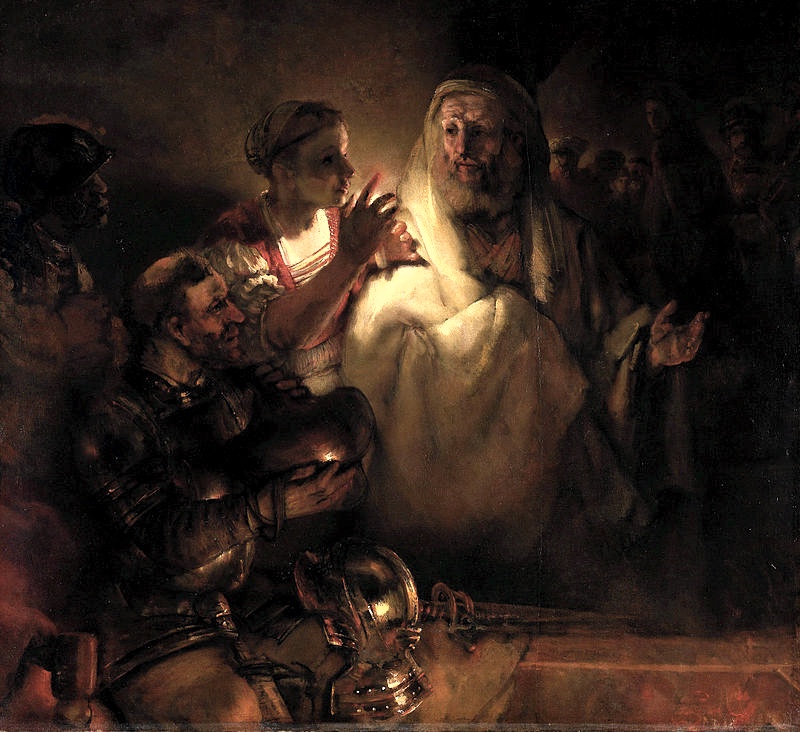
Impulsive master of misunderstanding
You comfort me with all your big mistakes;
Jumping the ship before you make the landing,
Placing the bet before you know the stakes.
I love the way you step out without knowing,
The way you sometimes speak before you think,
The way your broken faith is always growing,
The way he holds you even when you sink.
Born to a world that always tried to shame you,
Your shaky ego vulnerable to shame,
I love the way that Jesus chose to name you,
Before you knew how to deserve that name.
And in the end your Saviour let you prove
That each denial is undone by love.
Apostle
Caravaggio’s Conversion of Saul
An enemy whom God has made a friend,
A righteous man discounting righteousness,
Last to believe and first for God to send,
He found the fountain in the wilderness.
Thrown to the ground and raised at the same moment,
A prisoner who set his captors free,
A naked man with love his only garment,
A blinded man who helped the world to see,
A Jew who had been perfect in the law,
Blesses the flesh of every other race
And helps them see what the apostles saw;
The glory of the lord in Jesus’ face.
Strong in his weakness, joyful in his pains,
And bound by love, he freed us from our chains.
Music: Nunc scio vere (Now I am sure…) – Introit from today’s liturgy
Today, in God’s Lavish Mercy, our Alleluia Verse, like so many of the Psalms, encourages us to TRUST.
“24” was an action-packed show popular a couple of decades ago. In that TV series, the protagonist was played by a tough Kiefer Sutherland. Iconic to each episode was his repeated assurance to his allies, “Trust me”. Doing so would supposedly get them out of every possible kind of fix!
Trusting him usually brought a few hairy escapes, gunfights and explosions. And I guess it can feel like that sometimes when we think we trust God. But it shouldn’t.
Real and full trust in God yields deep peace which then impels us to act for justice and mercy.
Alleluia, alleluia. I trust in the LORD; my soul trusts in God’s word.
Our readings this week from the prophet Amos portray a morally confused community who are tumbling toward God’s wrath. The prophet uses stunning imagery to declare his warning and to call the people to a repentance which acts for justice toward the poor and suffering.
The prophet speaks in imagery. The point is not a literal one. The point, rather, is to recognize that the cost of a disordered public life is inescapably very great. The cost cannot be denied or understated.
Walter Brueggemann
We too as a global community, and as individuals, are called to live lives ordered on God’s Law – lives patterned on justice, mercy, and love for all people.
How do you think we’re doing with that? I think Amos would have preaching tirade if he lived in our day!
But as our Alleluia Verse and our Gospel indicate, a first step toward redemption is TRUST. God is with us. Jesus is “in our boat”. These passages encourage us to get to know, understand, and trust God’s Presence through growing familiarity with the Word.
Once our spirits rest in this kind of assurance, we will have the freedom and courage not only to face ourselves, but to act for true justice, mercy, and love for every person.
Poetry: Poem 8 – Hadewijch of Antwerp, a 13th century mystic and poet.
Born is the new season as the old one that lasted so long is drawing to a close.
Those prepared to do love’s service will receive her rewards: new comfort and new strength.
If they love her with the vigor of love, they will soon be one with love in love.
To be one with love is an awesome calling and those who long for it should spare no effort.
Beyond all reason they will give their all and go through all.
For love dwells so deep in the womb of the Father that her power will unfold only to those who serve her with utter devotion.
First the lover must learn charity and keep God’s law.
Then he shall be blessed a hundredfold, and he shall do great things without great effort, and bear all pain without suffering.
And so his life will surpass human reason indeed.
Those who long to be one with love achieve great things, and shirk no effort.
They shall be strong and capable of any task that will win them the love of love, to help the sick or the healthy, the blind, the crippled or the wounded.
For this is what the lover owes to love.
He shall help the strangers and give to the poor and soothe the suffering whenever he can.
He shall pay loyal service to God’s friends, to saints and men, with a strength that is not human, by night and by day.
And when his strength seems to falter he will still place his trust in love.
Those who trust in love with all their being shall be given all they need.
For she brings comfort to the sad and guidance to those who cannot read.
Love will be pleased with the lover if he accepts no other comfort and trusts in her alone.
Those who desire to live in love alone with all their might and heart shall so dispose all things that they shall soon possess her all.
Music: Sleep in the Storm – by Unspoken Music
(Captures the essence of today’s Gospel where Jesus sleeps in a gusty storm – TRUST!)











 Lavish Mercy