Wednesday of the Fifth Week of Easter

May 5, 2021

Today, in God’s Lavish Mercy, we pray with Psalm 122 which celebrates the beauty and stability of Jerusalem as a symbol of God’s enduring faithfulness to us.

I rejoiced because they said to me,
    “We will go up to the house of the LORD.”
And now we have set foot
    within your gates, O Jerusalem.

Psalm 122:1-2

Think of the peace this psalm brought to its reciters – the kind of peace we seek in a confusing world.

The disciples in our passage from Acts sought the same kind of peace. As the early Church – the “New Jerusalem” – developed, and diverse converts joined the community, everyone had an opinion about that development. We all know what that’s like! 😉


Many of us have been in discussions about how to use church/community resources, respond to new initiatives, or celebrate liturgy. While it’s great to have expanded energy in the discussion, it can be exhausting, particularly if some opinions are uninformed by prayer, justice, or humility.


The real issue for the early Christians wasn’t simply circumcision. The core challenge was how to remain true to the Gospel as it met the first of many generations of interpretation. To do so, they returned to the “compact unity of Jerusalem”. They held fast to the roots of Jesus’s teaching.

Jerusalem, built as a city
    with compact unity.
To it the tribes go up,
    the tribes of the LORD.

Psalm 122: 3-4

The topic of circumcision has long since been resolved by gathering the community in prayerful discernment and humble obedience. But as the ages pass, the Christian community will forever be called to return/remain in the “Jerusalem” of Christ’s teaching.

We do so by continually returning to the roots of the Gospel. That’s what it means to live in radical faith.

Remain in me, as I remain in you.
Just as a branch cannot bear fruit on its own
unless it remains on the vine,
so neither can you unless you remain in me.
I am the vine, you are the branches.
Whoever remains in me and I in him will bear much fruit,
because without me you can do nothing.

John 15: 4-5

May we constantly grow
in our love, understanding,
and obedience to the Gospel
so that we more fully contribute
to our community of faith.

Poetry: Palm Sunday by Malcolm Guite

Now to the gate of my Jerusalem,
The seething holy city of my heart,
The saviour comes. But will I welcome him?
Oh crowds of easy feelings make a start;
They raise their hands, get caught up in the singing,
And think the battle won. Too soon they’ll find
The challenge, the reversal he is bringing
Changes their tune. I know what lies behind
The surface flourish that so quickly fades;
Self-interest, and fearful guardedness,
The hardness of the heart, its barricades,
And at the core, the dreadful emptiness
Of a perverted temple. Jesus, come
Break my resistance and make me your home

Music: Pray for the Peace of Jerusalem – Herbert Howells

Lyrics:

O pray for the peace of Jerusalem.
They shall prosper that love thee.
Peace be within they walls
And plenteousness within thy palaces.
Psalm 122 vv. 6, 7

Tuesday of Fifth Week of Easter

May 4, 2021

Today, in God’s Lavish Mercy, we pray with Psalm 145 which reveals a wonderful secret – how to be a Friend of God:

Pope Francis describes friendship with God in a recent Angelus address:

God is not a distant and anonymous being: God is our refuge, the wellspring of our peace and tranquility. God is the rock of our salvation, to which we can cling with the certainty of not falling; one who clings to God never falls! God is our defence against the evil which is ever lurking. God is a great friend, ally, parent to us, but we do not always realize it. We do not realize that we have a friend, an ally, a parent who loves us, and we prefer to rely on immediate goods that we can touch, on contingent goods, forgetting and at times rejecting the supreme good, which is the  love of God. Feeling that God is our Parent, in this epoch of orphanhood, is so important! In this orphaned world…


The early Christians persevered in unfolding this secret as told in Acts today:

After they had proclaimed the good news to that city
and made a considerable number of disciples,
they returned to Lystra and to Iconium and to Antioch.
They strengthened the spirits of the disciples
and exhorted them to persevere in the faith, saying,
“It is necessary for us to undergo many hardships
to enter the Kingdom of God.”

Acts 14: 21-22

In our Gospel, Jesus speaks to his disciples before his Ascension. He gives them the secret of hope, peace and encouragement. In that gift, they will stay true friends to him as he is to them:

And now I have told you this before it happens,
so that when it happens you may believe.
I will no longer speak much with you,
for the ruler of the world is coming.
He has no power over me,
but the world must know that I love the Father
and that I do just as the Father has commanded me.

John 14: 29-31

May we live joyfully as Friends of God, confident of and making known God’s merciful Name by our faith, love, mercy, generosity, and hope.

May my mouth speak the praise of the LORD,
    and may all flesh bless God’s holy name forever and ever.

Psalm 145: 21

Poetry: I Am – Rainer Maria Rilke

I am, you anxious one. Do you not hear me
rush to claim you with each eager sense?
Now my feelings have found wings, and, circling,
whitely fly about your countenance.

Here my spirit in its dress of stillness
stands before you, — oh, do you not see?
In your glance does not my Maytime prayer
grow to ripeness as upon a tree?

Dreamer, it is I who am your dream.
But would you awake, I am your will,
and master of all splendor, and I grow
to a sphere, like stars poised high and still,
with time’s singular city stretched below.


Music: Friend of God written by Israel Houghton and sung by the Brooklyn Tabernacle Choir

I am a friend of God
He calls me friend

Who am I that You are mindful of me?
That You hear me when I call
Is it true that You are thinking of me?
How You love me
It's amazing

Who am I, Lord
Who am I that You are mindful of me?
That You hear me when I call (is it true O Lord?)

Is it true that You are thinking of me?
How You love me (it's amazing Jesus)
It's amazing (I am a friend of God)
I am a friend of God ....(repeated)

What a priviledge it is, yeah
Who am I that You are mindful of me?
That You hear me when I call (is it true, is it true?)
Is it true that You are thinking of me? 

(Oh Lord sometimes I don't understand)
How You love me (how You love me Lord?)
It's amazing (oh it's so amazing)
It's amazing (Lord it's so amazing)
It's amazing
I am a friend of God

(These phrases are repeated with lots of praise in between.
I hope you feel it too!❤️😇)

Feast of Saints Philip and James, Apostles

May 3, 2021


Today, in God’s Lavish Mercy, we pray with Psalm 19 in which the psalmist draws on nature’s beauty to praise God.

The heavens declare the glory of God;
    and the firmament proclaims his handiwork.
Day pours out the word to day;
    and night to night imparts knowledge.

Psalm 19: 2-3

Psalm 19 is used today to highlight the apostolic work of Philip and James who chose to declare the Gospel by their lives.

We note that these men are no longer called simply “disciples” or learners of the Word. They are now “apostles”, charged with spreading the Word for the benefit of all.

In our Christian vocations, we each are called to live both these aspects of our call. We are continual learners of the faith through our prayer, reading, and listening.  At the same time, we have an apostolic charge to spread the Gospel by the way we live.


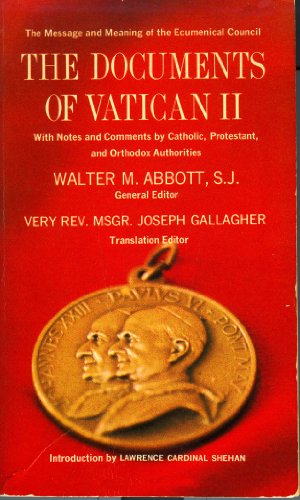
This double call was clearly proclaimed through Vatican II in the magnificent document Lumen Gentium, the Dogmatic Constitution on the Church.

I remember with great joy how this document, with its companions, released a surge of enthusiastic faith in the People of God when published in the 1960s. Many of us read and re-read our paperback copies of the Documents until they have long since fallen apart.

There is a Kindle edition available, but now when I want to be refreshed by their power, I access them for free on my iPad at the Vatican site:


Here is a favorite passage I used today to inform my prayer on this feast of two apostles

Lumen Gentium
(The Dogmatic Constitution on the Church)
promulgated by Pope Paul VI

The laity are gathered together in the People of God and make up the Body of Christ under one head. Whoever they are they are called upon, as living members, to expend all their energy for the growth of the Church and its continuous sanctification, since this very energy is a gift of the Creator and a blessing of the Redeemer.

The lay apostolate, however, is a participation in the salvific mission of the Church itself. Through their baptism and confirmation all are commissioned to that apostolate by the Lord. Moreover, by the sacraments, especially Holy Eucharist, that charity toward God and our brothers and sisters which is the soul of the apostolate is communicated and nourished. Now the laity are called in a special way to make the Church present and operative in those places and circumstances where only through them can it become the salt of the earth. Thus every lay person, in virtue of the very gifts bestowed upon them, is at the same time a witness and a living instrument of the mission of the Church itself “according to the measure of Christ’s bestowal”.

Besides this apostolate which certainly pertains to all Christians, the laity can also be called in various ways to a more direct form of cooperation in the apostolate of the Hierarchy. This was the way certain men and women assisted Paul the Apostle in the Gospel, laboring much in the Lord. Further, they have the capacity to assume from the Hierarchy certain ecclesiastical functions, which are to be performed for a spiritual purpose.

Upon all the laity, therefore, rests the noble duty of working to extend the divine plan of salvation to all persons of each epoch and in every land. Consequently, may every opportunity be given them so that, according to their abilities and the needs of the times, they may zealously participate in the saving work of the Church.


This morning’s question:
how am I hearing
and responding
to my apostolic call?

Poetry: An Apostle’s Prayer – Edward Henry Bickersteth, Bishop of Exeter (1825-1906)

My God, my Father, let me rest
In the calm sun-glow of Thy face,
Until Thy love in me express’d
Draws others to Thy throne of grace.

O Jesu, Master, let me hold
Such secret fellowship with Thee,
That others, careless once and cold,
Won to my Lord and theirs may be.

Eternal Spirit, heavenly Dove,
The light of life to me impart,
Till fire descending from above
Burns on and on from heart to heart.

O Father, Son, and Holy Ghost,
Still, still may love to love respond;
And teach me, when I love Thee most,
Depths all unfathom’d lie beyond.

Music: The Call – from Five Mystical Songs – Vaughan Williams

Come, my Way, my Truth, my Life:
such a way as gives us breath;
such a truth as ends all strife;
such a life as killeth death.

Come, my Light, my Feast, my Strength:
such a light as shows a feast;
such a feast as mends in length;
such a strength as makes a guest.

Come, my Joy, my Love, my Heart:
such a joy as none can move:
such a love as none can part;
such a heart as joys in love.

Fifth Sunday of Easter

May 2, 2021

Today, in God’s Lavish Mercy, we pray with Psalm 22 which captures the message of all our readings this Sunday: how we receive, cherish, grow and share our faith.

When I read these passages this morning, an image came to my mind.

Sister Bernard Mary was a special, and rather unique Sister of Mercy. Born in 1917, and a true representative of “The Greatest Generation”, she served as a Navy nurse in WWII. Afterward she joined the Sisters of Mercy and lived a long life of expert care in our hospitals and other institutions. Among her many clinical talents, she was the supreme phlebotomist. She could stick even a difficult vein with you never ever noticing the pinch.


When Bernard died at the age of 91, a lone sailor stood in our community cemetery to bugle “Taps” over her flag-draped coffin. The melody captured all the singular simplicity of her dedicated and faithful ministry, sending it to heavens that welcomed her.

Bernard was one of those iconic sisters whose life was fully focused on her faith and ministry. She worked every day, all day and, as far as I could tell, had few other interests than a love of her family. 


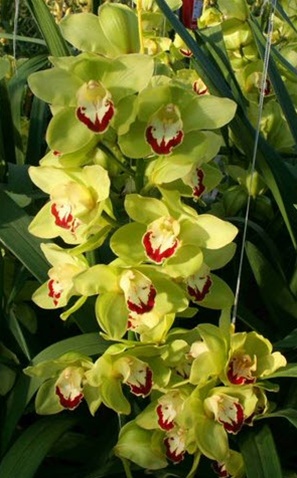
But she had an orchid plant. And it was a doozy. Given the plant as a small gift, she had nurtured that flower like the practiced healer that she was. She understood it, spoke to it, listened to it, responded to it, providing it deeper roots as it grew to an impressive size.  Like any plant, it went through cycles. Bernard patiently accompanied and nourished it through every one.

As a result, the orchid was huge and astoundingly beautiful – to the point that each year, it would be entered in the Philadelphia Flower Show. At least on one occasion, it won first prize!

(The Philadelphia Flower Show is an annual event produced by The Pennsylvania Horticultural Society. Said to be the “largest indoor flower show in the world”, it attracts more than a quarter million people annually.)


The image? That magnificent plant was a symbol – the visible expression of Bernard’s quiet but powerful faith.

Let’s consider our own faith. It’s a gift. It deserves our complete and loving attention. It must remain deeply rooted within us.  And it should be displayed for the benefit of others through our loving and merciful ministry to those in need.

Psalm 22 says so:

I will offer praise in the great assembly;
my vows I will fulfill before those who reverence the Lord.

The needy will eat their fill;
those who seek the LORD will offer praise.
May your hearts enjoy life forever!

Psalm 22: 26-27

The Acts of the Apostles says so:

The church throughout all Judea, Galilee, and Samaria was at peace.
It was being built up and walked in the fear of the Lord,
and with the consolation of the Holy Spirit it grew in numbers.

Acts 9:31

John’s letter says so:

And God’s commandment is this:
we should believe in the name of the Son, Jesus Christ,
and love one another just as commanded us.
Those who keep these commandments remain in himGod, and God in them,
and the way we know that God remains in us
is from the Spirit he gave us.


And our Gospel today says so:

Remain in me, as I remain in you.
Just as a branch cannot bear fruit on its own
unless it remains on the vine,
so neither can you unless you remain in me.
I am the vine, you are the branches.
Whoever remains in me and I in him will bear much fruit,
because without me you can do nothing.

John 15: 4-5

Dear Bernard, simple, faithful sister – you taught me so many things without your ever realizing it… thank you!


Poetry: Re-planting – Renee Yann,RSM

That afternoon,
winter framed sunlight
in the cold windows.

I watched you spread small greens
across a wooden table,
fingering their thready roots
like harp strings.

A song fell from that,
like quiet, nurturing rain.
Unable to sing,
I let the song seep quietly into me,
bathing my uprooted soul
in the warm silence between us.

There, in that comfort,
the small cutting at my core
sought earth,
sought healing.

Finally, I spoke
and laid the whole parched root
upon the table of your mercy. And
you, ever-tender gardener, lifted it
and blew the dust away, and
spitting gently in your hand,
massaged the feeble life it hid
before you stood it carefully in soil.

You said, “Life is like this sometimes.
Be gentle with it.  It will bloom again.” 

Music: With An Orchid – Yanni

Saturday of the Fourth Week of Easter

May 1, 2021

Today, in God’s Lavish Mercy, we pray with Psalm 98, an invitation to believe and rejoice in God’s Presence in our lives.

O Lord, You have made known the victory,
You have openly showed your righteousness
in the sight of the nations

Psalm 98: 2-3

In our first reading, as many Jews reject the invitation to Christian faith, the Apostles turn to the Gentiles with their evangelization:

The Gentiles were delighted when they heard this
and glorified the word of the Lord. 
All who were destined for eternal life came to believe,
and the word of the Lord continued to spread
through the whole region.

Acts 13: 48-49

But our Gospel passage reminds us that the exercise of faith demands an openness to God’s presence. Poor Philip seems to be missing the fact that Jesus – God – is right there with him!

Philip’s statement, “Show us the Father and it will be enough for us” translates like this for me: prove everything and then we can believe. I smile at Philip’s simplicity but then realize I am not that different from him. I often ask for proof of God’s Presence in my circumstances completely forgetting the fact that God is already and always there!


When thinking about faith, these two complementary passages both challenge and sustain me. I pray with them often:

Now faith is the substance of things hoped for,
the evidence of things not seen.

Hebrews 11:1

But hope that is seen is not hope.
Who hopes for what they already have?
But if we hope for what we do not yet have,
we wait for it patiently.

Romans 8:24-25

This kind of Resurrection faith and hope allow us to receive and rejoice in the Good News the Apostles preach in Acts today, and to proclaim it as encouraged in our Psalm:

Sing a new song to the Lord, who has done marvellous things,
whose mighty hand and holy arm have won the victory.
O Lord, You remember your mercy and faithfulness toward us,
and all the ends of the earth have seen your victory, O God.
Shout with joy to the Lord, all you lands;
lift up your voice, rejoice and sing.

Psalm 98: 1-4

Poetry: Flickering Mind – Denise Levertov 

Lord, not you
it is I who am absent.
At first
belief was a joy I kept in secret,
stealing alone
into sacred places:
a quick glance, and away -- and back,
circling.

I have long since uttered your name
but now
I elude your presence.
I stop
to think about you, and my mind
at once
like a minnow darts away,
darts
into the shadows, into gleams that fret
unceasing over
the river's purling and passing.

Not for one second
will my self hold still, but wanders
anywhere,
everywhere it can turn.  Not you,
it is I am absent.

You are the stream, the fish, the light,
the pulsing shadow.
You the unchanging presence, in whom all
moves and changes.

How can I focus my flickering, perceive
at the fountain's heart
the sapphire I know is there?

Music: Prayer- From Moses in Egypt, an oratorio by Giaocchino Rossini

In the opera, Moses in Egypt, Moses leads the community in a prayer of hope before the crossing of the Red Sea.

I couldn’t find a suitable English translation, but the original Italian is below. As with many gorgeous operatic arias, I am just as happy not to translate. The music itself speaks and often the actual words pale in comparison. Hear what “speaks” particularly to you in this lovely music.

Dal tuo stellato soglio,
Signor, ti volgi a noi!
Pietà de’ figli tuoi!
Del popol tuo pietà!
Pietà de’ figli tuoi!
Del popol tuo pietà!
Se pronti al tuo potere
Sono elementi, e sfere,
Tu amico scampo addita
Al dubbio, errante piè!
Pietoso Dio! ne aìta’:
Noi non viviam, che in Te!
In questo cor dolente
deh, scendi, o Dio clemente,
e farmaco soave
tu sia di pace almen!
Il nostro cor che pena
deh! tu confronta almen!

Friday of the Fourth Week of Easter

April 30, 2021


Today, in God’s Lavish Mercy, we pray with Psalm 2 which, at the beginning of the Psalter, highlights the centrality of King David to Israel’s faith.

For Christians, the archetype of King David serves as point of insight to explore who Jesus Christ is for us. Of course we know that Christ is God, but we have no direct experience of God. So we try to understand God through symbols which, although inadequate, give us a context to form our relationship with God.

Psalm 2 gives us two such archetypal symbols: king and son. For us, that combination signals not only Christ’s power but the fact that it is directly derived from God. Christ’s power is divine, just as the Creator’s power is divine.

Because of that divine intimacy, the “King-Son” may ask and will receive whatever is requested.


Ask of me and I will give you
    the nations for an inheritance
    and the ends of the earth for your possession.

Psalm 2; 8-9

Christ’s whole life – Passion, Death, and Resurrection – was that Messianic “Ask” foretold in David. Through Jesus, we too become daughters and sons of God. This is the Good News the disciples preach in today’s first reading. 

We ourselves are proclaiming this good news to you
that what God promised our fathers
God has brought to fulfillment for us, their children, by raising up Jesus,
as it is written in the second psalm,
    “You are my Son; this day I have begotten you.”

Acts 13:33

This is the Way, the Truth and the Life that Jesus offers in today’s Gospel.

“Master, we do not know where you are going;
how can we know the way?” 
Jesus said to him, “I am the way and the truth and the life. 
No one comes to the Father except through me.”

John 14: 5-6

The gender-heavy symbols of king and son don’t speak strongly to me, but the image of Christ as my “Requestor” does. I think this morning of another Gospel assurance that I love:

I tell you, whoever believes in me will do the works I have been doing,
and they will do even greater things than these,
because I am going to the Father.
And I will do whatever you ask in my name,
so that the Father may be glorified in the Son.
You may ask me for anything in my name, and I will do it.

John 14: 12-14

Dear Jesus, may we learn what it is
to live fully in your Name.


Music: What a Beautiful Name – Hillsong

Wednesday of the Fourth Week of Easter

April 28, 2021

I came into the world as Light,
so that everyone who believes in Me
might not remain in darkness.

Today’s Gospel – John 12:46

Today, in God’s Lavish Mercy, just this: The Full Pink Moon

O God, be merciful to us and bless us,
show us the Light of your countenance and come to us.

Full Pink Moon – poem by Renee Yann, RSM

Music: Moonlight Sonata – Beethoven 

Tuesday of the Fourth Week of Easter

April 27, 2021

Today, in God’s Lavish Mercy, we pray with Psalm 87 which is both a celebration of and a longing for God’s Presence as symbolized for the psalmist in Jerusalem, Zion, the Temple.

His foundation upon the holy mountains
    the LORD loves:
The gates of Zion,
    more than any dwelling of Jacob.
Glorious things are said of you,
    O city of God!

Psalm 87: 1-3

For the psalmist, who is in exile, Zion was the visible expression of God’s exclusive relationship with Israel – the longed-for Kingdom.


In our reading from Acts, the concept of God’s Kingdom takes a larger shape. Jewish Christians, scattered in persecution, began to share the Good News with Gentiles. Barnabas blesses this sharing. He and Paul spend a year in Antioch teaching these new Christians who will not have the same devotion to “Zion”.


So where is “the Kingdom” now?

Our Gospel shows us Jesus, walking in the Temple portico one winter morning. He stands amidst the very symbols extolled in Psalm 87. He points his listeners, who are still resistant, toward the only true “kingdom”, one he has described before:

Now when He was asked by the Pharisees when the kingdom of God would come, He answered them and said, “The kingdom of God does not come with observation; nor will they say, ‘See here!’ or ‘See there!’ For indeed, the kingdom of God is within you.”

Luke 17: 20-21

We know from the Beatitudes that the “kingdom of God” belongs to the poor and the persecuted:

Blessed are the poor in spirit,
    for theirs is the Kingdom of Heaven…..
……Blessed are those who are persecuted because of righteousness,
    for theirs is the Kingdom of Heaven.


Perhaps there is a touch of biblical irony in the fact that our poor and persecuted psalmist, exiled from beautiful Zion, already possessed the “kingdom” within! But, without the benefit of Jesus’s teaching, it seems he didn’t realize it.

Do we realize it? 


Prose: from Hans Küng

(For my spiritual reading recently , I returned to an old favorite Hans Küng, a revered Catholic priest and Vatican II theologian who died earlier this month. Word of his death took me back to my 1960s heady theology days.🙏😇)

Here are two relevant quotes to our thoughts on “the Kingdom” today:

The meaning of the church does not reside in what it is but in what it is moving towards. It is the reign of God which the church hopes for, bears witness to and proclaims.

Hans Küng: The Church

The kingdom of God is creation healed.

Hans Küng: On Being a Christian

Music: The Holy City, Jerusalem sung by Jessye Norman

Monday of the Fourth Week of Easter

April 26, 2021


Today, in God’s Lavish Mercy, we pray with Psalm 42, the only psalm that opens with a simile, and it is a memorable one:

As the deer longs for streams of water,
so my soul longs for you, O God.

Psalm 42:2

One pictures the psalmist crossing a desert-like expanse, longing for water. A deer wanders across the distance, also showing the effects of a deep, physical thirst. The psalmist is moved by the sight to consider a deeper thirst, that profound longing for God’s consolation and grace.

Athirst is my soul for God, the living God.
    When shall I go and behold the face of God?


Not included in today’s Responsorial Psalm is this stark verse which gives us insight into the depth of the psalmist’s longing. This soul is not just thirsty, but rather desperate to imbibe Grace, yearning to slake a nearly disabling aridity.

My tears have been my bread day and night,
as they ask me every day, “Where is your God?”

Psalm 42: 4A

Psalm 42 is a powerful poem with a deep psychological message about relationship with God, particularly when that relationship suffers shadows.

Luis Alonso Schökel, SJ, professor at the Pontifical Biblical Institute in Rome, offers insight into this depth that may enlighten our own prayer:

(In Psalm 42) the manner of God’s presence is awareness of his absence. Absence which is not noticed nor deeply felt is a simple absence which causes no grief. But absence which is felt is a means of being present in the consciousness, bringing anxiety and grief.

Paradoxically, the taunts of the enemies sharpen the sensation of God’s absence and thus,in the form of nostalgia, increase the sense of God’s presence.

The presence of God in the psalm is pervasive, God’s relationship with the psalmist personal and intimate. This means to say that God communicates most intensely by creating an awareness of his absence (as in the book of Job, throughout the entire construction of the poem on two levels, and explicitly in ch. 23). If communion with God is the meaning of worship, it is difficult to deny that the psalmist worships “in spirit and in truth”…

…With its wealth of structure, its dynamics, its lyrical and dramatic intensity, this psalm exceeds mere classification. In the theme of the eclipse of God and in the lucid consciousness which expresses this theme, the psalm is of especial relevance to our time.

from The Poetic Structure of Psalm 42-43

Music: Quemadmodum (As the hart desireth the waterbrooks…) – John Taverner

In finem. Intellectus filiis Core.
2  Quemadmodum desiderat cervus ad fontes aquarum, ita desiderat anima mea ad te, Deus.
3  Sitivit anima mea ad Deum fortem, vivum; quando veniam et apparebo ante faciem Dei?
4  Fuerunt mihi lacrimae meae panis die ac nocte, dum dicitur mihi quotidie: Ubi est Deus tuus?
5  Haec recordatus sum, et effudi in me animam meam, quoniam transibo in locum tabernaculi admirabilis, usque ad domum Dei, in voce exsultationis et confessionis sonus epulantis.
6  Quare tristis es, anima mea? et quare conturbas me? Spera in Deo, quoniam adhuc confitebor illi, salutare vultus mei,
7  et Deus meus. Ad meipsum anima mea conturbata est: propterea memor ero tui de terra Jordanis et Hermoniim a monte modico.
8  Abyssus abyssum invocat, in voce cataractarum tuarum; omnia excelsa tua, et fluctus tui super me transierunt.
9  In die mandavit Dominus misericordiam suam, et nocte canticum ejus; apud me oratio Deo vitae meae.
10  Dicam Deo: Susceptor meus es; quare oblitus es mei? et quare contristatus incedo, dum affligit me inimicus?
11  Dum confringuntur ossa mea, exprobraverunt mihi per singulos dies: Ubi est Deus tuus?
12  Quare tristis es, anima mea? et quare conturbas me? Spera in Deo, quoniam adhuc confitebor illi, salutare vultus mei, et Deus meus.

1  Like as the hart desireth the water-brooks: so longeth my soul after thee, O God.
2  My soul is athirst for God, yea, even for the living God: when shall I come to appear before the presence of God?
3  My tears have been my meat day and night: while they daily say unto me, Where is now thy God?
4  Now when I think thereupon, I pour out my heart by myself: for I went with the multitude, and brought them forth into the house of God;
5  In the voice of praise and thanksgiving: among such as keep holy-day.
6  Why art thou so full of heaviness, O my soul: and why art thou so disquieted within me?
7  Put thy trust in God: for I will yet give him thanks for the help of his countenance.
8  My God, my soul is vexed within me: therefore will I remember thee concerning the land of Jordan, and the little hill of Hermon.
9  One deep calleth another, because of the noise of the water-pipes: all thy waves and storms are gone over me.
10  The Lord hath granted his loving-kindness in the day-time: and in the night-season did I sing of him, and made my prayer unto the God of my life.
11  I will say unto the God of my strength, Why hast thou forgotten me: why go I thus heavily, while the enemy oppresseth me?
12  My bones are smitten asunder as with a sword: while mine enemies that trouble me cast me in the teeth;
13  Namely, while they say daily unto me: Where is now thy God?
14  Why art thou so vexed, O my soul: and why art thou so disquieted within me?
15  O put thy trust in God: for I will yet thank him, which is the help of my countenance, and my God.

Fourth Sunday of Easter

April 25, 2021


Today, in God’s Lavish Mercy, we pray with Psalm 118.

 “This psalm is centered on God, in a movement that expresses gratitude, admiration, joy and praise. In the King James Version, the Lord is mentioned in almost every verse.” (Wikipedia)

Give thanks to the LORD who is good,
    whose mercy endures forever.
It is better to take refuge in the LORD
    than to trust in humans.
It is better to take refuge in the LORD
    than to trust in princes.

Psalm 118: 1, 8-9

Following our first reading today, the psalm focuses me on God’s Name – often “Lord”, as in the psalm – but also so many other Names of God from the riches of scripture and tradition.

… in the Name of Jesus, this man stands before you healed.
He is the stone rejected by you, the builders,
    which has become the cornerstone.
There is no salvation through anyone else,
nor is there any other name under heaven
given to the human race by which we are to be saved.

Acts 4: 10-12

The fact that we have so many names for God reminds me of how accommodating God is to my need as I pray. 

One day I need “My Rock”.

Another day I delight in “My Dayspring”.

As I wake up each morning and allow the day to embrace me, I often greet God with a special name, depending on the mood and circumstances of my heart:

  • Good morning, Beautiful Light. Take any darkness from our world this day.
  • I greet You, Sweet Lord. Thank you for the delicious gift of life.
  • Cloudy God, you have been hiding from me. Bring me into your Sunshine today.
  • God, my Strong Shoulder, stand by me today.
  • Chilly God, seeming to ignore my prayer, unfreeze my spirit to hear your answer.

Jesus invites us to pray with images that speak to our hearts. In our Gospel, He names himself a Shepherd, an image so accessible to his agrarian listeners, and which said it all without the need for theology!

Jesus said:
“I am the good shepherd.
A good shepherd lays down his life for the sheep.”

John 10:11

As we pray today, within what image is God coming to us? May we let the Holy One speak a sanctifying and special Name over us in our prayer. May it free us just as it freed the man healed in today’s passage from Acts.


Poetry: Six Recognitions of the Lord – Mary Oliver

1.

I know a lot of fancy words.

I tear them from my heart and my tongue.

Then I pray…..

3
I lounge on the grass, that’s all. So
simple. Then I lie back until I am
inside the cloud that is just above me
but very high, and shaped like a fish.
Or, perhaps not. Then I enter the place
of not-thinking, not-remembering, not-
wanting. When the blue jay cries out his
riddle, in his carping voice, I return.
But I go back, the threshold is always
near. Over and back, over and back. Then
I rise. Maybe I rub my face as though I
have been asleep. But I have not been
asleep. I have been, as I say, inside
the cloud, or, perhaps, the lily floating
on the water. Then I go back to town
to my own house, my own life, which has
now become brighter and simpler, some-where I have never been before….

4.

Of course I have always known you

Are present in the clouds, and the

Black oak I especially adore, and the

Wings of birds. But you are present

Too in the body, listening to the body,

Teaching it to live, instead of all

That touching, with disembodied joy.

We do not do this easily….


6.

Every summer the lilies rise
and open their white hands until they almost
cover the black waters of the pond. And I give
thanks but it does not seem like adequate thanks,
it doesn’t seem
festive enough or constant enough, nor does the
name of the Lord or the words of thanksgiving come
into it often enough Everywhere I go I am
treated like royalty, which I am not. I thirst and
am given water. My eyes thirst and I am given
the white lilies on the black water. My heart
sings but the apparatus of singing doesn’t convey
half what it feels and means. In spring there’s hope,
in fall the exquisite, necessary diminishing, in
winter I am as sleepy as any beast in its
leafy cave, but in summer there is
everywhere the luminous sprawl of gifts,
the hospitality of the Lord and my
inadequate answers as I row my beautiful, temporary body
through this water-lily world.


Music: Two Songs for today

Kyrie – Michael Hoppé

Kyrie Eleison
Lord, have Mercy


For those who might want to take it up a notch:
Kyrie – Mr. Mister