Be Brave!

Tuesday of the Twenty-ninth Week in Ordinary Time
October 24, 2023

Today’s Readings:

https://bible.usccb.org/bible/readings/102423.cfm

Today, in God’s Lavish Mercy, Paul contrasts the sin of “Adam” with the gift of Jesus, demonstrating the specifics of Christ’s redemptive act.

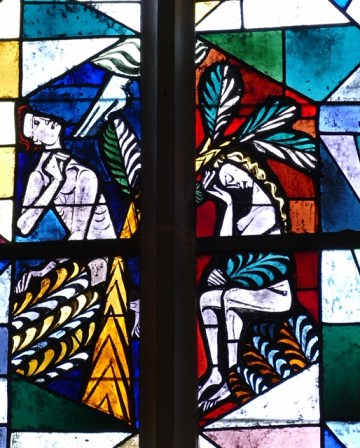
Adam

A key phrase for our prayer might be the following. The concupiscence of human nature will always make the sinful choice a possibility. But we can gain courage and strength from this powerful line from Paul:

Where sin increased,
grace overflowed all the more….

Romans 5:15

In our Gospel, Jesus teaches a lesson about perseverance in the spiritual life. He says if we stick with it, God will welcome us the way a generous master thanks and embraces a loyal servant. He adds a comforting thought for those of us of “a certain age”.

And should he come in the second or third watch
and find them prepared in this way,
blessed are those servants.

Luke 12:38

Speaking personally now, I find that moving into “the second or third watch” can be a little scary. As various physical functions occasionally fail me, and some of my joints are replaced with earth minerals, a line from Yeats’s poem comes to mind – “things fall apart“:

Turning and turning in the widening gyre
The falcon cannot hear the falconer;
Things fall apart; the centre cannot hold;
Mere anarchy is loosed upon the world...

As I look through my reading glasses at the information for my new titanium knee, I remember the young athlete who could drive a basketball down the lane for an explosive layup, often being knocked on her nethers by a powerful opponent. Nevertheless, she would jump up for the next rebound. What happened to that girl?

This Gospel reminds me that she is still inside me, but she is golden now — lifting her spirit, by God’s grace, to deeper challenge.


 I am beginning to understand that aging is its own life phase, not just a final comfortable fixity in one’s maturing. Just as every other life phase requires a gradual mastery of its challenges, so does aging. Toddlers must conquer balance and language skills. Teens must gain confidence and self-direction. Young adults work for greater wisdom and meaningful life relationships. Those “post-50” evaluate and may be challenged by the “successes” of their past years. And those in the sometimes not-so-really golden years are still doing all these earlier tasks while meeting the unique challenges of aging. One must be brave!


I hope some of you are Harry Potter fans. The books have powerful little encouragements tucked in their magical dialogue. One of my favorites is this. Harry, encouraging his elderly and fearful teacher to make a courageous choice, says, “Be brave, Professor… Otherwise, the bowl will remain empty… forever.”


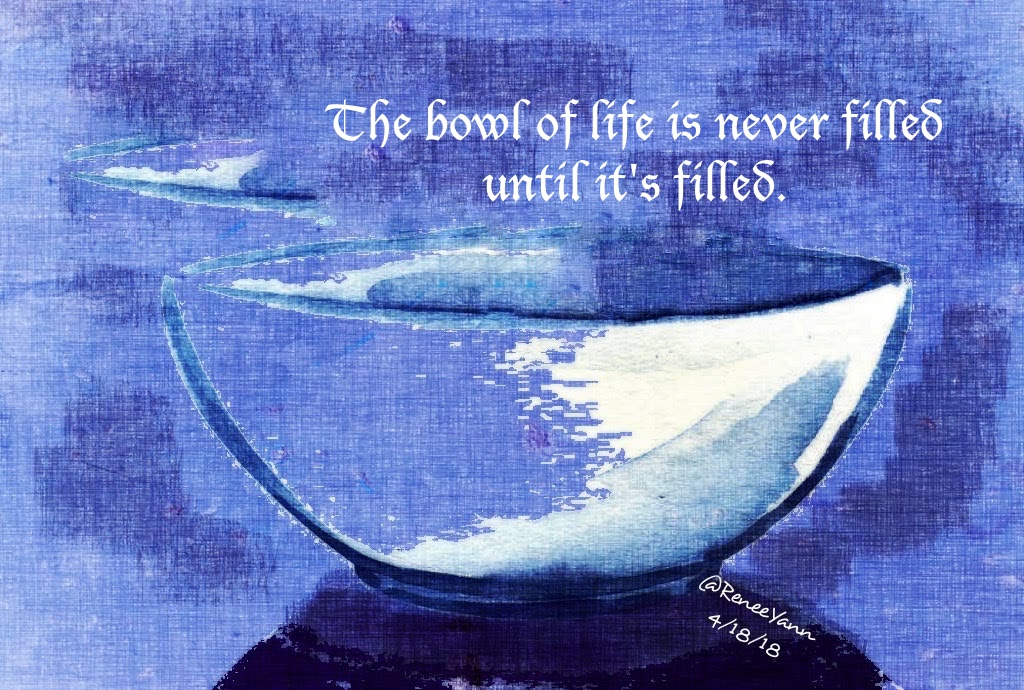
The bowl of our life is never filled until it’s filled. Jesus reminds us that none of us knows when that day of fulfillment will come and we must be vigilant for it until it does.

Blessed are those servants
whom the master finds vigilant on his arrival.
Amen, I say to you, he will gird himself,
have them recline at table, and proceed to wait on them.

Luke 12:37

We draw courage for that vigilance not from Harry Potter of course, but from Christ’s own promise to us that there is a special blessing especially for us 2nd or 3rd watchers:

And should he come in the second or third watch
and find them prepared in this way,
blessed are those servants.

Luke 12:38

I believe that if we prayerfully listen, we will find that this blessing already suggests itself this side of Christ’s final arrival. As Paul indicates in our first reading, when we remain open to graceful relationship with God, we already live in the peaceable kingdom.

… how much more will those who receive the abundance of grace
and the gift of justification
come to reign in life through the one Jesus Christ…

Romans 5:17

Poetry: Sailing to Byzantium – William Butler Yeats

I

That is no country for old men. The young
In one another’s arms, birds in the trees,
—Those dying generations—at their song,
The salmon-falls, the mackerel-crowded seas,
Fish, flesh, or fowl, commend all summer long
Whatever is begotten, born, and dies.
Caught in that sensual music all neglect
Monuments of unageing intellect.

II

An aged man is but a paltry thing,
A tattered coat upon a stick, unless
Soul clap its hands and sing, and louder sing
For every tatter in its mortal dress,
Nor is there singing school but studying
Monuments of its own magnificence;
And therefore I have sailed the seas and come
To the holy city of Byzantium.

III

O sages standing in God’s holy fire
As in the gold mosaic of a wall,
Come from the holy fire, perne in a gyre,
And be the singing-masters of my soul.
Consume my heart away; sick with desire
And fastened to a dying animal
It knows not what it is; and gather me
Into the artifice of eternity.

IV

Once out of nature I shall never take
My bodily form from any natural thing,
But such a form as Grecian goldsmiths make
Of hammered gold and gold enamelling
To keep a drowsy Emperor awake;
Or set upon a golden bough to sing
To lords and ladies of Byzantium
Of what is past, or passing, or to come.


Music: Candlelight – Ottmar Liebert

Liebert is a German classical guitarist, songwriter and producer best known for his Spanish-influenced music. A five-time Grammy Award nominee, he is also an ordained Zen monk.

Trusting the Promise

Monday of the Twenty-ninth Week in Ordinary Time
October 23, 2023

Today’s Readings:

https://bible.usccb.org/bible/readings/102323.cfm


Today, in God’s Lavish Mercy, Paul counsels us to be steadfast in our faith. Jesus counsels us to avoid greed. How might the two be connected?

Perhaps like this. Only by faith do we have the courage to repudiate the allurements of greed.

Paul lauds Abraham whose faith convinced him that God’s promise to him would be fulfilled. Jesus promises us eternal life in a realm apart from any earthly treasure. If we believe in Jesus’s promise, we realize the futility of possessiveness, greed and consumerism.

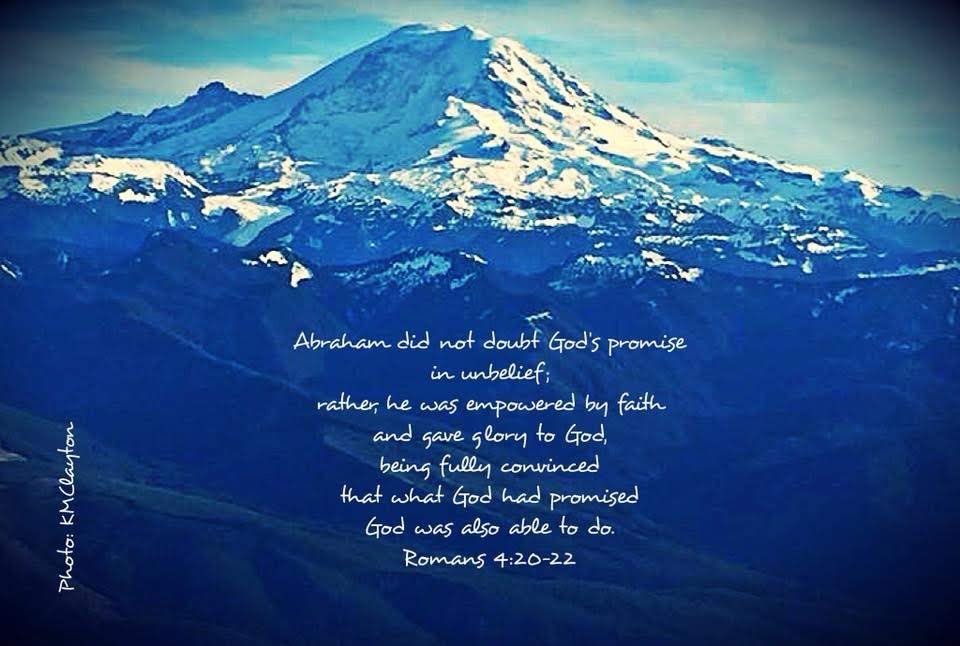
Abraham did not doubt God’s promise in unbelief;
rather, he was empowered by faith and gave glory to God
and was fully convinced that what God had promised
he was also able to do.
That is why it was credited to him as righteousness.

Romans 4:20-22

That’s a really hard call in our society which makes it hard to believe in anything including God and ourselves! Every type of media conspires to convince us that we are not enough as we are. We need a better car, house, clothes, haircut, and on and on to make us “acceptable”. Populism and racism ingrained in our politics convince us that we need to be a certain color, nationality, religion, speak a certain language to be worth anything.

Mt5_3 poor

Jesus says NO. You are beautiful just as I created you. And you already have everything you need to merit my promise of eternal life. You have only one need in this world — to love yourself and one another so that my promise can be released in you and in all Creation.

Then Jesus said to the crowd,
“Take care to guard against all greed,
for though one may be rich,
one’s life does not consist of possessions.”

Luke 12:15

Poetry: from Rumi

When I am with you, everything is prayer.
I prayed for change,
so, I changed my mind.

I prayed for guidance
and learned to trust myself.

I prayed for happiness
and realized I am not my ego.

I prayed for peace
and learned to accept others unconditionally.

I prayed for abundance
and realized my doubt kept it out.

I prayed for wealth
and realized it is my health.

I prayed for a miracle
and realized I am the miracle.

I prayed for a soul mate
and realized I am with the One.

I prayed for love
and realized it is always knocking,
but I have to allow it in.

Music: How Could Anyone Ever Tell You – Shaina Noll

A New Song

Twenty-ninth Sunday in Ordinary Time
October 22, 2023

Today’s Readings


Today, in God’s Lavish Mercy, we pray with Psalm 96, one of the “royal psalms” praising God as King.

Bow down to the LORD, splendid in holiness.
Tremble before God, all the earth;
declare among the nations: The LORD is King.
The world will surely stand fast, 
never to be shaken.
The Lord rules the peoples with fairness.

Psalm 96: 9-10

Our psalm today forms a link between two readings about two different kinds of human leaders.

In our first reading, we hear about King Cyrus, an “anointed” one:

Thus says the LORD to his anointed, Cyrus,
whose right hand I grasp,
subduing nations before him …

Isaiah 45:1

In fact, Cyrus the Great respected the customs and religions of the lands he conquered. This became a very successful model for centralized administration and establishing a government working to the advantage and profit of its subjects. Israel thrived under Cyrus and found no barriers to their own religious practices


In our Gospel, however, the Pharisees try to trap Jesus by testing him about their current political leadership, which is not so kindly inclined to the people:

Tell us, then, what is your opinion:
Is it lawful to pay the census tax to Caesar or not?

Matthew 22:17

Jesus’s answer simply tells the Pharisees to obey the legitimate law. But that answer is secondary to his real challenge to them:

Why are you testing me, you hypocrites?


Our psalm is the praise song of a people who do not “test” God; who receive both the blessings and trials of life with faith and hope, and seek the path to God within those circumstances.

A “Cyrus-type” leader builds up that holy courage in the people. A “Caesar-type” type leader only builds up only himself.


In his letter to the Thessalonians, Paul shows himself to be such an anointed leader, praying for and encouraging the Church in the journey of faith:

We give thanks to God always for all of you,
remembering you in our prayers,
unceasingly calling to mind your work of faith and labor of love
and endurance in hope of our Lord Jesus Christ,
before our God and Father …

1 Thessalonians 1;2-4

Today, there’s a lot of political dust swirling in the wind – a lot of discerning about leadership and our own modern brand of “kings”. The current sufferings of our time cause our hearts to long for “a new song”.

The readings today remind us that the only way our spirits can …

Sing to the LORD a new song;
sing to the LORD, all you lands.
Tell God’s glory among the nations;
among all peoples, God’s wondrous deeds

… is by living Paul’s formula – “to live our lives as a work of faith and labor of love and endurance in hope of our Lord Jesus Christ.


Poetry: New Day’s Lyric – Amanda Gorman

May this be the day
We come together.
Mourning, we come to mend,
Withered, we come to weather,
Torn, we come to tend,
Battered, we come to better.
Tethered by this year of yearning,
We are learning
That though we weren't ready for this,
We have been readied by it.
We steadily vow that no matter
How we are weighed down,
We must always pave a way forward.
*
This hope is our door, our portal.
Even if we never get back to normal,
Someday we can venture beyond it,
To leave the known and take the first steps.
So let us not return to what was normal,
But reach toward what is next.
*
What was cursed, we will cure.
What was plagued, we will prove pure.
Where we tend to argue, we will try to agree,
Those fortunes we forswore, now the future we foresee,
Where we weren't aware, we're now awake;
Those moments we missed
Are now these moments we make,
The moments we meet,
And our hearts, once altogether beaten,
Now all together beat.
*
Come, look up with kindness yet,
For even solace can be sourced from sorrow.
We remember, not just for the sake of yesterday,
But to take on tomorrow.
*
We heed this old spirit,
In a new day's lyric,
In our hearts, we hear it:
For auld lang syne, my dear,
For auld lang syne.
Be bold, sang Time this year,
Be bold, sang Time,
For when you honor yesterday,
Tomorrow ye will find.
Know what we've fought
Need not be forgot nor for none.
It defines us, binds us as one,
Come over, join this day just begun.
For wherever we come together,
We will forever overcome.

Sing a New Song – Brooklyn Tabernacle Choir

The Key of Knowledge

Memorial of Saints John de Brébeuf and Isaac Jogues
Thursday of the Twenty-eighth Week in Ordinary Time
October 19, 2023

Today’s Readings:

https://bible.usccb.org/bible/readings/101923.cfm


Today, in God’s Lavish Mercy, “the Law” plays a central role in our readings.

At their best, laws are those commonly agreed-upon markers that guide the human community on its shared journey. Ideally conceived in the context of justice, every law will lead to a balance of well-being for all concerned.


It is in the human administration of law that we meet challenges. Such administration rests in the hands of “superiors” who are, like all of us, subject to prejudice, ignorance, domination, and arrogance. These individuals can regress to an interpretation of law that benefits only themselves and those they favor.

In our Gospel, Jesus vociferously condemns this corruption of the Law by the very people who have been entrusted with its integrity:

Woe to you, scholars of the law!
You have taken away the key of knowledge.
You yourselves did not enter and you stopped those trying to enter.

Luke 11:52

What is that “key of knowledge” Jesus refers to? I think it is this: that the Law is only peripheral. While it must be respected, it must also be transcended so that we live beyond it and into the Spirit Who generates it.


In our first reading, Paul makes an astounding statement that surely knocked the pharisaical legalists on their pins! Paul says that God’s righteousness is not found in the Law but solely in faith in Jesus Christ.

Now the righteousness of God has been manifested apart from the law,
though testified to by the law and the prophets,
the righteousness of God through faith in Jesus Christ
for all who believe.

Romans 3:21-22

This passage in Romans is critical to the Christian understanding of “righteousness”. No one can achieve righteousness apart from the grace of God which is given to us solely as gift and not reward for our actions. But it is also essential that a person create an inner receptivity to grace, a receptivity achieved through the personal exercise of faith, hope, and love – that is, by the works of mercy.


Since the early 16th century, various Christian denominations have been trying to split the hair of this argument which is dubbed “Sola Fide (faith alone)”. The argument asks, “Are we made right with God by faith alone, or by faith demonstrated in good works?”.

Paul and Jesus addressed the question fifteen hundred years before anybody even thought up the Sola Fide conundrum. They did so in direct and simple language so that their listeners could learn and feel confident in their faith life.


The debate around “sola fide” can devolve into theological hair-splitting, an exercise that seems almost like an intellectual game. Contrary to hair-splitting, our faith life is fostered by a theology deeply rooted in spirituality and evidenced in reverent, grateful, and charitable living. Laws can help us with that pursuit but they can’t accomplish it. Only an active, loving faith, responsive to God’s grace, can unlock that door.


Prose: Excerpt from Lumen Fidei (The Light of Faith), the first encyclical of Pope Francis (June 29, 2013)

(This passage and the encyclical as a whole are so beautiful that I hope you will take time to savor the words, even in small doses. I broke it up into small sections because that’s the way I best prayed with it.)

Since faith is a light, it draws us into itself, 
inviting us to explore ever more fully 
the horizon which it illumines, 
all the better to know the object of our love. 

Christian theology is born of this desire. 
Clearly, theology is impossible without faith; 
it is part of the very process of faith, 
which seeks an ever deeper understanding 
of God’s self-disclosure culminating in Christ. 

It follows that theology is more 
than simply an effort of human reason 
to analyze and understand, 
along the lines of the experimental sciences. 
God cannot be reduced to an object. 
He is a subject who makes himself known 
and perceived in an interpersonal relationship. 

Right faith orients reason to open itself 
to the light which comes from God, 
so that reason, guided by love of the truth, 
can come to a deeper knowledge of God. 

The great medieval theologians and teachers 
rightly held that theology, as a science of faith, 
is a participation in God’s own knowledge of himself. 
It is not just our discourse about God, 
but first and foremost the acceptance and the pursuit 
of a deeper understanding 
of the word which God speaks to us, 
the word which God speaks about himself, 
for he is an eternal dialogue of communion, 
and he allows us to enter into this dialogue. 

Theology thus demands the humility 
to be "touched" by God, 
admitting its own limitations before the mystery, 
while striving to investigate, 
with the discipline proper to reason, 
the inexhaustible riches of this mystery.

Music: Spirit Seeking Light and Beauty – Janet Erskine Stuart, RSCJ

The Lie and The Truth

Memorial of Saint Ignatius of Antioch, Bishop and Martyr
Tuesday of the Twenty-eighth Week in Ordinary Time
October 17, 2023

Today’s Readings:

https://bible.usccb.org/bible/readings/101723.cfm


Today, in God’s Lavish Mercy, both Paul and Jesus speak forcefully against an endemic human fault: dishonesty.


Paul castigates “those who suppress the truth by their wickedness”:

The wrath of God is indeed being revealed from heaven
against every impiety and wickedness
of those who suppress the truth by their wickedness.
For what can be known about God is evident to them,
because God made it evident to them.
Ever since the creation of the world,
his invisible attributes of eternal power and divinity
have been able to be understood and perceived in what he has made.

Romans 1:18-20

These “truth suppressors” are guilty for one reason – they know better! God’s Truth is evident to them in Creation yet they deny and pervert it for the sake of their own selfish ends.

As a result, they have no excuse;
for although they knew God
they did not accord him glory as God or give him thanks.
Instead, they became vain in their reasoning,
and their senseless minds were darkened.
While claiming to be wise, they became fools
and exchanged the glory of the immortal God
for the likeness of an image of mortal man
or of birds or of four-legged animals or of snakes.

Romans 1:20-23

Jesus defines this untruth more clearly. He says that it presents itself in pretense – the external dissimulation which masquerades narcissistic motivations:

The Pharisee (who had invited Jesus to dinner) was amazed to see
that Jesus did not observe the prescribed washing before the meal.
The Lord said to him, “Oh you Pharisees!
Although you cleanse the outside of the cup and the dish,
inside you are filled with plunder and evil.
You fools!
Did not the maker of the outside also make the inside?
But as to what is within, give alms,
and behold, everything will be clean for you.”

Luke 11:38-41

Jesus indicates that charity is the perfect “cleanser” for dirty cup interiors (and dingy moral codes). Sounds easy enough, doesn’t it? Well, maybe not so easy but certainly clear and simple.

Charity is rooted in the interior recognition that we are all children of our Creator and that we have a responsibility for one another’s welfare. Acting on that recognition is “almsgiving” which comes from the same Greek root, “eleemosyne“, as the word mercy.


Our world, like Paul’s, is challenged by the suppression of truth. Much of our visible culture is based on lies and pretense. Political hoodwinking, media non-objectivity, economic duplicity, and exploitive advertising conspire to convince us that:

  • we ourselves never are or have enough
  • anyone not “like us” is a threat to our insufficiency
  • foreigners are dangerous
  • power grants sovereignty
  • the poor are solely responsible for their poverty.

Jesus and Paul tell us that we must resist such lies, purify our hearts of their influence, and live a Gospel life of truth, charity, and mercy.


Prose: from the Catholic Encyclopedia:

I found this definition of almsgiving very thought-provoking because it indicates that “almsgiving or “mercy” is more than an act or actions. It is an attitude and lifestyle, a lens through which we consider all things in the light of the Gospel for the sake of the poor:

Any material favor done to assist the needy, and prompted by charity, is almsgiving. It is evident, then, that almsgiving implies much more than the transmission of some temporal commodity to the indigent. According to the creed of political economy, every material deed wrought by humans to benefit the needy is almsgiving. According to the creed of Christianity, almsgiving implies a material service rendered to the poor for Christ’s sake. Materially, there is scarcely any difference between these two views; formally, they are essentially different. This is why the inspired writer says: “Blessed is the one that considers the needy and the poor” (Psalm 40:2) — not the one that gives to the needy and the poor.


Music: The Prisoners’ Chorus – from Beethoven’s only opera Fidelio

Fidelio is inspired by a true story from the French Revolution. It centers on a woman, Leonore, whose husband Florestan has been unjustly imprisoned by his political rival – the villainous Don Pizarro. In the magnificent “Prisoners’ Chorus”, the prisoners sing powerfully about the gift and need for freedom.

Oh what joy, in the open air
Freely to breathe again!
Up here alone is life!
The dungeon is a grave.

FIRST PRISONER
We shall with all our faith
Trust in the help of God!
Hope whispers softly in my ears!
We shall be free, we shall find peace.

ALL THE OTHERS
Oh Heaven! Salvation! Happiness!
Oh Freedom! Will you be given us?

Practice Resurrection

Twenty-eighth Sunday in Ordinary Time
October 15, 2023

Today’s Readings:

https://bible.usccb.org/bible/readings/101523.cfm


Today, in God’s Lavish Mercy, we pray with radically liberating readings including Psalm 23, a familiar, comforting and beloved prayer.

The LORD is my shepherd; I shall not want.
In verdant pastures he gives me repose;
beside restful waters he leads me;
he refreshes my soul.

Psalm 23: 1-3

The psalm comes between readings that assure us of a waiting and sumptuous banquet to which we gain entrance by both mercy and grace.  


Isaiah describes the feast in the future tense:

On that day it will be said:
“Behold our God, to whom we looked to save us!
This is the LORD for whom we looked;
let us rejoice and be glad that he has saved us!”

Isaiah 25:9

But Paul reminds us of the truth we often forget. The banquet is NOW!

My God will fully supply whatever you need,
in accord with his glorious riches in Christ Jesus.

Philippians 4:20

In our Gospel, Jesus invites his guests to that feast with both an immediacy and a demand. The celebration of abundance is open to all. But we must at least make the effort to don a wedding garment – that reverent, grateful attitude which gives glory to the Source of our abundance. 


The edge of the white choir mantle is visible below the veils.

In ancient times – when I first came to religious life 🙂 – we would add a special garment to our habit to celebrate a great feast. The white choir mantle was a symbol of our awareness of a particularly sacred moment.


Miraculously, it is that reverent awareness that opens our eyes to the plentitude in our midst. It releases us to the freedom of a hope already realized, but hidden from those whose hearts refuse to be dressed in grace.

You spread the table before me
in the sight of my foes;
you anoint my head with oil;
my cup overflows.

Psalm 23:5

Our readings invite us to live as not only invited but saved people, completely convinced of God’s eternal welcome and protection.

Only goodness and kindness follow me
all the days of my life;
and I shall dwell in the house of the LORD forever.

Psalm 23:6

What would the world be like if we lived out this conviction – that we already possess God’s gracious abundance? 

How might the reproaches of fear, competition,
domination, selfishness, and hoarding
be removed from our midst?

How might the rush of generosity, forgiveness, and mercy 
flow out of our confident hearts
to wash the earth in God’s restful waters?


Poem: Manifesto: The Mad Farmer Liberation Front by Wendell Berry

Love the quick profit, the annual raise,
vacation with pay. Want more
of everything ready-made. Be afraid
to know your neighbors and to die.
And you will have a window in your head.
Not even your future will be a mystery
any more. Your mind will be punched in a card
and shut away in a little drawer.
When they want you to buy something
they will call you. When they want you
to die for profit they will let you know.
So, friends, every day do something
that won’t compute. Love the Lord.
Love the world. Work for nothing.
Take all that you have and be poor.
Love someone who does not deserve it.
Denounce the government and embrace
the flag. Hope to live in that free
republic for which it stands.
Give your approval to all you cannot
understand. Praise ignorance, for what man
has not encountered he has not destroyed.
Ask the questions that have no answers.
Invest in the millennium. Plant sequoias.
Say that your main crop is the forest
that you did not plant,
that you will not live to harvest.
Say that the leaves are harvested
when they have rotted into the mold.
Call that profit. Prophesy such returns.
Put your faith in the two inches of humus
that will build under the trees
every thousand years.
Listen to carrion – put your ear
close, and hear the faint chattering
of the songs that are to come.
Expect the end of the world. Laugh.
Laughter is immeasurable. Be joyful
though you have considered all the facts.
So long as women do not go cheap
for power, please women more than men.
Ask yourself: Will this satisfy
a woman satisfied to bear a child?
Will this disturb the sleep
of a woman near to giving birth?
Go with your love to the fields.
Lie down in the shade. Rest your head
in her lap. Swear allegiance
to what is nighest your thoughts.
As soon as the generals and the politicos
can predict the motions of your mind,
lose it. Leave it as a sign
to mark the false trail, the way
you didn’t go. Be like the fox
who makes more tracks than necessary,
some in the wrong direction.
Practice resurrection.

Music: Abundant Life – written by Ruth Duck, sung by Marty Haugen

We cannot own the sunlit sky, 
the moon, the wild-flowers growing, 
For we are part of all that is 
within life’s river flowing.

With open hands receive and share 
the gifts of God’s creation, 
That all may have abundant life 
in every earthly nation.

When bodies shiver in the night 
and weary wait for morning,
When children have no bread but tears, 
and war horns sound their warning. 

God calls humanity to awake, 
to join in common labor,
That all may have abundant life, 
oneness with their neighbor.

God calls humanity to join as partners
in creating a future free 
from want or fear.
Life’s goodness celebrating, 

that new world beckons from afar,
Invites our shared endeavor 
that all might have abundant life 
and peace endure forever.

Prayer

Wednesday of the Twenty-seventh Week in Ordinary Time
October 11, 2023

Today’s Readings:

https://bible.usccb.org/bible/readings/101123.cfm


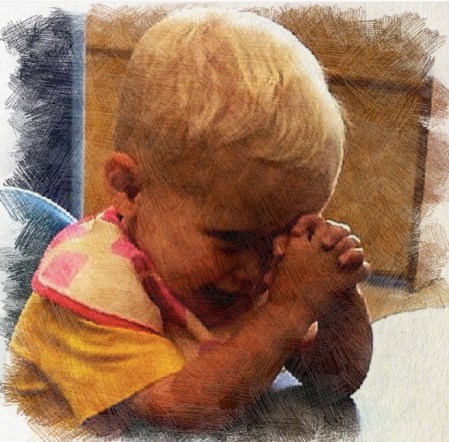
Ollie praying

Today, in God’s Lavish Mercy, Jesus teaches his disciples how to pray. His prayer is simple and direct, like talking to your best friend over a morning cup of coffee.

What about us? How do we pray?

Most of our first learned prayers are a lot like Jesus’s simple Our Father. We praise God, giving thanks, and asking for what we need.

Then we grow up and get sophisticated. We may begin to “say” or read prayers rather than use our own words. While such a practice can deepen our understanding of prayer, it places a layer between us and our conversation with God.

Sometimes others lead our prayer in the community of faith. This too can enrich us as we are inspired by a shared faith. But, sorry to say, at other times such prayer, indifferently led, can leave us empty and even frustrated. The whole process can be a little like trying to have a private conversation in an elevator full of noisy people.


Just as Jesus often went off in solitude to pray, this kind of prayer is our most intimate time with God – a time when God allows us to know God and ourselves in a deeper way. This sacred time alone with God may be spent in words, song, or the silence that speaks beyond words.

It is a time to be with the Beloved as we would be with our dearest, most faithful companion. We rest in the field of our experiences, letting them flow over God’s heart in tenderness. We listen with the ear of absolute trust to the secrets God tells us in the quiet.


When we become deeply accustomed to this type of intimate prayer, it transforms our self-understanding. Our every thought, word, and action is in the Presence of God. It is God Who hears our joys, sorrows, fears, and inspirations rising up in our hearts even before we hear them ourselves. It is God Who holds us at the center of our lives in communion with all Creation. It is God Who breathes grace into our human moments in acts of mercy, joy, charity, and justice.

Father, hallowed be your name,
your Kingdom come.
Give us each day our daily bread
and forgive us our sins
for we ourselves forgive everyone in debt to us,
and do not subject us to the final test.

Luke 11:2-4

Poetry: Praying – Mary Oliver

It doesn’t have to be
the blue iris, it could be
weeds in a vacant lot, or a few
small stones; just
pay attention, then patch

a few words together and don’t try
to make them elaborate, this isn’t
a contest but the doorway

into thanks, and a silence in which
another voice may speak.

Our Father – Leontyne Price

Sibling Dilemma

Tuesday of the Twenty-seventh Week in Ordinary Time
October 10, 2023

Today’s Readings:

https://bible.usccb.org/bible/readings/101023.cfm

Today, in God’s Lavish Mercy, we pray with Martha and Mary. These sisters are the personification of the Benedictine motto: Ora et labora: Pray and work – the two essentials that we all struggle to balance in our lives.

They, with their brother Lazarus, are dear friends of Jesus. The scriptures show us that Jesus felt comfortable at their home, and that they loved to have him stay with them.

As all of us do with our closest friends, Jesus understood the lights and shadows of their personalities – and they of his. He knew that Martha was the organizer, the one who planned and worried about the incidentals. Mary was deeply spiritual, but maybe had her head in the clouds a bit when it came to getting things done. 

Perhaps these personality differences caused some tensions between the sisters, as they might between us and our family members or close friends. Sometimes these little, unnoticed frictions can suddenly become chasms between us and those we love. 

How and why does it happen?

Jesus gives us the answer in this Gospel passage. He hears Martha’s simmering frustration. He calms her, as one might a child – “Martha, Martha…”. We can hear his gentle tone. Jesus tells her that worry and anxiety are signs that we are not spiritually free. He tells her that Mary has focused on the important thing.

This may sound repetitious, but just think about it a while:

It is so important to know what is important. 

It is so freeing to agree on what matters with those closest to us. Talking with each other in openness, respect, and unconditional love is the only path to that freedom.

Maybe Martha and Mary slipped off that path a bit in this situation. But with Jesus’ help, they righted their relationship. 

That’s the best way for us to do it too. Let Jesus show us what is most important through sharing our faith, and even our prayer, with those closest to us. Let him show us where our self-interests, need for control, fears and anxieties are blocking us from love and freedom.

It is the same way that we, like Mary, can strengthen our relationship with God. It is not sufficient for our prayer to consist of incidentals — pretty words and empty practices. 

We must sit open-hearted at the feet of Jesus and let him love us, let him change us. Even in the midst of our responsibilities and duties, we must balance “the better part”.


Poetry: Bethany Decisions – Irene Zimmerman, OSF 

As Jesus taught the gathered brothers
and Martha boiled and baked their dinner,
Mary eavesdropped in the anteroom
between the great hall and the kitchen.
Her dying mother’s warning words
clanged clearly in her memory—
“Obey your sister. She has learned
the ways and duties of a woman.”

She’d learned her sister’s lessons well
and knew a woman’s place was not
to sit and listen and be taught.
But when she heard the voice of Jesus
call to her above the din
of Martha’s boiling pots and pans,
she made her choice decisively—
took off her apron and traditions,
and walked in.


Music: a charming little song by Peg Angell which leaves me with same practical question I always have when reading this passage: who actually did get the dinner ready?

Neighbor

Monday of the Twenty-seventh Week in Ordinary Time
October 9, 2023

Today’s Readings:

https://bible.usccb.org/bible/readings/100923.cfm


Today, in God’s Lavish Mercy, get ready for a three-day cruise with Jonah and a radical journey down the Jericho road with the Good Samaritan.

The message of Jonah is clear: all people, even hated Ninevites, are children of God’s Mercy. Resisting that understanding can be catastrophic to our spiritual life.


Patricia Tull, Rhodes Professor Emerita of Old Testament at Louisville Seminary, summarizes the Book of Jonah like this:

A postexilic book, Jonah’s story is atypical for prophetic works. Not only is it a narrative about the prophet rather than his speeches, but it also rebuffs Jonah for his refusal to preach to foreign enemies. Jonah’s story portrays foreigners as more than ready to repent and turn to God. The book uses humor, hyperbole, and irony to make its parabolic point.

Our Gospel gives us one of the most beloved yet challenging parables of Jesus – who is our “neighbor”. The infinite dimensions within this parable continue to unfold for us as we deepen in our mercy spirituality.

God does not see anyone as a “foreigner”. Every human being lives with the breath of God. We are “neighbors” because we share that breath, that “neighborhood” of God’s boundless Love.


But, oh my God, how we have forgotten or rejected that common bond of reverence for one another! Just yesterday, one of our sisters brought up the subject of a recent hit-and-run accident in Philadelphia. It now seems to be the common practice to leave the scene of such an occurrence, abandoning the victim to his fatal circumstance. She wondered, incredulously, how anyone could be that callous.


Our Gospel parable describes that callousness. Notice that both the priest and the Levite pass the victim by “on the opposite side“. The phrase implies that if I can build a wall to make you invisible to me, I can more easily ignore your claim on my merciful neighborliness.

The Samaritan lived without those walls. He did not see a Jew, or a foreigner, or an expendable “other”. He saw a human being, like himself – a neighbor who was struggling to live.

The Good Samaritan (1880) by Aimé Morot


Jesus’ parable of the Good Samaritan is a clear example of the call of the Gospel to neighborliness. In the story, such a call is an inconvenient truth because it summons outside the comfortable community to find the neighbor among the not-well-regarded “others.” 

Walter Brueggemann, Health Progress, January – February 2010

We don’t want to be like resistant Jonah, nor like the prejudicially blinded priest and Levite of our parable. But it is hard. The world conspires to separate us into the haves and the have-nots, the deserving and the undeserving, the winners and the losers, the sinners and the saints. Mercy not only resists but dismantles such walls. Do we have the courage to examine our own prejudices and to step across from “the opposite side” for the sake of our neighbor?


Poem: Neighbor – Iain Crichton Smith

Build me a bridge over the stream
to my neighbour’s house
where he is standing in dungarees
in the fresh morning.
O ring of snowdrops
spread wherever you want
and you also blackbird
sing across the fences.
My neighbor, if the rain falls on you,
let it fall on me also
from the same black cloud
that does not recognize gates.

Music: JJ Heller – Neighbor

Sometimes it's easier to jump to conclusions
Than walk across the street
It's like I'd rather fill the blanks with illusions
Than take the time to see
You are tryna close the back door of your car
You are balancing the groceries and a baby in your arms
You are more than just a sign in your front yard
You are my neighbor
I can get so lost in the mission
Of defending what I think
I've been surfing on a sea of opinions
But just behind the screen
You are grateful that the work day's finally done
You are stuck in miles of traffic, looking at your phone
You are tryin' to feel a little less alone
You are my neighbor
When the chasm between us feels so wide
That it's hard to imagine the other side
But we don't have to see things eye to eye
For me to love you like you are my neighbor
My neighbor
Oh, to fear the unfamiliar
Is the easy way to go
But I believe we are connected more than we might ever know
There's a light that shines on both the rich and poor
Looks beyond where we came from and who we voted for
'Til I can't see a stranger anymore
I see my neighbor
May my heart be an open door to my neighbor
You are my neighbor

The Lord’s Vineyard

Twenty-seventh Sunday in Ordinary Time
October 8, 2023

Today’s Readings:

https://bible.usccb.org/bible/readings/100823.cfm


Today, in God’s Lavish Mercy, we pray with Psalm 80, rather a desperate plea in the midst of devastation.

… the vineyard which  you planted …
Why have you broken down its walls,
so that every passer-by plucks its fruit,
The boar from the forest lays it waste,
and the beasts of the field feed upon it?

Psalm 80: 13-14

Angelus – Jean Francois Millet

Among my readers there are probably not too many farmers, but there may be a few serious gardeners. You would know what it feels like to lose a valued and tendered crop. And all of us have probably seen a movie or two where early settlers lose the crop which sustained their existence, or a news story of the same tragedy in real life. No words.


So Isaiah tells us that Israel, and by extension the People of God, is that precious vineyard, lovingly planted in hope by the Creator. The prophet paints the image of a deeply disappointed God:

The vineyard of the LORD of hosts is the house of Israel,
and the people of Judah are his cherished plant;
he looked for judgment, but see, bloodshed!
for justice, but hark, the outcry!

Isaiah 5:7

But Psalm 80 calls out to that “disappointed” God and asks for forgiveness and restoration. The psalmist is inspired by the same kind of relentless hope Paul encourages in our second reading:

Have no anxiety at all, but in everything,
by prayer and petition, with thanksgiving,
make your requests known to God.
Then the peace of God that surpasses all understanding
will guard your hearts and minds in Christ Jesus.

Philippians 4:6-7

Our Gospel demonstrates for us that the cycle continues throughout history: hope – sin – devastation- repentance – forgiveness – renewed hope. It continues in individuals, families, societies, churches.

But that cycle has been forever absorbed into the Passion, Death and Resurrection of Christ who once and for all redeemed us from its clutches. In the grace of Jesus Christ, we can never remain devastated or bereft of life. This is the glory of our Baptism into Christ, if we will but claim it!

Paul guides us, himself like a tender gardener, in this passage that is so worth our quiet reflection. It will be our “poem” for today! 

Finally, brothers and sisters,
whatever is true, whatever is honorable,
whatever is just, whatever is pure,
whatever is lovely, whatever is gracious,
if there is any excellence
and if there is anything worthy of praise,
think about these things.
Keep on doing what you have learned and received
and heard and seen in me.
Then the God of peace will be with you.


Music: Shen Khar Venakhi ( You are a Vineyard )
A hymn of praise to God’s perfect vineyard, the Virgin Mary who brought forth Christ

You are a vineyard newly blossomed.
Young, beautiful, growing in Eden,
A fragrant poplar sapling in Paradise.
May God adorn you. 
No one is more worthy of praise.
You yourself are the sun, shining brilliantly.


Thou Art a Vineyard (Georgian: შენ ხარ ვენახი, transliterated: Shen Khar Venakhi) is a medieval Georgian hymn. The text is attributed to King Demetrius I of Georgia (1093–1156). The composer of the music is unknown. Supposedly Demetrius wrote it during his confinement as a monk in the monastery. The hymn is dedicated to Georgia and the patronage of the Virgin Mary: it is also a prayer of praise to Mary in the Georgian Orthodox Church

As the lyrics did not mention any saints or gods, this was the only church-song that was permitted to be performed in the anti-religious Soviet Union. There are East Georgian (Kartli-Kakhetian) and West Georgian (Gurian) versions of this chant with very different musical compositions.