A New Box of Crayons

September 7, 2025

You were a kid once, right? Well when I was a kid, one of the things I really loved about September was getting a new box of crayons. It was a chance to start fresh. It was an opportunity once more to make my contribution to the design of the world with renewed sharpness and depth. It was a beginning participation in the infinite cycle of experience and revitalization we call “Life”.

Our ability with crayons, like our ability with life, develops in stages. As toddlers, our first box of crayons may have been a small three-pack of the primary colors, thick enough for little fingers to grasp, bright enough to make a mark, and (if Mom was lucky) maybe washable! Like life, each year our box of crayons grew bigger with both vibrant and subtle colors, usually indelible, a lot like life itself.

We learned not only that things are rarely black and white. They are not often really red, blue or yellow. We learned that a wild red rose begins as a shy pink bud, just like some people do. We learned that a true blue friendship doesn’t just happen but has to be proven through many green seasons. We learned that what appears to be a yellow streak may really hide the aqua depths of a courageous peacemaker. Each of our experiences brings us a greater capacity and depth to express the power of our spirit as they add the nuances of color to our understanding of life.


On September 11, 2001, our nation and our world added a bruising violet to our box of crayons. As time passes, we are learning to use that painful color to deepen our capacity for courage, compassion, hope, and resolve. Sometimes we and our leaders do this well; sometimes poorly. Our civic and moral duty is to pursue universal peace and justice for all peoples; to contribute to the well-being of Earth and all who share her riches.

As we continue to color our world with meaning, God, Who holds our hand, renews us in grace. In that grace, we are invited to begin afresh. We have a new chance every day to make our lives and our world better — just as we did in our early Septembers with that new box of crayons.

Let’s pray for and encourage one another — especially as September 11th approaches. Let’s pray for those who were most profoundly wounded by the deep purple shadow that fell over all of us that day. Let’s pray for leaders who have the magnitude of heart and spirit to create a compassionate and just world. And let’s reach out in sincerity to one another every day, like we did as children– sharing the colors of hope, faith, and love.


Music: Colors – Black Puma

This song and video present a moving contradiction. The music is upbeat, suggesting happiness. But in the video, a family struggles with losing their home and living unhoused.
The video invites us to think about the counterbalance between struggle and joy, between justice and reality. Lyrics at end of page.


For Your Reflection

  • What feelings or reactions do I have after reading this reflection?
  • Do my feelings or reactions remind me of any passage or event in scripture, especially in the life of Christ? 
  • What actions might I take today because of my response to these readings?

Suggested Scripture: Genesis 9:13


[Verse 1: Eric Burton]
I woke up to the morning sky first
Baby blue, just like we rehearsed
When I get up off this ground, I shake leaves back down
To the brown, brown, brown, brown ’til I’m clean
Then I walked where I’d be shaded by the trees
By a meadow of green
For about a mile
I’m headed to town, town, town in style

[Chorus: Eric Burton with The Soul Supporters]
With all my favorite colors, yes, sir
All my favorite colors, right on
My sisters and my brothers see ’em like no other
All my favorite colors

[Post-Chorus: Eric Burton with The Soul Supporters]
It’s a good day to be, a good day for me
A good day to see my favorite colors, colors
My sisters and my brothers, they see ’em like no other
All my favorite colors

[Verse 2: Eric Burton]
Now take me to the other side
Little bitty blues birds fly
In gray clouds, or white walls, or blue skies
We gon’ fly, feel alright
And we gon’, ooh-ooh, ooh-ooh, ooh-ooh, ooh, yeah
They sound like ooh-ooh, ooh-ooh, ooh-ooh, ooh, yeah
And the least I can say, I anticipate
A homecome parade as we renegade in the morning, right on

Photo by Susanne Jutzeler, suju-foto on Pexels.com

A Crane in the Desert

August 6, 2025

Today is the 80th anniversary of the bombings of Hiroshima and Nagasaki

Dona Nobis Pacem – Yo-Yo Ma and Illia Bondarenko

On a hot August 6th over 40 years ago, I sat quietly in the Nevada desert just outside Las Vegas. Most maps call the place the Nevada Test Site. Established as the Atomic Energy Commission’s on-continent proving ground, the Nevada Test Site has seen multiple decades of nuclear weapons testing.

But to the native peoples, the land is known as Newe Sogobia (Earth Mother), or the Western Shoshone homelands.

I had come to the place with over 200 other peace activists to pray for the end of nuclear wars, bombings and weapons proliferation. As part of our prayer, each one of us found a private spot in that massive desert where we could sit alone to meditate. I rested by a low bush to capture its small shady triangle in the dry, threatening heat even of that early morning.

At first, to the unappreciative eye, the desert seems a monochromatic place. The earth, the few stones, the sparse vegetation all appear to wear a beige garment of anonymity – almost as if they are saying, “Don’t see me. Don’t change me by noticing me.” But after many minutes of peeling away the multiple blindfolds we all carry, I became aware of muted majesty breaking from that desert like tender life from an egg.

A tiny hummingbird, the color of slate and sand, hovered inches from my hand. It drew my eyes to another small white object hidden under the lowest branches of the bush. It was a perfectly executed origami crane, no bigger than my thumb. I learned later of the Japanese activists who had preceded us into the desert, and whose custom it was to leave behind these beautiful “peace cranes” as mute reminders of the horrors of Hiroshima and of the hope for universal peace.

Later that evening, thinking about the cranes, I found myself straddling a confusing range of emotions. In the late 40’s and 50’s, I had grown up in a household that despised Japan. On my mother’s birthday in 1945, her 19 year old brother had been killed at Iwo Jima. It was a scar my mother bore the rest of her life.

But as with many scars we have earned or inherited in life, the years had taught me that there is an inner grace to every pain. Holding one of the delicate cranes, I thought about the innumerable Japanese lives – mostly innocent civilians – that had been lost or disfigured on August 6, 1945. I thought about the fact that life is never served by war – whether that war is global, local or personal. War serves only death.

The quest for peace is a complicated and endless pursuit. I ask myself – and each of you – to renew that quest today by harboring peace in our own lives. Refuse to solve conflicts by aggression. Look beyond the battle to the person. Be an agent of mutuality not of domination. Resist the normalization and glorification of violence and war, and defend their victims.

Eighty years after Hiroshima, we still see abominable inhumanity exploding in Gaza, Ukraine, Haiti, Sudan, and the immigrant communities of the Americas. We cannot be silent in the face of what we see. We are called to witness for peace and justice by our words, our attitudes, our votes, and our advocacy.

God knows our world – our streets – need this from us. If we unfold the wings of our own hearts, perhaps the crane of peace can be freed to change the world.


Music: Peace Train – Cat Stevens

For Your Reflection

  • What feelings or reactions do I have after reading this reflection?
  • Do my feelings or reactions remind me of any passage or event in scripture, especially in the life of Christ? 
  • What actions might I take today because of my response to these readings?

Suggested Scripture: John 14:23-27

Summer Nights

June 15, 2025

Summer Nights – Tom Barabas

A perfect summer night is a treasure, isn’t it? … the kind you remember from when you were a kid:
• cool enough to play for hours without sweat and exhaustion…
• the long light lingering until almost nine o’clock…
• the jingle of the ice cream truck tantalizing in the distance….

It would have been fine with me if those nights had lasted forever. But like childhood, such summer nights do not last.

The challenge is this: can we retain the spirit of those nights in the heat or chill that follows In the long seasons of our adult responsibilities and choices, can we invoke our free and joyful inner child?

I remember one June Saturday a few years ago. I sat concentrating by my open window as a warm breeze drifted in. The street outside bustled with the sounds of the busy inner city. Inside, my mind bustled with all the work I had to accomplish in the short weekend.

Suddenly, like gentle bells amid the noise, children’s laughter threaded into my seriousness. Their roller skates softly clacked across the hard concrete of my sidewalk and my awareness. I thought to myself, “When was the last time you experienced pure, childlike joy and freedom? — AND what are you going to do about it?”

There are a few tender summer nights left in 2025. Turn the TV off and go out to your patio or front step. Play with your children. Listen for the ice cream truck. Sit on the porch with someone you enjoy and just talk. Or sit alone in the grateful stillness with our Creator Whose best gift to us is joyful freedom – Whose own playful heart created the zebra, the giraffe, the flamingo, the Blue-footed Booby … and, yes, even us 🙂

We know all too well that we were created to work. Let’s remind ourselves that we were also created to play with the simplicity and sincerity of our remembered childhood.


Music: Like a Child

For Your Reflection:

  • What feelings or reactions do I have after reading this reflection?
  • Do my feelings or reactions remind me of any passage or event in scripture, especially in the life of Christ? 
  • What actions might I take today because of my response to these readings?
Suggested Scripture: Psalm 131

Kept Covenant

April 6, 2025

The Rose

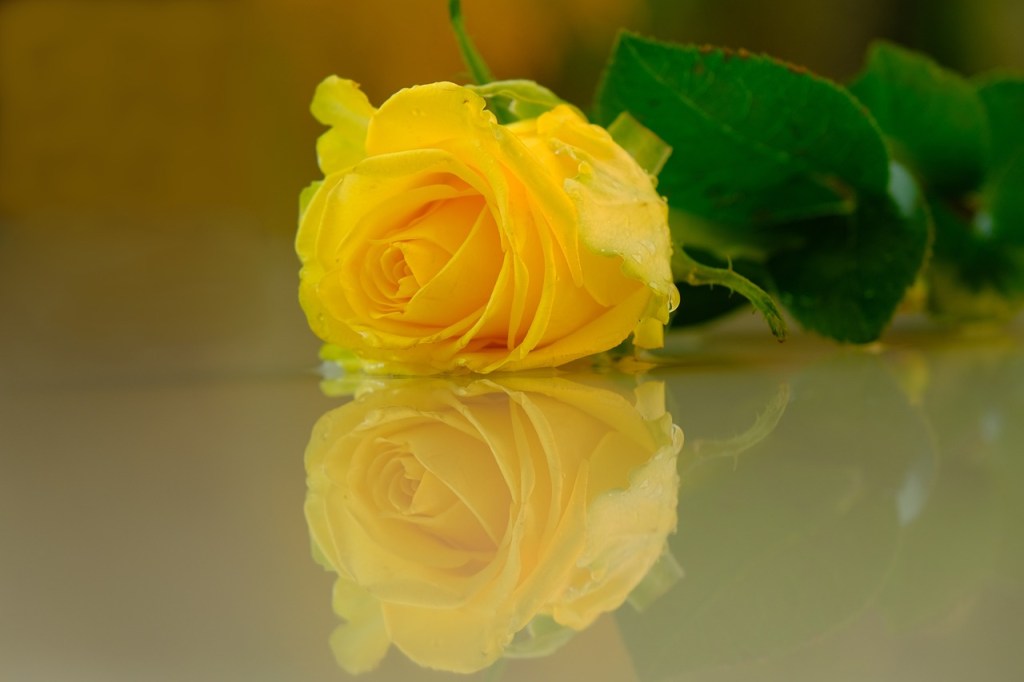
The golden morning had broken bright and warm through the hospital windows. With its breaking, the attending physician and chaplain had received a page. Dorothy had taken an unexpected turn. She was struggling both to live and to die. 

As they attended and comforted her, Dorothy managed to whisper ” … wait for Henry.” Henry, her husband of fifty-eight years, had arrived promptly at 7:00 AM daily for all the weeks of Dorothy’s hospitalization. Glancing at her watch, the chaplain saw that it was just 6:50 AM. 

When, after ten eternal minutes, Henry appeared at the door, he carried a small bouquet of yellow roses from their beloved garden. Quickly apprehending the changed situation, he laid the roses aside and hurried to hold Dorothy for the last few minutes of her life. In the loving, covenanted presence Dorothy had waited for, she finally embraced a peaceful death.

It had not been easy for Dorothy to die nor, from then on, had it been easy for Henry to live. Still, through many bereavement visits, the chaplain watched their long, honest love arise to heal Henry. Through prayer and the benediction of memories, Henry realized that their love, like the roses still blooming in their garden, was both fragile and eternal.

In this week’s readings, God again calls us to such a love. As God brought Lazarus, Suzanna, and Shadrack out of darkness and death, so God promises to bring us. “I will keep my covenant with you,” God says. “Whoever keeps my word will never die.” Accompanying Jesus, as he nears Jerusalem, let us trust and cherish these promises in our own darknesses and bereavements.


Music: Lazarus, Come Forth – The Bishops

Heartbroken, tears falling
Martha found Jesus
She questioned why Lazarus had died.
When she had thus spoken, her doubts were then silenced.
He walked toward the body and cried.

Lazarus, come forth.
Awake like the morning.
Arise with new hope, a new life is born.
Lazarus, come forth.
From death now awaken.
For Jesus has spoken.
Death’s chains have been broken.
Lazarus, come forth.

The tomb now was empty.
Martha stopped crying.
Her brother now stood by her side.
The Pharisee’s wondered about what had happened.
How could one now live who had died?

The reason this story gives hope to so many
Is although we know we must die.
Our bodies won’t stay there
In cold and dark silence.
We’ll hear Jesus cry from on high.

Children come forth
Awake like the morning.
Arise with new hope, a new life is born.
Children come forth.
From death now awaken.
For Jesus has spoken.
Death’s chains have been broken.
Children come forth.

For Jesus has spoken.
Death’s chains have been broken.
My Children come forth.
Children come forth.
Children, come forth.


For Your Reflection

  • What feelings or reactions do I have after reading this reflection?
  • Do my feelings or reactions remind me of any passage or event in scripture, especially in the life of Christ? 
  • What actions might I take today because of my response to these readings?

Suggested Scripture: John 11:17-44

Horizons

March 17, 2025

Forest Dreams – Tim Janis

Spring is on the horizon! The long winter watch is almost over. But before we shake off its dark velvet wraps for good, it might be well to think about what winter teaches us.

The stretch of time between November and April is all about waiting. Bulbs wait under the frozen earth. Bears hibernate in the cold mountains. Birds migrate, their old nests empty until the spring. All creation seems to enter a time of patience and unrealized expectation. But it is not a time of desolation. It is a time of hope for things yet unseen.


Human beings also experience “winter” – not simply the seasonal one – but “winters of the spirit”. We all go through times when our nests have been emptied; times when all the beautiful flowering aspects of our lives seem dormant; times when our vigor and strength seem to hide in the cave of depression or sadness.

These “winters” take many forms. We may find ourselves sick of a job we had always loved. We may find a long, committed relationship wavering. We may find the burdens of age or economics overwhelming us. We may be the unwilling bearers of responsibilities we had not bargained for.


But if we listen, under the deep silence of any winter, the wind rustles. It carries the hint of a new season. It carries the hope of the renewing cycle of our lives. In that silence, we may be able to hear our heartbeat more clearly. We may come to a clearer understanding of what is most important in our lives. In the stillness, we may be forced to know and understand ourselves more deeply.

Others may reach out to us in their “winters”. They may be ill, experiencing confusion, or overwhelmed by the demands of their lives. They are asking for reassurance that some form of spring is coming. They yearn to feel the warmth and hope of renewed life. Our compassion for their needs will grow if we can remember our own winters. Surely, there has been a time when someone lifted the ice and blew warm breath over our fears, grief, or isolation. Someone held hope out to us to grab hold.


I think of a powerful image from the works of St. Teresa of Avila. She imagines God as a warm healer leaning over our frozen world, setting free the beauty of our spirits. This is what she says:

And God is always there,
if you feel wounded.
God kneels over this earth
like a divine medic,
and God’s love
thaws the holy in us.

Teresa of Avila

When we are compassionate and offer one another hope and light, we free what is sacred and do a holy work. Every time you touch another person’s life, you have the chance to change winter into spring. You have a chance to be like God.


Music: I Will Carry You – Sean Clive

For Your Reflection

  • What feelings or reactions do I have after reading this reflection?
  • Do my feelings or reactions remind me of any passage or event in scripture, especially in the life of Christ? 
  • What actions might I take today because of my response to these readings?

Suggested Scripture: Song of Solomon 2:11-13

Longing for Spring?

February 9, 2025

Comfort Zone – Stephen Halpern

Is it damp, drippy February where you are? Are you longing for spring? It just does something for you, doesn’t it? On that first really warm afternoon, all the long, cold hours of winter suddenly coalesce into a small memory and disappear like an ice cube at the equator.

That same moment of new life can occur after any “cold season” — even a cold season of the heart. It can occur after a season of anger, loss, doubt, fear, or distrust . It can occur with something so small as a word, a glance, a smile offered in encouragement, love or forgiveness.

Think of a time in your life, perhaps, when a relationship felt “frozen” in anger or doubt. Think of that moment when one of you said to the other, “ I’m sorry”, “I didn’t mean to hurt you.”, “I love you no matter what.” In a small phrase, winter turned to spring and life was possible again!


Catherine McAuley understood the profound power of a small word, a glance, or a smile. In the 1800’s, she told the first Sisters of Mercy: “There are things the poor prize more highly than gold, tho’ they cost the donor nothing; among these are the kind word, the gentle, compassionate look, and the patient hearing of their sorrows.”

Each one of us finds ourselves poor in something at sometime in our lives. We may be poor in confidence, strength, courage, or determination. We may be at a point in our lives where we feel we cannot sustain one more worry or responsibility. We look to one another for the small “season-changing” word, glance, or smile.

To consistently be the kind of person who offers that season-changing gift takes concentration, inner clarity, and courage. It is not about being a “pollyanna”, sowing smiles without thought or substance. It means, instead, staying in touch with our interior life, keeping ourselves awake and responsive to our blessings, and sincerely connecting with those around us in reverence and hope for their lives. As we long for spring, may each of us see ourselves more clearly as the “life-giver” we can be. May we radiate that power for our own good and the good of all those whose lives we affect.


Music: The Moment Is Yours – Nicholas Gunn

For Your Reflection

  • What feelings or reactions do I have after reading this reflection?
  • Do my feelings or reactions remind me of any passage or event in scripture, especially in the life of Christ? 
  • What actions might I take today because of my response to these readings?

Suggested Scripture: 1 Peter 4:8-11

See

Monday of the Thirty-third Week in Ordinary Time
November 18, 2024

Today’s Readings:

https://bible.usccb.org/bible/readings/111824.cfm


Jesus stopped and ordered that the blind man be brought to him;
and when he came near, Jesus asked him,
“What do you want me to do for you?”
He replied, “Lord, please let me see.”
Jesus told him, “Have sight; your faith has saved you.”
He immediately received his sight
and followed him, giving glory to God.
Luke 18:40-42


This Gospel story is filled with images and interactions that might speak to our souls.

Today, in God’s Lavish Mercy:
We consider this:
What if Jesus asked you that question right now? “What do you want me to do for you?”

What would your request be? Would you be tempted to respond as if Jesus were a genie who deals in wishes not hopes?

Or would your answer grow from your deep faith as it does with this blind man? Upon his healing, heaven’s window was opened to him. The Gospel tellsus that “he followed” Jesus. His newfound vision was put fully at the service of God.


Poetry: Blind Trust – Irene Zimmerman

Bartimeus sat outside
the town of Jericho.
The more they told him where to go,
the louder he cried.

He had no pride --
when Jesus asked he simply stared:
"Lord, I want to see!" and waited
to be eyed.

Music: Heaven’s Window – Peter Kater

Mercy

Memorial of Our Lady of the Rosary
October 7, 2024

Today’s Readings:

https://bible.usccb.org/bible/readings/100724.cfm


But a Samaritan traveler who came upon him
was moved with compassion at the sight.
He approached the victim,
poured oil and wine over his wounds and bandaged them.
Then he lifted him up on his own animal,
took him to an inn, and cared for him.
The next day he took out two silver coins
and gave them to the innkeeper with the instruction,
‘Take care of him.
If you spend more than what I have given you,
I shall repay you on my way back.’
Which of these three, in your opinion,
was neighbor to the robbers’ victim?”
He answered, “The one who treated him with mercy.”
Jesus said to him, “Go and do likewise.”
Luke 10:33-37


Mercy sees you, welcomes you, acts for you, abides with you. Wrapped in Mercy, we find the spiritual comfort which allows us healing rest from those who did not see, welcome, act for, or abide with us.

Today, in God’s Lavish Mercy:
May we open ourselves to receive such Mercy. May we strenghten ourselves to give it generously.


Poetry: Xenia – Ryan Wilson

“Xenia” is the ancient Greek concept of hospitality,
the generosity shown to those who are far from home.

One day a silent man arrives 
At your door in an outdated suit,
Threadbare and black, like a lost mourner
Or a Bible salesman who’s been robbed.
Penniless, he needs a place to stay.
And you, magnanimous you, soon find
This stranger reading in your chair,
Eating your cereal, drinking your tea,
Or standing in your clothes at the window
Awash in afternoon’s alien light.
You tire of his constant company.
Your floorboards creak with his shuffling footfalls,
Haunting dark rooms deep in the night.
You lie awake in blackness, listening,
Cursing the charity or pride
That opened up the door for him
And wonder how to explain yourself.

He smells like durian and smoke
But it’s mostly his presence, irksome, fogging
The mind up like breath on a mirror …
You practice cruelty in a mirror,
Then practice sympathetic faces.
You ghoul.
Your cunning can’t deceive you.
You are afraid to call your friends
For help, knowing what they would say.
It’s just you two.
You throw a fit when
He sneaks water into the whisky bottle,
Then make amends.
You have no choice
Except to learn humility,
To love this stranger as yourself,
Who won’t love you, or ever leave.

Music: The Good Samaritan – Dallas Holm

Beaten, weary, left along the way
Dry from thirst ’til word I could not say
Then you came walking by and looked into my eyes
And saw my need and stopped to rescue me

Others came and others went on by
Refused to help or just too tired to try
Alone at last I sat, my head fell slowly back
And words from deep within me reached the sky

‘I’m hungry, please feed me
I’m naked, please clothe me
I’m so alone, won’t someone come to me?’
The sound of my words died
Oh, well, at least I tried
And trying seemed the only thing to do

But no sooner had I stopped and you were there
And then I knew that God had heard my prayer
I should have realized, and not have been surprised
His eye is on the sparrow, so why not me

Beaten, weary, left along the way
Dry from thirst ’til word I could not say
Then you came walking by, and looked into my eyes
And saw my need and stopped to rescue me
Then you came walking by, and looked into my eyes
And saw my need and stopped to rescue me

Mountain

Tuesday of the Twenty-third Week in Ordinary Time
September 10, 2024

Today’s Readings:

https://bible.usccb.org/bible/readings/091024.cfm


Jesus departed to the mountain to pray,
and he spent the night in prayer to God.
When day came, he called his disciples to himself,
and from them he chose Twelve, whom he also named Apostles.
Luke 6:12-13


Jesus wants to have a real heart-to-heart with the Creator. He goes to the mountain – where he can lift his spirit above and away from distractions.

Today, in God’s Lavish Mercy:
Our minds can become so cluttered and distracted, can’t they? They can throw tons of static into our conversation with God.

How and where can our hearts be lifted into the sacred ambience of silence? Where can we go, both spiritually and physically, to hear the Infinity beyond yet within us?


Poetry: Morning Mountain Prayer – Norbert Krapf

Morning mountain air
calls me to sit outside
and let it caress
my knees and calves.

Just after I settle
in a chair the sun rises
above a small divide
in the mountain

and warm light slants
onto this yellow paper
across which the black
ink of a German pen
walks leaving word tracks

that knew all along
that in the end
near the bottom
of this page

they would become
the thanksgiving prayer
I send to the universe.


Music: Gymnopédie No.1 – Erik Satie

Grudge

Memorial of the Passion of Saint John the Baptist
August 29, 2024

Today’s Readings:

https://bible.usccb.org/bible/readings/082924.cfm


John had said to Herod,
“It is not lawful for you to have your brother’s wife.”
Herodias harbored a grudge against him
and wanted to kill him but was unable to do so.
Herod feared John, knowing him to be a righteous and holy man,
and kept him in custody.
When he heard him speak he was very much perplexed,
yet he liked to listen to him.
Matthew 6:18-20


Our Gospel today describes the manner of death for John the Baptist. It is a sad and horrifying story. But the sadder story is how Herodias’s grudge poisoned both her heart and the cowardly heart of Herod.

Today, in God’s Lavish Mercy:
We examine our own hearts for any shadow of grudge or ill-feeling we might hold against others. It may be a small fracture, but it can widen over the years to become spiritually poisonous. We pray for the grace to be able to heal, to change, to forgive, and to be truly compassionate.


Poetry: Things That Cause a Quiet Life – Henry Howard, Earl of Surrey

My friend, the things that do attain
The happy life be these, I find:
The riches left, not got with pain,
The fruitful ground; the quiet mind;

The equal friend; no grudge, no strife;
No charge of rule nor governance;
Without disease the healthy life;
The household of continuance;

The mean diet, no dainty fare;
True wisdom joined with simpleness;
The night discharged of all care,
Where wine the wit may not oppress;

The faithful wife, without debate;
Such sleeps as may beguile the night:
Content thyself with thine estate,
Neither wish death, nor fear his might.


Music: J.S. Bach / Christ unser Herr zum Jordan kam, BWV 7
This is one of several church cantatas which Johann Sebastian Bach composed for the Feast of St. John the Baptist.