After Jesus had been taken up to heaven, the Apostles returned to Jerusalem from the mount called Olivet, which is near Jerusalem, a sabbath day’s journey away… … All these devoted themselves with one accord to prayer, together with some women, and Mary the mother of Jesus, and his brothers.
Acts 1: 12;14
Even though there are only scriptural snippets to support it, we can clearly discern Mary’s faithful devotion to the Gospel mission and the nascent Church. We can imagine Mary, whose whole life was filled with and inspired by the Holy Spirit, mentoring the younger disciples with her faith and wisdom.
We call on Mary today to be with us as we too labor to be faithful to our call to spread the Gospel with energy and fidelity.
My local readers may recognize the above photo as that of the Marian statue which stood for a century over our beloved Misericordia Hospital. With the recent transfer of the hospital to the University of Pennsylvania, the beautiful statue needed a new home where her vigilant oversight could be honored and extended to the future.
Today, in God’s Lavish Mercy: Seeing the statue can remind us of Mary’s role as Mother of the Church – a Church that greatly needs her guidance and inspiration as we work to carry the Gospel through the 21st century.
On May 29, 2024, this statue will be rededicated in its new home on the Sisters of Mercy motherhouse grounds. All are welcome for this event, especially all of you who have been a treasured part of the mission of Misercordia Hospital. It will be a joy to gather with you all.
Dedication of the statue of Our Mother of Mercy from Misericordia Hospital at Sisters of Mercy 515 Montgomery Avenue Merion Station, PA 19066 Wednesday, May 29, 2024 at 1:00 PM (Refreshments to follow)
RSVP by Friday May 24, 2024 cmaher@sistersofmercy.org
While they were still speaking about this, he stood in their midst and said to them, “Peace be with you.” But they were startled and terrified and thought that they were seeing a ghost. Then he said to them, “Why are you troubled? And why do questions arise in your hearts? Look at my hands and my feet, that it is I myself. Touch me and see, because a ghost does not have flesh and bones as you can see I have.” And as he said this, he showed them his hands and his feet. While they were still incredulous for joy and were amazed, he asked them, “Have you anything here to eat?” They gave him a piece of baked fish; he took it and ate it in front of them.
Luke 24: 36-42
Jesus allows his friends, whose faith is quavering with their current tumult, to touch him in a very human way. He offers his wounded body to their tentative hands. No longer needing human sustenance, he still asks to share their food to assure them he is real.
Today, in God’s Lavish Mercy:
The Risen Jesus is revealed to us when we reach to touch his wounds in the world.
As I pray this morning, I remember a morning over forty years ago when I stood outside a patient’s room ready to make my very first pastoral visit as a rookie chaplain. I was scared to death, feeling so inadequate and so unsure of what I would say and do once in the patient’s presence.
When I went in to meet Tony, the first thing he did was to extend his hand. That touch made him real. Awaiting some profound request from him, I stood quietly. Then Tony reached into his bedside drawer, pulled out a roll of candy, and said, “Would you like a Life-Saver?”.
Little did he realize that his very human actions were truly “life-savers” for me. They shifted my attention from myself and my inadequacies to Tony’s very honest openness for me to connect with him. Once that happened, the two of us could find our way to the presence of God.
Jesus extends that kind of humanness to his disciples in today’s reading. He makes it clear to them , without words, that this is where they will find him now — in the common and vulnerable humanity around them. Jesus is telling us the same thing.
Poem: Jesus of the Scars – Edward Shillito (1872 – 1948)
If we have never sought, we seek Thee now;
Thine eyes burn through the dark, our only stars;
We must have sight of thorn-pricks on Thy brow,
We must have Thee, O Jesus of the Scars.

The heavens frighten us; they are too calm;
In all the universe we have no place.
Our wounds are hurting us; where is the balm?
Lord Jesus, by Thy Scars, we claim Thy grace.

If, when the doors are shut, Thou drawest near,
Only reveal those hands, that side of Thine;
We know today what wounds are, have no fear,
Show us Thy Scars, we know the countersign.

The other gods were strong; but Thou wast weak;
They rode, but Thou didst stumble to a throne;
But to our wounds only God’s wounds can speak,
And not a god has wounds, but Thou alone.
One day, while the elders were waiting for the right moment, she entered the garden as usual, with two maids only. Susanna decided to bathe, for the weather was warm. Nobody else was there except the two elders, who had hidden themselves and were watching her. “Bring me oil and soap,” she said to the maids, “and shut the garden doors while I bathe.”
Daniel 13:15-18
“Let the one among you who is without sin be the first to throw a stone at her.” Again he bent down and wrote on the ground. And in response, they went away one by one, beginning with the elders. So he was left alone with the woman before him. Then Jesus straightened up and said to her, “Woman, where are they?
John 8: 7-10
We encounter so much in life that is hidden – motives, ambitions, agendas, pasts, judgments, reactions. We hide these things for all kinds of reasons. The lustful elders hid their actions for fear of discovery and condemnation. The Gospel stone throwers hid their pasts to exonerate themselves by judgment of another.
Today, in God’s Lavish Mercy:
We are reminded that with God nothing is hidden. And nothing needs to be. We can place our lusts, false judgments, and any other shadow-laden weaknesses in God’s Light because that Light is Forgiveness and Healing. That Light will free us to become forgivers and healers ourselves.
Poetry: Peter Quince at the Clavier – Wallace Stevens
Wallace Steven’s poem and Handel’s oratorio indicate the extent to which the tale of Susanna has been culturally interpreted down through the ages.
Just as my fingers on these keys
Make music, so the selfsame sounds
On my spirit make a music, too.

Music is feeling, then, not sound;
And thus it is that what I feel,
Here in this room, desiring you,
Thinking of your blue-shadowed silk,
Is music. It is like the strain
Waked in the elders by Susanna:
Of a green evening, clear and warm,
She bathed in her still garden, while
The red-eyed elders, watching, felt
The basses of their beings throb
In witching chords, and their thin blood
Pulse pizzicati of Hosanna.
II
In the green water, clear and warm,
Susanna lay.
She searched
The touch of springs,
And found
Concealed imaginings.
She sighed,
For so much melody.
Upon the bank, she stood
In the cool
Of spent emotions.
She felt, among the leaves,
The dew
Of old devotions.
She walked upon the grass,
Still quavering.
The winds were like her maids,
On timid feet,
Fetching her woven scarves,
Yet wavering.
A breath upon her hand
Muted the night.
She turned—
A cymbal crashed,
And roaring horns.
III
Soon, with a noise like tambourines,
Came her attendant Byzantines.
They wondered why Susanna cried
Against the elders by her side;
And as they whispered, the refrain
Was like a willow swept by rain.
Anon, their lamps' uplifted flame
Revealed Susanna and her shame.
And then, the simpering Byzantines
Fled, with a noise like tambourines.
IV
Beauty is momentary in the mind—
The fitful tracing of a portal;
But in the flesh it is immortal.
The body dies; the body's beauty lives.
So evenings die, in their green going,
A wave, interminably flowing.
So gardens die, their meek breath scenting
The cowl of winter, done repenting.
So maidens die, to the auroral
Celebration of a maiden's choral.
Susanna's music touched the bawdy strings
Of those white elders; but, escaping,
Left only Death's ironic scraping.
Now, in its immortality, it plays
On the clear viol of her memory,
And makes a constant sacrament of praise.
Music: Guilt trembling spoke my doom – George Frideric Handel
Susanna is an oratorio by George Frideric Handel. Handel composed the music in the summer of 1748 and premiered the work the next season at Covent Garden theatre, London, on 10 February 1749. (Lyrics below.)
Guilt trembling spoke my doom, And vice her joy display’d, Till truth dispell’d the gloom And came to virtue’s aid. Kind Heav’n, my pray’rs receive, They’re due alone to thee, Oppression’s left to grieve, And innocence is free.
There is a stream whose runlets gladden the city of God, the holy dwelling of the Most High. God is in its midst; it shall not be disturbed; God will help it at the break of dawn.
Psalm 46:5-6
Our Psalm today connects two readings centered around life-giving water.
Ezekiel’s watery vision offers a symbolic interpretation of the life-force flowing from God’s heart (symbolized by the Temple) to all Creation.
In our Gospel, a man waits for decades beside the waters of an inaccessible pool until Jesus cures him – until Jesus himself becomes the “Water of Life”.
Today, in God’s Lavish Mercy:
Imagine yourself being blessed by life-giving water – maybe a cool swim on a blistering day, or a warm bath on a frosty one.
Imagine walking in a gentle summer rain, no umbrella, no puddle prohibitions.
If you love the ocean, imagine diving under soft waves at flood tide, belly-riding them back, again and again, to a warm, quiet beach.
Now imagine that all that water is God’s Love for you, because it is. And let your heart pray with a joy similar to today’s psalmist!
Poetry: The Waterfall – Henry Vaughan (1621-1695)
With what deep murmurs through time’s silent stealth Doth thy transparent, cool, and wat’ry wealth Here flowing fall, And chide, and call, As if his liquid, loose retinue stay’d Ling’ring, and were of this steep place afraid; The common pass Where, clear as glass, All must descend Not to an end, But quicken’d by this deep and rocky grave, Rise to a longer course more bright and brave.
Dear stream! dear bank, where often I Have sate and pleas’d my pensive eye, Why, since each drop of thy quick store Runs thither whence it flow’d before, Should poor souls fear a shade or night, Who came, sure, from a sea of light? Or since those drops are all sent back So sure to thee, that none doth lack, Why should frail flesh doubt any more That what God takes, he’ll not restore?
O useful element and clear!
My sacred wash and cleanser here,
My first consigner unto those
Fountains of life where the Lamb goes!
What sublime truths and wholesome themes
Lodge in thy mystical deep streams!
Such as dull man can never find
Unless that Spirit lead his mind
Which first upon thy face did move,
And hatch’d all with his quick’ning love.
As this loud brook’s incessant fall
In streaming rings restagnates all,
Which reach by course the bank, and then
Are no more seen, just so pass men.
O my invisible estate,
My glorious liberty, still late!
Thou art the channel my soul seeks,
Not this with cataracts and creeks.
Music: How Deep Is the Ocean As you listen to the smooth jazz of Diana Krall, let yourself be in love with God who raises you from beside whatever pool where you’ve been lingering.
Cursed is the one who trusts in human beings, who seeks strength in flesh, whose heart turns away from the LORD. Such a person is like a barren bush in the desert that enjoys no change of season, But stands in a lava waste, a salt and empty earth.
Jeremiah 17: 5-6
Have you encountered a person who is spiritually languishing, or even dead? The light of their spirit has gone out. There is no joy, hope, delight, or generosity in them. Sometimes their barrenness is buried under false hilarity or bravado, but after leaving them we find ourselves confused, saddened, empty, tired, or even a little angry.
Today, in God’s Lavish Mercy:
Let’s pray for any barren spirit we have encountered. They badly need our prayers. And let’s ask God for the merciful freshening of our own spirit, seeking it by prayer, loving silence, and honest reflection on our choices and actions.
Poetry: What the Fig Tree Said – Denise Levertov
Literal minds! Embarrassed humans! His friends
were blurting for Him
in secret: wouldn’t admit they were shocked.
They thought Him
petulant to curse me!—yet how could the Lord
be unfair?—so they looked away,
then and now.
But I, I knew that
helplessly barren though I was,
my day had come. I served
Christ the Poet,
who spoke in images: I was at hand,
a metaphor for their failure to bring forth
what is within them (as figs
were not within me). They who had walked
in His sunlight presence,
they could have ripened,
could have perceived His thirst and hunger,
His innocent appetite;
they could have offered
human fruits—compassion, comprehension—
without being asked,
without being told of need.
My absent fruit
stood for their barren hearts. He cursed
not me, not them, but
(ears that hear not, eyes that see not)
their dullness, that withholds
gifts unimagined.
Today, in God’s Lavish Mercy, both our readings describe situations in which the fullness of the spiritual life is inhibited by choice or circumstance. In the readings from 1 Kings, we meet human beings crippled by moral incapacities. In Mark’s Gospel, we see a man handicapped by physical limitations.
What can we learn about God’s faithfulness from these passages? What can we learn about healing and spiritual renewal?
The Division of the Kingdom under Rehoboam by William Brassey Hole
In Solomon’s case, his unfaithful choices have brought him to spiritual collapse. 1 Kings tells us that Solomon committed all the sins forbidden in the Book of Deuteronomy. For example, he had over 700 wives and concubines from many alien nations. He built altars to their gods and allowed their idolatry to seep into Israel’s culture. As a result, God pronounced that the united monarchy, composed of the twelve tribes, would be ripped apart – symbolized in the cloak in today’s readings.
Today’s and tomorrow’s passages foretell the revolt within Israel that created the Northern and Southern Kingdoms. Rehoboam, Solomon’s son, is corrupt. The people revolt against his cruelty. Jeroboam, one of Solomon’s political ministers, assumes kingship over ten of the tribes, creating the Northern Kingdom (the Kingdom of Israel).
However, despite Solomon’s and Rehoboam’s infidelity, God remains faithful to the promise to David, allowing two of the tribes to continue under the leadership of David’s house through Rehoboam – the Southern Kingdom (the Kingdom of Judah)
So, are you bored with these snippets of biblical history? Don’t be. They are included in scripture to offer us lessons:
God’s voice comes to us in the unfolding of our lives
God expects our fidelity
Our infidelity leads to disruption
Still, God remains faithful and loving toward us
It is never too late to open our heart to God’s grace
Our Gospel can teach us similar lessons. For undisclosed reasons, our central character is hog-tied by the incapacity to speak and hear. Jesus’s healing of this man shows us that we too can be healed from any incapacity to hear God’s truth in our hearts and to speak it in our lives. All that we need do is what this man has done – to place ourselves in God’s Presence with faith and hope.
Notice that Jesus heals this man in a very human way – with fingers, spit, and guttural groans.
Jesus put his finger into the man’s ears and, spitting, touched his tongue; then he looked up to heaven and groaned, and said to him, “Ephphatha!” (that is, “Be opened!”) And immediately the man’s ears were opened, his speech impediment was removed, and he spoke plainly.
Mark 7:33-35
For the most part, healing comes to us in very human ways as well. God works through our circumstances and relationships to offer us renewing grace. As we live out each day, our life challenges us with a silent command: “Ephphatha!” Be opened to God speaking to you in this moment, in this person, in this situation, in this silence!
Sometimes, we just cannot hear the challenge or speak the truth. We are mute and deaf to the grace of the moment. Today is a good time to pray for openness – Ephphatha!
Poetry: At the Kishinev School for Deaf and Mute Children – Katia Kapovich (1960), a bilingual Russian poet. Born in Chişinău, the capital of Moldova, she later lived in Moscow and St Petersburg. Unable to publish her work in the former USSR because she participated in a samizdat dissident group, she emigrated, moving in 1990 to Jerusalem, where she published her first collection, and then in 1992 to the USA. In 2001, US Poet Laureate Billy Collins selected her for a Witter Bynner Fellowship from the Library of Congress, and she has also been Poet-in-Residence at Amherst College.
My first autumn after college I worked
at the Kishinev School for the Deaf and Mute,
whose voices were not speech,
yet sounded like a language.
A foreign language, muffled and unknown
to the teachers. Its strange vowels,
born in their windpipes,
burned away in their throats.
I wrote the alphabet on the blackboard,
watched them move their lips as they
tried to articulate the sounds of Russian,
but no one could help them.
Yet there was a children’s god in the classroom
who guided them across quicksand
to where the Tower of Babel stood crumbling
and filled their mouths with the ABCs.
Music: I Need Thee Every Hour – in American Sign Language
Today, in God’s Lavish Mercy, Samuel anoints Saul King of Israel.
Then, from a flask he had with him, Samuel poured oil on Saul’s head; he also kissed him, saying: “The LORD anoints you commander over his heritage. You are to govern the LORD’s people Israel, and to save them from the grasp of their enemies.
1 Samuel 10:1
Throughout Scripture, the act of anointing signifies being blessed, commissioned by grace. The sacred oil heals and strengthens the anointed to do the work of God.
We share in the grace of anointing through the sacraments – Baptism, Confirmation and Anointing of the Sick. We may not think about the power these rituals give us to live our lives in the pattern of Christ. But it is an amazing power which creates saints out of ordinary human beings like you and me!
Caritas, The Seven Acts of Mercy, pen and ink drawing by Pieter Bruegel the Elder, 1559. Counter-clockwise from lower right: feed the hungry, give drink to the thirsty, ransom the captive, bury the dead, shelter the stranger, comfort the sick, and clothe the naked
As many of you know, 2023 was a year of unexpected and intense health challenges for me. On three critical occasions, compassionate priests carried the Sacrament of the Sick to me. Both Fr. Lynn and Fr. Gleason gently asked me, “Would you like to be anointed?”. The question reminded me of Jesus when he asks the paralytic, “Do you want to be cured?”.
Clearly, healing isn’t a one-sided enterprise from God. We must be willing to open our hearts to the movement of the Spirit in our lives. The Sacrament of Anointing is a sacred gift to help us to that openness. For me, anointing from these ministers opened my heart to understand that, by grace, suffering had the potential to make me someone new. Sacramental grace invited me to find that newness in the pattern of Jesus Christ.
In a less formal way, we can anoint one another by our acts of generosity, honesty, justice and love. Think of the woman who anointed Jesus with nard from her alabaster jar. How that act strengthened him for the suffering he had to face!
There are so many chaffed and sore places in our world longing for the oil of mercy!
We can also “anoint” our own life by gratefully remembering God’s abiding presence with us: the blessings we have received, the challenges we have gracefully met, the love we have both given and received – all that strengthened us to do the work of God over our lifetime.
Poetry: Her Hands, Her Hair by Steve Garnass-Holmes
Mary took a pound of costly perfume made of pure nard, anointed Jesus’ feet, and wiped them with her hair. —John 12.3
God does not promise to save you from suffering,
or to remove you from this life and its jagged edges.
God shares your space in it, offers blessing in it,
anointing your nights as well as days.
The cross is no scheme to get you off a hook somewhere;
it’s the Beloved, with you in your pain.
Let the Beloved pour herself out on your troubles,
let her pour out a jar of tears for you,
wipe your aching feet with her hair.
Let the whole house of you be filled
with the fragrance of God’s blessing.
Others don’t feel your pain but she does,
they will flee but she will be with you.
Lay before her your sorrows and your rage.
Feel her hands upon you, her hair, her heart.
You are in the holy of holies.
The world’s derision fades away outside the gate.
She looks at you with love
that will stay with you forever
1 Samuel 8:19 – Israel demands a king.- J. Winter – from “The Bible and its Story” book, authored by Charles Horne, 1909
Today, in God’s Lavish Mercy, our first reading startles us with how foolish the Israelites are about their leaders.
All the elders of Israel came in a body to Samuel at Ramah and said to him, “Now that you are old, and your sons do not follow your example, appoint a king over us, as other nations have, to judge us.”
Samuel was displeased when they asked for a king to judge them. He prayed to the LORD, however, who said in answer: “Grant the people’s every request. It is not you they reject, they are rejecting me as their king.”
1 Samuel 8: 4-7
Israel is desperate for a “strong man” who will mimic the tyrants leading their enemies. They say a king will “rule us and to lead us in warfare and fight our battles.” They begin to envision a nation of their own design, not God’s.
They believe that having an absolute leader will make them politically strong. They are indifferent to Samuel’s warnings that such a choice will usurp their freedom, and lead to their devastation and enslavement.
This leaf is distinguished by a large initial P depicting Samuel, the last and one of the greatest of Israel’s judges. It introduces the text Preparte corda vestra domino et servite (“Prepare your hearts for the Lord and serve”).
God tells Samuel that, in rejecting the choice for responsible, spiritually-grounded, and mutually sustained leadership, the people are rejecting God and God’s plan for them.
The people, however, refused to listen to Samuel’s warning and said, “Not so! There must be a king over us. We too must be like other nations, with a king to rule us and to lead us in warfare and fight our battles.”
1 Samuel 8:9-20
In a nutshell, Israel’s problem is this: they have forgotten who and whose they are. For the sake of expected political dominance, they are willing to sacrifice their identity as a people formed and led by God.
Centuries later, in today’s Gospel, Jesus comes among these dispirited people. Their choice hasn’t worked. They are still a politically dominated nation. Their religious practice has lost its vigor, denigrating into lifeless rules and practices. A corrupt religious class manipulates every aspect of their lives by a self-serving manipulation of the Law.
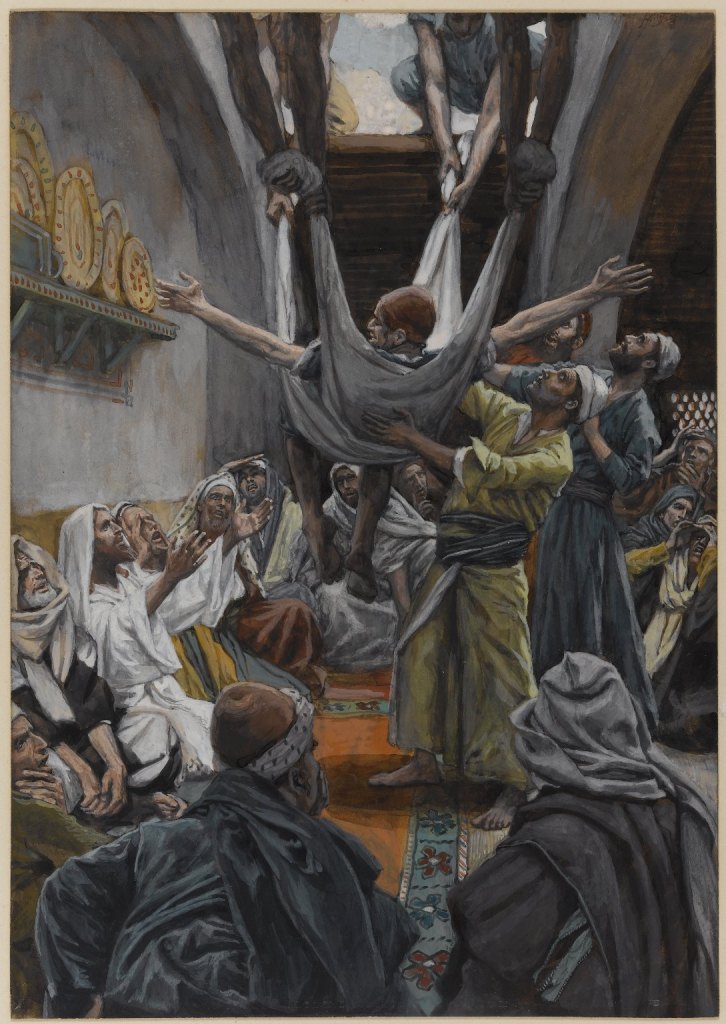
Jesus Cures the Palsied Man – James Tissot
Jesus, ignoring their religiously manufactured limitations, cures a paralyzed man. The scribes are scandalized. But Jesus confronts their equivocation:
Jesus said, “Why are you thinking such things in your hearts? Which is easier, to say to the paralytic, ‘Your sins are forgiven,’ or to say, ‘Rise, pick up your mat and walk’? But that you may know that the Son of Man has authority to forgive sins on earth” –he said to the paralytic, “I say to you, rise, pick up your mat, and go home.” He rose, picked up his mat at once, and went away in the sight of everyone. They were all astounded and glorified God …
Mark 2: 8-12
What would the world be like if we remained open to God’s grace, mercy, and infinite possibility? Can we even imagine such freedom and trust? Can we even imagine the marriage of our faith and politics to the point that we all live for the common good?
Thought for today: from “The City of God” by St. Augustine. This book was written in response to allegations that Christianity brought about the decline of Rome. It is considered one of Augustine’s most important works, standing alongside The Confessions, The Enchiridion, On Christian Doctrine, and On the Trinity.
“Indeed, the only cause of their [Rome] perishing was that they chose for their protectors gods condemned to perish.”
Today, in God’s Lavish Mercy, Jesus shows us how to live a merciful life – through loving, generous, joyfully responsive service.
A leper came to him and kneeling down begged him and said, “If you wish, you can make me clean.” Moved with pity, he stretched out his hand, touched the leper, and said to him, “I do will it. Be made clean.”
Mark 1: 40-41
A pitiable leper interrupts Jesus on his journey to ask for help. People like this man were scorned, feared, and isolated. Their leprosy impoverished them, making them annoying beggars. Their cries usually met with indifference at best and banishment at worst.
But when this leper poses his proposal to Jesus – “If you want to, you can heal me.” — Jesus gives the spontaneous answer of a true, merciful heart: “Of course I want to!”
Jesus heals the Leper – Alexandre Bida
There is no annoyance, no suggestion that other concerns are more important. There is just the confirmation that – Yes- this is my life’s purpose: to heal, love, and show mercy toward whatever suffering is in my power to touch. There is simply the clear message that “You, too, poor broken leper, are Beloved of God.”
What an example and call Jesus gives us today! We are commissioned to continue this merciful touch of Christ along the path of our own lives. When circumstances offer us the opportunity to be Mercy for another, may we too respond with enthusiasm, “Of course I want to!” May we have the eyes to see through any “leprosy” to find the Beloved of God.
Poetry: from Naming the Leper – Christopher Lee Manes
Between 1919 and 1941, five relatives of Christopher Lee Manes were diagnosed with an illness then referred to as “leprosy” and now known as Hansen’s disease. After their diagnosis, the five Landry siblings were separated from their loved ones and sent to the National Leprosarium in Carville, Louisiana, where they remained in quarantine until their deaths. Drawing on historical documents and imaginative reconstructions, Naming the Leper tells through poetry this family’s haunting story of exile and human suffering.
Manes won the Summerlee Book Prize for his work. Here is an excerpt that conveys the aimless desolation felt by “the leper” — likely felt by Jesus’s leper too.
” the trouble with this place…”
Dear Claire,
The trouble with this place
is getting out of bed to live
through the corpse of another day;
letting the world roll as God wants it,
while we sit on the front porch
and wave flies
from our face.

Isn’t it a wonder
more of us do not go crazy,
forced to live brooding over these
unfortunate conditions;
thrown into a contact so intimate and prolonged
we let go our reflections in the river,
and our loved ones—but most importantly,
the very children we’ve begotten—
forget us.
Today, in God’s Lavish Mercy, Isaiah opens our prayer with this amazingly inclusive passage, both a vision and an invitation:
In days to come, The mountain of the LORD’s house shall be established as the highest mountain and raised above the hills. All nations shall stream toward it; many peoples shall come and say: “Come, let us climb the LORD’s mountain, to the house of the God of Jacob, That he may instruct us in his ways, and we may walk in his paths.”
Isaiah 2:2-3
These first chapters of Isaiah were written about 8oo years before Christ, near the time of the Babylonian Captivity. The faith, vision, and hope of Israel were being sorely tested. Isaiah’s core message to these beleaguered people is that even when we do not see God, God abides. This abiding God will lead them to a new reality … to the “highest mountain” as opposed to their current valley of tears.
Isaiah is clear that this abiding promise is extended not only to Israel, but to all nations! What a surprising statement to find in the precious literature of Israel’s exceptionalism!
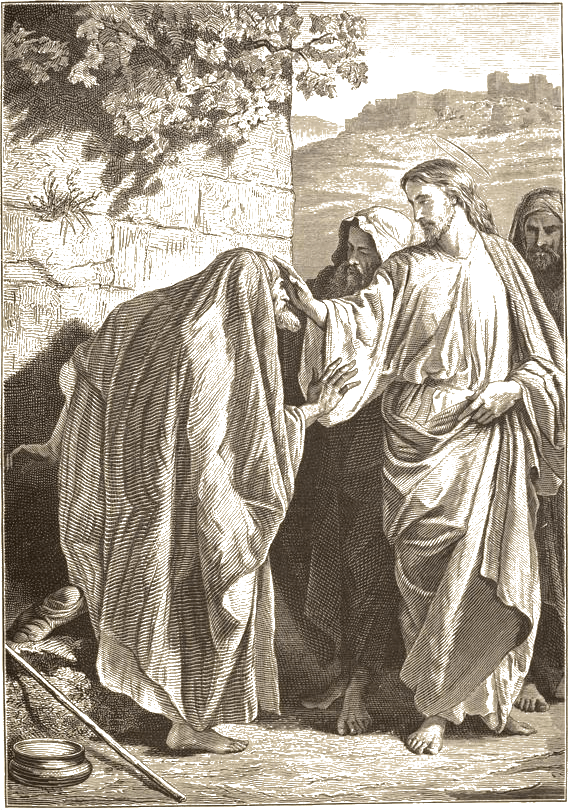
Jesus Heals a Centurion’s Servant – William Brassey Hole
To confirm this open invitation to “all nations”, our Gospel relates a complementary story. One of the first figures presented to us early in this Advent journey is the Gospel centurion, a Gentile with imperceptible religion but striking faith. His humble response to Jesus acknowledges that he, with all Creation, is subject to an infinitely loving Authority:
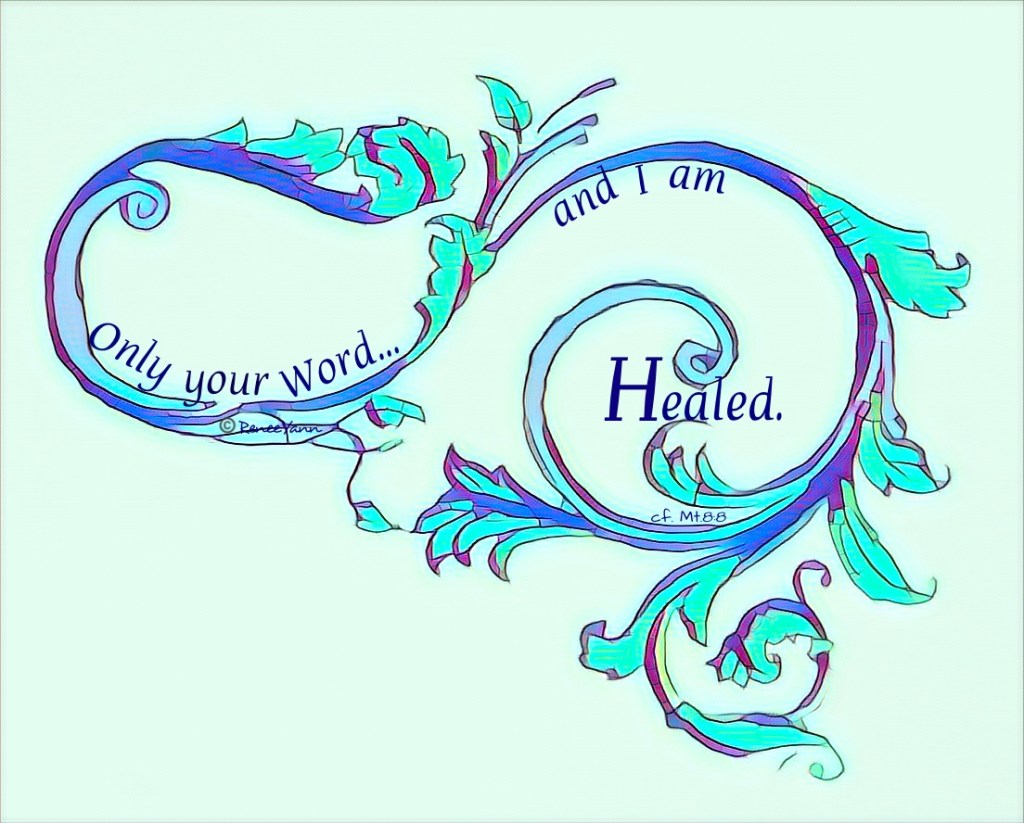
Lord, I am not worthy to have you enter under my roof; only say the word and my servant will be healed. For I too am a man subject to authority, with soldiers subject to me. And I say to one, ‘Go,’ and he goes; and to another, ‘Come here,’ and he comes; and to my slave, ‘Do this,’ and he does it.”
Matthew 8:6-9
Our Advent lesson? Maybe this. To bring, as the centurion did, our beloved hopes and needs before God. To place them lovingly, confidently in the Divine Heart. To trust and receive God’s answers with all the faith we can gather. And to look, not past the moment, but through it to the holy mountain in the distance – a distance which is shortened by our faithful Advent prayer.
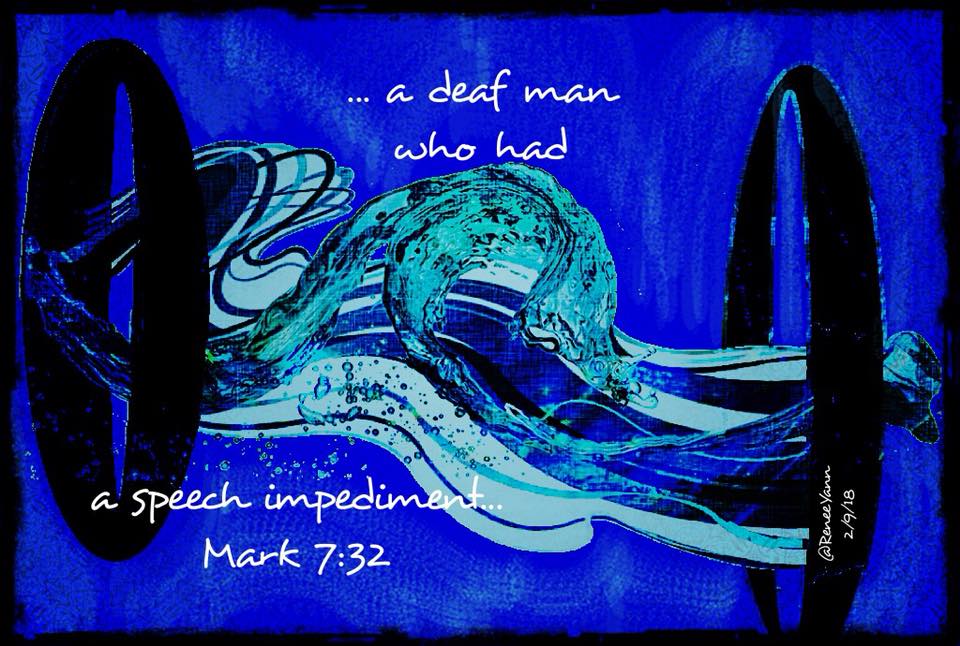
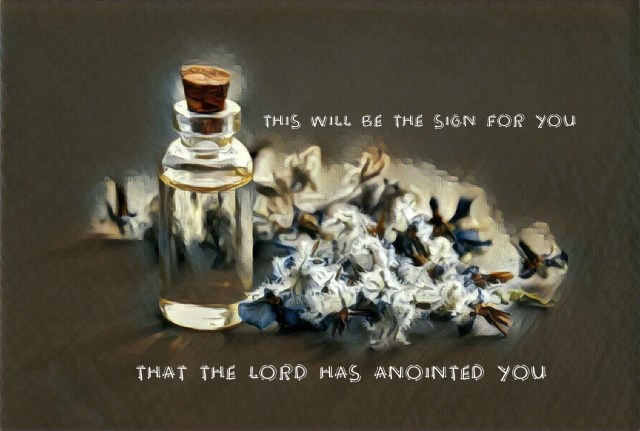
Poetry: I couldn’t come up with a written poem today, so I drew one:















 Lavish Mercy