We Belong to One Another

Monday, October 8, 2018

Readings: http://www.usccb.org/bible/readings/100818.cfm

Today, in Mercy, our Gospel gives us the parable of the Good Samaritan. It is a story in which we can all find ourselves, maybe changing roles in the changing circumstances of our lives.

IMG_6600

Have we ever been the robbers, the bullies, the outlaws who in some way used force or subterfuge to gain their own advantage? We don’t have to be a criminal to do this. We can do it by our prejudices, our preferential treatment, our secrets and our cliques. We can do it by our uninformed or willful choices which deprive others of their needs and rights.

Have we ever been the Levite, the one who claims a special religious place by family heritage? Have we ever, like the Levite in the parable, bypassed someone because of her religion or ethnic origins – because she isn’t “like us”?

Have we ever been this pathetic priest who so completely misunderstands the role of minister – who ignores God’s suffering creature for fear of some imagined contamination?

Have we ever been the victim, the one set upon by the meanness of others, the one unable to heal himself from injury? Has the memory made us more like the Samaritan or like the robbers once we were healed?

And finally, have we ever been the Samaritan? Do we even want to be? Or do we think him foolish to have given his own time and treasure for a stranger?

This parable is a study in differences and how we respond to them. Some use differences to separate rather than enrich their world. They fail to understand that we all belong to each other and will live forever as one family in heaven. If we don’t learn to do it in this life, we won’t be part of it in the life to come.

Realizing this may change how we might have responded on that ancient road – or the road right now where we’re all just walking each other home.

Music: Take All the Lost Home ~ Joe Wise

Remember Your Angels

Saturday, September 29, 2018
Readings: http://www.usccb.org/bible/readings/092918.cfm

Today, in Mercy, we celebrate the Feast of the Archangels Michael, Gabriel and Raphael.

Ps 138_Angel

I have always had a special love for St. Michael, having grown up in a parish named for him. Like many people, I was fascinated by the concept of angels – dynamic, immortal beings who provided hidden protection to my young soul. Although popular culture minimizes angels into fat little Valentine cherubs, the idea of a strong, noble supernatural sibling has remained with me throughout life. 

And although tradition has designated these angels with beautiful male names, angels are without gender. They could just as easily be imagined as mighty, glorious Sisters safeguarding us for God.

Praying with the angels can teach us more about their nature, and more about our own. Each of us, creatures of The Eternal One, reflect particular aspects of God’s nature. Just as children might resemble one of their parents, we humans and angels look like God. 

We humans, with all natural Creation, reflect God’s mercy, love, inclusivity.

Angels mirror God’s power, transcendence and glory. They exist in the perfection of adoration and service to God. They invite us to that same perfection when our earthly journey ends.

What a blessing and help for us to live more consciously in the presence of these invisible beings who desire and foster our good! What a spiritual support to realize that the communion of angels and saints perpetually and lovingly surrounds us!

The Catechism of the Catholic Church says this:

From its beginning until death, human life is surrounded by the angels’ watchful care and intercession. Beside each believer stands an angel as protector and shepherd leading that person to life. Here on earth the Christian life already shares by faith in the blessed company of angels and saints united in God.

Perhaps today, we might pray to know these holy companions a little better, and to gratefully allow them to bolster our spirits for the day’s journey.

Music: The Hymn of the Cherubim of the Byzantine Liturgy is one of the most beautiful hymns of all the Catholic Liturgies. The hymn was added to the Divine Liturgy of St. John Chrysostom by the Emperor Justinian. The lyrics are:     

We, who mystically represent the Cherubim,
And chant the thrice-holy hymn to the Life-giving Trinity,
Let us set aside the cares of life
That we may receive the King of all,
Who comes invisibly escorted by the Divine Hosts.

Jealousy Dresses in Many Costumes

Sunday, September 23, 2018

Reading: http://www.usccb.org/bible/readings/092318.cfm

Today, in Mercy, our Sunday readings each address, in some way, the motivations and judgments of the heart.

Most of us are good people, or at least we want to be. But life can still get us mixed up in situations and decisions which test our character and challenge our moral fortitude. A few characters from today’s readings seem beset with such dilemmas.

The voice within the Wisdom passage belongs to a hard-hearted and jealous person who finds the just person obnoxious. The speaker can’t stand being shown up by the good man’s character. It challenges his comfortable, self-absorbed existence.

In our epistle, James gives us the powerful admonitions, “Where jealousy and selfish ambition exist, there is disorder and every foul practice.” He tells us that our hearts should be filled instead with the wisdom from above, yielding peace, gentleness and Mercy.

When I watch the news, or observe the day’s political dramas, I long for the honest, sincere and decent world James describes. I long for a world where we respect and honor each other beyond politics, gender, color, nation, religion, and sexual orientation – for a world where we make choices FOR one another, not against.

How can we help realize a world like that by the choices we make in our personal lives? How can we minimize the jealousy that is born of self-interest and prejudice?

In the Gospel, Jesus tells us the way. His disciples are busy trying to figure out which of them is the greatest, missing -as they so often do- the whole point of discipleship. Jesus is gentle with them. He tells them to look at a little child. There they will find what is most important – in simplicity, vulnerability, openness, innocence. They will see that this is the way Jesus is with them.

If we can approach and receive one another with just an ounce of such selflessness, we might begin to change the world.

Music: Ubi Caritas ~ Taizé Community

Ubi caritas et amor, ubi caritas, Deus ibi est.

Where there is charity and love, God abides.

Decant the New Wine

Friday, September 7, 2019

       Reading: https://m.youtube.com/watch?v=QbJaM_EneMw

Today, in Mercy, Jesus offers the Pharisees “new wine”, the freedom of his law of love over their accustomed law of requirements.

Lk5_38 Wine

Have you ever found yourself in circumstances where you’re saying or hearing things like this:

  • It’s the law
  • That’s the way we’ve always done it
  • Sorry. They’re the rules.
  • Doesn’t matter. No exceptions.

In such situations, we are experiencing a code of limitations where we are defined either by what we must do or must not do. 

The Pharisaical law had become such a code, its spirit and freedom worn away by ages of control, authoritarianism, and brittle institutionalization.

Jesus preaches the new law of love, which can sound a little squishy and self-indulgent at first, because our navel-gazing culture has so eviscerated the meaning of love.

But real Christian love is the hardest “code” we will ever practice. Patterned on Jesus’ life, it is a discipline of mercy, self-sacrifice, radical inclusivity, non-violence, and forgiveness. Such a love will die for the sake of the beloved’s life in God.

Drinking this “new wine” brings us a profound freedom in God Who loves us like this — but infinitely.

Music: New Wine – Hillsong

Profession of Faith

Thursday, August 9, 2018

Readings: http://www.usccb.org/bible/readings/080918.cfm

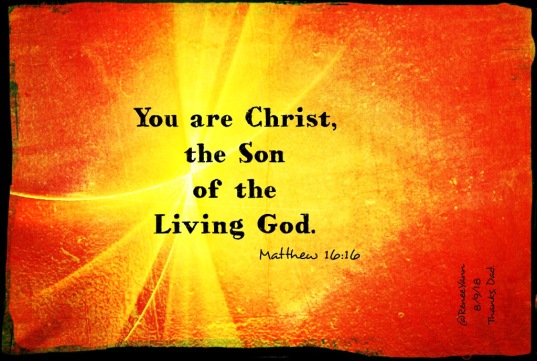
Today, in Mercy, our Gospel reading offers us Peter’s magnificent profession of faith. 

profession Mt16

This profession might cause us to consider our own faith and how we profess it in our daily lives.

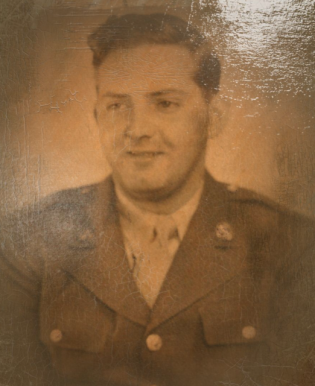
I think about that today in the context of my father’s life. Today is his birthday.

My father, gone to God nearly forty years ago, would have been 103 years old today.

He was born in the midst of the World War — called only that, because we never expected a second one.

His 28- year-old mother died when he was just two years old.

He grew up into a Depression which caused  him to cease his schooling at 7th grade and work the farm with the uncle who raised him.

Dad

By the tragic Second World War, he had grown to a man and  would fight in the fields and cities of Europe. He came home with pictures in his head that he would never talk about. And he never traveled again, at least not beyond Wildwood, New Jersey.

With not even a grade school diploma, he was a self-educated man in the skills of plumbing, electricity, painting, paper-hanging, and cement work.  Don’t undervalue this unless you have attempted these tasks yourself!

He was a hard-working, blue collar, salt-of-the-earth man who never owned his home but raised a family whose hearts he owned completely.

He suffered a heart injury at work when he was in his 50s and eventually – despite a valiant struggle – became disabled. After several heart attacks, he died a relatively early death at age sixty-six. In the intervening years, he read, prayed, and loved my mother, brother and me without reservation. He never missed a Sunday or Holy Day at Church. He prayed his devotions and novenas every day. He never put a single person down by his words or actions.

Some may read this short synopsis of his life and think it a little tragic. I read it and remember an everyday saint. He was made so by his resolute faith and trust in God; by his honest, inclusive patriotism, by his immense selflessness, and by his abundant kindness. These traits characterized many of “The Greatest Generation”.  We should never underestimate the contribution of their character to our national historical wealth.

My Dad died completely fulfilled and happy, leaving a heritage of faith, loyalty, generosity and love. That was his profession of faith, and I take great joy in it today. I think in many ways, Dad was a lot like Peter and I like to think of him that way as I pray this morning .

My dear readers, in your own family trees, I hope you are blessed to have such people- rough, tender-hearted heroes who carried you into the fullness of your life. Think of them, learn from them, and bless them today. Be them – if you have the courage.

Dad loved music. Toward the end of his life, this free and beautiful melody was one of his favorites. You might enjoy it as you pray this morning.

Verde ~ Guido and Maurizio DeAngelis

Pray for Priests

Saturday, August 4, 2018

Readings: http://www.usccb.org/bible/readings/080418.cfm

Today, in Mercy, we hear again about John the Baptist, the greatest prophet and preacher of all time, other than Jesus. John was so powerful that Herod thought he had come back from the dead to punish Herod’s sins.

John Vianney

Today is also the feast of St. John Vianney, popularly known as the “Curé d’Ars”. John was a simple and vibrantly devout parish priest in 19th century France. His humble holiness so transformed souls that he is considered the model and patron saint of all priests. St. John Vianney not only said, but lived, this statement:

“The priesthood is the love of the heart of Jesus.
When you see a priest, think of our Lord Jesus Christ.”

God knows we need the influence of this saintly man today in the Catholic Church. It is a time when many have lost faith in the priesthood because of the heinous sins of some. That loss of faith is inevitably tied to our sacramental life. It is a tragic and profound bereavement.

Our society suffers a similar foundational trauma in so many other areas. When people of my age were young, we could trust our priests, our doctors, our police officers, our bankers, our government to safeguard our good. That trust has eroded in this time of exposure of deep-rooted, extensive corruption in once trusted institutions.

How do we restore our faith in the Church and other service institutions we have loved? We have already begun some of the work in the Church, but there is still much to be done. The work may serve as a model for other institutions:

  • Name and confront the corruption 
  • Remove the structures, myths and attitudes which allow corruption to thrive
  • Declericalize and humanize the priesthood – flatten the “power tower”
  • Support the full participation of women in all societal roles.
  • Redefine “priest” as simply one in the community of believers.
  • Pray for the many good priests who are suffering from the stigma of their errant peers and support them by our vital commitment to true Christian community.

Today, let’s pray together the prayer of St. John Vianney:

God, please give to your Church today
many more priests after your own heart.
May they be worthy representatives of Christ the Good Shepherd.
May they wholeheartedly devote themselves to prayer and penance;
be examples of humility and poverty;
shining models of holiness;
tireless and powerful preachers of the Word of God;
zealous dispensers of your grace in the sacraments.
May their loving devotion to your Son Jesus in the Eucharist
and to Mary his Mother
be the twin fountains of fruitfulness for their ministry.
Amen.

Music: Philippians Canticle ~ John Michael Talbot
This hymn reflects the true nature of the priesthood of Jesus Christ


God Bless America

Wednesday, July 4, 2018

Readings: http://www.usccb.org/bible/readings/070418.cfm

bike wheel

The Fourth of July in 1955 looked like this to me:

• red, white and blue crêpe paper strung through my bicycle wheels
• an open fire hydrant at the height of the hot afternoon
• about six firecrackers, fizzling off a neighbor’s doorstep
• hot dogs, Kool-Aid and catching fireflies after sunset

We gathered our families, hoisted the flag, prayed for loved ones lost in a war too fresh to reflect on. We listened to music by John Philip Souza. We felt safe, strong, comfortable and grateful to be Americans. But my 10-year old America was very small.

It was an America before Civil Rights, Medicare and Medicaid; before the Kennedy and King assassinations, Vietnam, Watergate. It pre-dated Roe v. Wade, drug wars, mass shootings, 9/11, global warming, and marriage equality. It was a world without internet, cable news and Twitter.

It was a simple, circumscribed world that we will never see again. So we should stop trying, because it was not a perfect world.  Its wounds and warts were about to fester. We have spent the intervening half-century doctoring ourselves for its recurring symptoms, never able to acknowledge the systemic cause of our pain.

For what it’s worth, here’s my diagnosis: Americans are afraid of God, and it’s making us sick.

But why are we so afraid?

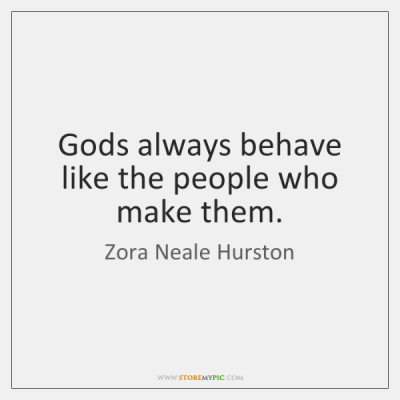
Contrary to the long-held opinions of some, modern evidence suggests that God is not male, not white, not a warrior, not rich, and not even American! And this scares some of us to death! We need that kind of God to justify our greed, domination and global arrogance.

Zora

So we keep creating the God we need. He carries an AK-47 and has a nuclear button under his fingertip. He builds walls to control people who are poor, hungry, and shades of brown. He stratifies people based on wealth, whiteness and worth to the system. He believes America should be first, and the rest of the world last. He reshapes religion into a vehicle for his own heartless caricature.

If we could just gain our independence from this idolatrous God, we might have better reason to celebrate the Fourth of July.

Today’s reading from the Book of Amos tells us what this liberating God wants:

Seek good and not evil, that you may live;
Then truly will the LORD, the God of hosts, be with you as you claim!
Hate evil and love good, and let mercy prevail at the border;
Then it may be that the LORD, the God of hosts, will have pity on you.

I hate, I spurn your feasts, says the LORD; I take no pleasure in your solemnities;
Your false prayers I will not accept. Away with your noisy songs!
But if you would truly honor Me, then let justice surge like water,
and mercy like an unfailing stream.

Music: God Bless America

Fired by Love

Wednesday, June 13, 2018

Readings: http://www.usccb.org/bible/readings/061318.cfm

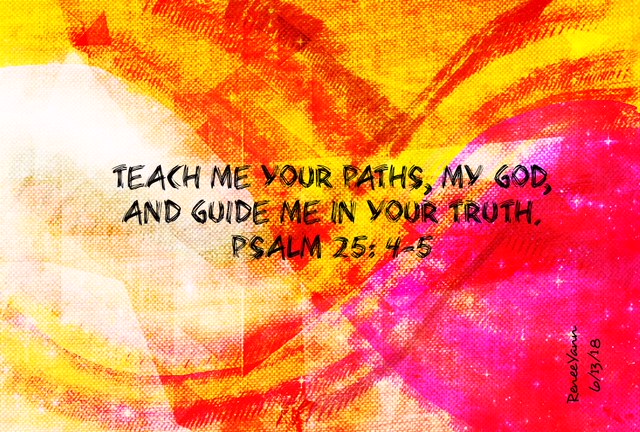
Ps 25 6_13_18

Today, in Mercy, when reading the passage about Elijah and the prophets of Baal, I was reminded of the Irving Berlin song, “Anything You Can Do, I Can Do Better”. In the reading, Elijah tests and even taunts Baal’s 450 prophets in a contest to prove whose God is true. Of course, Elijah wins in a stunning blast of fire. It is a religious exercise of “eradicate and supplant”.

The Gospel reading carries a similar theme.  Jesus’ followers seem to conclude that, because he is teaching something new, he is nullifying the customary Hebrew teachings. But Jesus says that, to the contrary, He is here to fulfill the Law, not to abolish it.

Religion, like any entrenched practice, tends over time to suffer the ill effects of institutionalization. Our rituals and devotions may become lifeless; our scriptures become rote. The power of our sacraments may be carelessly invoked and distractedly attended. A chasm grows between what we profess and what we live. We may become frozen. Sometimes, it might seem best to set the whole thing aflame and start all over again, like Elijah.

But Jesus challenges to us to go deeper than “practice”. Mere practice can easily become empty. Jesus shows us in his life what a fulfilled faith looks like. It is a faith expressed in service, sacrifice and inclusive mercy. It is a faith that, when brought to the pulpit and altar, carries the lives of those we love and serve. It is a faith, like the Psalmist’s, that listens for God’s direction deep in the experiences of life. It is a faith, not in contradiction to Law, but beyond it. It is a faith fired – transformed – by Love.

Music: Living Spirit, Holy Fire ~ David Haas

Prayer for Our Beloveds

Wednesday, June 6, 2018

Readings: http://www.usccb.org/bible/readings/060618.cfm

Today, in Mercy, we have the first of a few readings from Timothy, Paul’s beloved protégé in the faith.  Timothy had the blessing of not only Paul’s mentorship, but also of his own mother and grandmother who were devout Christian converts.

Lois and Timothy

Rembrandt’s Timothy and Lois

Today, we might give thanks for all those who have nurtured us in faith and love. We might also consider those who depend on us for the example and encouragement which leads them closer to God and to their best selves.

We might also pray for those desperate families and children seeking refuge at the US border. They also belong to us in Christ. May our prayer and advocacy help them to avoid harm.

It is our duty, in gratitude and mercy, to keep all these beloveds in our constant prayer, as Paul did Timothy in today’s tender reading.

Music: The Prayer

I pray you’ll be our eyes
And watch us where we go
And help us to be wise
In times when we don’t know

Let this be our prayer
When we lose our way
Lead us to a place
Guide us with your grace
To a place where we’ll be safe.

I pray we’ll find your light
And hold it in our hearts
When stars go out each night
Remind us where you are.

Let this be our prayer
When shadows fill our day
Lead us to a place
Guide us with your grace
To a place where we’ll be safe.

A world where pain and
sorrow will be ended
And every heart that’s
broken will be mended
And we’ll remember we
are all God’s children
Reaching out to touch you
Reaching to the sky.

We ask that life be kind
And watch us from above
We hope each soul will find
Another soul to love.

Let this be our prayer
Just like every child.
Needs to find a place
Guide us with your grace.
Give us faith so we’ll be safe

I Greet the Holy within You

Wednesday, May 16, 2018

Readings: http://www.usccb.org/bible/readings/051618.cfm

Today, in Mercy, in our reading from Acts, Paul continues his prayer for those who will safeguard and carry the faith into the future. In the Gospel, Jesus does the same thing. Both Jesus and Paul talk about the “consecration“ of those they are praying for.

Consecration is the act of making something sacred – setting it apart in God. Each one of us, by our Baptism, has been so consecrated. Jesus tells us that “the world” (read: the influences of greed, power, and self-absorption) will challenge what is sacred in us. These influences will fight against the Truth that we, and every other creature, are holy because Christ died for us.

On occasion, at very special liturgies, the celebrant will venerate the altar and the congregation with incense from a thurible. At funeral liturgies, the body of our loved one is so venerated. These acts recognize the holiness within us. In Hindu culture, the greeting, “Namaste” captures this understanding because it literally means, “I greet the Holy in you.” I was deeply moved to learn this word, many years ago, from one of our missionary Sisters returning from India.

Today’s readings encourage us to reflect on this question: Is my life an act of veneration to the sacred within me and everyone I meet?

Acts 20_32

Song: Holy Now by Peter Mayer