Today, in God’s Lavish Mercy, we pray with Psalm 98 which we reflected on just this past Saturday on the feast of St. Augustine. Here’s a refresher if you’d care to glance back.
Because they proclaim God’s faithfulness, today’s psalm verses ready us to receive the Gospel’s expansive injunction:
As we pass through the waters of life, we each meet our own “deeps”. Sometimes we do not recognize them as the sacred places where we are to meet God’s call.
Sometimes we see only their choppy surface, their tangled riptides, their frightening shadows.
Sometimes we miss the bounty held in the mystery of these moments. We fold our nets and try to sail away.
As he did for the weary disciples, Jesus
lovingly contradicts our fear,
releases our hope,
fills the flimsy net of our faith to bursting …
… if we will just trust his Word, and cast out with him over the waters of our lives.
Today, in God’s Lavish Mercy, we read from James who writes elegantly to his community. He reminds them and us that all gifts originate in our changeless, loving God Who breathed us into life from Infinite and Lavish Mercy.
Then James just so simply enjoins us:
So hear God’s Word of Love in your hearts
Be good by doing good for the afflicted
James says that doing this is “religion pure and undefined”.
James 1:27
In our Gospel, Jesus reinforces this truth. The Pharisees want to condemn Jesus and the disciples for breaking a ritual hand-washing rule. Jesus says those human rules are lip-worship. What God wants is a loving and sincere heart proven by loving and sincere deeds.
On this last Sunday of August, let us rejoice in the gifts God has given us- life, faith, the ability to love and hope. Let us reach out by prayer and service to those who might be blessed by our sharing.
That reach can be so simple: a smile, a phone call, a small courtesy, a solitary prayer. Or it can be huge: a long-delayed forgiveness, a turning from unhealthy or unholy behaviors, a commitment to faith and service. We ask the Creator of Lights to inspire us.
Poetry – excerpt from George MacDonald’s poem “Light”. I’ll post the entire poem separately today – long and very beautiful. Many of you may enjoy it.
Gentle winds through forests calling;
    Big waves on the sea-shore falling;
    Bright birds through the thick leaves glancing;
    Light boats on the big waves dancing;
    Children in the clear pool laving;
    Mountain streams glad music giving;
    Yellow corn and green grass waving;
    Long-haired, bright-eyed maidens living;
    Light on all things, even as now--
    God, our Father, it is Thou!
    Light, O Radiant! thou didst come abroad,
    To mediate 'twixt our ignorance and God;
    Forming ever without form;
    Showing, but thyself unseen;
    Pouring stillness on the storm;
    Making life where death had been!
    If thou, Light, didst cease to be,
    Death and Chaos soon were out,
    Weltering o'er the slimy sea,
    Riding on the whirlwind's rout;
    And if God did cease to be,
    O Beloved! where were we?

Father of Lights, pure and unspeakable,
    On whom no changing shadow ever fell!
    Thy light we know not, are content to see;
    And shall we doubt because we know not Thee?
    Or, when thy wisdom cannot be expressed,
    Fear lest dark vapors dwell within thy breast?
    Nay, nay, ye shadows on our souls descending!
    Ye bear good witness to the light on high,
    Sad shades of something 'twixt us and the sky!
    And this word, known and unknown radiant blending,
    Shall make us rest, like children in the night,--
    Word infinite in meaning: God is Light.
    We walk in mystery all the shining day
    Of light unfathomed that bestows our seeing,
    Unknown its source, unknown its ebb and flow:
    Thy living light's eternal fountain-play
    In ceaseless rainbow pulse bestows our being--
    Its motions, whence or whither, who shall know?
    O Light, if I had said all I could say
    Of thy essential glory and thy might,
    Something within my heart unsaid yet lay,
    And there for lack of words unsaid must stay:
    For God is Light.
Today, in God’s Lavish Mercy, as we pray with Psalm 34, our Sunday readings present us with spiritual ultimatums.
In our first reading, sensing his impending death, Joshua gathers the tribes on the Great Plains of Shechem – the land of their father Abraham. Joshua requires a commitment from the people:
“If it does not please you to serve the LORD, decide today whom you will serve … As for me and my household, we will serve the LORD.”
Joshua 24:15
In other words, “fish or cut bait” – you’re either with God, or you’re not. And your lives should reflect the choice.
In our Gospel, Jesus too feels death’s approach. His teachings have become more intense and direct, particularly regarding the Eucharist. This intensity has caused some of his listeners to waver. They’re not sure they can accept his words. Some drift away.
Jesus challenges the Twelve, those on whom he depends to carry his message after his death.
“Do you also want to leave?
These readings talk about the big choices, the soul’s orientation, either:
to seek and respond to God in our daily interactions
to be indifferent toward God’s Presence in our lives
Jesus’s question is before us all the time? Do we hear it?
(As for the unfortunate and contested second reading from Ephesians, this long but superb article from Elizabeth Johnson is worth your time.)
You see, I want a lot.
Perhaps I want everything:
The darkness that comes with every infinite fall
And the shivering blaze of every step up.
So many live on and want nothing
And are raised to the rank of prince
By the slippery ease of their light judgments
But what you love to see are faces
That do work and feel thirst…
You have not grown old,
And it is not too late to dive
Into your increasing depths where life
Calmly gives out its own secret.
Today, in God’s Lavish Mercy, we pray with Psalm 128. It describes the blessed scene that might ensue from the kind of hopeful and just community described in yesterday’s reflection. Because of its final verse, I like to think of it as a “Grandparents’ Blessing”.
Happy are they all who fear the Lord, and who follow in the ways of God! You shall eat the fruit of your labor; happiness and prosperity shall be yours. Your beloved shall be like a fruitful vine within your house, your children like olive shoots round about your table. The one who fears the Lord shall thus indeed be blessed. The Lord bless you from Zion, and may you see the prosperity of Jerusalem all the days of your life.
May you live to see your children’s children; may peace be upon your household.
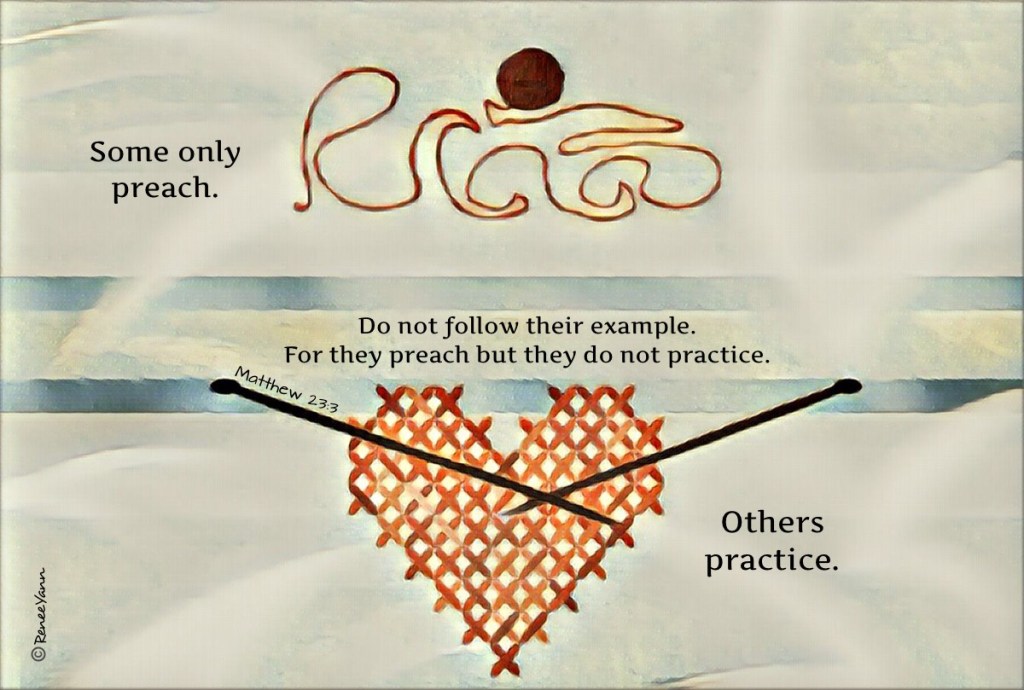
In our Gospel, Jesus tells us that we achieve such blessedness by actions, not simply by words.
Jesus spoke to the crowds and to his disciples, saying, “The scribes and the Pharisees have taken their seat on the chair of Moses. Therefore, do and observe all things whatsoever they tell you, but do not follow their example. For they preach but they do not practice.
Matthew 23: 1-3
I took that admonition to heart today. I do a lot of “preaching” on these pages. Following the example of Jesus, I need to see if those words come to life in my actions.
Are you with me?
Poetry: The Words We Speak – Hafiz
The words
We speak
Become the house we live in.
Who will want to sleep in your bed
If the roof leaks
Right above
It?
Look what happens when the tongue
Cannot say to kindness,
“I will be your slave.”
The moon
Covers her face with both hands
And can’t bear
To look.
Music: Without Words – Bethel Music
Just a pretty cool instrumental to reflect with today.
Today, in God’s Lavish Mercy, our readings capture the essence of life in God through Christ.
The first reading from Kings tells how Elijah, after eating the food God had provided him, was able to endure the long journey to God’s mountain. There, the sweetest whisper carried to Elijah the voice of God!
In today’s Gospel passage, Jesus makes clear that no one makes that journey into the heart of God unless God calls us. But Jesus says that the invitation is given to all who believe. He says that, just as with Elijah, the Father gives us food – Jesus himself – the bread of life.
The second reading from Ephesians says that we have already “been sealed for the day of redemption through the Holy Spirit.” Paul says that, given this amazing gift, we have only one job:
So be imitators of God, as beloved children, and live in love, as Christ loved us and handed himself over for us as a sacrificial offering to God for a fragrant aroma.
We are so accustomed to hearing these astounding passages that we may miss how astounding they really are. But Macrina Wiederkehr says:
When Jesus’ words begin to sound naive to our 21st century minds, let us look through the words, in between the words, underneath for a deeper truth.
Macrina Wiederkehr, OSB
Pierre Teilhard de Chardin, the great Jesuit mystical theologian, upon reading these passages, saw the mystery of the Body of Christ. He saw our call to be the heart of Christ in the world. He saw Christ’s promise to become one with us in Eucharist. He saw that, through this Infinite Love played out in our ordinary lives, God continues to redeem Creation.
In each soul, God loves and partly saves the whole world which that soul sums up in an incommunicable and particular way.
The Divine Milieu
Poetry: Love after Love by Derek Walcott
The time will come when with elation you will greet yourself arriving at your own door, in your own mirror and each will smile at the other’s welcome and say, sit here, eat. You will love again the stranger who was your self
Give wine, give bread. Give back your heart to itself, to the stranger who has loved you all your life whom you ignored for another who knows you by heart
Take down the love letters from the bookshelf, the photographs, the desperate notes, peel your own image from the mirror. Sit. Feast on your life.
Music: Quintessence – Spencer Brewer
May this lovely instrumental piece help take us to a deeply prayerful place as we contemplate God’s gift in Jesus.
Today, in God’s Lavish Mercy, we pray with Psalm 105 which depicts a “Remembering God” who calls us to respond as a “Remembering People”.
“Forever” is a word whose true meaning can be found only in an Eternal God. In Exodus, and in our Psalm 105, we see God inviting us to that fullness.
Our first reading recounts the Abrahamic covenant renewed with Moses. God, flaming out of a bush, tells Moses that God sticks by agreements.
God spoke further to Moses, “Thus shall you say to the children of Israel: The LORD, the God of your fathers, the God of Abraham, the God of Isaac, the God of Jacob, has sent me to you. “This is my name forever; this my title for all generations.
Exodus 3:15
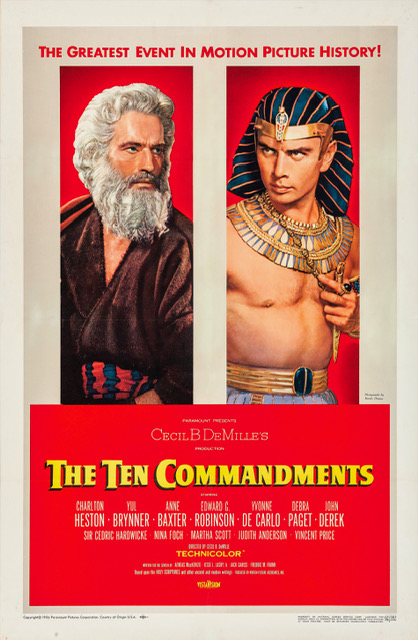
(I don’t know about you, but I’ve flashbacking all week to to Cecil B. DeMille’s 1956 classic, The Ten Commandments.)
Our psalm reinforces the Exodus commitment:
God remembers forever the covenant made binding for a thousand generations entered into with Abraham and by the oath to Isaac.
Psalm 105: 8-9
Our brief but beautiful Gospel shows us what God’s promise looks like in the tender person of Jesus:
Jesus said: “Come to me, all you who labor and are burdened, and I will give you rest. Take my yoke upon you and learn from me, for I am meek and humble of heart; and you will find rest for yourselves. For my yoke is easy, and my burden light.”
Matthew 11: 28-30
Throughout the ages, God’s reiterated fidelity calls us to obedience – that “heart-listening” which hears the invitation to Love.
Poetry: Everything That Was Broken – Mary Oliver
Everything that was broken has
forgotten its brokenness. I live
now in a sky-house, through every
window the sun. Also your presence.
Our touching, our stories. Earthy
and holy both. How can this be, but
it is. Every day has something in
it whose name is Forever.
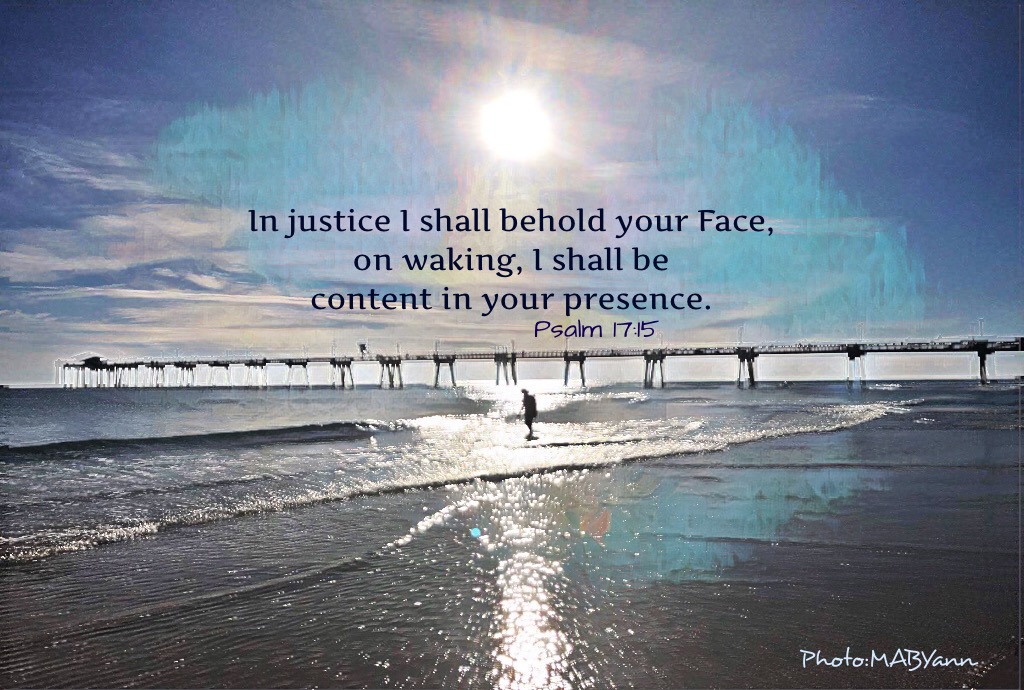
Today, in God’s Lavish Mercy, we pray with Psalm 17, a prayer which captures our deep desire to live in the Light of God’s Face.
We, like the psalmist and like Jacob in our first reading, want to know, to understand, to name the Holy in our experience.
From you let my judgment come; your eyes behold what is right. Though you test my heart, searching it in the night, though you try me with fire, you shall find no malice in me.
Psalm 17:6-7
When Jacob struggles with the heavenly visitor, he wants a blessing and the visitor’s name. Jacob wants to define what has happened to him in the night.
The man then said, “Let me go, for it is daybreak.” But Jacob said, “I will not let you go until you bless me.”
Genesis 32:27-28
The Spirit does bless Jacob, but remains nameless, beyond the confines of Jacob’s definition. It is only after the visitor has departed that Jacob realizes whom he has encountered:
With that, the visitor bade him farewell. Jacob named the place Peniel, “Because I have seen God face to face,” he said, “yet my life has been spared.”
Genesis 32:30-31
In our own lives, Heaven visits us constantly though we may be unaware. Discovering God’s Face depends so much on where we look and how we have learned to see.
Psalm 17 tells us that, if we stand in the light of justice and mercy, God’s face is revealed to us.
This was the light in which Jesus lived – to the point that, as we read in today’s Gospel, he could discover God’s face even under the guise of a poor demoniac.
Poetry: God BY KAHLIL GIBRAN
In the ancient days, when the first quiver of speech came to my lips, I ascended the holy mountain and spoke unto God, saying, “Master, I am thy slave. Thy hidden will is my law and I shall obey thee for ever more.”
But God made no answer, and like a mighty tempest passed away.
And after a thousand years I ascended the holy mountain and again spoke unto God, saying, “Creator, I am thy creation. Out of clay hast thou fashioned me and to thee I owe mine all.”
And God made no answer, but like a thousand swift wings passed away.
And after a thousand years I climbed the holy mountain and spoke unto God again, saying, “Father, I am thy child. In pity and love thou hast given me birth, and through love and worship I shall inherit thy kingdom.”
And God made no answer, and like the mist that veils the distant hills he passed away.
And after a thousand years I climbed the sacred mountain and again spoke unto God, saying, “My God, my aim and my fulfillment; I am thy yesterday and thou are my tomorrow. I am thy root in the earth and thou art my flower in the sky, and together we grow before the face of the sun.”
Then God leaned over me, and in my ears whispered words of sweetness, and even as the sea that enfoldeth a brook that runneth down to her, he enfolded me. And when I descended to the valleys and the plains God was there also.
Music:
We behold the splendor of God shining on the face of Jesus. We behold the splendor of God shining on the face of the Son.
[Verse1] And oh, how his beauty transforms us, the wonder of presence abiding. Transparent hearts give reflection of Tabor’s light within, of Tabor’s light within.
(Repeat Chorus)
[Verse 2] Jesus, Lord of Glory, Jesus, Beloved Son, oh, how good to be with you; ow good to share your light; how good to share your light.
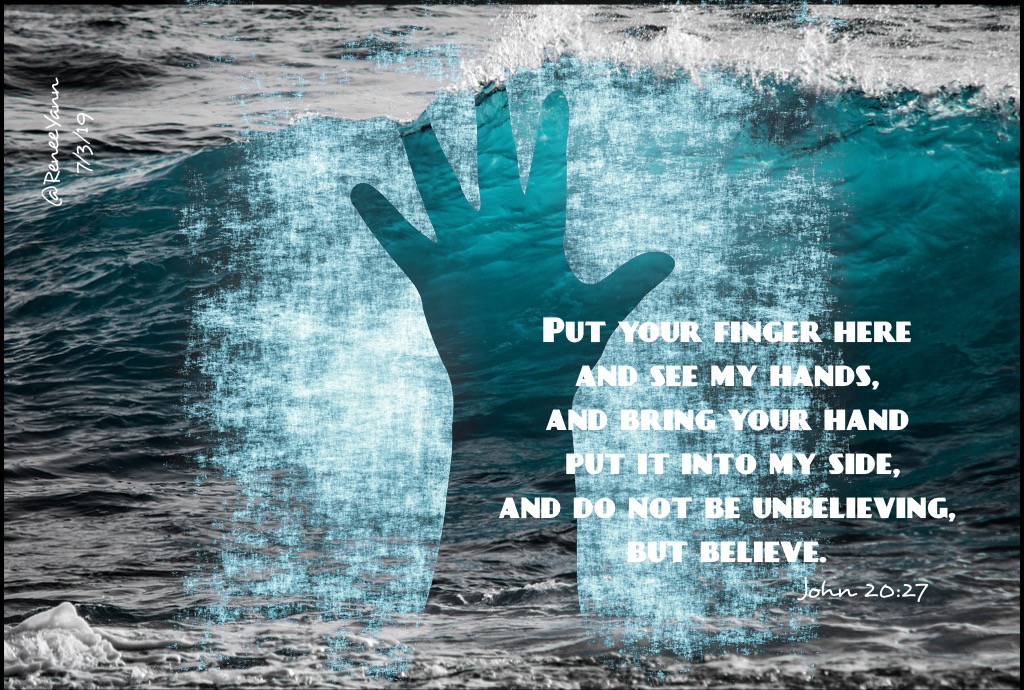
Today, in God’s Lavish Mercy, we pray with Psalm 117. We do so in the spirit of Thomas, who now offers his unquestioning faith to our patient and forgiving Jesus.
Praise the LORD, all you nations; glorify him, all you peoples! For steadfast is his kindness for us, and the fidelity of the LORD endures forever
Psalm 117: 1-2
Faith is not a commodity or an achievement. Faith is relationship and a journey.
It is a gift and an exercise of grace. Never stretched, it withers like a brittle ligament.
It ebbs and flows with our personal and communal dramas. It deepens with prayer, silent reaching, and a listening obedience to our lives. It shallows with our demands, like Thomas’s, only to see and to touch.
It is fed by the Lavish Mercy of God Who never cuts its flow to our souls if we but take down the seawall around our heart.
On this day when we celebrate the power of tested and proven faith, may we bring our needs into the circle gathered in that Upper Room.
Standing beside Thomas today in our prayer, may we place our trust in the glorified wounds of Christ.
A video today for our prayer: Blessed Are They That Have Not Seen
Music: Healing Touch – Deuter
As we reach out in faith with Thomas to touch Christ’s wounds, let us open our hearts to receive the returning touch of God’s Lavish Mercy.
Today, in God’s Lavish Mercy, we pray with Psalm 107, a poem filled with images that hold secrets for our spiritual journey:
They who sailed the sea in ships, trading on the deep waters, These saw the works of the LORD and God’s wonders in the abyss.
Psalm 107:23-24
Those who have the opportunity to see the ocean in its many moods will quickly understand the analogy.
Life is an ocean, but we are not sailing it alone.
That’s what the Lord suggests to Job in our first reading, and what Jesus points out to the nervous disciples in our Gospel.
Psalm 107 tells us that when life distresses us we should do just what the disciples did:
They cried to the LORD in their distress; from their straits he rescued them, God hushed the storm to a gentle breeze and the billows of the sea were stilled
Psalm 107: 28-29
It also suggests us that we can hope for this result:
They rejoiced that they were calmed, and brought to their desired haven. Let them give thanks fo the Lord’s kindness and wondrous deeds to us all.
Psalm 107:30-31
The message of today’s readings for me is trust and hope — in both calm and storm. Let’s pray for it.
Poetry: blessing of the boats – Lucille Clifton
(at St. Mary’s)
may the tide that is entering even now the lip of our understanding carry you out beyond the face of fear may you kiss the wind then turn from it certain that it will love your back may you open your eyes to water water waving forever and may you in your innocence sail through this to that.
Today, in God’s Lavish Mercy, we pray with Psalm 34 once again. With its two accompanying readings, the psalm hits me right between the eyes with this awareness:
Those of us trying to live in God’s presence, the world isn’t going to help us. We will be in contradiction to many, if not most, popular values. Our choices may be questioned, if not ridiculed. Our values may be explained away. Our integrity may be challenged.
What’s it like to live a faith-based life in today’s culture? The image that comes to my mind is that of trying to play soccer with a square ball!
Paul felt the dissonance:
But the Lord said to me, “My grace is sufficient for you, for power is made perfect in weakness.” So I will rather boast most gladly of my weaknesses, in order that the power of Christ may dwell with me. Therefore, I am content with weaknesses, insults, hardships, persecutions, and constraints, for the sake of Christ …
Jesus put the contradiction in a nutshell for us:
No one can serve two masters. You will either hate one and love the other, or be devoted to one and despise the other. You cannot serve God and mammon.
So we need to figure out our “mammon” and vanquish it. We need to make the choice that Paul, the psalmist, and Jesus made. Let’s pray on it today.
Poetry: Contraband – Denise Levertov
The tree of knowledge was the tree of reason. That’s why the taste of it drove us from Eden. That fruit was meant to be dried and milled to a fine powder for use a pinch at a time, a condiment. God had probably planned to tell us later about this new pleasure. We stuffed our mouths full of it, gorged on but and if and how and again but, knowing no better. It’s toxic in large quantities; fumes swirled in our heads and around us to form a dense cloud that hardened to steel, a wall between us and God, Who was Paradise. Not that God is unreasonable – but reason in such excess was tyranny and locked us into its own limits, a polished cell reflecting our own faces. God lives on the other side of that mirror, but through the slit where the barrier doesn’t quite touch ground, manages still to squeeze in – as filtered light, splinters of fire, a strain of music heard then lost, then heard again.








 Lavish Mercy