Today, in God’s Lavish Mercy, we pray with Psalm 94 which assures us of God’s patient and enduring love.
Happy are they whom you instruct, O Lord! whom you teach out of your law; to give them rest in evil days… For you will not abandon your beloved, nor will you forsake your own.
Psalm 94: 12-14
How does God instruct us in this perfect Law? Our Alleluia Verse offers this insight:
Take my yoke upon you and learn from me, For I am meek and humble of heart.
Matthew 11:29
By imitating the humble love of Jesus, we learn to become more like God in whose image we are created.
Deepening in that imitative love is a lifelong journey. Sometimes, maybe often, our footing is unsure. Sometimes we even fall flat on our face!
The psalmist tells us we are not alone in the struggle, a verse we might repeat when we are a bit off spiritual balance:
Were not the LORD my help, my soul would soon dwell in the silent grave. When I say, “My foot is slipping,” your mercy, O LORD, sustains me.
Psalm 94: 17-18
Poetry: Prayer of the Tightrope Dancer – Sister Eleanor Fitzgibbons, IHM
Oh God of tenderness and watchful love, You are my balance beam, I shall not falter. With you, my surety, I will not fail.
Music: Two songs today
Blessed Assurance – written in 1883 by Fanny Crosby an amazing creative talent and activist. She was blind from infancy.
For my fellow tightrope walkers out there: Walk-in’ the Tightrope: Some of you might like this rockin’ song from Stevie Ray Vaughn to kick up your Saturday 😉
Today, in God’s Lavish Mercy, we pray with Psalm 68 which pictures a triumphant God, rising like the sun over the darkness of evil.
Arise, O God, and let your enemies be scattered; let those who hate you flee. Let them vanish like smoke when the wind drives it away; as the wax melts at the fire, so let the wicked perish at your presence.
Psalm 68: 1-3
This psalm comforts us with a tender picture of God:
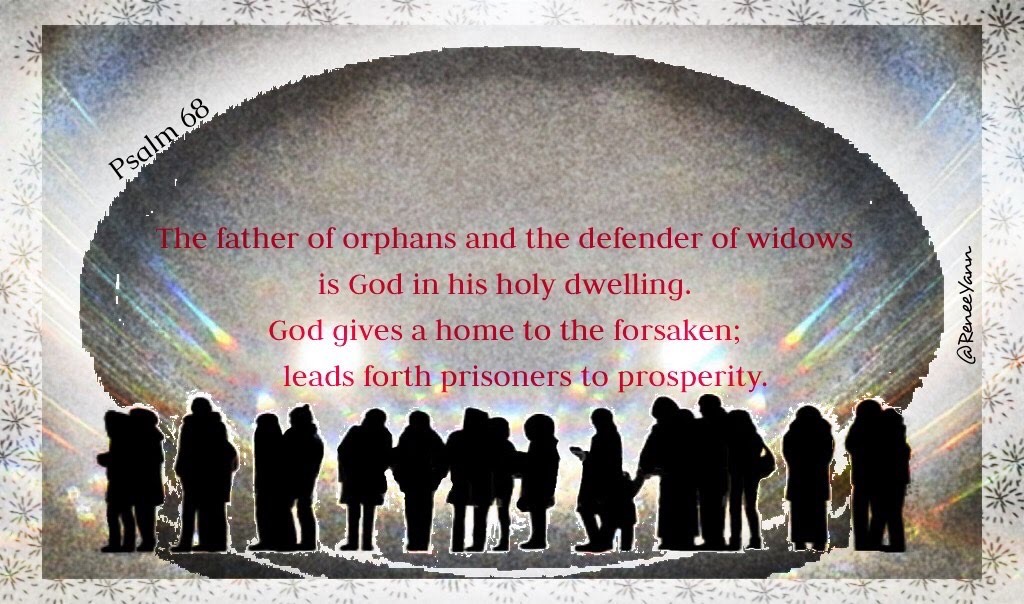
Protector of orphans, defender of widows, the One who dwells in holiness, who gives the solitary a home and brings forth prisoners into freedom; but the rebels shall live in dry places.
Psalm 68: 5-6
It is the same tenderness Paul presents in our first reading:
For those who are led by the Spirit of God are children of God. For you did not receive a spirit of slavery to fall back into fear, but you received a spirit of adoption, through which we cry, “Abba, Father!” The Spirit bears witness with our spirit that we are children of God, and if children, then heirs, heirs of God and joint heirs with Christ…
if only we suffer with him so that we may also be glorified with him.
And there we have the key line: we are to live a life aligned with the Passion, Death, and Resurrection of Christ.
And what will that kind of life look like? It will look like our merciful Jesus of today’s Gospel – who stepped out to see, comfort, and heal the suffering around him.
Jesus recognized the crippled woman as “an heir of God, and joint heir with him” to the fullness of life in God. We are called recognize ourselves and all of our sisters and brothers in the same way.
Poetry: WOMAN UN-BENT (LUKE 13:10–17) – by Irene Zimmerman, OSF
That Sabbath day as always
she went to the synagogue
and took the place assigned her
right behind the grill where,
the elders had concurred,
she would block no one’s view,
she could lean her heavy head,
and (though this was not said)
she’d give a good example to
the ones who stood behind her.

That day, intent as always
on the Word (for eighteen years
she’d listened thus), she heard
Authority when Jesus spoke.

Though long stripped
of forwardness,
she came forward, nonetheless,
when Jesus summoned her.
“Woman, you are free
of your infirmity,” he said.

The leader of the synagogue
worked himself into a sweat
as he tried to bend the Sabbath
and the woman back in place.

But she stood up straight and let
God’s glory touch her face.
Video: Jesus Heals the Bent-over Woman
If you’d still like a little music, this one seems to fit: Spirit Touch by Joseph Akins
Today, in God’s Lavish Mercy, we pray with Psalm 126, a song of irrepressible joy at Divine Deliverance:
When the LORD brought back the captives of Zion, we were like men dreaming. Then our mouth was filled with laughter, and our tongue with rejoicing.
Then they said among the nations, “The LORD has done great things for them.” The LORD has done great things for us; we are glad indeed.
Psalm 126: 1-3
The psalm captures for us a community which recognizes, beseeches, and thanks God for its deliverance.
Our Gospel presents us with a story of someone who is delivered – the blind man, Bartimeus. He is an otherwise unknown character in scripture. Yet this short passage suggests so much about him.
It is stated that he was the son of Timeus, apparently someone of note in the community – otherwise, why mention his name? And yet this notable man’s blind son is left to begging on the side of the road. Had disability driven father and son apart? Was Dad unable to accept a son with a physical challenge?
The passage also reveals that Bartimeus knew about Jesus. Perhaps while begging in the public square, he talked and listened. He daydreamed about what he planned to do if he should ever have a chance to meet Jesus!
His cronies in the marketplace were not very supportive. They told him to shut up, even as he pathetically cried for Jesus’s mercy. Still, Bartimues persisted and Jesus heard him.
When he comes to Jesus, Jesus asks, “What do you want me to do for you?” It has always struck me as a strange question. The man is obviously blind, stumbling through the crowd on some disciple’s arm. Why did Jesus bother to ask what Bartimeus wanted?
This might be the lesson hidden in this Gospel. We need to name and claim our needs before God can reach through and transform them. If we don’t even know we’re “blind”, how can we know we’re cured? If we don’t present our needs to God, how can we believe that it is God Who has healed us?
The freshly cured Bartimeus, eyes wide open in grace, now follows along the path with Jesus. All the “shut-uppers” are silenced. Perhaps, Timeus weeps off in a doorway to see the power of his son’s faith and Jesus’s love.
How might our lives be changed if we had that kind of faith… that kind of love?
Poetry: Blind Bartimeus – Henry Wadsworth Longfellow
Blind Bartimeus at the gates
Of Jericho in darkness waits;
He hears the crowd;--he hears a breath
Say, "It is Christ of Nazareth!"
And calls, in tones of agony,
Ἰησοῦ ἐλέησόν με! (Have mercy on me!)

The thronging multitudes increase;
Blind Bartimeus, hold thy peace!
But still, above the noisy crowd,
The beggar's cry is shrill and loud;
Until they say, "He calleth thee!"
Θάρσει ἔγειρε φωνεῖ σε! (Jesus is calling you)

Then saith the Christ, as silent stands
The crowd, "What wilt thou at my hands?"
And he replies, "Oh, give me light!
Rabbi, restore the blind man's sight."
And Jesus answers, "ὕπαγε
πίστις σου σέσωκέν σε!" (Your faith has saved you)

Ye that have eyes, yet cannot see,
In darkness and in misery,
Recall those mighty Voices Three,
Ἰησοῦ ἐλέησόν με! (Have mercy on me.)
Θάρσει ἔγειρε φωνεῖ σε! (Jesus is calling you.)
ἡ πίστις σου σέσωκέν σε! (Your faith has saved you.)
Music: Don’t Pass Me By – Fred Hammond (lyrics below)
There was a blind man on the road side, and he heard a commotion It was Jesus passing by with a crowd and it stirred his emotions He’d been displaced his whole life, should he even try
Don’t bother Jesus (they say you have nothing) You have nothing to offer (stay in your place) Right then he knew(he had to choose) He had nothing to lose
So he cried Jesus (Jesus), I need you, please don’t pass me by He cried out Jesus, I’m not ashamed(to tell you) I need you in my life (I need you in my life)
I’m not much different from that man, and this is the honest truth Could this sinful one, with this messed up life, could I ever serve you people and things clutter my mind, should I even try
Don’t bother Jesus (they say you have nothing) You have nothing to offer (stay in your place) Right then he knew (he had to choose) He had nothing to lose
So I cry Jesus(Jesus), I need you Please don’t pass me by I’m crying out Jesus, I’m not ashamed to tell you I need you in my life
As the deer (as the deer panted) Thirsty for the water yeah(thirsty for the water) My soul desires and longs to be(to be with you)
Jesus, I need you, please don’t pass me by I don’t mean to waste your time but I can’t listen to the crowd, Situations in my life telling me to keep it down But I need you
I know I’m broken, but you can heal me, Jesus, Jesus I’m calling you (I might not be worth much)might not be worth much, but I’m still willing Jesus, Jesus, I’m calling you
October 20, 2021 Wednesday of the Twenty-ninth Week in Ordinary Time
Today, in God’s Lavish Mercy, we pray with Psalm 124, a dramatic psalm stretched between early desperation and ultimate freedom.
In the psalmist’s prayer, Israel is called to realize that it has narrowly escaped from a mortal danger, never specified, but only alluded to in phrases such as:
would have swallowed us alive
fury was inflamed against us
waters have overwhelmed us
torrent swept over us
swept over by the raging waters
not leave us a prey to their teeth
This is some serious trouble! And because of this blessed escape, the community is called to a life of freely given service and praise.
In our readings, Paul and Jesus both instruct and challenge their listeners and us to a similar response for all the graces we have received – especially being rescued from sin in the life-saving waters of Baptism.
Paul wants us to understand that, through our Baptism, we are living in a whole new power for goodness and grace. The world may look the same as it did before we belonged to Christ, but it isn’t.
To use a phrase from the poet Gerard Manley Hopkins:
The world is charged with the grandeur of God. It will flame out, like shining from shook foil;
If we see with the new eyes of grace, we will be able to respond to Jesus’s challenge:
Stay awake! For you do not know when the Son of Man will come.
Stay awake. See the world and life as they truly are – places where God awaits us in every moment. This is the amazing power we have received through our Baptism!
So let’s open our hearts to listen lovingly to the sound of the Holy Spirit in our lives. That freed and obedient heart is precious to God, and is the catalyst to a transformed life!
Poetry: Song for Autumn – Mary Oliver
In the deep fall
don’t you imagine the leaves think how
comfortable it will be to touch
the earth instead of the
nothingness of air and the endless
freshets of wind? And don’t you think
the trees themselves, especially those with mossy,
warm caves, begin to think
of the birds that will come — six, a dozen — to sleep
inside their bodies? And don’t you hear
the goldenrod whispering goodbye,
the everlasting being crowned with the first
tuffets of snow? The pond
vanishes, and the white field over which
the fox runs so quickly brings out
its blue shadows. And the wind pumps its
bellows. And at evening especially,
the piled firewood shifts a little,
longing to be on its way.
Today, in God’s Lavish Mercy, we pray with Psalm 33 which
“proclaims the LORD as the one
in whom the righteous may place their trust and hope.”
James L. Mays: Psalms (Interpretation: A Bible Commentary for Teaching and Preaching)
Upright is the word of the LORD, and all his works are trustworthy. God loves justice and right; of the kindness of the LORD the earth is full.
See, the eyes of the LORD are upon those in awe, upon those who hope for God’s kindness, To deliver them from death and preserve them in spite of famine.
Psalm 33: 4-5; 18-19
This is a good psalm to be reminded of as we encounter readings from Isaiah and Mark which sound almost Lenten in tone. Our psalm reminds us that, despite adverse appearances, God abides with us and fosters our well-being.
Isaiah gives us the image of a broken Jesus, crushed by a “suffering that justifies many”.
Christ as the Man of Sorrows – Albert Durer
Mark recounts the story of the two rather oblivious disciples asking to sit in glory beside Jesus. They do not realize that the path to this glory is through Gethsemane and Calvary.
Jesus asks these disciples the same question he asks us throughout our lives:
“Can you drink the cup that I will drink?”
Each of our sufferings and sacrifices may be small or large in life. But when they are united with Christ in faith and hope, they all are redemptive.
We will be asked, as Jesus was, to lay down our life in love.
It may be in the unselfish raising of a family, or the humble pastoring of a church community.
It may be in the long-term care of an elderly parent or neighbor.
It may be in a ministry of healing, teaching, or encouragement where another requires our labor, patience and mercy.
It may be as a public servant who actually serves, or as a private nurse who tenderly nurses.
It may be as a community member who builds life by respect, responsibility, and mutuality.
We will come to realize, as did the ambitious sons of Zebedee, that true discipleship is not flash and glam. It is the daily choice to quietly lift the cup we have been given, and raise it to the honor of God – in openness, trust, joy and delight that we are called to share in the life of Christ.
Poetry: Can you Drink the Cup – Scott Surrency, OFM.Cap
Can you drink the cup? Drink, not survey or analyze, ponder or scrutinize – from a distance. But drink – imbibe, ingest, take into you so that it becomes a piece of your inmost self. And not with cautious sips that barely moisten your lips, but with audacious drafts that spill down your chin and onto your chest. (Forget decorum – reserve would give offense.)
Can you drink the cup? The cup of rejection and opposition, betrayal and regret. Like vinegar and gall, pungent and tart, making you wince and recoil. But not only that – for the cup is deceptively deep – there are hopes and joys in there, too, like thrilling champagne with bubbles that tickle your nose on New Year’s Eve, and fleeting moments of almost – almost – sheer ecstasy that last as long as an eye-blink, or a champagne bubble, but mysteriously satisfy and sustain.
Can you drink the cup? Yes, you — with your insecurities, visible and invisible. You with the doubts that nibble around the edges and the ones that devour in one great big gulp. You with your impetuous starts and youth-like bursts of love and devotion. You with your giving up too soon – or too late – and being tyrannically hard on yourself. You with your Yes, but’s and I’m sorry’s – again. Yes, you – but with my grace.
Can you drink the cup?
Can I drink the cup?
Yes.
Music: The Cup of Salvation ~Shane & Shane (Lyrics below.)
I love the Lord for He heard my voice And answered my cry for mercy Because He listened to me I will call upon Him as long as I live
CHORUS
What shall I render to the Giver of life and who all things are made What shall I render to the One who paints the oceans blue Jesus Christ
I will lift up a cup of salvation Call on the Name of the Lord How do I repay the life that You gave I’ll call on the Name of the Lord Lift up a cup, You have already poured
What kind of rendering is found in this taking Found in this drinking of love Love so abundant He meets me in depravity With one thing to give
CHORUS
You have delivered my soul from death My eyes from tears My feet from stumbling And I will walk before the Lord In the land of the living
Today, in God’s Lavish Mercy, pray with Psalm 62 which offers us sound advice about what is important in life:
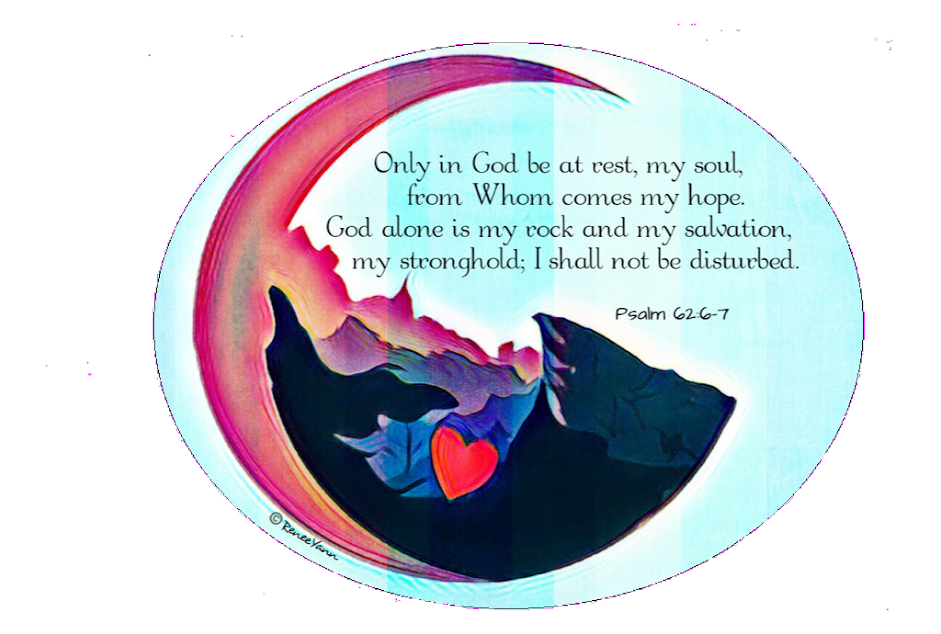
Only in You, God, is my soul at rest; from You comes my salvation. You only are my rock and my salvation, my stronghold; I shall not be disturbed at all.
Psalm 62: 6-7
Hopefully, we take the advice because … Oh boy, Paul and Jesus stick it to hypocrites in today’s readings. And I’m like, “Yeah! Go get those fakesters, those lying hypocrites” – and I have a whole slew of people in mind!
Then, WHOA! I see Paul’s no-nonsense warning:
For by the standard by which you judge another you condemn yourself, since you, the judge, do the very same things.
Romans 2:1
This is a definite “clean up your act” reading. And don’t deflect your own sinfulness on to the people around you!
Jesus takes the same advice to the Pharisees by throwing a couple of serious “woes” at them:
Woe to you Pharisees! You pay tithes of mint and of rue and of every garden herb, but you pay no attention to judgment and to love for God. These you should have done, without overlooking the others.
Woe to you Pharisees! You love the seat of honor in synagogues and greetings in marketplaces.
Woe to you! You are like unseen graves over which people unknowingly walk.
Yipes!
I mean “Yipes”! I don’t want to be like an unseen grave, do you?!
Neither did one of the scholars who responded to Jesus, “Teacher, by saying this you are insulting us too!”
But Jesus is undeterred:
Woe also to you scholars of the law! You impose on people burdens hard to carry, but you yourselves do not lift one finger to touch them.
Lke 11:46
Today’s readings offer us a clear message to take a good look at ourselves. Are we guilty of the very uglinesses that we condemn in others?
Poetry: In his poem “To A Louse”, Scottish poet Robert Burns wrote the famous line:
O would some Power the gift to give us To see ourselves as others see us!
For fun, here is the Standard English Translation
Ha! Where are you going, you crawling wonder? Your impudence protects you sorely, I can not say but you swagger rarely Over gauze and lace, Though faith! I fear you dine but sparingly On such a place
You ugly, creeping, blasted wonder, Detested, shunned by saint and sinner, How dare you set your foot upon her – Such fine a lady! Go somewhere else and seek your dinner On some poor body Off! in some beggar’s temples squat:
There you may creep, and sprawl, and scramble, With other kindred, jumping cattle, In shoals and nations; Where horn nor bone never dare unsettle Your thick plantations
Now hold you there! you are out of sight, Below the falderals, snug and tight; No, faith you yet! you will not be right, Until you have got on it — The very topmost, towering height Of misses bonnet. My sooth! right bold you set your nose out, As plump and gray as any gooseberry:
O for some rank, mercurial resin, Or deadly, red powder, I would give you such a hearty dose of it, Would dress your breech! I would not have been surprised to spy You on an old wife’s flannel cap:
Or maybe some small ragged boy, On his undervest; But Miss’s fine balloon bonnet! fye! How dare you do it. O Jenny do not toss your head, And set your beauties all abroad! You little know what cursed speed The blastie’s making!
Those winks and finger-ends, I dread, Are notice takiing! O would some Power the gift to give us To see ourselves as others see us! It would from many a blunder free us, And foolish notion: What airs in dress and gait would leave us, And even devotion.
Music: Britt Nicole – Through Your Eyes (a chance to think about how our loving God sees us, and everyone else/)
Today, in God’s Lavish Mercy, we pray with Psalm 19:
The heavens declare the glory of God, and the firmament proclaims God’s handiwork. Day pours out the word to day, and night to night imparts knowledge. Not a word nor a discourse whose voice is not heard; Through all the earth their voice resounds, and to the ends of the world, their message.
Psalm 19:2-5
The psalm captures the point of Paul’s declaration that the natural revelation of God’s power is accessible to all of us in the magnificence of Creation.
For what can be known about God is evident to them, because God made it evident to them. Ever since the creation of the world, God’s invisible attributes of eternal power and divinity have been able to be understood and perceived in what God has made.
Romans 2:19-20
This natural gift inspires us to know and believe in God. In fact, Paul says we “have no excuse” for a lack of faith, calling those who fail to believe “fools”.
It’s a word Jesus uses in our Gospel to describe Pharisaical religion – a religion of appearances rather than loving practice.
The Lord said, “Oh you Pharisees! Although you cleanse the outside of the cup and the dish, inside you are filled with plunder and evil. You fools! Did not the maker of the outside also make the inside?
Luke 11:39-40
In our first reading, Paul expresses his complete trust in and devotion to the Gospel of Jesus Christ. By this, Paul means more than the written words of Matthew, Mark, Luke and John. He means the entire gift of the Incarnation, Life, Passion, Death and Resurrection, continuing among us in the indwelling Holy Spirit.
Today’s readings leave me with two intentions:
to be more deeply aware of and grateful for God speaking to me in my natural surroundings
to examine my heart for the sincerity of my faith proven in practice
Poetry: God’s Word Is in All Creation – Hildegard of Bingen
No creature has meaning
without the Word of God.
God’s Word is in all creation, visible and invisible.
The Word is living, being,
spirit, all verdant
all creativity.
This Word flashes out in
every creature.
This is how the spirit is in
the flesh – the Word is indivisible from God.
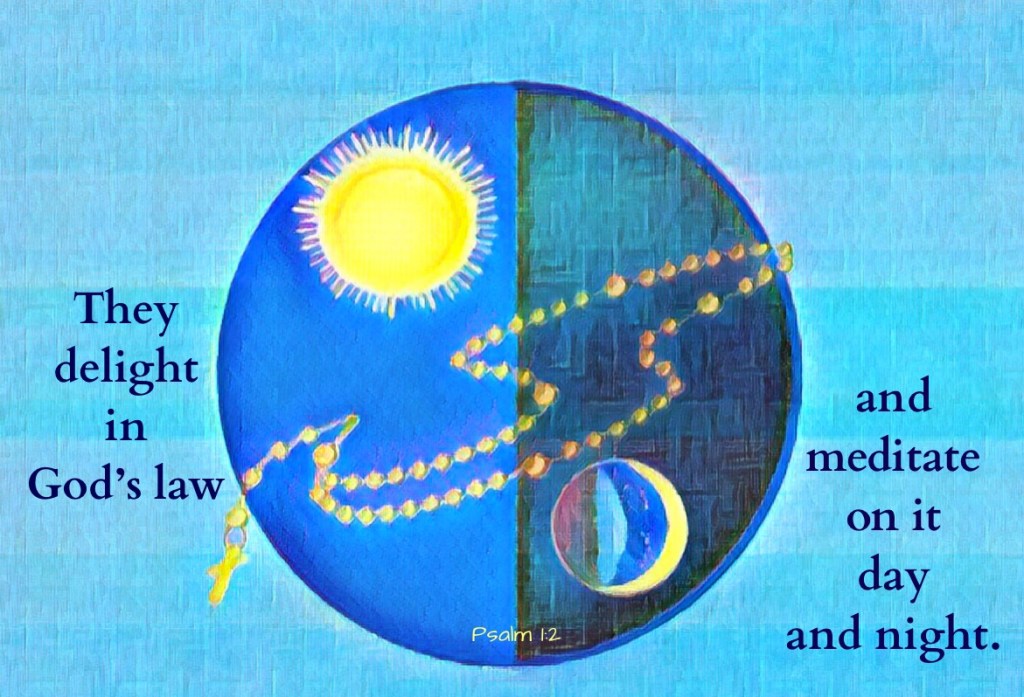
Today, in God’s Lavish Mercy, we pray with Psalm 1, its very opening verses.
Blessed the one who follows not the counsel of the wicked Nor walks in the way of sinners, nor sits in the company of the insolent, But delights in the law of the LORD and meditates on God’s law day and night.
Psalm 1:1-3
Scripture scholar James L. Mays says that the psalm’s primacy is not accidental:
The Book of Psalms begins with a beatitude. Not a prayer or a hymn, but a statement about human existence. Here at the threshold of the Psalter we are asked to consider the teaching that the way life is lived is decisive for how it turns out. This opening beatitude also serves as an introduction to the book. Its location as the first psalm is not accidental; the psalm is there to invite us to read and use the entire book as a guide to a blessed life.
Psalms: Interpretation: A Bible Commentary for Teaching and Preaching
Psalm 1 helps us to understand that praying the Psalter is a tool for spiritual guidance. It is not just about the people and times it mentions. It is about us and our lifelong journey with God.
In a sense the rosary, which we think about today as we pray with Mary, is a similar tool. And I’ll be honest with you, it’s a tool I didn’t appreciate until much later in my life.
Most Catholics have a history with the rosary. It’s a form of prayer we learned as children at our grandmother’s or first grade teacher’s knee. But for me as a six-year old, it was just too long. I became bored mid-second decade. I even used to cheat, drop the rosary on the floor, and pick it up a few decades further down the beads!
Me – on the right! 🙂
Of course, as a young nun, I prayed the rosary. I even wore the rosary at my hip and fingered its cool beads throughout the day. But I still didn’t appreciate or love it. Not until I was 36 years old and my father died.
My Dad lived an extremely simple, and I think holy, life. He didn’t vow it, but he practiced the evangelical counsel of poverty beautifully. He possessed very little that was his alone. When he died, almost everything important and precious to him (besides his family) could be found in the bottom drawer of our old China closet. That’s where I found his rosary on the day after his funeral.
It was cuddled in a wrinkled pouch imprinted with the phrase “My Rosary”. I smiled when I read that, thinking one didn’t really need to be reminded what was inside! But there was actually more inside than I expected.
Dad always loved the poems of James Metcalfe, published daily in the Philadelphia Evening Bulletin. One little poem was folded neatly inside the pouch:
A Dad’s Prayer
Almighty Father help me be . . . A good and loving dad . . . That my dear children may enjoy . . . The blessings I have had . . . Give me the wisdom I should use . . . To teach them right from wrong . . . And how to keep on going when . . . The road is rough and long . . . To do the duty that is theirs . . . Until its very end . . . To look for lasting beauty and . . . Appreciate a friend . . . Endow me with the grace I need . . . To mold their gentle youth . . . According to the measurements . . . Of loyalty and truth . . . Enable me to comfort them . . . Whenever they are sad . . . And O my Father, grant that they . . . Will always love their dad.
Every morning after I discovered Dad’s rosary, I ran the beads through my fingers, wanting in some way to touch Dad again.
I began to read about the rosary and its purpose as a means of meditation on the life of Christ. I began to pray it differently, slowly – eventually using the vocal prayers only as a rhythm underneath the thought of Jesus’s experiences.
Sometimes, rather than rushing through a decade as I had before, I couldn’t stay long enough to absorb all that Jesus or Mary chose to share with me in one of the rosary’s mysteries.
Maybe on this feast of Our Lady of the Rosary, we might renew our love, understanding,and appreciation of this beautiful means of prayer. Online, I found this guide created by the Knights of Columbus which I liked. You might find it helpful. (I didn’t check, but I think it might be printable.)
Today, in God’s Lavish Mercy, we pray with Psalm 86 which, following our first reading about vindictive Jonah, shows us a heart converted to mercy.
These readings are so powerful. I think a little “Jonah” lives in most of us – that part of us that wants “them” to get what they deserve. We can’t quite get ourselves to want “them”, instead, to receive the unmerited mercy of God.
In our first reading, God tries to help stingy-hearted Jonah face his unforgiveness toward the Ninevites.
Our psalm, on the other hand, is prayed by a humble servant who understands forgiveness because they need it themselves.
Have mercy on me, O Lord, for to you I call all the day. Gladden the soul of your servant, for to you, O Lord, I lift up my soul. For you, O Lord, are good and forgiving, abounding in kindness to all who call upon you. Hearken, O LORD, to my prayer and attend to the sound of my pleading.
Psalm 86: 3-6
Psalm 86 invites us to grow in our spiritual life in two ways:
to recognize our need for forgiveness because we are not without sin
to extend that forgiving desire to those who have sinned against us
It is the lesson Jesus affirms in today’s Gospel:
Jesus said to them, “When you pray, say: Father, hallowed be your name, your Kingdom come. Give us each day our daily bread and forgive us our sins for we ourselves forgive everyone in debt to us, and do not subject us to the final test.”
Poetry: Forgiveness – John Greenleaf Whittier
My heart was heavy, for its trust had been
Abused, its kindness answered with foul wrong;
So, turning gloomily from my fellow-men,
One summer Sabbath day I strolled among
The green mounds of the village burial-place;
Where, pondering how all human love and hate
Find one sad level; and how, soon or late,
Wronged and wrongdoer, each with meekened face,
And cold hands folded over a still heart,
Pass the green threshold of our common grave,
Whither all footsteps tend, whence none depart,
Awed for myself, and pitying my race,
Our common sorrow, like a mighty wave,
Swept all my pride away, and trembling I forgave!
Music: Lord, Teach Us to Pray – Joe Wise
Lord, teach us to pray…
It’s been a long and cold December kind of day. With our hearts and hands all busy in our private little wars. We stand and watch each other now from separate shores. We lose the way.
I need to know today the way things should be in my head. I need to know for once now the things that should be said. I’ve got to learn to walk around as if I were not dead. I’ve got to find a way to learn to live. (Refrain)
I still get so distracted by the color of my skin. I still get so upset now when I find that I don’t win. I meet so many strangers—I’m slow to take them in. I’ve got to find a way to really live. (Refrain)
I stand so safe and sterile as I watch a man fall flat. I’m silent with a man who’d like to know just where I’m at. With the aged and the lonely I can barely tip my hat. I need to see the sin of “I don’t care.” (Refrain)
I stand so smug and sure before the people I’ve out-guessed. To let a man be who he is I still see as a test. And when it all comes down to “must,” I’m sure my way is best. I’ve got to find what “room” means in my heart. (Refrain)
Lord, teach us to pray. We believe that we can find a better way. Teach us to pray. We lose the way. Teach us to pray.
Today, in God’s Lavish Mercy, we pray with Psalm 87, a Song of Zion which imagines the future Jerusalem as the world’s center of worship.
The foundation upon the holy mountains the LORD loves: The gates of Zion, more than any dwelling of Jacob. Glorious things are said of you, O city of God!
Psalm 87: 1-3
For centuries, the Jews had been scattered through many alien countries. Some had lost their ties to their inherited faith. The psalm calls all people “home” to the worship of the one, true God.
Jerusalem from the Mount of Olives by Frederic Edwin Church
Jerusalem is a profoundly unifying symbol for Jews. That is why it is so important for Jesus to “go up to Jerusalem” in order to accomplish our redemption. As our Gospel tells us:
When the days for Jesus to be taken up were fulfilled, he steadfastly turned his face to Jerusalem.
Luke 9:51
Praying with these passages may seem difficult for Christians if we have no emotional ties to the city of Jerusalem. But for us, Jerusalem serves as a symbol of that stable and committed faith which allows us to live our lives in the pattern of Jesus.
We journey too, as Jesus did toward the fullness of life in God. Our journey takes singular steadfastness, just as his did, a commitment rooted in faith and grace.
Together in faith, we form a New Jerusalem, glorious in each one of us through our Baptism into Christ.
Poetry: A Sonnet – Malcolm Guite
Now to the gate of my Jerusalem,
The seething holy city of my heart,
The saviour comes. But will I welcome him?
Oh crowds of easy feelings make a start;
They raise their hands, get caught up in the singing,
And think the battle won. Too soon they’ll find
The challenge, the reversal he is bringing
Changes their tune. I know what lies behind
The surface flourish that so quickly fades;
Self-interest, and fearful guardedness,
The hardness of the heart, its barricades,
And at the core, the dreadful emptiness
Of a perverted temple. Jesus  come
Break my resistance and make me your home.














 Lavish Mercy