Psalm 67: Bless Us All!

Twentieth Sunday in Ordinary Time
August 16, 2020

Today, in Mercy, we read the story of the Canaanite woman whom Jesus first meets with a sarcastic banter. The banter however serves to expose some of the alienating prejudices of Jesus’s time which he then dissolves in a sweeping act of mercy and inclusion. His actions signify a new culture of divine justice offered to all people. The reading challenges us to confront our own prejudices and any limitations we place on who belongs to the Kingdom of God.

from this Sunday’s Reflection – 2017
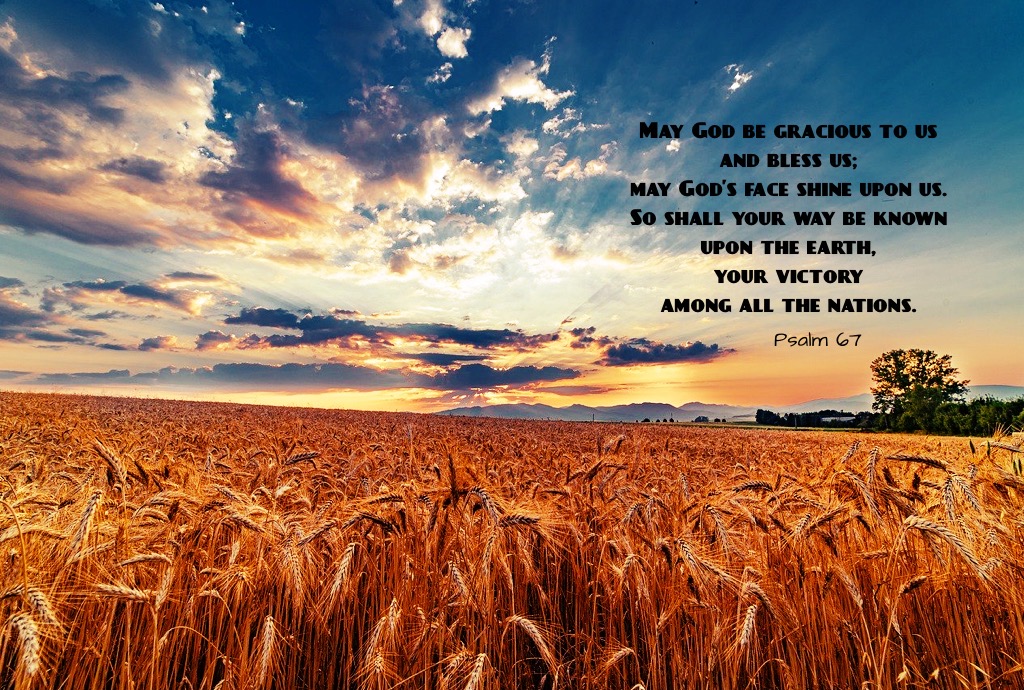
Today, in God’s Lavish Mercy, we pray with Psalm 67, a call to God for universal blessing on all Creation. Written to invoke a benediction on the land’s harvest, the Psalm blossoms into a generous prayer for the whole world to bask in God’s abundance.

May the nations be glad and rejoice;
for you judge the peoples with fairness,
you guide the nations upon the earth.

What if we prayed like that for all our brothers and sisters worldwide! What if we acted toward them with a justice that would make their abundance possible as well as our own! This is the Gospel mandate Jesus entrusted to us.

Psalm 67 shows the maturing of a nation from its own legitimate self-interests into its responsibility within all Creation.


In the USA, as our pre-election political awareness heightens, let’s learn from Psalm 67. Let’s broadly educate ourselves to the fundamental moral issues underlying various partisan platforms. 

For a religious person, voting is hard. There are profound moral issues on all sides of the question. A single issue approach does not work. An adamant stance on a single issue is the easy but inadequate approach. 


Even Jesus, in today’s Gospel, can be moved to a new way of thinking. The outcast Canaanite woman prevails on Jesus to broaden his kingdom. He opens his heart to another way of bringing mercy to all those longing for it.


Voting is a moral act. How we choose demonstrates the God we believe in.


May the peoples praise you, God;
may ALL the peoples praise you!


Poetry: Selah by Honoreé Fannane Jeffers

“The past few weeks were very hopeful for me, as an African-American. I saw images of young Black people out in the streets protesting, to make this country a better place. As an older person who stayed inside while these young folks put their bodies on the line, I wanted to celebrate them. I wrote this poem as a spiritual exaltation of Black faith, that our hoped-for change for our country is coming.”

Honoreé Fanonne Jeffers

Selah
after Margaret Walker’s “For My People”


The Lord clings to my hands
             after a night of shouting. 
                           The Lord stands on my roof 
             & sleeps in my bed. 
Sings the darkened, Egun tunnel— 
             cooks my food in abundance, 
                           though I was once foolish 
             & wished for an emptied stomach. 
The Lord drapes me with rolls of fat 
             & plaits my hair with sanity. 
                           Gives me air, 
             music from unremembered fever. 
This air
                            oh that i may give air to my people 
                            oh interruption of murder 
                                         the welcome Selah
The Lord is a green, Tubman escape. 
             A street buzzing with concern, 
                           minds discarding answers. 
             Black feet on a centuries-long journey.
The Lord is the dead one scratching my face, 
             pinching me in dreams. 
                           The screaming of the little girl that I was, 
             the rocking of the little girl that I was— 
the sweet hush of her healing. 
             Her syllables 
                           skipping on homesick pink. 
             I pray to my God of confused love, 
a toe touching blood 
             & swimming through Moses-water. 
                           A cloth & wise rocking. 
             An eventual Passover, 
outlined skeletons will sing 
             this day of air 
                           for my people—
                                         oh the roar of God 
                                         oh our prophesied walking

Music: Charles Ives – Psalm 67
Psalm 69: Answer Me, O Lord

Memorial of Saint Ignatius of Loyola, Priest

July 31, 2020


Today, in God’s Lavish Mercy, we pray with Psalm 69, a heart-felt lament whose verses are often paralleled with the sufferings of Jesus.

I have become an outcast to my brothers,
a stranger to my mother’s sons,
Because zeal for your house consumes me,
and the insults of those who blaspheme you fall upon me.

Psalm 69: 9

Christ did not please Himself; but as it is written,
“The reproaches of those who reproached You fell on Me”.

Roman 15: 3

Praying with Psalm 69 this morning, and in the light of both our first reading and Gospel, I am aware of how God’s prophets suffer to proclaim mercy, justice, and truth.

Jeremiah suffered in the hope and conviction that God imagined a future of justice for all God’s people. He stood in the midst of the Temple worshippers and condemned their pretense of righteousness.

Jesus stood at the center of his hometown synagogue to proclaim that the long hoped-for redemption had come. But like Jeremiah’s listeners, Jesus’s neighbors also turned on him.

In our own lifetimes, we see the persecution and hatred which is leveled at modern prophets who call the world to justice and mercy. Even within our own Church, we see how Pope Francis is vilified by those whose privileged excesses are threatened by his charity.


As I write this reflection, our country celebrates the life of one of its noblest prophets, the sainted John Lewis. In the image of all the great Justice Witnesses, John endured incredible suffering for the sake of people’s dignity and freedom. He was able to do so because, like Jeremiah and Jesus, he didn’t look inward at his wounds. He looked outward for the redemption of others … the prize of justice:

Never give up, never give in, never give out. 
Keep the faith, and keep your eyes on the prize. 
Together, we can redeem the soul of America.

John Lewis

Let us pray today that the voices of true prophets may be heard and heeded. In this age when technology and social media can quickly disseminate vitriol, hatred, and conspiracy, let us pray for discerning hearts and courageous wills.

But I pray to you, O LORD,
for the time of your favor, O God!
In your great kindness answer me
with your constant help.

Psalm 69; 14

Poetry: Prophet by Carl Dennis

Prophet
You'll never be much of a prophet if, when the call comes
To preach to Nineveh, you flee on the ship for Tarshish
That Jonah fled on, afraid like him of the people's outrage
Were they to hear the edict that in thirty days
Their city in all its glory will be overthrown.

The sea storm that harried Jonah won't harry you.
No big fish will be waiting to swallow you whole
And keep you down in the dark till your mood
Shifts from fear to thankfulness and you want to serve.
No. You'll land safe at Tarshish and learn the language
And get a job in a countinghouse by the harbor
And marry and raise a family you can be proud of
In a neighborhood not too rowdy for comfort.

If you're going to be a prophet, you must listen the first time.
Setting off at sunrise, you can't be disheartened
If you arrive at Nineveh long past midnight,
On foot, your donkey having run off with your baggage.
You'll have to settle for a room in the cheapest hotel
And toss all night on the lice-ridden mattress
That Jonah is spared. In the space of three sentences
He jumps from his donkey, speaks out, and is heeded, while you,

Preaching next day in the rain on a noisy corner,
Are likely to be ignored, outshouted by old-clothes dealers
And fishwives, mocked by schoolboys for your accent.
And then it's a week in jail for disturbing the peace.
There you'll have time, as you sit in a dungeon
Darker than a whale's belly, to ask if the trip
Is a big mistake, the heavenly voice mere mood,

The mission a fancy. Jonah's biggest complaint
Is that God, when the people repent and ask forgiveness,
Is glad to forgive them and cancels the doomsday
Specified in the prophecy, leaving his prophet
To look like a fool. So God takes time to explain
How it's wrong to want a city like this one to burn,
How a prophet's supposed to redeem the future,
Not predict it. But you'll be left with the question
Why your city's been spared when nobody's different,

Nobody in the soup kitchen you open,
Though one or two of the hungriest
May be grateful enough for the soup to listen
When you talk about turning their lives around.
It will be hard to believe these are the saving remnant
Kin to the ten just men that would have sufficed
To save Gomorrah if Abraham could have found them.

You'll have to tell them frankly you can't explain
Why Nineveh is still standing though you hope to learn
At the feet of a prophet who for all you know
May be turning his donkey toward Nineveh even now.
[from Practical Gods (2001)

Music: Lord, in Your Great Love – Orchard Enterprises

Psalm 95: The Real Voice

Monday of the Sixteenth Week in Ordinary Time

July 20, 2020

From this liturgical date in 2016:  

Monday, July 18, 2016: Today, in Mercy, we pray to do as the prophet Micah says. As our intense political season begins, we pray that our leaders – and we citizens – may do right, show real goodness, and find the courage to be humble. May we have the insight to shun a democracy built on values opposite to these. May God bless and inspire all who would lead us and may God bless and heal our country.


Today, in God’s Lavish Mercy, we will pray with Psalm 95, our Alleluia Verse. Today’s Responsorial is Psalm 50, which we have reflected on twice recently.

The verse from Psalm 95 is an often repeated one, and presents us with a clear ultimatum:

But how do we do that?
How do we hear God’s voice?
How do we avoid a hardened heart?


When I was a little girl, I loved to read the stories of the saints. I was particularly impressed by the life of the brave St. Joan of Arc, not only because she got to ride a horse, but because she heard heavenly voices. I thought it was very nice of God to tell Joan exactly what to do to be holy.

I waited a few years, probably from age six to nine, for God – or at least St. Michael, my parish patron – to speak to me. You know, just in case God had anything important for me to do, like take a small army over to New Jersey or something like that.

When I was 9 or 10, I fell in love with Jimmy Danvers and put my saint books in my bottom drawer. I still listened for God, but started not to expect an audible conversation.


What I failed to realize at that young age was that the conversation had already begun. I thought about God, prayed and tried to be a pretty good person. I went to Mass every day since 5th grade. I began to serve others in the way I thought Jesus would want to do it. With the help of my parents and teachers, I had made the choice to invite God’s heart into my heart.

Finally, I came to understand that God was speaking to me, and to everyone else, all the time. My job was to keep my heart’s ear open, softened, by my choices for Love.


Prayer is the communication of the soul with God. 
God is love, and love is goodness giving itself away. 
It is a fullness of being 
that does not want to remain enclosed in itself, 
but rather to share itself with others.

Saint Edith Stein

When we do this, each day brings us deeper and deeper into the Silent Word Who breathes forth the story of our lives. That sacred breath takes as many forms as there are creatures. Joan of Arc was one holy form. So am I. So are you.


Literature:  from Saint Joan by George Bernard Shaw

Charles VII:  Oh, your voices, your voices. Why don’t the voices come to me? I am king, not you!

Joan: They do come to you, but you do not hear them. You have not sat in the field in the evening listening for them. When the angelus rings, you cross yourself and have done with it. But if you prayed from your heart and listened to the thrilling of the bells in the air after they stopped ringing, you would hear the voices as well as I do.


Music: Holy Ground – John Michael Talbot

Verse 1
This is holy ground
We’re standing on holy ground
For the Lord is present
And where He is is holy
This is holy ground
We’re standing on holy ground
For the Lord is present
And where He is is holy

Verse 2
These are holy hands
He’s given us holy hands
He works through these hands
And so these hands are holy
These are holy hands
He’s given us holy hands
He works through these hands
And so these hands are holy

Verse 3
These are holy lips
He’s given us holy lips
He speaks through these lips
And so these lips are holy
These are holy lips
He’s given us holy lips
He speaks through these lips
And so these lips are holy

Psalm 93: Nestle in God’s Robe

Memorial of Saint Benedict, Abbot

July 11, 2020

Today, in God’s Lavish Mercy, we pray with Psalm 93, the first of the royal psalms (93-99) which praise God as King.

As we pray with today’s verses, we can easily feel the psalmist stretching for a description of God Who is, of course, indescribable. Never having seen God, we can only imagine the Divine Being in human terms. This writer imagines God as a King beyond even the greatness of human kings, and it is a beautiful image:

The LORD is king, in splendor robed;
robed is the LORD and girt about with strength.


Like the psalmist, we may tend to paint God in the colors of those who have had greatest influence in our lives

  • those with power over us, like parents and teachers
  • those who have loved us, or failed to
  • those in positions of success, and strength

Because all human models are flawed in some way, this tendency can give us a blurry, if not distorted picture of God.


Jesus came to correct our perspective.


A beautiful extra hymn for today. Just love this one.

Jesus showed us that, while we live on this earth, the glory of God is a hidden glory. It is robed in the suffering of the poor and abandoned. Its splendor is in the innocence of children. Its strength is in the hope of the sick and weak. Its beauty shines out to us in the vulnerability of our sisters and brothers.


In today’s Gospel, Jesus gives us the tender image of God as One who cherishes every hair on our heads. As we pray today, we might let that gentle God reach down and caress any pain, exhaustion or fear, like a Mother brushing her child’s hair. Just be with God Who knows our needs. Be cradled in the splendrous robe.


Poetry:  God’s True Cloak – Rainer Maria Rilke

We must not portray you in king’s robes,
you drifting mist that brought forth the morning.
Once again from the old paintboxes
we take the same gold for scepter and crown
that has disguised you through the ages.
Piously we produce our images of you
till they stand around you like a thousand walls.
And when our hearts would simply open,
our fervent hands hide you.

Music: George Frideric Handel – Chandos Anthem, #4/ Psalm 93 – O Sing Unto the Lord

Psalm 145: Through the Generations

Monday of the Fourteenth Week in Ordinary Time

July 6, 2020

Today, in God’s Lavish Mercy, we again pray with Psalm 145 – different verses. The great tenderness in today’s other readings is reflected in the choice of these particular psalm lines.

Our first reading is God’s tender love song to Israel spoken through the prophet Hosea. Our Gospel recounts several acts of tenderness as Jesus ministers to the suffering people he meets.


Psalm 145 reminds us that if we look back over our lives, and even farther back over our ancestors’ lives, we too will discover God’s continual love and mercy to us.

Generation after generation praises your works
and proclaims your might.
They speak of the splendor of your glorious majesty
and tell of your wondrous works.


Many ancestral blessings have been passed on to us – in skills, attitudes, physical strengths – but most importantly, in faith. We probably believe because someone before us taught us how.

There is no greater gift we can give to our children, and to all our beloveds, than to encourage their faith. Let’s take that to heart today as we pray. And let’s thank God for our own story and heritage of faith we have been given.


Poetry: Faith is the Pierless Bridge by Emily Dickinson, who appeared as more a dismissive critic of faith than a proponent. Yet, like many of us who bother to talk about a particular topic, she proved it to be more important to her than she professed.

Faith — is the Pierless Bridge
Supporting what We see
Unto the Scene that We do not —
Too slender for the eye
It bears the Soul as bold
As it were rocked in Steel
With Arms of Steel at either side —
It joins — behind the Veil
To what, could We presume
The Bridge would cease to be
To Our far, vacillating Feet
A first Necessity.

Music: In Every Age – Janèt Sullivan Whitaker

Psalm 117: Praise the Lord

Feast of Saint Thomas, Apostle

July 3, 2020

One of my favorite past reflections on faith vs. doubt – for this Feast of Saint Thomas


Today, in God’s Lavish Mercy, we pray with Psalm 117 which is the shortest of all the Psalms. But 117, also called the Laudate Dominum, still packs a huge spiritual punch.

The psalm is called a “doxology” which simply means it is a short prayer of praise, the type we often add at the end of longer prayers. We are very familiar with the following doxology:

Glory be to the Father, and to the Son, and to the Holy Spirit.
As it was in the beginning, is now, and ever shall be
,
world without end. Amen


Psalm 117 follows the same pattern in that it has two complementary parts.

The first invites us to praise God:
Praise the LORD, all you nations;
glorify God, all you peoples!

The second tells us why God deserves our praise:
For steadfast is God’s kindness for us,
and the fidelity of the LORD endures forever.

Notable about Psalm 117 is the fact that this Old Testament invitation to praise goes out “to ALL nations”. Scholars interpret this as pointing to the fulfillment, in Jesus, of God’s promise that Abraham would be the father in faith of many nations. Psalm 117 is a treasured and often repeated prayer throughout the Judea-Christian traditions.


Practicing this pattern of prayer can enrich our personal prayer life as well. I like to pray like this as soon as I wake each morning. Glancing out my window, I might say,

“I praise You in the sunrise, my Beautiful Creator.
Thank you for the gift of my life.”

Beginning the day with our own “doxology” gives us a head start on living joyfully and gratefully in the Presence of God for our next circuit of the sun.


Poetry: Morning Poem – Mary Oliver

Every morning 
the world 
is created. 
Under the orange
sticks of the sun 
the heaped 
ashes of the night 
turn into leaves again
and fasten themselves to the high branches— 
and the ponds appear 
like black cloth 
on which are painted islands
of summer lilies. 
If it is your nature 
to be happy 
you will swim away along the soft trails
for hours, your imagination 
alighting everywhere. 
And if your spirit 
carries within it
the thorn 
that is heavier than lead— 
if it's all you can do 
to keep on trudging—
there is still 
somewhere deep within you 
a beast shouting that the earth 
is exactly what it wanted—
each pond with its blazing lilies 
is a prayer heard and answered 
lavishly, 
every morning,
whether or not 
you have ever dared to be happy, 
whether or not 
you have ever dared to pray

Music: Laudate Dominum – Mozart, sung by Barbara Hendricks

Psalm 5: You Are God’s Flute

Tuesday of the Thirteenth Week in Ordinary Time

June 30, 2020

A Brief Prayer on Today’s Gospel from 2016
Today, in Mercy, we pray for all those tossed on a stormy sea, like Christ’s disciples. For all who are alone, in darkness or full of fear. There is no storm through which God cannot come to us. May we always trust that God is taking us to a new grace beyond the storm.


Today, in God’s Lavish Mercy, we pray with Psalm 5, the first one of several to mention “the Name of God” as a theme.  The psalm, a morning prayer to be “accompanied by a flute”, is a mix of lament and exaltation – like many of our own morning prayers, no doubt.

At dawn I bring my plea expectantly before you.
For you, O God, delight not in wickedness;

the evil one does not remain with you;
the arrogant may not stand in your sight.


Now, first off in the morning, we’re probably not going to talk to God about wickedness, evil, and arrogance unless we went to bed pretty upset the night before. The psalmist apparently has “slept on” his troubles without complete resolution.

We had a dear, wise Directress of Postulants who, on many an evening, patiently listened to our various vocational waverings. We were young. Just like the disciples in Matthew’s boat, we really weren’t as sure of our calls as we would like to have been. Sister Inez’s repeated advice soothed a lot of our growing pains, “Just give it to God and get a good night’s sleep. Things will be clearer in the morning.” And they always were.


As the psalmist prays this morning prayer, things clear as well. After a brief diatribe, the prayer realizes:

But I, through the abundance of your mercy,
will enter into your house.
I will bow down toward your holy sanctuary

in awe of your greatness.


Psalm 5 beautifully complements today’s Gospel. Jesus is in the storm-tossed boat peacefully “sleeping on it”. The disciples, on the other hand, cannot just “give” their terror over to God. When they wake Jesus, terrified, he gently reprimands them, “O ye of little faith”.

Jesus wants them and us, to realizes what the psalmist realizes in verse 12:

All who trust in God will be glad
and forever shout for joy.
God protects them 
and their lives are a melody
to God’s beloved Name


Poetry: A Hole in a Flute ~ Hafiz

I am a hole in a flute
that the Christ's breath moves through; 
listen to this music.

I am the concert 
from the mouth of every creature 
singing with the myriad chorus.

I am a hole in a flute 
that the Christ's breath moves through; 
listen to this music.

Music: The Edge of Night by a group called “Siyotanka” which is actually the Lakota name for this type of flute.

Psalm 89: Mary’s Echo

Memorial of the Immaculate Heart of the Blessed Virgin Mary

June 20, 2020

Today, in God’s Lavish Mercy, we pray with Psalm 89, as the Church celebrates the blessed humanity of Mary.

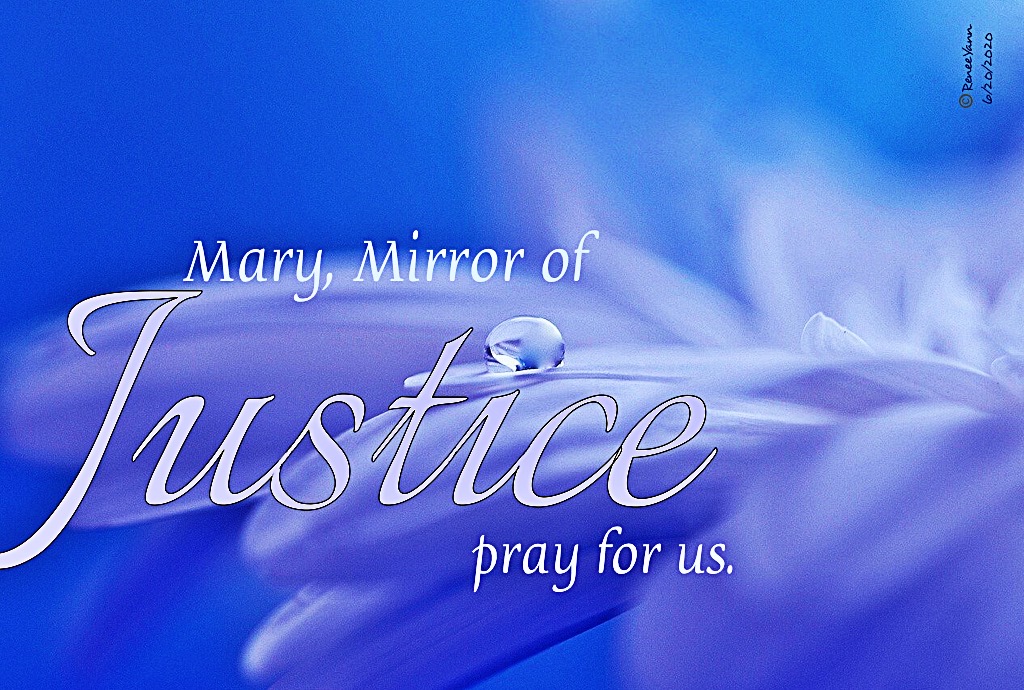
Yesterday and today, these beautiful “heart” feasts follow one upon the other, reminding us that both Jesus and Mary loved with human hearts like ours – Jesus as God, and Mary as God’s transformed Mirror.

As we pray with Mary today. Psalm 89 offers us a perfect context. The psalm was likely composed during a difficult time, when Israel began to doubt Yahweh’s enduring promise to care for them – some say during the Babylonian Captivity.

The psalm reminds the People of the Covenant and the Promise:

I have made a covenant with my chosen one,
I have sworn to David my servant:
Forever will I confirm your posterity
and establish your throne for all generations.

Forever I will maintain my kindness toward him,
and my covenant with him stands firm.
I will make his posterity endure forever
and his throne as the days of heaven.


Mary, born of the House of David, is the ultimate deliverer of that Promise in the person of her son, Jesus Christ. When, just before Jesus’ birth, Mary prays the Magnificat, we can hear echoes of Psalm 89:

And Mary said, 
My soul proclaims the greatness of the Lord;
my spirit rejoices in God my savior….

He has shown might with his arm,
dispersed the arrogant of mind and heart.
He has thrown down the rulers from their thrones
but lifted up the lowly….

He has helped Israel his servant,
remembering his mercy,
according to his promise to our fathers,
to Abraham and to his descendants forever.


An extra song for Mary today, written in 1961 for a Firemen’s Choir

In our own times of trouble, or when a long endurance is required of us, our faith in God’s promises might waver too. Mary is a good one to talk to in such times. Her faith was refined from all need to place stipulations on God’s timing. She believed. Period.

And she wants to nurture that gift in us.


Poetry: I think Mary and psalmist would have liked this poem by Kahlil Gibran. I hope you do too. For me, it speaks of how faith deepens, as Mary’s did.

God
In the ancient days, when the first quiver of speech came to my lips,
I ascended the holy mountain and spoke unto God, saying, 
“Master, I am thy servant.  Thy hidden will 
is my law and I shall obey thee for ever more.”
 
But God made no answer, and like a mighty tempest passed away.
 
And after a thousand years I ascended the holy mountain and again
spoke unto God, saying, “Creator, I am thy creation.  
Out of clay hast thou fashioned me and to thee I owe mine all.”
 
And God made no answer, but like a thousand swift wings passed
away.
 
And after a thousand years I climbed the holy mountain 
and spoke unto God again, saying, “Father, I am thy child.  
In pity and love thou hast given me birth, 
and through love and worship I shall inherit thy kingdom.”
 
And God made no answer, and like the mist that veils the distant
hills he passed away.
 
And after a thousand years I climbed the sacred mountain 
and again spoke unto God, saying, “My God, my aim and my fulfillment; 
I am thy yesterday and thou are my tomorrow.  
I am thy root in the earth and thou art my flower in the sky, 
and together we grow before the face of the sun.”
 
Then God leaned over me, and in my ears whispered words of sweetness,
and even as the sea that enfoldeth a brook that runneth down to
her, God enfolded me.
 
And when I descended to the valleys and the plains God was there
also.

Music: Psalm 89: Forever I Will Sing the Goodness of the Lord – Brian J. Nelson; cantor David Adams

Daniel 3: Bless the Lord

The Solemnity of the Most Holy Trinity

June 7, 2020

Click here for readings

Daniel3_Benedicite

Today, in God’s Lavish Mercy, we celebrate the Feast of the Holy Trinity.

For the Responsorial Psalm we have, not really a psalm, but an exultant canticle from the Book of Daniel – The Benedicite (Bless!)

Today’s segment of this extended and glorious canticle addresses God directly. The ensuing lines, not in today’s liturgy, invite all the elements of Creation to bless and glorify God.


3 men
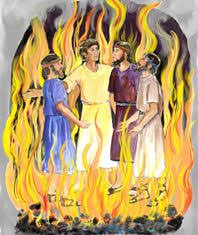
The prayers are those said by the three young men, rescued by an angel, and delivered from Nebuchadnezzer’s furnace.

As we pray for our country, and the world, to be delivered from the furnace of hate, racism, violence, militarism, and disease, let us call on all Creation to bless and beseech God – Creator, Redeemer, and Holy Spirit.


In God’s magnificent handiwork,
we see the perfection of peace,
the elegance of simplicity,
and the power of obedience to God’s design.

globe

Focus on whatever in nature speaks most to you today. Enter the depth of that part of Creation. Let it speak healing and wholeness to you and to our aching world. Praise the Adorable Trinity who gave us the gift of life with all Creation.

Music: Benedictus es Domine – this Latin chant is today’s Responsorial Psalm.


For our poetry today, we have the remaining verses of Daniel’s Canticle with a musical rendition at the end.

Bless the Lord, all you works of the Lord,
sing praise to him and highly exalt him forever.
Bless the Lord, you angels of the Lord,
bless the Lord, you heavens.
Bless the Lord, all you waters above the heaven,
bless the Lord, all powers.
Bless the Lord, sun and moon,
bless the Lord, stars of heaven.
Bless the Lord, all rain and dew,
bless the Lord, all winds.
Bless the Lord, fire and heat,
bless the Lord, winter cold and summer heat.
Bless the Lord, dews and snows,
bless the Lord, ice and cold.
Bless the Lord, frosts and snows,
bless the Lord, nights and days.
Bless the Lord, light and darkness,
bless the Lord, lightnings and clouds.
Let the earth bless the Lord;
let it sing praise to him and highly exalt him forever.
Bless the Lord, mountains and hills,
bless the Lord, all that grows on the earth.
Bless the Lord, you springs,
bless the Lord, seas and rivers.
Bless the Lord, you whales and all that swim in the waters,
bless the Lord, all birds of the air.
Bless the Lord, all beasts and cattle,
Bless the Lord, you sons of men.
Bless the Lord, O Israel;
sing praise to him and highly exalt him forever.
Bless the Lord, you priests of the Lord,
bless the Lord, you servants of the Lord.
Bless the Lord, spirits and souls of the righteous,
Bless the Lord, you who are holy and humble in heart.
Bless the Father, the Son and the Holy Spirit;
sing praise to him and highly exalt him forever.

Music:  Benedicite Omnia Opera Domini Domino – sung by Lionheart/Tydings True

BENEDICITE, omnia opera Domini, Domino;
laudate et superexaltate eum in saecula.
BENEDICITE, caeli, Domino,
benedicite, angeli Domini, Domino.
BENEDICITE, aquae omnes, quae super caelos sunt, Domino,
benedicat omnis virtutis Domino.
BENEDICITE, sol et luna, Domino,
benedicite, stellae caeli, Domino.
BENEDICITE, omnis imber et ros, Domino,
benedicite, omnes venti, Domino.
BENEDICITE, ignis et aestus, Domino,
benedicite, frigus et aestus, Domino.
BENEDICITE, rores et pruina, Domino,
benedicite, gelu et frigus, Domino.
BENEDICITE, glacies et nives, Domino,
benedicite, noctes et dies, Domino.
BENEDICITE, lux et tenebrae, Domino,
benedicite, fulgura et nubes, Domino.
BENEDICAT terra Dominum:
laudet et superexaltet eum in saecula.
BENEDICITE, montes et colles, Domino,
benedicite, universa germinantia in terra, Domino.
BENEDICITE, maria et flumina, Domino,
benedicite, fontes, Domino.
BENEDICITE, cete, et omnia, quae moventur in aquis, Domino,
benedicite, omnes volucres caeli, Domino.
BENEDICITE, omnes bestiae et pecora, Domino,
benedicite, filii hominum, Domino.
BENEDICITE, Israel, Domino,
laudate et superexaltate eum in saecula.
BENEDICITE, sacerdotes Domini, Domino,
benedicite, servi Domini, Domino.
BENEDICITE, spiritus et animae iustorum, Domino,
benedicite, sancti et humiles corde, Domino.
BENEDICITE, Anania, Azaria, Misael, Domino,
laudate et superexaltate eum in saecula.
BENEDICAMUS Patrem et Filium cum Sancto Spiritu;
laudemus et superexaltemus eum in saecula.
BENEDICTUS es in firmamento caeli
et laudabilis et gloriosus in saecula.

Amen.

Psalm 123: Song of the Caged Bird

Memorial of Saint Charles Lwanga and Companions, Martyrs

Charles Lwango
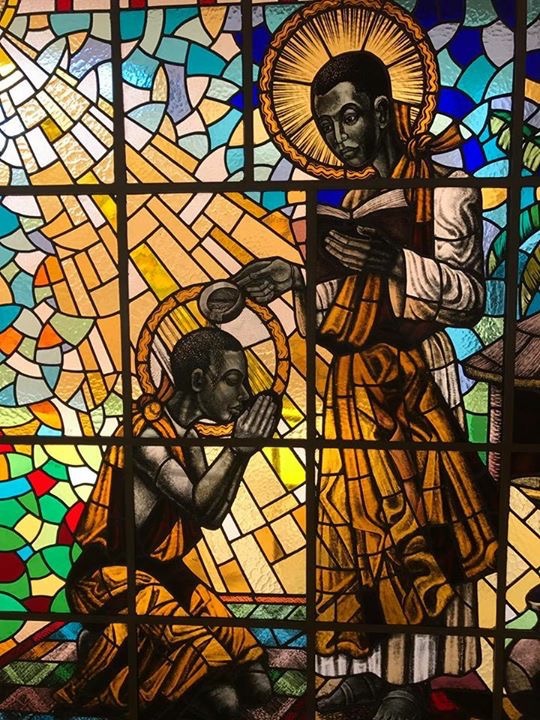
St. Kizito being baptised by St. Charles Lwanga at Munyonyo – stained glass at Munyonyo Martyrs Shrine

Charles Lwanga (1860 – 1886) was a Ugandan convert to the Catholic Church, who was martyred for his faith and is revered as a saint by both the Catholic Church and the Anglican Communion.


June 3, 2020

Click here for today’s readings

Today, in God’s Lavish Mercy, we pray with Psalm 123. How fitting that this particular prayer should bless us at this time!

Psalm 123 is one of the fifteen Psalms of Ascent (120-134). It is thought that these prayer songs were sung by pilgrims ascending to Jerusalem, expressing the joys, sorrows, needs and sufferings of the community.

Among them Psalm 123 is a lament, particularly for the scorn and contempt the Israelites felt as they tried to live lives of faith in a hostile world. Verses 3 and 4, (not included in today’s passage) plead:

Show us favor, LORD, show us favor,
for we have our fill of contempt.
Our souls are more than sated
with mockery from the insolent,
with contempt from the arrogant.

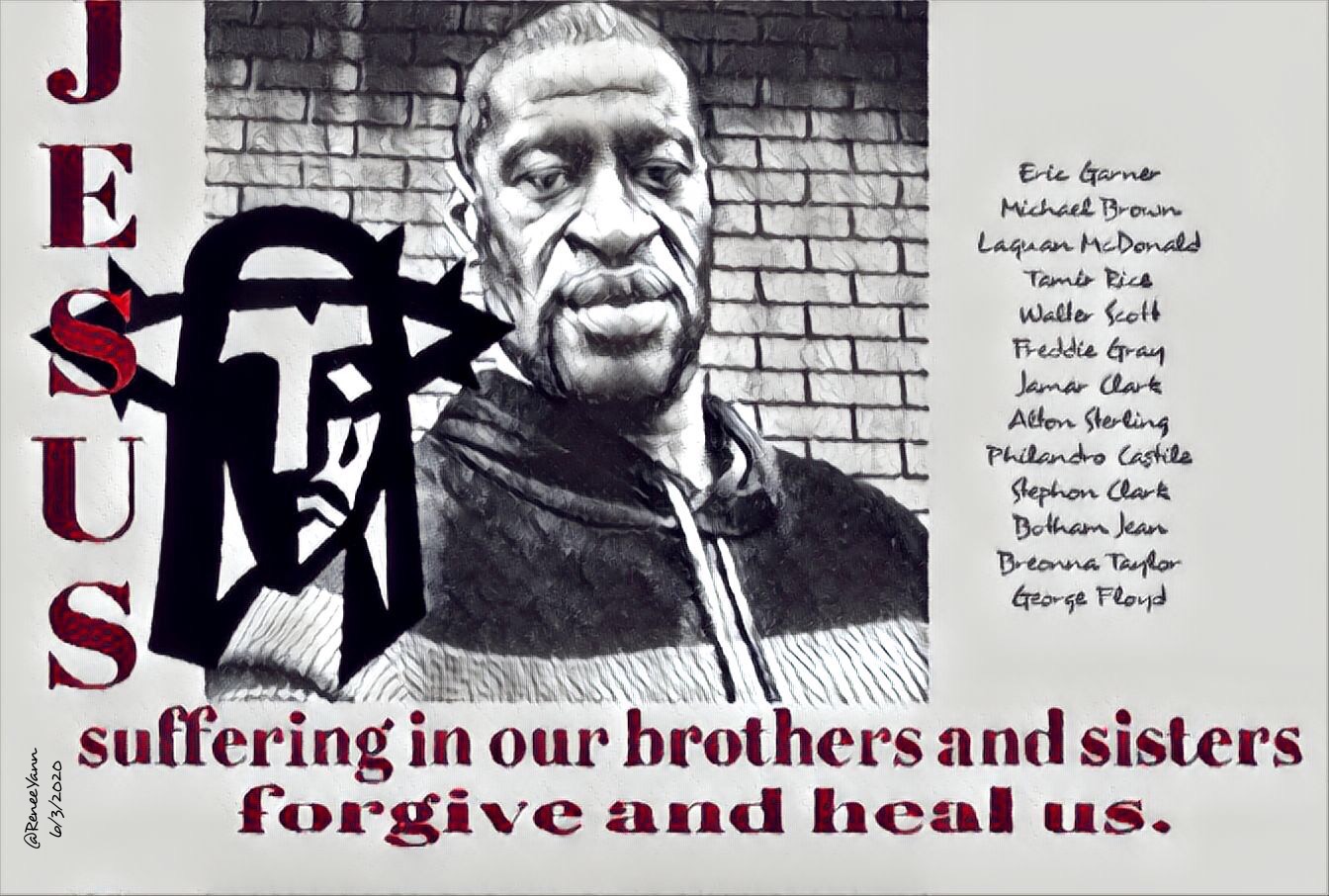
Praying with Psalm 123, we might think of today’s “pilgrims”, traveling the streets in protest of racial injustice. The integrity of their cause has been polluted by the rioters and looters infiltrating them, drawing contempt even from some who might otherwise have supported them.

Geo_Floyd

Still, people of faith must not be distracted from the truth, nor should we hide from the reality of our own complicity in normalizing unjust systems.  We must hear the lament of all those who long for justice. We must acknowledge that our current structures have grievously failed people of color, the poor and the refugee. We must make the choices that justice and mercy demand of us.


Today’s Responsorial verses may help us. In our hearts and souls, let us stand beside one another as we pray, each of us created to serve God by serving one another:

To you I raise my eyes,
to you enthroned in heaven.
Yes, like the eyes of servants
on the hand of their masters,

Like the eyes of a maid
on the hand of her mistress,
So our eyes are on the LORD our God,
till we are shown favor.


A poem to enrich your reflection:

cage

Caged Bird
A free bird leaps
on the back of the wind
and floats downstream
till the current ends
and dips his wing
in the orange sun rays
and dares to claim the sky.

But a bird that stalks
down his narrow cage
can seldom see through
his bars of rage
his wings are clipped and
his feet are tied
so he opens his throat to sing.

The caged bird sings
with a fearful trill
of things unknown
but longed for still
and his tune is heard
on the distant hill
for the caged bird
sings of freedom.

The free bird thinks of another breeze
and the trade winds soft through the sighing trees
and the fat worms waiting on a dawn bright lawn
and he names the sky his own

But a caged bird stands on the grave of dreams
his shadow shouts on a nightmare scream
his wings are clipped and his feet are tied
so he opens his throat to sing.

The caged bird sings
with a fearful trill
of things unknown
but longed for still
and his tune is heard
on the distant hill
for the caged bird
sings of freedom.
~ Maya Angelou


Music: Giovanni Pierluigi da Palestrina: Ad te levavi oculos meos (Psalm 123)

Ad te levavi oculos meos, qui habitas in caelis.
Ecce sicut oculi servorum in manibus dominorum suorum;
sicut oculi ancillae in  manibus dominae suae:
ita oculi nostri ad Dominum Deum nostrum,
donec misereatur nostri.

Miserere nostri, Domine, miserere nostri,
quia multum repleti sumus despectione;
quia multum repleta est anima nostra
opprobrium abundantibus, et despectio superbis.