The Holy Family

Sunday, December 26, 2021

Sorry for the late post today. Blame it on my being the big cook today and on my Aunt Peg’s wonderful pineapple casserole. She went home to God almost 30 years ago. But she lives in my kitchen anytime I cook a ham…and so many other times in my heart. ❤️ Merry Christmas once again, my friends.

in case you’d like to try it!

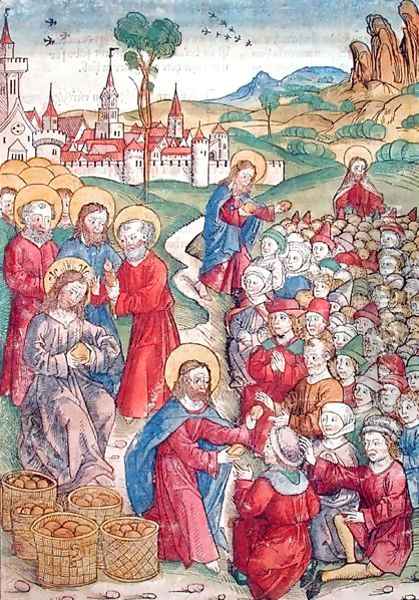
Today, in God’s Lavish Mercy, our prayer is turned to the Holy Family, that unique configuration of love which nurtured the developing life of Jesus. Can you imagine how tenderly the Father shaped this triad, this nesting place of love for God’s own Word?

Today, we look to the Holy Family so that we might see our own families through their lens of grace and mercy. We pray to the Holy Family so that we might be strengthened in the virtues that will help us build our own families: sacrificial love, reverence, courage, unfailing support, committed presence, shared faith, gentle honesty, unconditional acceptance.

“Family” is the primordial place where we learn who we are. The lessons it teaches us about ourselves – for better or worse — remain with us forever. 

This is my crew. How blessed I am in them!

Not everyone is blessed by their family. Family can ground us in confidence or undermine us with self-doubt. It can free us from fear or cripple us with reservation. It can release either possibility or perpetual hesitation within us.

Some families are so dysfunctional that we spend the rest of our lives trying to recover from them. But some, like the Holy Family, allow God’s dream to be nurtured in us and to spread to new families, both of blood and spirit.


The challenge today is to thank God for whatever type of family bore us. Lessons can be learned from both lights and shadows. Let us spend time this morning looking  at our own families with love, gratitude, forgiveness, understanding. Where there are wounds to be healed, let us face them. Where there are belated thanks to be offered, let us give them. Where there are negligence and oversights to confess, let us use them as bridges to a new devotion.


For some, it may seem too late to heal or bless our family. Time may have swallowed some of our possibilities. But it is never too late to deepen relationships through prayer, both for and to our ancestors.

May this feast strengthen us for the families who need us today. May it be the beginning of refuge for families broken and tested by migration and worldwide inhospitality


Music: God Bless My Family ~ Anne Hampton Calloway

Sing Mercy in the Sadness

December 7, 2021
Tuesday of the Second Week of Advent
Memorial of St. Ambrose

Today, in God’s Lavish Mercy, we are blessed, once again, with magnificent readings!

Our psalm coaches us to rejoice and sing – a song that will heal the nations.

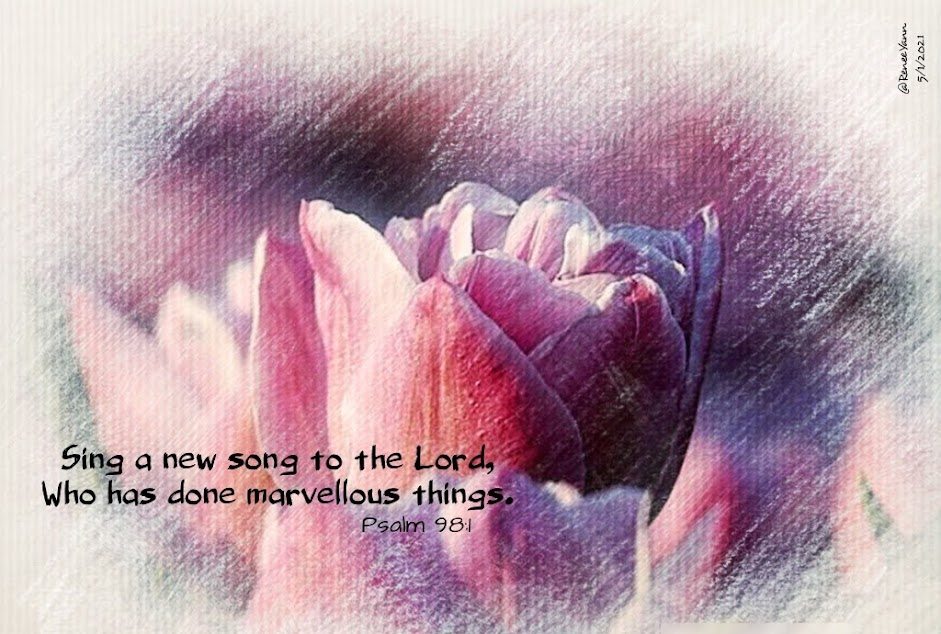
Sing to the LORD a new song;
    sing to the LORD, all you lands.
Sing to the LORD; bless the LORD’s name;
    announce God’s salvation, day after day.

Psalm 96:1-2

Our first reading is the exquisite “Comfort” passage from Isaiah. And our Gospel gives us Jesus tenderly seeking the single lost lamb.

The first and last words of these two readings – COMFORT, LOST – capture the whole intent of today’s message:


Life is a maze whose walls are heightened
by our incivility to one another.
Isaiah calls us to be a leveler of walls,
a straightener of twists, a bridge over deadly valleys.
Jesus calls us to seek and carry the lost sheep.
We are called to be Mercy in a suffering world.


These beautiful and challenging readings come to us this year at a time when Pope Francis has offered a clear and similar challenge to the world. Last week, during his visit to the refugee encampment on the Greek island of Lesbos, Francis voiced his profound pain at the international immigration tragedy:

“Let us not let our sea (mare nostrum) be transformed into a desolate sea of death (mare mortuum),” the Pope concluded.  “Let us not allow this place of encounter to become a theatre of conflict.  Let us not permit this “sea of memories” to be transformed into a “sea of forgetfulness”.  Please, let us stop this shipwreck of civilization.”

“It is an illusion to think it is enough to keep ourselves safe, to defend ourselves from those in greater need who knock at our door”, Pope Francis said.  “In the future, we will have more and more contact with others.  To turn it to the good, what is needed are not unilateral actions but wide-ranging policies.  History teaches this lesson, yet we have not learned it.” 

Source for quotes: Vatican News – vaticannews.va

During his address, the Pope asked every man and woman, “to overcome the paralysis of fear, the indifference that kills, the cynical disregard that nonchalantly condemns to death those on the fringes.” 


Resource: To learn about and reflect on the issue of immigration, here is a link to NETWORK. Founded by Catholic Sisters in the progressive spirit of Vatican II, NETWORK works to create a society that promotes justice and the dignity of all in the shared abundance of God’s creation.


Music: Comfort Ye from Handel’s Messiah – sung by Jerry Hadley

As we pray this glorious music today, let us ask for the strength and courage to be Mercy for the world, to find the ways to comfort God’s people, close by and at life’s borders.

God Knows My Truth

November 8, 2021
Monday of the Thirty-second Week in Ordinary Time

Today, in God’s Lavish Mercy, we pray with the comforting yet challenging Psalm 139, a prayer of awareness, intimacy, and trust.

O LORD, you have probed me and you know me;
    you know when I sit and when I stand;
    you understand my thoughts from afar.
My journeys and my rest you scrutinize,
    with all my ways you are familiar.

Psalm 139:1-3

The thought that God knows us so intimately might be both assuring and/or scary — depending on how we know and understand ourselves. The psalmist describes an overwhelming wonder at the thought of God’s closeness:

Even before a word is on my tongue,
    behold, O LORD, you know the whole of it.
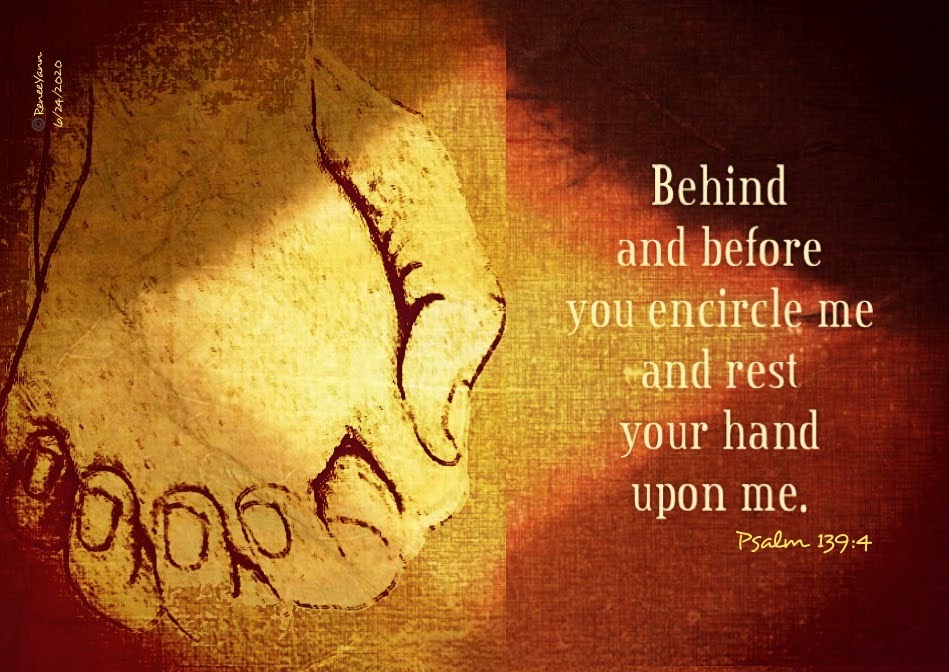
Behind me and before, you hem me in
    and rest your hand upon me.
Such knowledge is too wonderful for me;
    too lofty for me to attain.

Psalm 139:4-6

As we pray Psalm 139, the awe settles into a deep awareness that God’s penetrating Presence in our spirits is ever beneficent and merciful. We pray to yield to its Love and seek its Wisdom.

Where can I go from your spirit?
    From your presence where can I flee?
If I go up to the heavens, you are there;
    if I sink to the nether world, you are present there.
If I take the wings of the dawn,
    if I settle at the farthest limits of the sea,
Even there your hand shall guide me,
    and your right hand hold me fast.

Psalm 139:7-10

On this 32nd Monday, we begin a week of readings from the Book of Wisdom. Written in the century surrounding the birth of Christ, Wisdom is the work of a poet, theologian, philosopher, and moralist. 

Today’s passage alerts us, as does our Gospel, that holding God’s Presence within us, we must live lives that bear it witness:

For wisdom is a kindly spirit,
yet she acquits not blasphemers of their guilty lips;
Because God is the witness of the inmost self
and the sure observer of the heart
and the listener to the tongue.
For the Spirit of the Lord fills the world,
is all-embracing, and knows what the person truly bespeaks by their lives.

Wisdom 1:6-7

A millstone at someone’s feet …

For as our Gospel tells us today:

Jesus said to his disciples,
“Things that cause sin will inevitably occur,
but woe to the one through whom they occur.  
It would be better to have a millstone hung around the neck
and be thrown into the sea
than to cause one of these little ones to sin.”

Luke 17:1-2

Poetry: Wisdom – Tagore

The small wisdom 
is like water in a glass:
clear, transparent, pure.

The great wisdom 
is like the water in the sea:
dark, mysterious, impenetrable.

Music: The Perfect Wisdom of Our God – The Gettys

Paid in Full

November 5, 2021
Friday of the Thirty-first Week in Ordinary Time

Today, in God’s Lavish Mercy, we pray with Psalm 98, a beautiful hymn celebrating God’s munificence.

Our readings are about spiritual wealth, stewardship and Godly generosity.

Paul starts us off by proclaiming that the wealth/riches of salvation belong to ALL humanity. He presents himself as a unique “steward “ of those riches to the Gentiles.

Thus I aspire to proclaim the Gospel
not where Christ has already been named,
so that I do not build on another’s foundation,
but as it is written:

    Those who have never been told of him shall see,
    and those who have never heard of him shall understand.

Romans 15:21

Our Gospel gives us a second interpretation of “stewardship” in the parable the wily steward. This fella’ gets called on the carpet for squandering his employer’s resources. Pink slip time! 

So the steward calls in some of the debtors and reduces their debt by the amount of his own commission. By doing this, he hopes to make some friends to support him in his impending unemployment.


Talbots

Many years ago, there was a Talbot’s outlet in the Franklin Mills Mall in Northeast Philly (I know. Heaven, right?) You could get an amazing deal on the clearance items. But you got an even better deal if you went to a certain cashier for your checkout.

He was a tall, flamboyant and loudly funny guy. If a price tag was missing on an item, you got it virtually for free. He would make outlandish comments like, “Oh, honey, this isn’t your color so let’s discount it 50%.” If you bought two of the same item, he might announce,”Two for one today”, charging for only one. He was a living example of the Biblical steward! Over time, he developed a devoted buying community – those who had learned the secret of why people waited in his long line!


In today’s parable, Jesus isn’t advocating that we cheat our employers. The parable isn’t really about that at all. It is about the way he wants his disciples to be profligate in preaching the mercy of God.

Remember that this parable comes in between two blockbusters about Mercy – the Prodigal Son and Lazarus and the Rich Man. In a way, you might say Jesus is on a tear about the unbounded generosity of God in forgiveness and hope for us. Jesus makes clear that the wealth of Divine Love is delivered to us by our unbounded Christian love for one another.


So today, maybe we can think about the Talbot’s guy. We have been abundantly blessed by God’s love for us. Let’s pay it forward over and over today… and every day. Let’s generously share the infinite discount of Mercy.


Poetry: Mercy – by Charles Mackay, (1814 – 1889), a Scottish poet, journalist, author, anthologist, novelist, and songwriter.

A little stream had lost its way
Amid the grass and fern;
A passing stranger scooped a well,
Where weary men might turn;
He walled it in and hung with care
A ladle at the brink;
He thought not of the deed he did,
But judged that all might drink.
He passed again, and lo! the well,
By summer never dried,
Had cooled ten thousand parching tongues,
And saved a life beside.

A nameless man, amid a crowd
That thronged the daily mart,
Let fall a word of hope and love,
Unstudied, from the heart;
A whisper on the tumult thrown,
A transitory breath–
It raised a brother from the dust,
It saved a soul from death.
O germ! O fount! O word of love!
O thought at random cast!
Ye were but little at the first, But mighty at the last.


Music: Jesus Paid It All – Elvira M. Hall (1865) This rendition of the hymn by Kristian Stanfill (born 1983) is so interesting. Offered here with modern instrumentation, the words date back to the era of the US Civil War. Past and present meld in the ever eternal love God has for us. An original version is below in case you’d like to compare the music. i think both are beautiful.

Zap?

October 23, 2021
Saturday of the Twenty-ninth Week in Ordinary Time

Today, in God’s Lavish Mercy, we pray with Psalm 24 in which the psalmist expresses the heart’s deep longing for God:

Who can ascend the mountain of the LORD?
    or who may stand in that holy place?
The one whose hands are sinless, whose heart is clean,
    who desires not what is vain.
Who shall receive a blessing from the LORD,
    a reward from God the savior.
Such is the race that seeks for God,
    that seeks the face of the God of Jacob.

Psalm 24: 5-6

But achieving those sinless hands and clean heart is not always an easy task. It takes a life focused on faith and rooted in love.

Jesus talks about that focus in today’s Gospel.

Jesus gives us a parable which, at first, appears to say, “Get your act together fast, or God might zap you.” From Jesus’s words, we can assume that some public disasters have recently occurred. Those in the gathered crowd are unnerved by these events.

Jesus uses that nervousness to talk about repentance. He tells the people that tragedy can make us wake up to the fact that life is fragile and fleeting. That awareness should make us want to use our time on earth well, to give glory to God.

The repentance Jesus encourages is not just a contrition, or turning from sin. It is an opening of the soul’s eyes to see our lives and circumstances as God sees them.

Is God going to zap us if we don’t have that kind of repentance? No, I think not.

God is always Mercy …
always, always Mercy.

With the parable of the fruitless fig tree, Jesus assures us that God is with us, giving us every grace and opportunity to bear spiritual fruit. God is patient and nurturing. But, in every human life, there is a limit to the time we have to respond.


Poetry: The Facts of Life – Pádraig Ó Tuama

That you were born
and you will die.

That you will sometimes love enough
and sometimes not.

That you will lie
if only to yourself.

That you will get tired.

That you will learn most from the situations
you did not choose.

That there will be some things that move you
more than you can say.

That you will live
that you must be loved.

That you will avoid questions most urgently in need of
your attention.

That you began as the fusion of a sperm and an egg
of two people who once were strangers
and may well still be.

That life isn’t fair.
That life is sometimes good
and sometimes better than good.

That life is often not so good.

That life is real
and if you can survive it, well,
survive it well
with love
and art
and meaning given
where meaning’s scarce.

That you will learn to live with regret.
That you will learn to live with respect.

That the structures that constrict you
may not be permanently constricting.

That you will probably be okay.

That you must accept change
before you die
but you will die anyway.

So you might as well live
and you might as well love.
You might as well love.


Music: Calm the Soul – Poor Clares Galway

Winds of Change

Friday of the Twenty-ninth Week in Ordinary Time

October 22, 2021

Today, in God’s Lavish Mercy, we pray with Psalm 119, the longest and very familiar psalm which pleads for God to mercifully teach us:

  • Wisdom
  • Knowledge
  • Goodness 
  • Generosity
  • Kindness
  • Compassion

In our readings, Paul asserts that without God’s Grace we can never attain these gifts. Jesus calls us to use these gifts and to practice a holy life by recognizing and responding justly to the challenges of our times.


Paul sounds a lot like someone approaching the microphone at “Sinners Anonymous”:

I know that good does not dwell in me, that is, in my flesh.
The willing is ready at hand, but doing the good is not.
For I do not do the good I want,
but I do the evil I do not want.

Romans 7:18-20

Paul basically attests to the fact that for human beings, even him, will and actions often don’t synch up. Sure, we want to be good people, but as Nike says, do we …

Paul’s says no. The only way we do the good we will to do is by the grace of Jesus Christ.


In our Gospel, Jesus affirms the slowness of the human spirit to act on the realities around us. In some translations, Jesus uses a phrase which caught on with the architects of Vatican II: the signs of the times.

Jesus tells his listeners and us that we need to be alert to the circumstances of our world. It both weeps and rejoices. Where it weeps, we must be a source of mercy and healing. Where it rejoices, we must foster and celebrate the Presence of the Spirit.


In the Vatican II document Gaudium et Spes (The Church in the Modern World), we read:

In every age, the church carries the responsibility
of reading the signs of the times
and of interpreting them in the light of the Gospel, if it is to carry out its task.
In language intelligible to every generation, it should be able to answer
the ever recurring questions which people ask
about the meaning of this present life and of the life to come,
and how one is related to the other.
We must be aware of and understand the aspirations, the yearnings,
and the often dramatic features of the world in which we live.

Although written in the 1960s, these powerful words hold true today. We are the Church of which the document speaks. We are the ones whom Jesus calls to respond with authentic justice and mercy to the signs of the times. 

Read the newspaper in that light today. Watch the news in that light. Meet your brothers and sisters in that light today.


Poetry: Ode to the West Wind by Percy Bysshe Shelley

Perhaps more than anything else, Shelley wanted his message of reform and revolution spread, and the wind becomes the symbol for spreading the word of change through the poet-prophet figure. Some also believe that the poem was written in response to the loss of his son William in 1819 (born to Mary Shelley – author of “Frankenstein”). The ensuing pain influenced Shelley. The poem allegorizes the role of the poet as the voice of change and revolution. (Wikipedia)

O wild West Wind, thou breath of Autumn’s being, 
Thou, from whose unseen presence the leaves dead 
Are driven, like ghosts from an enchanter fleeing, 
Yellow, and black, and pale, and hectic red, 
Pestilence-stricken multitudes: O thou, 
Who chariotest to their dark wintry bed 
The winged seeds, where they lie cold and low, 
Each like a corpse within its grave, until 
Thine azure sister of the Spring shall blow 
Her clarion o’er the dreaming earth, and fill 
(Driving sweet buds like flocks to feed in air) 
With living hues and odours plain and hill: 
Wild Spirit, which art moving everywhere; 
Destroyer and preserver; hear, oh hear! 

II 

Thou on whose stream, mid the steep sky’s commotion, 
Loose clouds like earth’s decaying leaves are shed, 
Shook from the tangled boughs of Heaven and Ocean, 
Angels of rain and lightning: there are spread 
On the blue surface of thine aëry surge, 
Like the bright hair uplifted from the head 
Of some fierce Maenad, even from the dim verge 
Of the horizon to the zenith’s height, 
The locks of the approaching storm. Thou dirge 
Of the dying year, to which this closing night 
Will be the dome of a vast sepulchre, 
Vaulted with all thy congregated might 
Of vapours, from whose solid atmosphere 
Black rain, and fire, and hail will burst: oh hear! 

III 

Thou who didst waken from his summer dreams 
The blue Mediterranean, where he lay, 
Lull’d by the coil of his crystalline streams, 
Beside a pumice isle in Baiae’s bay, 
And saw in sleep old palaces and towers 
Quivering within the wave’s intenser day, 
All overgrown with azure moss and flowers 
So sweet, the sense faints picturing them! Thou 
For whose path the Atlantic’s level powers 
Cleave themselves into chasms, while far below 
The sea-blooms and the oozy woods which wear 
The sapless foliage of the ocean, know 
Thy voice, and suddenly grow gray with fear, 
And tremble and despoil themselves: oh hear! 

IV 

If I were a dead leaf thou mightest bear; 
If I were a swift cloud to fly with thee; 
A wave to pant beneath thy power, and share 
The impulse of thy strength, only less free 
Than thou, O uncontrollable! If even 
I were as in my boyhood, and could be 
The comrade of thy wanderings over Heaven, 
As then, when to outstrip thy skiey speed 
Scarce seem’d a vision; I would ne’er have striven 
As thus with thee in prayer in my sore need. 
Oh, lift me as a wave, a leaf, a cloud! 
I fall upon the thorns of life! I bleed! 
A heavy weight of hours has chain’d and bow’d 
One too like thee: tameless, and swift, and proud. 

Make me thy lyre, even as the forest is: 
What if my leaves are falling like its own! 
The tumult of thy mighty harmonies 
Will take from both a deep, autumnal tone, 
Sweet though in sadness. Be thou, Spirit fierce, 
My spirit! Be thou me, impetuous one! 
Drive my dead thoughts over the universe 
Like wither’d leaves to quicken a new birth! 
And, by the incantation of this verse, 
Scatter, as from an unextinguish’d hearth 
Ashes and sparks, my words among mankind! 
Be through my lips to unawaken’d earth 
The trumpet of a prophecy! O Wind, 
If Winter comes, can Spring be far behind?


Music: The Times They Are A’changin’ – Bob Dylan 

Dylan’s songs in the 50s and 60s became anthems for the Civil Rights and anti-war movements. His lyrics during this period incorporated a wide range of political, social, philosophical, and literary influences, defied popular music conventions and appealed to the burgeoning counterculture. (Wikipedia) 
Ah, it was a good time to be young! (me)

The Swedish Academy awarded Dylan the 2016 Nobel Prize in Literature “for having created new poetic expressions within the great American song tradition.”

Out of the Depths

Tuesday of the Twenty-seventh Week in Ordinary Time 
October 5, 2021

Today, in God’s Lavish Mercy, we pray with Psalm 130, a “Psalm of Ascents” in which the whole community joined in a prayer of intense supplication as they gathered at the Temple.

Although prayed as a community, the psalm is written in an individual voice, helping us to connect our times of personal desperation to the prayer.

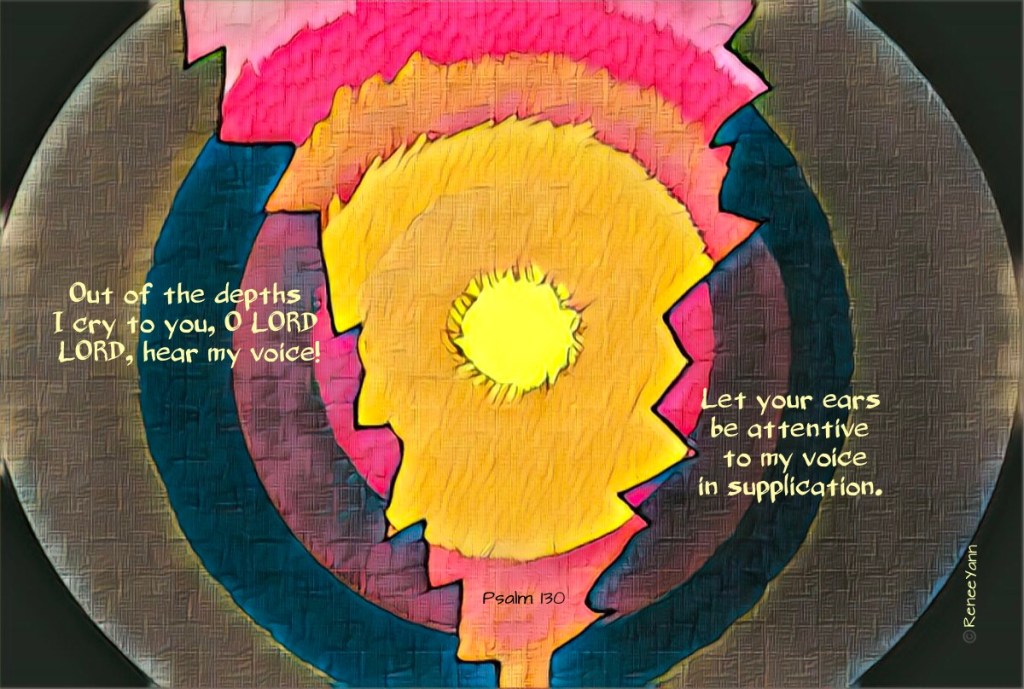
Out of the depths I cry to you, O LORD
    LORD, hear my voice!
Let your ears be attentive
    to my voice in supplication.

Psalm 130: 1-2

Jonah, in the chapter before today’s first reading, gives us a graphic image of what “the depths” feel like.  Not only is Jonah swallowed by the sea, but also by a whale which carries him – imprisoned – to the very bottom of the ocean!

Jonah prayed to the LORD, his God, from the belly of the fish:
Out of my distress I called to the LORD,
Who answered me;
From the womb of Sheol I cried for help,
and you heard my voice.

Jonah 2:2-3

Sheol” is a Hebrew term which could be translated as “place of the dead spirits”. It is different from the grave, which harbors the body. In other words, “Sheol” is a place where our spirits can die before we physically die.


We can experience this kind of spiritual death in so many ways. Some come upon us not by our own choice. Certainly in the illness of depression we feel this darkness. Profound bereavement and debilitating sickness can overwhelm us as well. Praying Psalm 130 may help at such times. But they also call for reaching out to friends, counselors, and professional support to help in our healing.


But the psalm more specifically addresses those times when we get caught in a deadly spiral due to our own sinful and selfish choices – by allowing prejudice, hate, willful ignorance or any of the seven deadly sins to overtake us.

Lord, hear my cry!
May your ears be attentive
to my cry for mercy.
If you, LORD, keep account of sins,
Lord, who can stand?
But with you is forgiveness
and so you are revered.

Psalm 130: 2-4

Psalm 130 tells us that God is present to us in both situations- whether our suffering is brought on by our own choices or not. God will walk us through to the Light when we open ourselves to Grace:

Let us wait patiently 
to discern God’s way,
For with God is kindness
    and plenteous redemption;
God will restore us
    from every darkness;
God’s way is mercy.

Psalm 130: 7-8

Let’s pray for that kind of faith in our hearts, and the hearts of those we love, especially for anyone suffering “the depths” right now.


Poetry: De Profundis – Christina Rossetti 

Oh why is heaven built so far, 
Oh why is earth set so remote? 
I cannot reach the nearest star 
That hangs afloat. 
I would not care to reach the moon, 
One round monotonous of change; 
Yet even she repeats her tune 
Beyond my range. 
I never watch the scatter'd fire 
Of stars, or sun's far-trailing train, 
But all my heart is one desire, 
And all in vain: 
For I am bound with fleshly bands, 
Joy, beauty, lie beyond my scope; 
I strain my heart, I stretch my hands, 
And catch at hope. 

Music: Out of the Deep – John Rutter

Psalm 130, ‘Out of the deep have I called unto thee O Lord’ begins darkly with an unaccompanied cello solo in C minor, later giving way to a more positive C major at the words ‘for with the Lord there is mercy, and with him is plenteous redemption’.

Out of the deep have I called unto thee, O Lord; Lord, hear my voice.
O let thine ears consider well the voice of my complaint.
If thou, Lord, wilt be extreme to mark what is done amiss, O Lord, who may abide it?
For there is mercy with thee: therefore shalt thou be feared.
I look for the Lord; my soul doth wait for him; and in his word is my trust.
My soul fleeth unto the Lord before the morning watch; I say, before the morning watch.
O Israel, trust in the Lord; for with the Lord there is mercy, and with him is plenteous redemption.
And he shall redeem Israel from all his sins.

A Blessed Mercy Day

Friday of the Twenty-fifth Week in Ordinary Time
September 24, 2021

The link below will take you to Mercy International Center’s website. About mid-page, you can click to see Catherine McAuley’s story, “In God Alone”. It is a wonderful short film. Please take time to enjoy it and to thank God with the Sisters of Mercy for our blessed founder, dear Catherine. Blessings and love to all our Mercy family throughout the world!

Music: In God Alone by Bernadette Farrell

Return Rejoicing!

Memorial of Saints Andrew Kim Tae-gŏn, Priest, and Paul Chŏng Ha-sang, and Companions, Martyrs
September 20, 2021

Today, in God’s Lavish Mercy, we pray with Psalm 126

This six-verse psalm is a regular part of Jewish, Catholic, Lutheran, Anglican and other Protestant liturgies. It is well known in Judaism as the preliminary psalm recited before the Birkat Hamazon (Grace After Meals) on Shabbat and Jewish holidays, and as such is sung to a wide variety of melodies.

Wikipedia
Shir hama'alot (Psalm 126) - cantor Yossele Rosenblatt

Psalm 126 can be described as:

 “joy remembered and joy anticipated”

James Luther Mays

The psalm is divided into two parts. 

Joys remembered: The first three verses gratefully reflect on the joy and freedom felt upon return to Jerusalem after the Babylonian exile.

Joys anticipated: The second three verses attest to the difficulties subsequent to that return. They voice a plea for restoration of joy.


This is a prayer most of us can relate to. Can you remember a time when you were so delighted to obtain a certain item, or status, or goal that you felt it was “almost like a dream” situation? 

When the LORD brought back the captives of Zion,
    we were like those dreaming.
Then our mouth was filled with laughter,
    and our tongue with rejoicing.

Psalm 126:1

But perhaps, once that reality was obtained, it wasn’t so easy to manage, or complete, or enjoy! Perhaps there were “dry spells” like the torrent-less desert of 126:

Restore our fortunes, O LORD,
    like the torrents in the southern desert.
Those that sow in tears
    shall reap rejoicing.

Psalm 126: 4-5

For example, I’ve heard a few young couples express delight upon buying their first home – a “fixer upper”. But often, the “fixing up” requires a lot more resources than expected!

Such was the situation for the Israelites who joyfully returned to Jerusalem — only to find a city in ruins, bereft of their beloved Temple, with devastated fields and vineyards.


Still, Psalm 126 is a testament to hope and resilience. It is an affirmation that we can go forward by faith, hope, trust, patience, and by drawing on the power of remembered mercies.

Although they go forth weeping,
    carrying the seed to be sown,
They shall come back rejoicing,
    carrying their sheaves.

Psalm 126:6

Poem: Blessing to Summon Rejoicing – Jan Richardson

When your weeping
has watered
the earth.
When the storm
has been long
and the night
and the season
of your sorrowing.
When you have seemed
an exile
from your life,
lost in the far country,
a long way from where
your comfort lies.
When the sound
of splintering
and fracture
haunts you.
When despair
attends you.
When lack.
When trouble.
When fear.
When pain.
When empty.
When lonely.
When too much
of what depletes you
and not enough
of what restores
and rests you.
Then let there be
rejoicing.
Then let there be
dreaming.
Let there be
laughter in your mouth
and on your tongue
shouts of joy.
Let the seeds
soaked by tears
turn to grain,
to bread,
to feasting.
Let there be
coming home.

— from Circle of Grace

Music: In the Place of Dreams – Tim Janis

Jubilate Deo!

Saturday of the Twenty-fourth Week in Ordinary Time

September 18, 2021

Today, in God’s Lavish Mercy, we pray with Psalm 100, called the “Jubilate Deo” because of its opening pronouncement:

Shout joyfully to the LORD, all you peoples;
serve the Lord with gladness;
come before the Lord with joyful song.

Psalm 100: 1-2

This is such a perfect prayer today for our Mercy community as we will gather to celebrate the Jubilee of many of our sisters this afternoon. It will be a huge celebration in which the Jubilarians of both 2020 and 2021 will be honored, due to last year’s Covid restrictions.

For many of us, the most moving parts of the celebration are the procession and recession. These celebratory passages are a testament to God’s faithfulness over many lifetimes, and to the women who have received and responded to God’s gifts.

Some sisters, who have been given the gift of long years, will process with a cane or walker to assist them. Some will move with an achieved maturity, and some still with the vigor of youth.

But our Mercy family, gathered in the pews, walks in Spirit with each of the Jubilarians, carrying her within a bond of mutual love. As we see each sister whom we have lived with, worked with, loved and learned from, our hearts indeed sing with them, “Jubilate!”


Poetry: The Neophyte – Alice Meynell

 
Who knows what days I answer for to-day:
  Giving the bud I give the flower.  I bow
  This yet unfaded and a faded brow;
Bending these knees and feeble knees, I pray.
Thoughts yet unripe in me I bend one way,
  Give one repose to pain I know not now,
  One leaven to joy that comes, I guess not how.
I dedicate my fields when Spring is grey.
Oh, rash! (I smile) to pledge my hidden wheat.
  I fold to-day at altars far apart
Hands trembling with what toils?  In their retreat
  I seal my love to-be, my folded art.
I light the tapers at my head and feet,
  And lay the crucifix on this silent heart.
Some of 2021’s Sapphire/Diamond Jubilarians when they were true Neophytes

Please join us in your grateful prayers for these Sisters of Mercy:

Jubilarians 2020
80 years
Sister Rita Powell

70 years
Sister Mary Georgina Hasson 
Sister Mary Hentz
Sister Kathleen Kelly
Sister Marie Lynch
Sister Antoinette Medori 
Sister Clare Miriam Schrant 
Sister Marianna Walsh

60 Years
Sister Rosellen Bracken
Sister Mary Elizabeth Burke 
Sister Emily Therese Connor 
Sister Marie Michele Donnelly 
Sister Patricia Anne Flynn
Sister Kathleen Marie Fox
Sister Mary Ann Giordano
Sister Patricia Anne Kennedy 
Sister Barbara Ann MacWilliams 
Sister Kathleen McAlpin
Sister Mercedes Joan McCann 
Sister Kathleen McGovern 
Sister Josephine McGrory
Sister Mary Sarah McNally 
Sister Mary Anne Nolan
Sister Stella Mary O’Brien
Sister Frances Paglione
Sister Rose Carmel Scalone 
Sister Barbara Smiley
Sister Patricia Talone
Sister Angela Welsh

50 years
Sister Mary Beth Geraghty 
Sister Mary Jane Morrison 
Sister Katherine Bednarcik

Jubilarians 2021
75 years
Sister Mary Ann Basile 
Sister Marie Helene Bradley 
Sister Mary Janet Doughty 
Sister Kathleen Mary Long 
Sister Marita Lyons
Sister Catherine Rawley 
Sister Ethel Sweeney

70 years
Sister Therese Marie Kenny 
Sister Alice Mary Meehan 
Sister Rose Morris
Sister Kathleen Waugh 
Sister Anne Marie Berenato 
Sister Mary Anton Frick

60 years
Sister Francis Haddow 
Sister Anna Marie Lesutis 
Sister Margery Lowry
Sister Mary Mester
Sister Sheila Murphy
Sister Anne Marie Weisglass 
Sister Joanne Whitaker 
Sister Beverly Wilde

50 years
Sister Maureen Conklin 
Sister Susan Myslinski

25 Years
Sister Guia Jimenez


Music: Utrecht Jubilate – Handel