Isaiah the Poet

Wednesday of the Twenty-ninth Week in Ordinary Time

October 21, 2020


Today, in God’s Lavish Mercy, we pray with Isaiah for our Responsorial Psalm.

God indeed is my savior;
I am confident and unafraid.
My strength and my courage is the LORD,
Who has been my savior.

Isaiah 12: 2-3

But how do we get to the degree of steadfast faith described here by Isaiah, a faith that is confident, unafraid, strong and courageous? Isaiah says it is like satisfying a deep thirst at a flowing fountain.


We all know how unpleasant it is to be thirsty, but what about really thirsty?

I’m a pretty big fan of old cowboy movies. A standard scene in many of these is the forlorn rider traversing a parched plain, longing for water.

by Stanley L. Wood

Now that’s “thirsty”! And that is the degree of longing Paul describes in today’s passage from Ephesians, a longing for that “water” that had been hidden through the ages:

To me, the very least of all the holy ones, this grace was given,
to preach to the Gentiles the inscrutable riches of Christ,
and to bring to light for all what is the plan of the mystery
hidden from ages past in God who created all things,
so that the manifold wisdom of God
might now be made known …


… the inscrutable riches of Christ…

This is the Fountain to which we are invited as we open ourselves through the Word of God in scripture, sacrament, and sacred circumstance of our lives.


Sing praise to the LORD for his glorious achievement;
let this be known throughout all the earth.
Shout with exultation, O city of Zion,
for great in your midst
is the Holy One of Israel!

Isaiah 12: 5-6

The “glorious achievement” proclaimed by Isaiah is the same “manifold wisdom” to which Paul says we all have access by faith:

… the manifold wisdom of God …
… accomplished in Christ Jesus our Lord,
in whom we have boldness of speech
and confidence of access through faith in him.

Ephesians 3: 10-12

In our Gospel, Jesus tells that this gift, this Fountain, once opened to us, demands our faithful response:

Much will be required of the person entrusted with much,
and still more will be demanded of the person entrusted with more.

So as we drink deeply of this Fountain, let us pray for a grateful, responsive fidelity for the gift we have been given.


Poem: excerpt from “Water Sign Woman” by Lucille Clifton

Photo by Kevin Bidwell on Pexels.com
the woman who feels everything
sits in her new house
waiting for someone to come
who knows how to carry water
without spilling, who knows
why the desert is sprinkled
with salt, why tomorrow
is such a long and ominous word.

they say to the feel things woman
that little she dreams is possible,
that there is only so much
joy to go around, only so much
water. there are no questions
for this, no arguments. she has
to forget to remember the edge
of the sea, they say, to forget
how to swim to the edge, she has

to forget how to feel. the woman
who feels everything sits in her
new house retaining the secret
the desert knew when it walked
up from the ocean, the desert,

so beautiful in her eyes;
water will come again
if you can wait for it.
she feels what the desert feels.
she waits.

Music: Come Thou Fount of Every Blessing written by Robert Robinson (1758) sung here by Fernando Ortega


Psalm 98: The Lord Remembers

Memorial of Saint Teresa of Jesus, Virgin and Doctor of the Church

October 15, 2020

Today, in God’s Lavish Mercy, on this feast of the great St. Teresa of Avila, we pray with Psalm 98.

Our psalm is the exultant song of a joyful and triumphant people – a people grateful and blessed by the Lord’s Presence among them.

Sing to the LORD a new song,
Who has done wondrous deeds;
Whose right hand has won for us
the victory of peace.

Psalm 98:1-2

We have all experienced these types of moments when we feel “delivered”.

  • We might have been praying for someone’s health, or our own.
  • We might have been caught in a difficult decision.
  • We might have been waiting for an acceptance letter or call.
  • We might have been hoping our apology would be accepted, or that one would be given.
  • We might have been aching for an inspiration, a thread of hope, or a new understanding.

And then —- Light!

We know what it feels like when the Light comes. But often, it is not the light we had expected. True “deliverance” comes not from shedding a worrisome circumstance. Instead, it comes from being incorporated into an unshakable faith and trust, as St. Teresa of Ávila describes it:

May today there be peace within. 
May you trust God that you are exactly where you are meant to be. 
May you not forget the infinite possibilities that are born of faith. 
May you use those gifts that you have received, and pass on the love that has been given to you. 
May you be content knowing you are a child of God. 
Let this presence settle into your bones, and allow your soul the freedom to sing, dance, praise and love. 
It is there for each and every one of us.


Poem: Nada Te Turbe – Teresa of Ávila

Let nothing disturb you,
Let nothing frighten you,
All things are passing:
God alone is changeless.
Patience
obtains all things.
Whoever has God
lacks nothing;
God alone suffices.

Nada te turbe,
Nada te espante.
Todo se pasa.
Dios no se muda.
La paciencia 
Todo lo alcanza.
Quien a Dios tiene,
Nada le falta.
Solo Dios basta.


Music: Voice in My Heart – Iris Koh


A beautiful reflection in Spanish from the Discalced Carmelite Sisters

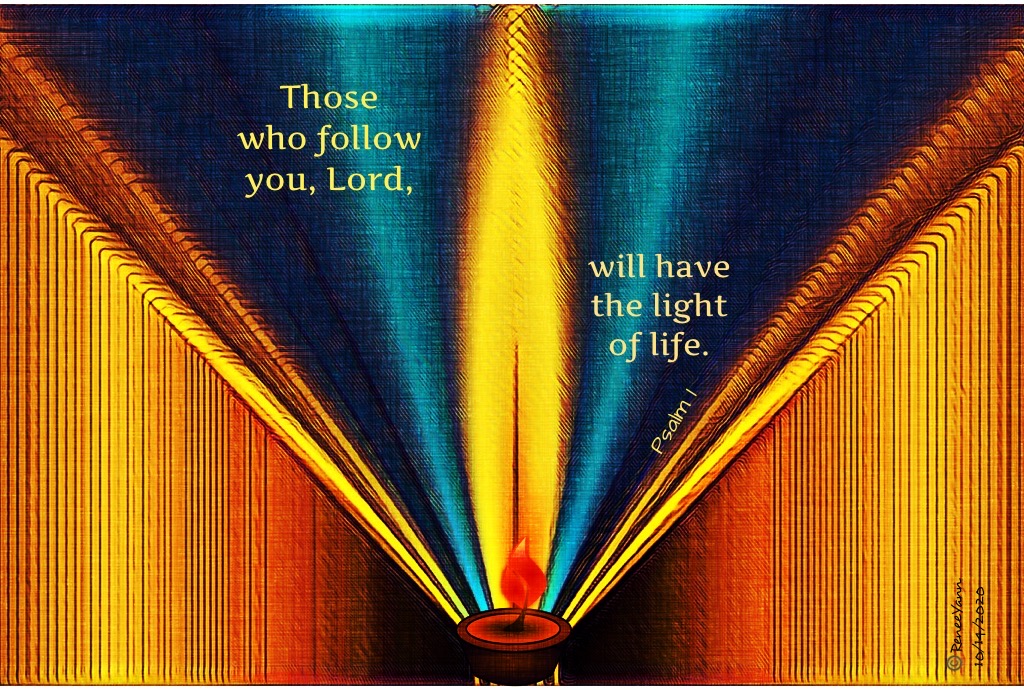
Psalm 1: The First Word

Wednesday of the Twenty-eighth Week in Ordinary Time

October 14, 2020


Today, in God’s Lavish Mercy, we pray with Psalm 1.

Patrick D. Miller, Hebrew Scriptures scholar, suggests that Psalm 1 “sets the agenda for the Psalter through its identification of the way of the righteous and the way of the wicked as well as their respective fates” along with “its emphasis on the Torah, the joy of studying it and its positive benefits for those who do“.

Blessed the one who follows not
the counsel of the wicked
Nor walks in the way of sinners,
nor sits in the company of the insolent,
But delights in the law of the LORD
and meditates on God’s law day and night.

Psalm 1:1-2

What does it really mean to “meditate on God’s law day and night”? Become a monk? Read the Bible all day? Never sleep?

Of course not. I think it means to live in the firm belief that God is in everything, and to train our hearts to see and respond to that Omnipresent Love.

We all know people who, no matter the circumstances, are focused on good and radiate a joyful confidence. There is a light within them and a peace around them. The living of their ordinary lives is a meditation on God’s order in all things.

Such a person …

… is like a tree
planted near running water,
That yields its fruit in due season,
and whose leaves never fade.
Whatever that faithful one does, prospers.

Psalm 1:3

It doesn’t mean there aren’t challenges … even protests, righteous anger, sadness and pain. Think of Jesus as he overturned the Temple tables!

It means rather that the focus is never lost because …
Creation’s sacred order is our Light;
and God’s law has taught ours hearts 
to find our joy in its Beauty.

my transliteration of Psalm 1:2

Let’s be that tree near
the running water of Grace!🙏


Poem: On Beauty by Khalil Gibran

And a poet said, Speak to us of Beauty.
     And he answered:
     Where shall you seek beauty, and how
shall you find her unless she herself be your
way and your guide?
     And how shall you speak of her except
she be the weaver of your speech?
    
The aggrieved and the injured say,
“Beauty is kind and gentle.
     Like a young mother half-shy of her
own glory she walks among us.”
     And the passionate say, “Nay, beauty is
a thing of might and dread.
     Like the tempest she shakes the earth
beneath us and the sky above us.”
    
The tired and the weary say, “Beauty is
of soft whisperings. She speaks in our spirit.
     Her voice yields to our silences like a faint
light that quivers in fear of the shadow.”
     But the restless say, “We have heard her
shouting among the mountains,
     And with her cries came the sound of
hoofs, and the beating of wings and
the roaring of lions.”
    
At night the watchmen of the city say,
“Beauty shall rise with the dawn from the
east.”
     And at noontide the toilers and 
the wayfarers say, 
“We have seen her leaning over
the earth from the windows of the sunset.”
    
In winter say the snow-bound, “She shall
come with the spring leaping upon the hills.”
     And in the summer heat the reapers say,
“We have seen her dancing with the autumn
leaves, and we saw a drift of snow in her hair.”
     All these things have you said of beauty,
     Yet in truth you spoke not of her but of
needs unsatisfied,
     And beauty is not a need but an ecstasy.
     It is not a mouth thirsting nor an empty
hand stretched forth,
     But rather a heart enflamed and a soul enchanted.
     It is not the image you would see nor the
song you would hear,
     But rather an image you see though you
close your eyes and a song you hear though
you shut your ears.
     It is not the sap within the furrowed bark,
nor a wing attached to a claw,
     But rather a garden for ever in bloom and
a flock of angels for ever in flight.
    
People of Orphalese, beauty is life when
life unveils her holy face.
     But you are life and you are the veil.
     Beauty is eternity gazing at itself in a mirror.
But you are eternity and you are the mirror.


Music: I Delight in You, Lord – David Baroni

Psalm 119: Come, Sweet Mercy!

Tuesday of the Twenty-eighth Week in Ordinary Time

October 13, 2020


Today, in God’s Lavish Mercy, we pray with Psalm 119 whose refrain is beautiful to the ears of those who love Mercy.


We can invite Mercy in many ways.

One way is to ask Mercy to heal the fractured circumstances of our lives – the outside of the cup, if we would borrow an image from today’s Gospel:

  • to strengthen us against any pain or fear in our own lives
  • to deliver us and those we love from all that overwhelms
  • to forgive our inexcusable retreats into selfishness
  • to repair that which seems irrevocably broken 

But another, deeper way is to invite Mercy to the inside of our “cup”:

  • to indwell our hearts
  • to transform, within us, the place where we encounter life
  • to inspire us to respond always with the heart of Jesus
  • to flow from us in continual witness to God’s Mercy

Today, in our prayer, let’s spend some time with Mercy, the most beautiful Face of God.


Poem:  Blest are the undefiled in heart (Psalm 119)
by Isaac Watts (1674 – 1748) was an English Christian minister (Congregational), hymn writer, theologian, and logician. He was a prolific and popular hymn writer and is credited with some 750 hymns. He is recognized as the “Godfather of English Hymnody”; many of his hymns remain in use today and have been translated into numerous languages.

Blest are the undefiled in heart,
whose ways are right and clean;
who never from your law depart,
but flee from every sin.

Blest are the ones that keep your word,
and serve you with their hands;
with their whole heart they seek you, Lord,
obeying your commands.

Great is their peace who love your law;
how firm their souls abide!
Nor can a bold temptation draw
their steady feet aside.

Then shall my heart have inward joy!
I’ll keep my steps from shame;
your statutes help me to obey,
and glorify your name.

Music- Sanctuary by Secret Garden

Psalm 105: God at the Center

Saturday of the Twenty-seventh Week in Ordinary Time

October 10, 2020


Today, in God’s Lavish Mercy, we pray with Psalm 105, a recounting of the marvelous works God has done from the Abrahamic covenant to the Exodus.

Sing to God, sing praise,
proclaim all God’s wondrous deeds.
Glory in the Holy Name;
rejoice, O hearts that seek the LORD!

Psalm 105: 2-3

Our psalm today enjoins us to remember God’s faithful mercy to us and to praise God as we remember.

Such sacred “remembering” is an act of radical faith which, first, recognizes God as the Center of our life, and second, acts from that radical awareness.


The word “obedience”, so commonly misconstrued as subservience, is another way of describing this radical faith which hears, listens, acknowledges, responds and centers itself on the voice of God. The word “obedience” comes from the same root as the word “listen”.

This freely-given and continually deepened obedience allows us to hear and discern the loving truth God weaves through our lives.

The counter-world of the Psalms contradicts our closely held world of amnesia and mediates to us a world of lively remembering….
… In Psalm 105, a long recital of the great deeds climaxes, “in order that they might keep his statutes and observe his laws” (v. 45). The purpose of remembering is thus to evoke a contemporary practice of obedience in the wake of the memory. The implied negative is that when the inventory of miracles is forgotten, there will be no contemporary obedience .

Walter Brueggemann, From Whom No Secrets Are Hid

In the encyclical Fratelli Tutti, Pope Francis points out how this obedience, (this holy remembering, listening and acting), is tied to the course of human affairs. Francis quotes JPII here:

In this regard, I wish to cite the following memorable statement: “If there is no transcendent truth, in obedience to which the human person achieves full identity, then there is no sure principle for guaranteeing just relations between people. Their self-interest as a class, group or nation would inevitably set them in opposition to one another. If one does not acknowledge transcendent truth, then the force of power takes over, and each person tends to make full use of the means at their disposal in order to impose personal interests or opinion, with no regard for the rights of others… The root of modern totalitarianism is to be found in the denial of the transcendent dignity of the human person who, as the visible image of the invisible God, is therefore by very nature the subject of rights that no one may violate – no individual, group, class, nation or state.

St. John Paul II, Encyclical Letter Centesimus Annus (1 May 1991)

Rootedness in this “remembering obedience” begins with each person’s own sincere prayer. With the psalmist, let us remember God’s loving fidelity to us and, in grateful response, live that Love faithfully into our conflicted world:

Look to the LORD’s strength;
seek to serve the Lord constantly.
Recall the wondrous deeds that God has wrought,
the signs, and the graces God has spoken in your life.

Psalm 105: 4-5

Poem: Called to Become – Edwina Gateley

You are called to become
A perfect creation.
No one else is called to become
Who you are called to be.
It does not matter
How short or tall
Or thick-set or slow
You may be.
It does not matter
Whether you sparkle with life
Or are as silent as a still pool.
Whether you sing your song aloud
Or weep alone in darkness.
It does not matter
Whether you feel loved and admired
Or unloved and alone
For you are called to become
A perfect creation.
No one's shadow
Should cloud your becoming.
No one's light
Should dispel your spark.
For the Lord delights in you.
Jealously looks upon you
And encourages with gentle joy
Every movement of the Spirit
Within you.
Unique and loved you stand.
Beautiful or stunted in your growth
But never without hope and life.
For you are called to become
A perfect creation.
This becoming may be
Gentle or harsh.
Subtle or violent.
But it never ceases.
Never pauses or hesitates.
Only is—
Creative force—
Calling you
Calling you to become
A perfect creation.

Music: Psalm 105 – Give Thanks – Sean Dayton

Psalm 111: Make It Personal

Friday of the Twenty-seventh Week in Ordinary Time

October 9, 2020

Today, in God’s Lavish Mercy, we pray with Psalm 111, an elegant and simple hymn of praise to God.

Wikipedia says that the psalm praises God for a few specific things:

  • God’s great works v.2
  • God’s enduring Righteousness v.3
  • God’s grace and compassion v.4
  • God’d provision v.5
  • Truth and Justice v.7
  • Redemption for God’s people v.9
  • Granting of wisdom to those who revere God v.10

As I pray this psalm this morning, I will thank and praise God for these things. But I also want to be more personal in my gratitude, to thank God for the elegant Divine Presence in my life and in our world.

  • How blessed are we even to have been born, let alone loved, sanctified, and redeemed by God!
  • How blessed are we to know God and to seek the depths of God in our lives!
  • How blessed are we to share our moment in time with other beloveds of God who enrich and challenge us!
  • How blessed are we to be enlivened with the exquisite grace of God’s own life, and to know that our eternity will be the fulfillment of that grace!

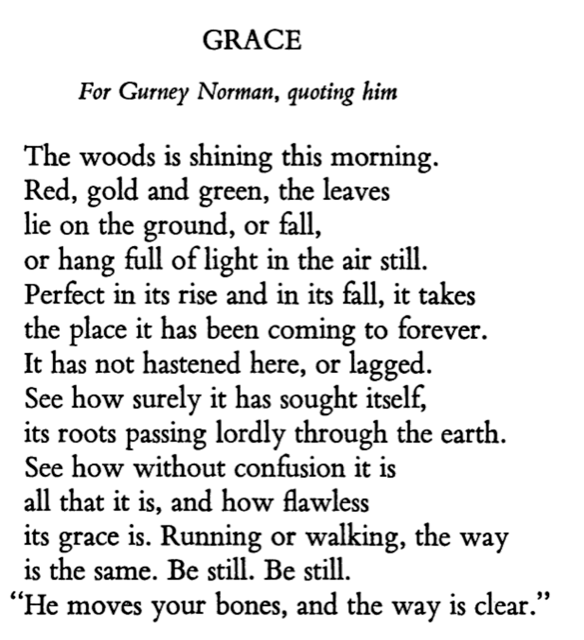
Poem: Grace by Wendell Berry

Music: Arioso, Cantata 156 – Johann Sebastian Bach played by Susanne Beer

Our Lady of the Rosary

Memorial of Our Lady of the Rosary

October 7, 2020

Today, in God’s Lavish Mercy, we pray with Psalm 117. Since it is also the Memorial of Our Lady of the Holy Rosary, I’ll refer you to a previous post on Psalm 117.


For today, the Feast of the Holy Rosary, we may wish to focus on that venerable prayer which had its origins in the very early Church. In fact, those early versions of a rosary are connected to the Psalms:

Prayers with beads like the rosary may have begun as a practice by the laity to imitate the Christian monasticism of the Liturgy of the Hours during the course of which the monastics prayed the 150 Psalms daily. As many of the laity could not read, they substituted 150 repetitions of the Our Father for the Psalms, sometimes using a cord with knots on it to keep an accurate count.
(The Catholic Encyclopedia)


The shape of the rosary as we pray it today emerged more clearly in the 13th century as Marian devotion blossomed in the Church. The tendency of that devotion was to place Mary, and other saints, between us and God. They, having already gained heaven, were deemed to have intercessory power we lacked. So praying the rosary became an “asking prayer” rather than a meditation on the whole of Christ’s life. In many ways, our relationship with Mary also took on a sentimentalism which lessened her true and unique power as witness and companion in the Communion of Saints.


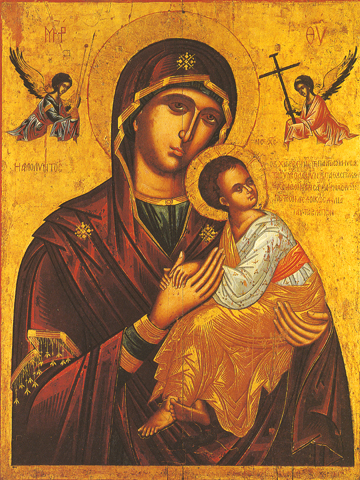
Theotokos of the Passion – 17th century

Today, Marian theology, as well as rosary devotion, looks to a clearer understanding of Mary’s role as participant in the continuing redemptive act of Jesus. Praying with her, in any form, is an opportunity to experience Jesus from her perspective and to apply that grace to our own life and world.

“Remembering Mary as a friend of God and prophet in the communion of saints, a woman who is truly sister to our strivings, allows the power of her life to play in the religious consciousness of the church, encouraging ever-deeper relationship with the living God in whom our spirits rejoice, and allying us with God’s redemptive designs for the hungry, the lowly, and all those who suffer, including in an unforgettable way women with their children in situations of poverty, prejudice, and violence.”

Elizabeth Johnson, CSJ – Truly Our Sister

I try, as I pray the rosary, to imagine Mary within each particular mystery or circumstance of Christ’s life. What did she experience? How did she grow in grace? What is she guiding me toward in my relationship with God?

I also ask Mary to allow those graces and insights to bless and heal not only my life but the life of the world, particularly where there is great pain or suffering for women and children.


In Whom We Live and Move and Have Our Being
~ Denise Levertov
(Reading this poem, we may think of our prayer as a “breathing” enveloped in the Presence of God. The “holy ones”, like Mary, easily ride that breath of prayer. When we pray with them, as in the Rosary, they “rock” us into the silent rhythm of God.)

Photographer: Johannes Plenio
Birds afloat in air's current,
sacred breath?  No, not breath of God,
it seems, but God
the air enveloping the whole
globe of being.
It's we who breathe, in, out, in, in the sacred,
leaves astir, our wings
rising, ruffled -- but only the saints
take flight.  We cower
in cliff-crevice or edge out gingerly
on branches close to the nest.  The wind
marks the passage of holy ones riding
that ocean of air.  Slowly their wake
reaches us, rocks us.
But storms or still, 
numb or poised in attention,
we inhale, exhale, inhale,
encompassed, encompassed.

Music: Beneath Your Compassion (Sub Tuum Praesidium) performed here in Russian by the PaTRAM Institute Singers

The oldest known devotion to Mary can be found in the words of a hymn that is documented to have existed and been sung before the middle of the 3rd century. 

Beneath your compassion,
We take refuge, O Theotokos:
do not despise our petitions in time of trouble;
but rescue us from dangers,
only pure, only blessed one.

Psalm 139: Life Knitter

Tuesday of the Twenty-seventh Week in Ordinary Time

October 6, 2020


Today, in God’s Lavish Mercy, we pray with Psalm 139 with its powerful image of God, the Life Knitter.

This psalm is hauntingly beautiful as it carries us in prayer to the moment of our own incarnation. We are awed by the thought of God touching us into life deep in the darkness of our mother’s womb.


Paul, in our first reading, says that even from that first moment, he was “set apart and called through grace.”

Every one of us receives the same divine mark as Paul. Every one of our lives is known full well in God’s love:

My soul also you knew full well;
nor was my frame unknown to you
When I was made in secret,
when I was fashioned in the depths of the earth.


Praying with this psalm, I am profoundly aware of the “life issues” at the root of U.S. culture and politics which face us in this election. I place myself before my Creator as I grapple with my abhorrence of abortion and my deep commitment to a “whole life” morality.

The document I share below has guided me as I try to faithfully discern the best moral choice in voting. As the document points out, “Faith does not fit into political parties neatly”. Indeed there is currently no party platform that fully and perfectly responds to the moral demands of our faith. Yet that faith requires that we participate in the political process of moving toward such a response.

Faithful voters are presented with a dilemma in the fullest sense of that word, that is, ” a circumstance in which a choice must be made between two or more alternatives that seem equally undesirable.”

Still, it is not enough to abandon our discernment to a single-issue mentality.

Besides considering the whole range of life and justice concerns, we must calculate the moral character of those we choose to govern and set national policy:

  • their honesty, compassion, decency, respect, toward all people; 
  • their capacity for mutuality, dialogue, and peace-building; 
  • their “economics morality”, (i.e. who shares in the basic rights necessary for a decent life)
  • their vision of democracy, human rights, and international power
  • their compatibility with the total legacy of Catholic social teaching

As we pray with Psalm 139 today, let us bring our concerns and hopes to God and ask for inspiration and courage.

Click below for the voting discernment document Equally Sacred Priorities


Poem: Invocation by Everett Hoagland

(Originality from Philadelphia, PA, Hoagland was Poet Laureate of New Bedford, MA 1994-1998. He is Professor Emeritus at UMass Dartmouth.)

Architect of icebergs, snowflakes,
crystals, rainbows, sand grains, dust motes, atoms.

Mason whose tools are glaciers, rain, rivers, ocean.

Chemist who made blood
of seawater, bone of minerals in stone, milk

of love. Whatever

You are, I know this,
Spinner, You are everywhere, in All The Ever-
Changing Above, whirling around us.

Yes, in the loose strands,
in the rough weave of the common

cloth threaded with our DNA on hubbed, spoked
Spinning Wheel that is this world, solar system, galaxy,

universe.

Help us to see ourselves in all creation,
and all creation in ourselves, ourselves in one another.

Remind those of us who like connections
made with similes, metaphors, symbols
all of us are, everything is
already connected.

Remind us as oceans go, so go we. As the air goes, so go we.
As other life forms on Earth go, so go we.

As our planet goes, so go we. Great Poet,
who inspired In The Beginning was The Word . . . ,

edit our thought so our ethics are our politics,
and our actions the afterlives of our words.”

Music: I Cannot Hide from You

Psalm 139: Pray with the Angels

Memorial of the Holy Guardian Angels

October 2, 2020


Today, in God’s Lavish Mercy, we pray with Psalm 139, one of the most beautiful psalms. It is a perfect choice for the feast of the Guardian Angels, those magnificent beings who carry God’s Presence to us in every situation of our lives.

Where can I go from your spirit?
From your presence where can I flee?
If I go up to the heavens, you are there;
if I sink to the nether world, you are present there.

If I take the wings of the dawn,
if I settle at the farthest limits of the sea,
Even there your hand shall guide me,
and your right hand hold me fast.

Angels are woven throughout the scriptures. They are mentioned nearly 300 times. I found this website so interesting. I enjoyed going over the stories, some of which I had never noticed before.


But today, what we celebrate is that each one of us has our own Guardian Angel. We might think of that Being as a friend, a guide, a protector, a bridge to the Divine, an inspirer.

Maybe the only angels we ever think about are chubby little cherubs on Christmas cards. The cultural tendency to represent angels in that way diminishes the real power of these mighty and loving beings to inspire and guide us. Today might be a day to rethink our relationship with our Guardian Angels.

Poem: Touched by an Angel by Maya Angelou 

We, unaccustomed to courage
exiles from delight
live coiled in shells of loneliness
until love leaves its high holy temple
and comes into our sight
to liberate us into life.
Love arrives
and in its train come ecstasies
old memories of pleasure
ancient histories of pain.
Yet if we are bold,
love strikes away the chains of fear
from our souls.
We are weaned from our timidity
In the flush of love's light
we dare be brave
And suddenly we see
that love costs all we are
and will ever be.
Yet it is only love
which sets us free

Music: Angel’s Serenade – Gaetano Braga

Psalm 88: Outlook Gloomy

Memorial of Saint Jerome, Priest and Doctor of the Church

September 30, 2020

Today, in God’s Lavish Mercy, we pray with Psalm 88. It’s supposed to be a gloomy, rainy day around here where I live, and Psalm 88 isn’t going to help! It is the desperate prayer of one who hears no answer from God:

But I, O LORD, cry out to you;
with my morning prayer I wait upon you.
Why, O LORD, do you reject me;
why hide from me your face?


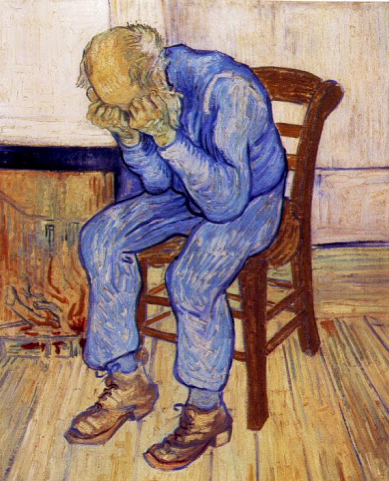
Sorrowful Man – Vincent Van Gogh

According to Martin Marty, a professor of church history at the University of Chicago,
Psalm 88 is “a wintry landscape of unrelieved bleakness.”
Psalm 88 ends by saying:
You have taken my companions and loved ones from me; 
the darkness is my closest friend.
Indeed, in Hebrew the last word of the psalm is “darkness”.
~ from Wikipedia


Also from Wikipedia:

J.M.Neale and R.F. Littledale, writing in the 19th century, find that Psalm 88 “stands alone in all the Psalter for the unrelieved gloom, the hopeless sorrow of its tone. Even the very saddest of the others, and the Lamentations themselves, admit some variations of key, some strains of hopefulness; here only all is darkness to the close.”


Gratefully, I have seldom been in the place of this psalm … but that doesn’t mean never. Many of you, I imagine, could say the same.

So what do we do when life, by our choices or despite them, finds us irrevocably caught in spiritual darkness? What happens to us when we think God isn’t listening to our prayer, or maybe that there was never any God in the first place?

St. John of the Cross says this:

Live in faith and hope,
though it be in darkness,
for in this darkness God protects the soul.
Cast your care upon God
for you are His and He will not forget you.
Do not think that He is leaving you alone,
for that would be to wrong Him.

John’s further writings show us that this darkness, rather than alienate John from God, was the source of unparalleled union with God.

May we be blessed in the same way.🙏


One dark night, 
Kindled in love with yearnings—oh, happy chance!— 
I went forth without being observed, 
My house being now at rest.
In darkness and secure, 
By the secret ladder, disguised—oh, happy chance!—
In darkness and in concealment, 
My house being now at rest.
In the happy night, 
In secret, when none saw me,
Nor I beheld aught, 
Without light or guide, save that which burned in my heart.
This light guided me 
More surely than the light of noonday
To the place where he (well I knew who!) was awaiting me— 
A place where none appeared.
Oh, night that guided me, 
Oh, night more lovely than the dawn,
Oh, night that joined Beloved with lover, 
Lover transformed in the Beloved!
~ John of the Cross

Poetry: Sorrow – Renee Yann, RSM

You must be alone
    with sorrow
    before you can leave it,
    or it will crush you
    like a dark, heavy rock.

    You must drive into
    the hollow of its face,
    under the ledges
    it projects against you.
    Feel its cold granite
    pressed to your grain.

    In time,
    it will allow your turning
    to rest your back
    within its curve.

    Only then,
    you will be free to leave it,
    walking lightly once again
    on yielding earth.

    When you return, it will be freely,
    on a pilgrimage,
    to touch the name you carved once
    in your heart’s anguish.

Music: Holy Darkness – John Michael Talbot