I am, O Anxious One. Don't you hear my voice
surging forth with all my earthly feelings?
They yearn so high, that they have sprouted wings
and whitely fly in circles round your face.
My soul, dressed in silence, rises up
and stands alone before you: can't you see?
don't you know that my prayer is growing ripe
upon your vision as upon a tree?
If you are the dreamer, I am what you dream.
But when you want to wake, I am your wish,
and I grow strong with all magnificence
and turn myself into a star's vast silence
above the strange and distant city, Time.
Music: Hear My Prayer by Moses Hogan, sung by Callie Day, noted for her amazing polyoctive range. And the accompanist is pretty remarkable too!
O Lord, please hear my prayer; In the morning when I rise. —It’s your servant bound for glory. O dear Lord, please hear my prayer. O Lord, please hear my prayer. Keep me safe within your arms. —It’s your servant bound for glory. O dear Lord, please hear my prayer. When my work on earth is done, And you come to take me home. —Just to know I’m bound for glory; And to hear You say, “Well done!” Done with sin and sorrow. Have mercy. Mercy.
Today, in God’s Lavish Mercy, we pray with Psalm 25, set perfectly in the midst of a few readings that speak to us about, among other things , “the Father’s Will”.
I think there is no greater spiritual mystery than the meaning of “God’s Will”, (and not wanting to show up Thomas Aquinas, I’ll resist explaining it here. 😂🧐)
But we’ve all heard attempts at explaining it, haven’t we, especially as it relates to suffering— as in:
everything that happens is God’s Will, so we must accept it
God wills our suffering to test us
if God wills that we suffer, He will give us the strength to endure it
I just don’t think so … not the God I love and Who loves me.
But these attempts to explain suffering are understandable because we want to rationalize the things we fear. Most of us, I think, struggle with the problem of evil and suffering in the world. We want to know what to do when, as Rabbi Kushner wrote, “… Bad Things Happen to Good People”.
Our first reading from Ezekiel shows us that even the ancient peoples met this struggle. The prophet seems to suggest that if you’re bad, you’ll suffer. If you repent, you won’t. Well, we all know that’s not quite the reality! But nice try, Ezekiel.
Our psalm gently leads to another way of facing suffering as the psalmist prays for wisdom, compassion and divine guidance. In the Garden of Gethsemane, Jesus himself prayed like this as he confronted his impending suffering.
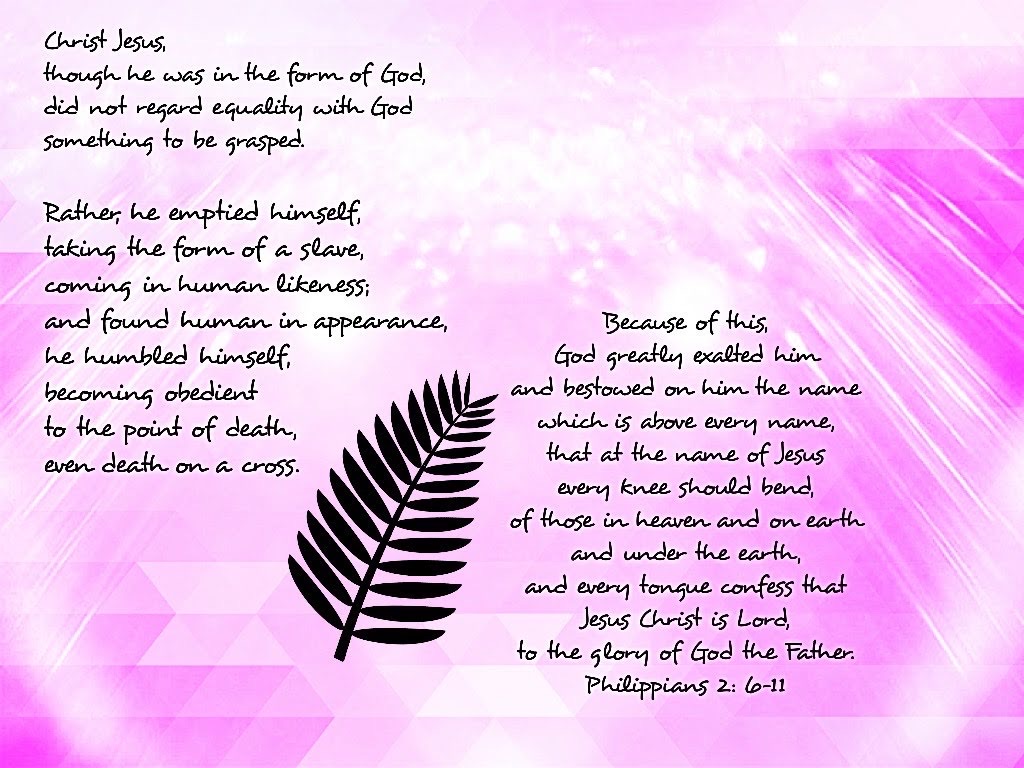
In our second reading, Paul places before us the example of Jesus who, in the face of suffering, was transformed by love:
Praying with these readings, each one of us must come to our own peace with the mystery of suffering. What we can be sure of is this: God’s Will is always for our wholeness and joy as so simply taught to us when we were little children:
God made me to know, love, and serve God, and to be happy with God in this world and forever.
Our Gospel tells us that such happiness comes through faith and loving service, through responding to “the Father’s Will”. May we have the insight, the love and the courage!
Poetry: Of Being by Denise Levertov
I know this happiness
is provisional:

       the looming presences—
       great suffering, great fear—

       withdraw only
       into peripheral vision:

but ineluctable this shimmering
of wind in the blue leaves:

this flood of stillness
widening the lake of sky:

this need to dance,
this need to kneel:

       this mystery:
Today, in God’s Lavish Mercy, we pray with Psalm 90. My daily readers may have noticed that I skipped to this psalm yesterday by mistake. Some mistakes are good ones, because this profound psalm about “a thousand years” deserves at least two days attention!😉
Today, Psalm 90 is set between two “downer” readings. The unknown author of Ecclesiastes is a phenomenal poet but definitely not a cheerleader. Telling the young man to “put away trouble from your presence, though the dawn of youth is fleeting…”
The writer encourages the young man to enjoy life…
Before the silver cord is snapped and the golden bowl is broken, And the pitcher is shattered at the spring, and the broken pulley falls into the well, And the dust returns to the earth as it once was, and the life breath returns to God who gave it.
As doleful as these images are, they rang a bell with me as I prayed. The long siege of this pandemic, its frightful toll in human life, the inexplicable resistance to controlling it, surely seem as doleful. Indeed, as Psalm 90 tells us
You make an end of them in their sleep; the next morning they are like the changing grass, Which at dawn springs up anew, but by evening wilts and fades.
But what else, what more important encouragement of hope, does Psalm 90 offer us?
I think this following passage is unbeatable, especially as transliterated by Stephen Mitchell in his book, A Book of Psalms.
Teach us how short our time is; let us know it in the depths of our souls. Show us that all things are transient, as insubstantial as dreams, and that after heaven and earth have vanished, there is only you.
Fill us in the morning with your wisdom; shine through us all our lives. Let our hearts soon grow transparent in the radiance of your love.
Show us how precious each day is; teach us to be fully here. And let the work of our hands prosper, for our little while.
Poetry: God by Khalil Gibran
In the ancient days, when the first quiver of speech came to my lips, I ascended the holy mountain and spoke unto God, saying, “Master,I am thy slave. Thy hidden will is my law and I shall obey thee for ever more.”
But God made no answer, and like a mighty tempest passed away.
And after a thousand years I ascended the holy mountain and againspoke unto God, saying, “Creator, I am thy creation. Out of clayhast thou fashioned me and to thee I owe mine all.”
And God made no answer, but like a thousand swift wings passed away.
And after a thousand years I climbed the holy mountain and spokeunto God again, saying, “Father, I am thy child. In mercy and lovethou hast given me birth, and through love and worship I shallinherit thy kingdom.”
And God made no answer, and like the mist that veils the distant hills he passed away.
And after a thousand years I climbed the sacred mountain and again spoke unto God, saying, “My God, my aim and my fulfillment; I amthy yesterday and thou are my tomorrow. I am thy root in the earthand thou art my flower in the sky, and together we grow before theface of the sun.”
Then God leaned over me, and in my ears whispered words of sweetness, and even as the sea that enfoldeth a brook that runneth down to her, he enfolded me. And when I descended to the valleys and the plains God was there also.
Music: Psalm 90 by Charles Ives, performed by the Stamford Choir
Today, in God’s Lavish Mercy, we pray with Psalm 90 and the hopeful refrain:
Fill us at daybreak with your kindness, that we may shout for joy and gladness all our days.
For today, I am just going to stay with that verse and with this song that I love. I hope you find it as beautiful as I do.
Poetry: a prose poem I wrote a few years ago:
Each morning, every soul is called out of sleep into life, out of darkness into dawn. As surely as the flower is kissed by the sun, as gently as grass is refreshed by the rain, the sparrow is called from its nest; the fox from its hollow.
From the Oriental Sunrise, all across the nations, the curtain is drawn back in revelation. Every country is slowly illuminated – across its seas and deserts, plains and mountains, wars and peace.
Across your own soul, all your personal geographies awaken, lit one by one with the awareness of life.
Each person whose breath has crossed your life – be they lover, friend, sister, or the shadow of a stranger momentarily passing on a distant afternoon – each one, this morning, will be struck like a candle by the Morning Spark, by the kindling of God. Will they catch fire with their lives? Will you?
We are ignited by God to live God’s sacred life in our time. We will each unfurl in a vital flame or smolder in the embers of our unawareness. From the depths of our poverty or the shallowness of our wealth, it makes no difference. It is the same Light. We will all be touched.
What differs are the shadows each of us has wrapped about our hearts, those deceptive veils where we hide from the mercifully incisive brilliance of God.
What veil might I lay aside today? Distraction, worry, vengeance, resentment, self-importance, laziness, a failure of intention in my choices, the enslavement of a toxic relationship?
At this moment in time, what unveiling will allow me to embrace God’s amazing gift of life?
Will I look fully into God’s bright eyes today by facing my own heart? Will I let God look back at me through the hearts of those with whom I share this sunrise?
Memorial of Saint Pius of Pietrelcina, Priest … also commonly known as Padre Pio. Padre Pio died during the night of 23 September 1968, at the age of 81. On 16 June 2002, he was proclaimed a saint by Pope John Paul II. In his homily, the Pope said, “The life and mission of Padre Pio prove that difficulties and sorrows, if accepted out of love, are transformed into a privileged way of holiness, which opens onto the horizons of a greater good, known only to the Lord.”
Today, in God’s Lavish Mercy, we continue praying with Psalm 119 which, with its 176 verses, is the longest psalm as well as the longest chapter in the Bible. So this could go on forever, right?
Well, it doesn’t. Even though Psalm 119 is used for the Responsorial a total of 22 times during the total liturgical cycle, we won’t see it again for a week or so.
However, the liturgical frequency of this psalm should alert us to the importance of its teachings. Although long and somewhat complex in its acrostic structure, the psalm is direct and simple in its message:
Learn, love and live God’s ways.
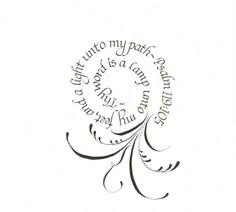
Today’s verses liken such pursuit to finding a lamp in the darkness:
Praying with this refrain, we might be able to recall a time we were enveloped in darkness, either material, emotional, or spiritual. Most of us become at least a little frightened by such conditions. We get disoriented. We don’t know if we will be able to find our way out.
The psalmist attests to similar experiences, and voices a confident call on God for deliverance. That confidence grows from the psalmist’s desire and commitment to walk in holy discernment:
From every evil way I withhold my feet, that I may keep your words. Through your precepts I gain discernment; therefore I hate every false way. Falsehood I hate and abhor; your law I love.
In this beautiful verse, the psalmist’s confidence is confirmed by God’s faithful endurance:
The law of your mouth is to me more precious than thousands of gold and silver pieces. Your word, O LORD, endures forever; it is firm as the heavens.
Poetry: One, One, One – Rumi
The lamps are different.
But the Light is the same.
So many garish lamps in the dying brain's lamp shop,
Forget about them.
Concentrate on essence, concentrate on Light.
In lucid bliss, calmly smoking off its own holy fire,
The Light streams toward you from all things,
All people, all possible permutations of good, evil, thought, passion.

The lamps are different,
But the Light is the same.
One matter, one energy, one Light, one Light-mind,
Endlessly emanating all things.
One turning and burning diamond,
One, one, one.

Ground yourself, strip yourself down,
To blind loving silence.
Stay there, until you see
You are gazing at the Light
With its own ageless eyes.
Music: Beati Quorem Via – Charles Villiers Stanford, sung by voces 8 The title of this hymn is the first verse of Psalm 119 in Latin. Translation below.
Blessed are they whose road is straight, who walk in the law of the Lord.
Beati quorum via integra est: qui ambulant in lege Domini
Today, in God’s Lavish Mercy, we pray with another of the Torah Psalms, Psalm 119. It is the prayer of one who delights in and lives by the Torah, the sacred law. ( See yesterday’s reflection for some scholarly words on the Torah Psalms.)
In today’s verses, with lovely antiphonal lilt, the psalmist describes the holy person, then asks for the virtues to become one.
Blessed are the blameless….. so guide me in your ways.
I want to meditate on your deeds …. so make me understand.
I want to observe your laws … so give me discernment
I delight in your path …. so lead me on it.
I will keep your law forever …. if you will just guide me.
I don’t think God can resist a sincere prayer like this. The psalmist is saying, “I want to love you, God, with my whole life. But you, Almighty, must help my weakness.”
Notice the guy on the right 🙂
As we pray today with Psalm 119, we might let a similar prayer rise up in our hearts.
We, too, want to love God well – completely. We, too, need Divine guidance to discern God’s continuing call in the complexities of our lives. We, too, long to deepen in discernment and commitment.
The psalmist gives us good example. Just tell God like it is. Tell God what you really want, what you really need to love as God wishes us to love.
If you hear yourself making requests for power, money, fame, security in any of their selfish forms, you better start all over again!😉
Remember the beginning of the psalm, the foundation of our prayer:
Blessed are they whose way is blameless, who walk in the law of the LORD.
In the Christian scriptures, that foundation is proclaimed like this:
One of the teachers of the law came and heard them debating. Noticing that Jesus had given them a good answer, he asked him, “Of all the commandments, which is the most important?” “The most important one,” answered Jesus, “is this: ‘Hear, O Israel: The Lord our God, the Lord is one.Love the Lord your God with all your heart and with all your soul and with all your mind and with all your strength.’ The second is this: ‘Love your neighbor as yourself.’ There is no commandment greater than these.”
Let’s ask God for the courage to offer a blameless prayer. The simple prayer of the Gospel centurion comes to mind:
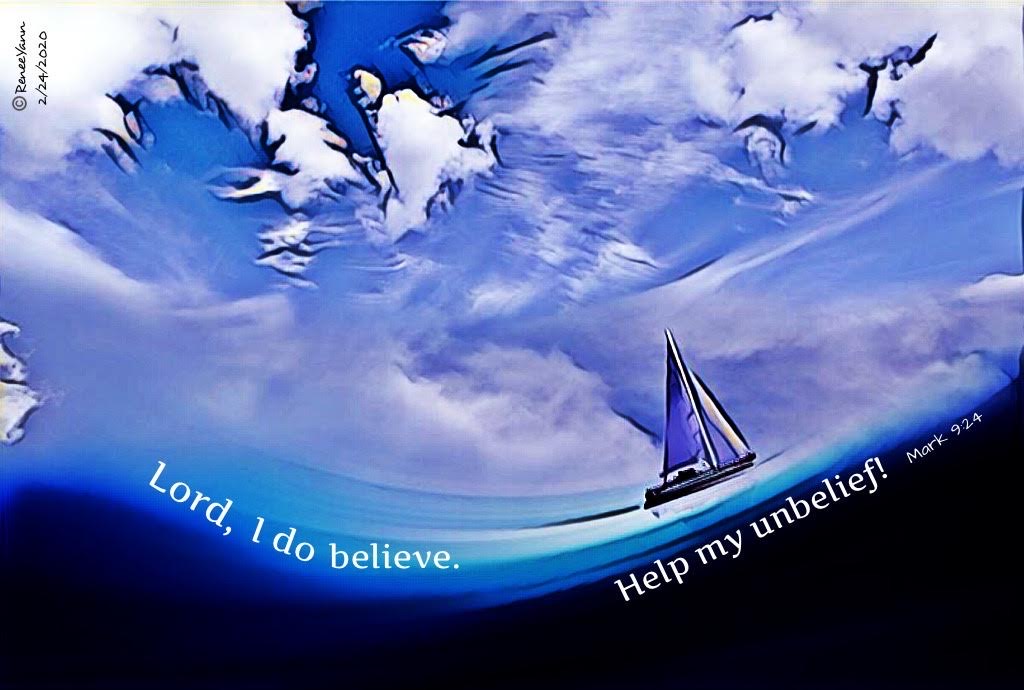
Lord, I do believe. Help my unbelief. Mark 9:24
Poetry: Morning Hymn by Charles Wesley, brother of John Wesley. They are considered founders of the Methodist religion.
Christ, whose glory fills the skies,
Christ, the true, the only light,
Sun of Righteousness, arise,
Triumph o’er the shades of night:
Day-spring from on high, be near:
Day-star, in my heart appear.

Dark and cheerless is the morn
Unaccompanied by thee,
Joyless is the day’s return,
Till thy mercy’s beams I see;
Till thy inward light impart,
Glad my eyes, and warm my heart.

Visit then this soul of mine,
Pierce the gloom of sin, and grief,
Fill me, Radiancy Divine,
Scatter all my unbelief,
More and more thyself display,
Shining to the perfect day.
Today, in God’s Lavish Mercy, we pray with Psalm 19, one of the unique “Torah Psalms” (1, 19, 119) in which Israel celebrates the divine structure of life in all Creation, including ourselves.
James Luther Mays, in his article The Place of the Torah-Psalms in the Psalter, suggests that these psalms serve as a guide to how all the other psalms are to be read, interpreted and prayed.
Walter Brueggemann describes life without God as “normless” – without the structure of grace and relationship with God that holds all Creation in abundant Life. He refers to the Torah as a “norming” dynamism, and writes:
And when Israel … used the term “Torah” (never meaning simply or simplistically “law”), it refers to the entire legacy of norming that is elastic, dynamic, fluid, and summoning. The outcome of that legacy in the Psalter is the great Torah Psalms in which Israel celebrates, with joy, that the creator God has not left the world as a normless blob but has instilled in the very structure of creation the transformative capacity for enacted fidelity. That is why Psalm 19 juxtaposes the glory of creation that attests the creator (vv. 1–6) with the commandments that are the source of life.
Our verses today for the Feast of St. Matthew include this phrase…
Their message goes out through all the earth.
… perhaps equating the universal ministry of the Apostles to the transformative power and witness of the heavens to God’s immutable glory.
The heavens declare the glory of God; and the firmament proclaims his handiwork. Day pours out the word to day, and night to night imparts knowledge. Not a word nor a discourse whose voice is not heard; Through all the earth their voice resounds, and to the ends of the world, their message.
The teaching of the Apostles is codified for Catholics in the Apostles Creed. We might want to pray it slowly today, attentive to those “norming ” beliefs – our sort of fundamental “Torah” – which hold our lives in graceful relationship with God through Jesus Christ.
Apostles Creed
I believe in God, the Father Almighty,
Creator of Heaven and earth;
and in Jesus Christ, His only Son Our Lord,
Who was conceived by the Holy Spirit,
born of the Virgin Mary,
suffered under Pontius Pilate,
was crucified, died, and was buried.
He descended into Hell;
the third day He rose again from the dead;
He ascended into Heaven,
and sits at the right hand of God, the Father almighty;
from thence He shall come to judge the living and the dead.
I believe in the Holy Spirit,
the holy Catholic Church,
the communion of saints,
the forgiveness of sins,
the resurrection of the body
and life everlasting.
Amen.
Poetry: XIX Caeli Ennarant by Malcolm Guite
In that still place where earth and heaven meet Under mysterious starlight, raise your head And gaze up at their glory: ‘the complete
Consort dancing’ as a poet said Of his own words. But these are all God’s words; A shining poem, waiting to be read
Afresh in every heart. Now look towards The brightening east, and see the splendid sun Rise and rejoice, the icon of his lord’s
True light. Be joyful with him, watch him run His course, receive the gift and treasure of his light Pouring like honeyed gold till day is done
As sweet and strong as all God’s laws, as right As all his judgements and as clean and pure, All given for your growth, and your delight!
Today, in God’s Lavish Mercy, we pray with Psalm 145 which, with our Sunday readings, ties together the themes of call and commitment.
In our first reading, Isaiah proclaims a repentant urgency to that call:
Seek the LORD while he may be found, call him while he is still near.
In our second reading, Paul confirms his own ultimate commitment to that call and urges his followers to imitate him:
Christ will be magnified in my body, whether by life or by death….
Only, conduct yourselves in a way worthy of the gospel of Christ, so that, whether I come and see you or am absent, I may hear news of you, that you are standing firm in one spirit, with one mind struggling together for the faith of the gospel.
But our Gospel reveals that not everyone responds immediately to God’s voice in their lives. Some of us come late to the call of grace. Nevertheless, our generous God seeks us, time and again, and embraces us fully no matter how close to the evening.
The early hires chafe against this system, imagining themselves somehow deprived by the Master’s abundance. Perhaps we heard attitudes like theirs expressed in self-sufficient phrases like:
but I’ve worked hard for everything I have
you need to earn your way in life
it’s not a free ride
if you can’t stand the heat, get out of the kitchen
Walter Brueggemann writes that the Psalms refute such an attitude:
The counter-world of the Psalms contradicts our closely held world of self-sufficiency by mediating to us a world confident in God’s preferential option for those who call on him in their ultimate dependence.
Psalm 145 lifts us beyond our selfish imaginations. It expresses the grateful praise of one who, swaddled in God’s lavish blessing, recognizes that Divine Justice looks like Mercy not calculation.
The LORD is gracious and merciful, slow to anger and of great kindness. The LORD is good to all and compassionate toward all his works.
Poem: by Rumi
By the mercy of God,
Paradise has eight doors.
One of those is the door of repentance, child.
All the others are sometimes open,
sometimes shut,
but the door of repentance is never closed.
Come seize the opportunity:
the door is open;
carry your baggage there at once.
Music: I Will Praise Your Name – Marty Haugen, David Haas
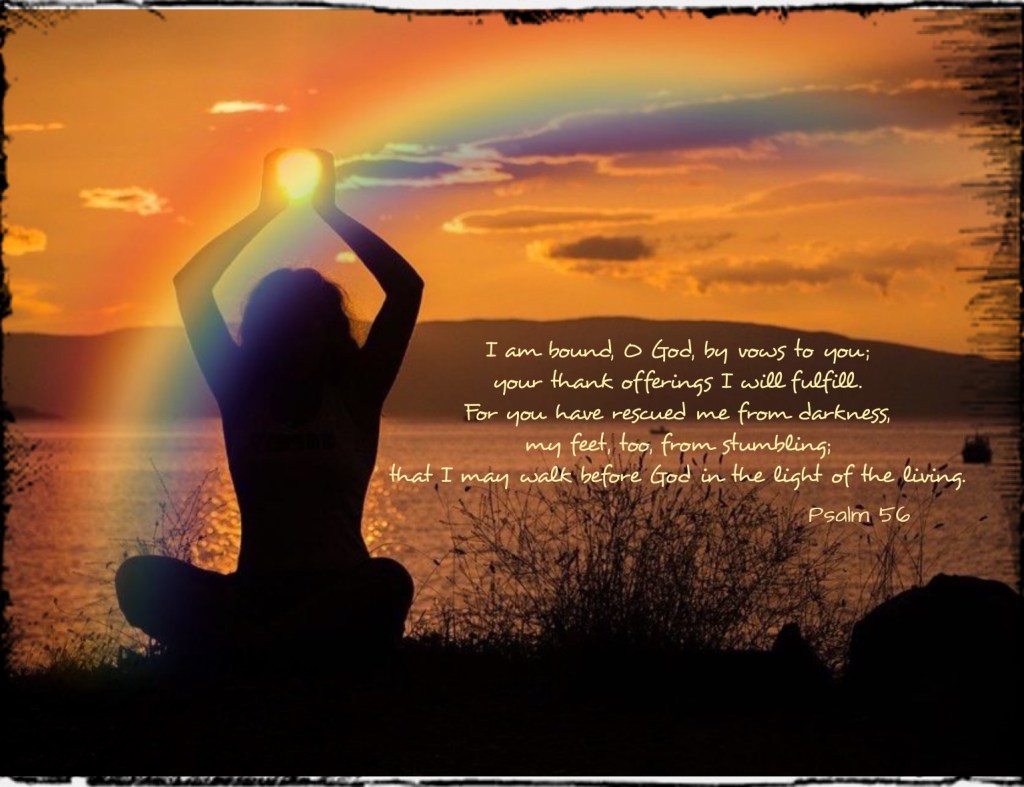
Today, in God’s Lavish Mercy, we pray with Psalm 56, an unusual mix of lamentation and praise, of light and dark emotions. Many consider the psalm to be a prayer of David in the midst of his problems with Solomon.
Our prayer can be this kind of mix at times. We might feel stressed by the exigencies of life, calling on God to ease our angst and protect us. At the same time, we have a underlying confidence that God is with us, even in difficulty. Such a prayer is not unlike the one Jesus prayed in Gethsemane.
I cherish a verse from Psalm 56 not included in today’s reading. In beautiful simile, the line captures suffering still imbued with trust. I especially like the old translation from the King James Version:
Today’s verses reflect the confidence born of such honest and steadfast prayer. There comes a surety in God’s abiding, a shift from self-centered fear, a welling up of praise for the One who saves us, not only from our troubles, but from our anxious selves.
Now I know that God is with me. In God, in whose promise I glory, in God I trust without fear; what can flesh do against me?
Poetry: Mount of Olives by Irene Zimmerman, OSF
He falls, crying,
“Help me, Father.”
Though his acquiescence rings
true as a well-tuned violin, the searing bow brings
tears of blood
as it plays across the taut strings
of his human dread of dying.









 Lavish Mercy