Wednesday of the Fourteenth Week in Ordinary Time

Wednesday, July 7, 2021
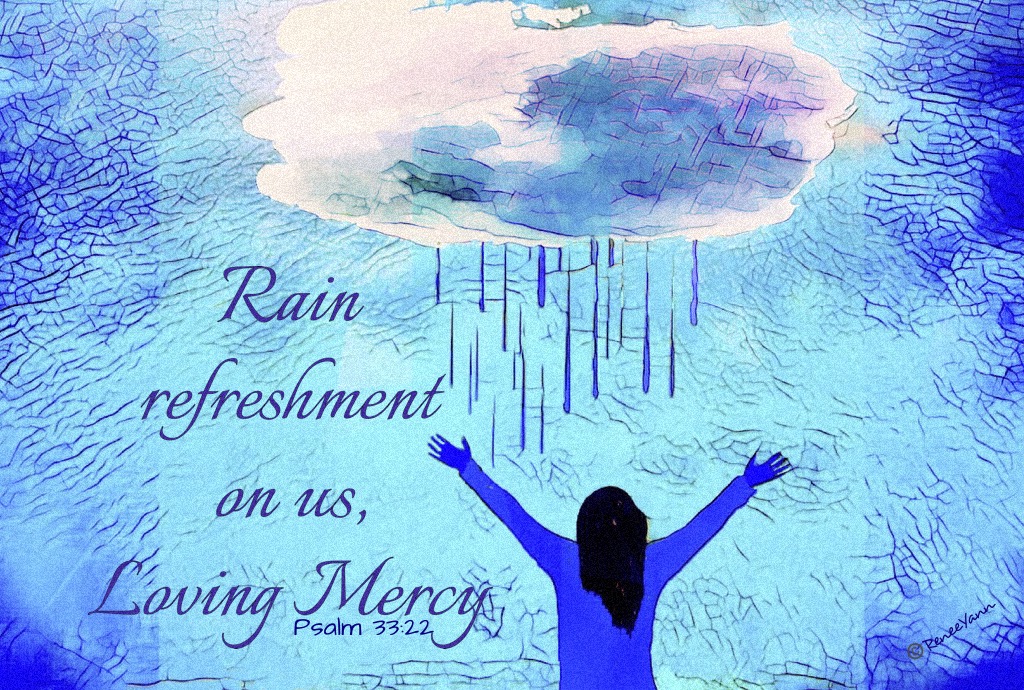
Today, in God’s Lavish Mercy, we pray with Psalm 33 in which the psalmist is clearly awestruck by both the power and the mercy of God. It is a prayer of radical awareness that God is Creator and we are creature.

According to Walter Brueggemann,
Psalm 33 describes Yahweh
as the settled sovereign, securely in control,
who need only speak
to have the command fulfilled.

The psalm has two divisions. In part one, the community is called to praise God because God deserves it.

Rejoice, you righteous, in the LORD;
praise from the upright is fitting.

Give thanks to the LORD on the harp;
on the ten-stringed lyre offer praise.

Sing to God a new song;
skillfully play with joyful chant.

For the LORD’s word is upright;
and works are trustworthy.

Psalm 33: 1-4

In part two, that praise is articulated by recounting God’s caring intervention in the community’s experience.

From heaven the LORD looks down
and observes the children of Adam,

From that dwelling place surveying
all who dwell on earth.

The One who fashioned together their hearts
and who knows all their works.

Psalm 33: 13-15

Psalm 33 can be summarized in this way:

Because Yahweh rules with righteousness, justice, and unfailing love,
we must worship Yahweh with songs and praise
and by rejecting all false sources of salvation.

Lynn Jost, Professor of Biblical and Religious Studies – Tabor College, Kansas

Praying Psalm 33 reminds me that one can never demand mercy. We cannot require the other to hold us in continual compassion. We can only hope and be grateful.

Mercy is the gift of a heart moved beyond itself by love and tenderness. Such outpouring is the very nature of God in whose image we are created.

Thus for God, and for us, to be unmerciful is to be unnatural. In Psalm 33, we pray not only to receive mercy, but to become mercy.


Psalm 33 closes with a plea for our hearts to be deepened in their affinity to God, to mirror God by our patience, joy, hope, and mercy.

Our soul waits for the LORD,
Who is our help and shield.

For in God our hearts rejoice;
in God’s holy name we trust.

May your mercy, LORD, be upon us;
as we put our hope in you.

Psalm 33: 20-22

Poetry: To Live in the Mercy of God BY DENISE LEVERTOV

To lie back under the tallest
oldest trees. How far the stems
rise, rise
               before ribs of shelter
                                           open!
To live in the mercy of God. The complete
sentence too adequate, has no give.
Awe, not comfort. Stone, elbows of
stony wood beneath lenient
moss bed.
And awe suddenly
passing beyond itself. Becomes
a form of comfort.
                      Becomes the steady
air you glide on, arms
stretched like the wings of flying foxes.
To hear the multiple silence
of trees, the rainy
forest depths of their listening.
To float, upheld,
                as salt water
                would hold you,
                                        once you dared.
                  .
To live in the mercy of God.
To feel vibrate the enraptured
waterfall flinging itself
unabating down and down
                              to clenched fists of rock.
Swiftness of plunge,
hour after year after century,
                                                   O or Ah
uninterrupted, voice
many-stranded.
                              To breathe
spray. The smoke of it.
                              Arcs
of steelwhite foam, glissades
of fugitive jade barely perceptible. Such passion—
rage or joy?
                              Thus, not mild, not temperate,
God’s love for the world. Vast
flood of mercy
                      flung on resistance.

Music: As you listen to David Arkenstone’s instrumental, you may want to remember Shakespeare’s famous description of mercy. See below the music.

Tuesday of the Fourteenth Week in Ordinary Time

Tuesday, July 6, 2021

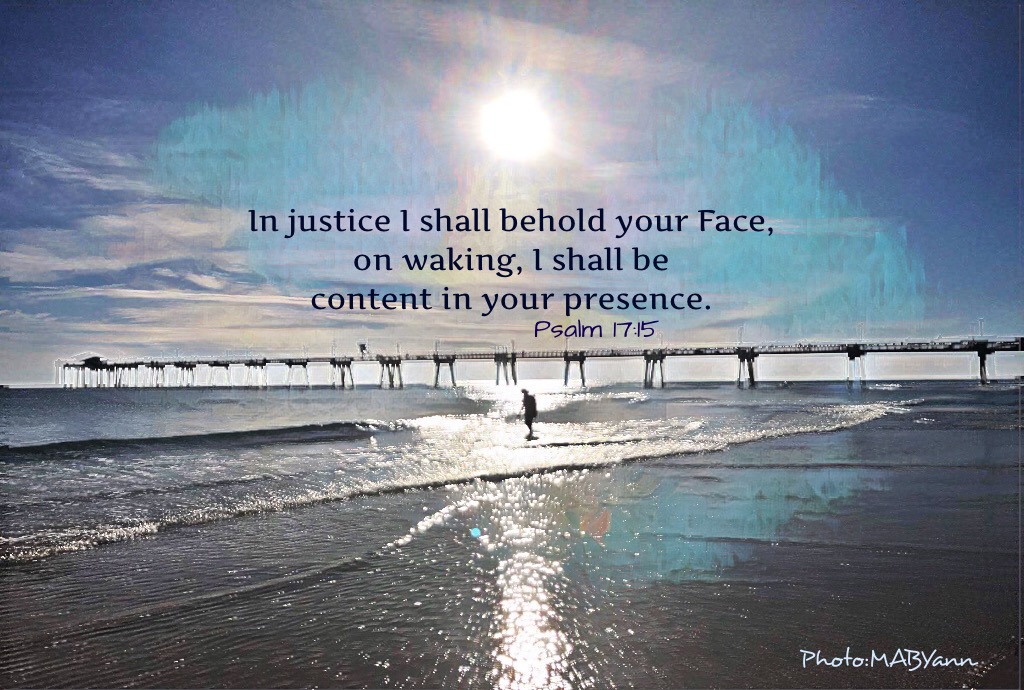
Today, in God’s Lavish Mercy, we pray with Psalm 17, a prayer which captures our deep desire to live in the Light of God’s Face.


We, like the psalmist and like Jacob in our first reading, want to know, to understand, to name the Holy in our experience. 

From you let my judgment come;
    your eyes behold what is right.
Though you test my heart, searching it in the night,
    though you try me with fire, you shall find no malice in me.

Psalm 17:6-7

When Jacob struggles with the heavenly visitor, he wants a blessing and the visitor’s name. Jacob wants to define what has happened to him in the night.

The man then said, “Let me go, for it is daybreak.”
But Jacob said, “I will not let you go until you bless me.”

Genesis 32:27-28

The Spirit does bless Jacob, but remains nameless, beyond the confines of Jacob’s definition. It is only after the visitor has departed that Jacob realizes whom he has encountered:

With that, the visitor bade him farewell.
Jacob named the place Peniel,
“Because I have seen God face to face,” he said,
“yet my life has been spared.”

Genesis 32:30-31

In our own lives, Heaven visits us constantly though we may be unaware. Discovering God’s Face depends so much on where we look and how we have learned to see.

Psalm 17 tells us that, if we stand in the light of justice and mercy, God’s face is revealed to us.

This was the light in which Jesus lived – to the point that, as we read in today’s Gospel, he could discover God’s face even under the guise of a poor demoniac.


Poetry: God BY KAHLIL GIBRAN

In the ancient days,
when the first quiver of speech came to my lips,
I ascended the holy mountain
and spoke unto God, saying,
“Master, I am thy slave.
Thy hidden will is my law
and I shall obey thee
for ever more.”

But God made no answer,
and like a mighty tempest passed away.

And after a thousand years
I ascended the holy mountain
and again spoke unto God, saying,
“Creator, I am thy creation.
Out of clay hast thou fashioned me
and to thee I owe mine all.”

And God made no answer,
but like a thousand swift wings passed away.

And after a thousand years
I climbed the holy mountain
and spoke unto God again, saying,
“Father, I am thy child.
In pity and love
thou hast given me birth, and through love and worship
I shall inherit thy kingdom.”

And God made no answer,
and like the mist that veils the distant hills he passed away.

And after a thousand years
I climbed the sacred mountain
and again spoke unto God, saying,
“My God, my aim and my fulfillment;
I am thy yesterday and thou are my tomorrow.
I am thy root in the earth
and thou art my flower in the sky,
and together we grow
before the face of the sun.”

Then God leaned over me,
and in my ears whispered words of sweetness,
and even as the sea that enfoldeth a brook
that runneth down to her, he enfolded me.
And when I descended to the valleys and the plains
God was there also.


Music:

We behold the splendor of God shining on the face of Jesus. 
We behold the splendor of God shining on the face of the Son.

[Verse1]
And oh, how his beauty transforms us, the wonder of presence abiding. 
Transparent hearts give reflection of Tabor’s light within, of Tabor’s light within.

(Repeat Chorus)

[Verse 2]
Jesus, Lord of Glory, Jesus, Beloved Son, oh, how good to be with you; 
ow good to share your light; how good to share your light.

Monday of the Fourteenth Week in Ordinary Time

July 5, 2021

Today, in God’s Lavish Mercy, we pray with the beautiful Psalm 91, so full of images to help us experience the steadfast tenderness of God.

Our Gospel shows us this tender mercy in the story of Jesus and two complementary healings – the woman who suffered for twelve years, and the young girl who has lived only twelve years.

In both cases Jesus, by a touch received or given, gathers a broken soul under Mercy’s wing. In the mystery of that grace-filled shade, the soul is restored to the fullness of Light.

As we pray Psalm 91 today let us, like the Gospel’s woman and young girl, reach for any healing and wholeness we long for. 

Is there something in us
that has died too soon
and longs to be reborn?

Is there something
crippled in us
that longs to leap once more
and run free?

May we find new life under God’s infinitely caring wing which ever hovers over us in love.


Poetry: A video mix of Rumi and Hafiz, a dynamite combo!


Music: Shadow of Your Wings – Jeff Nelson

Fourteenth Sunday in Ordinary Time

Sunday, July 4, 2021

Today, in God’s Lavish Mercy, we pray with Psalm 123. 

… eyes fixed on the Lord, pleading for mercy.

Psalm 123:2

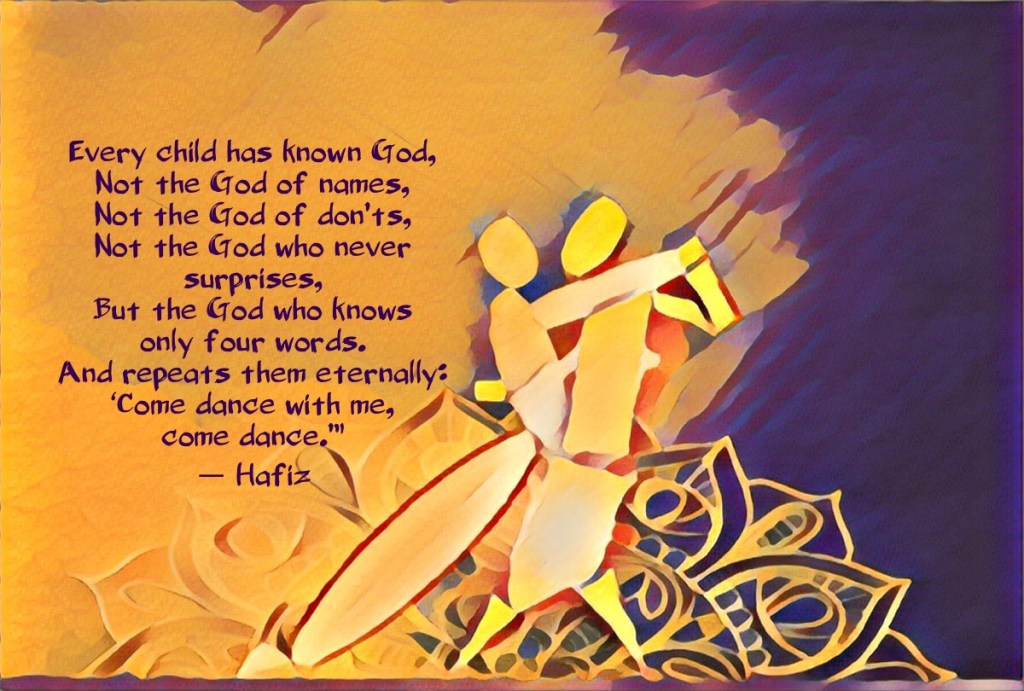
This starkly passionate response, repeated throughout the psalm, struck an image in my imagination – an ardent tango with the Beloved, eyes fixed in hope.


Often in my prayer I just dance or sing with God – sometimes with sound and movement, sometimes in still silence. The dances are varied depending  on the prayer and the day’s circumstances.  

Today’s readings, filled with Israel’s resistance, Paul’s thorn, and Nazarene recalcitrance drew an energetic tango in my mind.

It is a dance between Mercy and Resistance. In my prayer, I searched for where that dance resides in me.


Music: Tango to Evora – Loreena McKennitt

Feast of Saint Thomas, Apostle

Saturday, July 3, 2021

Today, in God’s Lavish Mercy, we pray with Psalm 117. We do so in the spirit of Thomas, who now offers his unquestioning faith to our patient and forgiving Jesus.

Praise the LORD, all you nations;
    glorify him, all you peoples!
For steadfast is his kindness for us,
    and the fidelity of the LORD endures forever

Psalm 117: 1-2

Faith is not a commodity or an achievement.
Faith is relationship and a journey.

It is a gift and an exercise of grace.
Never stretched, it withers like a brittle ligament.

It ebbs and flows with our personal and communal dramas.
It deepens with prayer, silent reaching, and a listening obedience to our lives.
It shallows with our demands, like Thomas’s, only to see and to touch.

It is fed by the Lavish Mercy of God Who never cuts its flow to our souls
if we but take down the seawall around our heart.

On this day when we celebrate the power of tested and proven faith,
may we bring our needs into the circle gathered in that Upper Room.

Standing beside Thomas today in our prayer,
may we place our trust in the glorified wounds of Christ.


A video today for our prayer: Blessed Are They That Have Not Seen


Music: Healing Touch – Deuter

As we reach out in faith with Thomas to touch Christ’s wounds, let us open our hearts to receive the returning touch of God’s Lavish Mercy.

Friday of the Thirteenth Week in Ordinary Time

Friday, July 2, 2021

Today, in God’s Lavish Mercy, we pray with Psalm 106 which is a prayerful inventory of Israel’s long story with God. In today’s liturgy, the psalm follows a similar Genesis recounting of the story of the Abraham-Sarah family.


These two readings remind me of my own family as we have gathered, in our many configurations, over the seven decades of my life. For many early years, I was the listener to the old tales and legends. Gradually, as new generations were born, I became a guardian and teller of our history.


Psalmist 106 is a teller of Israel’s many ups and downs to the place where they now find themselves. By remembering both the darkness and light, the calms and the storms, our psalm testifies to God’s faithful and enduring mercy.

Blessed are they who observe what is right,
    who do always what is just.
Remember us, O LORD, as you favor your people. 

That testimony encourages the listeners that this faithful God can be trusted now and in the future – to abide, forgive, renew, and call believers. 

It holds out for us a heritage of fidelity promising to bless the generations with whom we share it.


If you sat down with your life at the table of holy memory, what would your stories be? What storms and rainbows mark your journey? How would your psalm of memory and gratitude read? How is your faith life transmitting this heritage to the next generations?

Visit me with your saving help,
That I may see the prosperity of your chosen ones,
    rejoice in the joy of your people,
    and glory with your inheritance.


Poetry: Naked Truth – A Jewish tale retold as a poem by Heather Forest

Naked Truth walked down the street one day.
People turned their eyes away.
Parable arrived, draped in decoration.
People greeted Parable with celebration.

Naked Truth sat alone, sad and unattired,
“Why are you so miserable?” Parable inquired.
Naked Truth replied, “I’m not welcome anymore.
No one wants to see me. They chase me from the door.”

“It is hard to look at Naked Truth,”Parable explained.
“Let me dress you up a bit. Your welcome will be gained.”
Parable dressed Naked Truth in story’s fine attire, 
with metaphor, poignant prose, and plots to inspire.

With laughter and tears and adventure to unveil,
Together they went forth to spin a tale.
People opened their doors and served them their best.
Naked Truth dressed in story was a welcome guest. 

Music: Heritage of Faith – Babbie Mason (lyrics below)

The patriarchs of old
The saints that now are gone
To their great reward
Held fast to the struggle
Persistent through the years
Forging through their fears
They fought to change their world
For the sake of the gospel

May their love for Jesus
Never go unnoticed
May they spur us on to all
That lies before us
This heritage of faith
This legacy of love
We must pass to our daughters
Hand down to our sons
We must raise the standard high
And proclaim the name of Christ
That others may know the way
And this heritage of faith

In my heart I hear the call
That echoes from the cross
Where the sacrifice for man
Was freely rendered
It's the call to stand for right
Keep the faith and fight the fight

Thursday of the Thirteenth Week in Ordinary Time

July 1, 2021

Today, in God’s Lavish Mercy, we pray with Psalm 115, bringing a welcome comfort after the always disturbing story of Isaac’s aborted sacrifice.

This story fascinated Rembrandt. Notice the differences between the 1635 and 1655 interpretations. The old man in the 1655 image has darkened eyes, covers his son’s eyes – not his mouth, and embraces the boy in his lap not laid out on an altar. Old age has gentled what Rembrandt found in the story.


But here’s what I think. It was never about a human sacrifice. God was never going to let that happen.

It was about whether Abraham’s trust would allow him to really see God – God who is never a God of death, but always of life.

As Abraham looked about,
he spied a ram caught by its horns in the thicket.
So he went and took the ram
and offered it up as a burnt offering in place of his son.
Abraham named the site Yahweh-yireh;
hence people now say, “On the mountain the LORD will see.”


We live in a world full of choices that run the gamut from death-dealing to life-giving. They may be small, personal choices like what we eat, or how we drive. Or they may be more consequential choices such as the political views we foster or the global ideologies we embrace.

Psalm 115 helps us to solve any confusion we might have about our choices. Always make the choices that lead ourselves and others to the land of the living.

Abraham must have been thrown into the dark by what he believed was God’s expectation of him. But it was really Abraham’s own expectation that had to be broken through. He did this by staying with his pain while trusting that God was bigger than it.

Christine Robinson’s interpretation of Psalm 115 fits well here:

O Great Mystery
   We must love and praise you without understanding.
You are not a little tin god
   with eyes that do not see and ears that do not hear
   and a mouth that does not speak.
You can not be described or boxed up or tamed
   You are beyond our understanding.
Still, we yearn to hear you, know you,
   feel your love, and in mystery, we do.
We know awe at the intricate majesty of the heavens,
We cherish the work of caring for each other 
and the Earth.
We praise you, Great Mystery
   all the days of our lives.

Poetry: Silence – Rabbi Rachel Barenblat

Abraham failed the test.
For Sodom and Gomorrah he argued
but when it came to his son
no protest crossed his lips.
God was mute with horror.
Abraham, smasher of idols
and digger of wells
was meant to talk back.
Sarah would have been wiser
but Abraham avoided her tent,
didn’t lay his head in her lap
to unburden his secret heart.
In stricken silence God watched
as Abraham saddled his ass
and took Isaac on their final hike
to the place God would show him.
The angel had to call him twice.
Abraham’s eyes were red, his voice hoarse
he wept like a man pardoned
but God never spoke to him again.

(It is true that, in Genesis, this is the last recorded exchange between God and Abraham!)


Music: Story of Isaac – Leonard Cohen

(If there’s no picture below, just click on the underlined phrase “Watch on Youtube

The door, it opened slowly
My father, he came in
I was nine years old
And he stood so tall above me
Blue eyes, they were shining
And his voice was very cold
Said, "I've had a vision
And you know I'm strong and holy
I must do what I've been told"
So we started up the mountain
I was running, he was walking
And his axe was made of gold

Well, the trees, they got much smaller
The lake, a lady's mirror
When we stopped to drink some wine
Then he threw the bottle over
Broke a minute later
And he put his hand on mine
Thought I saw an eagle
But it might have been a vulture
I never could decide
Then my father built an altar
He looked once behind his shoulder
He knew I would not hide

You who build these altars now
To sacrifice these children
You must not do it anymore
A scheme is not a vision
And you never have been tempted
By a demon or a god
You, who stand above them now
Your hatchets blunt and bloody
You were not there before
When I lay upon a mountain
And my father's hand was trembling
With the beauty of the word

And if you call me brother now
Forgive me if I inquire
Just according to whose plan?
When it all comes down to dust
I will kill you if I must
I will help you if I can
When it all comes down to dust
I will help you if I must
I will kill you if I can
And mercy on our uniform
Man of peace or man of war
The peacock spreads his fan

Wednesday of the Thirteenth Week in Ordinary Time

June 30, 2021

Today, in God’s Lavish Mercy, we pray with Psalm 34. We do so in the light of our first reading which tells us the heart-wrenching story of Hagar. 

As Hagar sat opposite Ishmael, he began to cry.
God heard the boy’s cry,
and God’s messenger called to Hagar from heaven:
“What is the matter, Hagar?
Don’t be afraid; God has heard the boy’s cry in this plight of his.
Arise, lift up the boy and hold him by the hand;
for I will make of him a great nation.”
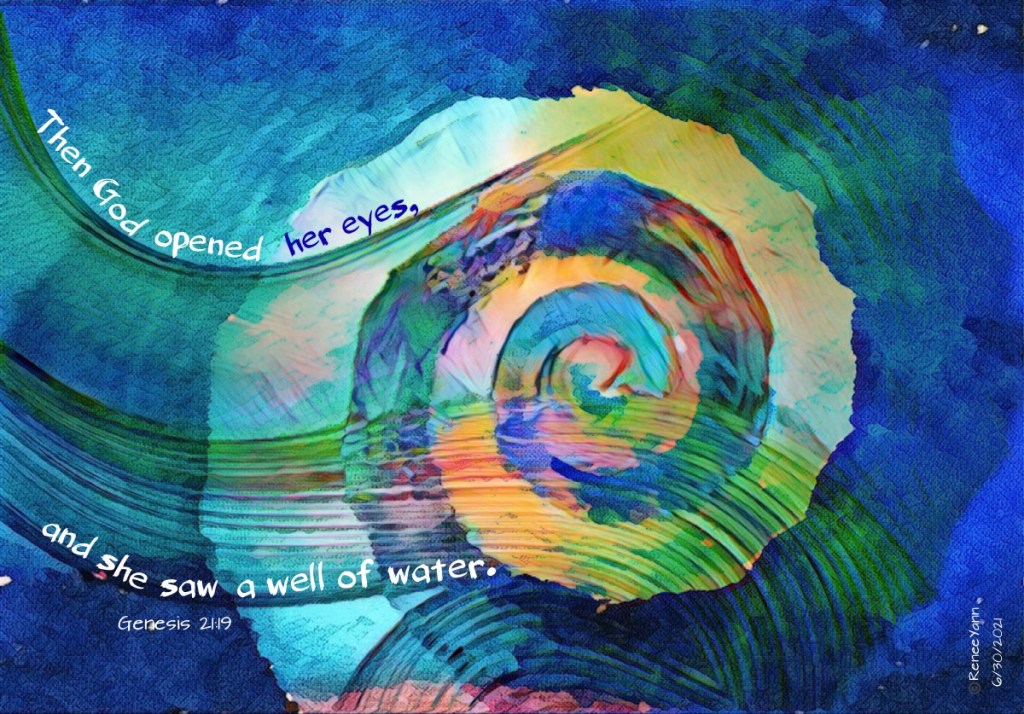
Then God opened her eyes, and she saw a well of water.
She went and filled the skin with water, and then let the boy drink.

Genesis 21: 15-19

Surely Hagar, and her baby Ishmael, are “poor ones” whose cries the Lord hears.

When the poor ones called out, the LORD heard,
and from all distress saved them.
The angel of the LORD encamps
around those who fear God, and delivers them.

Psalm 34: 7-8

Hagar is the embodiment of a faith that has surrendered everything to God. She is pressed to it by the circumstances of her life. But even in that press, she has a choice: God or godlessness. 

God sees her heart choice and opens her eyes to its power:

Then God opened her eyes,
and she saw a well of water.
She went and filled the skin with water,
and then let the boy drink.

The revelation I take from today’s readings?

Even in our deepest thirsts, there is a “well of water” awaiting us when we live in faith and reverence for God:

Fear the LORD, you holy ones,
for nought is lacking to those who fear God.
The great grow poor and hungry;
but those who seek God want for no good thing.

Psalm 34: 10-11

Poetry: Hagar in the Wilderness by Tyehimba Jess

My God is the living God,
God of the impertinent exile.
An outcast who carved me
into an outcast carved
by sheer and stony will
to wander the desert
in search of deliverance
the way a mother hunts
for her wayward child.
God of each eye fixed to heaven,
God of the fallen water jug,
of all the hope a vessel holds
before spilling to barren sand.
God of flesh hewn from earth
and hammered beneath a will
immaculate with the power
to bear life from the lifeless
like a well in a wasteland.
I'm made in the image of a God
that knows flight but stays me
rock still to tell a story ancient as
slavery, old as the first time
hands clasped together for mercy
and parted to find only their own
salty blessing of sweat.
I have been touched by my God
in my creation, I've known her caress
of anointing callus across my face. 
I know the lyric of her pulse
across these lips...  and yes,
I've kissed the fingertips
of my dark and mortal God.
She has shown me the truth
behind each chiseled blow
that's carved me into this life,
the weight any woman might bear 
to stretch her mouth toward her
one true God, her own
beaten, marble song.
sculptor: Edmonia Lewis (1845-1907), an African/Native American expatriate who was phenomenally successful in Rome.

Music: El Roi (Hagar’s Song)

Friday of the Twelfth Week in Ordinary Time

June 25, 2021

This reflection on Psalm 128 was published earlier this year, but I thought it deserved another day. I hope you do too. 🙂

Today, in God’s Lavish Mercy, we pray with Psalm 128 which some describe as a blueprint for a happy home.

Happy are they all who fear the Lord, 
and who follow in the ways of God!
You shall eat the fruit of your labor;
happiness and prosperity shall be yours.
Your wife shall be like a fruitful vine 
within your house, 
your children like olive shoots 
round about your table.

Psalm 128, Canadian Inclusive Psalter

As lovely as it is, this interpretation may be overly simple. 

Psalm 128, written in the post-exilic period, is the people’s song of gratitude for the chance to return to their homeland after the Babylonian captivity.

For Israel, the captivity was the result of their faithlessness to their covenant with God. The core sentiment of the psalm is awareness, repentance, and conviction to live life more intentionally – to live in fear of the Lord and thus preserve oneself from future calamity:

Blessed are you who fear the LORD,
    who walk in the Lord’s ways!


I think that word “fear” is a tough one. It seems to contradict our desired relationship with the God who is Love, the God we have met in the person of Jesus Christ. How do we reconcile the contradiction?

But Proverbs tells us this:

The fear of the LORD is the beginning of wisdom, 
and knowledge of the Holy One is understanding.

Proverbs 9:10

So this “fear” is significantly different from the emotion we might feel when, for example, we hear an unfamiliar noise in our darkened house.

Thus the ‘fear of the Lord’ is a relational term signifying the Israelites’ response to God’s grace displayed in salvation (especially the Exodus). As Walter Brueggemann has aptly written, it means: to take God with utmost seriousness as the premise and perspective from which life is to be discerned and lived. That ‘utmost seriousness’ requires attentiveness to some things rather than others, to spend one’s energies in response to this God who has initiated our life.

Mark J. Boda, Professor of Old Testament, McMaster Divinity College

This, in fact, is the rich sentiment underlying Psalm 128, and that will yield the security of an intimate relationship with God

May the LORD bless you from Zion;
may you see Jerusalem’s prosperity
all the days of your life,
and live to see your children’s children.
Peace upon Israel!

Psalm 128:4-5
May we live to see our lives unfold in grace.

The psalmist’s “fear” might be more akin to awe, reverence, glad obedience to our God who loves us and wills our good. It is a virtue rooted in our search for a holy awe and wisdom as our life unfolds in God’s Grace:

Old Testament scholar, Walter Brueggemann, says we live in a technological society that has grossly confused knowledge and wisdom. He says wisdom is the mystery, held by God, about how and why life works…how creation holds together…and how human reason has its limits. Wisdom is God’s secret and even our bold Enlightenment expectations barely lay a finger on that secret. Wisdom involves recognizing limits before the mystery of God. Knowledge has to do with control, says Brueggemann. Wisdom has to do with awe.

Walter M. Klein, Pastor, Lexington Presbyterian Church

Poem: I Am Bending My Knee

Originally from the Carmina Gadelica I, 3. Taken from Esther de Waal, editor, The Celtic Vision (Liguori, MO: Liguori/Triumph, 1988, 2001), p. 7.

I am bending my knee
In the eye of the Father who created me,
In the eye of the Son who purchased me,
In the eye of the Spirit who cleansed me,
In friendship and affection.

Through Thine own Anointed One, O God,
Bestow upon us fullness in our need,
Love towards God,
The affection of God,
The smile of God,
The wisdom of God,
The grace of God,
The fear of God,
And the will of God

To do on the world of the Three,
As angels and saints
Do in heaven;
Each shade and light,
Each day and night,
Each time in kindness,
Give Thou us Thy Spirit.

Music: The Fear of the Lord – First Baptist Dallas (Wow! How about this music ministry!)

Wednesday of the Twelfth Week in Ordinary Time

Wednesday, June 23, 2021

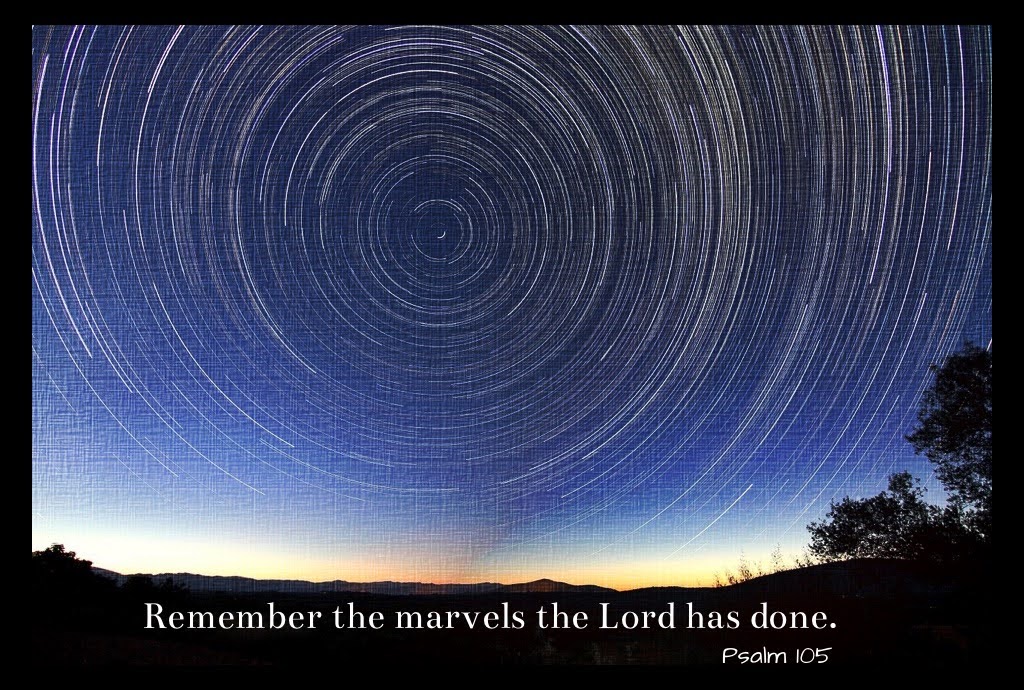
Today, in God’s Lavish Mercy, we pray with Psalm 105, a sacred invitation to rest confidently in God.

Glory in God’s holy name;
    rejoice, O hearts that seek the LORD!
Look to the LORD’s strength;
    seek to serve God wholeheartedly.

Psalm 105:3-4

Our trust is based on God’s infinite memory, mindful of us with every breath of our lives. We are asked to remember too.

The Lord remembers the covenant for ever.

Psalm 105:8

Jesus reminds us of this covenant in our Alleluia verse from John’s Gospel:

Let’s just be cradled in these holy promises as we pray today.


Poetry: Trust by Thomas R. Smith

It’s like so many other things in life   
to which you must say no or yes.                                    
So you take your car to the new mechanic.   
Sometimes the best thing to do is trust.   
The package left with the disreputable-looking   
clerk, the check gulped by the night deposit,   
the envelope passed by dozens of strangers—   
all show up at their intended destinations.   
The theft that could have happened doesn’t.   
Wind finally gets where it was going   
through the snowy trees, and the river, even               
when frozen, arrives at the right place.                        
And sometimes you sense how faithfully your life   
is delivered, even though you can’t read the address.


Music: two songs today. I liked them both a lot and didn’t want to deprive you of either.

Rest in God – Brian Doerksen

Rest – Steve Green