Today, in God’s Lavish Mercy, our readings have a global, even universal, feel to them. By the power of God, the Apostles begin to go out and preach to the whole world.
Acts tells us that:
… the Holy Spirit said, “Set apart for me Barnabas and Saul for the work to which I have called them.” Then, completing their fasting and prayer, they laid hands on them and sent them off.
Acts 13:2-3
Our Responsorial Psalm gives us this universal prayer:
May God have pity on us and bless us; may he let his face shine upon us. So may your way be known upon earth; among all nations, your salvation.
Psalm 67:2-3
And Jesus assures us in the Gospel:
I came into the world as light, so that everyone who believes in me might not remain in darkness.
John 12:45
For our prayer, we might want to place before God’s Radiance all those places in the world, and within ourselves, which long for Light. The whole world shares at least one dark shadow in the global pandemic. That shadow has emphasized some of the tenebrous corners in our own hearts where fear, loneliness, loss, and doubt cower and now want to creep out in our required isolation.
And, spread across our world, there are so many other darknesses famished for Light! War, gun violence, gender violence, economic oppression, a global sacrilegious inhumanity to other human beings.
Together, let us give all of these shadows to God’s power as we pray. May that power release us and all our sisters and brothers into its glorious resplendence. Like the Apostles, may a brilliant, steady energy go out from our hearts, convinced of and empowered by the Light of the Gospel.
Music: Two lovely pieces of music suggested themselves today. I hope you enjoy them.
Eric Whitaker – Lux Aurumque (“Light and Gold”) is a choral composition in one movement. It is a Christmas piece based on a Latin poem of the same name.
Lux, Calida gravisque pura velut aurum Et canunt angeli molliter modo natum.
Light, warm and heavy as pure gold and angels sing softly to the new-born babe. Edward Esch, b.1970 (Translated to Latin by Charles Anthony Silvestri)
Spirit seeking Light and Beauty, Hearts that longeth for Thy rest, Soul that asketh understanding, only thus can you be blest. Through the vastness of creation though your restless heart may roam,
God is all that you may long for, God is all His creatures’ home. Taste and see it, feel and hear it, Hope and grasp His unseen Hand.
Though the darkness seems to hide Him, Faith and love can understand God Who loveth all His creatures, All our hearts are known to Thee. Lead us through the Land of Shadows To Your vast eternity
Today, in God’s Lavish Mercy, the image of God’s hands emerges in each of our readings.
There were some …. proclaiming the Lord Jesus. The hand of the Lord was with them and a great number who believed turned to the Lord.
Acts 11:21
I know them, and they follow me. I give them eternal life, and they shall never perish. No one can take them out of my hand.
John 10:28
My Father, who has given them to me, is greater than all, and no one can take them out of the Father’s hand.
John 10:29
Each of these images evokes and inspires our trust that God abides with and sustains us – that we are in God’s hands.
We all know what it’s like to place ourself in someone else’s hands. Sometimes we do it willingly, sometimes not. Sometimes it is an act of trust, sometimes fear.
This morning, as I pray, I remember two parallel but distinctly different incidents of being in someone else’s hands.
In the first, I went with friends on a drive to the top of Pike’s Peak in Colorado. It was before the serpentine road was paved in 1999. The driver was the young cowboy nephew of one of the passengers, and he thought it was really fun to scare us out of our wits. He took the many curves and switchbacks at headlong speed. I closed my eyes and started praying. It was uncomfortable being in his hands, so to speak.
The second memory is more recent. Just before my knee replacement surgery, as I lay slightly anesthetized in pre-op, my surgeon came to the bedside. He sat down, took my hand and said, “I want you to know that I will do the surgery myself and be with you the whole time. I am putting my initials on your knee so you can be certain I’ll fix the right one.” He smiled, and I again closed my eyes and started praying.
What different prayers they were! One was begging God to intervene and save me. The other was thanking God for putting me in trustworthy hands.
With God, we are always in trustworthy hands. Indeed, sometimes it may feel like God is flying over the edge of Pike’s Peak with us in the back seat. But here’s the thing: God is in the car with us – and God always lives! If we give ourselves completely to God in trust, we will live too.
Eventually, our practice of trust grows enough to comfort us in all things. We realize God is always sitting beside us, taking our hand, assuring us of that Loving Presence Who always abides.
A great freedom comes with that realization, steeped in years of trust and understanding that God’s Will for us is our eternal good. The preachers in Acts today, and the disciples in John rejoiced and acted in such trust. May we too be strengthened, blessed, and impelled by it.
Poetry: Reconciliation – Renee Yann, RSM
The hands of God love me when I cannot see God’s face. Like salve, they warmly run over, in, and out of me, pausing where my hurt is knotted, barbed to their approach… mother’s hands, lover’s, friend’s, my own hands held in God’s hands, healing self-estrangement.
I come to God’s hands like broken earth stretches for redeeming rain. Even in the deep night, where God will not speak, those loving hands are words which I answer in the darkness.
Music: Into Your Hands – Ray Rep
Into Your hands we commend our spirit –Ray Repp
Into Your hands we commend our spirits O Lord, Into Your hands we commend our hearts. For we must die to ourselves in loving You, Into Your hands we commend our love.
O God, my God, why have You gone from me, Far from my prayers, far from my cry? To You I call and you never answer me, You send no comfort and I don’t know why!
You’ve been my guide since I was very young, You showed the way, you brought relief; But now I’m lonely, nobody’s by my side: Take heed, my Lord, listen to my prayer.
Peter’s Vision of the Sheet – By Domenico Fetti – Kunsthistorisches Museum Wien, Bilddatenbank., Public Domain
Today, in God’s Lavish Mercy, we have the long story and explanation by Peter about who can be welcomed into the Community.
The earliest Christians were all Jews. Their beginning Christian rituals had deep roots in Jewish tradition. Their entire expectation of a Messiah was wrapped in the garment of the Old Testament. So it was hard for them to comprehend that Gentiles might also be saved by the Blood of Christ.
We might be tempted to consider these Jewish Christians very provincial, parochial, or even prejudiced in their closed attitudes. But maybe we should just look in the mirror!
It seems to be an enduring human inclination that, rather than – like Peter – seek a road to inclusion, we claim privilege for ourselves and exclude others on all kinds of bases:
She’s a woman, so she can’t…. whatever…
He’s gay, so he can’t …
She’s divorced, so she can’t…
He’s pro-life, or pro-choice, so he can’t…
She’s a Muslim, an atheist, and (irony of ironies) a Jew, so she can’t…
He’s too young – She’s too old – so they can’t …
Maybe in your own life, you have felt the pain of some of these suggested or blatant exclusions.
Jesus, in our Gospel, has a whole different approach to whom he loves. All creatures belong to him and will be brought to the Father in love.
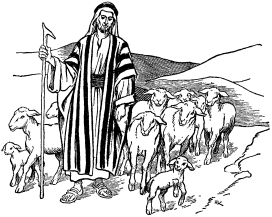
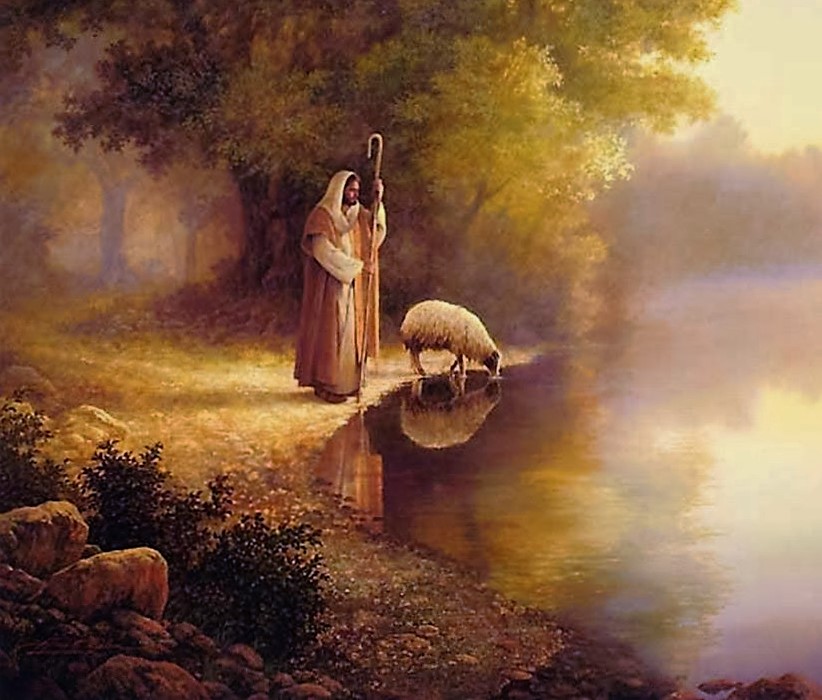
I am the good shepherd, and I know mine and mine know me, just as the Father knows me and I know the Father; and I will lay down my life for the sheep. I have other sheep that do not belong to this fold. These also I must lead, and they will hear my voice, and there will be one flock, one shepherd.
Let us pray today to know and love our God ever more intensely. Let us ask to experience God’s infinite love and knowledge of us so that our unquenchable joy, humble gratitude, and limitless charity grow more evident.
Let us pray these gifts for all our sisters and brothers, no matter by what gate they come to the sheep fold.
Quote: I couldn’t find the original source, but it is a quote common in Eastern Spirituality:
We are all One. There is no Other.
Music: They’ll Know We Are Christians By Our Love
This is an interesting rendering of an old hymn. Kind of touched my heart.
Today, in God’s Lavish Mercy, our three readings make one thing very clear – we are ALL invited to membership in the Body of Christ. We are ALL welcome in the Beloved Community.
In our first reading, Paul and Barnabas preach to Jews, converts to Judaism and to Gentiles – to the effect that:
All who were destined for eternal life came to believe, and the word of the Lord continued to spread through the whole region.
Acts 13:48
In our second reading:
John, had a vision of a great multitude, which no one could count, from every nation, race, people, and tongue. They stood before the throne and before the Lamb.
Revelation 2:9
And in our Gospel, Jesus says:
My sheep hear my voice; I know them, and they follow me. I give them eternal life, and they shall never perish.
John 10:27
These readings describe the family of God to which every human being has been given entrance through the Death and Resurrection of Christ.
Think about that:
when you look into people’s eyes today
when you see their stories on the news
when you people-watch at the airport or the mall
when you drive by a cemetery where lives are remembered in stone
when you look at your children, your friends, your foes
when you take that last look in the mirror tonight before you fall asleep
This person has been invited, with me, to the family of God. How might that thought influence my choices and actions each day?
All of us – ALL OF US- are welcome; all of us, equally loved.
Poetry: O Shepherd of Souls – Hildegard of Bingen (1098–1179)
O Shepherd of souls
and o first voice
through whom all creation was summoned,
now to you,
to you may it give pleasure and dignity
to liberate us
from our miseries and languishing.
Music: Come Worship the Lord – John Michael Talbot
Come, worship the Lord For we are his people The flock that he shepherds Alleluia Come, worship the Lord For we are his people The flock that he shepherds Alleluia
And come, let us sing to the Lord And shout with joy to the rock who saves us Let us come with thanksgiving And sing joyful songs to the Lord
Come, worship the Lord For we are his people The flock that he shepherds Alleluia Come, worship the Lord For we are his people The flock that he shepherds Alleluia
The Lord is God, the mighty God The great King o’er all other gods He holds in his hands the depths of the earth And the highest mountains as well He made the sea, it belongs to him The dry land too, was formed by his hand
Come, worship the Lord For we are his people The flock that he shepherds Alleluia Come, worship the Lord For we are his people The flock that he shepherds Alleluia
Come, let us bow down and worship Bending the knee for the Lord our maker For we are his people We are the flock that he shepherds
Today, in God’s Lavish Mercy, Peter is a headliner in both our readings.
I really love Peter. Can’t we relate to him on so many levels as he stumbles and shines through his growing relationship with Jesus?
Some of my best prayers with Peter have been:
when he tries to walk on water to meet Jesus in the sea
And Peter answered him, “Lord, if it is you, command me to come to you on the water.” He said, “Come.” So Peter got out of the boat and walked on the water and came to Jesus. But when he saw the wind, he was afraid, and beginning to sink he cried out, “Lord, save me.” Mk.14:28
when he gets slammed for trying to stop Jesus from talking about his death
Peter took Him aside and began to rebuke Him. “Far be it from You, Lord!” he said. “This shall never happen to You!” But Jesus turned and said to Peter, “Get behind me, Satan! You are a stumbling block to me!” Mt. 13:41
when his name is changed to Rock and he’s foretold his future
And I tell you that you are Peter, and on this rock I will build my church, and the gates of Hades will not overcome it. Mt. 16:18
when he cowers in denial outside Jesus’s trial
Immediately the rooster crowed the second time. Then Peter remembered the word Jesus had spoken to him: “Before the rooster crows twice you will disown me three times.” And he broke down and wept. Mk. 14:72
when he recognizes the Resurrected Jesus on the shore and swims to him
Then the disciple whom Jesus loved said to Peter, “It is the Lord!” As soon as Simon Peter heard him say, “It is the Lord,” he wrapped his outer garment around him (for he had taken it off) and jumped into the water. Jn.21:7
In today’s first reading, we see Peter in his full authority as the Vicar of Christ.
In our Gospel, we see Peter’s unequivocal confession of faith, voiced for the Church, voiced for all of us:
Jesus then said to the Twelve, “Do you also want to leave?” Simon Peter answered him, “Master, to whom shall we go? You have the words of eternal life. We have come to believe and are convinced that you are the Holy One of God.”
Let’s take whatever piece of Peter is in us today and lay it at the feet of Jesus in our own confession of faith and hope.
Poetry: Simon Peter – John Poch
There are three things which are too wonderful for me, Yes, four which I do not understand. The way of an eagle in the air, The way of a serpent on a rock, The way of a ship in the heart of the sea, And the way of a man with a maid –Prov. 30:18, 19
I Contagious as a yawn, denial poured over me like a soft fall fog, a girl on a carnation strewn parade float, waving at everyone and no one, boring and bored There actually was a robed commotion parading. I turned and turned away and turned. A swirl
of wind pulled back my hood, a fire of coal brightened my face, and those around me whispered: You’re one of them, aren’t you? You smell like fish. And wine, someone else joked. That’s brutal. That’s cold, I said, and then they knew me by my speech. They let me stay and we told jokes like fisher- men and houseboys. We gossiped till the cock crowed, his head a small volcano raised to mock stone.
II Who could believe a woman’s word, perfumed in death? I did. I ran and was outrun before I reached the empty tomb. I stepped inside an empty shining shell of a room, sans pearl. I walked back home alone and wept again. At dinner. His face shone like the sun.
I went out into the night. I was a sailor and my father’s nets were calling. It was high tide, I brought the others. Nothing, the emptiness of business, the hypnotic waves of failure. But a voice from shore, a familiar fire, and the nets were full. I wouldn’t be outswum, denied this time. The coal-fire before me, the netted fish behind. I’m carried where I will not wish.
Today, in God’s Lavish Mercy, our Gospel is serious business. In it, Jesus reveals the lynchpin of our sacramental faith.
Amen, amen, I say to you, unless you eat the Flesh of the Son of Man and drink his Blood, you do not have life within you. Whoever eats my Flesh and drinks my Blood has eternal life, and I will raise him on the last day.
John 6: 53-54
It is a stark and shocking statement. The listening Jews “quarreled among themselves, saying, ‘How can this man give us his Flesh to eat?’.”
Down through the ages, struggling believers have grappled with the same question. Or, perhaps less preferable, complacent believers have never even considered it.
I think Jesus wanted us to consider it, absorb it, be changed by it, live within it, because “unless you eat the Flesh of the Son of Man and drink his Blood, you do not have life within you.”
As Catholics, we believe that Christ is truly and fully present in Eucharist and that, by Communion, becomes fully present in us, the Church.
When the Church celebrates the Eucharist, the memorial of her Lord’s death and resurrection, this central event of salvation becomes really present and “the work of our redemption is carried out”. This sacrifice is so decisive for the salvation of the human race that Jesus Christ offered it and returned to the Father only after he had left us a means of sharing in it as if we had been present there. Each member of the faithful can thus take part in it and inexhaustibly gain its fruits. This is the faith from which generations of Christians down the ages have lived. (ECCLESIA DE EUCHARISTIA, Encyclical of John Paul II)
For me, it is a truth only appreciated when approached with more than the mind. It must be apprehended with the heart and soul. God so loves us in the person of Jesus Christ that God chooses to be eternally present with us, and in us, through the gift of Eucharist.
Praying with this truth over the years has led me to read authors like Edward Schillebeeckx (Christ the sacrament of the Encounter with God), Diarmuid O’Murchu (Quantum Theology), and Pierre Teilhard De Chardin (Hymn of the Universe).
Me in my First Communion Dress – and my handsome little brother
Still, despite all the Eucharistic theology, every time I receive the Eucharist, I let this simple hymn play in my heart – one I learned for my First Holy Communion. It still unites my heart to my desired faith which is, at once, both cosmic and intimate.
Poetry: “On the Blessed Sacrament of the Altar” by St Robert Southwell
Saint Robert Southwell (1561 – 1595) was an English Roman Catholic priest of the Jesuit Order. He was also a poet, hymnodist, and clandestine missionary in Elizabethan England. After being arrested and imprisoned in 1592, and intermittently tortured and questioned by Richard Topcliffe, Southwell was eventually tried and convicted of high treason for his links to the Holy See. On 21 February 1595, Father Southwell was hanged at Tyburn. In 1970, he was canonized by Pope Paul VI as one of the Forty Martyrs of England and Wales. (Wikipedia)
His poetry, written in Early Modern English, demonstrates deep devotion to the Eucharist. Although most of us can interpret the English of the 16th century, the translation below is modernized for convenience. It’s a long poem, but it is well worth your time.
“On the Blessed Sacrament of the Altar” by St. Robert Southwell From The Poems of Robert Southwell, S.J. (Oxford: Clarendon Press, 1967), edited by Fr James H. McDonald and Nancy Pollard Brown
In paschal feast the end of ancient rite
An entrance was to never ending grace,
Tips to the truth, dim glasses to the light,
Performing deed presaging signs did chase,
Christ's final meal was fountain of our good:
For mortal meat he gave immortal food.
That which he gave he was, O peerless gift,
Both God and man he was, and both he gave,
He in his hands himself did truly live:
Far off they see whom in themselves they have.
Twelve did he feed, twelve did their feeder eat,
He made, he dressed, he gave, he was their meat.
They saw, they heard, they felt him sitting near,
Unseen, unfelt, unheard, they him receiv'd,
No diverse thing though diverse it appear,
Though senses fail, yet faith is not deceiv'd.
And if the wonder of the work be new,
Believe the work because his word is true.
Here truth belief, belief inviteth love,
So sweet a truth love never yet enjoy'd,
What thought can think, what will doth best approve
Is here obtain'd where no desire is void.
The grace, the joy, the treasure here is such
No wit can with nor will embrace so much.
Self-love here cannot crave more than it finds,
Ambition to no higher worth aspire,
The eagerest famine of most hungry minds
May fill, yea far exceed their own desire:
In sum here is all in a sum express'd,
Of much the most, of every good the best.
To ravish eyes here heavenly beauties are,
To win the ear sweet music's sweetest sound,
To lure the taste the angels' heavenly fare,
To soothe the scent divine perfumes abound,
To please the touch he in our hearts doth bed,
Whose touch doth cure the deaf, the dumb, the dead.
Here to delight the wit true wisdom is,
To woo the will of every good the choice,
For memory a mirror shewing bliss,
Here all that can both sense and soul rejoice:
And if to all all this it do not bring,
The fault is in the men, not in the thing.
Though blind men see no light, the Sun doth shine,
Sweet cates are sweet, though fevered tastes deny it,
Pearls precious are, though trodden on by swine,
Each truth is true, though all men do not try it:
The best still to the bad doth work the worst,
Things bred to bliss do make them more accurst.
The angels' eyes whom veils cannot deceive
Might best disclose that best they do discern,
Men must with sound and silent faith receive
More than they can by sense or reason learn:
God's power our proofs, his works our wit exceed,
The doer's might is reason of His deed.
A body is endow'd with ghostly rights,
A nature's work from nature's law is free,
In heavenly Sun lie hidden eternal lights,
Lights clear and near yet them no eye can see,
Dead forms a never-dying life do shroud,
A boundless sea lies in a little cloud.
The God of Hosts in slender host doth dwell, Yea God and man, with all to either due: That God that rules the heavens and rifled hell, That man whose death did us to life renew, That God and man that is the angels’ bliss, In form of bread and wine our nurture is.
Whole may his body be in smallest bread,
Whole in the whole, yea whole in every crumb,
With which be one or ten thousand fed
All to each one, to all but one doth come,
And though each one as much as all receive,
Not one too much, nor all too little have.
One soul in man is all in every part,
One face at once in many mirrors shines,
One fearful noise doth make a thousand start,
One eye at once of countless things defines:
If proofs of one in many nature frame,
God may in stranger sort perform the same.
God present is at once in every place,
Yet God in every place is ever one,
So may there be by gifts of ghostly grace
One man in many rooms yet filling none.
Sith angels may effects of bodies shew,
God angels' gifts on bodies may bestow.
What God as auctor made he alter may,
No change so hard as making all of nought:
If Adam framed was of slimy clay,
Bread may to Christ's most sacred flesh be wrought.
He may do this that made with mighty hand
Of water wine, a snake of Moses' wand.
Today, in God’s Lavish Mercy, in our reading from Acts, we meet the Ethiopian eunuch who served the country’s Queen. The man was sitting in a chariot reading the prophet Isaiah. Philip asks him, “Do you understand what you are reading?” He replied, “How can I, unless someone instructs me?” Philip’s instruction results in this faith-filled man’s Baptism.
It’s a bible story I’ve loved since I was a novice and read the excellent book by Alexander Jones, “Unless Some Man Show Me”. That long-ago era in my life was a time when Vatican II opened up to the faithful the power and beauty of scriptural study and prayer.
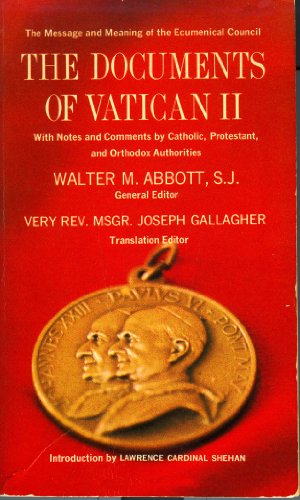
The 1960s were a wonderful time to be committing myself to a life-long spiritual journey. Over the next few years, I devoured the published documents of Vatican II which included the one on sacred scripture, the “Dogmatic Constitution on Divine Revelation” (“Dei Verbum”).
Before Vatican II, like many Catholics, I had had limited experience with scripture. Mainly, we had it read to us at Mass. We had a Bible in my childhood home, but we used it mainly to record familial births and deaths inside the front cover.
Part of the reason for this scriptural vacuum was the long-held belief that most Christians were not theologically astute enough to interpret scripture on their own. Vatican II initiated a blessed change in that perception.
In 1966, the same Alexander Jones, in the company of 27 colleagues, edited the magnificent Jerusalem Bible. My parents gave me this revered book as a gift for my Religious Profession and it has accompanied my prayer for more than a half-century.
Reading the phrase in Acts today, “unless someone show me”, brought the whole sacred journey back to me.
I offer this brief reminiscence to confirm how precious and important it is to build our prayer life on scripture. It is also important to educate ourselves continually by reading good commentary and spirituality. Such thinkers are like Philip in today’s passage. They are the ones who will “show” us, opening to us new understandings for our prayer.
Walter Brueggemann
Elizabeth Johnson
Thelma Hall
Macrina Wiederkehr
Raymond Brown
Brother David Steindl-Rast
Sandra Schneiders
Margaret Farley
Matthew Fox
Pierre Teilhard de Chardin
I would love for some of you (even though you are a shy audience) to list some of your biblical and spiritual guides in the comment section, if you feel so inclined.
Poetry: Give Me a Name – Emily Ruth Hazel, a New York City-based poet and writer whose work has appeared in numerous publications, including Magnolia: A Journal of Women’s Socially Engaged Literature, Kinfolks: A Journal of Black Expression, and Ruminate Magazine. In 2014, she was awarded a National Endowment for the Arts Fellowship to develop a full-length poetry book manuscript during a residency at The Hambidge Center for the Creative Arts & Sciences.
The way home is a desolate road
through the desert. Only my driver and I
roll through the noonday heat. Ahead of us,
the air shimmers. Then out of a cloud
of dust, a man runs up behind us.
He calls out, Who are you reading?
A poet’s vision unfurls in my lap.
I’m thirsty for company, someone to walk
between these lines with me,
clear a path through my own wilderness.
The stranger says he’s well acquainted
with this writer. If he knows who I am,
he doesn’t let on. He climbs in
and we plunge beneath the words.
Whose story is this, anyway?
The one who takes a vow of silence,
an outcast whose most loyal friend is
heartache—is this a portrait of the poet
or of another? I hold the words like water
in my palms, my face reflected in them.
Back in Jerusalem, I was an unexpected guest
in God’s house. There I was dark enough
that I’d never pass as a native.
In a land of divided rooms,
neither side claims me.
Smooth chinned, voice unchanged,
even among my own, I am always other.
My educated tongue surprises.
I read the way my people envy
and despise me in the same blink.
The jewel of Ethiopia, our warrior queen,
trusts me with the nation’s treasure.
But power of the purse came with a price.
Still a boy when I was taught my body
could not be trusted, I was like a lamb
that hears the metal scraping
hot against the stone. When they came for me,
my gut churned. A boulder sealed
my throat. Only mangled moans escaped.
They carved me into a loyal servant
ashamed of my own voice.
Deep in my chest liquid rage
threatened to erupt. I tried to swallow
the unspeakable. Learned to amputate
everything I felt. Any part of me that trembled
was a danger best denied.
All the boys I knew marched into manhood
believing courage hung between their legs.
But I’m my mother’s child.
Long after the men who tore me from my home
washed my blood off their blade,
I remembered my mother
had shown me how to be brave.
Wherever I go, I’m described by my difference,
defined by what I cannot do or be, haunted by
echoes of violence known but unnamed.
Never to look into a young face and recognize
my likeness, I’m tired of being seen
as an absence, a shadow that merely calls
attention to what is touched by light.
Here in this barren place, riding with
a stranger, I feel like I belong.
The wheels of my world slow to a stop.
I step out of the story I’ve been told
must be mine. The man I’ve just met
stands beside me as we wade into a river.
He holds my shoulders. Dips me
into the muddy water. Not as I was held down
years ago. This time, I’ve chosen
to be held. I feel the muscles in my back
relax against his arm. Memory stirs,
half-awake: my mother’s gentle hands
bathe me as a baby.
Raised up again, my body breaks
the surface. Bright sky overwhelms.
Boulder rolled away, my tongue
unguarded now. Laughing and coughing,
mouth full of water and silt and suddenly a song
in a language I’ve never heard.
God of the unsung, God of the present
and the missing, God who translates
phantom pain, who holds the map of all
my scars, may this body be your temple.
Some say my branches died before they bloomed,
water too precious to be wasted on me.
Don’t let me wither under the blistering sun,
cursed for bearing no fruit.
If I can offer shelter to someone called
to walk a lonely road, maybe that’s enough.
God of the forgotten, God of the never begotten,
will my story, at least, outlive me?
Give me a name worth remembering,
a name that will never be cut off.
Today, in God’s Lavish Mercy, our Gospel gives us the sense of Jesus claiming his inheritance from the Father.
He makes it clear that the Father’s Will is the Redemption of all Creation. This is the divine charge given to Jesus. This is his mission.
Everything that the Father gives me will come to me, and I will not reject anyone who comes to me, because I came down from heaven not to do my own will but the will of the one who sent me.
John 6:37-38
Jesus continues to use the symbol of bread to teach the forming community.
Bread sustains life. God’s Word is eternal life.
Sharing bread is an act of community. In the Body of Christ, we are made One with God and with one another.
Bread can stale and disintegrate. Within the Body of Christ, we become eternal and will be raised up unto the Last Day.
These are such BIG thoughts, amazing teachings! I always wonder how simple shepherds, milk maidens, fishermen and housekeepers were supposed to understand! I wonder how we, in our human limitations, could begin to comprehend the infinitely loving design of God revealed in Jesus Christ!
And I think that’s just the thing — we will never comprehend the Mystery of Jesus’s Presence with us. And we don’t have to!
We will never comprehend a lot of things: love, suffering, time, death, kindness, beauty. Yet we live within and savor these mysteries when we open our hearts in vulnerability to them. They are the dynamisms that can sanctify us!
So it is with the mysteries of our faith. While we can use our minds to explore them, our minds will never comprehend them. Only our hearts and souls can fully receive these mysteries in trust and faith.
For this is the will of my Father, that everyone who sees the Son and believes in him may have eternal life, and I shall raise him on the last day.
John 6:40
Prose: The Legend of St. Augustine – from augnet.org
The scene is the seashore, where there is a small pool, a little boy with a seashell, and a sandy beach on which St. Augustine, clad in his religious robes, is walking, pondering with difficulty the mystery of the Most Holy Trinity. “Father, Son, Holy Spirit; three in one!” he muttered, shaking his head.
As he approached the little boy who was running back and forth between the sea and the pool with a seashell of water, Augustine craned his neck and asked him: “Son, what are you doing?” “Can’t you see?” said the boy. “I’m emptying the sea into this pool!” “Son, you can’t do that!” Augustine countered.
“I will sooner empty the sea into this pool than you will manage to get the mystery of the Most Holy Trinity into your head!” Upon saying that, the boy, who was an angel according to legend, quickly disappeared, leaving Augustine alone with the mystery of the Most Holy Trinity.
Today, in God’s Lavish Mercy, I am offering a slightly edited edition of last year’s reflection for the Feast. Re-reading it, I thought it had some points worth repeating.
We pray today with Psalm 19 in which the psalmist draws on nature’s beauty to praise God.
The heavens declare the glory of God; and the firmament proclaims his handiwork. Day pours out the word to day; and night to night imparts knowledge.
Psalm 19: 2-3
Psalm 19 is used today to highlight the apostolic work of Philip and James who chose to declare the Gospel by their lives.
We note that these men are no longer called simply “disciples” or learnersof the Word. They are now “apostles”, charged with spreadingthe Word for the benefit of all.
In our Christian vocations, we each are called to live both these aspects of our call. We are continual learners of the faith through our prayer, reading, and listening. At the same time, we have an apostolic charge to spread the Gospel by the way we live.
This double call was clearly proclaimed through Vatican II in the magnificent document Lumen Gentium, the Dogmatic Constitution on the Church.
I remember with great joy how this document, with its companions, released a surge of enthusiastic faith in the People of God when published in the 1960s. Many of us read and re-read our paperback copies of the Documents until they have long since fallen apart.
There is a Kindle edition available, but now when I want to be refreshed by their power, I access them for free on my iPad at the Vatican site:
Here is a favorite passage I used today to inform my prayer on this feast of two apostles
Lumen Gentium (The Dogmatic Constitution on the Church) promulgated by Pope Paul VI
The laity are gathered together in the People of God and make up the Body of Christ under one head. Whoever they are they are called upon, as living members, to expend all their energy for the growth of the Church and its continuous sanctification, since this very energy is a gift of the Creator and a blessing of the Redeemer.
The lay apostolate, however, is a participation in the salvific mission of the Church itself. Through their baptism and confirmation all are commissioned to that apostolate by the Lord. Moreover, by the sacraments, especially Holy Eucharist, that charity toward God and our brothers and sisters which is the soul of the apostolate is communicated and nourished. Now the laity are called in a special way to make the Church present and operative in those places and circumstances where only through them can it become the salt of the earth. Thus every lay person, in virtue of the very gifts bestowed upon them, is at the same time a witness and a living instrument of the mission of the Church itself “according to the measure of Christ’s bestowal”.
Besides this apostolate which certainly pertains to all Christians, the laity can also be called in various ways to a more direct form of cooperation in the apostolate of the Hierarchy. This was the way certain men and women assisted Paul the Apostle in the Gospel, laboring much in the Lord. Further, they have the capacity to assume from the Hierarchy certain ecclesiastical functions, which are to be performed for a spiritual purpose.
Upon all the laity, therefore, rests the noble duty of working to extend the divine plan of salvation to all persons of each epoch and in every land. Consequently, may every opportunity be given them so that, according to their abilities and the needs of the times, they may zealously participate in the saving work of the Church.
This morning’s question: how am I hearing and responding to my apostolic call?
Poetry: An Apostle’s Prayer – Edward Henry Bickersteth, Bishop of Exeter (1825-1906)
My God, my Father, let me rest
In the calm sun-glow of Thy face,
Until Thy love in me express’d
Draws others to Thy throne of grace.

O Jesu, Master, let me hold
Such secret fellowship with Thee,
That others, careless once and cold,
Won to my Lord and theirs may be.

Eternal Spirit, heavenly Dove,
The light of life to me impart,
Till fire descending from above
Burns on and on from heart to heart.

O Father, Son, and Holy Ghost,
Still, still may love to love respond;
And teach me, when I love Thee most,
Depths all unfathom’d lie beyond.
Music: The Call – from Five Mystical Songs – Vaughan Williams
Come, my Way, my Truth, my Life:
such a way as gives us breath;
such a truth as ends all strife;
such a life as killeth death.

Come, my Light, my Feast, my Strength:
such a light as shows a feast;
such a feast as mends in length;
such a strength as makes a guest.

Come, my Joy, my Love, my Heart:
such a joy as none can move:
such a love as none can part;
such a heart as joys in love.
Today, in God’s Lavish Mercy, Acts introduces us to Stephen, so filled with the Holy Spirit that “his face was like the face of an angel”.
Stephen is among the first group of Christians designated as deacons “to serve at table” – in other words, to do the administrative tasks that kept the community whole.
However, Stephen’s gifts went well beyond these services. Acts describes him like this:
Stephen, filled with grace and power, was working great wonders and signs among the people.
For today’s reflection, though, our focus will be John 6 which is the beginning of a week-long journey into the discourse on the Bread of Life (Jn 6:22-71). These passages, going from today until Friday, are like a “faith boot camp” for Jesus’s followers. They contain the core message of who Jesus is and how we are brought into communion with him.
John’s Gospel does not include an account of the Last Supper and institution of the Eucharist. The Bread of Life Discourse is where Jesus proclaims those teachings in John. It is a more detailed instruction and, as we pray with it over the course of the week, we may trace our own past and current awakening in faith.
Limbourg Brothers, Très Riches Heures du duc de Berry, Jesus Feeding the 5,000 Source Wikimedia Commons
Today’s verses offer very basic training. Jesus has just fed 5000 people in the miracle of the loaves and fishes. The crowds, not having a global view of the miracle like we do, are confused. They know they got plenty to eat, but did everybody? They heard many people ate, but they saw only their nearby neighbors. What really happened out on the green field?
Finding Jesus the next day, they are ready for another meal. They’re more interested in matzoh than miracles. Their basic hunger for physical sustenance consumes them. Jesus begins the task of opening their hearts to their deeper hungers and his desire to meet them:
Jesus said, “You are looking for me not because you saw signs but because you ate the loaves and were filled. Do not work for food that perishes but for the food that endures for eternal life.”
John 6: 26-27
Praying with today’s Gospel, we might ask ourselves some basic questions about our own faith.
When we go looking for God, as these hungry people did, what is it that we are looking for?
Do we talk to God only when we need something the way these folks needed another loaf or fish?
Jesus is inviting us to Eucharist, to Communion with him. To what degree have we opened our hearts to that invitation by our reflective prayer and acts of mercy?
Jesus’s basic message to his flock today is this:
Don’t be satisfied by a tasty roll, a fat fish, (or a fancy car, a good job, a comfortable life.) God made you for much more than these things. Come to Me and feed your deepest hunger.
Maybe, as we pray, we can ask the question posed at end of today’s Gospel and listen intently to Jesus’s answer:
So they said to him, “What can we do to accomplish the works of God?” Jesus answered and said to them, “This is the work of God, that you believe in the one he sent.”
Poetry: Bread of Life by Malcolm Guite
6: 35 Jesus said to them, ‘I am the bread of life.
Whoever comes to me will never be hungry,
and whoever believes in me will never be thirsty.
Where to get bread? An ever-pressing question
That trembles on the lips of anxious mothers,
Bread for their families, bread for all these others;
A whole world on the margin of exhaustion.
And where that hunger has been satisfied
Where to get bread? The question still returns
In our abundance something starves and yearns
We crave fulfillment, crave and are denied.
And then comes One who speaks into our needs
Who opens out the secret hopes we cherish
Whose presence calls our hidden hearts to flourish
Whose words unfold in us like living seeds
Come to me, broken, hungry, incomplete,
I Am the Bread of Life, break Me and eat.
















 Lavish Mercy