Sing Mercy in the Sadness

December 7, 2021
Tuesday of the Second Week of Advent
Memorial of St. Ambrose

Today, in God’s Lavish Mercy, we are blessed, once again, with magnificent readings!

Our psalm coaches us to rejoice and sing – a song that will heal the nations.

Sing to the LORD a new song;
    sing to the LORD, all you lands.
Sing to the LORD; bless the LORD’s name;
    announce God’s salvation, day after day.

Psalm 96:1-2

Our first reading is the exquisite “Comfort” passage from Isaiah. And our Gospel gives us Jesus tenderly seeking the single lost lamb.

The first and last words of these two readings – COMFORT, LOST – capture the whole intent of today’s message:


Life is a maze whose walls are heightened
by our incivility to one another.
Isaiah calls us to be a leveler of walls,
a straightener of twists, a bridge over deadly valleys.
Jesus calls us to seek and carry the lost sheep.
We are called to be Mercy in a suffering world.


These beautiful and challenging readings come to us this year at a time when Pope Francis has offered a clear and similar challenge to the world. Last week, during his visit to the refugee encampment on the Greek island of Lesbos, Francis voiced his profound pain at the international immigration tragedy:

“Let us not let our sea (mare nostrum) be transformed into a desolate sea of death (mare mortuum),” the Pope concluded.  “Let us not allow this place of encounter to become a theatre of conflict.  Let us not permit this “sea of memories” to be transformed into a “sea of forgetfulness”.  Please, let us stop this shipwreck of civilization.”

“It is an illusion to think it is enough to keep ourselves safe, to defend ourselves from those in greater need who knock at our door”, Pope Francis said.  “In the future, we will have more and more contact with others.  To turn it to the good, what is needed are not unilateral actions but wide-ranging policies.  History teaches this lesson, yet we have not learned it.” 

Source for quotes: Vatican News – vaticannews.va

During his address, the Pope asked every man and woman, “to overcome the paralysis of fear, the indifference that kills, the cynical disregard that nonchalantly condemns to death those on the fringes.” 


Resource: To learn about and reflect on the issue of immigration, here is a link to NETWORK. Founded by Catholic Sisters in the progressive spirit of Vatican II, NETWORK works to create a society that promotes justice and the dignity of all in the shared abundance of God’s creation.


Music: Comfort Ye from Handel’s Messiah – sung by Jerry Hadley

As we pray this glorious music today, let us ask for the strength and courage to be Mercy for the world, to find the ways to comfort God’s people, close by and at life’s borders.
Delighted by Hope

December 6, 2021
Monday of the Second Week of Advent

Today, in God’s Lavish Mercy, our Advent readings increase in joyously expectant tone. They offer us wonderful images for our hope! 

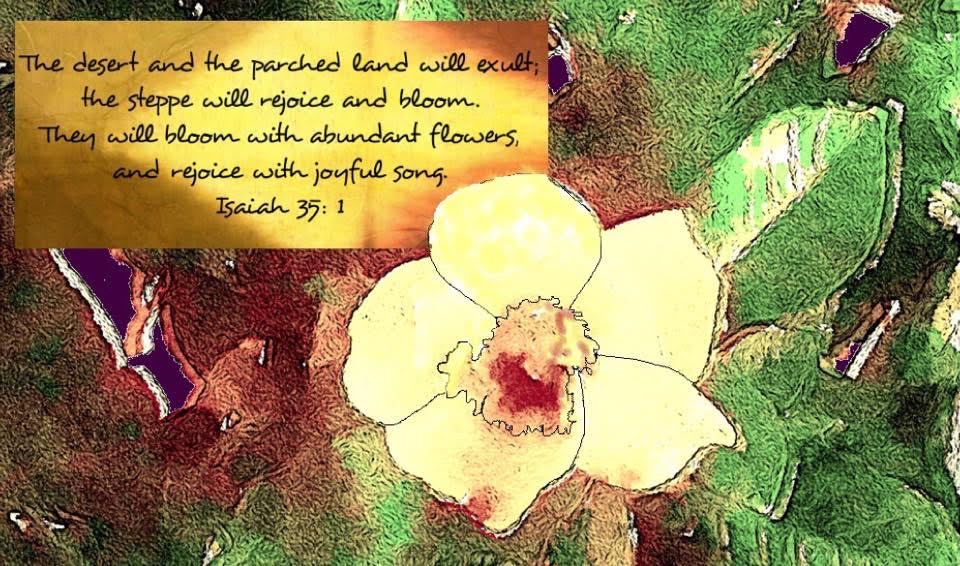
1. Our First Reading – A Blossoming Desert

Isaiah’s exultant description of the Peaceful Kingdom

2. Our Psalm – An Expectant Heart

the Psamist’s confidence in God’s intervention

3. Our Gospel – A Merciful, Rule-Breaking Savior!

Jesus’s miracle, and probable delight, for the paralyzed man lowered through the roof!
(Here is Mark’s version of the same incident as in Luke today.)

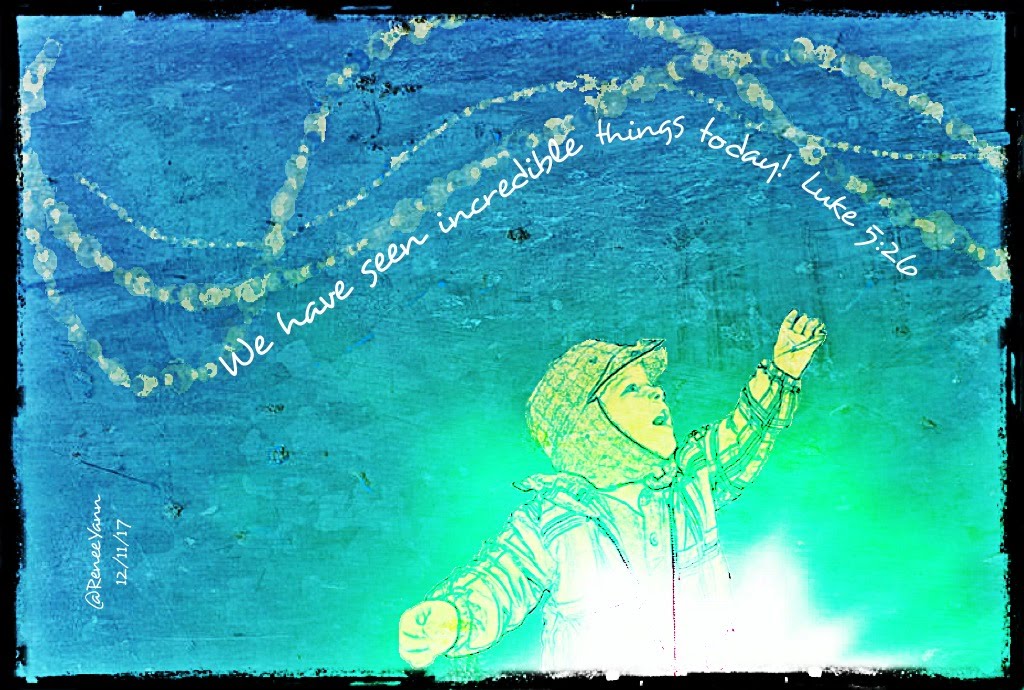
We have seen incredible things.. Luke 5:26

These passages are filled with an exuberant expectation, much like children feel as they discover an amazing gift. I remember with delight how my toddler nieces, nephew, and grands responded to their first snow! It’s a wonder that makes us want to be young again and eager for what may seem otherwise incredible.

May we open our hearts
with innocent hope toward God’s promise
that we are loved beyond our wildest dreams
– by a God Who will redeem us!

If you can, take the time today to read these passages slowly, listening for the particular word that will fall upon your heart like a blossom of hope in the desert – (or icy white magic from the sky!)


Poetry: Snow by Gillian Clarke 

The dreamed Christmas,
flakes shaken out of silences so far
and starry we can’t sleep for listening
for papery rustles out there in the night
and wake to find our ceiling glimmering,
the day a psaltery of light.

So we’re out over the snow fields
before it’s all seen off with a salt-lick
of Atlantic air, then home at dusk, snow-blind
from following chains of fox and crow and hare,
to a fire, a roasting bird, a ringing phone,
and voices wondering where we are.

A day foretold by images
of glassy pond, peasant and snowy roof
over the holy child iconed in gold.
Or women shawled against the goosedown air
pleading with soldiers at a shifting frontier
in the snows of television,

while in the secret dark a fresh snow falls
filling our tracks with stars.


Music: Winter Snow Song – Audrey Assad

[Verse 1]
Could’ve come like a mighty storm
With all the strength of a hurricane
You could’ve come like a forest fire
With the power of Heaven in Your flame

[Chorus]
(But) You came like a winter snow
Quiet and soft and slow
Falling from the sky in the night
To the earth below

[Verse 2]
Oh You could’ve swept in like a tidal wave
Or an ocean to ravish our hearts
You could have come through like a roaring flood
To wipe away the things that we’ve scarred

[Chorus]
(But) You came like a winter snow
Quiet and soft and slow
Falling from the sky in the night
To the earth below

[Bridge]
Ooh no, Your voice wasn’t in a bush burning
No, Your voice wasn’t in a rushing wind
It was still, it was small, it was hidden

[Chorus]
(But) You came like a winter snow
Quiet and soft and slow
Falling from the sky in the night
To the earth below

[Outro]
Falling, oh yeah, to the earth below
You came falling from the sky in the night
To the earth below

A Scriptural Banquet

December 5, 2021
Second Sunday of Advent

Today, in God’s Lavish Mercy, we pray with Baruch, Paul, Luke (channeling Isaiah), and Psalm 126. The passages given us are rich, lyrical, joyful and profound.


The Lord has done great things for us;
we are filled with joy.

Psalm 126:3


For this whole coming week, we are invited to a scriptural banquet – the table set with  preciously familiar Advent phrases to, once again, enrich and challenge our hearts.

Jerusalem, take off your robe of mourning and misery;
    put on the splendor of glory from God forever…

Baruch 5:1

I am confident of this,
that the one who began a good work in you
will continue to complete it 
until the day of Christ Jesus.

Philippians 1:6

A voice of one crying out in the desert:
    “Prepare the way of the Lord,
        make straight his paths.
    Every valley shall be filled
        and every mountain and hill shall be made low.
    The winding roads shall be made straight,
        and the rough ways made smooth,
    and all flesh shall see the salvation of God.”

Luke 3: 4-6

As with any banquet, we can approach this richness by taking a little bit of every offering, or we might prefer to fill up on one inspiration that particularly speaks to us at this moment in our lives.

  • Is there a misery we long to have lifted from our shoulders?
  • Is there a confidence and strength we seek from God?
  • Is there a sacred voice we need to hear, 
  • a crooked way needing straightening, 
  • an emptiness to be filled, 
  • an insurmountable challenge to be faced, 
  • a roughness to be smoothed?

Whatever our situation, by placing our needs faithfully before the promise of Advent, we will find the healing, hope, and grace we need.

Let these magnificent words seep into your heart to ready it for the promised salvation. For it is Advent – and

God is leading Israel in joy
    by the light of Divine Glory,
    with mercy and justice for company.

Baruch 5:9

Prose: from Pierre Teilhard de Chardin.


Above all, trust in the slow work of God.
We are quite naturally impatient in everything
to reach the end without delay.
We should like to skip the intermediate stages.
We are impatient of being on the way to something
unknown, something new.
And yet it is the law of all progress
that it is made by passing through
some stages of instability –
and that it may take a very long time.
And so I think it is with you.
Your ideas mature gradually—let them grow,
let them shape themselves, without undue haste.
Don’t try to force them on,
as though you could be today what time
(that is to say grace and circumstances
acting on your own good will)
will make of you tomorrow.
Only God can say what this new spirit
gradually forming within you will be.
Give our Lord the benefit of believing
that his hand is leading you,
and accept the anxiety of feeling yourself
in suspense and incomplete.

Music: Starlight through Barren Branches – Joel Clarkson

No More Tears

December 4, 2021
Saturday of the First Week of Advent

Today, in Mercy, Isaiah – in glorious prophecy – promises God’s People better times.

Thus says the Lord GOD,
    the Holy One of Israel:
O people of Zion, who dwell in Jerusalem,
    no more will you weep;
GOD will be gracious to you when you cry out,
    answering as soon as you are heard.
The Lord will give you the bread you need
    and the water for which you thirst.
No longer will your Teacher be hidden,
    but with your own eyes you shall see your Teacher,
While from behind, a voice shall sound in your ears:
    “This is the way; walk in it,”
    when you would turn to the right or to the left.

Isaiah 30: 19-21

Oh my, don’t we all long for the fulfillment of that promise! So much in both our larger and smaller worlds longs for healing!


Perhaps we can use our prayer within these readings today to call on God for the promised healing.

It is a healing that requires our cooperation. Isaiah says that we must name our pain to God – for ourselves and for all who suffer in our world:

The Lord will be gracious to you when you cry out,
answering as soon as you are heard.


The prophet says that this crying out will change us. We will see the Lord with us in our suffering. God will lead us through that suffering by our acts of faith, hope, love, justice and mercy:

No longer will your Teacher be hidden,
but with your own eyes you shall see your Teacher,
While from behind, a voice shall sound in your ears:
“This is the way; walk in it,”
when you would turn to the right or to the left.


Our Gospel tells us that we are called to be Christ’s disciples, and that disciples are healers. By letting our lives become sources of healing in the world, Isaiah’s prophecy is fulfilled for our time.

Jesus sent out these twelve after instructing them thus,
“Go to the lost sheep of the house of Israel.
As you go, make this proclamation: ‘The Kingdom of heaven is at hand.’
Heal the sick, raise the dead, cleanse lepers, drive out demons.

Without cost you have received; without cost you are to give.”

Matthew 10:5-8

How we do these wondrous deeds in the world is an ongoing revelation. When I was very young, I took the proclamation quite literally. But I soon lost the expectation that I would ever help “cure” anyone of anything!

Life has blessed me with the realization that there is a difference between “curing” and “healing” – and that there are many degrees of healing.

  • There are many ways in which living people are caught in deadly lives.
  • There are all kinds of “lepers” in our society, rendered so by the prejudices of others.
  • Certainly, many of us carry all sorts of crippling demons.

All these situations, and others like them, invite us to offer the gift of sacred healing implanted in us at our Baptism.

Acknowledging the pain in ourselves and others,
and trusting that God wants us to be healed and whole,
is the work of true discipleship.

Let’s draw strength from Isaiah’s promise in order to find a generous, merciful courage for our call to be “healed healers”.


Poetry: The Cure of Souls – Denise Levertov

The pastor
of grief and dreams

guides his flock towards
the next field

with all his care.
He has heard

the bell tolling
but the sheep

are hungry and need
the grass, today and

every day. Beautiful
his patience, his long

shadow, the rippling
sound of the flocks moving

along the valley.


Music: Your Healing Touch – Joe Bongiorno

In a very little while …

December 3, 2021
Friday of the First Week of Advent
Memorial of St. Francis Xavier

Today, in God’s Lavish Mercy, we stand with Isaiah on the rim of hope. We wait, trusting that “in a very little while”, the Lord will make Creation whole.

It’s a precipitous place, this cliff called “Hope”. It requires that we risk ourselves solely on the promises of a God we cannot see. It invites us to leap into a mist we cannot control.

Or can we?


In today’s Gospel, Jesus invites the blind men to the cliff’s edge by asking them:

Do you believe that I can do this?

Well, that’s everything, isn’t it? If our answer is “No”, “Maybe”, or “Kinda’”, we might as well just lie down on this side of the Promise.

But if our answer is brave, like the Gospel blind ones, we too may have our vision cleared to see that there is no leap required. We already stand beside God.

When his children see
the work of my hands in his midst,
They shall keep my name holy;
they shall reverence the Holy One of Jacob,
and be in awe of the God of Israel.
Isaiah 29:23


Poetry:Hope – Lisel Mueller

It hovers in dark corners
before the lights are turned on,
it shakes sleep from its eyes
and drops from mushroom gills,
it explodes in the starry heads
of dandelions turned sages,
it sticks to the wings of green angels
that sail from the tops of maples.

It sprouts in each occluded eye
of the many-eyed potato,
it lives in each earthworm segment
surviving cruelty,
it is the motion that runs
from the eyes to the tail of a dog,
it is the mouth that inflates the lungs
of the child that has just been born.

It is the singular gift
we cannot destroy in ourselves,
the argument that refutes death,
the genius that invents the future,
all we know of God.

It is the serum which makes us swear
not to betray one another;
it is in this poem, trying to speak.


Music: Amazing Grace sung by Il Divo

The Eternal Song

December 2, 2021
Thursday of the First Week of Advent

Today, in God’s Lavish Mercy, Isaiah promises the people that they will sing a song in the land of Judah.  It will be a song that celebrates confidence in God, justice, enduring faith, peace and trust.


Do you ever sing to God when your heart is filled like that? I don’t mean Church-singing or words somebody else wrote. 

I mean that sweet, indecipherable whisper a mother breathes over her child, or the mix of a hundred half-remembered melodies we hum when we are lost in the fullness of our lives.

And I don’t just mean the happy songs.

I mean the songs of loss and longing, awe and wonderment at life’s astounding turns. I mean even the sounds of silence when the refrain within us cannot be spoken.

When your heart is really stuck, unable to find the words to express the depth of your joy, longing or sorrow, try singing to God like that. So many times, I have done this while out on a solitary walk, or sitting by the water’s edge, or even driving on an open road. Sometimes, God even sings back!


Isaiah’s people were able to sing their song because they held on to faith and acted in justice. In our Gospel, Jesus tells us that this must be the way of our prayer too. He says that simply saying, “Lord, Lord” won’t cut it!

Real prayer is not just words. It is a life given to hearing God’s Word and acting on it. Real prayer is about always singing our lives in rhythm with the infinite, merciful melody of God.


Poetry: Every Riven Thing ~ Christian Wiman

God goes, belonging to every riven thing he’s made
sing his being simply by being
the thing it is:
stone and tree and sky,
man who sees and sings and wonders why

God goes. Belonging, to every riven thing he’s made,
means a storm of peace.
Think of the atoms inside the stone.
Think of the man who sits alone
trying to will himself into a stillness where

God goes belonging. To every riven thing he’s made
there is given one shade
shaped exactly to the thing itself:
under the tree a darker tree;
under the man the only man to see

God goes belonging to every riven thing. He’s made
the things that bring him near,
made the mind that makes him go.
A part of what man knows,
apart from what man knows,

God goes belonging to every riven thing he’s made.


Music: Bless the Lord, My Soul – Matt Redman

Table of Comfort

December 1, 2021
Wednesday of the First Week of Advent

Today, in God’s Lavish Mercy, our readings take us to the Lord’s banquet. It is a rich image that threads through scripture and helps us understand what characterizes the perfect reign of God.

The readings, coming just on the heels of Thanksgiving, present familiar images to us. Last week, you may have been part of the preparation of the feast for your family and friends. Maybe you’re the master carver, or brought sides of old family recipes. Or you might be the table decorator or, most important, the clean-up guru!

Or maybe you were the one who steered the conversation so that all felt welcomed and included in the gathering. Maybe you were the one who took someone aside if they needed an extra portion of care. Maybe you were the one who invited someone with no other place to go.


That Thanksgiving meal, and every meal, can be a symbol of the heavenly banquet.

Isaiah’s banquet is all elegance and fullness. He describes an end-time when, despite a path through suffering, all is brought to perfection in God:

On this mountain the LORD of hosts
will provide for all peoples
A feast of rich food and choice wines,
juicy, rich food and pure, choice wines.


Jesus’s feast is more “now”, and more rustic. He takes the ordinary stuff of present life and transforms it to satisfy the immediate needs of those gathered. With sparse and simple ingredients, Jesus creates the “miracle meal” for the poor and hungry.

He ordered the crowd to sit down on the ground.
Then he took the seven loaves and the fish,
gave thanks, broke the loaves,
and gave them to the disciples,
who in turn gave them to the crowds.
They all ate and were satisfied. 


Christ’s presence with us in the Eucharist is both kinds of meal.

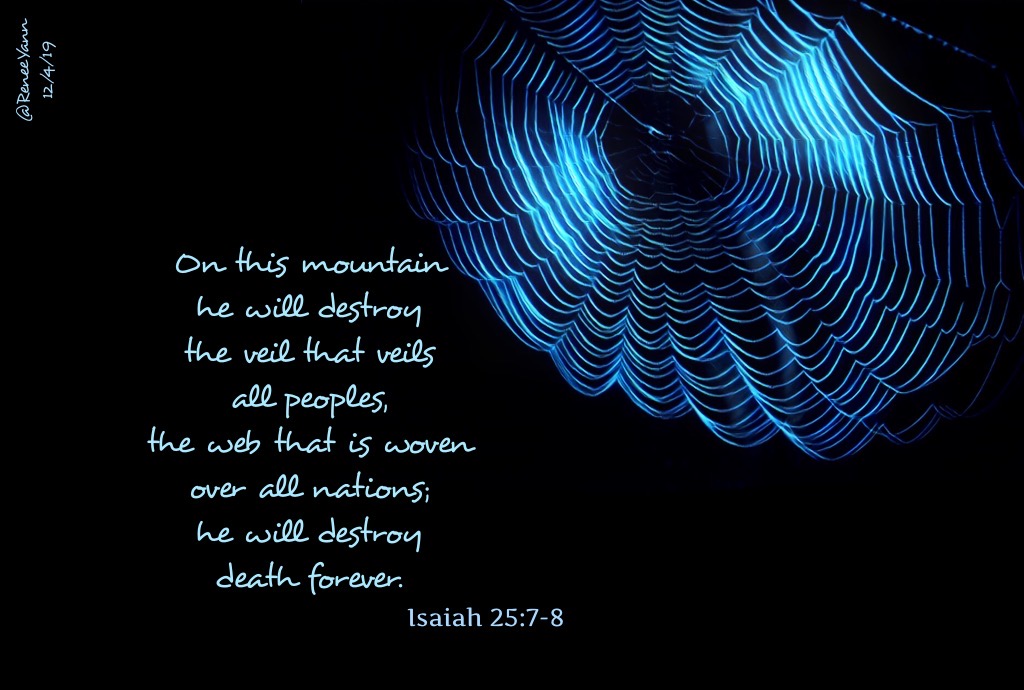
  • It points us to the perfection of heaven, where the “web” will be lifted from our eyes and we will see ourselves as one in Christ.
  • It calls us to be Christ for one another in this world – creating miracles of love and mercy so that all are adequately fed, in body and soul, for the journey we share.

Poetry: Love Bade Me Welcome – George Herbert, (1593 – 1633) – a Welsh-born poet, orator, and priest of the Church of England. His poetry is associated with the writings of the metaphysical poets, and he is recognized as “one of the foremost British devotional lyricists.


Love bade me welcome. Yet my soul drew back 
                              Guilty of dust and sin.
But quick-eyed Love, observing me grow slack 
                             From my first entrance in,
Drew nearer to me, sweetly questioning,
                             If I lacked any thing.
A guest, I answered, worthy to be here:
                             Love said, You shall be he.
I the unkind, ungrateful? Ah my dear,
                             I cannot look on thee.
Love took my hand, and smiling did reply,
                             Who made the eyes but I?
Truth Lord, but I have marred them: let my shame
                             Go where it doth deserve.
And know you not, says Love, who bore the blame?
                             My dear, then I will serve.
You must sit down, says Love, and taste my meat:
                           So I did sit and eat.

Music:  Banquet- Graham Kendrick (Lyrics below)

There’s no banquet so rich
As the bread and the wine
No table more holy
No welcome so kind
There’s no mercy so wide
As the arms of the cross
Come and taste, come and see
Come find and be found

There’s no banquet so rich
For what feast could compare
With the body of Jesus
Blessed, broken and shared?
Here is grace to forgive
Here is blood that atoned
Come and taste, come and see
Come know and be known

Take the bread, drink the wine
And remember His sacrifice
There’s no banquet so rich
As the feast we will share
When God gathers the nations
And dines with us here
When death’s shadow is gone
Every tear wiped away
Come and eat, come and drink
Come welcome that day

There’s no banquet so rich
For our Saviour we find
Present here in the mystery
Of these humble signs
Cleansed, renewed, reconciled
Let us go out as one
Live in love, and proclaim
His death till he comes

That Sweet Light

November 30, 2021
Feast of St. Andrew, Apostle

Today, in God’s Lavish Mercy, we pray with the Apostle Andrew – one who was called and gifted to bring the Good News – and with the Paul, and Isaiah ‘s beautiful song:

As Isaiah has written,
How beautiful are the feet of those who bring the good news!
But not everyone has heeded the good news;
for Isaiah says, Lord, who has believed what was heard from us?
Thus faith comes from what is heard,
and what is heard comes through the word of Christ.
But I ask, did they not hear?
Certainly they did; for

    Their voice has gone forth to all the earth,
        and their words to the ends of the world
.

Romans 10:16-18

 As we stand just past Advent’s front threshold, it is fitting to do so here beside Andrew, on his feast, remembering how one day Jesus invited him to launch out into a whole new world.

Today teases us with something we cannot yet imagine. Tomorrow, it will be December – the last month of 2021. And, as for the past two years, we still wait for the world to be delivered from pandemic. It is a waiting that takes great faith, courage, and perseverance – virtues, at times, difficult to summon.

Still as people of faith, we know that Advent is time to wait in silence for unfathomed miracles. Advent teases us with something we can not yet imagine.

What graces will these days hold for us as we prepare for Christmas?


Jesus teased Andrew and Peter too with the promise to be “fishers of men”. Wading knee-deep in the Galilean Sea, do you think they had any hint of what Jesus was talking about? I don’t. I think they simply caught the faith, hope and love in his eyes the way a match catches flame when it’s struck.

Let’s stand with Andrew today in these beginning hours of Advent, on the edge of the long nights or days of December (depending on our hemisphere)

Let’s trust the fire we find in Christ’s eyes as we pray through this Holy Season. Let’s be very intentional not to miss the point of these sacred days by losing them to the fears or frenzies that may threaten us.


An old devotion that I still love is the St. Andrew Novena. The prayer, prayed from November 30 until December 24th, is meant to remind us of the true meaning of these days leading to Christmas. Because my mother said it with me when I was a little girl, it carries both spiritual and emotional riches for me.

It is traditionally suggested that we say it fifteen times a day. I will confess that I say it only once a day, but I do that slowly, focusing on the sacred mystery held within the words.


Poetry – Prayer

I also have created my personal version without specific petitions. I think God knows what we need and provides for us. God’s Lavish Mercy is enough and everything.


My St. Andrew’s Prayer:

Hail, and blessed be the hour and moment
at which the Son of God was born
of our dear Mother Mary
in a stable
at midnight
in Bethlehem
in the piercing cold.
At that hour, I ask you dear God,
to hear my prayer and grant my hope
that you fill our world again
with your Loving Presence.
Through Jesus Christ and His most Blessed Mother.
Amen
.


Music: We Shall Behold Him – Ron Kenoly (Lyrics below)

I love this hymn, especially the line “the sweet light in his eyes shall enhance those awaiting”. Maybe that’s the light Andrew saw. May we see it too!

The Peaceable Kingdom

November 29, 2021
Monday of the First Week of Advent

Today, in God’s Lavish Mercy, we pray with Isaiah, Matthew and Psalm 122.

Our first reading sets us out on nearly two weeks of passages from Isaiah. The passionate hope of Isaiah’s writing, as well as its literary elegance, can reach into our hearts and powerfully renew us.

For these reasons, “Isaiah’s Vision” is among the most beloved and influential books of the Bible. The book has so influenced Christianity that it often is referred to as “The Fifth Gospel”.

They shall beat their swords into plowshares
    and their spears into pruning hooks;
One nation shall not raise the sword against another,
    nor shall they train for war again.

Isaiah 2:4

Isaiah’s images, written to fire the souls of the ancient Hebrews, still have the power to enkindle ours today as we await the quickening grace of our Prince of Peace. We still have little and big wars all around us, and some within us. Still there are swords and spears between us that cry for a peaceable bending.

Isaiah asks us to acknowledge them and offer them for transformation so that we may, with our psalmist, “go rejoicing to the house of the Lord.”


In our Gospel, Jesus paints a picture of the sacred house, an inclusive table where all are fed with Eternal Life.

I say to you, many will come from the east and the west,
and will recline with Abraham, Isaac, and Jacob
at the banquet in the Kingdom of heaven

Matthew 8:11

Today’s centurion
– by virtue of his humble, resolute faith –
already has partaken of that peaceable feast.
The early invitation is open to us as well.🤗


Poetry: An Appendix to the Vision of Peace by Yehuda Amichai

Yehuda Amichai is recognized as one of Israel’s finest poets. His poems, written in Hebrew, have been translated into 40 languages, and entire volumes of his work have been published in English, French, German, Swedish, Spanish, and Catalan. “Yehuda Amichai, it has been remarked with some justice,” according to translator Robert Alter, “is the most widely translated Hebrew poet since King David.”

  • from Poetry Foundation

    Don’t stop after beating the swords
    into plowshares, don’t stop! Go on beating
    and make musical instruments out of them.
    Whoever wants to make war again
    will have to turn them into plowshares first.


Music: Lo Yisa Goy – Utah Philharmonic

Lo Yisa Goy is a Jewish folk song based on Isaiah 2. Translation below.

Lo yisa goy
El goy cherev
Lo yil’medu
Od milchamah.

A nation shall not raise
A sword against a nation
And they shall not learn 
Any more war.

Promise Fulfilled

First Sunday of Advent
November 28, 2021

Today, in God’s Lavish Mercy, we begin our Advent journey remembering a promise:

The days are coming, says the LORD, 
    when I will fulfill the promise 
    I made to the house of Israel and Judah.

Jeremiah 33:14

“Promise” is a powerfully dynamic concept whose meaning we sometimes constrict. 

We might say something like, “I promise to pay you back someday” – thereby limiting “promise” to some future event that may or may not happen.

But “promise”, in its richer meaning, is an inward turning toward a journey, each step a necessary component of the ultimate fulfillment. 

In this sense, “promise” is more akin to “vow” or “covenant”. It unfolds as life unfolds. It grows through stages, like a fruit tree from a tiny seed. Its meaning, at first indistinctly seen, blossoms as it is fed with faith, hope, and enduring love.

This is the nature of God’s promise to us. It is not only some salvific event in our future. It is the flowering of grace, again and again, in our life choices for God. 

It is the classic example of that insightful phrase, “The journey is the destination.” In other words, Jesus cannot be born for us on Christmas if He is not born in us every day.


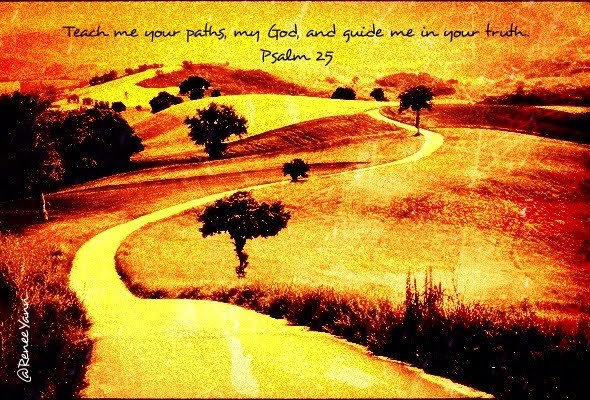
Thus, Psalm 25 is the perfect prayer as we reflect on our journey during Advent.

To you, O Lord, I lift my soul.

Your ways, O LORD, make known to me;
   teach me your paths,
Guide me in your truth and teach me,
   for you are God my savior,
   and for you I wait all the day. 

All Your paths are kindness and constancy
   toward those who keep Your covenant and decrees.
Your friendship is with those 

who hold themselves in awe before You,
   and Your covenant is for their daily instruction.

Psalm 25: 4-5; 10,14

As we begin this Advent,
let us ask God to show us
the promise longing for fulfillment
in each moment and
in every event of our daily lives.
Let us give our hearts to it.

Poetry: Advent Credo from Walking on Thorns by Allan Boesak

It is not true that creation and the human family are doomed to destruction and loss—
This is true: For God so loved the world that He gave his only begotten Son, that whoever believes in Him shall not perish but have everlasting life;

It is not true that we must accept inhumanity and discrimination, hunger and poverty, death and destruction—
This is true: I have come that they may have life, and that abundantly.

It is not true that violence and hatred should have the last word, and that war and destruction rule forever—
This is true: Unto us a child is born, unto us a Son is given, and the government shall be upon his shoulder, his name shall be called wonderful councilor, mighty God, the Everlasting, the Prince of peace.

It is not true that we are simply victims of the powers of evil who seek to rule the world—
This is true: To me is given authority in heaven and on earth, and lo I am with you, even until the end of the world.

It is not true that we have to wait for those who are specially gifted, who are the prophets of the Church before we can be peacemakers—
This is true: I will pour out my spirit on all flesh and your sons and daughters shall prophesy, your young men shall see visions and your old men shall have dreams.

It is not true that our hopes for liberation of humankind, of justice, of human dignity of peace are not meant for this earth and for this history—
This is true: The hour comes, and it is now, that the true worshipers shall worship God in spirit and in truth.

So let us enter Advent in hope, even hope against hope. Let us see visions of love and peace and justice. Let us affirm with humility, with joy, with faith, with courage: Jesus Christ—the life of the world.


Music: Psalm 26 – Kendrick and Redman