Thursday of the Eighteenth Week in Ordinary Time

Thursday, August 5, 2021

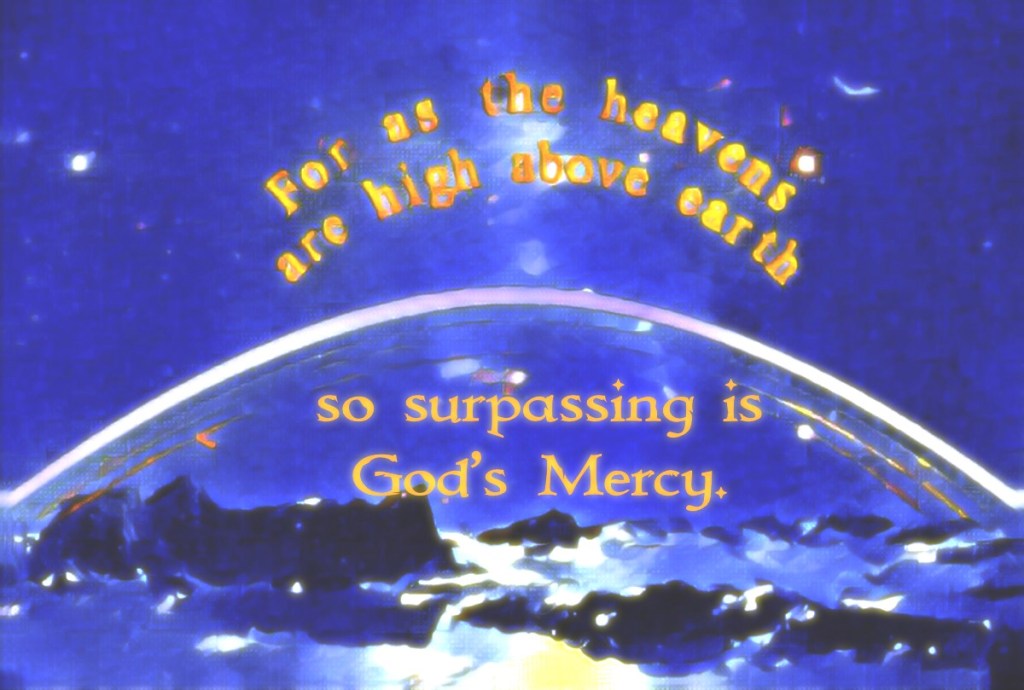
Today, in God’s Lavish Mercy, we pray with Psalm 95. 

This psalm and our other readings today are filled with rocks. So that seems to be the symbol speaking to us today.

Photo by Pixabay on Pexels.com

Psalm 95 is a summons to rejoice, but laced within it are stern reminders to remember and repent.

Oh, that today you would hear his voice:
    “Harden not your hearts as at Meribah,
    as in the day of Massah in the desert,
Where your forebearers tested me;
    they tested me though they had seen my works.”

Psalm 95: 8-9

The rock referred to in the psalm is the one Moses struck to release the waters. It is a contentious episode where the Israelites test God and Moses wavers in his faith.

These are the waters of Meribah,
where the children of Israel contended against the Lord,
and where the LORD’s sanctity was revealed among them.

Numbers 20:13

On the other hand, the rock in our Gospel passage refers to the strength and stability Peter receives and which will endure through the ages.

And so I say to you, you are Peter,
and upon this rock I will build my Church,
and the gates of the netherworld shall not prevail against it.

Matthew 16:18
Latin inscription on dome of St. Peter’s Basilica in Rome – ” Tu es Petrus — You are Peter and upon this rock…”

So the “rock”, like any symbol, takes its meaning and relevance from the circumstances which surround it. 

This is true as well  for the “rocks” we meet in our own lives. Some are sources of strength, some nearly insurmountable obstacles.  Some are a test, some a consolation.

Praying with today’s psalm and other readings, we might take the time to reflect on our current or past “rocks”. 

May we realize and gratefully remember how God gives life-giving water even from these seemingly unyielding sources.


Poetry: Sorrow – Renee Yann, RSM

You must be alone
    with sorrow
    before you can leave it,
    or it will crush you
    like a black, heavy rock.

    You must drive into
    the hollow of its face,
    under the ledges
    it projects against you.
    Feel its cold granite
    pressed to your grain.

    In time,
    it will allow your turning
    to rest your back
    within its curve.

    Only then,
    you will be free to leave it,
    walking lightly once again
    on yielding earth.

    When you return, it will be freely,
    on a pilgrimage,
    to touch the name you carved once
    with the anguish of your heart.

Music: Rock of Ages

“Rock of Ages” is a popular Christian hymn written by the Reformed Anglican minister, the Reverend Augustus Toplady, in 1763 and first published in The Gospel Magazine in 1775.

Traditionally, it is held that Toplady drew his inspiration from an incident in the gorge of Burrington Combe in the Mendip Hills in England. Toplady, a preacher in the nearby village of Blagdon, was traveling along the gorge when he was caught in a storm. Finding shelter in a gap in the gorge, he was struck by the title and scribbled down the initial lyrics. The fissure that is believed to have sheltered Toplady (51.3254°N 2.7532°W) is now marked as the “Rock of Ages”, both on the rock itself and on some maps.

Memorial of Saint John Vianney

Wednesday, August 4, 2021

Today, in God’s Lavish Mercy, we pray with Psalm 106 which mirrors the story told in our first reading from Numbers.

It takes some doing to pray with these passages, at least for me. On the surface, they offer us spies and wars and a vengeful God whom Moses has to placate – images that don’t speak to my spiritual life.


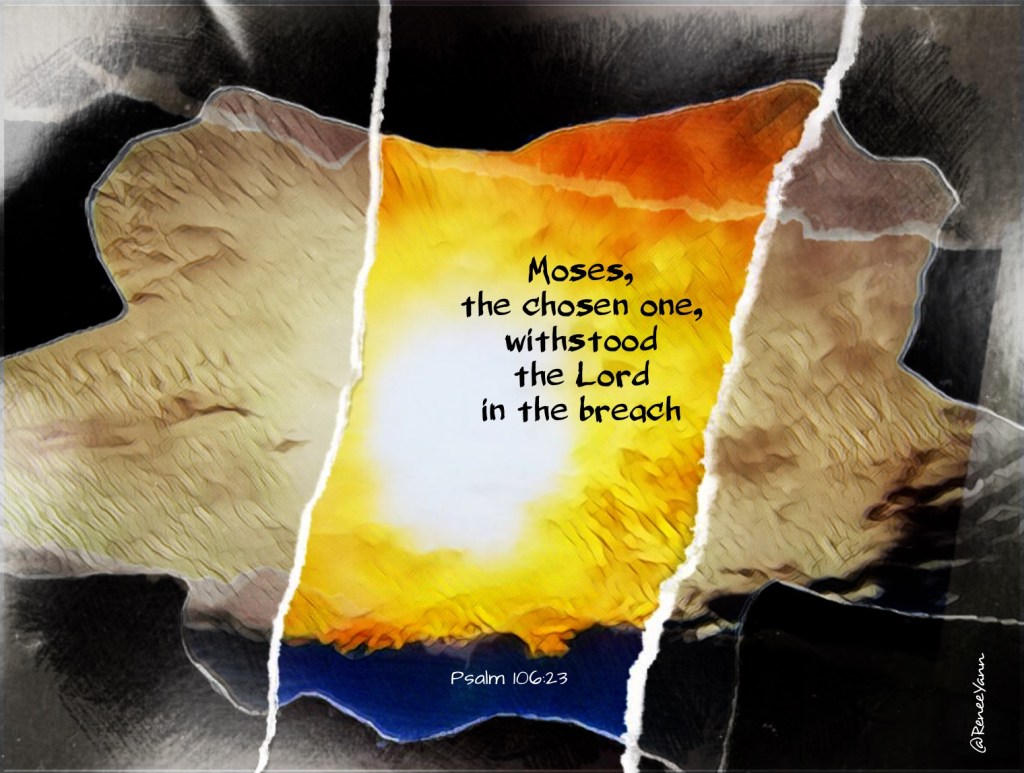
But, as always with scripture, I ask if there is a meaning for me underneath that surface story? I found it in the word “breach”.

God is always trying to break through – to breach – the surface of our lives to teach us divine meaning. But we are often spiritually short-sighted like the spies who report back to Moses. We sometimes let our simplistic observations of life block us from its true depth and call.

But Moses, because of his unique relationship with God, has been cleared of those blockages. He opens up – breaches – the surface to help the people connect with God’s power.

Photo by Silvana Palacios on Pexels.com

What allows me to “breach” my limited understandings and to see all life as God, shining through experience? 

For me? Sweet silence. Faithful prayer. Reaching for the “dearest freshness” of an obedient heart and a resolute love.


Poetry: God’s Grandeur- Gerard Manley Hopkins

The world is charged with the grandeur of God.
    It will flame out, like shining from shook foil;
    It gathers to a greatness, like the ooze of oil
Crushed. Why do men then now not reck his rod?
Generations have trod, have trod, have trod;
    And all is seared with trade; bleared, smeared with toil;
    And wears man's smudge and shares man's smell: the soil
Is bare now, nor can foot feel, being shod.

And for all this, nature is never spent;
    There lives the dearest freshness deep down things;
And though the last lights off the black West went
    Oh, morning, at the brown brink eastward, springs —
Because the Holy Ghost over the bent
    World broods with warm breast and with ah! bright wings.

Music: from Freshness Green Soothing Relaxation 

Tuesday of the Eighteenth Week in Ordinary Time

Tuesday, August 3, 2021

Today, in God’s Lavish Mercy, we pray with Psalm 51 which expresses the ardent desire for forgiveness and reconciliation.

The psalm reflects back to our first reading – an episode of sibling rivalry, jealousy, and hidden motives.

Moses, favored of God and leader of the people, makes a questionable choice. He marries outside the tribe, after telling everyone else not to. Hmmm. His siblings, Aaron and Miriam, don’t like that. So they indignantly complain:

Is it through Moses alone that the LORD speaks?
Does God not speak through us also?

Numbers 12:2

God hears their complaint and sees through it. God sees that they are less concerned about the marriage and more concerned about themselves. They’re tired of Moses telling them what to do. They think God could have picked a better leader — one of them!

God sets them straight about how special Moses is, and their responsibility to support, not undermine, him.

Should there be a prophet among you,
in visions will I reveal myself to him,
in dreams will I speak to him;
not so with my servant Moses!
Throughout my house he bears my trust:
face to face I speak to him;
plainly and not in riddles.
The presence of the LORD he beholds.

Numbers 12:6-7

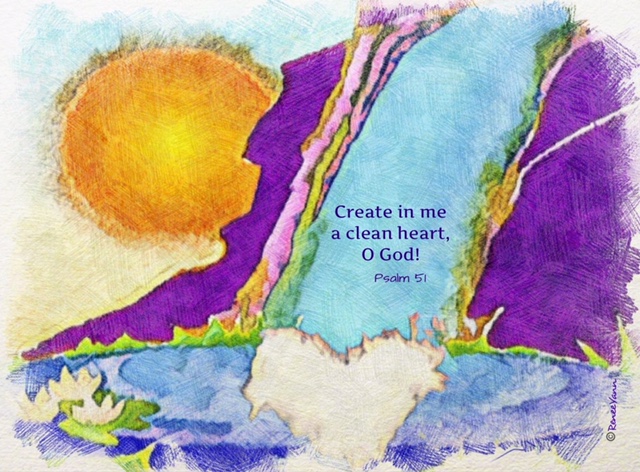
The whole story is really about motives. Everything we do must be done out of love – out of reverence for God, and out of respect and hope for ourselves and others. This is what it means to have a clean heart. And it is the plea of Psalm 51.

A clean heart create for me, O God,
and a steadfast spirit renew within me.
Cast me not off from your presence,
and your Holy Spirit take not from me.

Psalm 51:12-13

Reflection: This is a great piece by Sister Joyce Rupp on a clean heart (published in America magazine)

Music: some Gospel smooth jazz from Fred Hammond who is one of the most popular figures in contemporary Gospel music

Monday of the Eighteenth Week in Ordinary Time

Monday, August 2, 2021

Today, in God’s Lavish Mercy, we pray with Psalm 81, and today’s verses sound a little harsh. The Lord seems a bit fed up with Israel’s hungers:

My people heard not my voice,
    and Israel obeyed me not;
So I gave them up to the hardness of their hearts;
    they walked according to their own counsels.

Psalm 81:12-13

Translated to 21st century jargon that verse might sound like this:

I love them and all, but come on!
    They don’t follow my advice;
so the heck with their stubbornness.
    Let them stew in their own juices!

Renee’s unofficial imaginings 🙂

But see, here’s the thing. God is never like that with us. God is, instead, everlastingly patient with us. God stays with us until we – hopefully – respond to Grace.

And don’t we sometimes really test God’s patience! Moses was great at it — pushing and pushing for God to make things easier for him. 

I cannot carry all this people by myself,
for they are too heavy for me.
If this is the way you will deal with me,
then please do me the favor of killing me at once,
so that I need no longer face this distress.

Numbers 11:14-15

Picture Moses standing in front of God, hands on hips yelling, “I’ve had it! Why not just kill me now?!?!”

The verse actually makes me chuckle because I also picture God, smothering a smile at Moses’s tantrum, and thinking, “Maybe some quail will settle this guy down for the long haul.”


Today’s psalm and reading from Numbers remind us that each of our lives is an unfolding journey in relationship with God. It is a journey that requires us to listen and respond over and over again. At each response we move ever deeper into the heart of God, letting go of those things which impede us from our destination.

If only my people would hear me,
    and Israel walk in my ways,
Quickly would I humble their enemies;
    against their foes I would turn my hand.

Psalm 81: 14-15

God is our help
and is ALWAYS present with us.
If we can listen to our deep lives,
we will know that
and our spirits will sing.

Poetry: Moses by Alan Kanfer

Whatever residue of pride adhere
To eyes, to bones, to hair will shed like sand
When we discover the The Name is near
And fire is Light, and we are asked to stand.
That night my hair was like a fell of sheep,
My bones like water, I was weak and dumb:
My perfume reeked like camp whores that we keep.
I stood, receiving “I am that I am.”
How small the distance is between the root
And flower: the Name is near as our consent,
As our denial. Coming up the hill on foot
Long after, knowing we must be content
With shadow of The Name, I shed my will
But not my love: the final miracle.


Music: Frangeti – George Winston

Eighteenth Sunday in Ordinary Time

August 1, 2021

Today in God’s Lavish Mercy, we pray with our Sunday readings, so full of wisdom for our lives.

“Don’t we have anything decent to eat around here?” “There’s nothing to eat in this house !”  

How many times do parents hear these complaints from their growing teenagers! The problem? They’re not looking for the apples, or eggs, or yogurt, or avocados which actually are in the fridge. They’re looking for junk!

Today’s first reading reflects a similar situation with the Jews in the desert. They are hungry, but not for the spiritual food Yahweh is offering them. They complain continuously. So God relents, feeding them manna and quail. But God is clear. He says, “I have done this so that you may know I am the Lord, your God.”


In the Gospel, Jesus admonishes his listeners, “Do not work for food that perishes but for the food that endures for eternal life.” Jesus doesn’t mean we should stop eating. He knows that we need food and other things in order to live. What He wants us to understand is that these things have only secondary importance to the food for our soul, a sustenance which we often relegate to inferior status, to “when we have time”.


In his advice to the Ephesians, Paul says that to live without spiritual awareness is “to live in the futility of our minds”. It’s a powerful phrase, generating an image of us running around in our heads after all sorts of vain worries and goals — junk.

Paul’s advice? Get over that running around! Put on a New Self!

At our essence, we are hungry for the
Bread of Life.
Nothing else will fill that emptiness.


Poetry:  We Are Such a Mix – Mary Ellen Smajo, author at ignatianspirituality.com

we are such a mix of thorns and thread;
why do You insist on living in the midst,
even among the broken bowls and spilled strengths?
I’ve seen You sift among the crumbs
and find (I don’t know how) a loaf;
what we tear, touch to make us mend;
and show again to sift and share and be again the bread.


Music: Bread of Life ~ Bernadette Farrell 

Bread of life, hope of the world,
Jesus Christ, our brother:
feed us now, give us life,
lead us to one another.

As we proclaim your death,
as we recall your life,
we remember your promise
to return again.

Bread of life, hope of the world,
Jesus Christ, our brother:
feed us now, give us life,
lead us to one another.

The bread we break and share
was scattered once as grain:
just as now it is gathered,
make your people one.

Bread of life, hope of the world,
Jesus Christ, our brother:
feed us now, give us life,
lead us to one another.

We eat this living bread,
we drink this saving cup:
sign of hope in our broken world,
source of lasting love.

Hold us in unity,
in love for all to see;
that the world may believe in you,
God of all who live.

You are the bread of peace,
you are the wine of joy,
broken now for your people,
poured in endless love.

Memorial of Saint Ignatius of Loyola

Saturday, July 31, 2021

Today, in God’s Lavish Mercy, we pray with Psalm 67 which calls on God to bless all people.

O God, be merciful to us and bless us,
show us the light of your countenance and come to us.
So may your way be known upon earth;
   among all nations, your salvation.

Psalm 67: 1-2

This psalm is notable for its inclusiveness of nations outside of Israel. Most psalms focus inwardly on Israel’s needs, hopes and memories. But Psalm 67 calls on God to gather and bless universally:

May the nations be glad and exult
    because you rule the peoples in equity;
    the nations on the earth you guide.


For this reason, Psalm 67 has been called “the missionary psalm”, and is such a fitting prayer on this feast of St. Ignatius who founded a community which has carried the faith throughout the world.


As we pray our psalm today, we might examine how our own faith reaches out, includes and blesses others.  

Our final verses today point back to our first reading from Leviticus. While the math and calendar counting could get me pretty mixed up, the message is clear. It is a Jubilee message:

  • Stop. 
  • Take a good look at your life and the harvest of your years. 
  • Be grateful.
  • Be just.
  • Share. 
  • Bring others into your bounty because it all belongs to God, not you.

When we do these things, Psalm 67 becomes our prayer:

Let the nations be glad and sing for joy, 
for you judge the peoples with equity
and guide all the nations upon earth.
Let the peoples praise you, O God;
let all the peoples praise you.
The earth has brought forth its increase; 
may you, O God our God, bless us.
May you bless us,
and may all the ends of the earth stand in awe of you.


Poetry: This Is My Song by Lloyd Stone and Georgia Harkness

This is my song, O God of all the nations,
a song of peace for lands afar and mine;
this is my home, the country where my heart is;
here are my hopes, my dreams, my holy shrine:
but other hearts in other lands are beating
with hopes and dreams as true and high as mine.

My country’s skies are bluer than the ocean,
and sunlight beams on cloverleaf and pine;
but other lands have sunlight too, and clover,
and skies are everywhere as blue as mine:
O hear my song, thou God of all the nations,
a song of peace for their land and for mine.

May truth and freedom come to every nation;
may peace abound where strife has raged so long;
that each may seek to love and build together,
a world united, righting every wrong;
a world united in its love for freedom,
proclaiming peace together in one song.

Music: Finlandia, Opus 26

The above poem is sung to the tune of the final hymn in this work by Jean Sibelius. I think you will enjoy this beautiful video, especially the young ducks about midway through. Be sure to click the little arrowhead under the right side of the video to read the great history of this musical composition.

Friday of the Seventeenth Week in Ordinary Time

July 30, 2021

Today, in God’s Lavish Mercy, we pray with Psalm 81, a jubilant call to remember and celebrate our relationship with God.

Take up a melody, and sound the timbrel,
    the pleasant harp and the lyre.
Blow the trumpet at the new moon,
    at the full moon, on our solemn feast.


And this is to be done periodically and regularly as the reading from Leviticus so clearly stipulates. Each new effort at such praise renews us, gives us a fresh chance on our faith journey, and calls us more deeply to our part in the faithful community.


As young nuns, we were introduced to the practice of Retreat Sunday. The first Sunday of each month was a day of complete silence and prayer. I loved it! Many of us still practice it. It’s a chance to “Blow the trumpet at the new moon”, a revitalizing of our soul’s focus and our heart’s devotion.

I know many of my very busy readers – moms and dads and essential workers – just wish they could spend a whole Sunday in quiet prayer! But I hope you can find at least some time, on a regular basis, to give your soul this gift.


Instead of a poem:

Some extra music today: the trumpet highlight from Mahler’s Blumine. The Blumine movement was originally one of seven pieces of incidental music composed by Mahler in “two days” during June 1884, for a performance of Joseph Victor von Scheffel’s play Der Trompeter von Säkkingen (“The Trumpeter of Säkkingen”). The Blumine movement in the symphony contains little or no revisions from the original version, including its orchestration which utilises only a small section of the full symphonic orchestra which is used more fully in the other movements. The Andante movement begins and ends with a lyrical cantilena for the trumpet. August Beer described it as “a heartfelt, rapturous trumpet melody that alternates with melancholy song on the oboe. (Wikipedia)


Music: The reading from Leviticus made me think how all leaders describe their perfect kingdom and set the rules to achieve it. The song that came to mind is “Camelot”, where King Arthur pours out his hope for a beautiful world.

Certainly it’s not a religious song, but I think it is a spiritual one. Not only does it describe a perfect Creation, it – like Leviticus – tells us to remember our first hope so that we keep it alive. Of course, the fictional Camelot ended through human infidelity but our sacred “Camelot” endures eternally.

Memorial of Saints Martha, Mary, and Lazarus

Thursday, July 29, 2021

Today, in God’s Lavish Mercy, we pray with Psalm 84 – one of the loveliest.

My soul yearns and pines 
    for the courts of the LORD.
My heart and my flesh
    cry out for the living God.
Even the sparrow finds a home,
    and the swallow a nest
    in which she puts her young–
Your altars, O LORD of hosts,
    my king and my God!

Psalm 84: 3-6

The image of God’s dwelling places raises so many possibilities for prayer:

  • Mary, the dwelling of Jesus as he completed incarnation 
  • Eucharist, Christ’s continuing dwelling with us
  • Ourselves and all creatures as dwelling places of God’s spirit

Thinking of a dwelling place, many characteristics come to mind. Foremost for me is hospitality. We must be welcomed into a place in order to dwell there. We must be comfortable, cared about, and appreciated. We must feel at home.

We’ve all been in homes that make us feel this way, and hopefully our own home offers such hospitality to us and others. I think this morning of three old friends now at home with God. They were the sisters of a beloved pastor with whom I worked. We got to know them well at the time of his death and continued our friendship until they too died.

We often visited their old but perfectly appointed little home. And their hospitality took very evident forms: a prepared pitcher of Manhattans in the fridge, little snacks that we might have mentioned we liked, lively conversation, and the sharing of life-making stories – with a few secrets sprinkled in between.

I think that’s the same kind of hospitable home Mary, Martha, and Lazarus offered Jesus – a tasty meal, some good wine, and the sharing of life, laughter, and tears.


When we open our hearts to be dwelling places for God, we too can share the bread of life, the wine of experience, and the certainty of love with our infinitely hospitable Creator.

What immeasurable gifts! Having received them from God, may we offer them to others especially those who find them nowhere else.


Poetry: Dwelling Place – Henry Vaughan (1621-1695) who was a Welsh metaphysical poet, illustrator, translator, and physician

John 1:38-39 

What happy secret fountain, 
Fair shade or mountain, 
Whose undiscovered virgin glory 
Boasts it this day, though not in story, 
Was then thy dwelling? Did some cloud, 
Fixed to a tent, descend a shroud 
My distressed Lord? Or did a star, 
Beckoned by Thee, though high and far, 
In sparkling smiles haste gladly down 
To lodge light and increase her own? 
My dear, dear God! I do not know 
What lodged Thee then, nor where, nor how; 
But I am sure Thou dost now come 
Oft to a narrow, homely room, 
Where Thou too hast but the least part: 
My God, I mean my sinful heart.

Music: Dwelling Place – John Foley, SJ

(If the video says “Unavailable”, click on “Watch on YouTube” to get it.

Wednesday of the Seventeenth Week in Ordinary Time

July 28, 2021

Today, in God’s Lavish Mercy, we pray with Psalm 99, one of the six “enthronement psalms” which celebrate God as King.

The psalm is filled with awestruck sentiment such as one might feel before a king:

From the pillar of cloud God spoke to them;
    they heard the decrees and the law God gave them.
Extol the LORD, our God,
    and worship at the holy mountain;
    for holy is the LORD, our God.

Psalm 99:6-9

The images evoked are similar to those of our first reading with Moses’ face shining from his meetings with God:

As Moses came down from Mount Sinai
with the two tablets of the commandments in his hands,
he did not know that the skin of his face had become radiant
while he conversed with the LORD.

Exodus 34:29

The neat thing about all this glory is that a very tender human image nestles in the wording:

… worship at God’s footstool;
   for God is holy!

Psalm 99:5

Imagine the Beloved’s footstool – some precious place in the universe that invites you to God’s side. For someone it may be beside the ocean. For another it may be a quiet glen. It may be at your window listening to the sparrow’s morning song.

Wherever it is in the glorious universe, we are welcomed to rest with God at the peaceful footstool. We are free to speak as easily with God as Moses did in the little Sinai tent. And no doubt, we will receive a certain radiance, perhaps not so visible as Moses’. But we will be changed by such prayer.


Poetry: Here is Thy Footstool – Rabindranath Tagore 

HERE IS THY footstool and there rest thy feet 
where live the poorest, and lowliest, and lost.
When I try to bow to thee, 
my obeisance cannot reach down to the depth 
where thy feet rest among the poorest, and lowliest, and lost.
Pride can never approach to where thou walkest 
in the clothes of the humble among the poorest, and lowliest, and lost.
My heart can never find its way 
to where thou keepest company with the companionless 
among the poorest, the lowliest, and the lost.


Music: Resting Place – Daphne Rademaker

Tuesday of the Seventeenth Week in Ordinary Time

Tuesday, July 27, 2021

Today, in God’s Lavish Mercy, we pray with Psalm 103 whose verses this morning remind us of God’s munificence.

Munificent – it’s a wonderful word whose Latin roots literally mean gift-making, abundant generosity.

Merciful and gracious is the LORD,
    slow to anger and abounding in kindness.

Psalm 103:8

Praying this morning, I realize that I can’t even begin to number the gifts God has given me.


But like Moses in today’s first reading, I want to visit God in the sacred tent of prayer – learning, thanking and awakening to the Mercy in my life.

… and, like Moses, to invite God into every moment, to ask God to keep company with me on my journey:

Moses at once bowed down to the ground in worship.
Then he said, “If I find favor with you, O LORD,
do come along in our company.


Poetry: Bearing the Light – Denise Levertov

Rain-diamonds, this winter morning, embellish the tangle
of unpruned pear-tree twigs;
each solitaire, placed, it appears,
with considered judgement,
bears the light beneath the rifted clouds —
the indivisible shared out in endless abundance.


Music: In the Garden – written by C. Austin Miles in 1912. Miles wrote nearly 400 hymns, this one the most famous.

And who doesn’t love Anne Murray’s mellow voice!