Failure and Forgiveness

January 29, 2022
Saturday of the Third Week in Ordinary Time

Today, in God’s Lavish Mercy, our readings call us to consider and to cherish our relationship with our merciful God.

In our first reading, God sends the prophet Nathan to confront David with the enormity of his sin. With the parable of the ravaged little lamb, Nathan captures all the horrific implications of David’s blind selfishness.

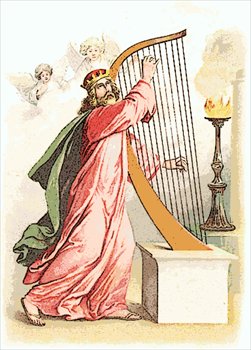
Nathan Denounces David’s Sin
William Brassey Hole

David listens and agrees with the condemnation, still blind that the story is about him! Nathan then unleashes the zinger, “You are the man!


But here is the key point of the passage. When David realizes his culpability, he does not retreat into his shame (as, for example, Judas does many years hence.) David acknowledges his fault and asks to be restored to relationship with the God Who has loved him so much.

David focuses on God not himself.  He does not wallow in self-recrimination or excuses. David looks to God’s Mercy not into the mirror of self-justification:

Then David said to Nathan, “I have sinned against the LORD.” Nathan answered David: “For his part, the LORD has removed your sin. You shall not die…

2 Samuel 12:13
It all transpires in this one verse. That simple, definitive change wrought by divine forgiveness constitutes the structure of Psalm 51 as well as the 2 Samuel narrative. It is the same structure in Christian liturgy as well. In psalm, narrative, and liturgy, it is a move from failure to restoration, a move from confession to assurance, even if the assurance is only implied in Psalm 51. The exchange is between human failure and divine assurance, made possible by human honesty and a divine readiness to begin again in mercy, steadfast love, and compassion.
Walter Brueggemann - From Whom No Secrets Are Hid
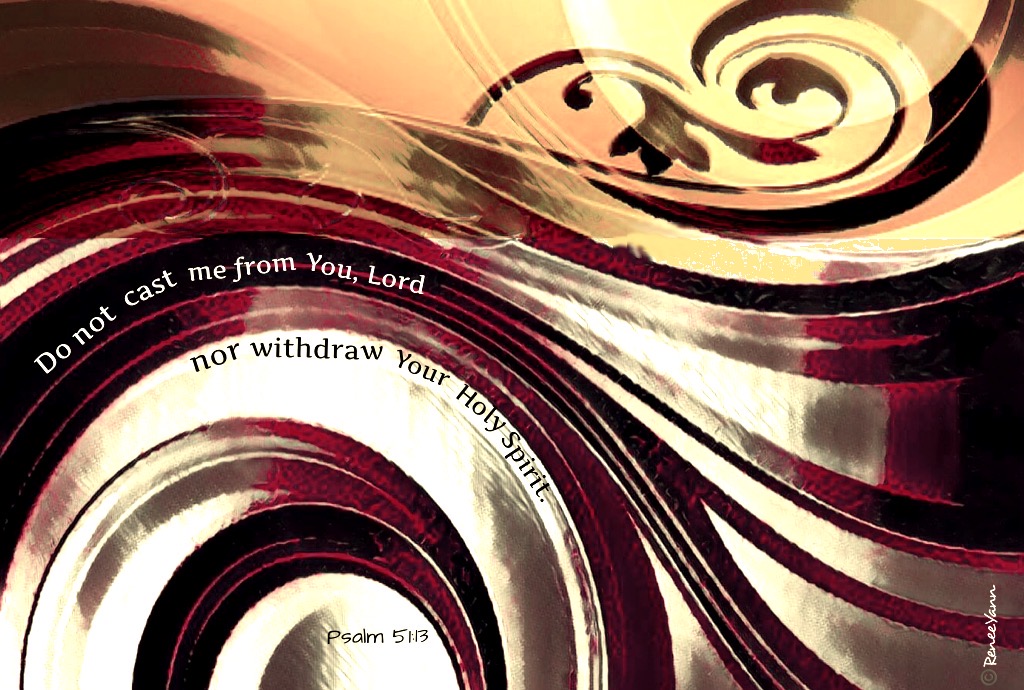
For prayer today, a deep reflection on Psalm 51 may bring us light and healing, for our own spirits and for the spirit of the world we share.


Poetry: Psalm 51 – A New Heart – Christine Robinson

Have mercy on me, O God,
   For I’ve messed up again
Sinned against You in thought, word and deed,
   and in what I have left undone.
Been--all too human.

Can you make me a new heart, O God?
   and a right spirit? Can you break my willful plundering
   of all that is Yours? 
If I got it together again, others would follow—
I could teach, guide, help—and I would!

O Lord, open my lips,
  that I may praise you.
I know you don’t want ritual sacrifice
   were I to give a burnt offering you’d be exasperated.
What you want is that new heart and right spirit. 
   For this, I pray.

Music: Miserere Mei (Have Mercy on Me, O God) – Gregorio Allegri 

David Falls Down

January 28, 2022
Memorial of Saint Thomas Aquinas, Priest and Doctor of the Church

Today, in God’s Lavish Mercy, we clearly are being taught. The first lesson comes from a gripping iconic story in Samuel – the treacherous murder of Uriah; the second from the Markan Parables – the miraculous mustard seed.

In our first reading, the noble, kingly David takes a mighty fall. He has tripped over his own power and descended into a chasm of indifference, lust, manipulation, deceit, and murder. Walter Brueggemann captures the immensity of the story here:

II Samuel 11:1–27 
We are now at the pivotal turning point in the narrative plot of the books of Samuel. We are also invited into the presence of delicate, subtle art. We are at the threshold of deep, aching psychology, and at the same time we are about to witness a most ruthless political performance. In this narrative we are in the presence of greatness. For David and for Israel, we are at a moment of no return. Innocence is never to be retrieved. From now on the life of David is marked, and all Israel must live with that mark.

David handing over a letter to Uriah, 1619 – Pieter Lastman

Unfortunately, David’s moral depravity is reshaped and retold in thousands of other biographies throughout history as “strongmen” (and women) grasp power. Too bad David, and those like him, could not have benefitted from some later-age wisdom such as these two quotables:

Power tends to corrupt, and absolute power corrupts absolutely.
~ John Dalberg-Acton, letter to Bishop Mandela Creighton, (April 1887)


One uncontrolled character flaw can ruin your greatest accomplishment.
~ Wayde Goodall, Why Great Men Fall: 15 Winning Strategies to Rise Above It All (2005)


While David’s sinfulness had corrupted the concept of “kingdom”, in Mark, Jesus teaches us a divinely refreshed understanding of the term.

When asked what the kingdom of heaven is like, Jesus describes generous, inclusive reality sprung from humble, hopeful investment:

To what shall we compare the Kingdom of God,
or what parable can we use for it?
It is like a mustard seed that, when it is sown in the ground,
is the smallest of all the seeds on the earth.
But once it is sown, it springs up and becomes the largest of plants
and puts forth large branches,
so that the birds of the sky can dwell in its shade.

Mark 4: 30-32

Perhaps our prayer today is best reflected in the Alleluia Verse – a plea to retain, in our choices, the deep innocence of faith:

Blessed are you, Creator, Lord of heaven and earth;
you have revealed to little ones the mysteries of the Kingdom.

Matthew 11:25

Praying with that this morning, I offer you the innocent drawing of my 6 year-old grand-nephew Robert, an interpretation of what it means to fall down.

Something Falling Down, as titled by the Artist

Poetry: When the Great Trees Fall – Maya Angelou

When great trees fall,
rocks on distant hills shudder,
lions hunker down
in tall grasses,
and even elephants
lumber after safety.
When great trees fall
in forests,
small things recoil into silence,
their senses
eroded beyond fear.
When great souls die,
the air around us becomes
light, rare, sterile.
We breathe, briefly.
Our eyes, briefly,
see with
a hurtful clarity.
Our memory, suddenly sharpened,
examines,
gnaws on kind words
unsaid,
promised walks
never taken.
Great souls die and
our reality, bound to
them, takes leave of us.
Our souls,
dependent upon their
nurture,
now shrink, wizened.
Our minds, formed
and informed by their
radiance,
fall away.
We are not so much maddened
as reduced to the unutterable ignorance
of dark, cold
caves.
And when great souls die,
after a period peace blooms,
slowly and always
irregularly. Spaces fill
with a kind of
soothing electric vibration.
Our senses, restored, never
to be the same, whisper to us.
They existed. They existed.
We can be. Be and be
better. For they existed.

Music: All the King’s Horses – Aretha Franklin
Although the song is not biblical, the lyrics carry similar emotions to the ones we find in the reading from Samuel.

Where Does God Live?

January 27, 2022
Thursday of the Third Week in Ordinary Time

Today, in God’s Lavish Mercy, we might take this question to our prayer: where does God dwell for me?

In our reading from Samuel, David had received an oracle (divine message) through the prophet Nathan. (see 2 Samuel 7:1-17) The essence of the three-way conversation is this: David is putting on the trappings of his kingship, including some fancy housing. He decides that God deserves a great house too and that David is going to build it. God says something like, “Hold up, David! — I’m the Divine Architect and Builder.” David is forcefully reminded that everything he has depends on God. In today’s passage, David humbly acknowledges all this while begging God to stay true to the promise of Israel’s prosperity:

Who am I, Lord GOD,
and who are the members of my house,
that you have brought me to this point?
Yet even this you see as too little, Lord GOD;
you have also spoken of the house of your servant
for a long time to come:
this too you have shown to man, Lord GOD

You have established for yourself your people Israel
as yours forever, and you, LORD, have become their God.
And now, LORD God, confirm for all time
the prophecy you have made
concerning your servant and his house,
and do as you have promised.

2 Samuel 7:18; 24-25

While these chapters tell us the great story of emerging kingship and messianic hope in the Judeo-Christian tradition, they also offer us some simpler thoughts for our prayer this morning.

Through our Baptism, we have been made temples of the Holy Spirit. We are made so by the grace and power of God so that we can reflect God’s Presence in our times. We are not all that different from David (except maybe we’re an uncrowned mini-version!)

It’s crucial to remember Who it is that built my “house” or “temple”.
I have not built a house for God.
God has built a house for me,
crafted from Baptismal Grace,
Confirmational Hope and
Eucharistic Love.

As God promised David, so God promises me, within the community of faith, to faithfully answer my prayer which might echo David’s:

Your servant now finds the courage to make this prayer to you.
And now, Lord GOD, you are God and your words are truth;
you have made this generous promise to your servant.
Do, then, bless the house of your servant
that it may be before you forever;
for you, Lord GOD, have promised,
and by your blessing the house of your servant
shall be blessed forever.”

2 Samuel 7:28-29

Poetry: Rabindranath Tagore

While God waits
for his temple
to be built of love,
men bring stones.

Music: Dwelling Place – John Foley

  1. I fall on my knees to the father of Jesus,
    The Lord who has shown us the glory of God.
  2. May he in his love give us strength for our living
    The strength of his spirit the glory of God.

Refrain
May Christ find a dwelling place of faith in our hearts.
May our lives be rooted in love, rooted in love.

  1. May grace and peace be yours in God our father
    and in his son (Refrain)
  2. I fall on my knees to the father of Jesus,
    The Lord who has shown us the glory of God (Refrain)

The Flame

January 26, 2022
Memorial of Saints Timothy and Titus, Bishops

Today, in God’s Lavish Mercy, we have the beautiful letter from Paul to Timothy, filled with tenderness, encouragement, hope and the sweet suggestion of loving memories.

Paul, an Apostle of Christ Jesus by the will of God
for the promise of life in Christ Jesus,
to Timothy, my dear child:
grace, mercy, and peace from God the Father
and Christ Jesus our Lord.

2 Tim 1:1

On life’s road, what an indescribable blessing to have even one companion who loves us the way Paul loved Timothy — to care for our whole life, our whole soul, and our whole “forever”.


Timothy and His Mother, Eunice – Henry Lejeune

In his letter, Paul reveals that Timothy has been immensely blessed with such love throughout his life. Timothy’s mother and grandmother, Eunice and Lois have already – for many years – tendered Timothy in the faith.

I think gratefully of my own mother today, on the 34th anniversary of her death. How indescribably blessed I have been by her love and faith!


In this heartfelt epistle, Paul notes that he prays for Timothy daily. Perhaps as you read his words you may, like me, think of those who have nurtured and cared for you in a way similar to Paul’s love for Timothy; to Eunice’s and Lois’s love for him.

Do we pray for those who have blessed us and loved us in our lives? Do we tell them so, if they are living? Do we thank and remember them if they have gone home to God?


Paul closes this part of his letter with such a powerful charge to Timothy:

For this reason,
I remind you to stir into flame
the gift of God that you have
through the laying on of my hands.

In other words, it is not enough just to be grateful for such gifts. We must use them to light and warm a next generation of believers and faith-filled lovers.

Many people have rested the hands
of blessing on our spirits, our hearts.
May we be filled with generous gratitude
today and everyday.


For those who have done otherwise, may we forgive them and, as best we can, release them to God’s Mercy. Perhaps they, by the grace of God, have left us with another kind of “gift” — as Mary Oliver has written:

Someone I loved once gave me
a box full of darkness.
It took me years to understand
that this, too, was a gift.

Poetry: God’s Grandeur – Gerard Manley Hopkins

The world is charged with the grandeur of God.
    It will flame out, like shining from shook foil;
    It gathers to a greatness, like the ooze of oil
Crushed. Why do men then now not reck his rod?
Generations have trod, have trod, have trod;
    And all is seared with trade; bleared, smeared with toil;
    And wears man's smudge and shares man's smell: the soil
Is bare now, nor can foot feel, being shod.

And for all this, nature is never spent;
    There lives the dearest freshness deep down things;
And though the last lights off the black West went
    Oh, morning, at the brown brink eastward, springs —
Because the Holy Ghost over the bent
    World broods with warm breast and with ah! bright wings.


Music: for your remembering prayer: James Last – Coulin

Paul’s Conversion

January 25, 2022
Feast of the Conversion of Saint Paul, Apostle

Today, in God’s Lavish Mercy, we read about Paul’s “enlightening” ride on the road to Damascus. I have blogged about the feast several times, and you can access one of those blogs if you wish by searching on the right-hand side of the webpage.

Caravaggio – The Conversion of St. Paul

Before my own prayer today, I read a masterful poem by John Keble and listened to beautiful music by Felix Mendelssohn. I’d like to share them with you for today’s reflection.


Poetry: The Conversion of St. Paul – John Keble, an English churchman and poet, one of the leaders of the Oxford Movement. Keble College, Oxford, was named after him.

And he fell to the earth, and heard a voice saying unto him,
Saul, Saul, why persecutest thou Me? 
And he said, Who art Thou, Lord? 
And the Lord said, I am Jesus whom thou persecutest. 
Acts ix. 4, 5. (KJV)

The mid-day sun, with fiercest glare,
Broods o’er the hazy twinkling air:   
Along the level sand
The palm-tree’s shade unwavering lies,
Just as thy towers, Damascus, rise   
To greet you wearied band.

The leader of that martial crew
Seems bent some mighty deed to do,   
So steadily he speeds,
With lips firm closed and fixèd eye,
Like warrior when the fight is nigh,   
Nor talk nor landscape heeds.

What sudden blaze is round him poured,
As though all Heaven’s refulgent hoard  
 In one rich glory shone?
One moment—and to earth he falls:
What voice his inmost heart appalls?—   
Voice heard by him alone.

For to the rest both words and form
Seem lost in lightning and in storm,   
While Saul, in wakeful trance,
Sees deep within that dazzling field
His persecuted Lord revealed,   
With keen yet pitying glance:

And hears time meek upbraiding call
As gently on his spirit fall,   
As if th’ Almighty Son
Were prisoner yet in this dark earth,
Nor had proclaimed His royal birth,   
Nor His great power begun.

“Ah! wherefore persecut’st thou Me?
”He heard and saw, and sought to free   
His strained eyes from the sight:
But Heaven’s high magic bound it there,
Still gazing, though untaught to bear   
Th’ insufferable light.

“Who art Thou, Lord?” he falters forth:—
So shall Sin ask of heaven and earth   
At the last awful day.
“When did we see Thee suffering nigh,
And passed Thee with unheeding eye?   
Great God of judgment, say!”

Ah! little dream our listless eyes
What glorious presence they despise,   
While, in our noon of life,
To power or fame we rudely press.—
Christ is at hand, to scorn or bless,   
Christ suffers in our strife.

And though heaven’s gate long since have closed,
And our dear Lord in bliss reposed,   
High above mortal ken,
To every ear in every land
(Thought meek ears only understand)   
He speaks as he did then.

“Ah! wherefore persecute ye Me?’
Tis hard, ye so in love should be   
With your own endless woe.
Know, though at God’s right hand I live,
I feel each wound ye reckless give   
To the least saint below.

“I in your care My brethren left,
Not willing ye should be bereft   
Of waiting on your Lord.
The meanest offering ye can make—
A drop of water—for love’s sake,   
In Heaven, be sure, is stored.”

O by those gentle tones and dear,
When thou hast stayed our wild career,   
Thou only hope of souls,
Ne’er let us cast one look behind,
But in the thought of Jesus find   
What every thought controls.
As to Thy last Apostle’s heart
Thy lightning glance did then impart  
Zeal’s never-dying fire,
So teach us on Thy shrine to lay
Our hearts, and let them day by day  
Intenser blaze and higher.
And as each mild and winning note
(Like pulses that round harp-strings float   
When the full strain is o’er)
Left lingering on his inward ear
Music, that taught, as death drew near,   
Love’s lesson more and more:

So, as we walk our earthly round,
Still may the echo of that sound   
Be in our memory stored
“Christians! behold your happy state:
Christ is in these, who round you wait;   
Make much of your dear Lord!”

Music: Paulus – Felix Mendelssohn – the Overture from the Oratorio

David, the King

January 24, 2022
Monday of the Third Week in Ordinary Time
Memorial of Saint Francis de Sales, Bishop and Doctor of the Church

Today, in God’s Lavish Mercy, our readings place us at watershed moments in the lives of David and Jesus.

All the tribes of Israel came to David in Hebron and said:
“Here we are, your bone and your flesh.
In days past, when Saul was our king, 
it was you who led the children of Israel out and brought them back.
And the LORD said to you, ‘You shall shepherd my people Israel 
and shall be commander of Israel.’”
When all the elders of Israel came to David in Hebron, 
King David made an agreement with them there before the LORD, 
and they anointed him king of Israel.

2 Samuel 5:1-4

In 2 Samuel 5, David fully assumes the kingship through the approbation of the community. The scene marks the culmination of his rise to power and “the beginning of the rest of his life”.

Through our readings in Samuel until now, we have ascended with David to the pinnacle of his life. We are about to begin weeks of moving down “the other side of the mountain”.


Scholars generally see the David narrative in two primary units, the Rise of David (I Sam. 16:1—II Sam. 5:10) and the Succession Narrative (II Sam. 9:1—20:26; I Kings 1:1—2:46). Chapters 5:11—8:18, fall between two larger units. Whereas the first presents David in his ascendancy, the second presents David in his demise and expresses pathos and ambiguity. Our chapters thus come after the raw vitality of the rise of David and before the terrible pathos of the succession narrative. They show the painful process whereby this beloved chieftain is transformed into a hardened monarch, who now has more power than popular affection.

Walter Brueggemann, First and Second Samuel

In our Gospel, Jesus also comes to a sort of “continental divide”. But rather than community approbation, Jesus encounters the condemnation of the scribes who have come from Jerusalem to assess him.

The scribes who had come from Jerusalem said of Jesus, 
“He is possessed by Beelzebul,” and
“By the prince of demons he drives out demons.”

Mark 3:22

From this moment in his life, Jesus too launches into his “kingship”, one that looks very different from David’s. The ensuing chapters of Samuel will reveal how David struggles and succumbs to the temptations of power and domination. The Gospels, on the other hand, describe Jesus’s “kingdom” as one of humility, mercy, and love for those who are poor and suffering.

Only through faith can we understand the inverse power of God present in the Life, Death and Resurrection of Jesus, and in our own lives. Jesus, the “new David”, is anointed in the Spirit to reveal and incorporate us into the kingdom of God.


Prose: from Immanuel Jakobovits who was the Chief Rabbi of the United Hebrew Congregations of the Commonwealth from 1967 to 1991.

To those without faith
there are no answers.
To those with faith, 
there are no questions.

Music: King David, music by Herbert Howells, sung by Sarah Connolly from a poem by Walter de la Mare

King David – Walter de la Mare

King David was a sorrowful man:
    No cause for his sorrow had he;
    And he called for the music of a hundred harps,
    To ease his melancholy.

    They played till they all fell silent:
    Played-and play sweet did they;
    But the sorrow that haunted the heart of King David
    They could not charm away.

    He rose; and in his garden
    Walked by the moon alone,
    A nightingale hidden in a cypress-tree
    Jargoned on and on.

    King David lifted his sad eyes
    Into the dark-boughed tree-
    ''Tell me, thou little bird that singest,
    Who taught my grief to thee?'

    But the bird in no wise heeded
    And the king in the cool of the moon
    Hearkened to the nightingale's sorrowfulness,
    Till all his own was gone.

Unfold the Word

January 23, 2022
Third Sunday in Ordinary Time

Today, in God’s Lavish Mercy, our readings focus on Sacred Scripture as the revealed Word of God.

Ezra, from our first passage, lived almost 500 years before Christ during the Babylonian captivity, a time when much of the population of Judea was deported to what is modern day Iraq. When the Persian King Cyrus the Great conquered Babylon, the Jews were permitted to return to Judea.

Ezra Reads the Law to the People – Gustave Dore

During the sixty-year enslavement, many Jews lost touch with their culture, language and religion. Our reading describes Ezra’s efforts to restore the Jewish character of the community by reintroducing them to the Torah. He has to read to them, translating the Hebrew for those who no longer speak the language.

In a gesture foretelling the liberating ministry of Jesus, Ezra unrolls the scroll – symbolic of bringing to light that which has been hidden or buried.

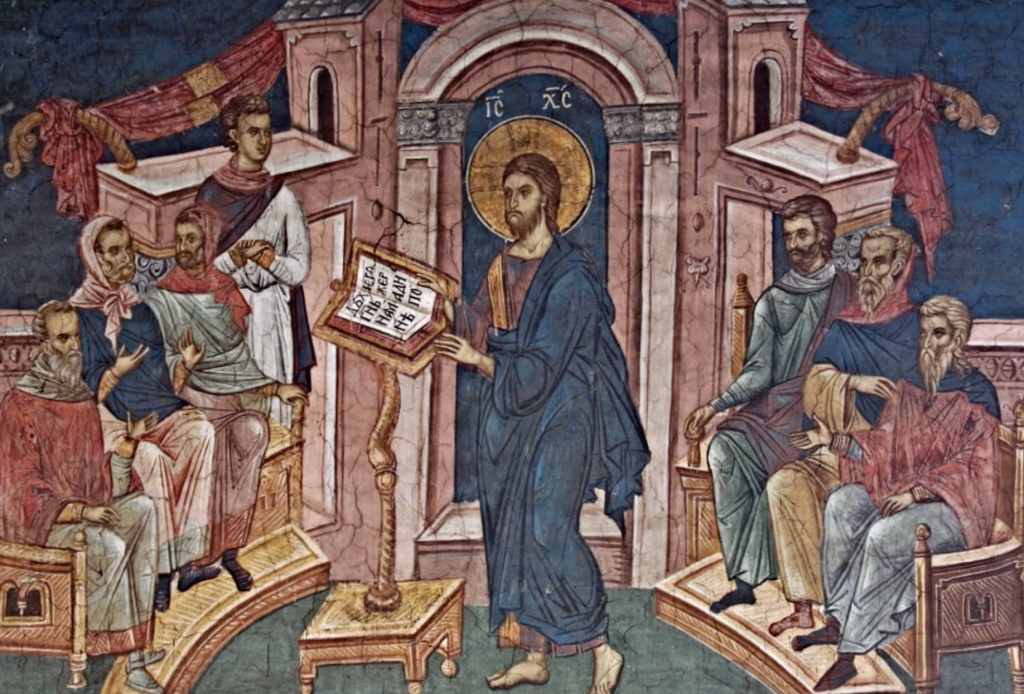
Jesus in the Synagogue at Nazareth – Anonymous

In our Gospel, Jesus too unrolls the scroll. In doing so, Jesus reveals the heart of faith which had been buried within the Law. Jesus preaches in a new “language” – the language of God’s all-inclusive mercy, forgiveness, and love.


For us who believe, the holy scriptures are a Living Word which, through thoughtful prayer, will continually reveal God’s heart to us. It is worth our time and attention to become friends with these sacred messages.

Many of you, dear readers, will be familiar with the ancient prayer practice of “lectio divina”. In her book “Too Deep for Words”, Sister Thelma Hall describes the practice:

… a wholistic way of prayer which disposes, opens, and “in-forms” us for the gift of contemplation God waits to give, by leading us to a place with him at our deepest center … It begins this movement by introducing us to the power of the Word of God in scripture to speak to the most intimate depths of our hearts …

Sister Thelma Hall’s book, a classic, is available on Amazon for those who might enjoy exploring Lectio Divina. I highly recommend it. My copy, nearly 30 years old, is beginning to show its age, but then again, so am I!

Poetry: The Word Of God – George MacDonald

Where the bud has never blown
Who for scent is debtor?
Where the spirit rests unknown
Fatal is the letter.
In thee, Jesus, Godhead-stored,
All things we inherit,
For thou art the very Word
And the very Spirit!

Music: Word of God Speak ~ Mercy Me

David’s Keening

January 22, 2022

Today, in God’s Lavish Mercy, our readings center on the themes of grief, honor, and mercy.

In the passage from 2 Samuel, Saul has been killed in battle. The news is brought to David by a scheming Amalekite who (later verses reveal) hopes to profit from his enterprise. He has stripped Saul’s dead body of its kingly insignia, obsequiously depositing it at David’s feet. The messenger expects David’s vengeful rejoicing and a hefty reward.

Instead David, with reverence and honor appropriate to a future king, launches a deep public mourning for Saul and Jonathan. It is a bereavement necessary to both cleanse and heal the community’s heart from all the strife leading up to it.

David seized his garments and rent them, 
and all the men who were with him did likewise.
They mourned and wept and fasted until evening 
for Saul and his son Jonathan, 
and for the soldiers of the LORD of the clans of Israel, 
because they had fallen by the sword.

2 Samuel 1:11-12

David’s lament is profound; it is”splancha”, sprung from his innards, like the anguish Jesus felt for the suffering persons he encountered, as described in our Gospel.

A callous or indifferent heart cannot comprehend such pathos. Seeing it in Jesus, even his relatives thought him insane!

Jesus came with his disciples into the house.
Again the crowd gathered,
making it impossible for them even to eat.
When his relatives heard of this they set out to seize him, 
for they said, “He is out of his mind.” 

Mark 3:20-21

Our God is a God of boundless love
and impractical mercy.
David models a bit of that godliness.
Jesus is its complete Incarnation.

Poem:  David and Jonathan by Abraham Crowley, an English poet born in the City of London in 1618. He was one of the leading English poets of the 17th century.

Still to one end they both so justly drew,
As courteous Doves together yok'd would do.
No weight of Birth did on one side prevaile,
Two Twins less even lie in Natures Scale,
They mingled Fates, and both in each did share,
They both were Servants, they both Princes were.
If any Joy to one of them was sent;
It was most his, to whom it least was meant,
And fortunes malice betwixt both was crost,
For striking one, it wounded th'other most.
Never did Marriage such true Union find,
Or mens desires with so glad violence bind;
For there is still some tincture left of Sin,
And still the Sex will needs be stealing in.
Those joys are full of dross, and thicker farre
These, without matter, clear and liquid are.
Such sacred Love does he'avens bright Spirits fill,
Where Love is but to Understand and Will,
With swift and unseen Motions; such as We
Somewhat express in heightned Charitie.
O ye blest One! whose Love on earth became
So pure that still in Heav'en 'tis but the same
There now ye sit, and with mixt souls embrace,
Gazing upon great Loves mysterious Face,
And pity this base world where Friendship's made
A bait for sin, or else at best a Trade.

Music: Lascia Ch’io Pianga (Let Me Weep)- Georg Frideric Handel – a single piece of beautiful music today in two version, an aria and an instrumental interpretation.

Julia Lezhneva – soprano


Stjepan Hauser – cellist

Lascia ch’io pianga
la cruda sorte,
e che sospiri
la libertà.
Il duolo infranga
queste ritorte
de’ miei martiri
sol per pietà.

Let me weep
cruel fate,
and sigh for
liberty.

May sorrow break
these chains
Of my sufferings,
for pity’s sake.

Sunset for Saul

January 21, 2022
Memorial of Saint Agnes, Virgin and Martyr
Friday of the Second Week in Ordinary Time

Today, in God’s Lavish Mercy, our readings are full of drama and meaning enveloped in two of the greatest speeches of the Hebrew Scriptures – one from David, the other from Saul. The use of speeches to unfold the narrative is characteristic of the high points of Scripture. And these are two winners.

In the passage from Samuel, David spares Saul’s life even though Saul is in murderous pursuit of him. The result is the final dissolution of Saul’s kingship. It is a scene that could be right out of MGM! (Here is a video for kids featuring the moment. But I thought it was pretty cool. Maybe you will too.)

Is David noble or naïve? Is he magnanimous or stupid? Is he sincere or clever? Various scripture scholars interpret these passages in a host of ways. But as I pray this morning, I ask myself what it is that God might be saying to me through this passage.

Two things rise up:

  1. Above all else, David is motivated by a deep respect for God’s Will and Presence in his life. He doesn’t force God’s Will by seizing the kingship. David waits and listens for God’s intention.

David said to his men,
“The LORD forbid that I should do such a thing to my master,
the LORD’s anointed, as to lay a hand on him,
for he is the LORD’s anointed.”

    2.  David engages Saul directly and respectfully, perhaps in the hope of reaching a resolution of their issues. This honesty appears to motivate Saul to see himself and his situation clearly. It is a consummate act of reconciliation.

When David finished saying these things to Saul, Saul answered,
“Is that your voice, my son David?”
And Saul wept aloud.


Reverence and honesty rooted in
sincere love and respect for one another!
What a world we would live in
if each of us practiced these things unfailingly!

In our Gospel, Jesus calls his disciples to live in the world in just such a way – to bring healing and wholeness in the Name of Christ, for the sake of Love.

Our Alleluia Verse today captures the essence of Christ’s call to them —- and to us:

God was reconciling the world to himself in Christ,
and entrusting to us the message of that reconciliation.


Poetry: Saul And David by Anthony Hecht, 1923 – 2004, was an American poet. His work combined a deep interest in form with a passionate desire to confront the horrors of 20th century history, with the Second World War, in which he fought, and the Holocaust being recurrent themes in his work.

It was a villainous spirit, snub-nosed, foul
Of breath, thick-taloned and malevolent,
That squatted within him wheresoever he went
…….And possessed the soul of Saul.

There was no peace on pillow or on throne.
In dreams the toothless, dwarfed, and squinny-eyed
Started a joyful rumor that he had died
…….Unfriended and alone.

The doctors were confounded. In his distress, he
Put aside arrogant ways and condescended
To seek among the flocks where they were tended
…….By the youngest son of Jesse,

A shepherd boy, but goodly to look upon,
Unnoticed but God-favored, sturdy of limb
As Michelangelo later imagined him,
…….Comely even in his frown.

Shall a mere shepherd provide the cure of kings?
Heaven itself delights in ironies such
As this, in which a boy’s fingers would touch
…….Pythagorean strings

And by a modal artistry assemble
The very Sons of Morning, the ranked and choired
Heavens in sweet laudation of the Lord,
…….And make Saul cease to tremble.

Music: To Fill the World with Love sung by Richard Harris
(Lyrics below, but you will no doubt recall them from the fabulous film “Goodbye Mr. Chips”.)

In the morning of my life I shall look to the sunrise.
At a moment in my life when the world is new.
And the blessing I shall ask is that God will grant me,
To be brave and strong and true,
And to fill the world with love my whole life through.

(Chorus)
And to fill the world with love
And to fill the world with love my whole life through

In the noontime of my life I shall look to the sunshine,
At a moment in my life when the sky is blue.
And the blessing I shall ask shall remain unchanging.
To be brave and strong and true,
And to fill the world with love my whole life through

(Chorus)

In the evening of my life I shall look to the sunset,
At a moment in my life when the night is due.
And the question I shall ask only God can answer.
Was I brave and strong and true?
Did I fill the world with love my whole life through?

Jonathan, Loyal Friend

January 20, 2022
Thursday of the Second Week in Ordinary Time

Today, in God’s Lavish Mercy, we read about the elements of a good and Godly friendship:

Trust
Loyalty
Courage

In our first reading, Saul, insecure because of David’s success where Saul had failed, becomes more obsessed with nullifying David’s popularity:

Saul discussed his intention of killing David 
with his son Jonathan and with all his servants.
But Saul’s son Jonathan, who was very fond of David, told him:
“My father Saul is trying to kill you.
Therefore, please be on your guard tomorrow morning; 
get out of sight and remain in hiding.
I, however, will go out and stand beside my father 
in the countryside where you are, and will speak to him about you.
If I learn anything, I will let you know.”


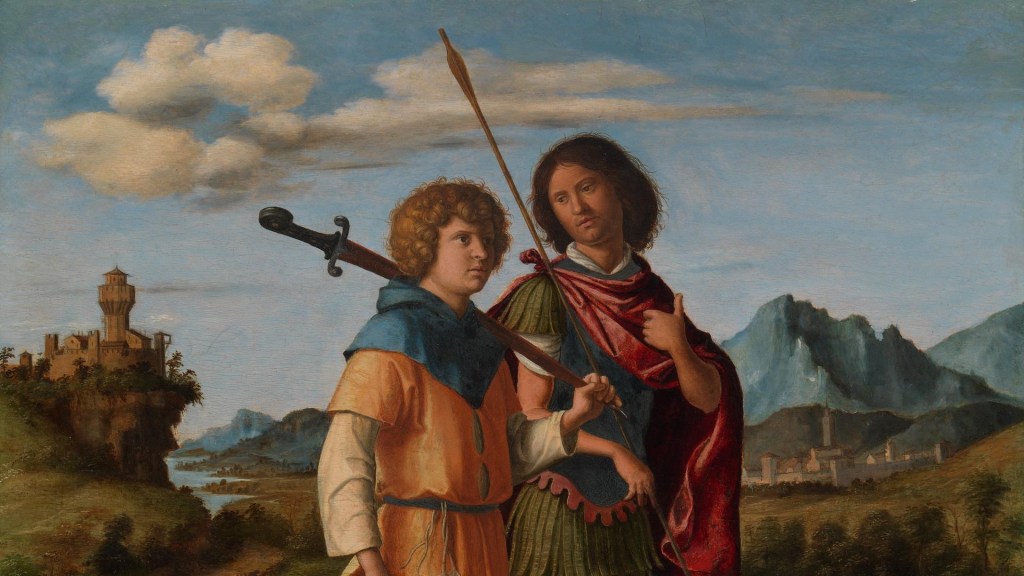
David and Jonathan – Giovanni Battista Cima de Conegliano

Jonathan had made a covenant of friendship with David right after David defeated Goliath. That friendship grew and Jonathan came to accept David as the divine choice for king.

At great risk to himself, Jonathan becomes David’s powerful advocate in the face of Saul. Jonathan should have been in solidarity with his father, if not out of duty, then out of self-interest (for the sake of his own chance at the throne). The narrative, however, presents Jonathan acting against both his duty and his self-interest… Jonathan could do that only if he trusted in how Yahweh would build his kingdom and if he aligned himself with it.

Walter Brueggemann: I and II Samuel

I read a line that captures all of this so perfectly:

Jonathan loved David
and that love surely
compelled him to act,
but he found freedom
and strength to act
by putting his trust in God.

Joy Lockwood, Senior Pastor, Lakewood Presbyterian Church,
Jacksonville, FL

While the story of Jonathan and David has much to teach us about the nature of devoted friendship, it – together with our psalm and Gospel – has more to say about our friendship with God.

I am bound, O God, by vows to you;
            your thank offerings I will fulfill.
For you have rescued me from death,
            my feet, too, from stumbling;
            that I may walk before God in the light of the living.


Our trust grows as we reflect on God’s steadfast loyalty to us, rescuing us from all the big and small stumblings of our life. Recognizing that generous Omnipresence, we deepen in courage to live honest, holy, just and merciful lives.


In our Gospel, we see Jesus being that kind of devoted and divine friend of those unbefriended by the merciless world. It is obviously a stressful ministry for which Jesus depends on communion with his Father and the Holy Spirit to sustain him. 


Let’s imagine that Triune Trust, Loyalty and Courage which we call the Holy Trinity. We can invite that Sacred Energy into our own hearts in a mutual friendship. This is the gift offered to us in our Baptism.


Poetry: You, neighbor God, if sometimes in the night – Rainer Maria Rilke

You, neighbor God, if sometimes in the night
I rouse you with loud knocking, I do so
only because I seldom hear you breathe
and know: you are alone.
And should you need a drink, no one is there
to reach it to you, groping in the dark.
Always I hearken. Give but a small sign.
I am quite near.

Between us there is but a narrow wall,
and by sheer chance; for it would take
merely a call from your lips or from mine
to break it down,
and that without a sound.

The wall is builded of your images.

They stand before you hiding you like names.
And when the light within me blazes high
that in my inmost soul I know you by,
the radiance is squandered on their frames.

And then my senses, which too soon grow lame,
exiled from you, must go their homeless ways.


Music: O Lux Beata Trinitas – Slovenian Philharmonic Choir

O lux beata Trinitas,
Et principalis unitas,
Iam sol recedat igneus,
Infunde lumen cordibus.

Te mane laudum carmine,
Te deprecemur vespere:
Te nostra supplex gloria
Per cuncta laudet sæcula.

Deo Patri sit gloria,
Ejusque soli Filio,
Cum Spiritu Paraclito,
Et nunc et in perpetuum.

O Trinity of blessed light,
O Unity of princely might,
The fiery sun now goes his way;
Shed Thou within our hearts Thy ray.

To Thee our morning song of praise,
To Thee our evening prayer we raise;
Thy glory suppliant we adore
Forever and forevermore.

All laud to God the Father be;
All praise, Eternal Son, to Thee;
All glory, as is ever meet,
To God the Holy Paraclete.