Today, in God’s Lavish Mercy, we pray with Psalm 145 in which the psalmist, filled with gratitude and joy, makes a prodigious promise:
Every day will I bless you, and I will praise your name forever and ever. Everyday! Forever and ever!
Psalm 145:2
Such a promise requires all one’s attention, discipline and practice. We must learn to see all experience in God’s Light so that everything becomes a reason for praise.
Paul, guiding the Colossians to live that kind of life, tells them:
As you received Christ Jesus the Lord, walk in him, rooted in him and built upon him and established in the faith as you were taught, abounding in thanksgiving.
Colossians 2:6-7
Powerful words: ~ walk in Christ ~ be rooted and built in Christ ~ be established in faith ~ be abundant in thanksgiving
God is gracious and merciful toward us as we pray for the psalmist’s prayer to be fulfilled in us and in our lives:
Let all your works give you thanks, O LORD, and let your faithful ones bless you. Let them discourse of the glory of your Kingdom and speak of your might.
Psalm 145:10-11
Poetry: from the Book of Hours – Rainer Maria Rilke
You are the future, the great sunrise red
above the broad plains of eternity.
You are the cock-crow when time’s night has fled,
You are the dew, the matins, and the maid,
the stranger and the mother, you are death.

You are the changeful shape that out of Fate
rears up in everlasting solitude,
the unlamented and the unacclaimed,
beyond describing as some savage wood.

You are the deep epitome of things
that keeps its being’s secret with locked lip,
and shows itself to others otherwise:
to the ship, a haven — to the land, a ship.
September has barely poked its nose through the door, but already we see signs of Autumn. A slight gold shimmers on the trees. Geese gather in noisy expectation. Early morning sheds its night veil in slower layers of magenta and blue. There have even been a few sweet nights when we can open the windows wide and sleep in the crisp September air. All the signs are there — it is a new season – “The Season of Freshness”.
“Fresh” is a powerful word. Who can resist the crisply-aproned waiter suggesting, “Fresh ground pepper?” Who can ignore the aroma of fresh baked bread? Some of us even remember with appreciation the scent of linens fresh from our mother’s clothesline.
Let this beautiful season remind us that each day the Creator shakes out a fresh beginning for every one of us. With every radiant morning, the slate is clear with mercy. The opportunity to re-create the world awaits us. Our lives, our work, our relationships are the fresh bread of God’s hope for us. Within them, we are invited to reveal that powerful grace which runs just under the visibility of the ordinary. It whispers to us, “You are Beloved, and I want your life to be a fountain of joy.”
September is for fresh beginnings: a sparkling season, an unmarked semester, a turning of the garden, a clean page. It is nature’s way of saying forgiveness is possible, life is resilient, hope is eternal.
Imagine September as the white-aproned waiter inviting you to freshness. At the Creator’s table, the tablecloth is clean and the sacred menu is forgiveness, hope, mercy and renewed beginnings. Don’t miss this opportunity to assess what needs refreshment in your life. Feast on September’s graces! They can be life-changing!
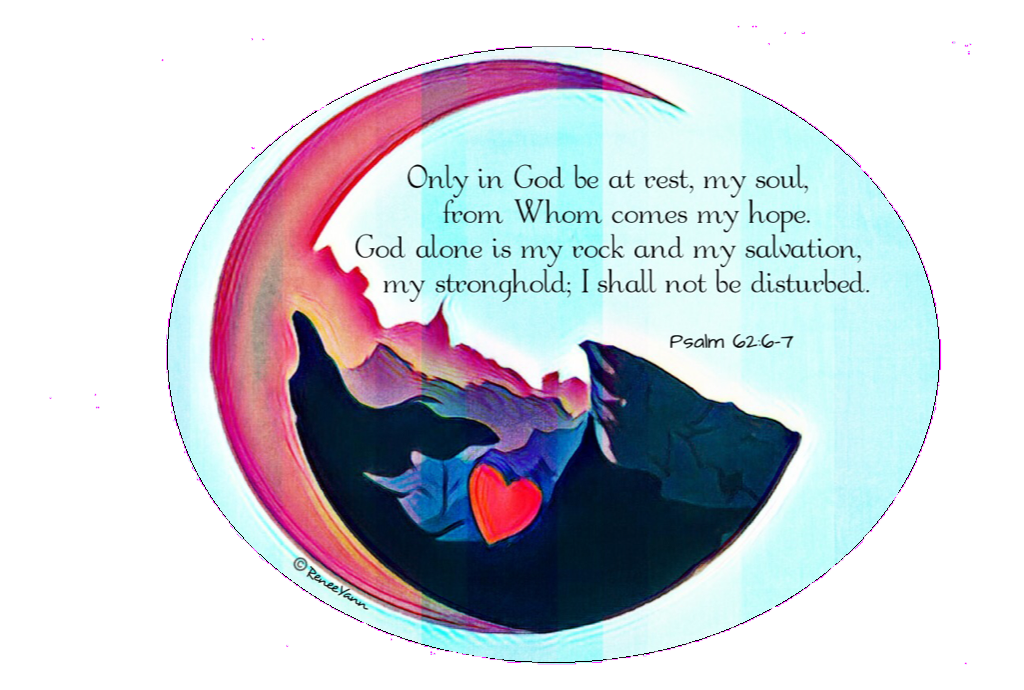
Today, in God’s Lavish Mercy, we pray with Psalm 62 and the heart of its prayer of confidence, verses 6-9.
Carroll Stuhlmueller, revered Old Testament scholar, places Psalm 62 among the Wisdom psalms – those which “seek the harmonious, stable order of life”. They do this by presenting a kind of curriculum for spiritual happiness.
That teaching is clear in Psalm 62: we find our soul’s fulfillment “only in God”.
Does that mean nothing else in our lives matter? That we should push all but God to the margins? No. The psalm encourages us to look deeply at all of life and to find God in every aspect.
Often, a spiritual director will ask this question of the directee:
“Where is God in this situation, in this moment?”
The question points us to the realization that we can’t compartmentalize God to our “prayer time”, or Sundays, or “religious experiences”.
God lives within us, and lives every moment of our lives with us. Until we align ourselves with God’s loving Presence, we will not find complete peace.
Trust in God at all times, O my people! Pour out your hearts before God; God is our refuge!
Psalm 62:9
Prose: from the Confessions of St. Augustine, Book 1, Chapter 1
Great are You, O Lord, and greatly to be praised;
great is Your power,
and of Your wisdom there is no end.
And we, being a part of Your creation,
desire to praise You….
You move us to delight in praising You;
for You have made us for Yourself,
and our hearts are restless until they rest in You.
Cor nostrum inquietum est donec requiescat in Te.
Lord, teach me to know and understand
which of these should be first:
to call on You, or to praise You;
and likewise to know You, or to call on You.
But who calls upon You without knowing You?
For the one that knows You not
may call upon You as other than You are.
Or perhaps we call on You
that we may know You.
But how shall they call on Him in whom they have not believed? Or how shall they believe without a preacher?
Romans 10:14
And those who seek the Lord shall praise the Lord. For those who seek shall find God,
Matthew 7:7
and those who find God shall praise God.
Let me seek You, Lord, in calling on You,
and call on You in believing in You;
for You have been preached unto us.
O Lord, my faith calls on You —
that faith which You have imparted to me,
which You have breathed into me
through the incarnation of Your Son,
through the ministry of Your preacher 1.
1 (Here Augustine is referring to St. Ambrose, his mentor)
Today, in God’s Lavish Mercy, we pray in the power of the Gospel:
Ephphatha! Be opened:
All minds to God’s omnipresence
All hearts to God’s infinite love
All spirits to God’s tender proposals
All eyes to God’s eternal vision
All ears to God’s cry in the poor
All mouths to speak God’s Word in justice
All plans to the rhythm of God’s freedom
All dreams to God’s dream for all.
Be opened – especially in me today. 🙏 Amen!
Poetry: Be Opened! – Malcolm Guite
Be opened. Oh if only we might be!
Speak to a heart that’s closed in on itself:
‘Be opened and the truth will set you free’,
Speak to a world imprisoned in its wealth:

'Be opened! Learn to learn from poverty’,
 Speak to a church that closes and excludes,
And makes rejection its own litany:
‘Be opened, opened to the multitudes

For whom I died but whom you have dismissed
 Be opened, opened, opened,’ how you sigh
And still we do not hear you. We have missed
Both cry and crisis, we make no reply.

Take us aside, for we are deaf and dumb
Spit on us Lord and touch each tongue-tied tongue.
Today, in God’s Lavish Mercy, we pray with Psalm 54, clearly described in its first two lines as a prayer of David when he was in deep trouble:
For the leader. On stringed instruments. A maskil of David, when the Ziphites came and said to Saul, “David is hiding among us.”
Psalm 54:1-2
You can watch the whole story here – (and it’s a good one):
Psalm 54 goes to the heart of this traumatic experience for David. It allows us to be part of his prayer for deliverance. It lays open to us the deep intimacy and trust of David’s relationship with God.
Throughout his prayer, David calls on God for protection. He does so in a tone like that of a child who, in fear and necessity, runs to a powerful parent.
David’s situation reminds me of my gang when we were kids in the old neighborhood. If Big Jimmy, the block bully, threatened any of us, we would invoke the strength of a bigger brother or uncle as protection. It always worked —- just by the power of our sheer belief that it would.
Saul Looking like Big Jimmy 🙂
David is besieged by Saul, so he makes recourse to his “bigger” protector, his God. David’s prayer is more than a request. It is an insistent plea, almost a demand:
save
defend
hear
listen
And like many prayers of desperation, it is offered with promises:
When I am delivered, I will offer you generous sacrifice and give thanks to your name, LORD, for it is good. Because it has rescued me from every trouble, and my eyes look down on my foes.
Psalm 54:9
So what does Psalm 54 teach me? That God will do what I “demand” if I pray hard enough? That if I promise God something, I will get what I want? No, not that.
What I find in this prayer is the encouragement to live always in honest and trusting relationship with God. When troubles come, we can call to God for help, and our practiced faith will allow us to discern God’s steady companionship – God’s Grace to find a deliverance for which we might not otherwise have had the courage.
God is present as my helper; the Lord sustains my life.
Psalm 54:6
Poetry: Keeping Watch – Hafiz
In the morning
When I began to wake,
It happened again—
That feeling
That you, Beloved,
Had stood over me all night
Keeping watch,
That feeling
That as soon as I began to stir
You put Your lips on my forehead
And lit a Holy Lamp
Inside my heart.
Today, in God’s Lavish Mercy, we pray with Psalm 100 which both invites and commands:
Come with joy into the Presence of the Lord.
Psalm 100:2
To know and honor this Presence is the sole pursuit of the Christian life.
Understanding is the reward of faith. Therefore, seek not to understand that you may believe, but believe that you may understand.
Augustine of Hippo
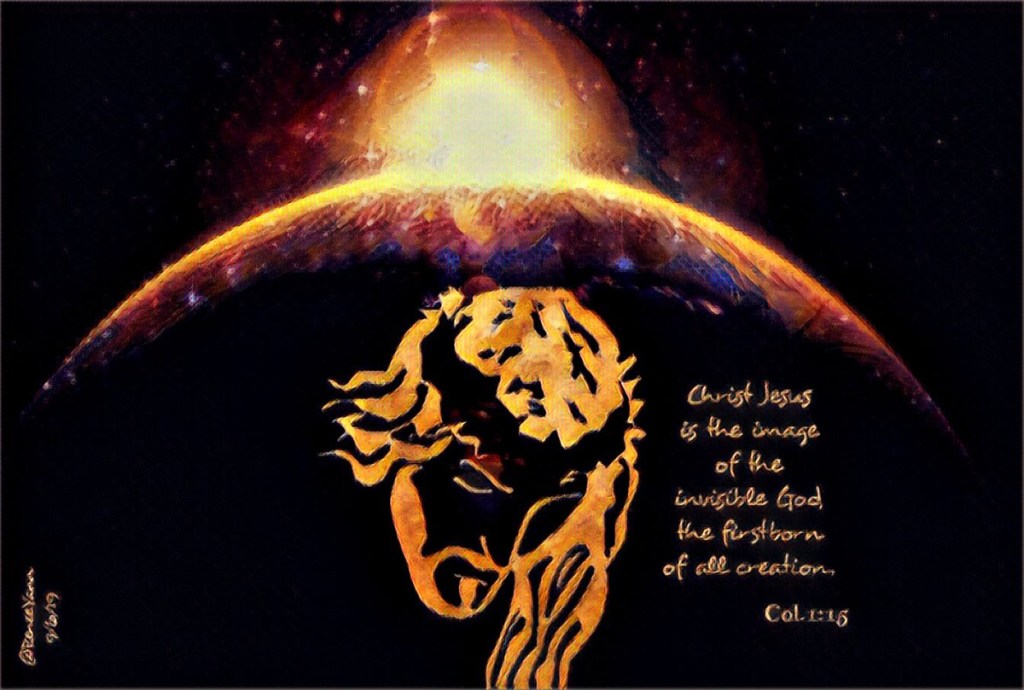
Our first reading from Colossians offers a beautiful hymn for our meditation as we pray to open ourselves to a deepening awareness of Jesus, present in our lives:
Christ Jesus is the image of the invisible God, the firstborn of all creation. For in him were created all things in heaven and on earth, the visible and the invisible, whether thrones or dominions or principalities or powers; all things were created through him and for him. He is before all things, and in him all things hold together. He is the head of the Body, the Church. He is the beginning, the firstborn from the dead, that in all things he himself might be preeminent. For in him all the fullness was pleased to dwell, and through him to reconcile all things for him, making peace by the Blood of his cross through him, whether those on earth or those in heaven.
Colossians 1:15-20
Prose: Jesus Prayer – John Henry Newman
Dear Jesus, Help me to spread Your fragrance everywhere I go. Flood my soul with Your spirit and life. Penetrate and possess my whole being so utterly, that my life may only be a radiance of Yours. Shine through me, and be so in me that every soul I come in contact with may feel Your presence in my soul. Let them look up and see no longer me but only Jesus! Stay with me and then I shall begin to shine as You shine, so to shine as to be a light to others; The light, O Jesus will be all from You; none of it will be mine; It will be you shining on others through me.
Today, in God’s Lavish Mercy, we pray with Psalm 98 which we reflected on just this past Saturday on the feast of St. Augustine. Here’s a refresher if you’d care to glance back.
Because they proclaim God’s faithfulness, today’s psalm verses ready us to receive the Gospel’s expansive injunction:
As we pass through the waters of life, we each meet our own “deeps”. Sometimes we do not recognize them as the sacred places where we are to meet God’s call.
Sometimes we see only their choppy surface, their tangled riptides, their frightening shadows.
Sometimes we miss the bounty held in the mystery of these moments. We fold our nets and try to sail away.
As he did for the weary disciples, Jesus
lovingly contradicts our fear,
releases our hope,
fills the flimsy net of our faith to bursting …
… if we will just trust his Word, and cast out with him over the waters of our lives.
Today, in God’s Lavish Mercy, we pray with Psalm 52, whose chosen verses today form an exquisite prayer – one that can be held like a diamond to the Light:
I, like a green olive tree in the house of God, Trust in the mercy of God forever and ever. I will thank you always for what you have done, and proclaim the goodness of your name before your faithful ones.
Psalm 52: 10-11
It is ironic that these tenderly beautiful verses close one of the most virulent curses of the Psalms! It’s better to let them stand alone for today’s prayer. Like that, they perfectly complement Paul’s gorgeous blessing poured over the Colossians in our first reading:
Grace to you and peace from God our Father. We always give thanks to God, the Father of our Lord Jesus Christ, when we pray for you, for we have heard of your faith in Christ Jesus and the love that you have for all the holy ones because of the hope reserved for you in heaven.
Colossians 1:2-5
As this first day of September breaks over us, it is a good day to give thanks within these scriptural blessings:
for courage given and hope sustained
for storms weathered and favors received
for the resilience of new promises
and the polished incandescence of the long-kept vow
for fields turned over toward a season of rest
for sweaters shaken out and ready to warm
for the smell of a sharpened pencil, the endless possibilities of a fresh notebook,
and a new box of crayons ( to follow in a later post. I mistakenly send a fragment earlier today. I hope it wasn’t a distraction to you.)
Poetry: First Day of School – by Howard Nemerov (February 29, 1920 – July 5, 1991), an American poet. He was twice Poet Laureate Consultant in Poetry to the Library of Congress, from 1963 to 1964 and again from 1988 to 1990. For The Collected Poems of Howard Nemerov (1977), he won the National Book Award for Poetry,Pulitzer Prize for Poetry,and Bollingen Prize.
I
My child and I hold hands on the way to school,
And when I leave him at the first-grade door
He cries a little but is brave; he does
Let go. My selfish tears remind me how
I cried before that door a life ago.
I may have had a hard time letting go.
Each fall the children must endure together
What every child also endures alone:
Learning the alphabet, the integers,
Three dozen bits and pieces of a stuff
So arbitrary, so peremptory,
That worlds invisible and visible
Bow down before it, as in Joseph’s dream
The sheaves bowed down and then the stars bowed down
Before the dreaming of a little boy.
That dream got him such hatred of his brothers
As cost the greater part of life to mend,
And yet great kindness came of it in the end.
II
A school is where they grind the grain of thought,
And grind the children who must mind the thought.
It may be those two grindings are but one,
As from the alphabet come Shakespeare’s Plays,
As from the integers comes Euler’s Law,
As from the whole, inseperably, the lives,
The shrunken lives that have not been set free
By law or by poetic phantasy.
But may they be. My child has disappeared
Behind the schoolroom door. And should I live
To see his coming forth, a life away,
I know my hope, but do not know its form
Nor hope to know it. May the fathers he finds
Among his teachers have a care of him
More than his father could. How that will look
I do not know, I do not need to know.
Even our tears belong to ritual.
But may great kindness come of it in the end.
Music: September Morn – instrumental version of Neil Diamond’s song. The words don’t exactly work for our prayer, but the melody does 🙂
Today, in God’s Lavish Mercy, we pray with Psalm 27 which pivots around two themes:
the first theme in verses 1-6: God’s infinite power and our convinced hope in God’s protection
One thing I ask of the LORD; this I seek: To dwell in the LORD’s house all the days of my life, To gaze on the LORD’s beauty, to visit his temple. For God will hide me in his shelter in time of trouble, He will conceal me in the cover of his tent; and set me high upon a rock.
Psalm 27: 4-5
the second theme in verses 7-14: a confession of faith and a call to perseverance
I believe that I shall see the bounty of the LORD in the land of the living. Wait for the LORD with courage; be stouthearted, and wait for the LORD.
Psalm 27: 13-14
The psalm follows so well on our reading from Thessalonians in which Paul calls upon that community to:
trust hope believe persevere
These practices are the linchpins of a vibrant faith. They hold us fast to God’s heart, allowing us to live in God’s house – and God in ours.
Our Gospel today shows us that it is certainly possible for dark spirits to take up residence in our hearts. Praying a prayer like Psalm 27 puts a watchman on our heart’s door, inviting the Holy One alone to live at our core.
Poetry: Covenant – Margaret Halaska, OSF
God
knocks at my door
seeking a home for his son.

Rent is cheap, I say.

I don’t want to rent. I want to buy, says God.

I’m not sure I want to sell,
but you might come in and look around.

I think I will, says God.

I might let you have a room or two.

I like it, says God. I’ll take the two. You might decide to give me more some day.
I can wait, says God.

I’d like to give you more,
but it’s a bit difficult. I need some space for me.

I know, says God, but I’ll wait. I like what I see.

Hm, maybe I can let you have another room.
I really don’t need that much.

Thanks, says God, I’ll take it. I like what I see.

I’d like to give you the whole house
but I’m not sure …

Think on it, says God. I wouldn’t put you out.
Your house would be mine and my son would live in it.
You’d have more space than you’d ever had before.

I don’t understand at all.

I know, says God, but I can’t tell you about that.
You’ll have to discover it for yourself.
That can only happen if you let me have the whole house.

A bit risky, I say.

Yes, says God, but try me.

I’m not sure –
I’ll let you know.

I can wait, says God, I like what I see.
Music: Psalm 27 – Marc Antoine Charpentier
This Latin chant is noted here as Psalm 26 which would have been its designation in the Vulgate translation of the Bible in Charpentier’s era.)








 Lavish Mercy