Today, in God’s Lavish Mercy, we pray with Psalm 96. Following as it does on our first reading from Thessalonians, the psalm is an encouragement to trust God completely and to demonstrate that trust in unconditional praise.
The tone of Paul’s letter to the Thessalonians suggests that, since his last visit, many of their community have died. The people are grieving, and they are unsure of what their new faith offers them.
Reading this passage today, I was taken back a few months to the first wave of COVID through our local Mercy community. Several of our sisters died. Their deaths came relentlessly, one after the other. There was a painful point at which we hated to hear the phone ring in the morning because it carried so many daily losses to us.
When, after weeks of bereavement, we were unlocked to visit one another again, there was a stunning emptiness in so many of the beloved spaces of our community!
We, who loved these sisters and the brave beauty of their generous lives, felt a grief reminiscent of the emotions in this plaintive song from Les Miserables.
That same kind of grief ripped though our nation this week with the murders of thirteen service members and nearly 200 Afghans at the Kabul airport as they sought freedom and peace.
from PBS.org
Death is cruel, and when it comes in a ravenous cluster, it is overwhelming. It was to such an overwhelmed community that Paul wrote these words:
We do not want you to be unaware, brothers and sisters, about those who have fallen asleep, so that you may not grieve like the rest, who have no hope. For if we believe that Jesus died and rose, so too will God, through Jesus, bring with him those who have fallen asleep.
1 Thessolonians 4:13-14
This remarkable hope, this blessed assurance, is the defining character of the Christian heart. It is the power that lifts us out of darkness and gives us the courage to praise God in all circumstances.
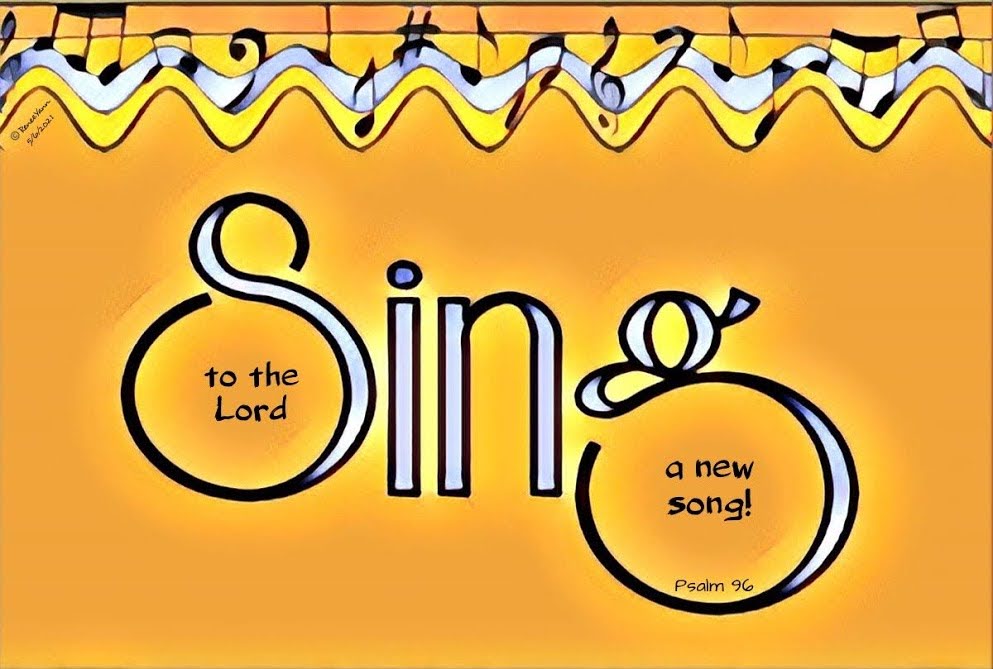
Sing to the Lord a new song; sing to the Lord, all the whole earth. Sing to the Lord and bless the divine name; proclaim the good news of our salvation from day to day. Declare the glory of the Lord among the nations and the wonders of God among all peoples. For great is the Lord and greatly to be praised, more awesome than all other gods….
Psalm 96: 1-4
… “more awesome than all our gods”…
even the false gods of death and war …
We are a people called to believe the declaration of today’s Gospel, that Jesus Christ is among us to restore Creation to eternal life:
He stood up to read and was handed a scroll of the prophet Isaiah.
He unrolled the scroll and found the passage where it was written: The Spirit of the Lord is upon me, because he has anointed me to bring glad tidings to the poor. He has sent me to proclaim liberty to captives and recovery of sight to the blind, to let the oppressed go free, and to proclaim a year acceptable to the Lord.
Rolling up the scroll, he handed it back to the attendant and sat down, and the eyes of all in the synagogue looked intently at him.
He said to them, “Today this Scripture passage is fulfilled in your hearing.”
Luke 4:17-21
And it is fulfilled every day, in our lights and even in our shadows, if we but believe.
Bring us, O Lord, at our last awakening into the house and gate of heaven, to enter into that gate and dwell in that house, where there shall be no darkness nor dazzling, but one equal light; no noise nor silence, but one equal music; no fears nor hopes, but one equal possession; no ends nor beginning, but one equal eternity; in the habitation of thy glory and dominion, world without end.
Prayer of John Donne
Poetry: John Donne (1572–1631)- Death Be Not Proud (Holy Sonnet X)
Death, be not proud, though some have called thee
Mighty and dreadful, for thou are not so;
For those whom thou think'st thou dost overthrow
Die not, poor Death, nor yet canst thou kill me.

From rest and sleep, which but thy pictures be,
Much pleasure; then from thee much more must flow,
And soonest our best men with thee do go,
Rest of their bones, and soul's delivery.

Thou'art slave to fate, chance, kings, and desperate men,
And dost with poison, war, and sickness dwell,
And poppy'or charms can make us sleep as well
And better than thy stroke; why swell'st thou then?

One short sleep past, we wake eternally,
And death shall be no more; Death, thou shalt die.
George MacDonald (10 December 1824 – 18 September 1905) was a Scottish author, poet and Christian minister. He was a pioneering figure in the field of modern fantasy literature and the mentor of fellow writer Lewis Carroll. In addition to his fairy tales, MacDonald wrote several works of Christian theology, including several collections of sermons.
His writings have been cited as a major literary influence by many notable authors including Lewis Carroll, W. H. Auden, David Lindsay, J. M. Barrie, Lord Dunsany, Elizabeth Yates, Oswald Chambers, Mark Twain, Hope Mirrlees, Robert E. Howard, L. Frank Baum, T.H. White, Richard Adams, Lloyd Alexander, Hilaire Belloc, G.K. Chesterton, C. S. Lewis, J. R. R. Tolkien, Walter de la Mare, E. Nesbit, Peter S. Beagle, Neil Gaiman and Madeleine L’Engle.
C. S. Lewis wrote that he regarded MacDonald as his “master”: “Picking up a copy of Phantastes one day at a train-station bookstall, I began to read. A few hours later”, said Lewis, “I knew that I had crossed a great frontier.” G. K. Chesterton cited The Princess and the Goblin as a book that had “made a difference to my whole existence”.
Elizabeth Yates wrote of Sir Gibbie, “It moved me the way books did when, as a child, the great gates of literature began to open and first encounters with noble thoughts and utterances were unspeakably thrilling.”
Even Mark Twain, who initially disliked MacDonald, became friends with him, and there is some evidence that Twain was influenced by him.[6] The Christian author Oswald Chambers wrote in his “Christian Disciplines” that “it is a striking indication of the trend and shallowness of the modern reading public that George MacDonald’s books have been so neglected”
Wikipedia
This beautiful poem is filled with so many magnificent images and metaphors that it warrants a slow reading, returning often perhaps to just a single phrase that releases the imagination and the soul!
Light

First-born of the creating Voice!
Minister of God's Spirit, who wast sent
Waiting upon him first, what time he went
Moving about mid the tumultuous noise
Of each unpiloted element
Upon the face of the void formless deep!
Thou who didst come unbodied and alone
Ere yet the sun was set his rule to keep,
Or ever the moon shone,
Or e'er the wandering star-flocks forth were driven!
Thou garment of the Invisible, whose skirt
Sweeps, glory-giving, over earth and heaven!
Thou comforter, be with me as thou wert
When first I longed for words, to be
A radiant garment for my thought, like thee!

We lay us down in sorrow,
Wrapt in the old mantle of our mother Night;
In vexing dreams we strive until the morrow;
Grief lifts our eyelids up-and Lo, the light!
The sunlight on the wall! And visions rise
Of shining leaves that make sweet melodies;
Of wind-borne waves with thee upon their crests;
Of rippled sands on which thou rainest down;
Of quiet lakes that smooth for thee their breasts;
Of clouds that show thy glory as their own;
O joy! O joy! the visions are gone by!
Light, gladness, motion, are reality!

Thou art the god of earth. The skylark springs
Far up to catch thy glory on his wings;
And thou dost bless him first that highest soars.
The bee comes forth to see thee; and the flowers
Worship thee all day long, and through the skies
Follow thy journey with their earnest eyes.
River of life, thou pourest on the woods,
And on thy waves float out the wakening buds;
The trees lean toward thee, and, in loving pain,
Keep turning still to see thee yet again;
South sides of pines, haunted all day by thee,
Bear violins that tremble humanly.
And nothing in thine eyes is mean or low:
Where'er thou art, on every side,
All things are glorified;
And where thou canst not come, there thou dost throw
Beautiful shadows, made out of the dark,
That else were shapeless; now it bears thy mark.

And men have worshipped thee.
The Persian, on his mountain-top,
Waits kneeling till thy sun go up,
God-like in his serenity.
All-giving, and none-gifted, he draws near,
And the wide earth waits till his face appear-
Longs patient. And the herald glory leaps
Along the ridges of the outlying clouds,
Climbing the heights of all their towering steeps.
Sudden, still multitudinous laughter crowds
The universal face: Lo, silently,
Up cometh he, the never-closing eye!
Symbol of Deity, men could not be
Farthest from truth when they were kneeling unto thee!

Thou plaything of the child,
When from the water's surface thou dost spring,
Thyself upon his chamber ceiling fling,
And there, in mazy dance and motion wild,
Disport thyself-etherial, undefiled.
Capricious, like the thinkings of the child!
I am a child again, to think of thee
In thy consummate glee.
How I would play with thee, athirst to climb
On sloping ladders of thy moted beams,
When through the gray dust darting in long streams!
How marvel at the dusky glimmering red,
With which my closed fingers thou hadst made
Like rainy clouds that curtain the sun's bed!
And how I loved thee always in the moon!
But most about the harvest-time,
When corn and moonlight made a mellow tune,
And thou wast grave and tender as a cooing dove!
And then the stars that flashed cold, deathless love!
And the ghost-stars that shimmered in the tide!
And more mysterious earthly stars,
That shone from windows of the hill and glen-
Thee prisoned in with lattice-bars,
Mingling with household love and rest of weary men!
And still I am a child, thank God!-to spy
Thee starry stream from bit of broken glass
Upon the brown earth undescried,
Is a found thing to me, a gladness high,
A spark that lights joy's altar-fire within,
A thought of hope to prophecy akin,
That from my spirit fruitless will not pass.

Thou art the joy of age:
Thy sun is dear when long the shadow falls.
Forth to its friendliness the old man crawls,
And, like the bird hung out in his poor cage
To gather song from radiance, in his chair
Sits by the door; and sitteth there
His soul within him, like a child that lies
Half dreaming, with half-open eyes,
At close of a long afternoon in summer-
High ruins round him, ancient ruins, where
The raven is almost the only comer-
Half dreams, half broods, in wonderment
At thy celestial ascent
Through rifted loop to light upon the gold
That waves its bloom in some high airy rent:
So dreams the old man's soul, that is not old,
But sleepy mid the ruins that infold.

What soul-like changes, evanescent moods,
Upon the face of the still passive earth,
Its hills, and fields, and woods,
Thou with thy seasons and thy hours art ever calling forth!
Even like a lord of music bent
Over his instrument,
Giving to carol, now to tempest birth!
When, clear as holiness, the morning ray
Casts the rock's dewy darkness at its feet,
Mottling with shadows all the mountain gray;
When, at the hour of sovereign noon,
Infinite silent cataracts sheet
Shadowless through the air of thunder-breeding June;
When now a yellower glory slanting passes
'Twixt longer shadows o'er the meadow grasses;
And now the moon lifts up her shining shield,
High on the peak of a cloud-hill revealed;
Now crescent, low, wandering sun-dazed away,
Unconscious of her own star-mingled ray,
Her still face seeming more to think than see,
Makes the pale world lie dreaming dreams of thee!
No mood, eternal or ephemeral,
But wakes obedient at thy silent call!

Of operative single power,
And simple unity the one emblem,
Yet all the colors that our passionate eyes devour,
In rainbow, moonbow, or in opal gem,
Are the melodious descant of divided thee.
Lo thee in yellow sands! Lo thee
In the blue air and sea!
In the green corn, with scarlet poppies lit,
Thy half-souls parted, patient thou dost sit.
Lo thee in dying triumphs of the west!
Lo thee in dew-drop's tiny breast!
Thee on the vast white cloud that floats away,
Bearing upon its skirt a brown moon-ray!
Gold-regent, thou dost spendthrift throw
Thy hoardless wealth of gleam and glow!
The thousand hues and shades upon the flowers
Are all the pastime of thy leisure hours;
The jewelled ores in mines that hidden be,
Are dead till touched by thee.

Everywhere,
Thou art lancing through the air!
Every atom from another
Takes thee, gives thee to his brother;
Continually,
Thou art wetting the wet sea,
Bathing its sluggish woods below,
Making the salt flowers bud and blow;
Silently,
Workest thou, and ardently,
Waking from the night of nought
Into being and to thought;

Influences
Every beam of thine dispenses,
Potent, subtle, reaching far,
Shooting different from each star.
Not an iron rod can lie
In circle of thy beamy eye,
But its look doth change it so
That it cannot choose but show
Thou, the worker, hast been there;
Yea, sometimes, on substance rare,
Thou dost leave thy ghostly mark
Even in what men call the dark.
Ever doing, ever showing,
Thou dost set our hearts a glowing-
Universal something sent
To shadow forth the Excellent!

When the firstborn affections-
Those winged seekers of the world within,
That search about in all directions,
Some bright thing for themselves to win-
Through pathless woods, through home-bred fogs,
Through stony plains, through treacherous bogs,
Long, long, have followed faces fair,
Fair soul-less faces, vanished into air,
And darkness is around them and above,
Desolate of aught to love,
And through the gloom on every side,
Strange dismal forms are dim descried,
And the air is as the breath
From the lips of void-eyed Death,
And the knees are bowed in prayer
To the Stronger than despair -
Then the ever-lifted cry,
Give us light, or we shall die,
Cometh to the Father's ears,
And he hearkens, and he hears:-

As some slow sun would glimmer forth
From sunless winter of the north,
We, hardly trusting hopeful eyes,
Discern and doubt the opening skies.
From a misty gray that lies on
Our dim future's far horizon,
It grows a fresh aurora, sent
Up the spirit's firmament,
Telling, through the vapors dun,
Of the coming, coming sun!
Tis Truth awaking in the soul!
His Righteousness to make us whole!
And what shall we, this Truth receiving,
Though with but a faint believing,
Call it but eternal Light?
'Tis the morning, 'twas the night!

All things most excellent
Are likened unto thee, excellent thing!
Yea, he who from the Father forth was sent,
Came like a lamp, to bring,
Across the winds and wastes of night,
The everlasting light.
Hail, Word of God, the telling of his thought!
Hail, Light of God, the making-visible!
Hail, far-transcending glory brought
In human form with man to dwell-
Thy dazzling gone; thy power not less
To show, irradiate, and bless;
The gathering of the primal rays divine
Informing chaos, to a pure sunshine!

Dull horrid pools no motion making!
No bubble on the surface breaking!
The dead air lies, without a sound,
Heavy and moveless on the marshy ground.

Rushing winds and snow-like drift,
Forceful, formless, fierce, and swift!
Air-like vapors madly riven!
Waters smitten into dust!
Lightning through the turmoil driven,
Aimless, useless, yet it must!

Gentle winds through forests calling!
Bright birds through the thick leaves glancing!
Solemn waves on sea-shores falling!
White sails on blue waters dancing!
Mountain streams glad music giving!
Children in the clear pool laving!
Yellow corn and green grass waving!
Long-haired, bright-eyed maidens living!
Light, O radiant, it is thou!
Light!-we know our Father now!

Forming ever without form;
Showing, but thyself unseen;
Pouring stillness on the storm;
Breathing life where death had been!
If thy light thou didst draw in,
Death and Chaos soon were out,
Weltering o'er the slimy sea,
Riding on the whirlwind's rout,
In wild unmaking energy!
God, be round us and within,
Fighting darkness, slaying sin.

Father of Lights, highest, unspeakable,
On whom no changing shadow ever fell!
Thy light we know not, are content to see;
Thee we know not, and are content to be!-
Nay, nay! until we know thee, not content are we!
But, when thy wisdom cannot be expressed,
Shall we imagine darkness in thy breast?
Our hearts awake and witness loud for thee!
The very shadows on our souls that lie,
Good witness to the light supernal bear;
The something 'twixt us and the sky
Could cast no shadow if light were not there!
If children tremble in the night,
It is because their God is light!
The shining of the common day
Is mystery still, howe'er it ebb and flow-
Behind the seeing orb, the secret lies:
Thy living light's eternal play,
Its motions, whence or whither, who shall know?-
Behind the life itself, its fountains rise!
In thee, the Light, the darkness hath no place;
And we have seen thee in the Saviour's face.

Enlighten me, O Light!-why art thou such?
Why art thou awful to our eyes, and sweet?
Cherished as love, and slaying with a touch?
Why in thee do the known and unknown meet?
Why swift and tender, strong and delicate?
Simple as truth, yet manifold in might?
Why does one love thee, and another hate?
Why cleave my words to the portals of my speech
When I a goodly matter would indite?
Why mounts my thought of thee beyond my reach?
-In vain to follow thee, I thee beseech,
For God is light
Today, in God’s Lavish Mercy, we read from James who writes elegantly to his community. He reminds them and us that all gifts originate in our changeless, loving God Who breathed us into life from Infinite and Lavish Mercy.
Then James just so simply enjoins us:
So hear God’s Word of Love in your hearts
Be good by doing good for the afflicted
James says that doing this is “religion pure and undefined”.
James 1:27
In our Gospel, Jesus reinforces this truth. The Pharisees want to condemn Jesus and the disciples for breaking a ritual hand-washing rule. Jesus says those human rules are lip-worship. What God wants is a loving and sincere heart proven by loving and sincere deeds.
On this last Sunday of August, let us rejoice in the gifts God has given us- life, faith, the ability to love and hope. Let us reach out by prayer and service to those who might be blessed by our sharing.
That reach can be so simple: a smile, a phone call, a small courtesy, a solitary prayer. Or it can be huge: a long-delayed forgiveness, a turning from unhealthy or unholy behaviors, a commitment to faith and service. We ask the Creator of Lights to inspire us.
Poetry – excerpt from George MacDonald’s poem “Light”. I’ll post the entire poem separately today – long and very beautiful. Many of you may enjoy it.
Gentle winds through forests calling;
    Big waves on the sea-shore falling;
    Bright birds through the thick leaves glancing;
    Light boats on the big waves dancing;
    Children in the clear pool laving;
    Mountain streams glad music giving;
    Yellow corn and green grass waving;
    Long-haired, bright-eyed maidens living;
    Light on all things, even as now--
    God, our Father, it is Thou!
    Light, O Radiant! thou didst come abroad,
    To mediate 'twixt our ignorance and God;
    Forming ever without form;
    Showing, but thyself unseen;
    Pouring stillness on the storm;
    Making life where death had been!
    If thou, Light, didst cease to be,
    Death and Chaos soon were out,
    Weltering o'er the slimy sea,
    Riding on the whirlwind's rout;
    And if God did cease to be,
    O Beloved! where were we?

Father of Lights, pure and unspeakable,
    On whom no changing shadow ever fell!
    Thy light we know not, are content to see;
    And shall we doubt because we know not Thee?
    Or, when thy wisdom cannot be expressed,
    Fear lest dark vapors dwell within thy breast?
    Nay, nay, ye shadows on our souls descending!
    Ye bear good witness to the light on high,
    Sad shades of something 'twixt us and the sky!
    And this word, known and unknown radiant blending,
    Shall make us rest, like children in the night,--
    Word infinite in meaning: God is Light.
    We walk in mystery all the shining day
    Of light unfathomed that bestows our seeing,
    Unknown its source, unknown its ebb and flow:
    Thy living light's eternal fountain-play
    In ceaseless rainbow pulse bestows our being--
    Its motions, whence or whither, who shall know?
    O Light, if I had said all I could say
    Of thy essential glory and thy might,
    Something within my heart unsaid yet lay,
    And there for lack of words unsaid must stay:
    For God is Light.
Today, in God’s Lavish Mercy, we pray with Psalm 98, the scripture which inspired “Joy to the World”.
Psalm 98 describes God’s redemption of Israel and the jubilation that will ensue. In other words, it is a song of “rejoicing in the future tense”. When the community sang it for their great occasions, they had not yet seen the Savior. But their profound faith allowed them to celebrate in spirit what they believed would be accomplished – as the psalm’s concluding verse asserts:
In righteousness shall God judge the world and the peoples with equity.
Psalm 98:8
We too are called to let our lives sing to the Lord in hope and confidence because we know that what we believe is true. That kind of faith in action is called “witness”. And we, my dears, in ALL circumstances of our lives, are charged to be WITNESSES!
Like the seas who sing in either still or storm
Like rivers who clap in ebb or the neap
Like the mountains who sing in all seasons
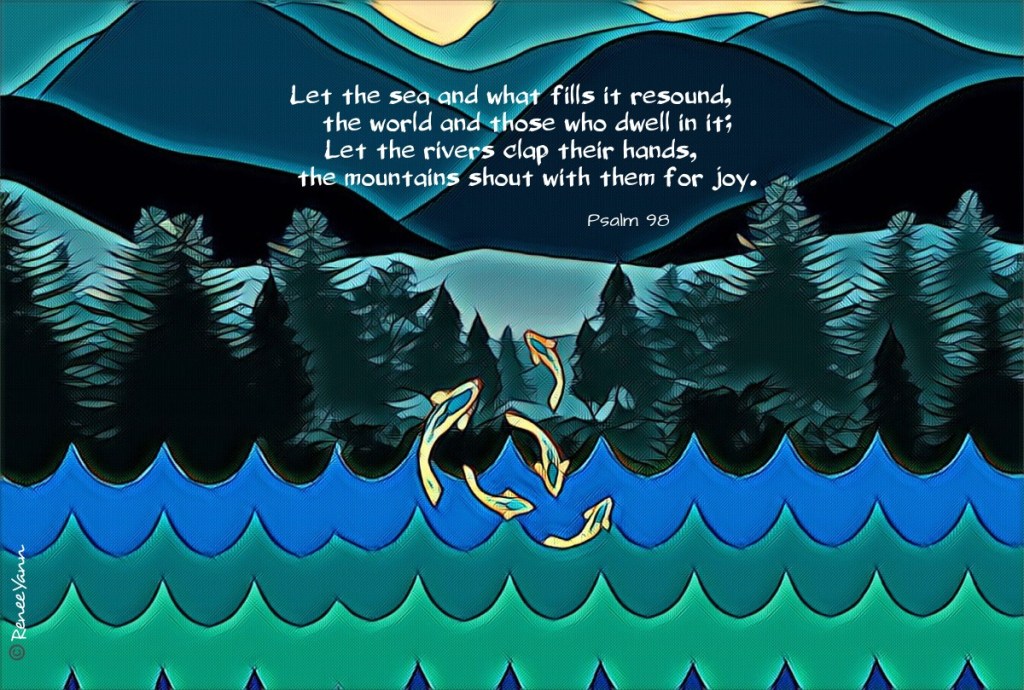
Let the sea and what fills it resound, the world and those who dwell in it; Let the rivers clap their hands, the mountains shout with them for joy.
Psalm 98:7-8
Like our hearts that believe even through life’s intermingled joys and sorrows
This is your life, joys and sorrow mingled, one succeeding the other.
Catherine McAuley: Letter to Frances Warde (May 28, 1841)
Poetry: Flickering Mind – Denise Levertov
Lord, not you
it is I who am absent.
At first
belief was a joy I kept in secret,
stealing alone
into sacred places:
a quick glance, and away -- and back,
circling.
I have long since uttered your name
but now
I elude your presence.
I stop
to think about you, and my mind
at once
like a minnow darts away,
darts
into the shadows, into gleams that fret
unceasing over
the river's purling and passing.
Not for one second
will my self hold still, but wanders
anywhere,
everywhere it can turn.  Not you,
it is I am absent.
You are the stream, the fish, the light,
the pulsing shadow.
You the unchanging presence, in whom all
moves and changes.
How can I focus my flickering, perceive
at the fountain's heart
the sapphire I know is there?
Today, in God’s Lavish Mercy, we pray with Psalm 97, one of several psalms categorized as “enthronement psalms”. These psalms celebrate God as king, a king exponentially greater than any human sovereign.
But Psalm 97 shows us that this Divine Ruler is also exponentially different from the flawed and often oppressive human rulers Israel (and others throughout history)has/have experienced.
For that reason, God is the only one who should rule our lives, and all human authority should mirror God’s perfect balance of love, mercy, and justice.
The psalm indicates how God is uniquely supreme:
JUSTICE – God’s reign is founded on justice, not domination
The LORD is king; let the earth rejoice; let the many isles be glad. Justice and judgment are the foundation of his throne.
97:1-2
UNIVERSALITY – God’s power moves earth and heaven, beyond any human ability
The mountains melt like wax before the LORD, before the LORD of all the earth. The heavens proclaim his justice, and all peoples see his glory.
97:5-6
GOODNESS – God loves goodness, not evil; uprightness, not power plays
The LORD loves those who hate evil; he guards the lives of his faithful ones; from the hand of the wicked he delivers them.
97:10
JOY – God’s reign brings universal joy, not subjugation. It inspires gratitude, not fear:
Light dawns for the just; and gladness, for the upright of heart. Be glad in the LORD, you just, and give thanks to God’s holy name
97:11-12
Psalm 97, though constructed on a metaphor that doesn’t speak to many of us, still has much to teach us.
How do we image God?
How does that image inspire, define, or control our behaviors and choices?
In whatever form we exercise authority, how do we reflect God’s authority?
Especially in our influence over younger, or vulnerable persons, what image of God would they learn from us?
For Christians, Psalm 97 points to a most contradictory “king”, one who loves the “beatitude person” and is willing to suffer and die for them. The psalm so clearly foreshadows Christ that it is the psalm prayed at Mass on Christmas Day.
In Christmas the Church does not simply celebrate the birth of a wondrous baby. Through that birth we celebrate the cosmic reality that God has entered the process of the world in a decisive way that changes everything toward life. The entry of God into the process of the world is the premise of the poem in Psalm 97.
Walter Brueggemann, Psalm 97: Psalm for Christmas Day
Poetry: The Kingdom – R. S. Thomas
                 It’s a long way off but inside it
                 There are quite different things going on:
                 Festivals at which the poor man
                 Is king and the consumptive is
                 Healed; mirrors in which the blind look
                 At themselves and love looks at them
                 Back; and industry is for mending
                 The bent bones and the minds fractured
                 By life. It’s a long way off, but to get
                 There takes no time and admission
                 Is free, if you will purge yourself
                 Of desire, and present yourself with
                 Your need only and the simple offering
                 Of your faith, green as a leaf.
Today, in God’s Lavish Mercy, we pray with Psalm 90 whose selected verses for today present three brilliant images for our prayer.
The image of an eternal God, who spins time like the threads of a dream:
You turn us back to the dust and say, “Go back, O child of earth.” For a thousand years in your sight are like yesterday when it is past and like a watch in the night. You sweep us away like a dream; we fade away suddenly like the grass.
Psalm 90: 3-5
The image of us, ordering our days on the great abacus of Grace:
So teach us to number our days aright that we may apply our hearts to wisdom. Return, O Lord; how long will you tarry?
Psalm 90:12-13
The image of God, each morning answering our prayer, and we weaving that delicate gift, like fine lace, into the handiwork of our lives
Fill us at daybreak with your kindness, that we may shout for joy and gladness all our days. And may the gracious care of the LORD our God be ours; prosper the work of our hands for us! Prosper our fragile handiwork!
Psalm 90:14,17
These images converge to remind us that time, from our perspective, is brief. But, with God, there is no “time”. God has breathed us forth, a song without end, into an eternal melody of love and joy.
The psalmist prays to honor that indescribable gift of life by making something beautiful of it in the time allotted.
We pray for that too, and are invited to reflect on Paul’s prayer for the Thessalonians in our first reading. This prayer captures what Paul believes to be something beautiful for God:
Now may God our Creator, and our Lord Jesus direct our way to you, and may the Lord make you increase and abound in love for one another and for all, just as we have for you, so as to strengthen your hearts, to be blameless in holiness before our God and Creator at the coming of our Lord Jesus with all his holy ones. Amen.
1 Thessalonians: 3:11-13
Prose: Something Beautiful for God – Mother Teresa
What I can do, you cannot.
What you can do, I cannot.
But together we can do
something beautiful for God.
Yes, you must live life beautifully
and not allow the spirit of the world
that makes gods out of power, riches, and pleasure
make you to forget that
you have been created for greater things
 – to love and to be loved.
Today, in God’s Lavish Mercy, we pray with Psalm 139, a familiar and powerful favorite for many of us.
As a whole, the psalm conveys an assurance that God is everywhere, caring for and directing our lives toward good.
Still, the psalmist paints the picture of a treacherous journey to that assurance, a journey through various levels of darkness:
the darkness of the womb:
You formed my inmost being; you knit me in my mother’s womb.
139:13
the darkness of life’s “secrets”
LORD, you have probed me, you know me: you know when I sit and stand; you understand my thoughts from afar. You sift through my travels and my rest; with all my ways you are familiar.
139: 1-3
the darkness of people who make evil choices:
Do I not hate, LORD, those who hate you? Those who rise against you, do I not loathe? With fierce hatred I hate them, enemies I count as my own.
139: 21-22
the darkness within the one who prays
Probe me, God, know my heart; try me, know my thoughts. See if there is a wicked path in me; lead me along an ancient path.
139: 23-24
Even though we try – and often succeed – to live in God’s Light, as long as we live in this world we will be besieged by darkness. It is simply part of being human. The darkness can come to us, as it did to the psalmist, in many forms:
doubt, fear, sin, illness, loneliness, addiction, mental anguish, poverty, hunger, death and bereavement
The triumphant core of Psalm 139 is the faith-filled assertion that God is greater than any darkness. God is always Light.
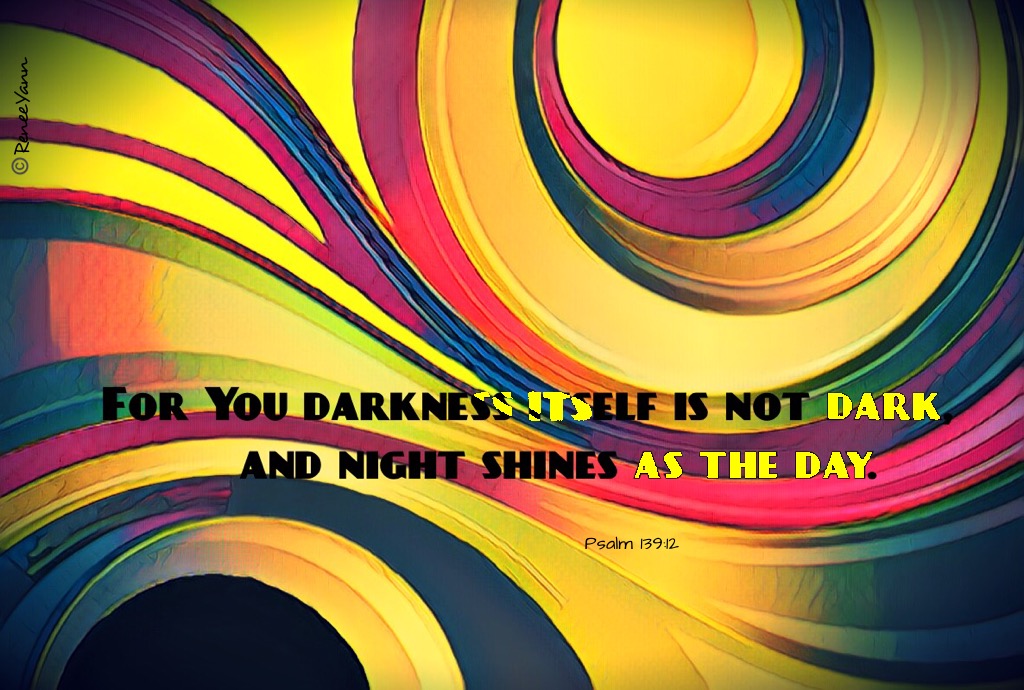
If I say, “Surely darkness shall hide me, and night shall be my light”, – Darkness is not dark for you, and night shines as the day. Darkness and light are but one.
139: 11-12
Like the psalmist, we may struggle at times to find God in our shaded experiences. But God has, from the beginning and forever, already found us.
Behind and before you encircle me and rest your hand upon me. Such knowledge is too wonderful for me, far too lofty for me to reach
139: 5-6
Prose: Pope Benedict XVI on the Trinity
God is love and only love, most pure, infinite and eternal love. The Trinity does not live in a splendid solitude, but is rather the inexhaustible font of life that unceasingly gives itself and communicates itself…. The “name” of the Most Holy Trinity is in a certain way impressed upon everything that exists, because everything that exists, down to the least particle, is a being in relation, and thus God-relation shines forth, ultimately creative Love shines forth…. The strongest proof that we are made in the image of the Trinity is this: only love makes us happy, because we live in relation, and we live to love and be loved.
Today, in God’s Lavish Mercy, we pray with Psalm 145, a luxuriant song of praise to a God who overwhelms us with generosity.
I will extol you, my God and king; I will bless your name forever and ever.
Every day I will bless you; I will praise your name forever and ever.
Great is the LORD and worthy of much praise, whose grandeur is beyond understanding.
Psalm 145: 1-3
Citing verses 13-20 which are structured around the word “all”, Walter Brueggemann says:
The image is an overflow of limitless blessing given without reservation to all who are in need and turn to the Creator.
Which brings us to Nathaniel and how this prayer might have sung in his heart.
I got to be friends with Nathaniel over 50 years ago when, at my reception in our community, Mother Bernard decided to give me his name. And after an initial shock, I came to love it.
Nathaniel and I have spent countless hours under his fig tree sharing both our lives. I’ve asked him many times what he was thinking about when Philip came to invite him to meet Jesus. Nathaniel always has a different answer… one amazingly similar to whatever happens to be preoccupying me at the time.😇
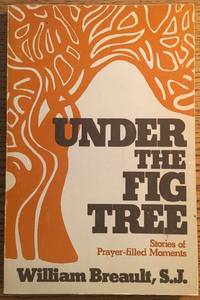
a favorite old book that started some of my conversations with Nathaniel
One element remains constant in every circumstance: in his quiet moment, Nathaniel sought God’s Light. As our Gospel shows, that Luminous Word came to him and he responded.
I think that in our “fig tree moments”, we have finally sifted through all that we are capable of in order to find Grace in our lives. Now we wait, in the shade and quiet of prayer, for the True Answer.
When that answering Word comes, it shatters our doubts and pretenses like an egg. And like a shattered egg, the Word releases new life in us. We move deeper into the unbreakable Wholeness and Infinity. Like Nathaniel, even in our ordinary lives, we begin to “see greater things” than we had ever imagined.
Nathanael said to him, “How do you know me?” Jesus answered and said to him, “Before Philip called you, I saw you under the fig tree.” Nathanael answered him, “Rabbi, you are the Son of God; you are the King of Israel.” Jesus answered and said to him, “Do you believe because I told you that I saw you under the fig tree? You will see greater things than this.” And he said to him, “Amen, amen, I say to you, you will see heaven opened and the angels of God ascending and descending on the Son of Man.”
After that momentous afternoon when he was drawn from the shade into the Light, Nathaniel’s life became a hymn of praise and thanksgiving.
Let all your works give you thanks, O LORD, and let your faithful ones bless you. Let them discourse of the glory of your Kingdom and speak of your might.
Poem-Prayer from Christine Robinson
Psalm 145 – Opening Heart
I exalt you, Holy One, and open my heart to you
by remembering your great love.
Your expansiveness made this beautiful world
in a universe too marvelous to understand.
Your desire created life, and you nurtured
that life with your spirit.
You cherish us all—and your prayer
in us is for our own flourishing.
You are gracious to us
slow to anger and full of kindness
You touch us with your love—speak to us
with your still, small voice, hold us when we fall.
You lift up those who are oppressed
by systems and circumstances.
You open your hand
and satisfy us.
You ask us to call on you—
and even when you seem far away, our
longings call us back to you.
Hear my cry, O God, for some days, it is all I have.
Today, in God’s Lavish Mercy, we pray with Psalm 149, the beautiful praise song which is part of the rousing conclusion of this Book:
Let them praise God’s name in the festive dance, let them sing praise to God with timbrel and harp. For the LORD loves this people, and adorns the lowly with victory.
Psalm 149: 3-4
Let them praise God’s Name in festive dance, for the Lord takes delight in them. Psalm 149: 3-4
Walter Brueggemann describes these final psalms here:
One of the richest deposits of such hymns of praise is at the conclusion of the Psalter in Psalms 146–150, in which the particulars of psalmic praise wanes, and the exuberance of praise becomes more vigorous and bold. In Psalm 148, the singers can imagine all creation, all creatures, including sea monsters and creeping things, united in praise of YHWH. By the culmination of the sequence in Psalm 150, there is a total lack of any specificity, and users of the psalm are invited to dissolve in a glad self-surrender that is to be enacted in the most lyrical way imaginable. Such praise is a recognition that the wonder and splendor of this God—known in the history of Israel and in the beauty of creation—pushes beyond our explanatory categories so that there can be only a liturgical, emotive rendering of all creatures before the creator.
Walter Brueggemann: From Whom No Secrets Are Hid
For me, these final psalms are like a resounding cymbal crash at the masterpiece’s end. It is a prayer simply to let these glorious lines sing and dance in our hearts:
Hallelujah! Sing to the Lord a new song; sing the praises of God in the beloved community. Let us rejoice in our maker; let us be joyful in our sovereign God. Let us praise the name of the Lord in the dance; let us sing praise to God with timbrel and harp. For the Lord takes pleasure in this people and adorns the poor with victory. Let the faithful rejoice in triumph; let them be joyful even as they rest.
Psalm 149
No poem today. Instead two pieces of music to delight in Psalm 149
Total Praise: One of my favorite hymns beautifully performed here in sign language.
2. Psalm 149 by Antonín Leopold Dvořák, original Czech. English version and sample of music below.
Many things live, not just the plants, animals and humans that grace our world. Memories and promises live. Vows live. Unlike our physical life, these less tangible realities become stronger with time. Tales of valor and achievement live, often becoming epic with the passing of the years.
Mercy lives too, blessing not only the current receiver, but the unseen generations to whom it is passed.
Every morning, old fears and new hopes wake up within us all. They vie with each other to become the engines of our lives. The happy ones among us have learned to let hope win.
Mother Patricia Waldron outside Merion’s chapel building, holding a flower.
On this date August 22, 1861, a small group of just such happy, hopeful people came to Philadelphia. On that hot August afternoon, the first Philadelphia Sisters of Mercy, led by 26-year old Patricia Waldron, arrived at Broad Street Station in North Philadelphia. They carried no worldly possessions. They came with only a dream for Mercy. It was a dream so alive in them that it still inspires us today, 160 years later.
Can’t you see them standing on the busy platform, the hissing steam trains encircling them in mist? They must have felt “be-misted” themselves, these mostly Irish country girls engulfed in a big city.
Union troops heading south crowded the platform. Busy Broad Street crackled with news of the burgeoning national strife. Lincoln himself would visit the city in the coming weeks.
And hidden within the seams of this bustling city’s garment lay the poor – the ones for whom they had come. How to reach them? How to help them change their lives?
Ranging from sixteen to twenty-seven years old, these brave young women had been charged with establishing a kind of “new nation” themselves – not of politics, but of mercy. No doubt they, like the young stout-hearted soldiers surrounding them, were also a little weak-kneed. They too had their battles to face. They too would see starvation, illness, attack and death – but their spirits would endure for the sake of the Mercy dream, God’s dream for the poor.
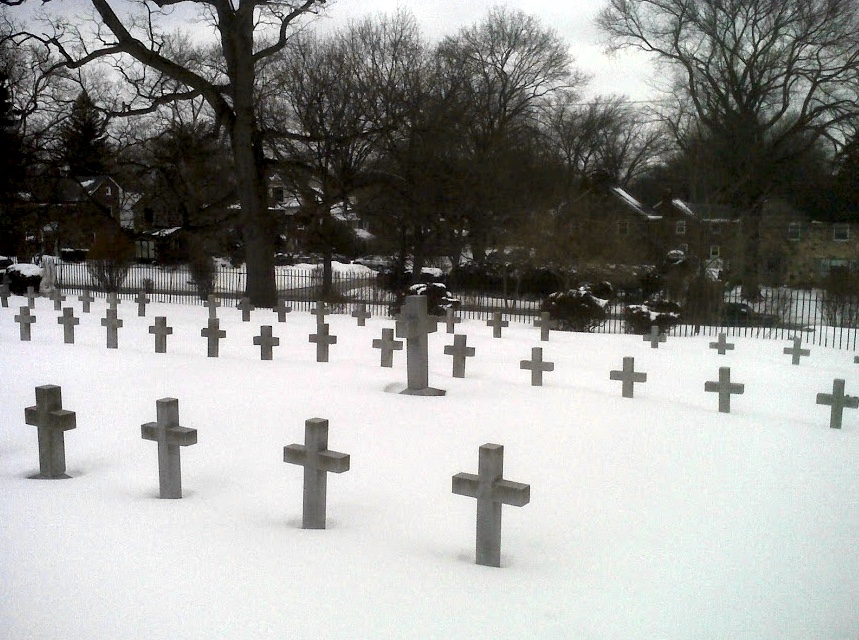
Mercy Cemetery – Merion, PA
Enduring dreams begin with small first steps. So, hailing a horse-drawn carriage, Mother Patricia Waldron led her young band to their new lives. At first, they lived in a small house in Assumption Parish, Philadelphia.
Not too much later, the growing band moved to the venerable Broad Street Convent, now of happy memory.
Convent of Mercy – Broad Street and Columbia Avenue, Philadelphia
Thus, on this date, Mother Patricia and her companions began the grace-filled saga many of us know so well and of which we are a part today. Their dream lives in us who love Mercy:
in our continued effort to find those who are poor and sick in a world that ignores them
in our choice to be compassionate in a world that often chooses violence
in our commitment to care in a world of treacherous indifference
On that sultry August day 1861, and on this one 2021, people have choices to make. They have vows and promises to keep. Some choices live forever. In the name of Mercy, what will you choose today?
Sister Jeanette Goglia conducts “Circle of Mercy” at the Sesquicentennial celebration at Philadelphia’s Kimmel Center.
Click white arrowhead above to hear Circle of Mercy















 Lavish Mercy