“Siste!” – “Just Stop!”

June 20, 2025

Our joys and sorrows fall like shadows
across the sundial of our lives

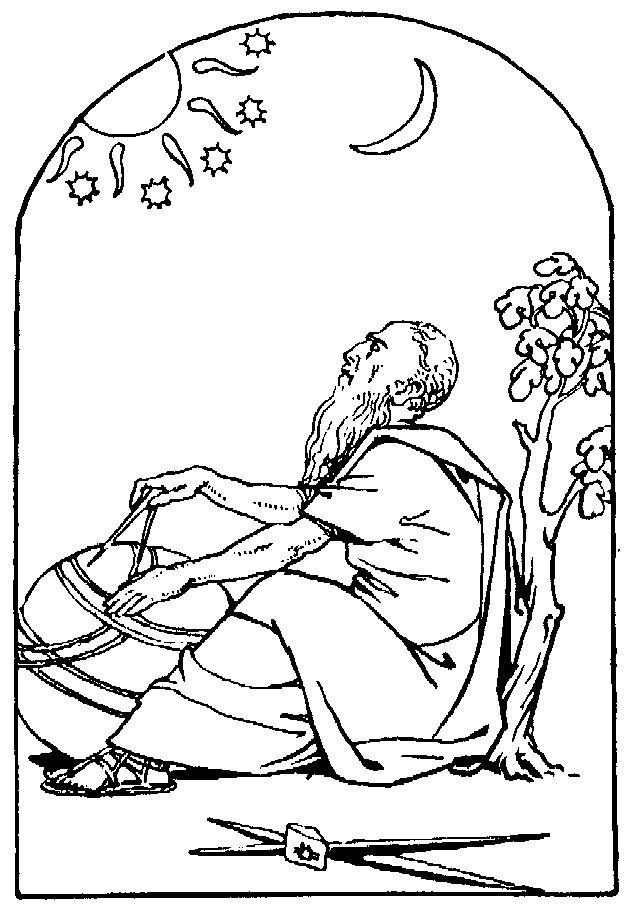
It is waning June. Up and down the long valleys of time, Earth moves toward Solstice, a word taken from the Latin “sistere” – to stop, as in “desist”.

In Southern lands, winter begins its slow climb through the cold. In the North, summer rolls lazily through the heat toward autumn respite. Through multiple millennia, Earth has made this resolute journey, assuring us of God’s infinite stability. It is an assurance we sorely need in our current times, so threatened by the destabilizing greed and evil self-interests of immoral leaders and their irresponsible partisans..

About this time ten years ago, our beloved Pope Francis placed this beautiful, magical earth in our hands with the publication of his magnificent encyclical Laudato Si’.

Timothy O’Malley, Director of the Notre Dame Center for Liturgy, says :

The greatest challenge of Laudato Si’
is the invitation it offers
for us to avoid the hopelessness
that too often infects the human condition.
Pope Francis invites us as Catholics to participate
in the re-creation of a culture of love.
This ecological culture, attentive to the whole human family,
offers the potential for not simply the renewal of nature
but of humanity itself.


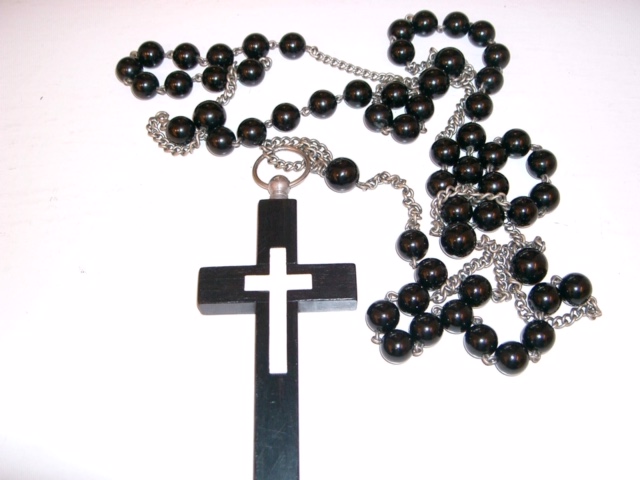
Attentive to the challenge Francis offered, I hold the Earth this Solstice Morning like a rosary, drawing its broken surface between the fingers of my prayer. Every bead is a country, a culture, a people, a species, an environment – a life – riddled with a corresponding suffering. My fingertips ache with the pain of war, greed, violence, discrimination, and hate weeping from every bead.
We see this hate in attempts:

  • to demonize cultures other than our own
  • to destabilize democracies and militarize nations
  • to erase the people of Gaza
  • to steal Ukraine from its own people
  • to refuse humanitarian aid to struggling nations
  • to assault the Earth for the sole sake of profit
  • to suppress human rights based on uninformed prejudice

This hate is born of the same sin Pope Francis placed squarely before us. It is the sin of believing that we are separate from one another. It is the sin of acting from the false superiority and moral indifference such pretense allows. People who carry this hate to our hearts and homes have found an evil nurture in the diseased moral culture for which we all have some responsibility.


As I pray this morning to be enlightened toward my own response, I ask Earth itself to teach me. I hear the wisdom of Solstice suggest itself to my soul:

“Solstice” = Sol + Sistere: (Sun + Stop)

If the earth did not “stop” each June and each December, the world would careen into a devastation of heat or cold. But, by an exquisite self-awareness, our Earth chooses its perfect balance. She enlists me to do the same.

Might that be enough to continue this journey into the fullness of “Laudato Si” – just to stop those tendencies and choices in my life which place me in domination of any other creature? Might this be enough to confront today’s moral ugliness – just to stop the rhetoric and behaviors which feed separatism and prejudice?

Just to stop. With the Solstice, it is at least enough to try.

Julian Lennon is the son of Beatles great John Lennon.

John Lennon was murdered in 1980.

Psalm 8: Hymn of the Universe

Memorial of Saint Ignatius of Antioch, Bishop and Martyr

October 17, 2020


Today, in God’s Lavish Mercy, we pray with Psalm 8.

O LORD, our LORD,
how glorious is your Name over all the earth!
You have exalted your majesty above the heavens.
Out of the mouths of babes and sucklings
you have fashioned praise ….

Psalm 8:2-3

Just yesterday, I got an email from the amazingly organized Sister who manages our grounds. She wanted to alert us that there would be a small “star-gazing” event this weekend, sponsored by our school, in case we might wonder about unusual nighttime visitors.


The note took me back to my own star-gazing days, residues of which percolate from time to time, especially during meteor showers. These days I do most of my “gazing” out our kitchen window, but when I studied for my certification in Earth Sciences, I had several opportunities for “instructed” star-gazing with excellent West Chester University astronomers. In a subsequent reflection, I described one such experience like this:

There are a few places where nature offers an experience of darkness so absolute it can be terrifying.  Assateague Island lies along the barrier coast of Virginia.  On a winter night, darkness there feels complete, enveloping.  As evening lengthens, night pulls its velvet canopy from the black ocean, covering the beach in silence. The whisper of rustling sea oats along invisible dunes is the only link to a land left behind.  But slowly, like sparks rolling through dry tinder, stars burn one by one through heaven’s blanket.  By midnight, their incomparable brilliance convinces the soul that it has never been and can never be alone.


Three thousand years ago, our psalmist felt the same way:

When I behold your heavens, the work of your fingers,
the moon and the stars which you set in place—
What are we  that you should be mindful of us,
we human beings that you should care for us?

Psalm 8:4-5

Charles Spurgeon, revered Baptist preacher, calls this psalm “the song of the Astronomer“, as gazing at the heavens inspires the psalmist to meditate on God’s creation and humanity’s place in it.

You have made us little less than the angels,
and crowned us with glory and honor.
You have given us rule over the works of your hands,
putting all things under our feet.

Psalm 8:6-7

Pope John Paul II said this:

 …. for those who have attentive ears and open eyes, creation is like a first revelation that has its own eloquent language: it is almost another sacred book whose letters are represented by the multitude of created things present in the universe. St. John Chrysostom says: “The silence of the heavens is a voice that resounds louder than a trumpet blast: this voice cries out to our eyes and not to our ears, the greatness of Him who made them.

General Audience – January 30, 2002

And our dear Pope Francis reiterates this thought so beautifully in his epic encyclical:

At the end, we will find ourselves face to face with the infinite beauty of God, and be able to read with admiration and happiness the mystery of the universe, which with us, will share in unending plenitude.

Laudato Si’

Let’s rest in all this beauty as we pray today with Psalm 8


Music: Beautiful Universe – Tim Janis

Psalm 145: Laudato Sí

Eighteenth Sunday In Ordinary Time

August 2, 2020

For my prayer this morning, I re-read Pope Francis magnificent encyclical Laudato Si’ which instructs us and begs us to cherish the gift of our Common Home. – a world which God has so loved that God gave the only begotten Son that we should not perish.
This sacred document has become even more meaningful as a global pandemic exposes the fragmentations we have wrought upon the earth.

from Reflection for Earth Day 2020

Today, in God’s Lavish Mercy, we pray with Psalm 145, a song of complete confidence that God will sustain us.

Set like diamond amidst our three beautiful readings, Psalm 145 offers us a rich and melodious way to praise our Creator and to recognize the glory of God’s gift of Creation.

St. Francis of Assisi used this psalm to inspire his own well-known Canticle of the Sun – which, in turn, inspired Pope Francis’s magnificent encyclical Laudato Sí.

For our prayer today, we might choose any of these texts, even a small taste, and savor it with thanksgiving and hope, letting our hearts sing on this Sunday morning.

Poetry:  Canticle of the Sun – Francis of Assisi

Original text in Umbrian dialect:

Altissimu, omnipotente bon Signore,
Tue so le laude, la gloria e l’honore et onne benedictione.
Ad Te solo, Altissimo, se konfano,
et nullu homo ène dignu te mentouare.
Laudato sie, mi Signore cum tucte le Tue creature,
spetialmente messor lo frate Sole,
lo qual è iorno, et allumini noi per lui.
Et ellu è bellu e radiante cum grande splendore:
de Te, Altissimo, porta significatione.
Laudato si, mi Signore, per sora Luna e le stelle:
in celu l’ài formate clarite et pretiose et belle.
Laudato si, mi Signore, per frate Uento
et per aere et nubilo et sereno et onne tempo,
per lo quale, a le Tue creature dài sustentamento.
Laudato si, mi Signore, per sor’Acqua,
la quale è multo utile et humile et pretiosa et casta.
Laudato si, mi Signore, per frate Focu,
per lo quale ennallumini la nocte:
ed ello è bello et iucundo et robustoso et forte.
Laudato si, mi Signore, per sora nostra matre Terra,
la quale ne sustenta et gouerna,
et produce diuersi fructi con coloriti fior et herba.
Laudato si, mi Signore, per quelli ke perdonano per lo Tuo amore
et sostengono infirmitate et tribulatione.
Beati quelli ke ‘l sosterranno in pace,
ka da Te, Altissimo, sirano incoronati.
Laudato si mi Signore, per sora nostra Morte corporale,
da la quale nullu homo uiuente pò skappare:
guai a quelli ke morrano ne le peccata mortali;
beati quelli ke trouarà ne le Tue sanctissime uoluntati,
ka la morte secunda no ‘l farrà male.
Laudate et benedicete mi Signore et rengratiate
e seruiteli cum grande humilitate.

English Translation:
Most High, all powerful, good Lord, 
Yours are the praises, the glory, the honor, and all blessing.
To You alone, Most High, do they belong, 
and no man is worthy to mention Your name.
Be praised, my Lord, through all your creatures, 
especially through my lord Brother Sun, 
who brings the day; and you give light through him. 
And he is beautiful and radiant in all his splendor! 
Of you, Most High, he bears the likeness.
Praised be You, my Lord, through Sister Moon and the stars, 
in heaven you formed them clear and precious and beautiful.
Praised be You, my Lord, through Brother Wind, 
and through the air, cloudy and serene, 
and every kind of weather through which 
You give sustenance to Your creatures.
Praised be You, my Lord, through Sister Water,
which is very useful and humble and precious and chaste.
Praised be You, my Lord, through Brother Fire, 
through whom you light the night and he is beautiful 
and playful and robust and strong.
Praised be You, my Lord, through Sister Mother Earth, 
who sustains us and governs us and who produces 
varied fruits with coloured flowers and herbs.
Praised be You, my Lord, 
through those who give pardon for Your love, 
and bear infirmity and tribulation.
Blessed are those who endure in peace 
for by You, Most High, they shall be crowned.
Praised be You, my Lord, 
through our Sister Bodily Death, 
from whom no living man can escape.
Woe to those who die in mortal sin. 
Blessed are those whom death will 
find in Your most holy will, 
for the second death shall do them no harm.
Praise and bless my Lord, 
and give Him thanks 
and serve Him with great humility.

Music: Biblical Songs, Op.99, No.5 (Psalm 145) by Antonín Dvořák and, an added selection, a populair hymn based on Psalm 145. Remember, to sing is to pray twice! 🙂

Earth Day 2020

Wednesday of the Second Week of Easter

April 22, 2020 – Fiftieth Anniversary Earth Day

Today, in Mercy, the theme of our readings falls perfectly in step with Earth Day.

John3_16 so loved

For my prayer this morning, I re-read Pope Francis magnificent encyclical Laudato Si’ which instructs us and begs us to cherish the gift of our Common Home. – a world which God has so loved that God gave the only begotten Son that we should not perish.

This sacred document has become even more meaningful as a global pandemic exposes the fragmentations we have wrought upon the earth.

Here are two of my favorite sections from the encyclical, although I do encourage you to read the whole masterpiece if you have the time and desire.


Click here for the complete Laudato Si’


In the Judaeo-Christian tradition,
the word “creation” has a broader meaning than “nature”,
for it has to do with God’s loving plan
in which every creature
has its own value and significance.
Nature is usually seen
as a system which can be studied,
understood and controlled,
whereas Creation can only be understood
as a gift from the outstretched hand of the Father of all,
and as a reality illuminated by the love
which calls us together into universal communion.

(Laudato Si’ paragraph 76)

laudato


The ultimate destiny of the universe
is in the fullness of God,
which has already been attained by the risen Christ,
the measure of the maturity of all things.
Here we can add yet another argument
for rejecting every tyrannical and irresponsible domination
of human beings over other creatures.
The ultimate purpose of other creatures
is not to be found in us.
Rather, all creatures are moving forward with us
and through us towards a common point of arrival,
which is God,
in that transcendent fullness
where the risen Christ embraces and illumines all things.
Human beings, endowed with intelligence and love,
and drawn by the fullness of Christ,
are called to lead all creatures back to their Creator.
(Laudato Si’ paragraph 83)


May these words bless and enlighten us today to become blessings for Earth, our Common Home.

Music: God So Loved the World – sung by the Mormon Tabernacle Choir