Leadership: Service not Status

Saturday of the Twentieth Week in Ordinary Time
August 26, 2023

Today’s Readings:

https://bible.usccb.org/bible/readings/082623.cfm


Today, in God’s Lavish Mercy, we continue with the story of Ruth, prototype of the Servant Christ. And we pray our first reading in the light of today’s Gospel in which Jesus teaches his disciples a key lesson in servant leadership:
Jesus spoke to the crowds and to his disciples, saying,
“The scribes and the Pharisees
have taken their seat on the chair of Moses.
Therefore, do and observe all things whatsoever they tell you,
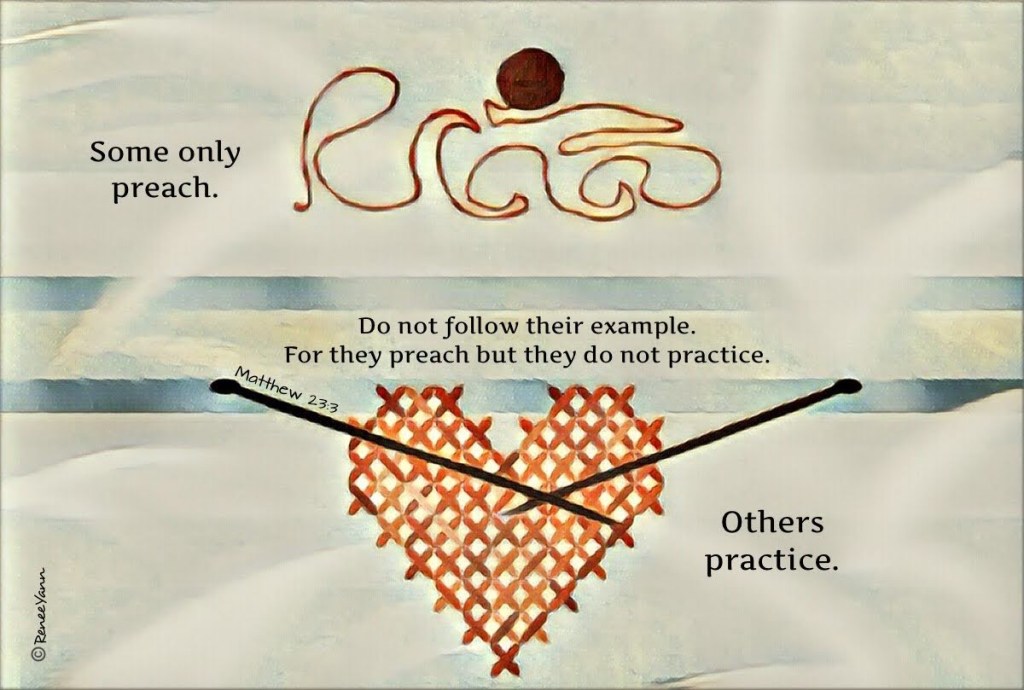
but do not follow their example.
For they preach but they do not practice.
They tie up heavy burdens hard to carry
and lay them on people’s shoulders,
but they will not lift a finger to move them.
All their works are performed to be seen.
They widen their phylacteries and lengthen their tassels.
They love places of honor at banquets, seats of honor in synagogues,
greetings in marketplaces, and the salutation ‘Rabbi.’

Matthew 23: 1-7

Jesus is so clear in this teaching. How is it that, even after 2000 years, we still don’t get it!

Stop and think about our culture – how we worship glitz, and bling, and “blow-em-up”! Listen to some of our political rhetoric filled with narcissistic “me-ism” and violent braggadocio. Look at some of the people in leadership positions around the world! They are tangled in their “phylacteries and tassels” and tripping us up with them.

Yes, even in our churches, we sometimes encounter supposed leaders who delight in places of honor and who lay burdens on the faithful rather than lift them.


Our first reading offers us humble Ruth who led and healed by selfless love.

Our Gospel reminds us that the Christian life is one of servant leadership fueled in a God-centered community to which all belong as sisters and brothers.

As for you, do not be called ‘Rabbi.’
You have but one teacher, and you are all brothers.
Call no one on earth your father;
you have but one Father in heaven.
Do not be called ‘Master’;
you have but one master, the Christ.
The greatest among you must be your servant.
Whoever exalts himself will be humbled;
but whoever humbles himself will be exalted.

Matthew 23:8-12

History is the story of our struggle to find that balance of leadership and community that will foster the life of all people. It is the great struggle between sin and goodness, between a life lived only for self and a life lived generously with others.

As we deepen our spiritual understanding with today’s readings, we may see ways that we want to act and choose more intentionally around the ministry of leadership – as it is exercised by ourselves and by others.


Prayer: from Jesuit Resources at Xavier University.org

A Leader’s Prayer

Leadership is hard to define.
Lord, let us be the ones to define it with justice.
Leadership is like a handful of water.
Lord, let us be the people to share it with those who thirst.
Leadership is not about watching and correcting.
Lord, let us remember it is about listening and connecting.
Leadership is not about telling people what to do.
Lord, let us find out what people want.
Leadership is less about the love of power,
and more about the power of love.

Lord, as we continue to undertake the role of leader let us be
affirmed by the servant leadership we witness in your son Jesus.
Let us walk in the path He has set and let those who will, follow.

Let our greatest passion be compassion.
Our greatest strength love.
Our greatest victory the reward of peace.

In leading let us never fail to follow.
In loving let us never fail.


Hymn: Prayer of St. Francis

Hope and Resilience

Friday of the Twentieth Week in Ordinary Time
August 25, 2023

Today’s Readings:

https://bible.usccb.org/bible/readings/082523.cfm


Today, in God’s Lavish Mercy, we read the tender and beloved story of Ruth and Naomi. We have come to love the beautiful exchange between these two women, filled with devotion and selfless love:

But Ruth said to Naomi, “Do not ask me to abandon or forsake you!
For wherever you go, I will go, wherever you lodge I will lodge,
your people shall be my people, and your God my God.
Where you die I will die,
and there be buried.
May the LORD do thus to me, and more,
if even death separates me from you!”

Ruth 1: 16-17

Who doesn’t long to be devoutly loved the way Ruth loved Naomi?
Who, especially in elder years or lonely times, isn’t filled with gratitude for the faithful companionship of dear ones?
Who isn’t moved at a wedding ceremony when young couples make brave promises like Ruth’s, having no idea what their vow will require down the years?


Reading the story of Ruth from these perspectives can carry us to deep reflection, but it can also leave us with an insubstantial or idealized perception of the infinite Love mirrored in this Scripture.

The Book of Ruth is so much more than an admirable devotion.

In the Book of Ruth, significant theological formation occurs, presenting a beautifully written story placed distinctively between the chaos of the Book of Judges and the epic struggle between the prophet Samuel and the intractable King Saul in the first book of Samuel. Nestled in between this chaotic downward spiral and the recalcitrance of Saul, Ruth exhibits resilience amidst vulnerability, an outsider grafted into the Davidic lineage and its climactic conclusion in Christ. A theology of hope for those found outside the normative structures of patriarchal, religious, and cultural normative spheres.

Bradford Parker: Ruth: A Theology of Resilience Amidst Vulnerability

Various authors suggest a host of underlying theological themes in Ruth:

  • the community is responsible for those who are hungry;
  • the experience of despair cannot be ignored;
  • people young and old are to be cared for; and
  • the marginalized are to push to the center, and those at the center are to move toward the marginalized. (Katherine Doob Sakenfeld: Ruth, Interpretation)

Another writer sees “Ruth is herself the “mirror of God” by reflecting Yahweh through her actions of devotion throughout the narrative.” (John C. Holbert: Preaching the Old Testament)

Andre LaCocque argues that “Ruth belongs to the extraordinary. She is characterized by hesed (Mercy).” (Ruth: Continental Commentary)


The Book of Ruth, on surface appearance, is a simple yet compelling story. But reading under its words, we will find astounding depth:

  • a faithful elder who now feels abandoned by God (Naomi),
  • a vulnerable young woman who chooses to act for mercy and justice (Ruth)
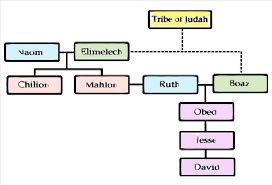
  • a man who, by aligning himself unselfishly to the Law, allows the continuation of the familial line which will lead through Obed to David and ultimately to Jesus.(Boaz)

Naomi teaches us how to respond from the depths of loss, sadness, diminishment, or fear. Ruth shows us how courage, fidelity, and mercy act in the everyday world.
Boaz models faithfulness, responsibility, and justice given without question when needed.


It is not a stretch to say that Ruth is a Christ figure, foreshadowing the Merciful Jesus who accompanies us in our vulnerabilities and who, by loving us, teaches us how to love:

“Teacher, which commandment in the law is the greatest?”
He said to him,
“You shall love the Lord, your God, with all your heart,
with all your soul, and with all your mind.
This is the greatest and the first commandment.
The second is like it:
You shall love your neighbor as yourself.
The whole law and the prophets depend on these two commandments.”

Matthew 22:36-40

Poetry: Rather than choose a single poem for you, here is the link to a series of thoughtful, poetic reflections on the characters in the Book of Ruth.

Poems from the Velveteen Rabbit blog

Music: Ruth’s Song – Misha and Marty Goetz

Memorial of Saint Bernard

Friday, August 20, 2021

Today, in God’s Lavish Mercy, we pray with Psalm 146, chosen today to complement our first reading which is a rare lectionary passage from the Book of Ruth. In it, we meet Naomi who is, at one point, widowed and alone. 

The fatherless and the widow the Lord sustains,
    but the way of the wicked is thwarted.

Psalm 146:9
Ruth Carries Her Gleanings – James Tissot

The Book of Ruth is familiar to many of us because some of its charming story and verses seem a lovely fit for weddings and anniversaries. But in some ways, that isolated use tends to trivialize the powerful messages embedded in this short volume.


If we have a limited view of the Book of Ruth, Psalm 146 can help us widen it. The psalm points to elements central to a hopeful and just community, to a community in right relationship with God. This too is a core message of Ruth.


It is a community strengthened by compassion, loyalty, inclusivity, trust, hope and grateful praise. Each character, at some point in the story’s unfolding, exhibits some aspect of God’s merciful nature and steadfast attachment to us. They put flesh on the psalm’s Antiphons:

Happy are they who have the God of Jacob for their help! 
For their hope is in the Lord their God,
who made heaven and earth, 
the seas, and all that is in them;
who keeps promises for ever;
who gives justice to those who are oppressed,
food to those who hunger
and sets the prisoners free.
The Lord opens the eyes of the blind!
The Lord lifts up those who are bowed down
and loves the righteous.
The Lord cares for the stranger
and sustains the orphan and widow,
but frustrates the way of the wicked. 
The Lord shall reign for ever,
your God, O Zion, throughout all generations.
Hallelujah!

Ruth was the great-grandmother of David and blood ancestor of Jesus. Her story, and the tender mercy it declares, foretells the character of the Beloved Community Christ will establish.


The heart of that community – our community – is aptly described in today’s Gospel. When the Pharisees ask Jesus what is most important, he replies:

You shall love the Lord, your God, with all your heart,
with all your soul, and with all your mind.
This is the greatest and the first commandment.
The second is like it:
You shall love your neighbor as yourself.
The whole law and the prophets depend on these two commandments.

Ruth already knew what was most important.
May we learn it deeply from her story.


Poem: Ruth and Naomi by Frances Ellen Watkins Harper (1825-1911), an African American abolitionist and poet. Born free in Baltimore, Maryland, she had a long and prolific career, publishing her first book of poetry at twenty and her first novel, the widely praised Iola Leroy, at age 67. 

"Turn my daughters, full of woe,
Is my heart so sad and lone? 
Leave me children — I would go 
To my loved and distant home. 

From my bosom death has torn 
Husband, children, all my stay, 
Left me not a single one, 
For my life's declining day 

Want and woe surround my way, 
Grief and famine where I tread; 
In my native land they say
"God is giving Jacob bread.”

Naomi ceased, her daughters wept, 
Their yearning hearts were filled; 
Falling upon her withered neck, 
Their grief in tears distill'd. 

Like rain upon a blighted tree, 
The tears of Orpah fell 
Kissing the pale and quivering lip, 
She breathed her sad farewell. 

But Ruth stood up, on her brow 
There lay a heavenly calm; 
And from her lips came, soft and low 
Words like a holy charm. 

"I will not leave thee, on thy brow 
Are lines of sorrow, age and care; 
Thy form is bent, thy step is slow, 
Thy bosom stricken, lone and sear. 

Oh! when thy heart and home were glad, 
I freely shared thy joyous lot; 
And now that heart is lone and sad, 
Cease to entreat — I'll leave thee not. 

Oh! if a lofty palace proud 
Thy future home shall be; 
Where sycophants around thee crowd, 
I'll share that home with thee. 

And if on earth the humblest spot, 
Thy future home shall prove; 
I'll bring into thy lonely lot 
The wealth of woman's love. 

Go where thou wilt, my steps are there, 
Our path in life is one; 
Thou hast no lot I will not share, 
'Till life itself be done. 

My country and my home for thee, 
I freely, willingly resign, 
Thy people shall my people be, 
Thy God he shall be mine. 

Then, mother dear, entreat me not 
To turn from following thee; 
My heart is nerved to share thy lot, 
Whatever that may be.”

Music: Ruth’s Song – Marty and Misha Goetz

(Verse 1)
All my life, I have wondered
Wondered where I might belong
Feeling lost, like a stranger
Wandering far all on my own
(Verse 2)
Without a home. Without a people
Without a hope, without a prayer
Without a way, that I could follow
Then I turned, and you were there
(Chorus)
Where you go, I will go
Where you stay, I will stay forever
Where you lead, I will follow
So I can know the one you know
(Verse 3)
Under his wings, you found a shelter
You have no fear, you have no shame
And when you call, he seems to answer
He even seems to know your name
(Chorus)
(Bridge)
Then somehow should I find his favor
I won’t look back on all I’ve known
Your people then will be my people
And Your God my God alone
(Chorus)
Where you go, I will go
And you know I will never leave you
Not even death, will ever part us
Now that I know the one you know
I will go now, where you go

Wherever … with Love

Friday of the Twentieth Week in Ordinary Time

August 23, 2019

Click here for readings

Today, in Mercy, I thank God that we have gotten to the Book of Ruth. The wars and subterfuges of the Judges we’re sorely testing me!😂 But the beautiful story of Ruth and Naomi, familiar and beloved, offers us a more spontaneous inspiration for prayer.

Naomi’s husband and only two sons have died. Her only remaining family are her two daughters-in-law, Ruth and Orpha. Naomi, resigning herself to a lonely death, urges these two young women to return to their kinsmen and begin new lives. Orpha acquiesces. 

Naomi RuthJPG
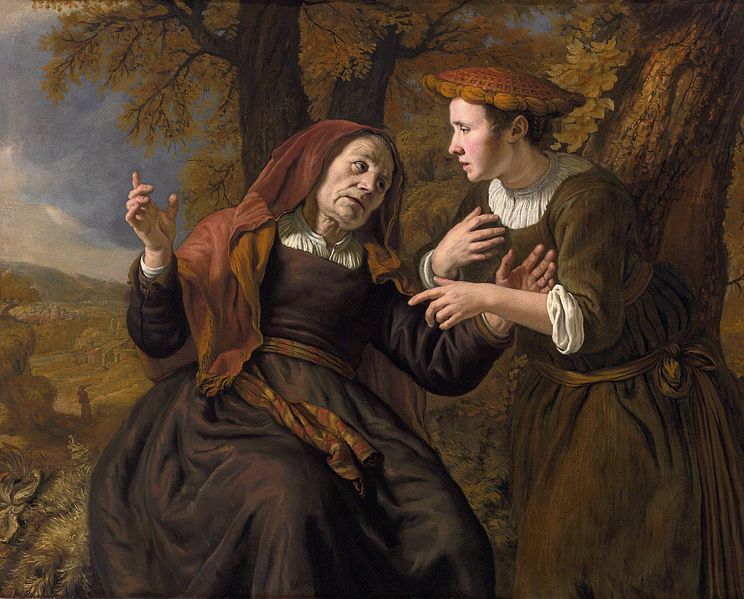
Ruth Swearing Allegiance to Naomi by Jans Victor (1619-1676)

But Ruth abides. Together, she and her mother-in-law return to Bethlehem, Naomi’s homeland. There, by her humble and steadfast work to support Naomi, Ruth attracts the love and admiration of Boaz, whom she eventually marries.

On the surface, and appropriately, we may read the story to be about Naomi and Ruth, their response to devastating bereavement, and their ultimate, fruitful devotion to each other.

However, on a deeper level, we may see Naomi as a symbol of suffering and need, and Ruth as an icon of God. In that manner of reading:

  • God suffers our diminishments with us
  • God refuses to abandon us 
  • God accompanies us to a new understanding of ourselves
  • God works to feed our poverty of mind, heart and spirit
  • God brings our brokenness to wholeness by loving fidelity to us

What a different kind of message from Judges the Book of Ruth brings us – a tender and merciful God more like the God of the Gospel. Although the author of the Book of Ruth is unknown, some think – because of the tone and characters – that it was written by a woman. I like that thought.

May our prayer today take us to the place where God abides with us in any suffering or spiritual longing we hold. May God’s faithful companionship heal and transform us. May God’s song of fidelity thrill, delight and sustain us. May we return it with generosity and joy.

Music: Covenant Song – Rory Cooney and Gary Daigle (Lyrics below)

Wherever you go, I will follow, Wherever you live is my home.
Though days be of blessing or sorrow, though house be of canvas or stone,
Though Eden be lost to the past, though mountains before us be vast,
Wherever you go, I am with you. I never will leave you alone.

Whatever you dream, I am with you, when stars call your name in the night
Though shadows and mist cloud the future,
together we bear there a light.
Like Abram and Sarah we stand, with only a promise in hand.
But lead where you dream: I will follow. To dream with you is my delight.

And though you should fall, you will find me, when no other friend can you claim,
when foes beat you down or betray you, and others desert you in shame.
When home and dreams aren’t enough, and you run away from my love,
I’ll raise you from where you have fallen. Faithful to you is my name.

Wherever you die, I will be there to sing you to sleep with a psalm,
to soothe you with tales our journey, your fears and your doubts I will calm.
We’ll live when journeys are done forever in mem’ry as one.
And we will be buried together, and awaken to greet a new dawn.

Wherever you go, I will follow. Behold! The horizon shines clear.
The possible gleams like a city: together we’ve nothing to fear.
So speak with words bold and true the message my heart speaks to you.
You won’t be alone, I have promised. Wherever you go, I am here.