Give It All You’ve Got

Saturday of the Ninth Week in Ordinary Time
June 10, 2023

Today’s Reading:

https://bible.usccb.org/bible/readings/061023.cfm

Today, in God’s Lavish Mercy, we come to nearly the last chapter in the Book of Tobit. We hear a passage from Tobit only once again in the entire liturgical year. So if you want to know the whole story, you’ll have to pick up your Bible and do some reading!
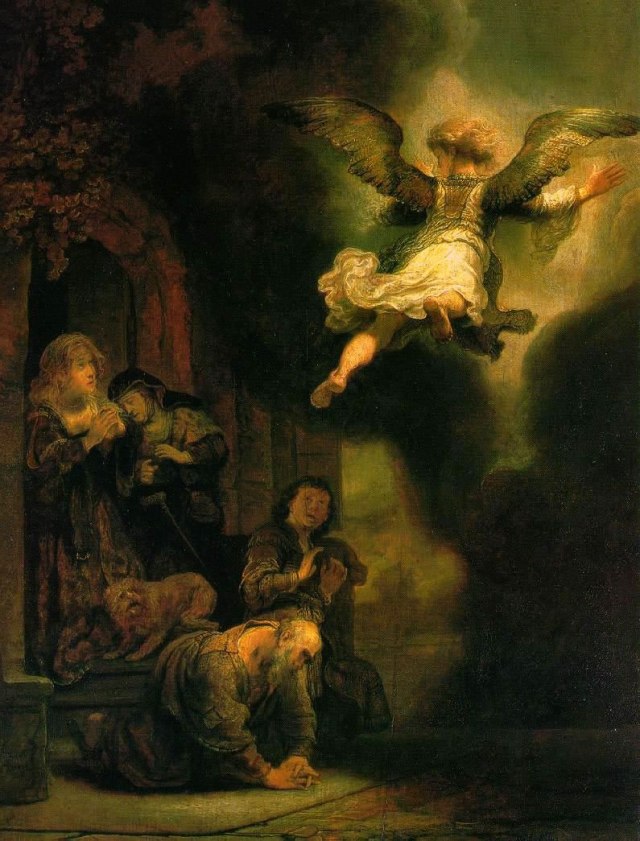

Archangel Raphael Leaves Tobias’s Family – Rembrandt

In today’s passage, Raphael reveals himself as God’s elite angel sent in answer to Tobit’s and Anna’s prayers. Before leaving to return to heaven, Rafael gives the family a bundle of advice about righteousness and sanctity. In reality, it is the author of Tobit giving his audience this advice as they cope with the anxieties of the diaspora.


In our Gospel, Jesus finishes up a chapter too. The scribes, Sadducees, and Pharisees have been wrangling with Jesus throughout the week’s readings. Today, rather than enter into debate with them, Jesus uses a visual example to make his point.

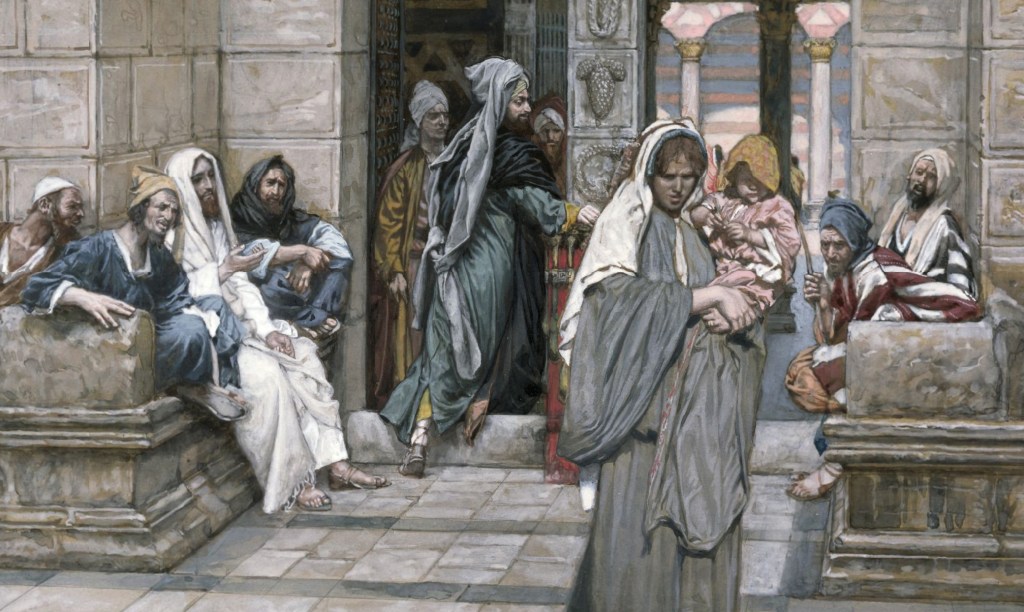
Where Jesus sits debating with these elitist religionists, there is a “poor box” to make offerings. The rich and privileged pass by, maybe tossing in a few left over coins from their marketing. But a poor widow approaches the box with a nearly invisible yet momumental gift. Jesus seizes the moment to make a consummate point with an economy of words:

Many rich people put in large sums.
A poor widow also came and put in two small coins worth a few cents.
Calling his disciples to himself, he said to them,
Amen, I say to you, this poor widow put in more
than all the other contributors to the treasury.
For they have all contributed from their surplus wealth,
but she, from her poverty, has contributed all she had,
her whole livelihood
.”

The Widow’s Mite – James Tissot


Humble Tobit and the Generous Widow teach us volumes about how to love and serve God. They teach us about righteousness and spiritual wealth, about justice and freedom, about fidelity and hope.

As we close this week of wonderful readings, let’s sit with these teachers, and with Jesus, to discern the most important lessons for us.


Poetry: The Widow’s Mites – Richard Crashaw

Two mites, two drops, yet all her house and land,
Fall from a steady heart, though trembling hand :
The other's wanton wealth foams high, and brave ;
The other cast away, she only gave.

Music: Give It All You’ve Got – 3rd Force

Vigil

Friday of the Ninth Week in Ordinary Time
June 9, 2023

Today’s Readings:

https://bible.usccb.org/bible/readings/f060923.cfm

Today, in God’s Lavish Mercy, you might be reminded of your younger days when you read our passage from Tobit.

Tobiah’s mom is worried about his long absence. He was sent off on an errand to retrieve his Dad’s money, but he’s been busy getting married and catching magic fish. So he probably hasn’t taken the time to “call home”.

Meanwhile, Anna has sat watching the road by which her son was to return. When she saw him coming, she called to his father, “Look, your son is coming, and the man who traveled with him!”

Tobit 11:5-6
Dante Gabriel Rossetti
Tobias in the House of His Father and Mother

Did your parents ever keep a vigil like this for you? Maybe after a date that went too long? Or an assigned journey to which you added a few stops of your own? Wouldn’t Mom and Dad have been glad to see you coming home, like Tobiah, with a guardian angel by your side – instead of, maybe, the school principal or a police officer! 😉


We keep vigil in the restless expectation of good things.
Even though vigils occur in the darkness before the dawn,
they are fired by hope and trust in God.


Many years ago, my then young brother spent several months in Thailand for his job. My mother and I missed him so much! When we received word that he was coming home for Christmas, the long vigil for his arrival began. It included cleaning, cooking, and planning the holiday calendar that would celebrate his return. (You would have thought Julius Caesar was returning from the conquest of Gaul!)


Waiting

But Jimmy didn’t arrive on the day he was expected. What did arrive was a big nor’easter snow storm that clogged the roads he would be traveling!

Mom and I took turns peeking out the front window at ten minute intervals, but no matter how often we peeked, Jim still didn’t appear. Finally, bleary-eyed past midnight, we both surrendered to a strained sleep.

Awakening before dawn the next morning, I prayed to see my brother sleeping on the couch. But my hope was not met. Nervous now, I opened the front door to retrieve the nearly frozen milk containers resting in the snow outside.

And there he was – asleep behind the wheel of a rental car parked under the amber street light. He hadn’t wanted to wake us since the snow had delayed his arrival until long after midnight.


Our entire life is a vigil for the expected coming of God Who arrives in every moment. Imagine God, like my kind and freezing brother, wanting us to wake up gently on our own to the Divine Presence right outside the door of our consciousness. Imagine ourselves opening that door in surprised delight and welcoming God into our warm relief.


Poetry: The Heart Cave – Geoffrey Brown
(My long time readers will recognize this beautiful poem as one of my often repeated favorites.)

I must remember to go down to the heart cave
And sweep it clean, make it warm, with fire on the hearth
And candles in their niches
The pictures on the walls glowing with quiet lights.

I must remember to go down to the heart cave
And make the bed with the quilt from home
Strew rushes on the floor
And hang lavender and sage from the corners.

I must remember to go down to the heart cave
And be there when you come.


Music: Homecoming – Hagood Hardy

Not Far

Thursday of the Ninth Week in Ordinary Time
June 8, 2023

Today’s Readings:

https://bible.usccb.org/bible/readings/060823.cfm

Today in God’s Lavish Mercy, our first reading invites us to a wedding and our Gospel shows us the way to heaven.

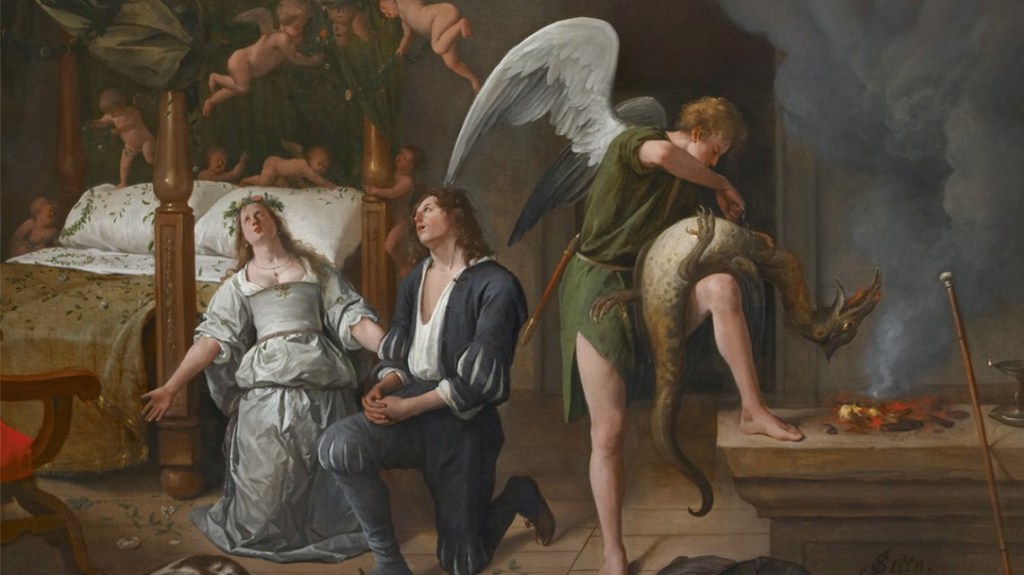
The marriage of Tobiah and Sarah is a nail-biter! Seven would-be husbands have already died in the honeymoon chamber! Sarah’s father is so convinced that Tobiah will be the eighth that, after the couple goes to bed, he digs a grave just in case. But Tobiah, like his father Tobit, is a good and just man. His heart is pure. Before they make love, Tobiah and Sarah pray and God hears their prayer, allowing Raphael to dispel the demon that has plagued Sarah’s earlier disastrous marriage attempts.


So what is happening here in terms of scriptural inspiration? Is this just a great beach book for the Jews scattered after the Assyrian captivity? Certainly not. The Book of Tobit offered spiritual stability to the uncertain world of the Jews in exile. In a clever story, the narrator outlines the essential guideposts for the believer to hold fast to their identity and faith – primarily with these concepts:

  • God is in charge and will remain faithful even if we do not. Imagine that!
  • Our faithfulness is demonstrated by religious fidelity, humility, prayer, patience and good works.
  • God’s faithfulness is demonstrated by bringing good even out of chaos and misfortune.

Our modern understandings are not that different from those of Tobit’s ancient author. In some sense, we all live “in exile”, at least from our final heavenly home. And God, of course, is still in charge. But we see God’s power in our lives not as preordained management but rather as a steadfast companionship in our own life’s unfolding drama.

Our life is not a book God has already written. In a mystery we cannot comprehend, our Omnipotent God chooses to live our lives with us, its direction unfolding as we continue to mature in God’s Love.


Our Gospel tells the story of a scribe deepening in that maturing process. He asks Jesus what is most important to live a good life. Jesus says what’s most important is love – love of God and love of neighbor. When the scribe responds in agreement, Jesus tells him that he is not far from the kingdom of God.

Perhaps our prayer today could be this: May deepening Love carry each of us all the way home to God’s heart.


Poetry: Heaven-Haven by Gerard Manley Hopkins

(A nun takes the veil)
I have desired to go
Where springs not fail,
To fields where flies no sharp and sided hail
And a few lilies blow.
And I have asked to be
Where no storms come,
Where the green swell is in the havens dumb,
And out of the swing of the sea.


Music: A Walk in Paradise – Darlene Koldenhaven

What Will Heaven Be Like?

Wednesday of the Ninth Week in Ordinary Time
June 7, 2023

Today’s Readings:

https://bible.usccb.org/bible/readings/060723.cfm

Today, in God’s Lavish Mercy, both Tobit and Sarah stand on the edge of a psychological cliff:

  • Tobit – because he has lost his ability to see, both physically and spiritually
  • Sarah – because she is ridiculed and accused of killing seven husbands

The beautiful thing about both of them is that in their desperation they turn to God. Ultimately, God hears them and gives healing.


Sarah’s Marriage to Tobiah after Raphael Kills Demon- Jan Steen


In our Gospel, the Sadducees present Jesus with a puzzle reminiscent of Sarah’s situation.

Now there were seven brothers.
The first married a woman and died, leaving no descendants.
So the second brother married her and died, leaving no descendants,
and the third likewise.
And the seven left no descendants.
Last of all the woman also died.
At the resurrection when they arise whose wife will she be?

Mark 12:20-23

The Sadducees could not have been more insincere in their question. They didn’t even believe in life after death, so why were they posing the question? The Sadducees accepted only the first five books of the Bible as scripture. They rejected the inspirations of the prophets and wisdom writers where the first Biblical ideas of an afterlife arise.

Given their rejection of the developing insights into God and God’s dealings with his people over the intervening centuries, and expressed so beautifully in the prophets and much of the wisdom literature, they did not accept any possibility of life after death. Persons lived on through descendants. The centrality of descendants was the reason also for their obsession with property rights and inheritance. The consequences of human behavior did not echo into eternity. Their horizons were firmly limited to the here and now.

Father John McKinnon – revered Australian priest and teacher

Jesus clearly saw the intention of the Sadducees’s question. Feeling their elite status to be threatened by his teaching, they wished to trap Jesus in an indefensible position. If they could undermine his authority and influence, their own would be bolstered.

Jesus unperturbedly but directly tells them that they are not only wrong in their calculations, but are clueless regarding God and the scriptures:

Jesus said to them, “Are you not misled
because you do not know the Scriptures or the power of God?
When they rise from the dead,
they neither marry nor are given in marriage,
but they are like the angels in heaven.

Mark 12:24-25

Haven’t you wondered what heaven will be like? Jesus’ answer gives us a little insight. I really like how Father McKinnon describes Jesus’s perception:

Jesus’ view of resurrection was of unbelievable qualitative difference, beyond the capacity of people to imagine or understand. It would be the power of God at work: pure gift. 

Father John McKinnon

We may want to spend some prayer time imagining that “unbelievable qualitative difference”, an imagining which ultimately saved Tobit and Sarah from their desperation.


Poetry: The World is not Conclusion – Emily Dickinson

This World is not Conclusion.
A Species stands beyond -
Invisible, as Music -
But positive, as Sound -
It beckons, and it baffles -
Philosophy, dont know -
And through a Riddle, at the last -
Sagacity, must go -
To guess it, puzzles scholars -
To gain it, Men have borne
Contempt of Generations
And Crucifixion, shown -
Faith slips - and laughs, and rallies -
Blushes, if any see -
Plucks at a twig of Evidence -
And asks a Vane, the way -
Much Gesture, from the Pulpit -
Strong Hallelujahs roll -
Narcotics cannot still the Tooth
That nibbles at the soul -

Music: Can Only Imagine – MercyMe

Sincerely

Tuesday of the Ninth Week in Ordinary Time
June 6, 2023

Today’s Readings:

https://bible.usccb.org/bible/readings/060623.cfm


Today, in God’s Lavish Mercy, our readings give us two examples of people talking to each other without communicating. Ever been there- just not quite on the same wavelength?

In the passage from Tobit, fiesty Anna brings home a bonus goat as a reward for her good work. Tobit, grumpy with the ill fortune of his blindness, accuses her of fencing stolen goods.

Anna said to me, “The goat was given to me as a bonus over and above my wages.”
Yet I would not believe her,
and told her to give it back to its owners.
I became very angry with her over this.
So she retorted: “Where are your charitable deeds now?
Where are your virtuous acts?
See! Your true character is finally showing itself!”

Tobit 2:14

Anna uses Tobit’s incalcitrance to make him take a good look at himself – his true character. She challenges another kind of blindness in Tobit beyond his physical challenges. He ultimately repents and prays for solace.


However, in our Gospel, a gang of antagonists intend to set a trap for Jesus. This is a whole different level of wavelength misalignment. Here, the questioners never had an intention to seek truth or come to mutual understanding.

Some Pharisees and Herodians were sent
to Jesus to ensnare him in his speech.
They came and said to him,
“Teacher, we know that you are a truthful man
and that you are not concerned with anyone’s opinion.
You do not regard a person’s status
but teach the way of God in accordance with the truth.

Mark 12:13-14

These two instances of fractious communication are differentiated by one key element: sincerity. Though out of alignment, both Anna and Tobit are sincere in their exchange. In our Gospel, only Jesus is sincere. His antagonizers use the reprehensible tool of gaslighting, attempting trap Jesus in his own words.


The Latin words “sine cera” mean ‘without wax”

“Sin-cere. Since the days of Michelangelo, sculptors had been hiding the flaws in their work by smearing hot wax into the cracks and then dabbing the wax with stone dust. The method was considered cheating, and therefore, any sculpture “without wax”—literally sine cera—was considered a “sincere” piece of art. The phrase stuck. To this day we still sign our letters “sincerely” as a promise that we have written “without wax” and that our words are true.”

Dan Brown, The Lost Symbol

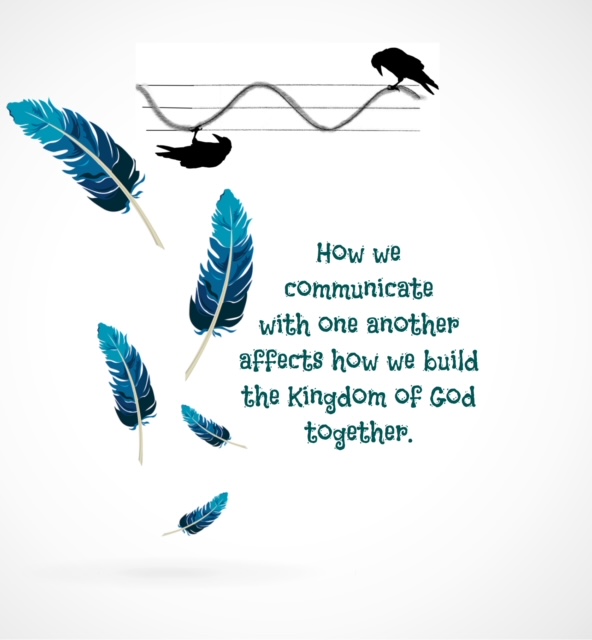
How we communicate with one another affects how we build the kingdom of God together. The communication can be as ordinary as a couple’s banter, like Anna and Tobit. Or it can be as momentous as two cultures meeting in either resistance or transformation.

Our readings suggest that if we have not learned to practice sincerity even in small things, we will not have the awareness and spiritual freedom to practiice it in big things.


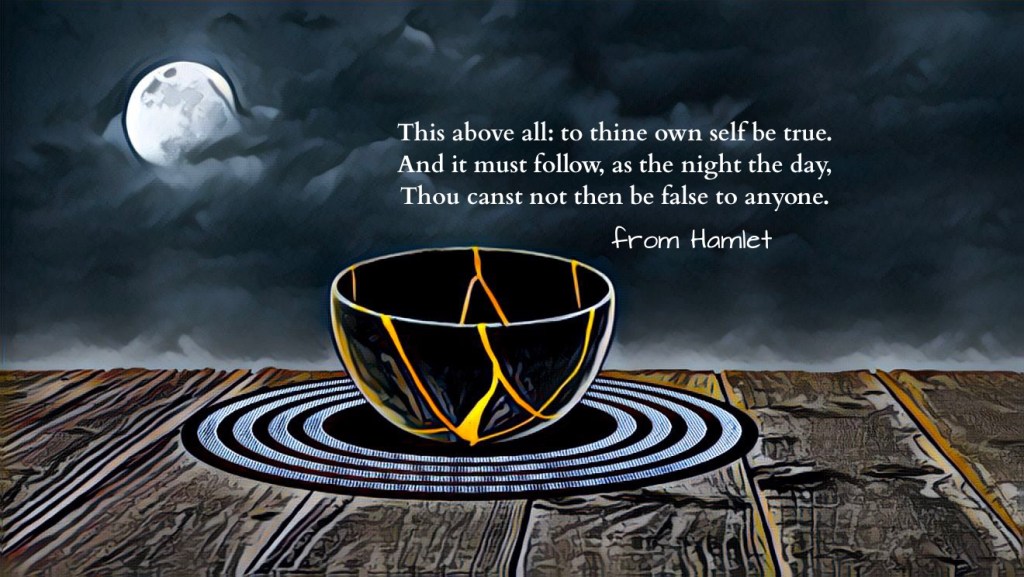
Poetry: “To thine own self be true” from Shakespeare’s Hamlet. Here, Polonius instructs his son, Laertes, as he leaves for college.

There, my blessing with thee.
And these few precepts in thy memory
Look thou character. Give thy thoughts no tongue,
Nor any unproportioned thought his act.
Be thou familiar but by no means vulgar.
Those friends thou hast, and their adoption tried,
Grapple them unto thy soul with hoops of steel,
But do not dull thy palm with entertainment
Of each new-hatched, unfledged comrade. Beware
Of entrance to a quarrel, but being in,
Bear ’t that th’ opposèd may beware of thee.
Give every man thy ear but few thy voice.
Take each man’s censure but reserve thy judgment.
Costly thy habit as thy purse can buy,
But not expressed in fancy—rich, not gaudy,
For the apparel oft proclaims the man,
And they in France of the best rank and station
Are of a most select and generous chief in that.
Neither a borrower nor a lender be,
For loan oft loses both itself and friend,
And borrowing dulls the edge of husbandry.
This above all: to thine own self be true,
And it must follow, as the night the day,
Thou canst not then be false to any man.
Farewell. My blessing season this in thee.

Music: To Thine Own Self Be True – Music by Brian Tate

And check out the just -for-fun extra song below.

Maybe you can imagine Anna singing this oldie but goodie to Tobit once they argued over the goat!

Fidelity in Exile

Memorial of Saint Boniface, Bishop and Martyr
June 5, 2023

Today’s Readings:

https://bible.usccb.org/bible/readings/060523.cfm

Today, in God’s Lavish Mercy, we begin a series of readings from the Book of Tobit. This fascinating scripture is actually a biblical novel written by an unknown author about 200 years before Jesus was born. It tells the story of a character who lived 800 years before that. It is not an autobiography or history. It is a combination of fiction, poetry, allegory and wisdom. Probably a “best seller” in its own time, it is actually really fun to read – and it gives us a good dose of spiritual wisdom!


In a nutshell, the book of Tobit relates how two suicidal characters, one blind
(Tobit) and one haunted by a husband-killing demon (Sarah) are healed with
medicinal fish organs by Tobit’s son Tobiah with the guidance of the angel
Raphael. Tobiah marries Sarah and acquires wealth and property into the
bargain. In addition to being entertaining, the book of Tobit
maintains that one can withstand temporary misfortune
and ultimately enjoy a happy life if one performs righteous deeds.

Delicious Prose: Reading the Tale of Tobit with Food and Drink, by Naomi S.S. Jacobs

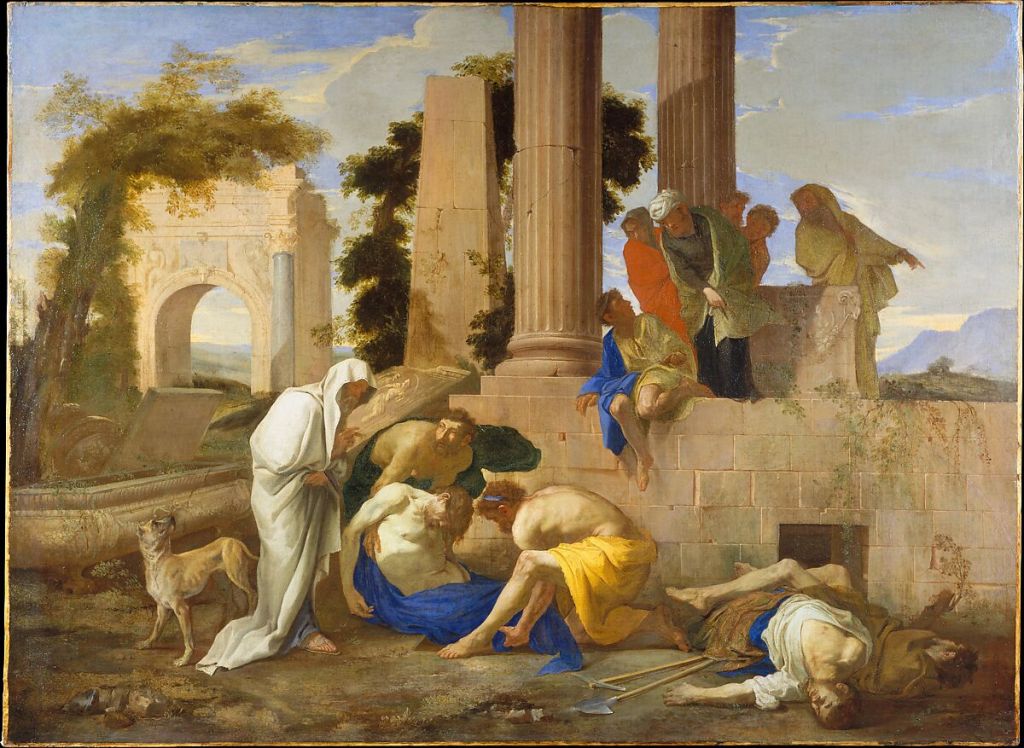
In today’s passage, Tobit introduces himself as a good man who wants to share his blessings with someone less fortunate. He sends his son Tobiah on the noble errand to find such a person. On his way, Tobiah discovers a murdered kinsman left unburied where he died. Upon hearing of it, Tobit “springs” into action, doing the right thing for this unfortunate victim. As a result of his righteous response, Tobit incurs the wrath not only of the Assyrian overlords, but also of his wimpy Israelite neighbors who are too afraid (or lazy) to keep the Mosaic Law while in exile.

Tobit Burying the Dead – Andrea DiLeone


Big lessons from this reading? Remember, the author of Tobit was writing for a community that had been ripped from their spiritual and material home. They knew the waning hope of one in exile. They needed to be reminded of and supported by stories of covenantal fidelity – both God’s and humanity’s.

By the rivers of Babylon we sat and wept when we remembered Zion.(Ps.137)


But even if our lives are not quite so dramatic as theirs, the reading holds quite a few lessons for us as well.

  • Circumstances may cause one to feel “exiled” from the comfort of their faith, but it is essential to retain a stabilizing religious devotion and practice.
  • It is important to invite and include others, especially the young, in the faithful practice of charity and justice.
  • It is normal and healthy to grieve the spiritual losses or emptiness we may experience. Such recognition is a first step to healing, and can give us the release to move on to what we need to do:

Returning to my own quarters, I washed myself
and ate my food in sorrow.
I was reminded of the oracle
pronounced by the prophet Amos against Bethel:
All your festivals shall be turned into mourning,
and all your songs into lamentation.

And I wept.
Then at sunset I went out, dug a grave, and buried him.

Tobit 2:5-7

Prose: How to Be Hopeful by Barbara Kingsolver, from her commencement address at Duke University, May 11, 2008

HOPE: AN OWNER’S MANUAL
Look, you might as well know, this thing
is going to take endless repair: rubber bands, crazy glue, tapioca, the square of the hypotenuse. Nineteenth century novels. Heartstrings, sunrise: all of these are useful. Also, feathers.

To keep it humming, sometimes you have to stand on an incline, where everything looks possible;
on the line you drew yourself. Or in
the grocery line, making faces at a toddler secretly, over his mother's shoulder.

You might have to pop the clutch and run
past all the evidence. Past everyone who is laughing or praying for you. Definitely you don't want to go directly to jail, but still, here you go, passing time, passing strange. Don't pass this up.

In the worst of times, you will have to pass it off.
Park it and fly by the seat of your pants. With nothing in the bank, you'll still want to take the express.
Tiptoe past the dogs of the apocalypse that are sleeping in the shade of your future. Pay at the window.
Pass your hope like a bad check.
You might still have just enough time. To make a deposit. 

Music: Take Courage – Kristine DiMarco

Autumn Equinox

Wednesday of the Twenty-fifth Week in Ordinary Time

September 22, 2021

Today, in God’s Lavish Mercy, as we mark the Autumn Equinox, we pray with a verse from our Responsorial Psalm:

Bless the Lord, all you chosen ones,
and may all of you praise God’s majesty.
Celebrate days of gladness, 
give God praise.

Tobit 13: 7-8
"EQUINOX"
- the beautiful heft of the word!
Four malleable vowels and
two steely consonants,
softened slightly by a third.
On the fulcrum of a middle "i",
"equ" pushes for balance
against the pressure of "nox",
whose mass bears 
winter's weighted threat.

However we may read the word “equinox”, it spells “change“. Trees put away their lithesome summer greens, like sleeveless tops folded on September’s shelf. Slowly, they wrap themselves within autumn’s deep gold and umber sweaters, trimmed in warm magenta.

We too return to the enterprise of warmth, of fueling fires, of lighting lamps. What nature gave, and we heedlessly received in bright July, is spent. Some chilled memory of solstice motivates us to prepare.


Our hearts too, in synch or out with seasons, cycle through such changes. This inner rhythm of need and abundance is the music through which the Holy Spirit shapes our understanding of God. As in all graceful dances, there must be a yielding. There must be abandon to the mystery into which each passing step dissolves.

God hums the infinite song in our souls, if we will listen. It is deeper than any single note of joy or sorrow. It is the fluid under-beat of Love which recreates and sustains us in every shifting moment of our lives. We belong to it as the waves belong to the Sea, as the leaves belong to the Seasons.


In Philadelphia, it is a glorious day – a perfect vestibule to a season of amazing beauty.  Nature prepares to shed the showy accretions of summer in a multi-colored ritual of leave-taking. It is time to return to the essentials – back to the branch, back to the buried root, back to the bare, sturdy reality that will anchor us in the coming winter.

On each of the coming days, some new layer of green will ignite in a blaze of scarlet or gold then turn out its light for a long winter’s sleep. Nature knows when things are finished.  It knows when it has had enough.  It knows its need for a season of emptying, for a clearing of the clutter, for the deep hibernation of its spirit.


But we humans often ignore the need for an “autumning” of our spirits.  We try to live every moment in the high energy of summer – producing, moving, anticipating, and stuffing our lives with abundance.  

But simplicity, solitude and clarity are necessary for our spirit to renew itself.  Autumn is the perfect time to prayerfully examine the harvest of our lives – reaping the essentials and sifting out the superfluous. In the quiet shade of a crimson maple tree, we may discover what we truly love, deeply believe and really need to be fully happy.

Take time on these crystal days to ask yourself what is really essential in your life.  Nurture those things with attention and care.  Don’t take them for granted.  After the flare of the summer has passed, these are the things that will sustain you: a strong faith, a faithful love and a loving compassion. Tend them in this season of harvest.

Music: Autumn from The Four Seasons by Antonio Vivaldi

Memorial of Saint Boniface, Bishop and Martyr

Saturday, June 5, 2021

Today, in God’s Lavish Mercy, we pray with the final prayer of Tobit for our Responsorial Psalm.

The Church has  followed Tobit’s story for a little over a week. We have seen a man who, even through his dramatic ups and downs, remains a steadfast believer. 

For Tobit, the exigencies of his life do not dictate the intensity of his faith. Rather, that intense faith fuels his response to life.

The Lord scourges and then has mercy;
    casts down to the depths of the nether world,
    and brings up from the great abyss.
No one can escape the Lord’s hand.
So now consider what the Lord has done for you,
    and give praise with full voice.
Bless the Lord of righteousness,
    and exalt the King of ages.

Tobit 13: 2,6

Tobit realized that his faith stood as a sign to others. He preached by his attitude in life, not so much by his words:

In the land of my exile I praise him
    and show his power and majesty to a sinful nation.

Tobit 13:7

Written from a place of exile, the Book of Tobit gives us good advice to sustain faith in our own small “exiles”. Always bless and praise God. Find the points of light and joy. Cling to and celebrate them.

Bless the Lord, all you his chosen ones,
    and may all of you praise his majesty.
Celebrate days of gladness, and give the Lord praise.

Tobit 13:8

Tobit is a make-believe person. But our Gospel shows us a real woman who embodies the simple, steadfast faith which the Book of Tobit preaches. She also preached with her actions rather than her words.

Although she had little, she lived out of her abundance not her scarcity. That abundance was fired by the God she believed in and trusted, as was the faith of apocryphal Tobit.

As we pray with Tobit and the widow, we might share with them our own faith, both its strengths and it weaknesses, asking to draw inspiration and courage from their stories.


Poetry: This Place of Abundance – Catherine of Siena
~ from Love Poems from God – Twelve Sacred Voices from the East and West
by Daniel Ladinsky

We know nothing until we know everything.
    I have no object to defend
    for all is of equal value
    to me.

I cannot lose anything in this
place of abundance
I found.

    If something my heart cherishes
    is taken away,
    I just say, “Lord, what
    happened?”

And a hundred more
appear.

Music: Live Like You’re Loved – Hawk Nelson

Friday of the Ninth Week in Ordinary Time

June 4, 2021

Today, in God’s Lavish Mercy, we pray with Psalm 146, a song of uninhibited delight and thanksgiving to God.

Coming after our reading from Tobit, we see just what such utter delight looks like.

That “angelic fish gall” re-lit the world for Tobit in a way he had never imagined before!


Sometimes we too have to experience a profound blindness before we really begin to see rightly. Let’s be honest: haven’t we all been blind a few times in our lives.

  • Blessings unrecognized
  • Friendships taken for granted
  • Kindnesses overlooked
  • People misjudged 
  • Needs ignored
  • Expectations unsurrendered 
  • Biases unexamined
  • Opportunities bypassed
  • Perhaps even responsibilities shirked

Praying with Psalm 146, we might take note of those whom the Lord favors:

the oppressed, the hungry. captives, those who are bowed down; 
the just, strangers, orphans and widows

These favored of God share a common trait – a vulnerability learned through suffering.


None of us seeks suffering in our lives. But we all will encounter it personally at least to some degree. Further, all in the community of faith are called to share the sufferings of others by our works of mercy.

In both instances, can we allow suffering to let us see the world differently, to lift the scales of any blindness in our hearts? Because here is the beautiful mystery: the God of Mercy is with us in our lights and shadows — and is always Light.

Praise the LORD, O my soul;
    I will praise the LORD all my life;
    I will sing praise to my God while I live. 

Psalm 146:1

Poetry: God Pours Light – Hafiz

God
pours light
into every cup,
quenching darkness.
The proudly pious
stuff their cups with parchment
and critique the taste of ink
while God pours light
and the trees lift their limbs
without worry of redemption,
every blossom a chalice.
May I seduce those withered souls
with words that wet their parched lips
as light
pours like rain
into every empty cup
set adrift on the Infinite Ocean.


Music: Amazing Grace – Leo Rojas

Memorial of Saint Justin, Martyr

Tuesday, June 1, 2021

Today, in God’s Lavish Mercy, we pray with Psalm 112, a hymn deeply rooted in the biblical concept of law and justice.

Blessed the one who fears the LORD,
who greatly delights in God’s commands.
That person’s posterity shall be mighty upon the earth;
the upright generation shall be blessed.

Psalm 112:1-2

In our first reading, as Tobit and Anna share a familiar type of marital spat, we see that there are many perspectives from which one can approach the concept of justice. Anna knows her actions to be just from experience. Tobit analyzes the situation from judgement and law.

But in our Gospel, the wily Pharisees try to manipulate the law in order to ensnare Jesus:

Teacher, we know that you are a truthful man
and that you are not concerned with anyone’s opinion.
You do not regard a person’s status
but teach the way of God in accordance with the truth.
Is it lawful to pay the census tax to Caesar or not?

Mark 12:14

Jesus, who is the essence of Truth, is not trapped. After examining the coin which was given him:

Jesus said to them,
“Repay to Caesar what belongs to Caesar
and to God what belongs to God.
They were utterly amazed at him.”

Mark 12:15

Our psalm tells us that understanding God’s law is grounded in the transparency of our own truth:

The just one’s heart is firm, 
trusting in the LORD.
It is steadfast and fearless.
From its abundant confidence, 
such a heart lavishly gives to the poor;
with a generosity that shall endure forever,
standing firm to glorify God.

Psalm 112: 7-9

Our readings give us a lot to think about. And if nothing else, a delightful story from Tobit. 🤗


Poetry: Truth by Rumi

The truth was a mirror 
in the hands of God. 
It fell, 
and broke into pieces. 
Everybody took a piece of it, 
and they looked at it 
and thought they had the truth.


Music: The Voice of Truth – Casting Crowns