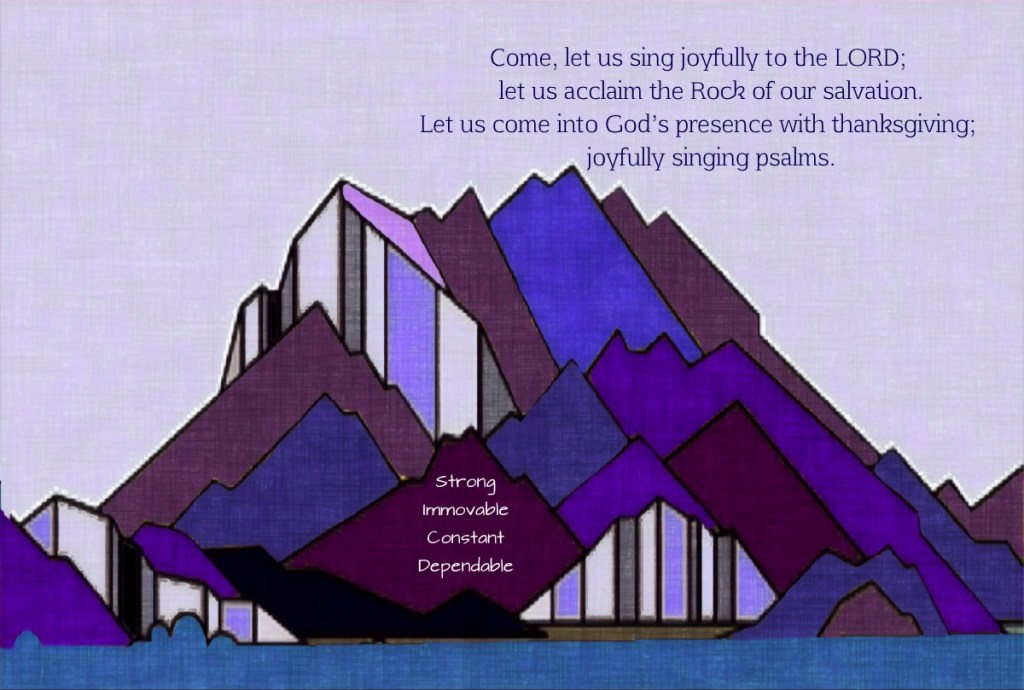
Psalm 51: I Desire Mercy

Saturday of the Third Week of Lent

March 13, 2021
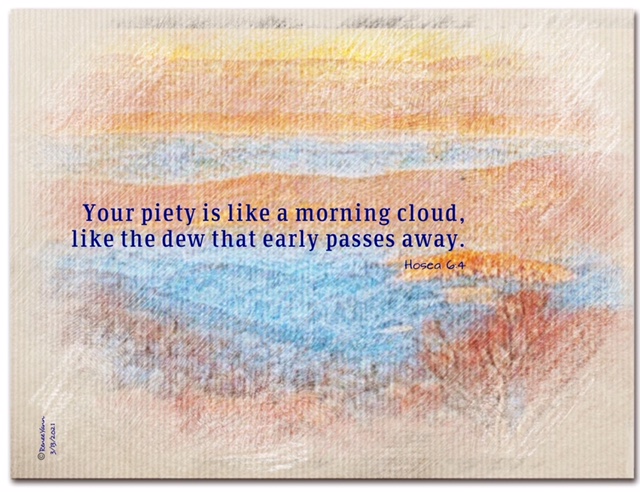

Hosea’s Warning

Today, in God’s Lavish Mercy, we pray with Psalm 51 which, together with our other readings, tests the depths and sincerity of our prayer.

A clean heart create for me, God;
renew within me a steadfast spirit.

Psalm 51:12

Our readings today put this consideration before us:

What is prayer really,
and what is the quality of my prayer?


Hosea tells us

For it is love that I desire, not sacrifice,
    and knowledge of God rather than burnt offerings.


Luke tells us

For everyone who exalts himself will be humbled,
and the one who humbles himself will be exalted.


And our psalm tells us

For you are not pleased with sacrifices;
    should I offer a burnt offering, you would not accept it.
My sacrifice, O God, is a contrite spirit;
    a heart contrite and humbled, O God, you will not spurn.


To sum up our readings, here’s what prayer is NOT:

  • It is not a roll call of our sacrifices and righteousness.
  • It is not fasting, or paying tithes, or even keeping the commandments.

Then what is it?


Prayer is an intimate exchange with God
with whom we are humble, honest,
open, generous and grateful
– with Whom we are safe, confident and in love.

Prayer is our response to God
who desires our merciful hearts.
… so
Let us Pray.

Poetry: A Prayer from Teresa of Avila 

May today there be peace within.
May you trust God that you are exactly where you are meant to be.
May you not forget the infinite possibilities that are born of faith.
May you use those gifts that you have received, 
and pass on the love that has been given to you.
May you be content knowing you are a child of God.
Let this presence settle into your bones, 
and allow your soul the freedom to sing, dance, praise and love.
It is there for each and every one of us.

Music: Peaceful Moments – Regi Stone

Psalm 81: Through the Storm

Friday of the Third Week of Lent

March 12, 2021


Today, in God’s Lavish Mercy, we pray with Psalm 81, another call to listen to God’s Word in order to find the fullness of life:

If only my people would hear me,
    and Israel walk in my ways,
I would feed them with the best of wheat,
    and with honey from the rock I would fill them.


But honestly, isn’t it hard to listen sometimes. Even the psalm suggests that there are such loud, distracting events in our lives that we sometimes can’t hear that Word:

In distress you called, and I rescued you.
 Unseen, I answered you in thunder;
    I tested you at the waters of Meribah.
Hear, my people, and I will admonish you;
    O Israel, will you not hear me?


The psalm shows us that God’s deepest Word
comes to us in thunder, in storm.
It is a truth Jesus embraced on Calvary.
It is a truth our lives will sometimes require of us.


This morning my prayer is filled with thoughts of my friend whose young daughter died last week. When even I, who never met Emily, can feel the overwhelming sadness of her untimely death, what unbearable storm must surround her parents! How can they hear the word of faith in the tumult?


Many years ago, I attended an evening event on the other side of my state. During the ceremony, a tornado touched down very nearby. After several frightening hours, I was able to travel back to my hotel, about five miles away.

But the roads were blocked with debris. The streets lights and signs had been blown down. And I was completely unfamiliar with the vicinity. I did eventually make it “home” to the hotel, but it wasn’t the same as I had left it. Part of the roof lay across the street. The window in my room had been fractured and boarded up.

For me, the memory is a parable about suffering. When the storm comes, we may pass through it, but we are not unchanged. Our world is not unchanged.

Jesus was not unchanged by Good Friday and Easter Sunday. By hearing God’s Word in the storm, Jesus was transformed. This is the legacy of faith Christ has given us in the Paschal Mystery. May it strengthen, heal, and transform us this Lent. May it comfort all those who so dearly love Emily.


Poetry: The Man Watching  by Rainer Maria Rilke, Translated by Robert Bly

I can tell by the way the trees beat, after
so many dull days, on my worried windowpanes
that a storm is coming,
and I hear the far-off fields say things
I can’t bear without a friend,
I can’t love without a sister.

The storm, the shifter of shapes, drives on 
across the woods and across time,
and the world looks as if it had no age:
the landscape, like a line in the psalm book, 
is seriousness and weight and eternity.

What we choose to fight is so tiny! 
What fights with us is so great. 
If only we would let ourselves be dominated
as things do by some immense storm, 
we would become strong too, and not need names.

When we win it’s with small things, 
and the triumph itself makes us small. 
What is extraordinary and eternal
does not want to be bent by us. 
I mean the Angel who appeared
to the wrestlers of the Old Testament:
when the wrestlers’ sinews 
grew long like metal strings, 
he felt them under his fingers 
like chords of deep music.

Whoever was beaten by this Angel 
(who often simply declined the fight) 
went away proud and strengthened
and great from that harsh hand, 
that kneaded him as if to change his shape. 
Winning does not tempt that man. 
This is how he grows: by being defeated, decisively, 
by constantly greater beings.


Music: Moonlight Sonata in a Thunderstorm 

Psalm 95: Image of God

Thursday of the Third Week of Lent

March 11, 2021


Today, in God’s Lavish Mercy, we pray with Psalm 95, another frequent friend of our prayer.

Psalm 95 is an “enthronement psalm” which calls us to worship God as Ruler. Our verses today also use the images of Rock and Shepherd as images to help us understand the nature of God’s presence in our lives.

We can know God only through images. Most of us don’t have direct revelations. 😉 The images we choose and cultivate have a profound impact on our relationship with God and on how we live our lives in God’s image.

Psalm 95 offers us two pictures of God today. These two metaphors evoke some similar sentiments. They also contrast in other ways. Praying with ikons like these can be a beneficial way to come deeply into God’s Presence by touching into our deepest spiritual needs.


Poetry: Rainer Maria Rilke, Poems from the Book of Hours

You are the future, the great sunrise red
above the broad plains of eternity.
You are the cock-crow when time’s night has fled,
You are the dew, the matins, and the maid,
the stranger and the mother, you are death.
You are the changeful shape that out of Fate
rears up in everlasting solitude,
the unlamented and the unacclaimed,
beyond describing as some savage wood.
You are the deep epitome of things
that keeps its being’s secret with locked lip,
and shows itself to others otherwise:
to the ship, a haven — to the land, a ship.


Music: Made in the Image of God – We Are Messengers

Psalm 147: Count Your Blessings

Wednesday of the Third Week of Lent

March 10, 2021

Today, in God’s Lavish Mercy, we pray with Psalm 147, a poem filled with reasons to love and praise God. Today’s selected verses mention just a few of those reasons.

The blessings of security and family:

Worship the Lord, O Jerusalem; praise your God, O Zion,
who has strengthened the bars of your gates, 
who has blessed your children within you.

Psalm 147: 12-13

The blessings of diverse Creation:

The Lord sends out a command to the earth, 
and this word runs very swiftly.
The Lord gives snow like wool 
and scatters hoarfrost like ashes

Psalm 147: 15-16

The blessings of faith and religious heritage:

The Lord declares the word to Jacob, 
statutes and judgements to Israel.
The Lord has not done so to any other nation; 
to them these judgements have not been revealed.

Psalm 147: 19-20

Sometimes we spend a lot of energy praying over the things we think we need rather than recognizing all that we have.

This morning as I prayed, a personal thanksgiving psalm unfolded in my heart:

  • Hundreds of snow geese followed their yearly flight path right over my home, honking a symphony of hope.
  • The sun rose warm, tugging a clear promise of spring up over the horizon.
  • The Psalms lay open in my lap, a rich gift of the ages to my sometimes thin prayer.
  • My beloved communities slowly awakened and blossomed around me – my Mercy sisters, the toddlers in the daycare below me, the daily hum of the Motherhouse across the path outside my window, the buses carrying children to our Mercy schools
  • My family texting from their faraway homes.
  • I imagined myself as a small part of the magnificent communities described by beloved Pope Francis in Laudato Sí and Fratelli Tutti.
  • I felt those communities slowly beginning to recover from this past year’s devastation.
  • I prayed my sense of blessing into those still so deeply broken by global suffering, begging for their healing.

Gratitude for my blessings overwhelmed me, as it did our psalmist in #147:

Hallelujah!
How good to sing praise to our God;
how pleasant to give fitting praise.

Psalm 147:1

Poem: God Moves in a Mysterious Way – William Cowper

God moves in a mysterious way,
    His wonders to perform;
He plants his footsteps in the sea,
    And rides upon the storm.

Deep in unfathomable mines
    Of never failing skill;
He treasures up his bright designs,
    And works His sovereign will.

Ye fearful saints fresh courage take,
    The clouds ye so much dread
Are big with mercy, and shall break
    In blessings on your head.

Judge not the Lord by feeble sense,
    But trust him for his grace;
Behind a frowning providence,
    He hides a smiling face.

His purposes will ripen fast,
    Unfolding ev'ry hour;
The bud may have a bitter taste,
    But sweet will be the flow'r.

Blind unbelief is sure to err,
    And scan his work in vain;
God is his own interpreter,
    And he will make it plain.

Music: The Snow Goose – John Ritchie

Speaking of geese this morning, one of my all time favorite stories is “The Snow Goose” by Paul Gallico. I hope many of you have read it. It’s beautiful. I found a website that talks all about it, even with a Richard Harris movie included! For those who might be interested in a literary excursion 😀:

Psalm 25: Remember me?

Tuesday of the Third Week of Lent

March 9, 2021


Today, in God’s Lavish Mercy, we pray with Psalm 25, a gentle call for God’s attention:

The tone of this very human prayer is this: “Pay attention to me, God!”
Think of a toddler peppering her parent – “Mommy, look! Daddy, watch!

That’s what Psalm 25 is – a peppering of God.🤗


It’s not exactly that we feel forgotten by God. We know that can never happen, right? But we want God to put aside everything that might be occupying the Divine Attention, turn around and focus on us, listen intently to our prayer.


Remember that your compassion, O LORD,
    and your kindness are from of old.
In your kindness remember me,
    because of your goodness, O LORD.


Praying with Psalm 25 might lead us to realize that it is not God who must remember, or pay attention. It is us! In our need, we must recall God’s long faithfulness to us and therefore TRUST that God is with us – always – in any current circumstance. We must pray to discover God present there.

Your ways, O LORD, make known to me;
    teach me your paths,
Guide me in your truth and teach me,
    for you are God my savior.


Poetry: Psalm 25 – Trust by Christine Robinson

I put my trust in you, O God, as best as I am able. 
   May I be strong. May I not be afraid
May all who open their hearts
  hear your voice and know your love.

Lead me, teach me, help me to trust.
You are gracious to us, O God
You guide us, you forgive our clumsy ways
You help us prosper.

When I am sad and anxious
  I school my heart to trust
I act with integrity and uprightness
  And hope to feel your touch in my heart.
May it be so for all the peoples of the earth
  Who call you by many names.

Music: Two selections today

  1. To You O Lord – Marty Haugen

2. For lovers of Bach, like me, you might enjoy this:

Psalm 25 – Nach dir, Herr, verlanget mich, BWV 150 (For Thee, O Lord, I Long. Thought to be the earliest extant Cantata by Johann Sebastian Bach)

Here is a link to a great Bach website where I found some of my material for today.

Psalm 42/43: So Thirsty!

Monday of the Third Week of Lent

March 8, 2021

Today, in God’s Lavish Mercy, we pray with Psalm 42 and 43 which, in some ancient Hebrew texts, were combined into one psalm.

Athirst is my soul for God, the living God.
   When shall I go and behold the face of God?

Psalm 42:3

We human beings experience thirst on many levels. We thirst for water, for knowledge, for happiness, for peace. 

Our accompanying readings today tell the stories of two Old Testament figures who thirsted for God’s life and healing – Naaman the leper and the widow of Zarephath.

Jesus says that among many lepers and widows, they were unique in having their thirsts quenched – their longings answered with miracles.

Why was that?

Both Naaman and the widow were able
to give up the outcome they expected
in order to receive the miracle God offered.

Naaman had expected an extraordinary prophetic light-show. But, with encouragement, he yielded to the common waters Elisha prescribed.

The widow had expected to starve and die. But she yielded to the generous sharing of her last water and bread.


Like these two seekers, we need our many thirsts slaked too. Throughout our lives, we pray for our own big and small miracles. But the miracle will almost always come to us in a manner we had not expected just as it did to Naaman and the widow.

Our supplications rarely find expected answers. Rather, our prayer transforms us to engage the grace already present in our ordinary circumstances:

  • the healing, like Naaman’s, in our ordinary rivers
  • the enduring sustenance, like the widow’s, in our simple stores

Send forth your light and your fidelity;
    they shall lead me on
And bring me to your holy mountain,
    to your dwelling-place.

Psalm 43:3

Poetry: New Year Re-Solutions, 2021 by Richard Blanco, author of the 2019 book How to Love a Country, and the 2013 inaugural poet of the United States for the inauguration of President Barack Obama; he was the first Latino to hold the role.

Stop closing the shades, let the sun glow again 
like a god who loves and wakes me to me 
in the wake of its divine light traveling millions of miles
to ripple mauve and amber into my window, raise 
my shut eyes open, done dreaming. Breathe. 
Let my coffee’s steamy soul rise and bless me 
every day with its aroma before I take my first sip. 
Name each day a miracle, linger again in its mystery
of possibilities. Breathe. Set the mime-hands of my watch
back two minutes every day, until time and me disavow 
each other’s obligations. Open the newspaper, but read
between the black and white lines for its lies. Breathe. 
Stop walking my dog, let him dog-walk me unleashed
through his park. Let his nose compass me toward 
the smells of all I’ve stopped taking in: the sweet,
ancient dank of mud and mosses, the incense
of pine tree bark. Let his ears point me to listen again
to all I’ve become deaf to: the wind harping through
the strings of leaved branches, the opera of wrens
gossiping about the weather’s secrets. Breathe. Don’t deal
with the mail every day, let bills and notices pile up
like a house of cards until it collapses on the kitchen counter. 
Take up cooking again, but add music to my recipes: 
sway my hips as I beat eggs to conga beats, tap my feet
as I chop shallots to the staccato of piano keys, sing along
as I strum the sauces slow and tender to the croon
of a folk guitar. Bake all the desserts I deserve, dip 
my finger into the frosting first, bite into the crust, lick
the plate clean, feast on my life. Breathe. Indulge 
myself more often alone in the living room where
I’d forgotten to live. Take down my old photo albums
from the shelves, stare at all the dusty years of myself
in those eyes I had forgotten were mine and still love
me. Breathe. Sit on the porch every night, but stop
asking the moon: Who am I? Accept the moon as simply 
the moon, and me as simply me, just as bright
and wise, just as scared and delicate as I was
last year, and will be this year, and the next and 
the next, perfectly imperfect in the nothing of 
my everything, breathing as if each breath
is forever my first and my last.

Music Come to the Water – John Foley

Psalm 19: The Law

Third Sunday of Lent

March 7, 2021


Today, in God’s Lavish Mercy, we pray with Psalm 19.

Those of you who click through to our daily readings on the USCCB website may notice that two sets of readings are offered for this 3rd Sunday in Lent. The alternative set is for a Mass which incorporates “The Scrutinies”.

“The Scrutinies” are part of the process of admitting adults into the Catholic Church which typically takes place throughout Lent and culminates in Easter Baptism. 

There are several steps in the admission process beginning with discernment and in-depth education. The Scrutinies occur near the end, during the 3rd, 4th, and 5th Sundays of Lent. As the name indicates, these exercises have us look deep into our hearts and souls for the healing and forgiveness we need in faith.


However, most of us attending this Sunday’s liturgy will hear the Year B readings which center on LAW and how our developing faith understands it.


For the ancient Israelites, as Exodus tells us, that understanding took the form of a specified discipline in the Ten Commandments.

For I, the LORD, your God, am a jealous God, 
inflicting punishment for their fathers’ wickedness 
on the children of those who reproach me …

Exodus 20:5

In our second reading, Paul preaches a new understanding of Law – the Law of Sacrificial Love revealed in the sacred contradiction of Cross.

… but we proclaim Christ crucified, 
a stumbling block to Jews and foolishness to Gentiles, 
but to those who are called, Jews and Greeks alike, 
Christ the power of God and the wisdom of God.

1 Corinthians 1: 23-25

And in our Gospel, Jesus confronts those whose faith is hardened against the new Law which he embodies:

While he was in Jerusalem for the feast of Passover, 
many began to believe in his name 
when they saw the signs he was doing.
But Jesus would not trust himself to them because he knew them all, 
and did not need anyone to testify about human nature.
He himself understood it well.

John 2:23-25

Our psalm offers us an opportunity to “scrutinize” the sincerity of this prayer in our own hearts:


Poetry: As Kingfishers Catch Fire Gerard Manley Hopkins sees the law as acting in God’s eye…

As kingfishers catch fire, dragonflies dráw fláme;
As tumbled over rim in roundy wells
Stones ring; like each tucked string tells, each hung bell’s
Bow swung finds tongue to fling out broad its name;
Each mortal thing does one thing and the same:
Deals out that being indoors each one dwells;
Selves–goes itself; _myself_ it speaks and spells,
Crying _Whát I do is me: for that I came.

Í say móre: the just man justices;
Kéeps grace: thát keeps all his goings graces;
Acts in God’s eye what in God’s eye he is–
Chríst–for Christ plays in ten thousand places,
Lovely in limbs, and lovely in eyes not his
To the Father through the features of men’s faces.

Music: The Law of the Lord is Perfect

Psalm 103: #BeLike

Saturday of the Second Week of Lent

March 6, 2021


Today, in God’s Lavish Mercy, we pray with Psalm 103, an effusive canticle on God’s unbounded Mercy.

Bless the LORD, O my soul;
    and all my being, bless his holy name.
Bless the LORD, O my soul,
    and forget not all his benefits.
He pardons all your iniquities,
    he heals all your ills.
He redeems your life from destruction,
    he crowns you with kindness and compassion.

Psalm 103:1-4

A sufficient prayer today would be to thank God for our experiences of this overflowing mercy. But our Gospel tells us there is more to it. There is a response required of us.


If you’re into social media like Facebook or Twitter, you may have noticed the popular meme “BeLike”.  (A meme is an idea, behavior, or style that becomes a fad and spreads by means of imitation from person to person within a culture, often carrying a symbolic meaning.) Here is an example of the  #BeLike meme posted by the NJ State Police.


If our psalmist and evangelist were writing a meme for today’s readings, it might look like this:


That’s the message.
I’m spending my prayer time with just that today.


Poetry: The Prodigal’s Mother Speaks to God by Allison Frank

When he returned a second time,
the straps of his sandals broken,
his robe stained with wine,

it was not as easy to forgive.

By then his father
was long gone himself,
leaving me with my other son, the sullen one
whose anger is the instrument he tunes
from good morning on.

I know.

There’s no room for a man
in the womb.

But when I saw my youngest coming from far off,
so small he seemed, a kid
unsteady on its legs.

She-goat
what will you do? I thought,
remembering when he learned to walk.

Shape shifter! It’s like looking through water—
the heat bends, it blurs everything: brush, precipice.

A shambles between us.

Music: Father, I Have Sinned – Eugene O’Reilly

Psalm 105: Tell the Story

Friday of the Second Week of Lent

March 5, 2021


Today, in God’s Lavish Mercy, we pray with Psalm 105. Together with our other readings, the psalm allows us to participate in Israel’s great family storytelling.

Give thanks to the LORD, invoke God’s name;
make known among the peoples God’s deeds!
Sing praise to the Lord, play music;
proclaim all the Lord’s wondrous deeds!

Psalm 105: 1-2

Psalm 105 is one of two historical psalms. (The other is Psalm 78.) Its verses summarize an amazing catalogue of God’s faithfulness to Israel and invites the listeners to grateful praise and unfettered hope.


Today’s particular passage is chosen because it recounts the same incidents as our first reading – the story of Joseph. And Joseph’s story prefigures Jesus’s own story which he offers in parable form in today’s Gospel.

When the LORD called down a famine on the land
    and ruined the crop that sustained them,
He sent a man before them,
    Joseph, sold as a slave.

Psalm 105: 16-17

For us, the telling and re-telling
of relationship stories
is an important human rubric,
practiced at
crowded Thanksgiving tables,
at relaxed summer reunions,
and at our inevitable bereavements.


Eventually, with enough retellings, a story becomes part of our family or friendship canon. Thence forward, it gains new dimension. Just like the canon of the Mass, whose formula becomes beautifully rote to us, the story now may be endlessly repeated without being exhausted. In its retelling, it always reveals something new and confirms something old.

Seek out the LORD and the Lord’s might;
constantly seek God’s face.
Recall the wondrous deeds God has done
for you and your beloved ones

Psalm 105: 4-5

In fact, such a story becomes a kind of sacrament, carrying within it the mysterious and unwordable blessings of what it means to live, love, die, and believe. 

Each human story is, in some form, a re-enactment of Christ’s life, death, and Resurrection. The faith, courage, humor, pathos, genius and serendipity of our lives carry the graces to make us holy, to make us Love as Jesus was Love.

When we gratefully retell the history of those graces – as Psalm 105 does today – we practice a powerful ritual of faith. By such liturgy, we are invited to the same grateful praise and unfettered hope as we meet in Psalm 105.

The LORD, is our God
whose judgments reach through all the earth.
Who remembers forever the covenant,
the word commanded for a thousand generations.

Psalm 105: 8-9

Poetry: The Storyteller – Mike Jones

I’m a teller of tales, a spinner of yarns,
A weaver of dreams and a liar.
I’ll teach you some stories to tell to your friends,
While sitting at home by the fire.
You may not believe everything that I say
But there’s one thing I’ll tell you that’s true
For my stories were given as presents to me
And now they are my gifts to you.

My stories are as old as the mountains and rivers
That flow through the land they were born in
They were told in the homes of peasants in rags
And kings with fine clothes adorning.
There’s no need for silver or gold in great store
For a tale becomes richer with telling
And as long as each listener has a pair of good ears
It matters not where they are dwelling.

A story well told can lift up your hearts
And help you forget all your sorrows
It can give you the strength and the courage to stand
And face all your troubles tomorrow.
For there’s wisdom and wit, beauty and charm
There’s laughter and sometimes there’s tears
But when the story is over and the spell it is broken
You’ll find that there’s nothing to fear

My stories were learned in my grandparent’s home
Where their grandparents also had heard them
They were given as payment by travelling folk
For a warm place to lay down their burdens
My stories are ageless, they never grow old
With each telling they are born anew
And when my story is ended, I’ll still be alive
In the tales that I’ve given to you.

Music: The Story I’ll Tell – Morgan Harper Nichols 

Psalm 1: Don’t Sit There!

Thursday of the Second Week of Lent

March 4, 2021


Today, in God’s Lavish Mercy, we pray with Psalm 1. We’ve prayed with it several times, but today a particular word and verse struck me.

“Insolent” — I’ll bet it’s a word you seldom, if ever, said out loud. The last time I think I heard it  was when my sixth grade teacher caught me smoking in the girls’ lav. I didn’t know what the word meant, but I knew it wasn’t good.

Even etymologists are uncertain of the origin of the word, but it has come to define one who is contemptuous of rightful authority.


Despite its current infrequent use, the Bible likes the word and uses it at least 23 times to instruct our spiritual life.

Psalm 1 declares that even hobnobbing with the insolent is a bad idea. Insolence rubs off on us if we’re not careful. You know, “birds of a feather” and all that.


And isn’t it true? Haven’t you run into one or two cliques of contemptuous, snidely belligerent people in your lifetime who feed on one another’s insolence?

Those are the kind of folks Psalm 1 is talking about. We meet them everywhere – school, church, work, socially. They are the ones gossiping, passing judgment, stereotyping, slandering … Perhaps we’ve even joined them at times 🥲

In their worst form, they are the ones in the white hoods, carrying the burning torches, pushing kids into cages. We should pray for them because, as our psalmist suggests, they have been emptied of their souls:


… they are like chaff which the wind drives away.

Psalm 1:4


It’s been a long time since sixth grade and, even if I still don’t know the etymology of the word, I’ve come to understand what severe insolence does to a soul.

I don’t want to harbor even an ounce of it. Reflecting on Psalm 1 today, that is my heartfelt prayer.


Poetry: Know Yourself –   Meister Eckert

A human being has so many skins inside, 
covering the depths of the heart. 
We know so many things, 
but we don’t know ourselves! 
Why, thirty or forty skins or hides, 
as thick and hard as an ox’s or bear’s, 
cover the soul. 
Go into your own ground 
and learn to know yourself there.

Music: Grace Is – Paul Avgerinos