
June 19, 2026
Like me, some of you may have thought that the Emancipation Proclamation was a “one-and-done” event. It wasn’t, and it isn’t. Like its companions in American history ( the Constitution,the Bill of Rights), the document – and its dynamism – is a complex living reality that, even now, continues to unfold among us.
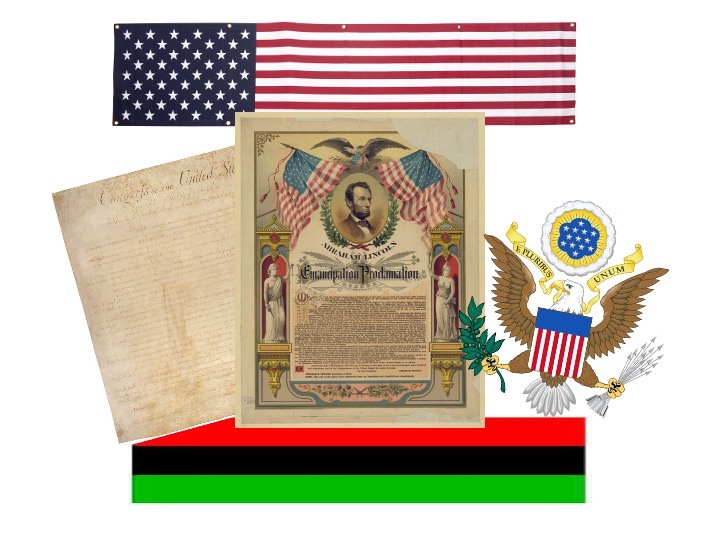
The Emancipation Declaration was first issued on January 1, 1863, freeing enslaved African Americans in the Confederate States. There were many states, notably some in the North, to which the new law did not immediately apply (border states of Delaware and Kentucky). However, the 13th Amendment, ratified on December 6, 1865, made slavery universally unconstitutional throughout the United States.
During the intervening time period, enforcement of the new law rolled out slowly through the post-Confederate South, especially in far western regions like Galveston, Texas. It was not until June 19th, two years later, that freedom reached that resistant enclave:
On the morning of June 19, 1865, Union Major General Gordon Granger arrived on the island of Galveston to take command of the more than 2,000 federal troops recently landed in the department of Texas to enforce the emancipation of its enslaved population and oversee Reconstruction, nullifying all laws passed within Texas during the war by Confederate lawmakers. The order informed all Texans that, in accordance with a Proclamation from the Executive of the United States, all enslaved people were free. (Wikipedia)
Wanting to learn more about the Juneteenth holiday, I purchased a beautifully illustrated children’s book, Opal Lee and What It Means to Be Free. I wanted to share it with my grand-nephews and niece when they visit because this history belongs to all of us. We all need to learn from it.
Ms. Lee, who is approaching her 100th birthday in October, has suffered personally from racist terrorists. She grew up in Texas, where her family’s home was burned down by white rioters when she was twelve years old. Resilient and brave, she eventually pursued an extensive education and became a teacher, community leader, and activist. She lobbied particularly for the recognition of Juneteenth as a Holiday, believing it was crucial to the story of African American freedom.
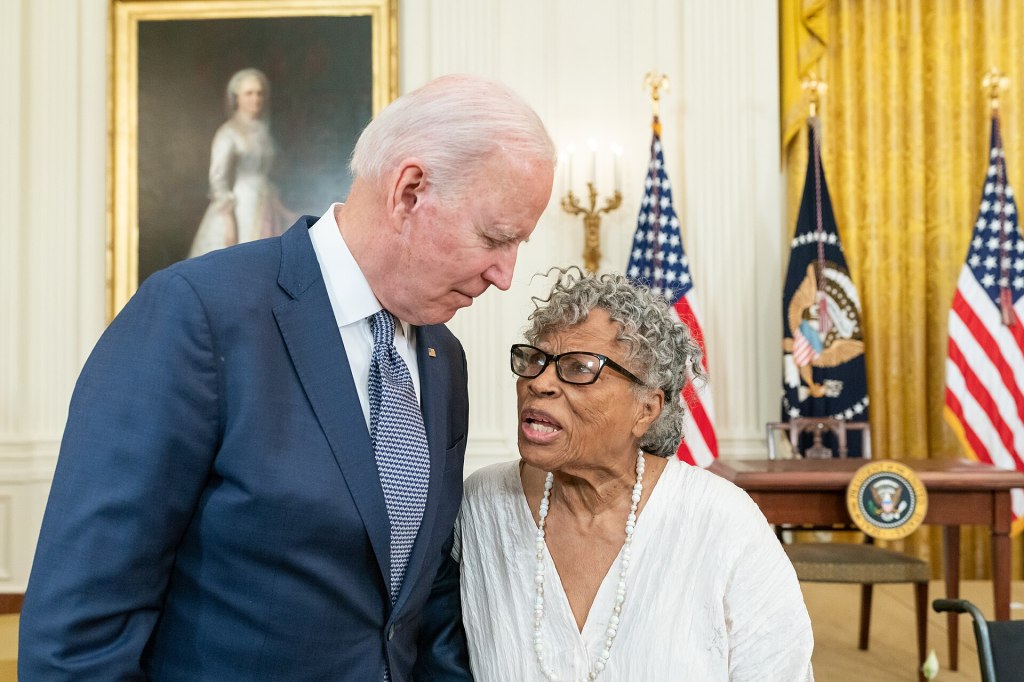
(Official White House Photo by Chandler West)
In June 2021, at the age of 94, her efforts succeeded as a bill to make Juneteenth a federal holiday was passed by Congress and signed into law by President Joe Biden. She was an honored guest at the bill signing ceremony, receiving the first of many pens the President used to sign the document. As she sat in the front row, she received a standing ovation, and President Biden got down on one knee to greet her. (Wikipedia)
Music: Lift Every Voice and Sing (The Black National Anthem) – sung by Wintley Phipps
Suggested Scripture: Galatians 3:23-29
For Your Reflection:
- What feelings or reactions do I have after reading this reflection?
- Do my feelings or reactions remind me of any passage or event in scripture, especially in the life of Christ?
- What actions might I take today because of my response to these readings?
 Lavish Mercy