Sister Renee Yann, RSM, D.Min, is a writer and speaker on topics of spirituality, mission, and ethical business practice. After twenty years in teaching and social justice ministry, she served for over thirty years in various mission-related roles in Mercy Health System of Southeastern Pennsylvania.
Here are two of my poems to go with tomorrow’s reflection. I hope they are useful for your prayer. Also, this interesting excerpt I found online.
The Hebrew word for mother is emm, the Aramaic word is immah, and the Arabic word is umm. The liturgical word amen, which at its core means “confirmation, support”, is derived from the words for “mother”. ( From Dr. Goodword’s Language Blog – Click here to go to blog)
If You Are Mother
If You are Mother, God don’t let us hurt ourselves; keep freedom in us as freedom, not as willfulness, so that we grow, even if we must grow down like a dark, hidden root.
Remember, if life dies in us, You change. We are not isolated seedlings you left somewhere in lonely hope one Spring.
You are the ground, and the growth, and the growth’s nourishment. When we green, it is You who thrive.
The Hands of God
The hands of God love me when I cannot see God’s face. Like salve, they warmly run over in and out of me, pausing where my hurt is knotted, barbed to their approach…
mother’s hands, lover’s, friend’s, my own hands held in God’s hands, healing self-estrangement.
I come to God’s hands like broken earth stretches for redeeming rain.
Even in the deep night, where God will not speak, those loving hands are words which I answer in the darkness.
Today, in Mercy, we have, from Isaiah, one of most beloved and comforting passages in Scripture:
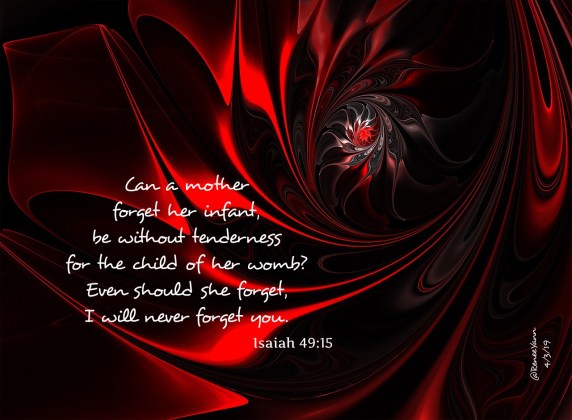
But Zion said, “The LORD has forsaken me; my Lord has forgotten me.” Can a mother forget her infant, be without tenderness for the child of her womb? Even should she forget, I will never forget you.
Not to forget is to remember. And to “re-member” is to put back together all the pieces that have fallen apart.
Because God “remembers” us at every moment in our lives, we are held together in that Divine Memory through all the exigencies of time. We are held together in the wholeness of our Creation, in the fullness of grace that God imagines for us. Even when we cannot feel or believe it, God continues to dream us into Eternal Life.
Whenever we feel in our hearts a lament like Zion’s
“The Lord has forsaken me…”
let us place ourselves in the heart of our Mother God Who cradles us with infinite, unconditional affection and tenderness, Who is alway re-membering us.
Music: God Our Mother – The Litugists
This song, though short, is a good one to repeat as a mantra as we pray. Lyrics below
God our Father
Giver of daily bread
Blessing our hands and covering our heads
God our Mother
Leading us into peace
Drawing and comforting all those in need
Hallowed, hallowed be thy name
Hallowed, hallowed be thy name
Hallowed, hallowed be thy name in all the earth
Jesus, brother, guiding our very step
Deliver us and grant places of rest
Jesus, savior, grabbing us from the grave
Cheating the fall and bringing the light of day
Today, in Mercy, our readings bring to mind the role of religion in our spiritual life.
The dictionary defines religion as a particular system of faith and worship. The origin of the word “religion” is from the Latin “religare”: to bind.
In the magnificent passage from Ezekiel, we are given a metaphorical description of grace flowing from the Temple, the locus of faith for Israel. Ezekiel is led by a radiant vision to this source of abundant life symbolized by water. Slowly and incrementally, this abundance deepens for Ezekiel, until he is swimming in its grace.
Ezekiel’s vision demonstrates what happens in us when religion, ritual and law enhance grace. The beauty, power and architectural symmetry of the Temple symbolize the great benefits of religious practice.
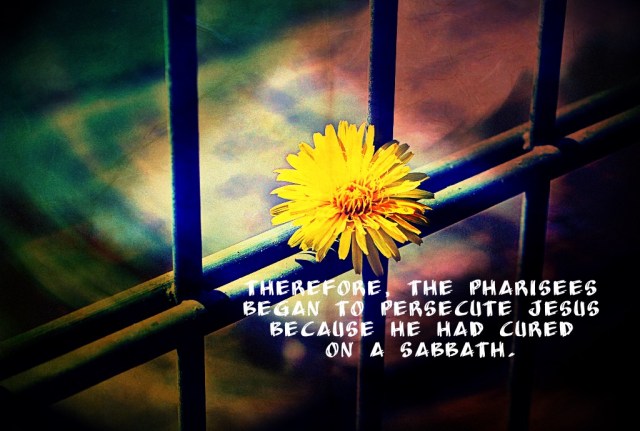
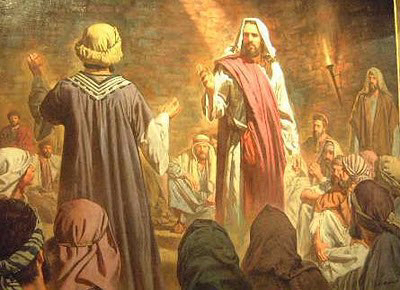
Our Gospel, on the other hand, shows us a Pharisaical religion built on empty practice and bereft of heart. When Jesus cures on the Sabbath, he moves beyond these skeletal boundaries to mercy, which is the reason for all religious practices.
Jesus Cures on the Sabbath
Jesus shows us that when religion – and its ensuing ritual and law – bind grace, it needs to be set aside. His whole life was predicated on a faith which generated mercy, not sacrifice. The alleviation of suffering and need always supersede observance – even on the Sabbath.
When we see any so-called faith or religion which places law over mercy, we see an empty temple where the river of grace has run dry. Our culture is filled with fake holiness that measures, condemns and ostracizes others. We see religion distorted into political bullying. We see it redefined as an excuse for excessive wealth. We even see it used as legitimization for nationalism, violence, racism, and war.
Today’s readings tell us to be on guard. The forces which twist religion are very subtle and pervasive in our culture. They dress themselves in impressive words and practices, just like the Pharisees did, but their costumes hide an ugly hate and fear.
To the fearful and weak, these forces preach power – but it is a power over not forothers.
Jesus has shown us what faithful practice looks like: mercy and love. It is vulnerable, courageous, inclusive, and humble. It sees the suffering of others and responds. It waters the Temple of our hearts to make them verdant with hope, joy and generosity.
Music: Come to the Water – John Foley, SJ and Matt Maher
Today, in Mercy, our readings speak to our innate desire to have another chance, to start fresh.
Don’t you love to get something new? A new outfit that refashions not only your appearance but your attitude? A fresh coat of paint on a room that has grown commonplace? A few new plantings in your winter-dried flower boxes?
Even as a kid, didn’t you treasure that new box of crayons? That unscuffed baseball when the season started? That second piece of construction paper when your first effort flopped?
Isaiah knows how we feel. He is speaking, in today’s passage, to a people bereft by their circumstances and recent history. They have suffered invasion, exile, tribal strife, and the destruction of the Temple. The faith of the masses had been weakened almost beyond repair.
But Isaiah challenges his listeners to renew their hearts. God is greater than all they have suffered. And God is offering them that second chance, that fresh sheet of paper, that box of whole crayons:
Instead, there shall always be rejoicing and happiness in what I create; For I create Jerusalem to be a joy and its people to be a delight; I will rejoice in Jerusalem and exult in my people.
What we have to understand from this passage is that God is talking to us! We are Jerusalem! Any suffering in our lives, the pain, disappointment, brokenness, heartache and sin that might burden us is going to be transformed. In the Eternal Creation, all will be joy and fullness of life.
And we don’t have to wait until we die to experience that new creation. Our faith, ever deepened by God’s grace, lets us live in that joy even in the midst of our everyday challenges.
This is the profound lesson Jesus is about to teach us by his Passion, Death and Resurrection. This week’s readings, in a dynamic mix of joy and sorrow, lead us more deeply into that understanding.
Music:O Day of Peace That Dimly Shines –Carl P. Daw
Today, in Mercy,halfway through Lent, we see in our readings glimpses of new life.
The captivity in Egypt had been TOUGH on Israel. During those many decades, they had appeared to be abandoned and forgotten by God.It was a harsh reckoning for them … hard to be forgotten. Even then, when they thought they had found freedom, they still wandered for forty years in the desert.
But now Israel stands at a new horizon.Moses has died and Joshua has become Israel’s leader.God tells him that it is a new day:
“Today I have removed the reproach of Egypt from you.”
In our second reading, Paul tells us:
Whoever is in Christ is a new creation: the old things have passed away; behold, new things have come.
And in our revered Gospel story of the Prodigal Son, Jesus tells us:
This beloved child of mine was dead, and has come to life again; was lost, and has been found.
All of these passages speak to us in our Lenten journey, and in our Life journey.We have experienced our own “Egypts”, times when we felt disconnected, even abandoned, by God.We have sometimes felt we were journeying aimlessly toward an unknown goal. We have at times wandered, like the prodigal son, from the path of God’s love. We have darknesses in our memories that still long for Light.
This poem from Mary Oliver might capture the feeling for us:
Someone I loved once gave me
a box full of darkness.
It took me years to understand
that this, too, was a gift.
~ Mary Oliver ~
In today’s readings, God is reminding us that the Light awaits us. Forgiveness, reconciliation, new energy and grace are the gifts of Easter – the gifts where we must keep our eyes focused as we journey.
So let us do as e.e.cummings encourages us in this poem:
Let It Go – e.e. cummings
let it go – the
smashed word broken
open vow or
the oath cracked length
wise – let it go it
was sworn to
go
let them go – the
truthful liars and
the false fair friends
and the boths and
neithers – you must let them go they
were born
to go
let all go – the
big small middling
tall bigger really
the biggest and all
things – let all go
dear
so comes love
Music: Remember Not the Things of the Past – Bob Hurd
(Lyrics below)
Remember not the things of the past;
now I do something new,
do you not see it?
Now I do something new, says the Lord.
In our distress God has grasped us by the hand,
opened a path in the sea, and we shall pass over,
we shall pass over, free at last.
In our parched land of hypocrisy and hate,
God makes a river spring forth,
a river of mercy, truth and compassion; come and drink.
And who among us is sinless in God’s sight?
Then who will cast the first stone, when he who was sinless
carried our failings to the cross?
Pressing ahead, letting go what lies behind,
may we be found in the Lord, and sharing his dying,
share in his rising from the dead.
Today, in Mercy, our two readings encourage us to be humble and repentant.
In the reading from Hosea, God is very clear:
For it is love that I desire, not sacrifice, and knowledge of God
rather than burnt offerings.
In our Gospel, Jesus tells us the parable of the proud Pharisee and the humble tax collector. The Pharisee’s prayer shows his judgmental self-satisfaction with all the sacrifices he’s made:
O God, I thank you that I am not like the rest of humanity — greedy, dishonest, adulterous — or even like this tax collector. I fast twice a week, and I pay tithes on my whole income.’
On the other hand, we have the scorned tax collector ( a status we can understand this time of year:-) who admits his weakness and need for God’s mercy.
Oh God, have mercy on me, a sinner!
The readings are really about seeing ourselves in the light of God’s truth, while knowing that our merciful God loves us infinitely, even in our weakness. They are about being open to that mercy so that we can know the fullness of God’s grace.
Today, in Mercy, Hosea, the composer of passionate love songs, tells us this:
I will heal your weaknesses, says the LORD, I will love you freely; for my wrath is turned away. I will be like the dew for you: you shall blossom like the lily; You shall strike root like the Lebanon cedar, and put forth your shoots. Your splendor shall be like the olive tree and your fragrance like the Lebanon cedar. Again you shall dwell in the shade and raise grain; You shall blossom like the vine, and your fame shall be like the wine of Lebanon.
The passage sings of new life, strength, vigor – the hope of Easter! Today as we pray, what withering branches in our lives do we wish to place in the warmth of this promise?
You are not far from the kingdom of God
In our Gospel, the good scribe asks for Jesus’s confirmation that he is on the right track to holiness. Jesus blesses him by saying:
You are not far from the kingdom of God
God is so good to us. Let us ask God’s generous help as we seek to grow in holiness, goodness and peace this Lent, so that we may be blessed by the same promises.
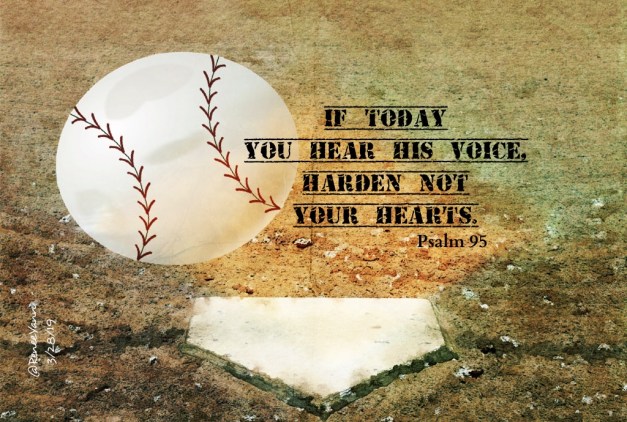
Looking at my graphic for today, you may wonder how I’m going to connect that command to baseball’s Opening Day. Watch! 😊⚾️
There’s no better feeling than an “opening day” feeling. No matter how bad you were last year, you have a clean slate for the new season. You’ve had a chance to assess your weaknesses and rehab them. You’ve been able to add some strengths you needed but had neglected. You’ve got another carte blanche chance to be everything you were born to be! Now you’re standing in the batter’s box just listening for that thrilling phrase, “Play ball!”
Guess what! You’ve been doing all the same things throughout Lent. You’ve taken a look at your life and straightened a few things out. You’ve dusted off the plate, so to speak, and you’re ready to start fresh as Easter approaches.
Today’s readings are telling us to tune in, listen, for God’s coaching in our lives. The game of life plays out for us in ways we could never imagine. But God imagines- and will guide us through to home plate if we just “hear God’s voice and harden not our hearts”.
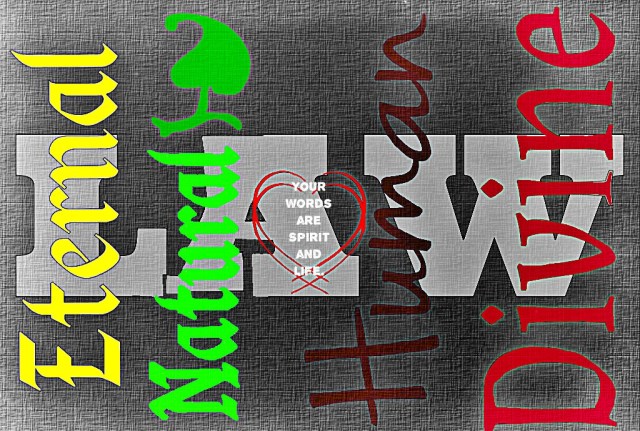
Today, in Mercy, our readings are all about “law”.
Deuteronomy talks about the Law of Moses as he received it from God.
Psalm 147 talks about God’s law as it is expressed in nature and human understanding.
In Matthew, Jesus talks about his New Law as a development, not a contradiction, of the Old Law.
All this talk of “law” seems coincidental, doesn’t it, in these days after the Mueller report and what is within, above and beyond “the law”. So many definitions and concepts of “law”!
So, as we pray these scriptures, we might ask ourselves, “What exactly is “law”, especially in terms of my spiritual life and development?”
St. Thomas Aquinas may be a good place to start. Here are his definitions, simplified:
Eternal Law = God’s will and guidance which orders all creatures toward the good of the universe.
Natural Law = our self-ordering, by reason, toward this universal good.
Human Law = particular statutes instituted in accord with human reason for the good of civil society.
Divine Law= the revealed law of God as found in Scripture
Praying with these concepts is different from studying them.
If we pray with the concept of eternal law, we might offer praise for God’s unchanging Presence in our lives, assuring us that we are eternally loved.
If we pray with the concept of natural law, we might say of a prayer of supplication for the grace to be attuned to God in all our natural thoughts, words and actions.
If we pray with the concept of human law, we might pray in contrition for all the ways we humans mistake law for justice.
If we pray with the concept of divine law, we might offer thanks for God’s generous revelation which allows us to contemplate and grow in relationship with God.
We want our understanding and living of law to be rooted in the heart of God, according to these verse from John 6:
Your words, Lord, are Spirit and life; you have the words of everlasting life.
Let’s pray for that rootedness today.
Music: I Will Delight in the Law of the Lord – Maranatha
Today, in Mercy, our readings describe God’s lavish mercy and the expectation for our reciprocity.
The passage from the Book of Daniel, written in lilting prose, quotes the prayer of Azariah. It gives us several phrases to savor in our own prayer, depending on the particular disposition of our heart on any given day:
To whom you promised …. like the stars of heaven, or the sand on the shore of the sea. What has God promised you to give you hope in your life? Can you call on those promises today in your prayer?
For we are reduced, O Lord, beyond any other nation… Are you feeling sad, disconnected, humiliated or depressed? Can you give these feelings to God and open your heart to healing?
We have in our day no prince, prophet, or leader, no burnt offering, sacrifice, oblation, or incense, no place to offer first fruits, to find favor with you. Do you ever feel abandoned by the institutions we all once depended on, whether Church, government, law etc.? Can we pray for the courage to depend only on God in all things?
Now we follow you with our whole heart… Have our life circumstances brought us to the point of placing ourselves totally in God’s care? Can we pray with that peaceful and holy abandonment?
Deliver us by your wonders, and bring glory to your name, O Lord.Can our prayer be one of giving glory to God for all the blessings in our lives?
God has been so good to us! Our Gospel enjoins us to be reciprocally good to others.
Music: Give Me Your Eyes – An interesting song by rock singer Brian Heath. As his plane is landing one night, he receives a grace to pray for new eyes — eyes that see and love all humanity as God does.






 Lavish Mercy