Today, in Mercy, our readings are filled with the sanctifying unrest of the Holy Spirit.
In Acts we read that, despite the internal peace of the early Christian community, they faced a hostile surrounding environment. Nevertheless, they were impelled by the Spirit within them to continue to proclaim Jesus Christ.
Our Gospel remembers Nicodemus, a ruler of the Jews. Grace burned in him too, but it was a subtle light shaded by his early fear. He came to Jesus in the shadows of the night to test the flame in his soul.
Jesus answered and said to him, “Amen, amen, I say to you, unless one is born from above, he cannot see the Kingdom of God.
Again and again in salvation history, the world is “turned upside down and shaken” by God’s renewing power.We human beings find ourselves struggling to get our feet under us again as circumstances spin to a new truth. Like graceful ballet dancers pirouetting in space, we must keep our eyes on the fixed point of God’s immovable love.
The early disciples did this. Nicodemus did this. As our world now shakes into a changed reality, it is our turn to lock our hearts on God, opening to the new dream God has for all Creation.
Music: Shake – by Mercy Me (You been sittin’ in that chair a while? Here’s a song you can get up and dance-pray!)
Today, in Mercy, our readings are about appearances and recognitions.
We pray this morning with the pioneers of our Christian Faith: Mary Magdalen, Peter, John, and all the Eleven. The scriptures tell us the story of their post-Resurrection discipleship – a time of joyous, dynamic commitment to build the faith community, to share the wonder of the eternally living Jesus with all people.
These first Easter Christians were shining with faith…. so much so that it could be said:
Observing the boldness of Peter and John and perceiving them to be uneducated, ordinary men, the leaders, elders, and scribes were amazed, and they recognized them as the companions of Jesus.
Our Gospel summarizes the fact that, for a brief time, the Risen Jesus remained with these disciples to shore up their confidence and commitment. In this passage, He appeared first to beloved Mary Magdalen, then to the unnamed two who journeyed a country road, and finally to the Eleven gathered at dinner.
He had different messages at each appearance:
the intimate commission of Mary to be his first announcer
the companionable accompaniment of the two distraught disciples from Emmaus
the scolding of the “hard-hearted” Eleven with the uncompromising charge
“Go into the whole world and proclaim the Gospel
to every creature.”
Dear Friends, that charge is meant for each of us as well. For our times, we are the ones commissioned to proclaim that Christ is risen, that the Good News of God’s love is alive in us! Damn the Corona – We are a Resurrection People!
Our prayer today may lead us to consider:
Would we, like Mary, recognize the voice of Jesus calling us to deeper discipleship?
Would we, like the Emmaus travelers, listen beyond our fears to hear the Truth of Jesus in our circumstances?
Would we, like the hesitant Eleven, rebound through our failures to a stronger faith?
Would we, like Peter and John, by our faith-filled words and actions, be recognizable as companions of Jesus?
Music: They Will Know We Are Christians- This is a 60s song, reminiscent of the kind of music that flooded the Church after the breakthroughs of Vatican II. It’s not great music — but I always love hearing it, because it reminds of the joy and enthusiasm of those times when we first realized WE were the Church Alive in the world!
Today, in Mercy, our passage from Acts describes a sacred practice of the early Church – the invocation of the Name of Jesus as a source of spiritual power.
Peter said, “I have neither silver nor gold, but what I do have I give you: in the name of Jesus Christ the Nazorean, rise and walk.”
These first Christians were so invested in the Gospel of Jesus Christ that they claimed the right to act in his Name. They also clearly believed that they had no power themselves, but only in that blessed Name.
To call someone by their given name is an act of familiarity, if not intimacy. For those closest to us, we often have nicknames or pet names, conveying a unique understanding of each other.
Calling God by name is an act of both intimacy and worship. In the book of Exodus, God takes the first step in that deeper friendship:
God also said to Moses, “I am the Lord. I appeared to Abraham, to Isaac and to Jacob as God Almighty, but by my name “the Lord” I did not make myself fully known to them.
With the Incarnation of Jesus, God took the ultimate step in loving friendship with us. To help us understand the nature of this friendship, Jesus gives himself some “nicknames” throughout the Gospel:
Good Shepherd
Lamb of God
the Vine
the Way, the Truth, the Life
the Bread of Life
the Light of the World
Each of these names helps us to enter more deeply into the infinite love God has for us.
Do you have a special name for God? Sometimes, early in the morning when First Light touches my window, I pray with that Name. I ask my Bright God to light my life and the lives of those I love this day. At night, that same window is full of Sweet Darkness, a Name I call God as I ask that we all find a peaceful, protected sleep.
We might also ask if God has a special name for us. At different moments and moods of your life, does God speak to you with a personal, loving “nickname”? If you haven’t heard it yet, why not ask God to whisper it to you in your next prayer?
Jesus, Jesus
Let all creation bend the knee to the Lord.
In Him we live, we move and have our being;
In Him the Christ, In Him the King!
Jesus the Lord.
Though Son, He did not cling to Godliness,
But emptied Himself, became a slave!
Jesus the Lord.
He lived obediently His Father’s will
Accepting His death, death on a cross!
Jesus the Lord.
Today, in Mercy,we enter the Easter Season which will last until June 8th. The next day we will celebrate Pentecost.
Throughout these several weeks, we will have a thorough reading of the Acts of the Apostles.
Theologian Walter Brueggemann says this about Acts:
In the Book of Acts the church is a restless, transformative agent at work for emancipation and well-being in the world.
As Easter People, transformed by the Resurrection of Jesus, that’s what we’re all called to be. Our models and inspiration will be found in these early women and men we read about over the next few weeks. This was a community that acted – within a culture of death – for an alternative, life-giving world.
“The whole book of Acts is about power from God that the world cannot shut down. In scene after scene, there is a hard meeting between the church and worldly authorities, because worldly authorities are regularly baffled by this new power and resentful of it.”
At one point, in chapter 17, the followers of Jesus are accused of “turning the world upside down.” (Brueggemann)
Our world sorely needs such an active Church, speaking clearly to the issues that threaten and limit human life and wholeness in God. It’s not easy to be that witness, but it is critical. Our Gospel suggests the difficulty, but also defines the motivation:
Mary Magdalene and the other Mary went away quickly from the tomb, fearful yet overjoyed, and ran to announce the good news …
May we, though sometimes fearful, choose to be agents of the joyful Good News for our times. May we be brave in witnessing Christ, even in trying times!
Music: Alleluia from Mozart’s Exultate et Jubilate- sung by Barbara Bonney
Today, in Mercy, worlds are splitting apart, but the Word of God comes to heal them.
In our first reading, we share in the experience of the prophet Ezekiel.
Ezekiel and his wife lived during the Babylonian Captivity on banks of the Chenab River which is in modern day Iraq. He lived during the siege of Jerusalem in 589 BC. In Ezekiel’s day the northern kingdom had been conquered and destroyed 150 years earlier.
In other words, Ezekiel, like his contemporary Jeremiah, had his heart torn apart along with the homeland they cherished as God’s promise to them.
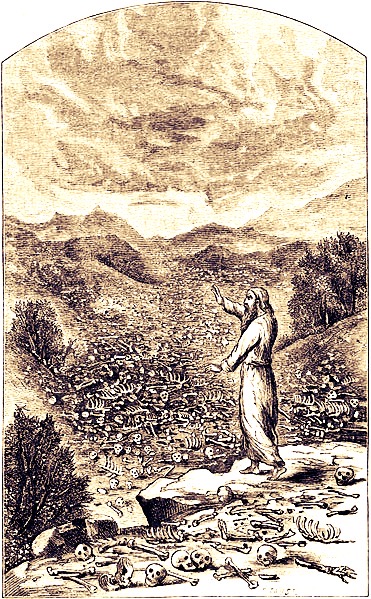
The Valley of the Dry Bones – artist unknown
In today’s reading, which comes immediately after his vision of the Dry Bones, Ezekiel prophesies a message of hope and restoration to a fragmented and devastated nation.
In our Gospel, Jesus is the new Ezekiel. He stands in the midst of the bigger “nation” of all God’s Creation which has been fragmented by the failure to love. Like Ezekiel, Jesus offers a message of hope and restoration to sinners.
In this Gospel, Jesus himself is the “Temple” about to destroyed. The prophecy of its destruction is unwittingly delivered by the high priest Caiaphas:
Caiaphas, who was high priest that year, said to the Pharisees and Sanhedrin, “You know nothing, nor do you consider that it is better for you that one man should die instead of the people, so that the whole nation may not perish.” He did not say this on his own, but since he was high priest for that year, he prophesied that Jesus was going to die for the nation, and not only for the nation, but also to gather into one the dispersed children of God.
Within Christ’s new law of love, these “children of God” go far beyond the Jewish nation. They are you and me, and every other creature with whom we share this time and universe. The fragmentations which separate and alienate us are dissolved in the Passion, Death and Resurrection of Jesus Christ.
Holy Week will begin tomorrow when all believers will intensify their desire to join Christ in his final journey to Resurrection, to understand our own lives anew in the power of Paschal Grace.
This is a somber and surreal time for all of us, and we will miss our ability to join one another in our beloved Holy Week Services. But there are some helpful alternatives. I’ve listed some of my favorites below. Click on any of these three links below to explore.
Music:Make Us One – featuring James Lorne’s. Written by Sally DeFord
(Lyrics below)
Lyrics
How shall we stand amid uncertainty? Where is our comfort in travail? How shall we walk amid infirmity, When feeble limbs are worn and frail? And as we pass through mortal sorrow, How shall our hearts abide the day? Where is the strength the soul may borrow? Teach us thy way.
Chorus:
Make us one, that our burdens may be light Make us one as we seek eternal life Unite our hands to serve thy children well Unite us in obedience to thy will. Make us one! teach us, Lord, to be Of one faith, of one heart One in thee.
Then shall our souls be filled with charity, Then shall all hate and anger cease And though we strive amid adversity, Yet shall we find thy perfect peace So shall we stand despite our weakness, So shall our strength be strength enough
We bring our hearts to thee in meekness; Lord, wilt thou bind them in thy love?
(Repeat chorus)
Take from me this heart of stone, And make it flesh even as thine own Take from me unfeeling pride; Teach me compassion; cast my fear aside. Give us one heart, give us one mind Lord, make us thine Oh, make us thine!
(Repeat chorus)
Today, in Mercy, on this day between the feasts of St. Patrick and St. Joseph, it seems a very good day to thank God for our heritage of faith. Our readings today remind us how precious that heritage is.
Moses, after reiterating the history of God’s goodness to Israel, enjoins the People:
Take care and be earnestly on your guard not to forget the things which your own eyes have seen, nor let them slip from your memory as long as you live, but teach them to your children and to your children’s children.
Jesus, too, acknowledges the importance of his religious heritage:
Do not think that I have come to abolish the law or the prophets. I have come not to abolish but to fulfill. Amen, I say to you, until heaven and earth pass away, not the smallest letter or the smallest part of a letter will pass from the law, until all things have taken place.
This day between St. Patrick’s and St. Joseph’s always takes me back to my grade school days – a time when my “faith family” gifted me with the seeds that now sustain my life.
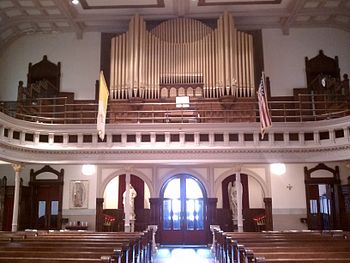
Beautiful St. Michael’s Church, 2nd and Jefferson, Philadelphia – built in 1846, now much as it look in the mid-1950s
I can still see our straight-from-Ireland pastor, old as the hills, standing in the pulpit to bless us with water from the Shrine at Knock. We school kids had waited all year for a chance to belt out the hymn “Great and Glorious Saint Patrick” to the accompaniment of a thundering organ. We held our breath at the final blessing, anxiously awaiting the word to go home. It was inevitably a school holiday but we were always innocently surprised to receive it!
St. Michael’s magnificent organ
Then, we gathered for 8 o’clock Mass again on the 19th to celebrate St. Joseph, patron of our beloved Sisters who taught us. If we had the means to give them feastday gifts, we were asked to give canned goods. That request never struck me as a kid, but as I grew up, I realized how dependent these Sisters were on those donations – how close to poverty they lived for the sake of transmitting the faith to us.
So I count these days of mid-March as Foundation of Faith Days. Perhaps today’s reading might incline you to think about your own faith story and who planted the early seeds in your heart. Let’s give these beloveds our grateful prayers of remembrance.
Music:Faith of Our Fathers – another oldie that we loved to sing voce piena
Today, in Mercy, our reading is about God naming us.
The Apostle Peter – Rembrandt
We celebrate wonderful Saint Peter – so fully human, so fully holy, so fully in love with God! Today, as we pray with Peter’s naming, may we deepen in understanding our own naming by God.
I wrote about Peter like this on another of his feasts:
When Jesus asks Peter what he believes, Peter says,
“YOU ARE THE CHRIST, THE SON OF THE LIVING GOD.”
An ordinary man responding with a clear and extraordinary faith.
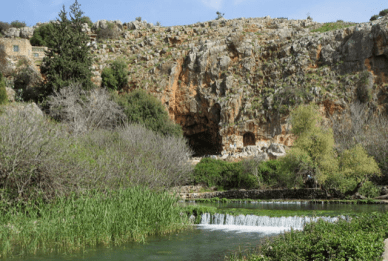
One June morning, about forty years ago, I sat in a sun-filled field in the Golan Heights of Israel at a spot called Caesarea Philippi. Thirty other pilgrims composed the group as we heard today’s Gospel being read. Listening, I watched the rising sun grow brilliant on the majestic rock face in the near distance.
I thought how Peter might have watched his day’s sun playing against the same powerful cliffs as Jesus spoke his name:
Jesus said to him,
You are Peter (which means “Rock”),
and upon this Rock
I will build my Church.
A few years later, I stood at the center of St. Peter’s Basilica in the Vatican. Looking up, I saw these words emblazoned around the awesome rotunda dome:
Tu es Petrus,
et super hanc petram
aedificabo ecclesiam.
On that lazy afternoon two-thousand years ago, Peter could never have imagined what God already saw for him. Yet, Peter responded – with his whole life. This is what makes a Saint.
Jesus calls us to be saints too. He lovingly speaks our name into a sacred future we cannot even imagine. But if, like Peter, we trust and believe, God does the rest.
Below the music is a powerful poem by John Poch. It captures the transformation of Peter’s humanness into God’s hope for him.
There are three things which are too wonderful for me, Yes, four which I do not understand. The way of an eagle in the air, The way of a serpent on a rock, The way of a ship in the heart of the sea, And the way of a man with a maid –Prov. 30:18, 19
I
Contagious as a yawn, denial poured over me like a soft fall fog, a girl on a carnation strewn parade float, waving at everyone and no one, boring and bored. There actually was a robed commotion parading. I turned and turned away and turned. A swirl
of wind pulled back my hood, a fire of coal brightened my face, and those around me whispered: You’re one of them, aren’t you? You smell like fish. And wine, someone else joked. That’s brutal. That’s cold, I said, and then they knew me by my speech. They let me stay and we told jokes like fisher-
men and houseboys. We gossiped till the cock crowed, his head a small volcano raised to mock stone.
II
Who could believe a woman’s word, perfumed in death? I did. I ran and was outrun before I reached the empty tomb. I stepped inside an empty shining shell of a room, sans pearl. I walked back home alone and wept again. At dinner. His face shone like the sun.
I went out into the night. I was a sailor and my father’s nets were calling. It was high tide, I brought the others. Nothing, the emptiness of business, the hypnotic waves of failure. But a voice from shore, a familiar fire, and the nets were full. I wouldn’t be outswum, denied
this time. The coal-fire before me, the netted fish behind. I’m carried where I will not wish.
Today, in Mercy, our readings talk about how we try to “house” God.
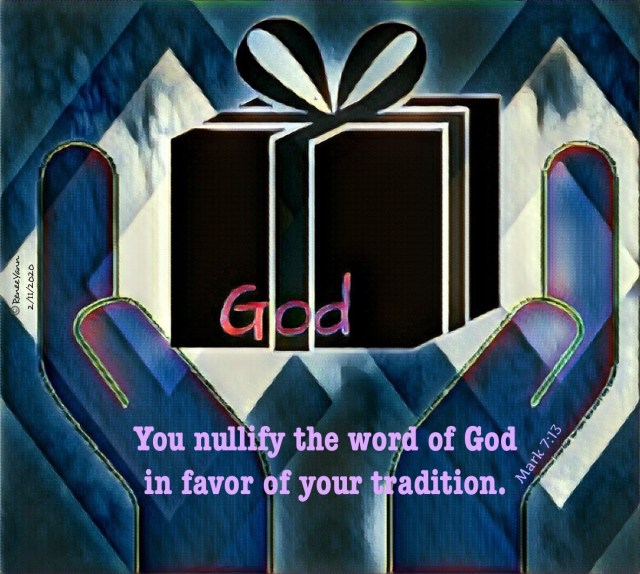
Because God is bigger than BIG, our minds struggle. More than struggle, they actually fail, repeatedly, to define God. Yet we still try, don’t we?
We try to picture, describe, paint, quote, and interpret God. We even decide what God wants and create laws to insure God gets that.
We dilute Divinity to our human dimensions. We just can’t take it straight. We mix it and bottle it in our laws, and box it in our rituals — because we can’t manage Omnipotence.
And let’s face it, most of us like to manage things. 😉At least the Pharisees in today’s Gospel liked that kind of control. And Jesus challenges them on it.
Praying with these thoughts today, I think of my Dad. He liked an occasional jigger of really fine bourbon – savored in its unadulterated state, without water or soda – what today’s purists call “sipping whisky”.
When the doctor informed him, unfortunately in my mother’s presence, that whisky was a no-no, Dad didn’t like it. But he acquiesced. At least we thought he did.
After Dad died, my brother and I found his bottle of Kentucky bourbon wrapped in a towel in the basement dryer. You see, only Dad did the wash. Mom never liked machines.
I think Jesus would have really enjoyed my Dad as one of his original disciples. Dad liked life “straight”. His faith was simple, direct, complete and undiluted. Sitting with Jesus that Gospel day, Dad wouldn’t have washed his hands either. He would have been too busy listening to the pure, unbottled Word pouring over him.
The message I took from today’s prayer:
Be very wary of anyone who thinks they know exactly what God wants.
Let God out of the boxes I put Him in.
Invite God’s Spirit to run free through my heart.
Don’t bottle God up; don’t box God in.
Enjoy sipping God’s surprising and infinite grace.
Music:New Pharisees – Charlie Daniels Band (Lyrics below)
New Pharisees
They go walking into church every Sunday morning
They the self-appointed sin patrol
Well they whisper and they gossip behind the back
Of anybody that they can’t control
See that girl in the choir she’s got evil desires
She must be drinking from the devil’s well
She’s a downright disgrace with that paint on her face
She looks just like a Jezebel
And they’re running around putting everybody down
What are you trying to do?
You need to pick up the Book and take another look
‘Cause brother I’ve got the news for you
You know Jesus was sent with a new covenant
And he even died for you
New pharisees like a fatal disease
Always flapping your jaws trying to live by the law
You see that boy over there with that long shaggy hair
Ought to be ashamed of his self
He wearing hip-hop clothes got a ring in his nose
Don’t he know he going straight to hell
And then yesterday morning me and sister Johnson
Were talkin’ on the party line
She said that Deacon Brown was having dinner downtown
Somebody seen him with a glass of wine
And you act so righteous and you look so pious
You always pay your tithe
But there’s a rock in your heart and a fire on your tongue
And there ain’t no love in your eyes
Bad news is begotten and the devil is smiling
You gossip and you criticize
New pharisees like a fatal disease
Always flapping your jaws trying to live by the law
Well you can’t get by the law so quit flapping your jaws
New pharisees yes, you’re a lot like me
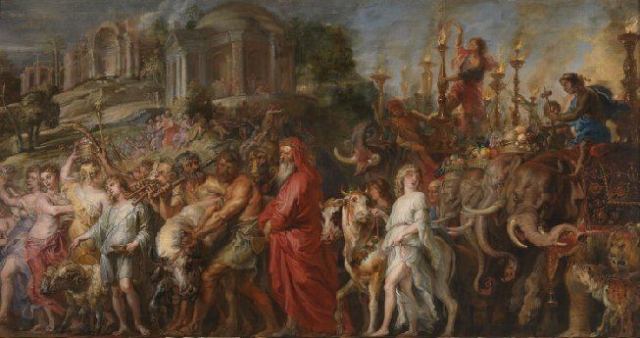
Today, in Mercy, we read about the massive celebration to dedicate Solomon’s Temple. It would have been a ceremony akin to the parades we view in movies like Ben Hur.
This video gives us a good understanding of the magnificence of the building.
Praying with the passage today, core questions repeat themselves to me:
Can God be in a building?
Is there a legitimate spiritual purpose to the cathedrals, large or small, that we build?
For me, the answer is a fluid one. Certainly, beautiful churches inspire our faith and serve as a central symbol for the unity of believers.
But throughout history, these buildings have also symbolized individual and national power, pride and greed.
A recent initiative of Pope Francis converted a 19th century palace behind the Vatican into a homeless shelter. The Pope directed this rather than the site’s upgrade to a luxurious hotel.
The building is described as having “carved wooden ceilings, frescoed walls and tiled floors — evidence of its aristocratic origins.” Sharing a meal with its first residents, Pope Francis said, “Beauty heals”.
Such healing is the real purpose of all such buildings – that their beauty heal hearts, communities, and nations. Where the purpose is lost, excess eviscerates the healing beauty.
At points in the Gospel, Jesus refers to himself as the Temple – instructing his disciples that God’s Presence now dwells in the world through him. Today’s Gospel shows us how this Presence manifests itself – through the power of compassion and justice for the poor:
Whatever villages or towns or countryside he entered, they laid the sick in the marketplaces and begged him that they might touch only the tassel on his cloak; and as many as touched it were healed.
Where God is present there is always healing. May it be so in our churches and in our hearts.
Today, in Mercy, our first reading is stuff worthy of an action movie! Even today, in my seventh decade, I remember the first time I heard it as a spellbound child. Could young, virtually unarmed David really conquer a GIANT!
Wrapped in the story, of course, is the spiritual nugget we are meant to take to our own heart:
…thus the whole land shall learn that Israel has a God. All this multitude, too, shall learn that it is not by sword or spear that the LORD saves. For the battle is the LORD’s and he shall deliver you into our hands.
We have battles of every description all around us: military, political, economic, cultural, moral, and personal. Today’s Day of Prayer highlights one of those battles – the right to life for unborn children.
On January 22, 1973, the Supreme Court issued a 7–2 decision in favor of Roe that held that women in the United States have a fundamental right to choose whether or not to have abortions without excessive government restriction, and struck down Texas’s abortion ban as unconstitutional. (Wikipedia)
Since that fateful day, many people of faith, and certainly the Catholic Church, have fought this decision. It has been a contentious and divisive battle which has divided people into pro and anti-abortion factions.
From my perspective, one unfortunate dimension of the situation is an insufficient effort by Catholic bishops to provide wholistic definition, research, teaching, and support to Catholics on the moral imperative for the right to life in all its aspects.
Episcopal support for right to life often degenerates into a single-issue approach which fails to instruct on other life issues such as war, death penalty, poverty, adequate health care, civil and women’s rights, and environmental justice.
At the same time, morality statements around these issues often fail to address legitimate concerns around birth control, maternity care, newborn nutritional programs, and other issues parents struggle with.
Probably what most infuriates me is the political hijacking of this single issue by those whose own moral and policy choices mock a comprehensive culture of life.
Benedictine Sister Joan Chittister said this in a 2004 interview:
“I do not believe that just because you are opposed to abortion, that that makes you pro-life. In fact, I think in many cases, your morality is deeply lacking if all you want is a child born but not a child fed, a child educated, a child housed. And why would I think that you don’t? Because you don’t want any tax money to go there. That’s not pro-life. That’s pro-birth. We need a much broader conversation on what the morality of pro-life is.”
Personally, I am deeply opposed to abortion. And I am just as deeply opposed to an inconsistent morality and a policy-making which isolates this issue to the point of stagnating ignorance and indifference on other critical life issues.
A phrase in today’s Gospel struck me as I prayed on these things. Perhaps it will strike you as well:
Jesus said to the Pharisees, “Is it lawful to do good on the sabbath
rather than to do evil, to save life rather than to destroy it?
Jesus acknowledges that finding moral perfection requires a balancing of goods, some of which are weightier than others. The Sabbath laws were designed to foster the spiritual life. But if their observance consigns this crippled man to hopelessness, have the laws met their goal?
If indeed a life is saved from abortion, society must continue to save that life by fostering a culture which supports it for ALL of its life..


 Again and again in salvation history, the world is “turned upside down and shaken” by God’s renewing power. We human beings find ourselves struggling to get our feet under us again as circumstances spin to a new truth. Like graceful ballet dancers pirouetting in space, we must keep our eyes on the fixed point of God’s immovable love.






 Lavish Mercy