Today, in God’s Lavish Mercy, our first reading opens with the beautiful image of Paul and co-ministers sailing off into the Mediterranean blue, finally ending up in Philippi.
There they meet Lydia, “a dealer in purple cloth”. Lydia was a notable figure. Some scripture scholars say she was businesswoman and head of a significant household who offered hospitality to Paul’s entire traveling team. Others see her as a morally questionable “huckster” whose invitation of men to her home would have been morally questionable.
In a magnificent paper for her doctoral dissertation, Alexandra Gruca-Macaulay argues for Lydia as the “Perceptive Disciple” whose true heart became an agent for God’s Word.
A complex but excellent read for those who might be interested.
However we imagine Lydia, Acts clearly notes that she was already a “worshipper of God”, Lydia listened to the disciples’ evangelization. God opened her heart and she accepted Jesus Christ. This is most significant because her heart-opening, much like Mary’s, allowed the Gospel to pass through to her household and, symbolically, to all of Asia Minor.
Lydia is the first Christian convert in Philippi, a church which Paul grew to love deeply as we can discern from his beautiful letter to the Philippians. As Paul and his company finish their initial evangelization in Philipppi, the community is entrusted to the hands of Lydia and her devoted neighbors.
What exactly was Lydia’s role as Paul sailed on to other horizons? As in so many cases involving early Church women, history folds that answer into the opinionated edits of 2000 years of monks and translators.
I choose to think that Lydia continued at least as a presbyter, if not a priest. The community had long gathered around her generous and dynamic leadership. Why would that change after Paul departed?
In our Gospel, Jesus is speaking to people like Lydia and like us, down through the ages. He indicates that once we are transformed in the Holy Spirit, we can’t help but cry out the wonder of God in our lives.
Jesus said to his disciples: “When the Advocate comes whom I will send you from the Father, the Spirit of truth who proceeds from the Father, he will testify to me. And you also testify, because you have been with me from the beginning.
John 15:26-27
Let’s pray to and for all true disciples, especially the women God has chosen to stand at the center of an ever-evolving Church and to weave its energy always toward an inclusive community.
Poetry: Epilogue – Sister Lou Ella Hickman, a widely published poet whose collection ” she:robed and wordless” captures the essence of many biblical women. Her poem cited here attracted me because of the colors – purple, of course, then oranges and reds. I can almost hear our Lydia reciting such a poem!
Music: Piano instrumental of the beautiful song Deep Purple
Today, in God’s Lavish Mercy, our readings can serve to remind us that Christian discipleship is not always a smooth ride. There are “potholes” — as in all of life.
Pothole 1: Rejection in Lycaonia Paul, after being stoned, rejected and otherwise harassed, takes off for Derbe and Lystra to test the readiness of that community to receive the Gospel. There, Paul meets Timothy who would become a beloved friend and companion, traveling and ministering with Paul for the next decade.
Pothole 2: Sorry, Tim! But the relationship starts out with a problem. Timothy’s dad was Greek and, per custom, did not have Timothy circumcised at birth. Even though the Jerusalem apostles had adjudicated circumcision as unnecessary, Paul – who had been its main critic – requires the rite for Timothy. Paul was convinced that the Jews to whom they would be preaching would reject Timothy otherwise.
Pothole 3: Rejection in Asia They traveled through the Phrygian and Galatian territory because they had been prevented by the Holy Spirit from preaching the message in the province of Asia. (Acts 16:6)
Pothole 4: Bypassing Bithynia When they came to Mysia, they tried to go on into Bithynia, but the Spirit of Jesus did not allow them, so they crossed through Mysia and came down to Troas. (Acts 16:7)
When we see the massive success and widespread influence of the Church today, we might think it was easy to get this whole thing started – to light the fire of faith in the early years. It wasn’t! And it’s still not easy, despite some appearances.
Jesus counseled his disciples that it would be this way, and encouraged them:
Jesus said to his disciples: “If the world hates you, realize that it hated me first. If you belonged to the world, the world would love its own; but because you do not belong to the world, and I have chosen you out of the world, the world hates you. Remember the word I spoke to you, ‘No slave is greater than his master.’ If they persecuted me, they will also persecute you. If they kept my word, they will also keep yours. And they will do all these things to you on account of my name, because they do not know the one who sent me.”
John 15:18-21
That encouragement was enough for Paul and Timothy to keep going. May it be so for us, and for all who would lead the Church into the future Jesus desired for us..
Poetry: Portia Nelson, There’s a Hole in My Sidewalk from The Romance of Self-Discovery
I walk down the street. There is a deep hole in the sidewalk. I fall in. I am lost… I am helpless. It isn’t my fault. It takes forever to find a way out.
I walk down the same street. There is a deep hole in the sidewalk. I pretend I don’t see it. I fall in again. I can’t believe I am in the same place. But, it isn’t my fault. It still takes me a long time to get out.
I walk down the same street. There is a deep hole in the sidewalk. I see it is there. I still fall in. It’s a habit. My eyes are open. I know where I am. It is my fault. I get out immediately.
walk down the same street. There is a deep hole in the sidewalk. I walk around it.
I walk down another street.
Music: just for some pothole fun today – I Love My Juggernaut – an Irish lorry driven bemoans the pothole problem. Lyrics below.
This is an enjoyable Irish song highlighting a long-standing pothole problem in Cavan, a small city near the border with Northern Ireland. The town is located on the junction of two national routes, the N3 to Dublin and N55 to Athlone. Until recently there was no bypass around Cavan town to eliminate the heavy traffic passing through an already congested town –thus, the legendary pothole problem!
Oh believe it or believe it not, I love me Juggernaut !! I’ve been all over Ireland, to the North I’ve seen the lot. I’m hauling great big bales of hay, I’m heading for Mayo. With potholes all through Cavan, sure I’ll have to drive so slow.
In the morning I’m up early on the road at half past five. The air is fresh and crispy boy it’s great to be alive. I fall in behind a crawler put me foot down on the gas. But the roads are to bumpy for me Juggernaut to pass.
Chorus
Oh believe it or believe it not i love me Juggernaut !! I’ve been all over Ireland, to the North I’ve seen the lot. I’m hauling great big bales of hay, I’m heading for Mayo. With potholes all through Cavan, sure i’ll have to drive so slow.
(Johnny) “Breaker, Breaker, I’m looking for a copy” (Richie) “10/4…This is big Rich’ come back” (Johnny) “Ah, this is your auld pal Johnny” (Richie) “A, Johnny what’s your 20”
I’m in the County Offaly and I’m awfully sorry now. I broke the mirrors of me cab and I’d like to tell you how. With sceachs, bows and bushes rubbing of me load. I wish the county council would trim along the road.
Chorus
Oh believe it or believe it not I love me Juggernaut !! I‘ve been all over Ireland, to the North I’ve seen the lot. I’m hauling great big bales of hay, I’m heading for Mayo. With potholes all through Cavan, sure I’ll have to drive so slow.
(Richie) “Come back Johnny, come back”
Some people call us Juggernaut’s, Artic’s or big trucks. Some people even give us horrid dirty looks. I know you’ve got your reasons, sometimes for to frown. But did you ever try to drive a Scania through your town.
Chorus
Oh believe it or believe it not I love me Juggernaut !! I’ve been all over Ireland to the North, I’ve seen the lot. I’m hauling great big bales of hay, I’m heading for Mayo. With potholes all through Cavan, sure I’ll have to drive so slow.
(Richie) “Stay wut her Johnny, stay wut her” (Johnny ) “That’s right, that’s the truth, rev’er on the corners” (Richie) “And face her for Mount Leinster”
I know I swing me volvo all around your market square. I know that you think lorry drivers we just don’t care. But the streets are so narrow, built so many years ago. They were built for horses carts, not juggernauts you know.
Chorus
Oh believe it or believe it not I love me juggernaut!! I’ve been all over Ireland, to the North I’ve seen the lot. I’m hauling great big bales of hay, I’m heading for Mayo. With potholes all through Cavan, sure I’ll have to drive so slow.
(Richie) “Come back Johnny, come back, we’ll leave the last one to you”
I’m in the County Offaly and I’m awfully sorry now. I broke the mirrors off me cab and I’d like to tell you how. With sceachs, bows and bushes the council will not cut. When I get back to the depot, the boss will do his nut. Oh when I get back to the depot, the boss will do his nut.
Today, in God’s Lavish Mercy, the Apostles continue to deal with the assimilation of Gentiles into the faith community. Their struggle is one that continually challenges the human community throughout history.
Think about it. What’s it like when someone new comes into your established community – your family, parish, workplace, convent, social group, etc.? How did it feel when you met your potential in-laws, or teacher-partner, or new boss, new novices, or your betrothed’s questionable friends?
And, maybe more importantly, how did they feel bumping up against your already solidly established relationships and practices?
It’s no fun being the new guy or gal. It’s exciting maybe, but it’s also a little scary. And it’s certainly no fun feeling different or like a stranger in one’s new environment.
And, in a way, it’s no fun being the old guy or gal either. It can be challenging, even annoying, to have to realign our comfortable routines to incorporate a newbie. And when these routines are centuries old religious practices, oh baby, we have a problem!
This is the challenge the early Christian community faced as the established Jerusalem church spread out across Asia and the Mediterranean basin to bring the Gospel to the Gentiles. Through Peter’s leadership, they seem to have handled the issue very well:
“My brothers, you are well aware that from early days God made his choice among you that through my mouth the Gentiles would hear the word of the Gospel and believe. And God, who knows the heart, bore witness by granting them the Holy Spirit just as he did us.
God made no distinction between us and them, for by faith he purified their hearts. Why, then, are you now putting God to the test by placing on the shoulders of the disciples a yoke that neither our ancestors nor we have been able to bear?
On the contrary, we believe that we are saved through the grace of the Lord Jesus, in the same way as they.”
What powerful lessons to learn as we continue to build an inclusive and universal Church, and to deal with the many blocks inhibiting us: racism, xenophobia, sexism and heterosexism, to name a few. All of these are based on a negative pre-judgment whose purpose is to maintain control and power in a dominant group.
By the power of the Holy Spirit, Peter was able to let go of that need. Let’s ask him to help us and our Church.
Poetry: Song of Myself #48 – Walt Whitman
I have said that the soul is not more than the body,
And I have said that the body is not more than the soul,
And nothing, not God, is greater to one than one’s self is,
And whoever walks a furlong without sympathy walks to his own funeral drest in his shroud,
And I or you pocketless of a dime may purchase the pick of the earth,
And to glance with an eye or show a bean in its pod confounds the learning of all times,
And there is no trade or employment but the young man following it may become a hero,
And there is no object so soft but it makes a hub for the wheel’d universe,
And I say to any man or woman, Let your soul stand cool and composed before a million universes.
And I say to mankind, Be not curious about God,
For I who am curious about each am not curious about God,
(No array of terms can say how much I am at peace about God and about death.)
I hear and behold God in every object, yet understand God not in the least,
Nor do I understand who there can be more wonderful than myself.
Why should I wish to see God better than this day?
I see something of God each hour of the twenty-four, and each moment then,
In the faces of men and women I see God, and in my own face in the glass,
I find letters from God dropt in the street, and every one is sign’d by God’s name,
And I leave them where they are, for I know that wheresoe’er I go,
Others will punctually come for ever and ever.
Today, in God’s Lavish Mercy, and as we come closer to the end of the Easter season, our Sunday readings repeat essential themes which invite us to the Beloved Community:
In Acts, the nascent Christian community grows, organizes, reflects and preaches the Good News.
In John’s Gospel, Jesus reiterates his enduring presence and love for all who live in his Word.
In his letter, Peter calls the growing community to recognize themselves as God’s dwelling place whose foundation has been secured in Christ.
This Sunday’s readings invite us, for the sake of the whole Church, to draw power for our Christian lives today:
They ask us to reflect on the experience of the early Church and to learn from the way these Christians grew in their understanding of faith and discipleship.
As the number of disciples continued to grow… the Twelve called together the community of the disciples…. The proposal was acceptable to the whole community… The word of God continued to spread, and the number of the disciples in Jerusalem increased greatly
Acts 6
They ask us to respond to the timeless call to be God’s Presence in the world.
Come to him, a living stone, rejected by human beings but chosen and precious in the sight of God, and, like living stones, let yourselves be built into a spiritual house… acceptable to God through Jesus Christ.
1 Peter 2:4-5
They assure us that Jesus indwells and blesses our faithful commitment to this call.
Do not let your hearts be troubled. You have faith in God; have faith also in me. In my Father’s house there are many dwelling places…
Amen, amen, I say to you, whoever believes in me will do the works that I do, and will do greater ones than these, because I am going to the Father.
John 14:1-2;12
Let’s face it, we live a long way in time from that bubbling little faith community described in Acts. Peter’s and Jesus’ encouragement have to echo down two thousand years to reach us! It’s not easy to stay plugged in to the dynamic power offered in today’s readings. How do we do that?
We have these amazing gifts to draw on:
the capacity to pray
the indwelling of the Holy Spirit resident in our souls
the blessing of a sacramental life
the living Word of the scriptures
the rich legacy of spiritual writings stored up through history
the current library of spiritual and theological literature
the sacred gifts of poetry, music and art
the beauty of God’s Creation in nature
the witness of our surrounding faith communities both living and dead
How unfortunate if we fail to recognize these gifts, given as means to open our hearts to our shared call to holiness!
Poetry: Mysteries, Yes – Mary Oliver
Truly, we live with mysteries too marvelous
to be understood.
How grass can be nourishing in the
mouths of the lambs.
How rivers and stones are forever
in allegiance with gravity
while we ourselves dream of rising.
How two hands touch and the bonds will
never be broken.
How people come, from delight or the
scars of damage,
to the comfort of a poem.

Let me keep my distance, always, from those
who think they have the answers.

Let me keep company always with those who say
“Look!” and laugh in astonishment,
and bow their heads.
Today, in God’s Lavish Mercy, we prayerfully remember one of the great women of the Church, Catherine of Siena.
Catherine of Siena, TOSD (1347 – 1380) was a member of the Third Order of Saint Dominic. She was a mystic, activist, and author who had a great influence on Italian literature and on the Catholic Church. Canonized in 1461, she is also a Doctor of the Church.
Three genres of work by Catherine survive: – Her major treatise is The Dialogue of Divine Providence. It is a dialogue between God and a soul who “rises up” to God. – Catherine’s letters are considered one of the great works of early Tuscan literature. – Twenty-six prayers of Catherine of Siena also survive, mostly composed in the last eighteen months of her life.
Wikipedia
The beauty of Catherine’s life and spirituality has blessed the world for nearly seven centuries. Still, it has never grown old because it was fully rooted in an eternal God.
Catherine’s sanctity was born of: transcendent FAITH, uncompromising TRUTH, and overarching LOVE for God and God’s Creation.
Our first reading today introduces another, much earlier, woman pillar of the Church – Tabitha, sometimes called Dorcas. She was so important to the Christian community in Joppa that they sent for Peter upon her death. They needed his intervention in order to hold the community together in the face of this profound loss.
Now in Joppa there was a disciple named Tabitha (which translated is Dorcas). She was completely occupied with good deeds and almsgiving. Now during those days she fell sick and died, so after washing her, they laid her out in a room upstairs.
Acts 9: 36-38
St. Cyprian, writing in the 3rd century, implies that Dorcas merited Peter’s miraculous intervention because of her Christian generosity, her being “completely occupied with good deeds and almsgiving“.
Dorcas, Raised from the Dead by Peter – Jacob Jordaens (c. 1655)
Though little is given to describe Tabitha’s position in the community, one might imagine that she was a woman of some means. Many widows achieved a certain status living on the accumulated wealth of their deceased husbands and the dividends of their recovered dowries. This generous women seems to have gathered around her a community of less fortunate neighbors who came to depend on her for their livelihood.
In Tabitha/Dorcas, we find a model of women’s discipleship repeated through the centuries and into our own times.
She is aware of the needs around her and of her own capacity to meet those needs.
Inspired by the Gospel, she builds a community to embrace both the needs and the strengths she recognizes.
She acts FOR others, especially those who are in need, in imitation of Christ.
In the 14th century, Catherine of Siena manifested a similar pattern of discipleship.
Catherine of Siena – from Eleanor Fortescue Brickdale’s Golden Book of Famous Women (1919)
Catherine saw the whole Church as her community and recognized its need for reconciliation and unity. She confronted fracturing political allegiances and destructive ecclesiastical egos to advocate for the Roman Pope’s sovereignty over the global Church, thus influencing the entire flow of European history.
My sweet Lord, look with mercy upon your people and especially upon the mystical body of your Church. Greater glory is given to your name for pardoning a multitude of your creatures than if I alone were pardoned for my great sins against your majesty. It would be no consolation for me to enjoy your life if your holy people stood in death. For I see that sin darkens the life of your bride the Church – my sin and the sins of others.
from A Dialogue on Divine Providence
Catherine, whose profound spirituality was laced with miracles and mysticism, nevertheless taught an attainable spiritual discipline in her writings – a practical spirituality demonstrated, as was Tabitha’s, in generous acts of love:
The love which the soul sees that God has for her, she, in turn, extends to all other creatures. . . she immediately feels compelled to love her neighbor as herself, for she sees how supremely she herself is loved by God, beholding herself in the wellspring of the sea of the Divine Essence.
Letter to Raymond of Capua, dated February 17, 1376
In our Gospel, Jesus has just finished telling the people:
“Amen, amen, I say to you, unless you eat the flesh of the Son of Man and drink his blood, you do not have life within you.”
They respond to this “hard saying” with hesitancy and “shock”. Jesus tells them that he knows that this level of faith is impossible to reach on one’s own and so…
“For this reason I have told you that no one can come to me unless it is granted him by my Father.”
John 6: 64-65
Tabitha and Catherine of Siena, by the power of the Holy Spirit granted through our Creator, attained a beautiful faith expressed in generous works for their communities. As we pray with them today, let us ask God for the grace of such faith for ourselves and for our whole Church.
Poetry: Consumed in Grace (Catherine of Siena) – from Daniel Ladinsky’s “Love Poems from God”
I first saw God when I was a child, six years of age. The cheeks of the sun were pale before Him, and the earth acted as a shy girl, like me.
Divine light entered my heart from His love that did never fully wane,
though indeed, dear, I can understand how a person’s faith can at times flicker,
for what is the mind to do with something that becomes the mind’s ruin: a God that consumes us in His grace.
I have seen what you want; it is there, a Beloved of infinite tenderness.
Music: The Mystical Ecstasy of Catherine of Siena – from the opera Santa Caterina da Siena by Marco Enrico Bossi
Today, in God’s Lavish Mercy, our reading from Hebrews describes Jesus as the perfect high priest. Through the Father’s call, Jesus took on our imperfect nature and transformed it by his Life, Death and Resurrection. In the Eucharist, Jesus left us a living memorial of this transformation so that we might participate in its saving mystery.
Paul’s “perfected priest” is patient because his own weakness humbles him. He does not take honor upon himself, but receives it humbly from God.
Jesus, the model of this priesthood,
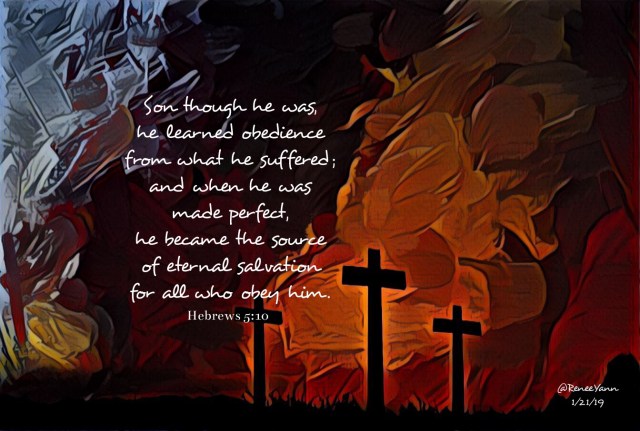
… in the days when he was in the Flesh, … offered prayers and supplications with loud cries and tears to the one who was able to save him from death, and he was heard because of his reverence.
The perfection of Christ’s priesthood was accomplished through suffering and obedience. This is how Jesus teaches us to live in reverence and humble service.
As I read and pray with this scriptural understanding of priesthood, I pray for our Church. The catastrophic scandals involving our priests and leaders have deeply shaken the faith of many Catholics over the past several years.
Many are frustrated by the continued refusal of some in our Church to open themselves to new models of priestly service which are grounded in mutuality, inclusivity and simplicity.
The accretions of institutionalization, hierarchical camouflage, and sexist rationale have mitigated the Church’s credibility to touch the lives of ordinary people, especially our emerging adults.
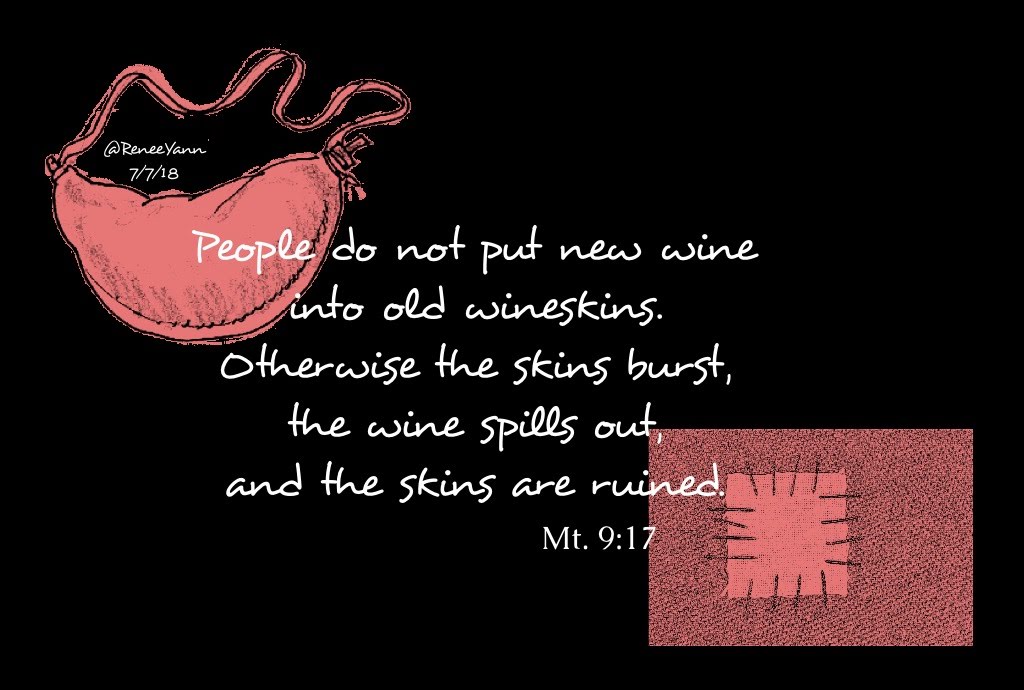
In our Gospel, Jesus talks about an old cloak that needs a patch to make it whole again. He talks about new wine that must be captured and preserved in new wine skins. For me, he is talking about our Church which must be continually renewed and grounded in the truth of the Gospel.
Let us pray that the Church may continue to be transformed by humble obedience to God’s call – just as the high priest of our first reading was perfected.
Let us pray today for our good Pope Francs, bishops, theologians and spiritual leaders – and for the whole People of God – that we may hear and respond.
Prayer: In place of a poem today, this beautiful prayer written in 2019 by Rita Thiron, from the Federation of Diocesan Liturgical Commissions
Prayer for the Church

Heavenly Father,
In every age, you have been our refuge.
Yet again and still, we stand before you
asking for your protection on your holy Church.

For the victims of abuse and their families,
pour out your healing and your peace.
For the Bishops of this country,
inspire their decisions,
and guide them with your Spirit.

For the thousands of good and faithful priests,
who have followed your call
to serve you and your people in holiness,
sustain them by your grace.

For the faithful who are angry, confused,
and searching for answers,
embrace them with your love,
restore their trust,
console them with your clear Gospel message,
and renew them with your sacraments.

We place our Church in your hands,
for without you we can do nothing.

May Jesus, our High Priest and true compass,
continue to lead her in every thought and action
 – to be an instrument of justice,
a source of consolation,
a sacrament of unity,
and a manifestation of your faithful covenant.

Grant this through that same Jesus Christ, our Lord,
who lives and reigns with you
in the unity of the Holy Spirit,
one God, for ever and ever.
Amen.
Today, in God’s Lavish Mercy, we continue to relish John’s eloquent first letter in which he heartily instructs us in the life of Christian love and fidelity.
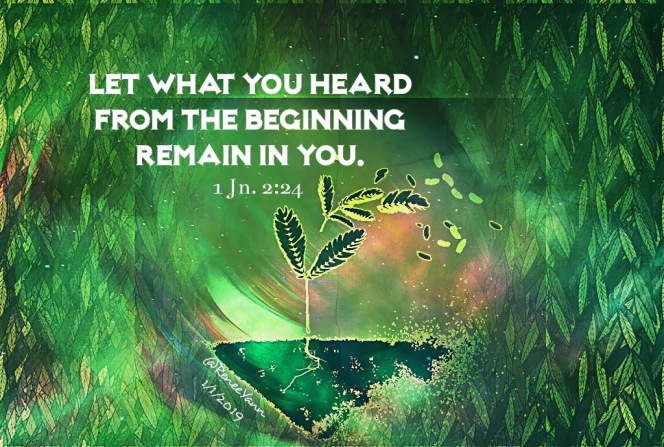
Let what you heard from the beginning remain in you. If what you heard from the beginning remains in you, then you will remain in the Son and in the Father. And this is the promise that he made us: eternal life.
1 John 2:24-26
John has written this letter out of concern about false teachings that are cropping up in the early Church. Misguided “prophets” are placing distorted interpretations on the pure, original message of the Gospel.
Human beings have never stopped doing that, have we? Down through the centuries, how many heresies and misinterpretations have tried to weave their confusion into the Gospel’s central, inviolable thread? How many charlatans, purposefully or ignorantly, have confused people with their bogus religious interpretations.
Has it happened to our own faith? Have we lost the crisp, clear power of our foundational belief? Have we been hijacked into a “faith” or religious practice that ultimately contradicts the Gospel?
It can happen easily in a society where truth is manipulated for purposes of politics, power, and economics. How can we work to avoid it?
John tells us to hold fast to the core teaching of the Gospel.
As for you, the anointing that you received from him remains in you, so that you do not need anyone to teach you. But his anointing teaches you about everything and is true and not false; just as it taught you, remain in him.
1 John 2: 27
This is the faith that many of us learned as children from devout parents and teachers. It is a faith that continues to evolve through scriptural prayer and meditation, through openness to theological wisdom, through the holy dialogue of the beloved community.
It is a living faith, stretched and tested by our daily choices for true Christian love for all people, especially the poor, sick and marginalized.
Ultimately, it is a faith rooted in the Cross and transformed by the Resurrection.
Over these next few weeks, let us listen carefully to John as he guides us to the depth of this faith.
Poetry: A Thanksgiving – St. John Henry Newman
The faith-journey of John Henry Newman has always inspired me. Born in 1801, he was an English theologian, academic, intellectual, philosopher, polymath, historian, writer, scholar and poet, first as an Anglican priest and later as a Catholic priest and cardinal. He was an important and controversial figure in the religious history of England in the 19th century. St. John Henry Newman was canonized as a saint in the Catholic Church in 2019.
As a young nun, when I thought faith was largely an intellectual pursuit, I was caught up in his Apologia Pro Vita Sua (Latin: A defense of one’s own life). The essay is a defense of his religious opinions, published in 1864 in response to Charles Kingsley of the Church of England after Newman quit his position as the Anglican vicar of St. Mary’s, Oxford.
Newman also wrote poetry. “A Thanksgiving” traces the unfolding gift and struggle of Newman’s faith journey.
Lord, in this dust Thy sovereign voice
      First quicken’d love divine;
I am all Thine, Thy care and choice,
      My very praise is Thine.

I praise Thee, while Thy providence
      In childhood frail I trace,
For blessings given, ere dawning sense
      Could seek or scan Thy grace;

Blessings in boyhood’s marvelling hour,
      Bright dreams, and fancyings strange;
Blessings, when reason’s awful power
      Gave thought a bolder range;

Blessings of friends, which to my door
      Unask’d, unhoped, have come;
And, choicer still, a countless store
      Of eager smiles at home.

Yet, Lord, in memory’s fondest place
      I shrine those seasons sad,
When, looking up, I saw Thy face
      In kind austereness clad.

I would not miss one sigh or tear,
      Heart-pang, or throbbing brow;
Sweet was the chastisement severe,
      And sweet its memory now.

Yes! let the fragrant scars abide,
      Love-tokens in Thy stead,
Faint shadows of the spear-pierced side
      And thorn-encompass’d head.

And such Thy tender force be still,
      When self would swerve or stray,
Shaping to truth the froward will
      Along Thy narrow way.

Deny me wealth; far, far remove
      The lure of power or name;
Hope thrives in straits, in weakness love,
      And faith in this world’s shame.
Music: some gentle meditation music for your prayer with John:
Solemnity of the Blessed Virgin Mary, the Mother of God
Theotokos, a mosaic mural from the Gelati Monastery, Georgia, (1125-1130 AD)
Today, in God’s Lavish Mercy, we celebrate Mary, Mother of Jesus.
We might begin prayer today by asking a question posed by distinguished theologian, Elizabeth Johnson, CSJ:
What would be a theologically sound, spiritually empowering and ethically challenging theology of Mary, mother of Jesus the Christ, for the 21st century? This question has no simple answer, for the first-century Jewish woman Miriam of Nazareth, also held in faith to be Theotokos, the God-bearer, is arguably the most celebrated woman in the Christian tradition. One could almost drown surveying the ways different eras have honored her in painting, sculpture, icons, architecture, music and poetry; venerated her with titles, liturgies, prayers and feasts; and taught about her in spiritual writings, theology and official doctrine.
In my own prayer today, though, I am not reaching for a deeper theological understanding of Mary. I simply want to talk with her as a faithful woman, my Mother, my older Sister, my Friend. I want to seek her guidance and her inspiration. I want to thank her for her continual willingness to bear Christ into the world, and into my life.
How significant it is that the Church begins the year inviting us all to Mary’s Light! Our first reading blesses us in a way that Mary might bless us, especially as we begin this New Year of grace:
The LORD bless you and keep you! The LORD let his face shine upon you, and be gracious to you! The LORD look upon you kindly and give you peace!
Numbers 6: 24-26
Mary was all about giving us the LORD, not giving us herself. We see Mary best when we see her holding Christ toward us – the “God-bearer” or “Theotokos”.
Theotokos Vladimirskaya icon, Vologda, Vladimirskaya Church, mid-end 16 century
“Theotokos”, a title used especially in Eastern Christianity, originated in the 3rd century Syriac tradition. It affirms Mary as the Mother of Jesus, Who was both human and divine in nature.
Our reading from Galatians assures us that we too, by our Baptism, are the daughters and sons of God – thus becoming Mary’s own. She is our Mother too by the power of this sacrament.
When the fullness of time had come, God sent his Son, born of a woman, born under the law, to ransom those under the law, so that we might receive adoption as sons
Galatians 4:4
Our Gospel reveals the spirituality of Mary who, after all the heavenly wonders faded, “pondered” all the mysterious workings of God deep in her heart. This Mary is my revered sister, guiding me as I meet the unfolding of God in my own life.
And Mary kept all these things, reflecting on them in her heart. Then the shepherds returned, glorifying and praising God for all they had heard and seen, just as it had been told to them.
Luke 2: 19-20
Today, let us pray with Mary, our Mother, our Sister, Bearer of God. Let us learn to be “ponderers” and “bearers” of God in her pattern. Let us pray for the whole Church, the whole world – all of whom dear Mary tenderly loves.
Music: Two selections today.
A Peaceful Hymn to the Theotokos – Nuns of the Carmazani Monastery in Romania
Today, in God’s Lavish Mercy, we stand at the edge of the final deep dive into Christmas.
Tomorrow, we will begin the magnificent O Antiphons with their rich and repeated invitation for God, not only to enter, but to take up residence our lives. We hear the hint of those invitations in today’s Responsorial Psalm:
Alleluia, alleluia. Come, Lord, bring us your peace that we may rejoice before you with a perfect heart.
It’s a perfect prayer for these last few days before Christmas, because so many of us get caught up in a contradictory kind of frenzy of shopping, gifts, parties, decorating, cooking, wrapping, buying…. and on, and on, and on.
The hyperactivity doesn’t leave a lot of space for peace and the perfection of our hearts to welcome the Savior.
This lovely poem by Geoffrey Brown has always helped focus me on the peace-making of my heart so that I could welcome Grace as it comes to me.
The Heart Cave
I must remember
To go down to the heart cave
& sweep it clean; make it warm
with a fire on the hearth,
& candles in their niches,
the pictures on the walls
       glowing with a quiet light.
       I must remember
To go down to the heart cave
       & make the bed
with the quilt from home,
strew
the rushes on the floor
hang
lavender and sage
         from the corners.
         I must go down
        To the heart cave & be there
         when You come.
Isaiah, with a powerful “how-to”, reminds us that we are all called to this spiritual readying:
Thus says the LORD: Observe what is right, do what is just, for my salvation is about to come, my justice, about to be revealed. Happy is the one who does this, whoever holds fast to it: Keeping the sabbath without profaning it, keeping one’s hand from doing any evil
As a last reminder before our journey through the O Antiphons, Isaiah coaches us in inclusivity – assuring us that all people are welcome in the arms of the One Who is to come:
Let not the foreigners say, when they would join themselves to the LORD, “The LORD will surely exclude me from the people.” The foreigners who join themselves to the LORD, ministering to and Loving the name of the LORD, and becoming God’s servants– All who keep the sabbath free from profanation and hold to my covenant, Them I will bring to my holy mountain and make joyful in my house of prayer …
Music: Rorate Caeli – sung by Harpa Dei
“Rorate caeli” (Drop down, ye heavens) are the opening words of Isaiah 45:8. The text is frequently sung to plainsong at Mass and in the Divine Office during Advent where it gives expression to the longings of Patriarchs and Prophets, and symbolically of the Church, for the coming of the Messiah.
Today, in God’s Lavish Mercy, our readings carry the themes of perseverance in prayer and commitment to Gospel justice.
Familiar Psalm 112 draws the theme forward for us.
That theme is justice, and what it really means for us in our daily lives.
Wealth and riches shall be in the blessed one’s house; where generosity shall endure forever. Light shines through the darkness for the upright; who is gracious and merciful and just.
Psalm 112:3-4
In secular culture, the words “justice” and “law” carry very different interpretations from biblical meanings. In the Bible, justice is that right-balance of Creation in which all beings support one another in the fullness of God’s love.
It is a balance which we all must help achieve, as we see in our first reading from John. In this unique letter, addressed to only one person – a Christian named Gaius, – John requests material help for his early missionaries.
Beloved, you are faithful in all you do for the brothers and sisters, especially for strangers; they have testified to your love before the Church. Please help them in a way worthy of God to continue their journey.
Such requests mark the life of the Church throughout the ages, because our call in Christian community is about helping one another to live a full life in Christ. We could easily read John’s plea as a plea to us, especially in these times of seeking just global immigration and economic policies.
In our Gospel, Jesus tells a parable which is overtly about prayer. But it carries deep themes of the justice God desires for all people, especially the vulnerable:
Will not God then secure the rights of God’s chosen ones who call out day and night? Will God be slow to answer them? I tell you, God will see to it that justice is done for them speedily. But when the Son of Man comes, will he find justice on the earth?
Luke 18: 7-8
Practicing justice and righteousness means active advocacy for the vulnerable. It means doing the works of mercy as a way to love God.
Light shines through the darkness for the upright; that person is gracious and merciful and just. It is well for the one who is gracious and lends, who lives a graceful justice; they shall never be moved; the just ones shall be in everlasting remembrance.










 Lavish Mercy