Hear God Speak Your Name

February 22, 2022
Feast of the Chair of St. Peter

Today, in God’s Lavish Mercy, our readings invite to consider God’s naming us – calling us.

We celebrate wonderful Saint Peter – so fully human, so fully holy, so fully in love with God! As we pray the Gospel of Peter’s naming, may we deepen in understanding our own naming by God.

Once, Jesus asked Peter what he believed. Peter answered, simply and magnificently:
“YOU ARE THE CHRIST, THE SON OF THE LIVING GOD.”
Peter was an ordinary man who responded to Jesus with a clear and extraordinary faith.


One June morning, nearly fifty years ago, I sat in a sun-drenched field in the Golan Heights of Israel at a spot called Caesarea Philippi. Thirty other pilgrims composed the group as we heard today’s Gospel being read. Listening, I watched the rising sun grow brilliant on the majestic rock face in the near distance.

I thought how Peter might have watched his day’s sun playing against the same powerful cliffs as Jesus spoke his name:

Jesus said to him,
You are Peter (which means “Rock”),
and upon this Rock
I will build my Church.


A few years later, I stood at the center of St. Peter’s Basilica in the Vatican. Looking up, I saw these words emblazoned around the awesome rotunda dome:

Tu es Petrus,
et super hanc petram
aedificabo ecclesiam.

On that sunlit afternoon two-thousand years ago,
Peter could never have imagined
what God already saw for him.
Yet, Peter responded – with his whole life.
This is what makes a Saint.

Jesus calls us to be saints too. He lovingly speaks our name into a sacred future we cannot even imagine. But if, like Peter, we trust and believe, God does the rest.


Poetry: Peter by John Poch.
The poem captures the transformation of Peter’s humanness into God’s hope for him – the “changing” of his name.


There are three things which are too wonderful for me,
Yes, four which I do not understand.
The way of an eagle in the air,
The way of a serpent on a rock,
The way of a ship in the heart of the sea,
And the way of a man with a maid

–Prov. 30:18, 19

I
Contagious as a yawn, denial poured
over me like a soft fall fog, a girl
on a carnation strewn parade float, waving
at everyone and no one, boring and bored.
There actually was a robed commotion parading.
I turned and turned away and turned. A swirl
of wind pulled back my hood, a fire of coal
brightened my face, and those around me whispered:
You’re one of them, aren’t you? You smell like fish.
And wine, someone else joked. That’s brutal. That’s cold,
I said, and then they knew me by my speech.
They let me stay and we told jokes like fisher-
men and houseboys. We gossiped till the cock crowed,
his head a small volcano raised to mock stone.

II
Who could believe a woman’s word, perfumed
in death? I did. I ran and was outrun
before I reached the empty tomb. I stepped
inside an empty shining shell of a room,
sans pearl. I walked back home alone and wept
again. At dinner. His face shone like the sun.
I went out into the night. I was a sailor
and my father’s nets were calling. It was high tide,
I brought the others. Nothing, the emptiness
of business, the hypnotic waves of failure.
But a voice from shore, a familiar fire, and the nets
were full. I wouldn’t be outswum, denied
this time. The coal-fire before me, the netted fish
behind. I’m carried where I will not wish.


Music: Peter’s Song – Face to Face – Michael O’Brien

I recall
something in the way
you called my name,
an ordinary fisherman you called me friend and took me in.
How everything had changed
because then I knew I’d never be the same.

Love came and rescued me.
I gave up my everything to follow.
Now I know.
All that I was before
won’t matter anymore
for I am a new man
because I have seen my Savior
face-to-face.

I recall
standing in the courtyard by the fire,
words still ringing in my head,
three times before the break of dawn
you would be denied.
And yet I saw no judgment in your eyes.

Love came and died for me.
I gave up my everything,
gave up my everything to follow.
Now I know
all that I was before
is dead and it lives no more
for I am a new man
because I have seen
my savior face-to-face.

The dark night, the new day –
The stone was rolled away –
my Savior, You are the Light
You are alive! Ascended to heaven.
I know that you will come again.

That moment I will arise
to worship before your throne,
to bow down for you alone are worthy,
so worthy
and there with saints of old,
I’ll sing a brand new song in heaven
forever
where I will see my Savior face-to-face.

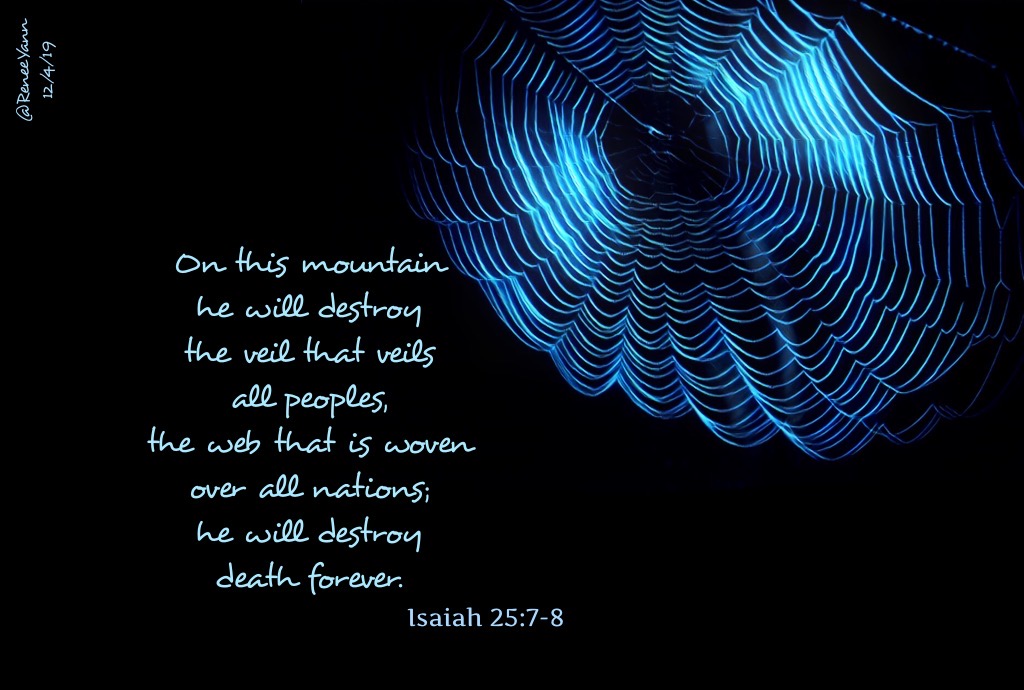
Table of Comfort

December 1, 2021
Wednesday of the First Week of Advent

Today, in God’s Lavish Mercy, our readings take us to the Lord’s banquet. It is a rich image that threads through scripture and helps us understand what characterizes the perfect reign of God.

The readings, coming just on the heels of Thanksgiving, present familiar images to us. Last week, you may have been part of the preparation of the feast for your family and friends. Maybe you’re the master carver, or brought sides of old family recipes. Or you might be the table decorator or, most important, the clean-up guru!

Or maybe you were the one who steered the conversation so that all felt welcomed and included in the gathering. Maybe you were the one who took someone aside if they needed an extra portion of care. Maybe you were the one who invited someone with no other place to go.


That Thanksgiving meal, and every meal, can be a symbol of the heavenly banquet.

Isaiah’s banquet is all elegance and fullness. He describes an end-time when, despite a path through suffering, all is brought to perfection in God:

On this mountain the LORD of hosts
will provide for all peoples
A feast of rich food and choice wines,
juicy, rich food and pure, choice wines.


Jesus’s feast is more “now”, and more rustic. He takes the ordinary stuff of present life and transforms it to satisfy the immediate needs of those gathered. With sparse and simple ingredients, Jesus creates the “miracle meal” for the poor and hungry.

He ordered the crowd to sit down on the ground.
Then he took the seven loaves and the fish,
gave thanks, broke the loaves,
and gave them to the disciples,
who in turn gave them to the crowds.
They all ate and were satisfied. 


Christ’s presence with us in the Eucharist is both kinds of meal.

  • It points us to the perfection of heaven, where the “web” will be lifted from our eyes and we will see ourselves as one in Christ.
  • It calls us to be Christ for one another in this world – creating miracles of love and mercy so that all are adequately fed, in body and soul, for the journey we share.

Poetry: Love Bade Me Welcome – George Herbert, (1593 – 1633) – a Welsh-born poet, orator, and priest of the Church of England. His poetry is associated with the writings of the metaphysical poets, and he is recognized as “one of the foremost British devotional lyricists.


Love bade me welcome. Yet my soul drew back 
                              Guilty of dust and sin.
But quick-eyed Love, observing me grow slack 
                             From my first entrance in,
Drew nearer to me, sweetly questioning,
                             If I lacked any thing.
A guest, I answered, worthy to be here:
                             Love said, You shall be he.
I the unkind, ungrateful? Ah my dear,
                             I cannot look on thee.
Love took my hand, and smiling did reply,
                             Who made the eyes but I?
Truth Lord, but I have marred them: let my shame
                             Go where it doth deserve.
And know you not, says Love, who bore the blame?
                             My dear, then I will serve.
You must sit down, says Love, and taste my meat:
                           So I did sit and eat.

Music:  Banquet- Graham Kendrick (Lyrics below)

There’s no banquet so rich
As the bread and the wine
No table more holy
No welcome so kind
There’s no mercy so wide
As the arms of the cross
Come and taste, come and see
Come find and be found

There’s no banquet so rich
For what feast could compare
With the body of Jesus
Blessed, broken and shared?
Here is grace to forgive
Here is blood that atoned
Come and taste, come and see
Come know and be known

Take the bread, drink the wine
And remember His sacrifice
There’s no banquet so rich
As the feast we will share
When God gathers the nations
And dines with us here
When death’s shadow is gone
Every tear wiped away
Come and eat, come and drink
Come welcome that day

There’s no banquet so rich
For our Saviour we find
Present here in the mystery
Of these humble signs
Cleansed, renewed, reconciled
Let us go out as one
Live in love, and proclaim
His death till he comes

We Are the Church

November 9, 2021
Feast of the Dedication of the Lateran Basilica in Rome

Today, in God’s Lavish Mercy, we celebrate a rare type of feast day – one that marks the dedication of a church building.  For many, that seems a little odd. We are accustomed to celebrating Mary, Joseph and other saints and feasts of Our Lord.

Here’s the thing: we are not actually celebrating a building.  We are celebrating what the building represents – the Body of Christ, the Church, made of living stones – us.

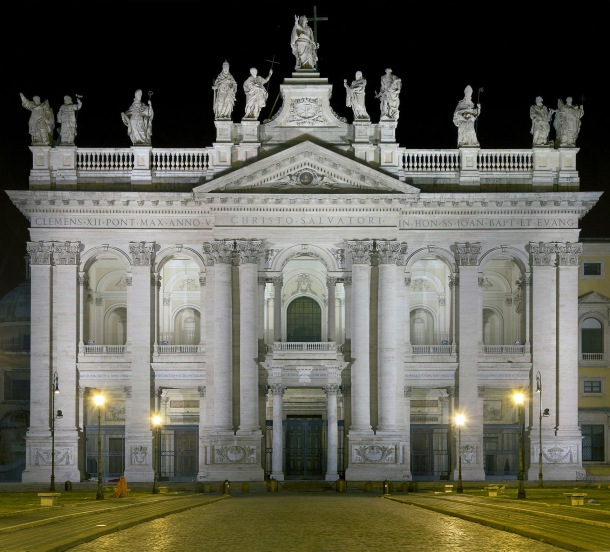
St. John Lateran Basilica in Rome

But sometimes it helps to have visible symbols of the things we venerate and celebrate. That’s why we have medals, rosary beads and candles – so that we can SEE something as we try to conceptualize a spiritual reality.


St. John Lateran is the Pope’s parish church.
Since he is the Bishop of the whole People of God,
his physical church has come to symbolize
the universal Body of Christ, the world Church.


Pope Benedict XVI in his Angelus Address, on November 9, 2008 said this:

Dear friends, today’s feast celebrates a mystery that is always relevant: God’s desire to build a spiritual temple in the world, a community that worships him in spirit and truth
(cf. John 4:23-24).
But this observance also reminds us of the importance of the material buildings in which the community gathers to celebrate the praises of God.
Every community therefore has the duty to take special care of its own sacred buildings, which are a precious religious and historical patrimony. For this we call upon the intercession of Mary Most Holy, that she help us to become, like her, the “house of God,” living temple of his love.


As we pray today, we might want to consider the gift of faith on which our own lives are built – a faith whose cornerstone is Jesus Christ. In our second reading, Paul says this:

Brothers and sisters:
You are God’s building…..
Do you not know that you are the temple of God,
and that the Spirit of God dwells in you?

1 Corinthians 3:16

And in our Gospel, Jesus speaks of his own body as a temple which, though apparently destroyed by his enemies, will be raised up in three days.

By our Baptism, that same spiritual temple lives in us and in all the community of faith. That same power of Resurrection is alive in us! So in a very real sense, what we celebrate today is ourselves – the Living Church – raised up and visible as a sign of God’s Life in the world.

Happy Feast Day, Church!


Poetry: A Perfect Church – the Roseville Bulletin. A light-hearted but honest look at ourselves as Church 🙂

I think that I will never see
A church that’s all it ought to be 
A church that has no empty pews
A church where people never get the blues
A church whose music is always great
A church where people are never late

Such perfect churches there may be 
But none of them are known to me 
If you could find the perfect church
Without one fault or smear
For goodness sake, don’t join that church
You’ll spoil the atmosphere

If you should find the perfect church
Then don’t you even dare
To tread upon such holy ground
You wouldn’t fit in there
But since no perfect church exists
Where people never sin
Then let’s stop looking for that church
And love the one we’re in

Amen


Music: Cornerstone – Hillsong

Memorial of Saint Clare

Wednesday, August 11, 2021

Today, in God’s Lavish Mercy, we pray with Psalm 66 – a psalm which, according to scripture scholar Roland Murphy, mixes two genres:

  1. A thanksgiving song of the community:

Shout joyfully to God, all the earth;
    sing praise to the glory of God’s name;
    proclaim God’s glorious praise.
Say to God: “How tremendous are your deeds!”

Psalm 66: 1-3
  1. A thanksgiving song of an individual:

Hear now, all you who fear God, while I declare 
    what God has done for me.
When I appealed to God  in words,
    praise was on the tip of my tongue.

Psalm 66: 16-17

Psalm 66 reminds us that we come to know,
love and serve God
both as individuals
and within the community of faith.
Our union with God is deepened at both fountains.

Today, we celebrate the feast of Clare of Assisi who praised God through a life of service shaped by a radical understanding of holy poverty.

We become what we love 
and who we love shapes what we become. 
If we love things, we become a thing. 
If we love nothing, we become nothing. 
Imitation is not a literal mimicking of Christ, 
rather it means becoming the image of the beloved, 
an image disclosed through transformation. 
This means we are to become vessels of God’s 
compassionate love for others.

Clare of Assisi

Poetry/Prayer: As we pray to live lives of love and compassion, may St. Clare’s blessing encourage us.

Go forth in peace, 
for you have followed the good road. 
Go forth without fear, 
for the One who created you 
has made you holy, 
has always protected you, 
and loves you as a mother. 
Blessed be you, my God, for having created me.


Music: Let the Love that Dwells in Your Heart – Poor Clare’s of Arundel

Memorial of Saint Ignatius of Loyola

Saturday, July 31, 2021

Today, in God’s Lavish Mercy, we pray with Psalm 67 which calls on God to bless all people.

O God, be merciful to us and bless us,
show us the light of your countenance and come to us.
So may your way be known upon earth;
   among all nations, your salvation.

Psalm 67: 1-2

This psalm is notable for its inclusiveness of nations outside of Israel. Most psalms focus inwardly on Israel’s needs, hopes and memories. But Psalm 67 calls on God to gather and bless universally:

May the nations be glad and exult
    because you rule the peoples in equity;
    the nations on the earth you guide.


For this reason, Psalm 67 has been called “the missionary psalm”, and is such a fitting prayer on this feast of St. Ignatius who founded a community which has carried the faith throughout the world.


As we pray our psalm today, we might examine how our own faith reaches out, includes and blesses others.  

Our final verses today point back to our first reading from Leviticus. While the math and calendar counting could get me pretty mixed up, the message is clear. It is a Jubilee message:

  • Stop. 
  • Take a good look at your life and the harvest of your years. 
  • Be grateful.
  • Be just.
  • Share. 
  • Bring others into your bounty because it all belongs to God, not you.

When we do these things, Psalm 67 becomes our prayer:

Let the nations be glad and sing for joy, 
for you judge the peoples with equity
and guide all the nations upon earth.
Let the peoples praise you, O God;
let all the peoples praise you.
The earth has brought forth its increase; 
may you, O God our God, bless us.
May you bless us,
and may all the ends of the earth stand in awe of you.


Poetry: This Is My Song by Lloyd Stone and Georgia Harkness

This is my song, O God of all the nations,
a song of peace for lands afar and mine;
this is my home, the country where my heart is;
here are my hopes, my dreams, my holy shrine:
but other hearts in other lands are beating
with hopes and dreams as true and high as mine.

My country’s skies are bluer than the ocean,
and sunlight beams on cloverleaf and pine;
but other lands have sunlight too, and clover,
and skies are everywhere as blue as mine:
O hear my song, thou God of all the nations,
a song of peace for their land and for mine.

May truth and freedom come to every nation;
may peace abound where strife has raged so long;
that each may seek to love and build together,
a world united, righting every wrong;
a world united in its love for freedom,
proclaiming peace together in one song.

Music: Finlandia, Opus 26

The above poem is sung to the tune of the final hymn in this work by Jean Sibelius. I think you will enjoy this beautiful video, especially the young ducks about midway through. Be sure to click the little arrowhead under the right side of the video to read the great history of this musical composition.

Tuesday of the Sixteenth Week in Ordinary Time

Tuesday, July 20, 2021

(Since today’s readings are so similar to yesterday’s, I decided to offer this reflection from 2019. I hope you like it.)

Today, in God’s Lavish Mercy, we read that triumphant Exodus passage in which the Israelites pass through the walled-up waters of the Red Sea. The images and exultations abound!

Here are the obvious ones:

  • Sea (the agent of delivery/salvation)
  • Wind (the grace of change)
  • Chariots (the inevitable challenges/obstacles)
  • Night (the mystery in which faith operates)
  • Fiery Cloud/The Lord’s Glance (God’s intervention)
  • Song (humble acknowledgement and thanksgiving)

Just as the newborn is carried through the birth canal on the waters of life, so too God’s neonate people finally begin the fullness of life promised to Abraham. God accomplishes this great “delivery” by a masterful intertwining of omnipotence, human choices, and natural phenomena. The result is breathtaking!


Just as it is in our lives!

Like any great Bible story, this one invites us to find ourselves somewhere within it. At the least, we are all making a sometimes treacherous passage through life. And at particular times, maybe even now, the threats may be intense.

At times, we stand at the edge of intimidating seas, wondering how we will make it to the other side. But if we reflect on our history, we must acknowledge that – with prayer and patience – the parting wind does come. Those “chariots” at our heels become mired in our resilience, hope and trust in God.

Even through the dark night of faith,
the Bright Mystery speaks to us.

In moments of astounding though quiet grace, we catch the glance of God. And we sing in thanksgiving.

The glory of this magnificent reading is captured in the Exultet, sung at the Easter Vigil.


Exult, let them exult, the hosts of heaven,
exult, let Angel ministers of God exult,
let the trumpet of salvation
sound aloud our mighty King's triumph!

Be glad, let earth be glad, as glory floods her,
ablaze with light from her eternal King,
let all corners of the earth be glad,
knowing an end to gloom and darkness.

Rejoice, let Mother Church also rejoice,
arrayed with the lightning of his glory,
let this holy building shake with joy,
filled with the mighty voices of the peoples.

(Therefore, dearest friends,
standing in the awesome glory of this holy light,
invoke with me, I ask you,
the mercy of God almighty,
that he, who has been pleased to number me,
though unworthy, among the Levites,
may pour into me his light unshadowed,
that I may sing this candle's perfect praises.)

(V. The Lord be with you.
R. And with your spirit.)
V. Lift up your hearts.
R. We lift them up to the Lord.
V. Let us give thanks to the Lord our God.
R. It is right and just.

 
It is truly right and just, with ardent love of mind and heart
and with devoted service of our voice,
to acclaim our God invisible, the almighty Father,
and Jesus Christ, our Lord, his Son, his Only Begotten.

Who for our sake paid Adam's debt to the eternal Father,
and, pouring out his own dear Blood,
wiped clean the record of our ancient sinfulness.

These, then, are the feasts of Passover,
in which is slain the Lamb, the one true Lamb,
whose Blood anoints the doorposts of believers.

This is the night,
when once you led our forebears, Israel's children,
from slavery in Egypt
and made them pass dry-shod through the Red Sea.

This is the night
that with a pillar of fire
banished the darkness of sin.

This is the night
that even now, throughout the world,
sets Christian believers apart from worldly vices
and from the gloom of sin,
leading them to grace
and joining them to his holy ones.

This is the night,
when Christ broke the prison-bars of death
and rose victorious from the underworld.

Our birth would have been no gain,
had we not been redeemed.

O wonder of your humble care for us!
O love, O charity beyond all telling,
to ransom a slave you gave away your Son!
O truly necessary sin of Adam,
destroyed completely by the Death of Christ!
O happy fault
that earned so great, so glorious a Redeemer!

O truly blessed night,
worthy alone to know the time and hour
when Christ rose from the underworld!

This is the night
of which it is written:
The night shall be as bright as day,
dazzling is the night for me,
and full of gladness.

The sanctifying power of this night
dispels wickedness, washes faults away,
restores innocence to the fallen, and joy to mourners,
drives out hatred, fosters concord, and brings down the mighty.  
On this, your night of grace, O holy Father,
accept this candle, a solemn offering,
the work of bees and of your servants’ hands,
an evening sacrifice of praise,
this gift from your most holy Church.

But now we know the praises of this pillar,
which glowing fire ignites for God's honor,
a fire into many flames divided,
yet never dimmed by sharing of its light,
for it is fed by melting wax,
drawn out by mother bees
to build a torch so precious.

O truly blessed night,
when things of heaven are wed to those of earth,
and divine to the human.

Therefore, O Lord,
we pray you that this candle,
hallowed to the honor of your name,
may persevere undimmed,
to overcome the darkness of this night.

Receive it as a pleasing fragrance,
and let it mingle with the lights of heaven.

May this flame be found still burning
by the Morning Star:
the one Morning Star who never sets,
Christ your Son,
who, coming back from death's domain,
has shed his peaceful light on humanity,
and lives and reigns for ever and ever.

R. Amen.

The Solemnity of the Most Holy Trinity

May 30, 2021

Today, in God’s Lavish Mercy, we celebrate the Solemnity of the Most Holy Trinity, one of the most profound mysteries of our faith. 

The first reading shows us that human beings have been trying to understand this Mystery ever since the time of Moses! 

The readings from both Romans and Matthew describe the power of God’s triune love in those who believe. But none of the readings really explain the Holy Trinity.

And that’s the whole point. “Mystery” cannot be explained. We fumble around with human words in an attempt to capture a reality beyond words, beyond analysis – but not beyond faith. Mystery can only be encountered in humble and undemanding faith.


Today, as Christians, we profess our belief in a God Who is incomprehensible Infinite Love creating, redeeming and sanctifying all Creation. 

This Infinite Love is so pure and complete that, within its Unity, it both embraces and frees the three Persons of the Trinity.


Pope Francis has said, “The Christian community, though with all its human limitations, can become a reflection of the communion of the Trinity, of its goodness and beauty.”  

Our prayer today is to grow in our capacity to love in imitation of the Trinity. May we, as individuals and as a Church, increase in that merciful inclusivity and wholeness which reflect the triune love of God, at once embracing and freeing all that we love.


Poetry: TO LIVE WITH THE SPIRIT – Jessica Powers


To live with the Spirit of God is to be a listener.
It is to keep the vigil of mystery,
earthless and still.
One leans to catch the stirring of the Spirit,
strange as the wind’s will.

The soul that walks where the wind of the Spirit blows
turns like a wandering weather-vane toward love.
It may lament like Job or Jeremiah,
echo the wounded hart, the mateless dove.
It may rejoice in spaciousness of meadow
that emulates the freedom of the sky.

Always it walks in waylessness, unknowing;
it has cast down forever from its hand
the compass of the whither and the why.

To live with the Spirit of God is to be a lover.
It is becoming love, and like to Him
toward Whom we strain with metaphors of creatures:
fire-sweep and water-rush and the wind’s whim.
The soul is all activity, all silence;
and though it surges Godward to its goal,
it holds, as moving earth holds sleeping noonday,
the peace that is the listening of the soul.

Music: Always – Aeoliah

Always by Aeoliah 

Memorial of the Blessed Virgin Mary, Mother of the Church

May 24, 2021

Today, in God’s Lavish Mercy, we pray with Psalm 87, allowing it to focus us on Mary, the Mother of Christ and thus of the Church. 

With her “Yes”, Mary engaged the Spirit of God and, like the ancient Holy City, became a dwelling place of Grace.

Glorious things are said of you,
    O city of God!
And of Zion they shall say:
    “One and all were born in her;
And the One who has established her
    is the Most High LORD.”

Psalm 87

In her book “Truly Our Sister”, theologian Elizabeth Johnson helps us to understand Mary as a companion, guide, and inspiration:

One fruitful approach to the theology of Mary, historically the mother of Jesus, called in faith the Theotokos or God-bearer, is to envision her as a concrete woman of our history who walked with the Spirit.


As I pray with Mary today, I picture her sitting with the young disciples after the mind-blowing experience of Pentecost. The whiff of Divine Electricity still pervades the room, still jars their senses to an indescribable timbre!

Mary is stilled with a silent understanding. From the abundance of her wisdom, gained in her daily presence with Jesus, Mary gently focuses, calms and directs these new evangelists for the task before them.

Mary is someone who has had her own “visitation by the Spirit”, many years before. Pentecost, for Mary, is a kind of “second Annunciation “. She knows what the willing reception of the Spirit will mean for one’s life.

Indeed, this moment – and their response, like hers so long ago – will bear God’s life into their world.


We call on Mary today, as Church and as individuals, to be with us as we are re-fired in the Holy Spirit. As we reflect on her and the way she opened her life to God, may we grow in faith and desire to open our own lives to the Spirit’s transformative power.


Elizabeth Johnson encourages us:

“to relate to Miriam of Nazareth as a partner in hope in the company of all the graced women and men who have gone before us; to be encouraged by her mothering of God to bring God to birth in our own world; to reclaim the power of her dangerous memory for the flourishing of suffering people; and to draw on the energy of her memory for a deeper relationship with the living God and stronger care for the world.”


Poetry: Annunciation – Denise Levertov

We know the scene: the room, variously furnished, 
almost always a lectern, a book; always
the tall lily.
       Arrived on solemn grandeur of great wings,
the angelic ambassador, standing or hovering,
whom she acknowledges, a guest.

But we are told of meek obedience. No one mentions
courage.

       The engendering Spirit
did not enter her without consent.
         God waited.

She was free
to accept or to refuse, choice
integral to humanness.

                  ____________________

Aren’t there annunciations
of one sort or another
in most lives?
         Some unwillingly
undertake great destinies,
enact them in sullen pride,
uncomprehending.
More often
those moments
      when roads of light and storm
      open from darkness in a man or woman,
are turned away from

in dread, in a wave of weakness, in despair
and with relief.
Ordinary lives continue.
                                 God does not smite them.

But the gates close, the pathway vanishes.

                  ____________________

She had been a child who played, ate, slept
like any other child–but unlike others,
wept only for pity, laughed
in joy not triumph.
Compassion and intelligence
fused in her, indivisible.

Called to a destiny more momentous
than any in all of Time,
she did not quail,
  only asked
a simple, ‘How can this be?’
and gravely, courteously,
took to heart the angel’s reply,
the astounding ministry she was offered:

to bear in her womb
Infinite weight and lightness; to carry
in hidden, finite inwardness,
nine months of Eternity; to contain
in slender vase of being,
the sum of power–
in narrow flesh,
the sum of light.

                     Then bring to birth,
push out into air, a Man-child
needing, like any other,
milk and love–

but who was God.

This was the moment no one speaks of,
when she could still refuse.

A breath unbreathed,
                                Spirit,
                                          suspended,
                                                            waiting.
                  ____________________

She did not cry, ‘I cannot. I am not worthy,’
Nor, ‘I have not the strength.’
She did not submit with gritted teeth,
                                                       raging, coerced.
Bravest of all humans,
                                  consent illumined her.

The room filled with its light,
the lily glowed in it,
                               and the iridescent wings.
Consent,
              courage unparalleled,
opened her utterly.


Music: Vespro Della Beata Vergine – Claudio Monteverdi

From the baroque period, Monteverdi praises Mary in his masterpiece, Vespro Della Beata Vergine commonly referred to as Vespers of 1610. The work is monumental in scale and difficult to perform, requiring two large choirs who are skillful enough to cover up to 10 voice parts accompanied by an orchestral ensemble. Here is just an excerpt.

Lauda, Jerusalem, Dominum: lauda Deum tuum, Sion.
Quoniam confortavit seras portarum tuarum: benedixit filiis tuis in te.
Qui posuit fines tuos pacem: et adipe frumenti satiat te.
Qui emittit eloquium suum terræ: velociter currit sermo ejus.
Qui dat nivem sicut lanam: nebulam sicut cinerem spargit.
Mittit crystallum suam sicut buccellas: ante faciem frigoris ejus quis sustinebit?
Emittet verbum suum, et liquefaciet ea: flabit spiritus ejus, et fluent aquæ.
Qui annunciate verbum suum Jacob: justitias et judicia sua Isræl.
Non fecit taliter omni nationi:
et judicia sua non manifestavit eis.
Gloria Patri et Filio et Spiritui Sancto.
Sicut erat in principio, et nunc, et semper, et in sæcula sæculorum. Amen

Praise the Lord, O Jerusalem; praise thy God, O Zion.
For he hath strengthened the bars of thy gates; he hath blessed thy children within thee.
He maketh peace in thy borders,
and filleth thee with the finest wheat.
He sendeth his commandment to the earth; his word runneth swiftly.
He giveth snow like wool;
he scattereth hoar frost like ashes.
He casteth forth his ice like morsels; before his cold who can stand?
He sendeth out his word, and melteth them; his spirit blows, and the waters flow.
He sheweth his word unto Jacob, his statutes and judgements to Isræl.
He hath not dealt so with any nation;
and his judgments he hath not made manifest.
Glory be to the Father and to the Son and to the Holy Spirit.
As it was in the beginning, is now, and ever shall be, without end. Amen.

Pentecost Sunday

 May 23, 20

Today, in God’s Lavish Mercy, we pray with Psalm 104 – a fitting prayer for this glorious Feast of Pentecost.

Lord, send out your Spirit,
and renew the face of the earth.

It is a bold prayer, an extravagant request. It asks for everything – a Fire of Love so complete that the whole earth is remade in its Divine Power.

It is a prayer based in mutual invitation as, in the Sequence, we invite the Holy Spirit to renew us:

Come, Holy Spirit, come!
And from your celestial home
Shed a ray of light divine!

Pentecost Sequence

And, as in any true relationship, the Spirit invites us too – to open our hearts to the infinite grace of this feast. The Book of Revelation describes this reciprocity in this profound passage:

“ I, Jesus, have sent my angel to give you this testimony for the churches. I am the Root and the Offspring of David, and the bright Morning Star.”

The Spirit and the bride say, “Come!” And let the one who hears say, “Come!” Let the one who is thirsty come; and let the one who wishes take the free gift of the water of life.

Revelation 22: 16-17

Today, on the Birthday of the Church, we pray not only for our own soul’s kindling, but for the whole People of God. May the Grace of Pentecost ignite a new fire of charity over all the earth. May that fire clear the way for the Spirit’s gifts to flower, for Her fruits to blossom, for Her power to surprise us as it bursts forth in our hearts!


Poetry: The Golden Sequence

Veni Sancte Spiritus, sometimes called the Golden Sequence, is a sequence prescribed in the Roman Liturgy for the Masses of Pentecost and its octave. It is usually attributed to either the thirteenth-century Pope Innocent III or to the Archbishop of Canterbury, Cardinal Stephen Langton, although it has been attributed to others as well.

“Veni Sancte Spiritus” is one of only four medieval Sequences which were preserved in the Roman Missal published in 1570 following the Council of Trent (1545–63).

The other three occasions when we hear these beautiful ancient hymns are Easter Sunday (“Victimae Paschali Laudes”), Corpus Christi (“Lauda Sion Salvatorem”) and Our Lady of Sorrows (“Stabat Mater Dolorosa”). On Easter Sunday and Pentecost, the sequence must be sung, whereas on Corpus Christi and Our Lady of Sorrows, the sequence is optional.

Wikipedia

Come, Holy Spirit, come!
And from your celestial home
    Shed a ray of light divine!

Come, Father of the poor!
Come, source of all our store!
    Come, within our bosoms shine.

You, of comforters the best;
You, the soul’s most welcome guest;
    Sweet refreshment here below;

In our labor, rest most sweet;
Grateful coolness in the heat;
    Solace in the midst of woe.

O most blessed Light divine,
Shine within these hearts of yours,
    And our inmost being fill!

Where you are not, we have naught,
Nothing good in deed or thought,
    Nothing free from taint of ill.

Heal our wounds, our strength renew;
On our dryness pour your dew;
    Wash the stains of guilt away:

Bend the stubborn heart and will;
Melt the frozen, warm the chill;
    Guide the steps that go astray.

On the faithful, who adore
And confess you, evermore
    In your sevenfold gift descend;

Give them virtue’s sure reward;
Give them your salvation, Lord;
    Give them joys that never end. Amen.
    Alleluia.

Music: Veni Santé Spiritus – Chant of the Mystics

Sixth Sunday of Easter

May 9, 2021

Today, in God’s Lavish Mercy, we pray with Psalm 98, an exuberant celebration of God’s predilection and fidelity toward Israel. But at the same time, it is a call to recognize God’s love for ALL Creation:

The LORD has made his victory known;
has revealed his triumph in the sight of the nations

Psalm 98;2

If we read the whole psalm, we might imagine all Creation assembled like a magnificent choir and orchestra – something like a supersized Mormon Tabernacle Choir. As the psalm progresses, the choirmaster-psalmist incorporates successive components into an awakened awareness until there is one universal melody of praise.


First, in a theme we met recently, the call to a NEW song:

Sing a new song to the LORD,
who has done marvelous deeds…
..remembering mercy and faithfulness
toward the house of Israel.
All the ends of the earth have seen
the victory of our God.

Psalm 98: 1-3

Next, the vocals and the instruments 

Shout with joy to the LORD, all the earth;
break into song; sing praise.
Sing praise to the LORD with the lyre,
with the lyre and melodious song.
With trumpets and the sound of the horn
shout with joy to the King, the LORD.

Psalm 98: 4-6

Then nature’s  “orchestra”

Let the sea and what fills it resound, the world and all who dwell in it!

And even the suggestion of tambourine dancers along the river’s edge

Let the rivers clap their hands
the mountains shout with them for joy,
before the LORD who comes,
who comes to govern the earth,
To govern the world with justice
and the peoples with fairness.

Psalm 98: 8-9

This inclusive psalm serves our other readings so well. The early Church in Acts has folded the Gentiles into the chorus.

Then Peter proceeded to speak and said,
“In truth, I see that God shows no partiality.
Rather, in every nation whoever fears him and acts uprightly
is acceptable to him.”

Acts 10: 34-35

And Jesus gives us the underlying truth that, in his Love, we are ALL part of this cosmic symphony:

“As the Father loves me, so I also love you.
Remain in my love.
If you keep my commandments, you will remain in my love,
just as I have kept my Father’s commandments
and remain in his love.
“I have told you this so that my joy may be in you
and your joy might be complete.

This is my commandment:
love one another as I love you.

Poetry: Shoulders – Naomi Shihab Nye

A man crosses the street in rain,
stepping gently, looking two times north and south,
because his son is asleep on his shoulder.
No car must splash him.
No car drive too near to his shadow.
This man carries the world's most sensitive cargo
but he's not marked.
Nowhere does his jacket say FRAGILE,
HANDLE WITH CARE.
His ear fills up with breathing.
He hears the hum of a boy's dream
deep inside him.
We're not going to be able
to live in this world
if we're not willing to do what he's doing
with one another.
The road will only be wide.
The rain will never stop falling.

Music: OK – it’s not the Mormon Tabernacle 😀 but it captures the spirit for me! I hope it puts you in the rhythm too, beloveds!