Don’t Be a Hypocrite

Memorial of Saint Augustine, Bishop and Doctor of the Church
August 28, 2023

Today’s Readings:

https://bible.usccb.org/bible/readings/082823.cfm


Today, in God’s Lavish Mercy, we make a shift in our first readings. We leave the Hebrew Scriptures for a while to pick up Paul’s letters – from now until almost the end of September.

We begin with the first letter to the Thessalonians. Written about twenty years after the Resurrection, 1 Thessalonians is widely agreed to be the first book of the New Testament to be written, and the earliest extant Christian text.


The lyrical opening greeting in itself is magnificent. With it, Paul confirms these very early Christians as a recognized and deeply appreciated community giving them the encouragement they need to sustain and grow their shared life in Christ.

Paul, Silvanus, and Timothy to the Church of the Thessalonians
in God the Father and the Lord Jesus Christ:
grace to you and peace.

1 Thessalonians: 1

And then, they are given this beautiful, grateful prayer from Paul naming and blessing their call and subsequent efforts for God:

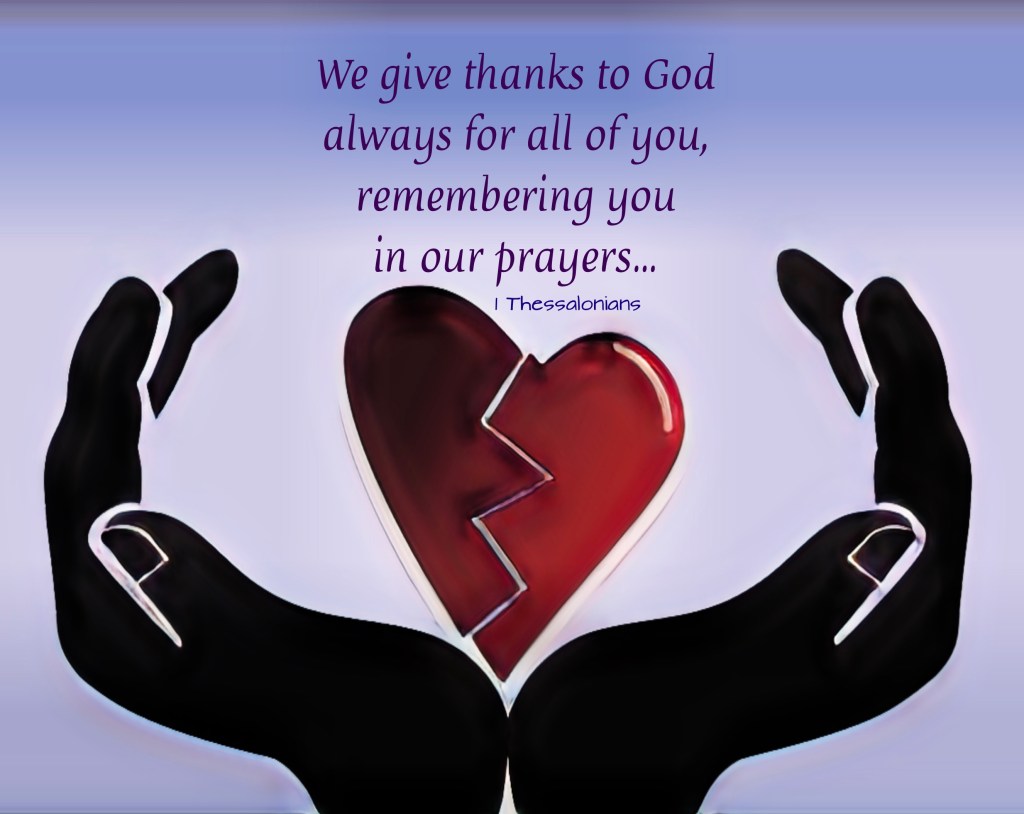
We give thanks to God always for all of you,
remembering you in our prayers,
unceasingly calling to mind your work of faith and labor of love
and endurance in hope of our Lord Jesus Christ,
before our God and Father,
knowing, brothers and sisters loved by God, how you were chosen.

1 Thessalonians: 2-4

photo by Martin Sanchez from Unsplash

Praying with this passage, I am moved to recall the “encouragers of faith” in my own life. At those few times in my life when the floor seemed to fall out and I felt like I was hanging on by a fingernail, there have always been those dear voices who called to me the way Paul calls to the Thessalonians today:

  • I am praying for you
  • You are part of a community who needs you and will sustain you
  • Know that who you are and what you do is appreciated
  • By faith, you have endured difficulty before. You can do it again.
  • You are loved and chosen by God. Be confident in that Power.

This kind of loving support is a key element of Christian community.

In today’s Gospel, Jesus condemns those who completely miss that point. He calls them hypocrites because they bury the heart of community in compliance to their controlling and self-promoting laws.

Jesus said to the crowds and to his disciples:
“Woe to you, scribes and Pharisees, you hypocrites.
You lock the Kingdom of heaven before others.
You do not enter yourselves,
nor do you allow entrance to those trying to enter.

Woe to you, scribes and Pharisees, you hypocrites.
You traverse sea and land to make one convert,
and when that happens you make him a child of Gehenna
twice as much as yourselves.

Matthew 23: 13-15

The fundamental charge laid against (the scribes and Pharisees) is hypocrisy—a gap between appearance and reality, between saying and doing, caused by a misplaced hierarchy of values and excessive emphasis on external matters to neglect of the interior.

Daniel J. Harrington – Sacra Pagina: The Gospel of Matthew

Jesus and Paul make it quite clear how we are to love and support one another in the Christian community. As we give thanks for those who have been such a support in our lives, let’s look into our own hearts for the same kind of behaviors. When we love one another in this way, we carry the otherwise invisible love of God to our sisters and brothers when they most need to see it.


Poetry: If I Can Stop One Heart from Breaking – Emily Dickinson

If I can stop one heart from breaking, I shall not live in vain;
If I can ease one life the aching,
Or cool one pain,
Or help one fainting robin
Unto his nest again, I
shall not live in vain.


Music: You Raise Me Up – written by Rolf Levland and sung by Josh Groban

Leadership: Service not Status

Saturday of the Twentieth Week in Ordinary Time
August 26, 2023

Today’s Readings:

https://bible.usccb.org/bible/readings/082623.cfm


Today, in God’s Lavish Mercy, we continue with the story of Ruth, prototype of the Servant Christ. And we pray our first reading in the light of today’s Gospel in which Jesus teaches his disciples a key lesson in servant leadership:

Jesus spoke to the crowds and to his disciples, saying,
“The scribes and the Pharisees
have taken their seat on the chair of Moses.
Therefore, do and observe all things whatsoever they tell you,
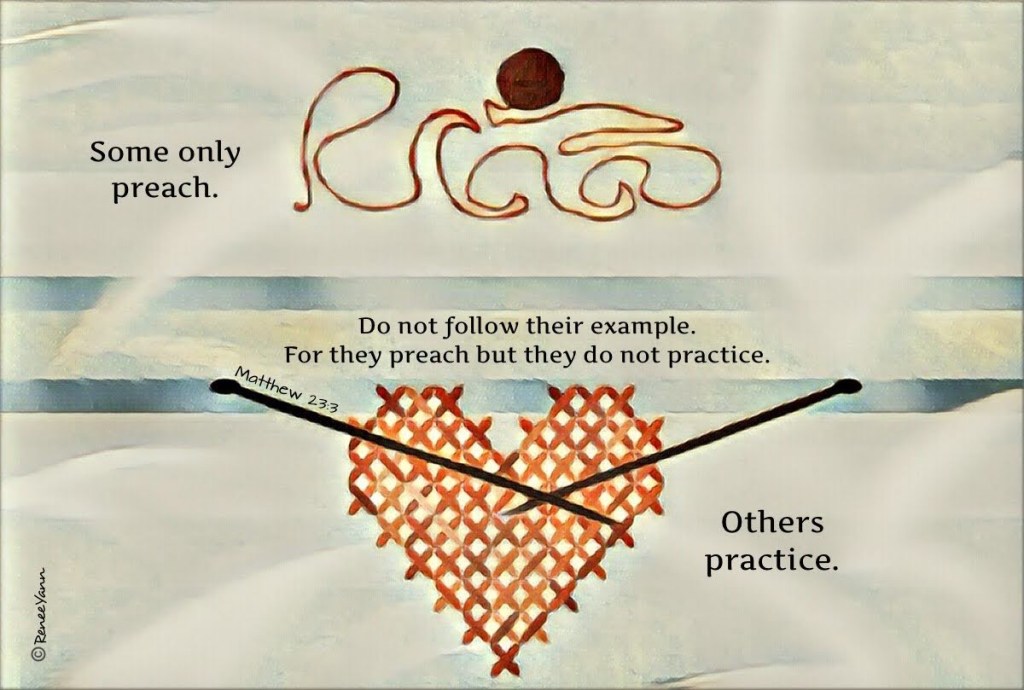
but do not follow their example.
For they preach but they do not practice.
They tie up heavy burdens hard to carry
and lay them on people’s shoulders,
but they will not lift a finger to move them.
All their works are performed to be seen.
They widen their phylacteries and lengthen their tassels.
They love places of honor at banquets, seats of honor in synagogues,
greetings in marketplaces, and the salutation ‘Rabbi.’

Matthew 23: 1-7

Jesus is so clear in this teaching. How is it that, even after 2000 years, we still don’t get it!

Stop and think about our culture – how we worship glitz, and bling, and “blow-em-up”! Listen to some of our political rhetoric filled with narcissistic “me-ism” and violent braggadocio. Look at some of the people in leadership positions around the world! They are tangled in their “phylacteries and tassels” and tripping us up with them.

Yes, even in our churches, we sometimes encounter supposed leaders who delight in places of honor and who lay burdens on the faithful rather than lift them.


Our first reading offers us humble Ruth who led and healed by selfless love.

Our Gospel reminds us that the Christian life is one of servant leadership fueled in a God-centered community to which all belong as sisters and brothers.

As for you, do not be called ‘Rabbi.’
You have but one teacher, and you are all brothers.
Call no one on earth your father;
you have but one Father in heaven.
Do not be called ‘Master’;
you have but one master, the Christ.
The greatest among you must be your servant.
Whoever exalts himself will be humbled;
but whoever humbles himself will be exalted.

Matthew 23:8-12

History is the story of our struggle to find that balance of leadership and community that will foster the life of all people. It is the great struggle between sin and goodness, between a life lived only for self and a life lived generously with others.

As we deepen our spiritual understanding with today’s readings, we may see ways that we want to act and choose more intentionally around the ministry of leadership – as it is exercised by ourselves and by others.


Prayer: from Jesuit Resources at Xavier University.org

A Leader’s Prayer

Leadership is hard to define.
Lord, let us be the ones to define it with justice.
Leadership is like a handful of water.
Lord, let us be the people to share it with those who thirst.
Leadership is not about watching and correcting.
Lord, let us remember it is about listening and connecting.
Leadership is not about telling people what to do.
Lord, let us find out what people want.
Leadership is less about the love of power,
and more about the power of love.

Lord, as we continue to undertake the role of leader let us be
affirmed by the servant leadership we witness in your son Jesus.
Let us walk in the path He has set and let those who will, follow.

Let our greatest passion be compassion.
Our greatest strength love.
Our greatest victory the reward of peace.

In leading let us never fail to follow.
In loving let us never fail.


Hymn: Prayer of St. Francis

Parable of the Trees

Wednesday of the Twentieth Week in Ordinary Time
August 23, 2023

Today’s Readings:

https://bible.usccb.org/bible/readings/082323.cfm


Today, in God’s Lavish Mercy, our first reading delivers a powerful message if we can decipher it. The passage, sometimes known as “Jotham’s Fable”, depicts the rise of Jotham’s felonious brother Abimelech as leader of Israel.

Abimelech was a bad guy, and the story of his tenure is so full of treacherous violence that it would be an “X” movie if shown in theaters today. Jotham, the only surviving brother of Abimelech’s fratricide, preaches his fable to warn the people against his murderous brother.

Jotham went to the top of Mount Gerizim and, standing there,
cried out to them in a loud voice:
“Hear me, citizens of Shechem, that God may then hear you!
Once the trees went to anoint a king over themselves.

Judges 9:7-8

Let’s take a look at the fable. What significance might it have for us today?

The fable describes humanized trees who seek a strong leader from among the most revered trees in Israel: the olive, the fig, and the grapevine. Each of the three trees is asked to assume leadership because each has proven honest and true in sustaining the people. However each, when asked, refuses because they are committed to the current success of their own chosen work. As a result, a vacuum of leadership is left. This vacuum allows the “bramble”, a self-absorbed, non-productive weed to slip in and grasp control over the people. It doesn’t turn out well.


Walter Bruggemann interprets the parable in this way:

The point of the parable is not obscure. The parable is simply a clever way to assert that if good people with positive political potential default on governing responsibility, then rule will be exercised by less desirable, more dangerous alternatives. The point is clear; nonetheless there is merit in lining out the parable. Not only is it entertaining in its imagery, but the repetition of patterned speech reinforces the danger and the possibility concerning governance. In the case of this narrative, the parable implies that Abimelech came to power because better candidates refused to have their productive lives interrupted by public responsibility.

It takes no great imagination for us to see the contemporaneity of the parable for us. If responsible people eschew public responsibility, the way is open for those who would misuse power in a governing space.

Walter Brueggemann: “Refusing the Bramble” from churchanew.org

It takes both generous courage and insightful self-examination to answer a call to true leadership which is a ministry of God’s merciful love. Every one of us will hear that call in some way in our lives – not necessarily to be President, Queen, or Pope – but as parent, teacher, coach, counselor, minister, board member, supervisor, or simply a true friend … and all the other ways we have the power to influence another’s life.


On the flip side, it takes reflective awareness to choose and support good leaders. In our complex society, we must be intentional not to be caught in the “brambles” of a self-absorbed wannabe who, like Jotham’s combustible weed, cannot nourish the community. Achieving that awareness is not as easy as it might seem. Potential leaders, at any level, can fool us by subtly appealing to our own unexamined “brambles” – those flashpoints which exploit our fears and prejudices rather than leading to a communally successful way through them.


In our Gospel, Jesus tells us what God’s “leadership” is like. God is like the selfless landowner who meets his people’s need with unmeasured generosity. Whether we come early or late to God’s vineyard, we are fully embraced and rewarded. Jesus’s parable suggests that we should be wary of “leaders” who divide communities into “them” and “us” in order to ration God’s Mercy.

Instead, the Gospel-inspired community is amazingly able to embrace each member at the place where they can best be led to wholeness. A sound, selfless leader is essential to building that kind of community whether it be civic or religious.

In reply, the landowner said to one of the complainers,
‘My friend, I am not cheating you.
Did you not agree with me for the usual daily wage?
Take what is yours and go.
What if I wish to give this last one the same as you?
Or am I not free to do as I wish with my own money?
Are you envious because I am generous?’
Thus, the last will be first, and the first will be last.”

Matthew 20:13-16

Praying with these passages, we might ask for “justice-eyes” and a “mercy-heart” as we navigate our world as both leaders and as those who discern leaders.


Poetry: Nobility by Alice Cary (1820-1871)

True worth is in being, not seeming,-
In doing, each day that goes by,
Some little good, not in the dreaming
Of great things to do by and by.
For whatever men say in their blindness,
And spite of the fancies of youth,
There’s nothing so kingly as kindness,
And nothing so royal as truth.


Music: Song for the Journey – not the greatest music ever written, but still the song captures the message of servant leadership.

In the Name of Mercy

August 22, 2023
Foundation Day: Sisters of Mercy Philadelphia/Merion


On August 22, 1861, a small group of hopeful women arrived at the railroad station in North Philadelphia. On that hot afternoon, the first Philadelphia Sisters of Mercy, led by a 27-year-old Irish immigrant Patricia Waldron, disembarked from the train and caught their first amazed glimpse of the busy city.  They carried few worldly possessions. They came with only a dream for Mercy.  It was a dream so alive in them that it still inspires us today, over 160 years later.


Can you see them standing on the cramped platform, the hissing steam trains encircling them in mist?  They must have felt “be-misted” themselves, these mostly Irish country girls engulfed in a noisy teeming city.

Union troops heading south crowded the platform.  Busy Broad Street crackled with news of the burgeoning national strife.  Lincoln himself would visit the city in the coming weeks.


Visiting Old Moyamensing Prison

Where would they begin? And how? Hidden within the seams of this bustling city’s garment lay the poor – the ones for whom they had come.  How to reach them?  How to help them change their lives?

Ranging from sixteen to twenty-seven years old, these brave young women had been charged with establishing a kind of “new nation” themselves – not of politics, but of mercy.  They, like the young stout-hearted soldiers around them, were also a little weak-kneed. They too had their battles to face. They too would see starvation, illness, attack, and death – but they would endure for the sake of the Mercy dream, God’s dream for all those in need.


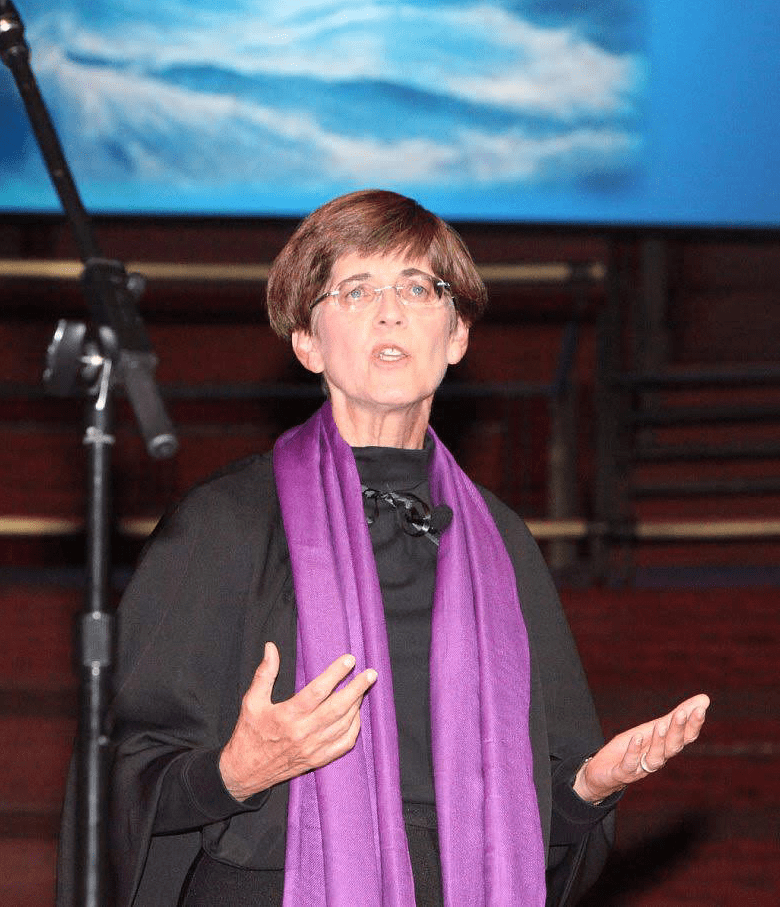
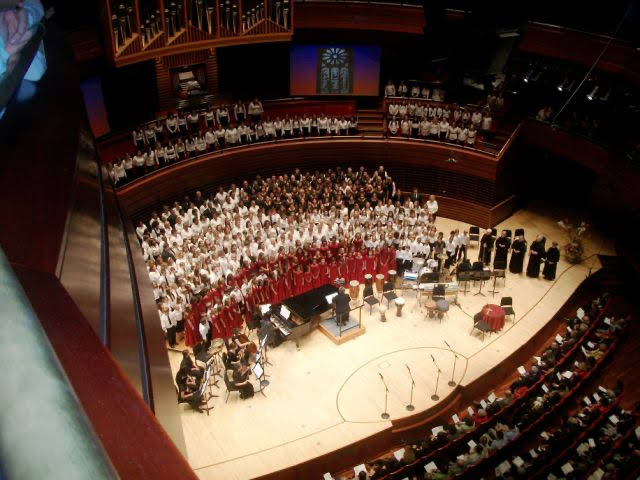
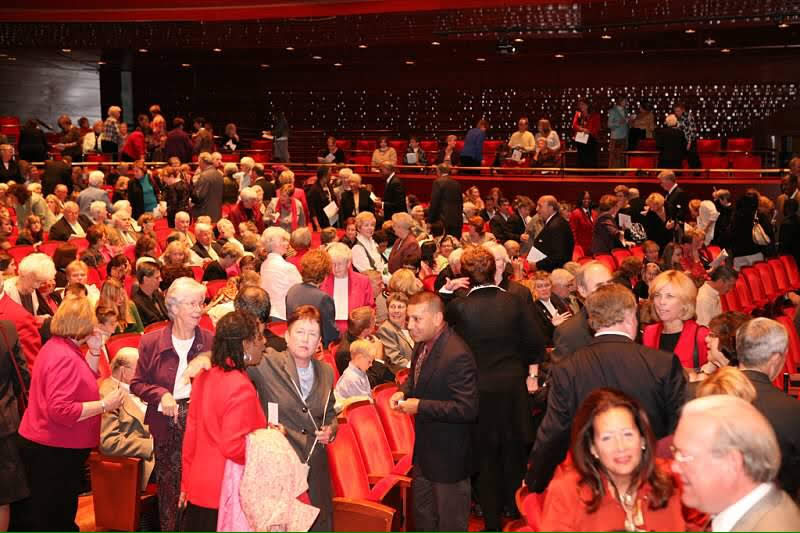
In 2011, the Philadelphia/Merion Sisters of Mercy celebrated our Sesquicentennial. One of our celebratory events was a thrilling performance at the Kimmel Center commemorating these founding sisters and the decades of ministry built on their commitment.

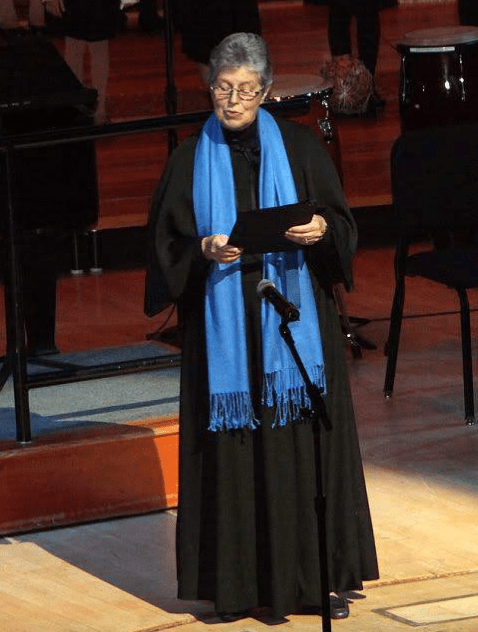
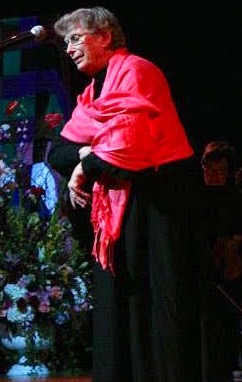
The performance opened with these imagined comments from Patricia Waldron.

Mother Patricia Waldron
(played by our dear late Sister Mimi Connor, RSM
)

Have you ever noticed how our dreams unfold?
They never happen in the way we first imagined.
Instead, they weave – your dreams and mine ---
Among each other in a latticework of grace.
By the way, my name is Anne Waldron.
known in my life as Mother Patricia –
“Reverend Mother” really.
A rather weighty title, don’t you think?
But my own dream of mercy was not weighty.
I was born in Tuam (pronounced “Choom”), County Galway, Ireland.
‘Tis a precious place, a mere 20 miles from the glorious bay to the south,
Where the soft air carries a hint of the sea
And the sweet land holds both a deep promise and a deep scar of famine.
I must seem a long way from you now, after these 150 years 
– almost like a shadow on your memories.
And you must think me a particularly courageous part of your history.
After all, you have named buildings after me, I see!
But tonight, I want you to know me in a new way.

I was only 27 when I came here to this strange city.
I walked these same streets as you, fraught as they are with their dangers and beauties.
Do you know that a century and a half ago
we sisters lived just two miles north of this very spot -
you call it “The Kimmel” I think!
Ah, but the Philadelphia of the 1860s was a far different sight 
from what I saw outside tonight.
I see that a million and a half souls live here now!
Oh my! Just a third that number in the city then.
We thought it an amazing number having come mostly from our small villages.

I was young then – like all of you are or were once –
Young and full of dreams.
We all were – I and these my dear companions.

We were not different because of our courage, 
our spirit of adventure, our dedication, or our generosity—
although these marked our lives
as we grew deeper into God.

No – what made us who we were was this:
We clearly knew and trusted that the dream in us
was God’s dream for a wounded world.
In our deepest hearts,
we were Sisters of Mercy!

As you listen to our stories tonight,
Hold this question in your own hearts:
What dream lived in you when you were young?
What dream lives in you now?

Enduring dreams begin with small first steps.  So, hailing a horse-drawn carriage, Mother Patricia Waldron led her young band to their new lives.  Thus she began the grace-filled saga many of us know so well and of which we are a part today.  Their dream lives in us who love Mercy:

  • in our continued effort to find those who are poor and sick in a world that ignores their suffering
  • in our choice to be compassionate in a world that often chooses violence
  • in our commitment to care in a world of treacherous indifference
cemetery
Today we honor our beloved foremothers
who led the way in faith and commitment.

On that sultry August day in 1861, and on this one in 2023, people have choices to make.  They have vows to keep. Some choices live forever.  In the name of Mercy, what will you choose today?


I think many of you might enjoy a photo review of the Kimmel Celebration. I have only a few photos of the original sisters which I connected with the performer where possible.

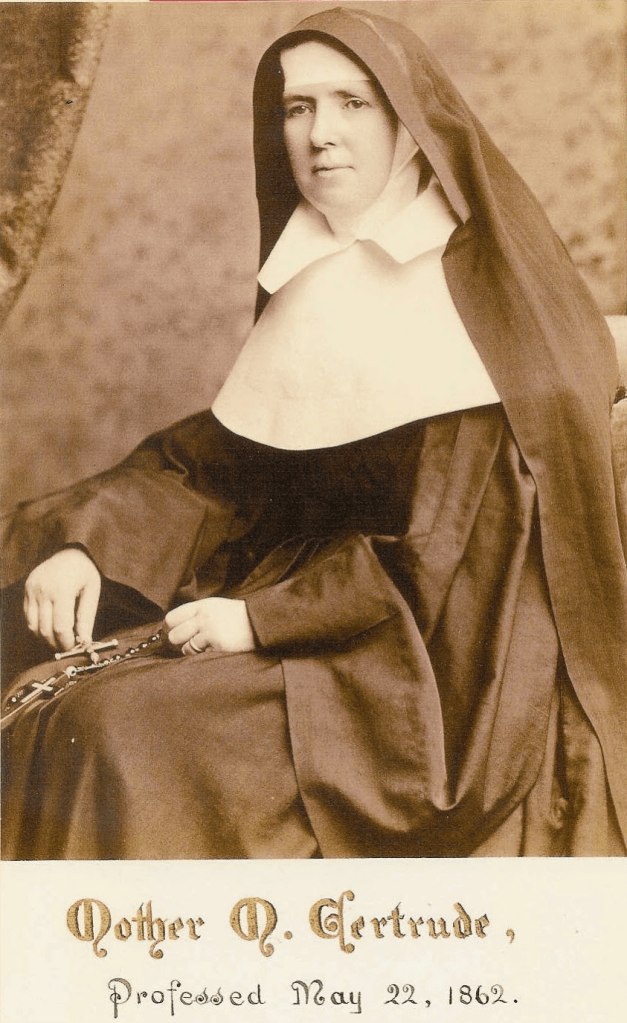
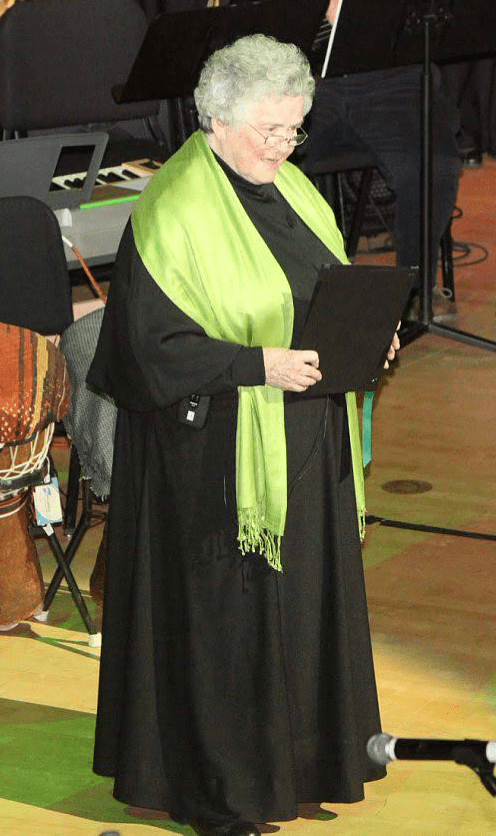
Mother Gertrude Dowling
(played by Sister Kathleen Mary Long)


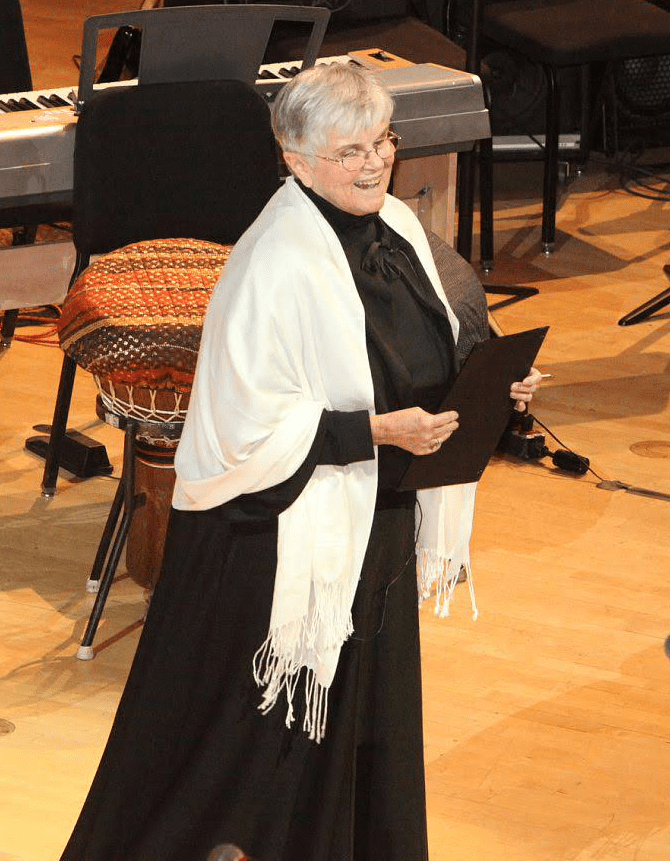
Sister Marie Madeleine Mathey
(played by Sister Suzanne Neisser)


Sister Mary Philomena Hughes

(played by Sister Mary Hentz)


Sister Mary Angela Curtin
(played by Sister Connie Haughton)


Sister Mary Ann Coveney

(played by Sister Diane Guerin)


Sister Francis de Sales Geraghty
(played by Sister Mary Klock)


Sister Mary Rose Davies
(played by Sister Marie Carolyn Levand)


Sister Mary Veronica O’Reilley
(played by Sister Eileen Sizer)


Virtuoso Sister Marie Ann Ellmer plays the magnifcent
Kimmel organ


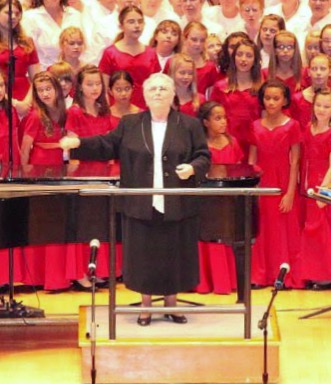
Maestro Sister Jeanette Goglia
leads a resounding rendition
of her composition “The Circle of Mercy”
sung by 2500 attendees

(Click the white arrowhead to enjoy “The Circle of Mercy” as you peruse these photos.
Happy Foundation Day to all who love and live Mercy!)

All Are Welcome

Twentieth Sunday in Ordinary Time
August 20, 2023

Today’s Readings:

https://bible.usccb.org/bible/readings/082023.cfm


Christ and the Canaanite Woman – Annibale Carracci

Today, in God’s Lavish Mercy, we read the story of the Canaanite woman whom Jesus first meets with sarcastic banter. The banter however serves to expose some of the alienating prejudices of Jesus’s time which he then dissolves in a sweeping act of mercy and inclusion.

But the woman came and did Jesus homage, saying, “Lord, help me.”
He said in reply,
“It is not right to take the food of the children
and throw it to the dogs.”
She said, “Please, Lord, for even the dogs eat the scraps
that fall from the table of their masters.”
Then Jesus said to her in reply,
“O woman, great is your faith!
Let it be done for you as you wish.”

Matthew 15:25-28

The outcast Canaanite woman prevails on Jesus to broaden his kingdom. His response is to open his heart to another way of bringing mercy to all those longing for it. Jesus’s words and actions signify a new culture of divine justice offered to all people. They alert his reticent disciples to practice the same kind of generous, inclusive mercy in their ministries.


Our Gospel challenges us to confront our own prejudices and any limitations we place on who is welcome in the Kingdom of God. It clearly establishes a single element as the determiner of who belongs to God’s new Reign of Love. That element is FAITH.

Then Jesus said to her in reply,
O woman, great is your faith
Let it be done for you as you wish.” 


Prose for Reflection: Pope Francis continually encourages the Church toward this faith-defined inclusivity.

Being the church, being the people of God, … means being God’s leaven in this our humanity. It means proclaiming and bearing God’s salvation in this our world, which is often lost and needful of having encouraging answers, answers that give hope, that give new energy along the journey.

May the church be the place of God’s mercy and love where everyone can feel themselves welcomed, loved, forgiven and encouraged to live according to the good life of the Gospel. And in order to make others feel welcomed, loved, forgiven and encouraged, the church must have open doors so that all might enter. And we must go out of those doors and proclaim the Gospel.”


Music: All Are Welcome – Marty Haugen

Let us build a house
Where love can dwell
And all can safely live
A place where
Saints and children tell
How hearts learn to forgive
Built of hopes and dreams and visions
Rock of faith and vault of grace
Here the love of Christ shall end divisions
All are welcome, all are welcome
All are welcome in this place

Let us build a house where prophets speak
And words are strong and true
Where all God's children dare to seek
To dream God's reign anew
Here the cross shall stand as witness
And a symbol of God's grace
Here as one we claim the faith of Jesus
All are welcome, all are welcome
All are welcome in this place

Let us build a house where love is found
In water, wine and wheat
A banquet hall on holy ground
Where peace and justice meet
Here the love of God, through Jesus
Is revealed in time and space
As we share in Christ the feast that frees us
All are welcome, all are welcome
All are welcome in this place

Remember and Love Generously

Memorial of Saint Clare, Virgin
August 11, 2023
Friday of the Eighteenth Week in Ordinary Time

Today’s Readings:

https://bible.usccb.org/bible/readings/081123.cfm


Today, in God’s Lavish Mercy, our readings continue to take us through Deuteronomy, and for the next two weeks, through Joshua, Judges, and Ruth.

The word “Deuteronomy” means “second law” because the book is a reiteration and refinement of the Law given in Exodus. The Book of Deuteronomy is basically three big speeches by Moses, the commissioning of Joshua as Israel’s next leader, and a recounting of the death of Moses.


Today’s speech is powerful and beautiful. Moses calls on the people to remember and give thanks for the immense blessings they have received at the hand of God.

Ask now of the days of old, before your time,
ever since God created man upon the earth;
ask from one end of the sky to the other:
Did anything so great ever happen before?
Was it ever heard of? 
Did a people ever hear the voice of God
speaking from the midst of fire, as you did, and live?

Deuteronomy 4:32-33

At length, Moses recounts the sacred history of the people and tells them that, because of it, they are called to respond in covenanted fidelity.

This is why you must now know, and fix in your heart,
that the LORD is God in the heavens above and on earth below,
and that there is no other.
You must keep his statutes and commandments which I enjoin on you today,
that you and your children after you may prosper,
and that you may have long life on the land
which the LORD, your God, is giving you forever.”

Deuteronomy 4: 39-40

Moses offered these encouraging and directive speeches because he sensed he was near the end of his life and that Israel was moving into a new phase of its life.

In our Gospel, Jesus feels the same way. In the section immediately preceding today’s reading, Matthew says this:

From that time on, Jesus began to show his disciples that he must go to Jerusalem and suffer greatly from the elders, the chief priests, and the scribes, and be killed and on the third day be raised


In today’s passage, Jesus calls his disciples to live in covenanted fidelity by imitating his life.

Whoever wishes to come after me must deny himself,
take up his cross, and follow me.
For whoever wishes to save his life will lose it,
but whoever loses his life for my sake will find it.
What profit would there be for one to gain the whole world
and forfeit his life?
Or what can one give in exchange for his life?

Matthew 16: 25-26

I’ve read this Gospel passage a thousand times in the past sixty or seventy years. And I ask myself each time, “Do you really take this seriously? Do you really understand that your life is not for yourself but for God and all of God’s beloved creatures?”

It takes radical courage to live that kind of understanding. But continually remembering God’s Presence and Promises throughout our own lives strengthens us. That’s what Moses was trying to tell his people. That’s what Jesus is encouraging his disciples to recognize.

Jesus promises that, at the end of time, each will be repaid according to the level of their generosity. But the repayment doesn’t wait for the end times. Remembering our lives in grateful prayer will convince us of this: there is no true happiness, no deep joy, unless we learn to live beyond our own self-interests.


Poetry: Unless a Grain of Wheat Falls into the Ground and Dies – Malcolm Guite

Oh let me fall as grain to the good earth
And die away from all dry separation,
Die to my sole self, and find new birth
Within that very death, a dark fruition,
Deep in this crowded underground, to learn
The earthy otherness of every other,
To know that nothing is achieved alone
But only where these other fallen gather.

If I bear fruit and break through to bright air,
Then fall upon me with your freeing flail
To shuck this husk and leave me sheer and clear
As heaven-handled Hopkins, that my fall
May be more fruitful and my autumn still
A golden evening where your barns are full.

Music: Unless a Grain of Wheat – Bernadette Farrell


Unless a grain of wheat shall fall upon the ground and die,
it remains but a single grain with no life.

If we have died with him then we shall live with him;
if we hold firm, we shall reign with him.
Unless a grain of wheat shall fall upon the ground and die,
it remains but a single grain with no life.

If anyone serves me then they must follow me;
wherever I am my servants will be.
Unless a grain of wheat shall fall upon the ground and die,
it remains but a single grain with no life.

Make your home in me as I make mine in you;
those who remain in me bear much fruit.
Unless a grain of wheat shall fall upon the ground and die,
it remains but a single grain with no life.

If you remain in me and my word lives in you,
then you will be my disciples.
Unless a grain of wheat shall fall upon the ground and die,
it remains but a single grain with no life.

Those who love me are loved by my Father;
we shall be with them and dwell in them.
Unless a grain of wheat shall fall upon the ground and die,
it remains but a single grain with no life.

Peace I leave with you, my peace I give to you;
peace which the world cannot give is my gift.
Unless a grain of wheat shall fall upon the ground and die,
it remains but a single grain with no life.

Hidden Motives

Memorial of Saint Dominic, Priest
Tuesday of the Eighteenth Week in Ordinary Time
August 8, 2023

Today’s Readings:

https://bible.usccb.org/bible/readings/080823.cfm


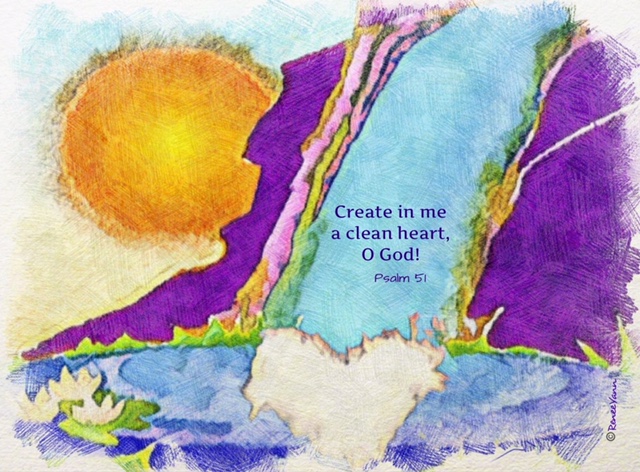
Today, in God’s Lavish Mercy, we pray with Psalm 51 which expresses the ardent desire for forgiveness and reconciliation.

The psalm reflects back to our first reading – an episode of sibling rivalry, jealousy, and hidden motives.

Moses, favored of God and leader of the people, makes a questionable choice. He marries outside the tribe, after telling everyone else not to. Hmmm. His siblings, Aaron and Miriam, don’t like that. So they indignantly complain:

Is it through Moses alone that the LORD speaks?
Does God not speak through us also?

Numbers 12:2

God hears their complaint and sees through it. God sees that they are less concerned about the marriage and more concerned about themselves. They’re tired of Moses telling them what to do. They think God could have picked a better leader — one of them!

God sets them straight about how special Moses is, and their responsibility to support, not undermine, him.

Should there be a prophet among you,
in visions will I reveal myself to him,
in dreams will I speak to him;
not so with my servant Moses!
Throughout my house he bears my trust:
face to face I speak to him;
plainly and not in riddles.
The presence of the LORD he beholds.

Numbers 12:6-7

The whole story is really about motives. Everything we do must be done out of love – out of reverence for God, and out of respect and hope for ourselves and others. This is what it means to have a clean heart. And it is the plea of Psalm 51.

A clean heart create for me, O God,
and a steadfast spirit renew within me.
Cast me not off from your presence,
and your Holy Spirit take not from me.

Psalm 51: 12-13

Prose: This is a great piece by Sister Joyce Rupp on a clean heart (published in America magazine)

https://www.ncronline.org/blogs/clean-heart


Music: Psalm 51 – Chant of the Heart

But Not Yet

Monday of the Eighteenth Week in Ordinary Time
August 7, 2023

Today’s Readings:

https://bible.usccb.org/bible/readings/080723.cfm


Today, in God’s Lavish Mercy, with passages from Numbers and Deuteronomy, we begin a week and a half of readings that complete our scriptural journey through the Pentateuch.

The Book of Numbers, so named because of the two censuses within it, draws the Exodus journey to a close. The people are nearly at the edge of the Promised Land – but not yet. They are tired and frustrated and they let Moses know it:

The children of Israel lamented,
“Would that we had meat for food!
We remember the fish we used to eat without cost in Egypt,
and the cucumbers, the melons, the leeks,
the onions, and the garlic.
But now we are famished;
we see nothing before us but this manna.”


“Not Yet” is one of the hardest times in a journey. Driving from Philly to Knoxville to visit my family, I marveled at how the last two hours seemed so much longer than the eight which had preceded them! If there are kids in the car, the point is painfully driven home:

Are we there yet? x 1000!= Frustration


In today’s reading, the Israelites frustrate Moses with their “Are we there yet” attitude. Moses begs God to give him a break because his leadership is crumbling in the hungry unrest of the people:

“Why do you treat your servant so badly?” Moses asked the LORD.
“Why are you so displeased with me
that you burden me with all this people?
Was it I who conceived all this people? 
Or was it I who gave them birth,
that you tell me to carry them at my bosom,
like a foster father carrying an infant,
to the land you have promised under oath to their fathers?

Numbers 11:11-12

A core message from today’s Numbers passage is that the people need to be “fed” or they will not continue on the journey. Jesus acknowledges this universal fact in today’s Gospel. The story recounts the miracle of a physical feeding of the crowds, but the real miracle is the resuscitation of their faith because they witness the power of God in Christ.


We, individually and as a Church, need to be fed in order to continue our journey of faith. It is important for each of us to build into our lives those practices which will nourish our faith and spirituality: reflective prayer, enlivening spiritual reading, and merciful service. It is also critical for us to assess the kind of communal nourishment we receive within our faith communities and, where that nourishment is lacking, to acknowledge distress and seek alternatives as the hungry Israelites did in the desert.

Recently I was with a group of deeply faithful Christians where this shocking phrase was spoken and acknowledged: “The Catholic Church is dead“. What the phrase connotes is that, in light of the clerical abuse and other institutional scandals, coupled with the absence of inspirational Church leadership, many Catholics are starving for nourishment on the journey. Clearly, the same may be said of other Christian Churches.


To varying degrees, we may be familiar with the Synod 2021-24 initiated by Pope Francis in October 2021.

The word synod comes from the Greek: σύνοδος [ˈsinoðos], meaning “assembly” or “meeting”; the term is analogous with the Latin word concilium meaning “council”.

The word synod comes from the Greek meaning “assembly” or “meeting”; the term is analogous with the Latin word concilium meaning “council”.

Traditionally, we are familiar with such gatherings being constituted primarily by the hierarchy of the Church. Synod 2021-24 is different.


The Synod on Synodality represents a new and exciting phase in the life of the Church. This phase deepens the ecclesiology of the People of God developed at the Second Vatican Council and invites us to generate processes of conversion and reform of relationships, communicative dynamics and structures in the Church. This will require a process of common discernment and formation in the short, medium and long term to stimulate the awareness of a Church lived and understood in a synodal key.

Boston College – School of Theology and Ministry

Many of us are old enough to remember the intense enthusiasm and hope which sprang from the Second Vatican Council a half-century ago. The inspired Vatican II documents fueled a dynamic revitalization for the People of God.

But over the course of 5o years, the Church’s landscape has changed:

  • plummeting numbers in religious and priestly vocations
  • scars from the sexual abuse scandal
  • misalignment between practice and teaching on sexuality, gender, and marriage
  • disaffection of women and young adults with the Church
  • widespread persecution of the missionary Church in totalitarian and extremist Islamic states

These are issues that must be addressed by the whole Church acting in a synodal manner similar to that of the inaugural Christian community:

At that time, as the number of disciples continued to grow, the Hellenists complained against the Hebrews because their widows were being neglected in the daily distribution.

So the Twelve called together the community of the disciples and said, “It is not right for us to neglect the word of God to serve at table.* Select from among you seven reputable disciples, filled with the Spirit and wisdom, whom we shall appoint to this task.

… The proposal was acceptable to the whole community.

Acts 6:1-5

The aim of the current synodal process is not to provide a temporary or one-time experience of synodality, but rather to provide an opportunity for the entire People of God to discern together how to move forward on the path towards being a more synodal Church in the long-term.
A basic question prompts and guides us: How does this journeying together allow the Church to proclaim the Gospel in accordance with the mission entrusted to Her; and what steps does the Spirit invite us to take in order to grow as a synodal Church?

Vatican Commentary on the Synodal Process

The prayers, participation, and support of faithful people are critical to the success of this Synod because it is truly a synod of the people. It is important for us to pray for the Church, for the Pope, and assess the level of our own contribution to the life of the community. I know I need to take my awareness and attention up a notch, and I thought perhaps some of my readers might too. Many of us may look to this synod as the sign of hope we need in deeply challenging times.


Prose: from Pope Francis on World Youth Day

We recall that the purpose of the Synod 
is not to produce documents,
but to plant dreams,
draw forth prophecies and visions,
allow hope to flourish,
inspire trust,
bind up wounds,
weave together relationships,
awaken a dawn of hope,
learn from one another
and create a bright resourcefulness
that will enlighten minds, warm hearts,
give strength to our hands.

Music: I Am the Bread of Life – Suzanne Toolan, RSM

Jubilee!

Saturday of the Seventeenth Week in Ordinary Time
Saturday, August 5, 2023

Today’s Readings:

https://bible.usccb.org/bible/readings/080523.cfm


One in a series of 60 paintings by Jacob Lawrence which captures
the journeys of millions of African-Americans
who left the Jim Crow South
in search of better lives elsewhere.


Today, in God’s Lavish Mercy, Leviticus offers us a reading critical to our moral clarity.

This fiftieth year you shall make sacred
by proclaiming liberty in the land for all its inhabitants.
It shall be a jubilee for you,
when every one of you shall return to his own property,
every one to his own family estate.

Leviticus 25:10

Leviticus 25 is the account of Jubilee which, for the Mosaic community, was the quintessential practice of justice.

When the Israelites came to the Promised Land, they came as an emancipated people to share in the abundance to which God had delivered them. There was initial equity in the sharing. But over time, power, influence and wealth were hoarded – endangerments that threaten all communities.

In the proclamation of Jubilee, God directs the people to return to an original justice in which all persons are freed from indebtedness of any kind in order to live in communal harmony.


Consider the hypothetical example of an Israelite family that lost their land twelve years before the Jubilee Year. On the tenth day of the seventh month, the entire community participates in the Day of Atonement and its ritual purging of sin. On this very same day, the trumpet is blown and the Jubilee year is announced; in this year, both sins and debts are forgiven, and the family that had been forced to live and work in another’s household for more than a decade regain possession of their land.

Imagine the joy of this moment! Imagine the dreams and desires! After having served as hired hands for a generation, now to be restored to a position of social and economic strength!

Michael J. Rhodes – Jubilee Formation: Cultivating Desire and Dependence in Leviticus 25

The concept of this type of justice is alien to our capitalist and consumerist orientations. We may have heard the attitude expressed, or we may hold it ourselves, that some people have and some people don’t. And the ones who “have” earned it and deserve it.

“Jubilee” instructs us that this is a false context for fulfilling God’s Will for the wholeness of Creation. In such a false context, reward ensues from avarice, dominance, possessiveness, and aggression, yielding a continually deeper gap between those who have and those who do not, between those who influence and those who cannot, between those who thrive and those who do not.


“Jubilee” resets the game board and in so doing resets attitudes about who owns what and how they must use it to enact the Reign of God.

I recently heard a story which speaks of forgetting to whom things belong. A very proper lady went to a tea shop. She sat at a table for two, ordered a pot of tea, and prepared to eat some cookies which she had in her purse. Because the tea shop was crowded, a man took the other chair and also ordered tea. As it happened, he was a Jamaican black, though that is not essential to the story. The woman was prepared for a leisurely time, so she began to read her paper. As she did so, she took a cookie from the package. As she read, she noticed that the man across also took a cookie from the package. This upset her greatly, but she ignored it and kept reading. After a while she took another cookie. And so did he. This unnerved her and she glared at the man. While she glared, he reached for the fifth and last cookie, smiled and offered her half of it. She was indignant. She paid her money and left in a great hurry, enraged at such a presumptuous man. She hurried to her bus stop just ouside. She opened her purse to get a coin for her bus ticket. And then she saw, much to her distress, that in her purse was her package of cookies unopened. The lady is not different from all of us. Sometimes we possess things so long that do not really belong to us that we come to think they are ours. Sometimes, by the mercy of God, we have occasion to see to whom these things in fact belong.

Walter Brueggemann, “Voices of the Night—Against Justice,” in To Act Justly, Love Tenderly, Walk Humbly: An Agenda for Ministers

The applications are abundant, obvious, and profound for our own lives in the various communites in which we live. But they are not easy applications to confront or practice. They pose the ultimate question to us: where do we place our security? The answer determines how fully we understand “Jubilee”.


You have two meaningful prose passages to consider today so let’s just add a little music for your prayer time.

Gabriel’s Oboe – Ennio Morricone played by Henrik Chaim Goldschmidt

Shine!

Wednesday of the Seventeenth Week in Ordinary Time
August 2, 2023

Today’s Readings:

https://bible.usccb.org/bible/readings/080223.cfm


Today, in God’s Lavish Mercy, Moses descends the mountain and returns to the people, his face shining with the glory of God.

As Moses came down from Mount Sinai
with the two tablets of the commandments in his hands,
he did not know that the skin of his face had become radiant
while he conversed with the LORD.

Exodus 34:29

Moses’s appearance frightened the Israelites. They weren’t accustomed to being this close to “The God Effect”. Moses had to veil his face until the people became a little more comfortable with his transformed self.


People who are close to God do have a certain “shine”. I know, because I live with a houseful of them! Most of these wonderful women are well into their years, and will moan occasionally about their ever-increasing wrinkles. Like most of us, they don’t see their own beauty, nor the fact that an inimitable loveliness radiates from their fundamental goodness.


Once again in today’s Gospel, as in this past Sunday’s, Jesus encourages his followers to live in that irradiating Presence. Finding that Presence is like finding a treasure or a pearl of great price. The Gospel searcher is filled with abundant “joy” upon the discovery. That joy, no doubt, lit up that finder the way Moses was fired by God’s Glory.


We all want to have that kind of joy. It is the true fulfillment of life. Jesus wants us to have it too as recorded in today’s Alleluia Verse:

I call you my friends, says the Lord,
for I have made known to you all that the Father has told me.

John 15:15

By studying, praying with, and imitating the life of Christ, we too – like the moon emblazoned by the Sun – will come to reflect an Immense Love.


Poetry: As Kingfishers Catch Fire – Gerard Manley Hopkins

As kingfishers catch fire, dragonflies draw flame;
As tumbled over rim in roundy wells
Stones ring; like each tucked string tells, each hung bell's
Bow swung finds tongue to fling out broad its name;
Each mortal thing does one thing and the same:
Deals out that being indoors each one dwells;
Selves — goes itself; myself it speaks and spells,
Crying Whát I dó is me: for that I came.
I say móre: the just man justices;
Keeps grace: thát keeps all his goings graces;
Acts in God's eye what in God's eye he is —
Chríst — for Christ plays in ten thousand places,
Lovely in limbs, and lovely in eyes not his
To the Father through the features of men's faces.

Music: Variations on a Theme From Pachelbel’s Canon in D Major – David Lanz