Selflessness

Saturday of the Fourth Week in Ordinary Time
February 3, 2024

Today’s Readings:

https://bible.usccb.org/bible/readings/020324.cfm


Today, in God’s Lavish Mercy, our readings offer us insights into the ministry of leadership. They are insights worth pondering for at least these two reasons:

  • We are all called to be leaders in some way in our lives, be it as parent, teacher, supervisor, team captain, committee lead, board chair … you name it.
  • We need to be able to recognize good leaders in order to follow wisely, otherwise we are following self-interested fools determined to re-create us in their likeness.
In both our readings, leadership is characterized by this key element: selflessness.

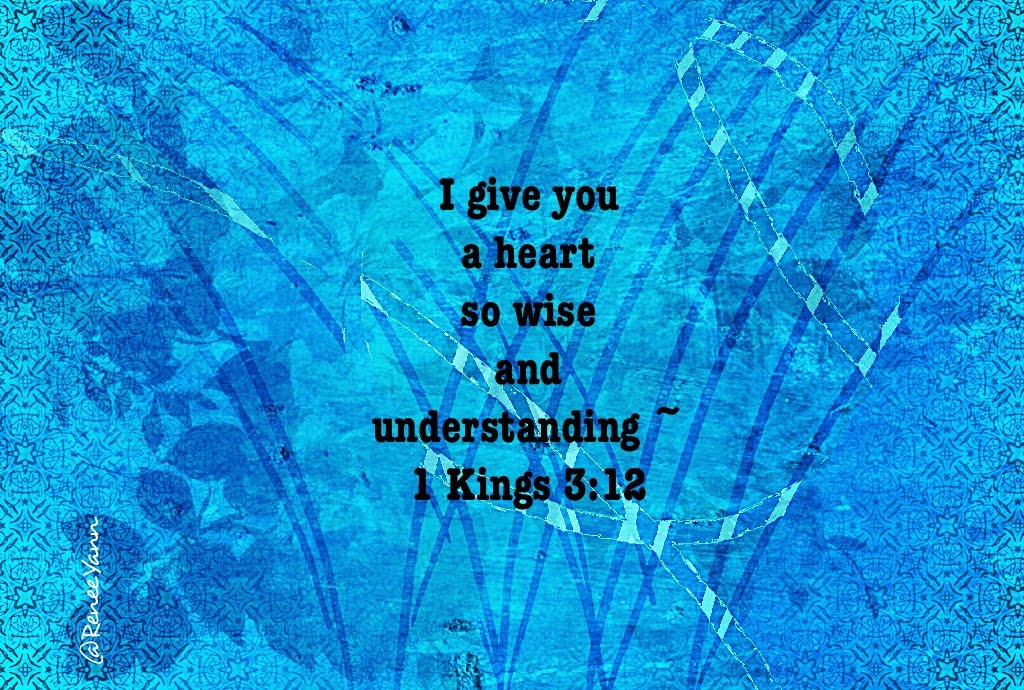
Solomon, when given the chance to ask for anything he wants, asks for a gift that will benefit the community.


Give your servant, therefore, an understanding heart
to judge your people and to distinguish right from wrong.

1 Kings 4:9

Jesus and the disciples, exhausted from the press of the crowd, still respond in mercy to their relentless needs

Jesus said to the disciples,
“Come away by yourselves to a deserted place and rest a while.”
People were coming and going in great numbers,
and they had no opportunity even to eat.
So they went off in the boat by themselves to a deserted place.
People saw them leaving and many came to know about it.
They hastened there on foot from all the towns
and arrived at the place before them.

When Jesus disembarked and saw the vast crowd,
his heart was moved with pity for them,
for they were like sheep without a shepherd;
and he began to teach them many things.

Mark 6: 30-34

As we daily focus our lives on becoming more like Christ, the practice of selflessness can be tricky – how to live selflessly without losing one’s self; how to foster common and individual good without depleting one’s own spiritual strength. To my mind, these things are important:

Honesty: I think the grounding virtue of a good leader is honesty – with others and with self. Once a leader starts to pretend, deceive, equivocate, feign ignorance, or outright lie, (even to themselves), they are no longer fit to lead.

Spiritual Discipline: When we look at Jesus’s life, we see that he practiced a cycle of ministry and prayer. Several times in the Gospel, Jesus withdraws to commune with the Father. Although Christ was in union with the Father at all times, he exercised his ministry around a personal discipline of solitude and prayer.

Discernment: Solomon understands the importance of this gift. What Solomon actually prays for is the sensitivity to practice the “cardinal virtues” that we learned long ago in catechism class. Remember? Prudence, Justice, Fortitude, and Temperance.


Prose: Remember the Baltimore Catechism? Well, maybe some of you are too young to remember, Here’s how wikipedia defines it:

A Catechism of Christian Doctrine, Prepared and Enjoined by Order of the Third Council of Baltimore, or simply the Baltimore Catechism, was the national Catholic catechism for children in the United States, based on St. Robert Bellarmine’s 1614 Small Catechism. The first such catechism written for Catholics in North America, it was the standard Catholic school text in the country from 1885 to the late 1960s. From its publication, however, there were calls to revise it, and many other catechisms were used during this period. It was officially replaced by the United States Catholic Catechism for Adults in 2004, based on the revised universal Catechism of the Catholic Church.


Throughout my adult life, I have retained an appreciation for what I learned from the now-defunct edition of the Baltimore Catechism. While it conveyed the impression that a recipe for holiness could be compacted into a small manual, its inimitable Thomistic logic left valuable lessons with me to which I often return. Here are a few that informed my prayer today as I reflected on “selflessness”:

Besides the theological virtues of faith, hope, and charity there are other virtues, called moral virtues.

These virtues are called moral virtues because they dispose us to lead moral, or good lives, by aiding us to treat persons and things in the right way, that is, according to the will of God.

The chief moral virtues are: prudence, justice, fortitude, and temperance; these are called cardinal virtues.

These virtues are called cardinal virtues because they are like hinges on which hang all the other moral virtues and our whole moral life. The word “cardinal” is derived from the Latin word “cardo” meaning hinge.

  • Prudence disposes us in all circumstances to form right judgments about what we must do or not do.
  • Justice disposes us to give everyone what belongs to them.
  • Fortitude disposes us to do what is good despite any difficulty.
  • Temperance disposes us to control our desires and to use rightly the things which please ourselves.

Music: Song of Solomon – Martin Smith

Do You Not Yet Have Faith?

Saturday of the Third Week in Ordinary Time
January 27, 2024

Today’s Readings:

https://bible.usccb.org/bible/readings/012724.cfm


Today, in God’s Lavish Mercy, our readings say something about Divine Order, about Sacred Balance – and our ability to let go and trust.

Nathan Rebukes David – by James Tissot

In our first reading, the prophet Nathan confronts David regarding his relationship with Bathsheba. The beautiful Bathsheba was the wife of Uriah, an elite soldier in David’s army. From far away one day, David spies her bathing in a pool. Full of covetousness and lust, he engineers a heartless plot to have her as his own.

The story is complex, intriguing, and extremely dramatic. You can read it for yourself in 2 Samuel. But the point I would like to draw out for today is about covetousness. What is that, really, and does it play any part in my life?


“Covet” is an intransitive verb that we learned when we were taught the Ten Commandments. Like all the other sins, my six-year-old self decided I would try hard not to commit it … but I had no idea what it even meant! I was pretty sure I didn’t have to be worried about coveting my neighbor’s wife, but I did like Jimmy Clark’s bike enough to covet it. (But, I didn’t steal it.)


Honestly, I don’t think I’ve ever used the verb “covet” in a sentence before today. So I turned to Meriam-Webster who defines covetousness like this: to desire (what belongs to another) inordinately or culpably

Do we “covet” when we wish we had some of the great things others have? Material things like money, mansions, and limousines? Or immaterial things like talent, beauty, and popularity?

I don’t think so. We may have to deal with the concupiscence of jealousy or envy, but it’s not quite the same as coveting. As Merriam-Webster indicates, coveting implies an inordinance or culpability. In other words, we act on our jealousy or envy in some way, creating an imbalance in our moral life. 

  • We resent, judge, or ostracize the person who has what we want.
  • We plot to take away the other’s prized possession or status.
  • We create a deficit in our own responsibilities by directing essential resources to our plot.
  • And what may be the worst and most likely situation, we use our power to indifferently usurp what belongs to others.

When I examine my conscience I remind myself that the world belongs to me, but it also belongs to others — all others. Peace, a decent level of sustenance, the goods of Creation, the right to life — these belong to me but also to others. I may not be aware of “coveting” these things to the detriment of others, but how do my choices and actions in any way limit that right for others?

It could be as simple as this:

  • Do I vote for leaders who continually foster negotiation over militaristic responses?
  • Do I support trade agreements that establish sustainable practices for producers as well as consumers?
  • Do I recognize that climate deterioration and refugee intensification are inextricably connected to abusive environmental practices and that I have a role in promoting change?
  • Do I have a single-issue or a holistic approach to life concerns for the unborn, impoverished, incarcerated, unhoused, immigrant, and medically needy populations?

When we find ourselves entangled in greed or covetousness, it’s not necessarily that we are bad people. We might be more like the disciples described in today’s Gospel – fearful people, so insecure that we amass material protections around us.

A violent squall came up and waves were breaking over the boat,
so that it was already filling up.
Jesus was in the stern, asleep on a cushion.
They woke him and said to him,
“Teacher, do you not care that we are perishing?”
He woke up,
rebuked the wind, 
and said to the sea, “Quiet! Be still!”
The wind ceased and there was great calm.
Then he asked them, “Why are you terrified?
Do you not yet have faith?”

Mark 4: 37-40

Jesus calls us to live a life grounded in faith not material protections. Only faith is invulnerable to life’s storms. Within its eternal securities, we become more deeply aware of our sacred relationship to all creatures and to Creation Itself.


If David had exercised such faith, the taking of Bathsheba and murder of Uriah would have been incomprehensible to him. As we deepen in our faith, what awarenesses will awaken in us?


Quote: Wisdom from Ramana Maharshi (1879 – 1950) who is considered an Indian Hindu sage and “jivanmukta” (liberated being). He is regarded by many as an outstanding enlightened being and, as a charismatic person, attracted many devotees. I particularly value this quote which leads me to consider my oneness with all beings:

Questioner: How are we to treat others?
Ramana Maharshi: There are no others.


Music: Imagine – John Lennon

The Soul’s Rhythm

Tuesday of the Third Week in Ordinary Time
January 23, 2024

Today’s Readings:

https://bible.usccb.org/bible/readings/012324.cfm


David danced

Today, in God’s Lavish Mercy Mercy, vigorous, grace-filled David dances with abandon before the Lord. It is a beautiful moment to imagine!

David went to bring up the ark of God from the house of Obed-edom
into the City of David amid festivities.
As soon as the bearers of the ark of the LORD had advanced six steps,
he sacrificed an ox and a fatling.
Then David, girt with a linen apron,
came dancing before the LORD with abandon,
as he and all the house of Israel were bringing up the ark of the LORD
with shouts of joy and to the sound of the horn.

2 Samuel 6: 12-15

David dances with unselfconscious joy because he has brought the Presence of God home to the heart of the community. The joy comes from recognizing that God wants to be with the People. This joy, inexpressible in words, takes the form of a dance with the Spirit of God.


Let’s pause today with that dancing image, to consider all the ways God longs to dance with us throughout our lives, and we with God — dances of both:

joy and sorrow,
faith and questioning,
hope and shadow

… dances in which we must abandon ourselves to the moment’s sacred music and respond to God’s mysterious, leading step.


Whatever the emotion we bring to prayer, what matters is only that we carry it close to God’s heart, listening to our circumstances for the Divine Heartbeat. We may not be the “Fred Astaire” or “Ginger Rodgers” of prayer, but each one of us has a holy dance somewhere in their heart.

I think our children can teach us something about this kind of uninhibited prayer – one filled with trust, hope, joy, and innocence.


Poetry: T. S. Eliot

IMG_2326


At the still point of the turning world.
Neither flesh nor fleshless;
Neither from nor towards;
at the still point, there the dance is,
But neither arrest nor movement.
And do not call it fixity,
Where past and future are gathered.
Neither movement from nor towards,
Neither ascent nor decline.
Except for the point, the still point,
There would be no dance,
~ T.S. Eliot


A second lovely poem, even though it is not Easter 🙂

IMG_2327


Easter Exultet

Shake out your qualms.
Shake up your dreams.
Deepen your roots.
Extend your branches.

Trust deep water
and head for the open,
even if your vision
shipwrecks you.

Quit your addiction
to sneer and complain.
Open a lookout.
Dance on a brink.

Run with your wildfire.
You are closer to glory
leaping an abyss
than upholstering a rut.

Not dawdling.
Not doubting.
Intrepid all the way
Walk toward clarity.

At every crossroad
Be prepared
to bump into wonder.
Only love prevails.

Enroute to disaster
insist on canticles.
Lift your ineffable
out of the mundane.

Nothing perishes;
nothing survives;
everything transforms!
Honeymoon with Big Joy!
~ James Broughton


Music: No Reason Not to Dance – Kathryn Kaye

… a cup of kindness yet …

New Year’s Eve
December 31, 2023

The motherhouse chapel is hushed in sacred quiet. We have spent these New Year’s Eve hours in prayer, thanksgiving, and hope. Now in midwinter’s purple shadows, a silent nun touches her single, small light to the majestic candelabras to prepare for this Mass which balances on the turning of the years. The tiny flames slowly saturate the darkness, transforming it to a warm, golden invitation.

Our Mercy family gathers from the places where they have been praying.  Each one carries a heart filled with the past year’s blessings and challenges and with the new year’s hopes.  

As each one enters the chapel, she places her thoughts in the ciborium of silence. She pours her needs into the chalice of trust.


Evening, through the stained-glass windows, breaks its dark rainbow across the sanctuary, wakening an expectant God to receive our promises. The schola rustles to life for the celebration.  With them, our spirits hum the treasured Christmas harmonies learned in distant novitiates. Some who will celebrate Jubilee this year gather at the back of chapel for the entrance procession, awed that the years have carried them to this moment. The stage is set for the great liturgy of renewal, for on this night each year, we pronounce again the vows that sculpt our lives.


This is a most-hallowed ritual for year after year in Mercy, even before we were born, we have been carried by the sacrament of one another’s fidelity.  As we light the slender tapers, we remember and are encouraged by our beloved sisters who now live the fulfillment of their vows in heaven.  

We give thanks for the new life of our candidates and novices whose eyes and hearts open in wonder at the incredible power of call and community. And we see the inexplicable beauty of one another whose lives, woven together in joys and sorrows through the years, have carried us to the merciful heart of God.

These are the grains of bread.  These are the drops of wine – these lives, taken and called by God, blessed and broken over the world, given again and again in mercy for the poor, sick and uneducated. This is the Eucharist of our vowed and covenanted lives.  This is the Body and Blood of Christ.


On this night, the spice of life steeps in a mulled wine where tart experience and sweet assurance marry in faith. On this night, we offer the past; we pledge the future, but we do so in this present moment which alone holds meaning. It is in this vowed moment – this pledged renewal – that the host is lifted and the cup sanctified. It is a moment repeated infinitely in the faithful living of our call. It is the moment of transformation.


Poetry:


Music: Auld Lang Syne – played by Kenny G

John, the Lover

Feast of Saint John, Apostle and evangelist
December 27, 2023

Today’s readings:

https://bible.usccb.org/bible/readings/122723.cfm


Today, in God’s Lavish Mercy, we begin a three-week immersion in John’s magnificent first letter. At the same time, our Gospels will take us on a somewhat random journey with Jesus through his very early years.

Today’s Gospel, however, differs from the expected pattern and – yes, right here in the Christmas season – gives us an account of the Resurrection!

Early in the morning, on the first day of the week,
Mary Magdalene ran and went to Simon Peter
and to the other disciple whom Jesus loved, and told them,
“They have taken the Lord from the tomb,
and we do not know where they put him.”
So Peter and the other disciple went out and came to the tomb.
They both ran, but the other disciple ran faster than Peter
and arrived at the tomb first;
he bent down and saw the burial cloths there, but did not go in.
When Simon Peter arrived after him,
he went into the tomb and saw the burial cloths there,
and the cloth that had covered his head,
not with the burial cloths but rolled up in a separate place.
Then the other disciple also went in,
the one who had arrived at the tomb first,
and he saw and believed.

John 20: 1-8

Did somebody get mixed up? Did someone think it was the Octave of Easter, not Christmas! No, of course not. I think the choice of this Gospel, at this point in the Liturgical Year, serves at least two purposes:

  • From the start of Christ’s life, it establishes how his days will end. Therefore, throughout the ensuing year, we are to read and interpret all of the Gospel in the glorious light of the Resurrection.
  • Placing this Gospel here, to accompany our first reading, clarifies exactly who John is — the one who indeed saw, heard, and touched the Word of God made visible in Jesus Christ and therefore is eminently qualified to testify to Christ.

Beloved:
What was from the beginning,
what we have heard,
what we have seen with our eyes,
what we looked upon
and touched with our hands
concerns the Word of life —
for the life was made visible;
we have seen it and testify to it
and proclaim to you the eternal life
that was with the Father and was made visible to us—

1 John 1:1-2

One very popular form of both fiction and non-fiction is the love letter. Some of the most wonderful books are in the genre. Three of my favorites fit the category:

  • 84, Charing Cross Road – Helene Hanff
  • The Love Letters – Madeleine L’Engle
  • A Green Journey – John Hassler

Reading such literature evokes a reverence for the lives we touch in the gathered words. We read what is said and imagine what is unsaid. We witness the depth of another’s self-donation and we ponder our own capacity for such a gift.


In 1 John, we are granted the privilege of reading John’s love letters to his God and to his community. John’s love is profoundly deep yet simply expressed. We might tend to skip through his rich but clipped phrases. But to truly plumb them requires us to suspend time and rest with his words until they open in us like flowers in sunlight.


Poetry: The Living Word – Herman Hesse

The sun speaks to us through light.
Flowers give voice to fragrance and colour.
The air communes through clouds, snow, and rain.
From the sacred center of the world
streams forth an irrepressible desire
to overcome the silence between things.
Art, the ever flowing fountain, reveals
the secret of life through word and gesture, colour and sound.

The world wants to be known to spirit
and find expression for timeless wisdom.
All life longs for a language.
Deep intuitions wish to surface,
find words and numbers, lines and tones,
always evolving forms of understanding.

The red and blue of flowers
and the verses of the poet
point to the inner workings of creation,
always pregnant with beginning and never-ending.
When word and sound marry,
where songs soar and art unfolds
all life is brimmed again with spirit.
And every melody and book
and every painting is a revelation,
is another fresh attempt
to unfold the harmony of life.
Poetry and music invite you
to understand the splendors of creation.
A look into a mirror will confirm it.
What disturbs us often as disjointed
becomes clear and simple in a poem:
Flowers start laughing, the clouds release their rain,
the world regains its soul, and silence speaks.

Music: Love Letter – Anthony Nelson

Blessed Christmas!

The Nativity of the Lord (Christmas) 
December 25, 2023

Today’s Readings:

https://bible.usccb.org/bible/readings/122523-Day.cfm


Merry Christmas, dear readers! May our sweet Jesus abundantly bless you and those you love.

Below is a video beautifully edited by our Sister Mary Kay Eichman. We both thought you might like to enjoy it, whole or in parts, over this Christmastide.


Today, in God’s Lavish Mercy, let us pray within the amazing Presence of God in our life renewed in us this Christmas.

Today’s readings:

https://bible.usccb.org/bible/readings/122523-Day.cfm


Mary is wrapped in the cold darkness of this winter night.
She is vulnerable as she waits to bring forth her child.
Yet she feels wrapped in tenderness by God
and supported by God’s love.
She longs to welcome this Holy Child in warmth
And to wrap him in the same love and tenderness.

We too want to welcome Jesus with warm tenderness.
In Mercy, we have tried to bring Christ into world
and to warm and comfort people with God’s presence.

Is there a person in your life,
Or a place in your heart today
that needs warmth, comfort and love?

Be in quiet prayer for that person or place for a while
as we absorb the amazing graces
offered us in the Christmas miracle.


Prayer

Today the Christ Child is born
We welcome Him into our hearts
We wrap Him in our adoration.

Today the Christ Child is born
In the refugee who longs for home
In the sick who long care
In the poor who long for sustenance
In the uneducated who long for hope
In these, we welcome Him. 
We wrap them in our prayer.

Today the Christ Child in born
In children who long for a future
In families who long for unity
In elders who long for peace
In all people who long for dignity and love
In these, we welcome Him.
We wrap them in our prayer.

Today the Christ Child is born
In our Church that longs for holiness
In our community that longs for grace
In our world that longs for peace
In our hearts that long for God
In these we welcome Him.
We wrap them in our prayer.

Amen.


Music: Silent Night

Earnest Expectation

Saturday of the Third Week of Advent
December 23, 2023

Today’s Readings:

https://bible.usccb.org/bible/readings/122323.cfm


(Today, the Church repeats the King O Antiphon. But I love the concept of Christ as Radiant Dawn. It also fits so clearly with the sacred purifications alluded to in today’s readings.)


Today, in God’s Lavish Mercy, we have finally reached the “delivery” stage of Advent. Just like those Amazon packages that keep showing up on doorsteps in the days preceding Christmas, other important arrivals are popping up in our readings.

Malachi announces that a prophet is coming who will purify the people, particularly concerning their worship practices which have corrupted:

Thus says the Lord GOD:
Lo, I am sending my messenger
to prepare the way before me;
And suddenly there will come to the temple
the LORD whom you seek,
And the messenger of the covenant whom you desire.
Yes, he is coming, says the LORD of hosts.


It seems that Malachi and his friends, perhaps like some of us, haven’t had the discipline and devotion to safeguard the Temple rituals. Maybe like Mal and the gang, we start to take things for granted, to become cavalier about liturgical intention, to cut corners, to program our own agendas into the sacred rituals of common prayer. — to forget that God is the center of worship, not us.

Becoming that “forgetful” hardens the heart to grace. The One Who longs to encounter us in prayer and worship is stymied by our distracted negligence.


Our Gospel, too, is reminiscent of a sanctuary scene, for it was there that Zechariah learned that a prophet was actually going to be his son! Zechariah encountered God’s Word purifying his life and directing it in a totally unexpected manner. Surely, in the ensuing nine months of silence, the essence of Zechariah’s worship was transformed.

In today’s reading, the incredulous neighbors at John’s bris question Elizabeth’s assignment of such an unfamiliar name. But Zechariah confirms Elizabeth’s declaration. Zechariah’s purification and graceful evolution are complete. His tongue is loosened to proclaim the Word God has spoken in his silent heart.

“There is no one among your relatives who has this name.”
So they made signs, asking his father what he wished him to be called.
He asked for a tablet and wrote, “John is his name,”
and all were amazed.
Immediately his mouth was opened, his tongue freed,
and he spoke blessing God.

Luke 1: 61-64

(I often wonder why the neighbors “made signs” to Zechariah.
Why didn’t they just speak to him? 
He wasn’t struck deaf, just mute.:)


Poetry: Zechariah by Andy Sabaka, Pastor of Grace Fellowship Church in Louisville, KY

Day one of his nine months of silence
Began as Zechariah entered God’s presence.
When he walked past the curtain to behold
Gabriel standing by the incense altar of gold,
Zechariah did what all who are not regularly
In the presence of such shining authority
Do: he fell to his knees, filled full with dread,
Assuming in moments he would be struck dead.
Yet Gabriel’s words were frightfully comforting,
Ringing off the walls like heavenly trumpeting.
“Zechariah, my friend, do not be afraid,
For the prayers you and Elizabeth have prayed,
Have been heard by our God, the All-powerful One,
And I tell you, soon your bride will bear a son.
His name will be John, a man set apart,
Filled with God’s Spirit, calling the hearts
Of all who will listen to make room and repent
Because the coming Messiah is soon to be sent.”
The announcement of who the promised child would be,
Never reached Zechariah’s ears, for all he could see
Was Elizabeth’s barrenness and how old they both were.
He was stung that the promise had come so long after
They had given up hope of any offspring.
The guarantee of a child brought back an old sting.
His fear of the angel faded, now replaced by disbelief,
Combined with renewed disappointment and grief.
He said to the angel, “How shall I know this is true?
Can’t you see we are old; our youth long ago flew?
So I hear your authoritative proclamation
But from the little I know about procreation…”
“Silence,” the angel said, and Zechariah obeyed the command.
“Gabriel is my name; before God in heaven I stand.
I was sent from there to give you this good news.
But since you have rejected these wonderful truths,
You will be silent until you see their fulfillment.”
And at the exit of Gabriel, Zechariah’s voice also went.
The crowd outside had been worried at Zechariah’s delay,
So when he finally emerged, they demanded right away
An explanation for all that had happened inside,
But Zechariah’s mouth could give none, no matter how he tried.
It was obvious to all that a vision had been sent
And those who heard of his muteness responded with wonderment.
Yet the response to Zechariah’s silence was nothing compared
To the way that everyone would stop and then stare
At Elizabeth’s pregnant stomach. How could it be
That a woman her age could possibly conceive?
So it was that dumbfounded silence was the reply
To Gabriel’s message that could no longer be denied.
Elizabeth named her child John the day he was born,
But everyone received the name with great scorn,
Insisting the name Zechariah was the right one,
But his father wrote clearly: “His name shall be John.”
It was in that moment of faith, when Zechariah obeyed,
When he showed he believed all the angel had said,
God reached down and touched the lips of the man,
Releasing his tongue to speak once again.
And when his voice first spoke after being dead for so long,
It rang out clearly in the words of this song:
Praise the Lord, the God of Israel, who has come to save
And redeem his people – a horn of salvation he will raise
And he will come from the house of David, his servant,
The one who the prophets said would be sent,
Bringing salvation from our enemies and great mercy
To our fathers before and to all who now see
The promise of Abraham fulfilled in our days.
We are free now to serve with no fear in the way
To walk in righteousness before the rising sun,
And in holiness from this blessed day on.
And you, John, my son, will be a prophet of the Most High,
Preparing the way for him – in the desert you will cry,
Giving the knowledge of salvation through the forgiveness of sins
That the tender mercy of God has come here to win.
He will rise like the sun from heaven and shine bright
On those living in darkness, giving them sight,
Calling them out of the shadow of death to release
Their feet to walk in the path paved with peace.”
Our first advent candle tells us to recall
The miracle of Christmas and the wonder of all
It took for our God to prepare and then send
His Son to bring sin and death to an end.
Let us silently wait in this season pregnant with meaning
Until God loosens our lips to break forth with loud singing
About the rising sun from heaven who has risen again
And brings forgiveness and life to each of us when
We repent and believe that God can do
Any miraculous thing that he wants to,
Including save doubting sinners like you and like me,
Shutting our mouths, making us able to see.

Music: Anticipation – from The Secret Garden

Rescue Us from Ourselves, O Adonai!

Monday of the Third Week of Advent
December 18, 2023

Today’s Readings:

https://bible.usccb.org/bible/readings/121823.cfm


Today, in God’s Lavish Mercy, we pray with our beautiful O Antiphon:

In our prayer, we call out to God as a Leader, a Leader we desperately crave because we cannot find the way ourselves. Oh, how badly we need that Divine Leader today!


Throughout these past few weeks, as I have prayed and written about the salvation history of Israel, interwoven with our Christian faith, I have been so painfully aware of the current situation in the Holy Land. The human carnage being executed there, as well as in Ukraine, screams against our mounting stagnation and indifference.

As the world observes and opines over the sacrilegious slaughter of human life, I know God’s heart breaks, as does the heart of anyone who loves as God loves. Where are the human leaders who will hear God’s cries to fashion a peace for these people, and for the world which is sickened by their suffering.

“We, people of God who proclaim the Gospel of the Risen One, have the duty to cry out this truth of faith: God is a God of peace, love, and hope. A God who wants us all to be brothers and sisters, as His Son Jesus Christ taught us. The horrors of war, of every war, offend the most holy name of God. And they offend Him even more if His name is abused to justify such unspeakable carnage.”

Pope Francis

War, and its reflection in proliferating smaller violences, is the extreme expression of a heart and a civilization deadened by sin. When a culture has normalized the tactics of death, it can be rescued only by the Divine.


As we pray today with Jeremiah’s promise to a beleaguered people, let us pray for mercy and justice for all people, especially women, children, and the poor who are always the most brutalized in war. And let’s do all that we can to move our government to moral leadership against the embedded sin of global violence.

Behold, the days are coming, says the LORD,
when I will raise up a righteous shoot to David;
As king he shall reign and govern wisely,
he shall do what is just and right in the land.
In his days Judah shall be saved,
Israel shall dwell in security.
This is the name they give him:
“The LORD our justice.”

Jeremiah 3:5-6

Prayer: On Peace and War – Walter Brueggemann from Prayers for a Privileged People

We are aware, acutely aware in your presence,
of the grind of tanks,
of the blast of mines hidden against human flesh,
of the rat-tat-tat of sniper fire.
We are aware of the stench of death,
bodies of our own military women and men, bodies of countless Iraqis,
and the smell makes us shiver.

Such smells and sounds are remote from us,
but not remote from us are bewilderment,
and anxiety, and double-mindedness.
We are bewildered,
whether we are liberators or invaders,
whether they are terrorists or freedom fighters, whether we should yearn for peace or savor victory.

The world has become so strange,
and our place in it so tenuous,
where gray seems clearer than the white purity of our hopes,
or the darkness of our deathly passions.
There is so little agreement among us,
perhaps so little truth among us,
so little, good Lord, that we scarcely know how to pray,
or for what to pray.

We do know, however, to whom we pray!
We pray to you, creator God, who wills the world good;
We pray to you, redeemer God, who makes all things new.
We pray to you, stirring Spirit, healer of the nations.
We pray for guidance,
And before that, we pray in repentance,
for too much wanting the world on our own terms.

We pray for your powerful mercy,
to put the world – and us – in a new way,
a way after Jesus who gave himself,
a way after Jesus who confounded the authorities and
who lived more excellently.
Whelm us by your newness, by peace on your terms
– the newness you have promised,
of which we have seen glimpses in your Son
who is our Lord.

Music: End the War. Grant Us Peace – Lord’s Loving Melody

Beyond Fear

Memorial of Saint Martin of Tours, Bishop
November 11, 2023

Today’s Readings:

https://bible.usccb.org/bible/readings/111123.cfm


Today, in God’s Lavish Mercy, there is a graceful coincidence of several themes calling me to prayer. I share them with you:

  • On November 11th, Sisters of Mercy throughout the world commemorate the death of our beloved founder Catherine McAuley.
  • This year that commemoration falls on the feast of the beautiful St. Martin of Tours.
  • Our readings for the day prompt us to consider our beloved companions on our spiritual journey who provide a harbor of blessings in a fearsome world.

Not just today, but often, I think about what Catherine would be like if she lived among us today. In her day, she was ever practical, focusing on healing the greatest unmet needs around her.

Her “un-technologized” world was smaller than ours. She encountered need simply by a walk through Dublin’s neighborhoods. Were she here today, need would pour into her awareness from every corner of the earth via technological means. How would she focus the power of her merciful heart for our times?


Our readings prompt me to think that Catherine would do the same three things she did almost two hundred years ago:

  • She would gather her companions on the journey
  • Together, they would empty their spirits of anything that was not of God
  • In that profound spiritual clarity, they would see where God called them to be Mercy for the world.

In our first reading, Paul names a number of his companions, those who strengthened and assisted him in life and ministry. Catherine too had beloved companions without whom she could not have met the challenges of her call.


In our Gospel, Jesus affirms that our hearts must be emptied of the undue love of anything that distracts us from God and God’s Way:

No servant can serve two masters.
He will either hate one and love the other,
or be devoted to one and despise the other.
You cannot serve God and mammon.”
The Pharisees, who loved money,
heard all these things and sneered at him.And he said to them,
“You justify yourselves in the sight of others,
but God knows your hearts;
for what is of human esteem is an abomination in the sight of God.”

Luke 16: 12-15

While in her times, Catherine encountered the ravages of material poverty, I think that something much less tangible, but exponentially more destructive, would capture her ministerial awareness today.

Our world suffers from an intrinsic and debilitating fear which inclines us to amass power and possessions to the impoverishment of those around us. The fear of not being or having enough drives the systemic predation of the rich upon the poor, and the powerful over the weak. It is a fear that grows in a heart emptied of God.

While Catherine would continue to address the needs of those suffering from poverty and disenfranchisement, I think she would reach out in a new way to the healing of those underlying fears. These fears fester in a culture of spiritual ignorance endemic to our modern society. The naming and healing of that ignorance is deeply congruous with Catherine’s charism and calls to us urgently today.


About St. Martin de Porres, Pope John XXIII said this:

“He loved his neighbors with the benevolence
of the heroes of the Christian faith.”

So did Catherine McAuley. So must we.


Poetry: Where the Mind is Without Fear – Rabindranath Tagore

Where the mind is without fear and the head is held high
Where knowledge is free
Where the world has not been broken up into fragments
By narrow domestic walls
Where words come out from the depth of truth
Where tireless striving stretches its arms towards perfection
Where the clear stream of reason has not lost its way
Into the dreary desert sand of dead habit
Where the mind is led forward by thee
Into ever-widening thought and action
Into that heaven of freedom, my Father, let us awake.


Music: There is No Fear in Love – The Bible Project

Magna Misericordia

Memorial of Saint Leo the Great, Pope and Doctor of the Church
Friday of the Thirty-first Week in Ordinary Time
November 10, 2023

Today’s Readings:

https://bible.usccb.org/bible/readings/111023.cfm


already paid

Today, in God’s Lavish Mercy, our readings are about spiritual wealth, stewardship, and Godly generosity.

Paul starts us off by proclaiming that the wealth/riches of salvation belong to ALL humanity. He presents himself as a unique “steward “ of those riches to the Gentiles.

But I have written to you rather boldly in some respects to remind you,
because of the grace given me by God
to be a minister of Christ Jesus to the Gentiles
in performing the priestly service of the Gospel of God,
so that the offering up of the Gentiles may be acceptable,
sanctified by the Holy Spirit.

Romans 15:15-16

Our Gospel gives us a second interpretation of “stewardship” in the parable the wily steward. This fella’ gets called on the carpet for squandering his employer’s resources. Pink slip time! 

So the steward calls in some of the debtors and reduces their debt by the amount of his own commission. By doing this, he hopes to make some friends to support him in his impending unemployment.

Talbots

Many years ago, there was a Talbot’s outlet in the Franklin Mills Mall in Northeast Philly. You could get an amazing deal on the clearance items. But you got an even better deal if you went to a certain cashier for your checkout.

He was a tall, flamboyant and loudly funny guy. If a price tag was missing on an item, you got it virtually for free. He would make outlandish comments like, “Oh, honey, this isn’t your color so let’s discount it 50%.” If you bought two of the same item, he might announce,”Two for one today”, charging for only one. He was a living example of the Biblical steward! Over time, he developed a devoted buying community – those who had learned the secret of why people waited in his long line!


In today’s parable, Jesus isn’t advocating that we cheat our employers. The parable isn’t really about that at all. It is about the way Jesus wants his disciples to be profligate in preaching the mercy of God.

Remember that this parable comes in between two blockbusters about Mercy- the Prodigal Son and Lazarus and the Rich Man. In a way, you might say Jesus is on a tear about the unbounded generosity of God in forgiveness and hope for us. He makes clear that the wealth of Divine Love is delivered to us by our unbounded Christian love for one another.


So today, maybe we can think about the Talbot’s guy. We have been abundantly blessed by God’s love for us. Let’s pay it forward over and over today… and every day. Let’s generously share the infinite discount of Mercy.


Poetry: from Day of a Stranger by Thomas Merton

I am out of bed at two-fifteen in the morning, 
when the night is darkest and most silent. . .. 
I find myself in the primordial lostness of night,
solitude, forest, peace, a mind awake in the dark,
looking for a light,
not totally reconciled to being out of bed. 
A light appears, and in the light an ikon. 
There is now in the large darkness 
a small room of radiance with psalms in it. 
The psalms grow up silently by themselves 
without effort like plants
in this light which is favorable to them.
The plants hold themselves up on stems 
that have a single consistency,
that of mercy, or rather great mercy. 
Magna misericordia. 
In the formlessness of night and silence
a word then pronounces itself: Mercy.

Music: Jesus Paid It All – Elvira M. Hall (1865)
This rendition of the hymn by Kristian Stanfill (born 1983) is so interesting. Offered here with modern instrumentation, the words date back to the era of the US Civil War. Past and present meld in the ever eternal love God has for us.