Pray for One Another

Friday of the Twenty-sixth Week in Ordinary Time
October 6, 2023

Today’s Readings:

https://bible.usccb.org/bible/readings/100623.cfm


Baruch Writing Jeremiah’s Prophecies – Gustave Doré


Today, in God’s Lavish Mercy (and tomorrow) we have a few words from Baruch – and he is not a happy camper. Baruch, the scribe for the prophet Jeremiah, did his own little bit of writing reflecting on the situation of the Jews exiled in Babylon.

The Book of Baruch takes the form of a letter from the captives to the high priest who remained in Jerusalem after the exile. The writer asks for prayers for the exiled community and sends money to support that request. He voices the people’s acknowledgment that their suffering is a result of their own sin. He even composes the prayers that he wishes to be said in Jerusalem:

Justice is with the Lord, our God;
and we today are flushed with shame,
we men of Judah and citizens of Jerusalem,
that we, with our kings and rulers
and priests and prophets, and with our ancestors,
have sinned in the Lord’s sight and disobeyed him.

Baruch 1:15-18

When I was growing up, we had a practice in my family very similar to that described in Baruch. When confusing troubles arose for the family, Mom would appeal to either of two sources for supportive prayer: The Shrine of Sainte-Anne-de-Beaupré in Canada or the “Pink Sisters” (The Holy Spirit Adoration Sisters) on Green Street in Philadelphia. I have written to the Pink Sisters myself on a few spiritually catastrophic occasions. A Sister always writes back with sustaining wisdom and the affirmation of prayer.

Remembering all this reminds me that it is so important to pray for one another! Doing so creates an invisible, almost magnetic connection that helps sustain us in times of doubt, suffering, loss, and sadness. It also helps the pray-er to affirm membership in a company of believers – all of us “just walking each other home.”(Ram Dass)


This is exactly what Baruch was doing for the Babylonian exiles:

  • reminding them of their true home in God
  • reconnecting them to a community from which they had been severed
  • voicing their suffering
  • showing them a path to repentance, hope, and restoration.

At those “exile times” in our lives, when we are somewhere on the fragile edge of faith and endurance, as our Psalm today reminds us, prayer refocuses us on God rather than ourselves. Trusting the glorious name of God, we slowly open to a Light we may not have seen because our own shadow was in the way.

Help us, O God our savior,
because of the glory of your name;
Deliver us and pardon our sins
for your name’s sake.

Psalm 79:9

Poetry: A Prayer – May Sarton

Help us to be the always hopeful
gardeners of the spirit
who know that without darkness
nothing comes to birth
as without light
nothing flowers.
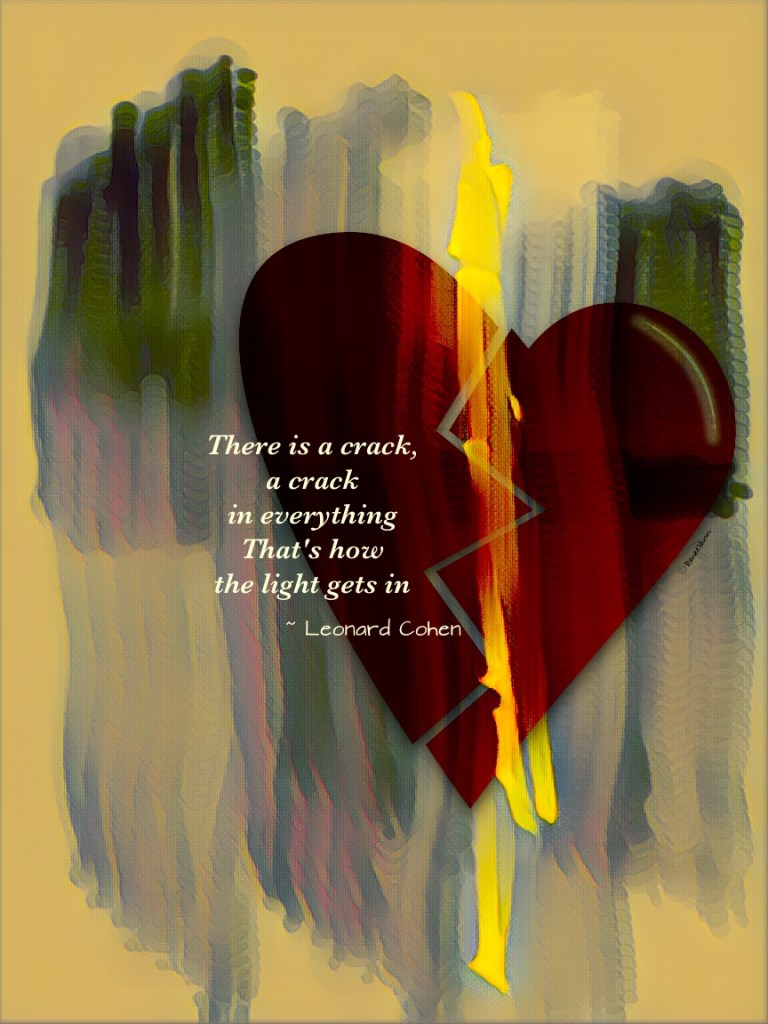
Music: Anthem – Leonard Cohen

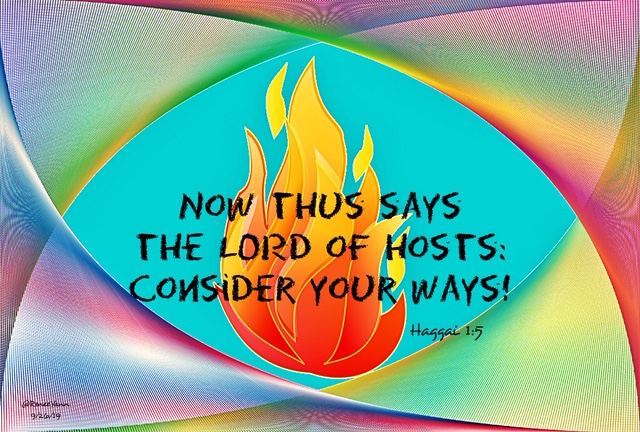
God’s Firewall

Memorial of Saint Jerome, Priest and Doctor of the Church
September 30, 2023

Today’s Readings:

https://bible.usccb.org/bible/readings/093023.cfm


Today, in God’s Lavish Mercy, we begin the first of three passages from the prophet Zechariah to be read over the next few days. These are the only times we meet Zechariah in our cycle of readings, other than December 12th, the Feast of Our Lady of Guadalupe.

For that reason, we could easily overlook Zechariah, a minor prophet whose visions, so specifically directed to the post-exilic Israelite community, may seem alien and extraneous to our own spirituality.


But we should not overlook Zechariah. Here’s why.

These two prophets (Zechariah and Haggai) seek to rally the identity and vocation of Jews in a time when faith is hard and prospects are lean. Such a time, they assert, is a time for vigorous action. The rebuilding of the temple is thus an act of faith, confident in the reality of God, and an act of defiance against the established imperial order of the world, even the imperial order that funded the project. We might well read these prophets in our own time of “small things” when the church seems to lack energy, courage, and imagination. In just such a time it is urgent to enact visible faithful gestures (like the temple building) that defy business as usual. Thus the prophetic imagination given here outruns historical possibility. That is the quality and depth of faith held here to which we are invited.

Walter Brueggeman: From Judgement to Hope

Zechariah invites the people to imagine a world vastly beyond their present perceptions. It is a world where the Temple is rebuilt as a symbol of God’s Presence, central to their identity. That Divine Presence provides any protection needed, thus removing the need for “walls” of isolation, fear, oppression, defensiveness, and exclusion.

People will live in Jerusalem as though in open country,
because of the multitude of men and beasts in her midst.
But I will be for her an encircling wall of fire, says the LORD,
and I will be the glory in her midst.

Zechariah 2:8-9

Surely we could use such holy imagination in our times! And surely this is the sacred energy Pope Francis seeks as he leads the Church in synodality.

As our shared geopolitical world seems daily to become more fragmented and hostile, the power of our communal, Resurrection faith is crucial to its graceful restoration.


Zechariah calls the people to sing, even in the midst of their disheartening exile, and to dream of a world without vicious walls. We are called to the same hope even in a world that conspires to feed cynicism and indifference rather than justice and mercy.

Sing and rejoice, O daughter Zion!
See, I am coming to dwell among you, says the LORD.
Many nations shall join themselves to the LORD on that day,
and they shall be his people and he will dwell among you.

Zechariah 2:14

Prose: The Monk Manifesto – Christine Valtners Paintner

Monk Manifesto is a public expression of one’s commitment to live a compassionate, contemplative, and creative life. When I read it, I find encouragement to act for a more integrated world, one without dissociative walls.

  • I commit to finding moments each day for silence and solitude, to make space for another voice to be heard, and to resist a culture of noise and constant stimulation.
  • I commit to radical acts of hospitality by welcoming the stranger both without and within. I recognize that when I make space inside my heart for the unclaimed parts of myself, I cultivate compassion and the ability to accept those places in others.
  • I commit to cultivating community by finding kindred spirits along the path, soul friends with whom I can share my deepest longings, and mentors who can offer guidance and wisdom for the journey.
  • I commit to cultivating awareness of my kinship with creation and a healthy asceticism by discerning my use of energy and things, letting go of what does not help nature to flourish.
  • I commit to bringing myself fully present to the work I do, whether paid or unpaid, holding a heart of gratitude for the ability to express my gifts in the world in meaningful ways.
  • I commit to rhythms of rest and renewal through the regular practice of Sabbath and resist a culture of busyness that measures my worth by what I do.
  • I commit to a lifetime of ongoing conversion and transformation, recognizing that I am always on a journey with both gifts and limitations.

Music: One World – Toby Mac

I’m not a big fan of rap, but I think this song is pretty good for today’s reflection.

Turn to Tenderness, Turn to God

Thursday of the Twenty-fifth Week in Ordinary Time
September 28, 2023

Today’s Readings:

https://bible.usccb.org/bible/readings/092823.cfm


Today, in God’s Lavish Mercy – and tomorrow – we will hear from Haggai, one of the twelve minor prophets of the Hebrew Scriptures. These dozen writers are referred to as “minor” because of the length of their writings, not their value.

So Haggai, even though many of us have never heard of him, has something important to say for Judeo-Christian tradition and for each of us who read him. Let’s see what that might be.

Hag1_9JPG

Haggai is prophesying during the Persian period of Jewish history, around the middle of the 6th century, BC. The Jewish people had been back home from the Babylonian captivity for almost 20 years. When they first returned they were passionate about rebuilding the Temple. But as the decades passed, and opposition from their non-Jewish neighbors increased, their commitment waned.


The building of worship places has always been an activity with fans on both sides of the aisle. Some argue that God needs a spot where the Divine Presence can be recognized and revered. Others believe that the effort and resources expended in such building could better be used in human services for God’s poor and needy people. Haggai’s community had people in both camps. (Sound familiar?)

Haggai offers a turning point for their arguments. He tells the people they are a mess. The absence of a central symbol for their faith has weakened and scattered them to their own selfish pursuits. He tells them to look at themselves:

Consider your ways!
You have sown much, but have brought in little;
you have eaten, but have not been satisfied;
You have drunk, but have not been exhilarated;
have clothed yourselves, but not been warmed;
And whoever earned wages
earned them for a bag with holes in it.


The Temple, while it is important, isn’t the most important part of Haggai’s prophecy. He tells the people they have lost their souls. The lack of a central, shared faith has caused them to forget who they are. They will remember only when they remember God’s centrality in their lives.

Haggai appeals to the people to restore a public life which gives honor to God. For their time and circumstance, such a return is symbolized by the rebuilding of the Temple which had been destroyed at the time of their enslavement by Babylon.


We humans often forget what’s important. We chip away at, and ultimately destroy, what makes us who we are by little acts of faithlessness, deceit, covetousness, and envy. These small treacheries grow into big ones redeemable only by an impeachment of the soul and the renewal of a common moral purpose. Haggai offered that conversion to Israel. Pope Francis is offering it to us today.


Video: TED Talk by Pope Francis given at the Annual TED Conference in 2017 and pleading for a “Revolution of Tenderness”. (Yes, it’s long, but it is profound. When he delivered this talk, the Pope was given a standing ovation by some of the most prestigious business people of our time.)

https://www.npr.org/sections/thetwo-way/2017/04/26/525699847/in-surprise-ted-talk-pope-francis-asks-the-powerful-for-revolution-of-tenderness


Music: Come Back to Me – by Gregory Norbet, sung by John Michael Talbot

Money is Not Enough

Friday of the Twenty-fourth Week in Ordinary Time
September 22, 2023

Today’s Readings:

https://bible.usccb.org/bible/readings/092223.cfm


Today, in God’s Lavish Mercy, we pray with Psalm 49, the point of which according to Walter Brueggemann is this:

The point is that death is the great equalizer, 
and those who are genuinely wise 
should not be impressed by or committed to 
that which the world over-values.

Walter Brueggemann: From Whom No Secrets Are Hid

We may have heard the sentiment stated more succinctly by an anonymous scholar:

You can’t take it with you.


This is the core message Paul imparts to Timothy in our first reading:

For the love of money is the root of all evils,
and some people in their desire for it have strayed from the faith
and have pierced themselves with many pains.

1 Timothy 6:10

The advice is about more than money, or “dollar-bucks” as my 7-year-old grandnephew calls them.


The instruction is about our priorities – 
whom, why and what 
we love, value, and sacrifice for.

Walter Brueggemann

The opposite of this “love of money” is an unselfish, sacrificial love for others. This is the love Jesus hopes for in his disciples as he blesses them in today’s Gospel.

It takes courage to live such discipleship. As human beings, we tend to fear any kind of deprivation. We crave security, and sometimes we think money and possessions can give us that. Our readings today redirect that all too common misperception.

The world can be a very dark place, and of course, we will have fears and worries. Paul and our psalmist direct us to the right place to calm these concerns. Jesus calls us to believe in and live in the Light which is our true security.

Our psalm reminds us to keep our eyes on the eternal promise we have all been given.

But God will redeem my life,
will take me from the hand of Darkness.

Psalm 49:16

Poetry: Accepting This – Mark Nepo

Yes, it is true. I confess,
I have thought great thoughts,
and sung great songs—all of it
rehearsal for the majesty
of being held.
The dream is awakened
when thinking I love you
and life begins
when saying I love you
and joy moves like blood
when embracing others with love.
My efforts now turn
from trying to outrun suffering
to accepting love wherever
I can find it.
Stripped of causes and plans
and things to strive for,
I have discovered everything
I could need or ask for
is right here—
in flawed abundance.
We cannot eliminate hunger,
but we can feed each other.
We cannot eliminate loneliness,
but we can hold each other.
We cannot eliminate pain,
but we can live a life
of compassion.
Ultimately,
we are small living things
awakened in the stream,
not gods who carve out rivers.
Like human fish,
we are asked to experience
meaning in the life that moves
through the gill of our heart.
There is nothing to do
and nowhere to go.
Accepting this,
we can do everything
and go anywhere.

Music: His Eye is on the Sparrow (You might recall this version from the movie “Sister Act II”)

Responsible Membership

Memorial of Saints Andrew Kim Tae-gŏn, Priest,
and Paul Chŏng Ha-sang, and Companions, Martyrs
September 20, 2023

Today’s Readings:

https://bible.usccb.org/bible/readings/092023.cfm


Today, in God’s Lavish Mercy, our readings lead us in prayer to the concept of responsible membership in community, specifically the Church.

Paul counsels Timothy in this regard, reminding the Ephesian community, whom Timothy shepherded, how profoundly graced they are in their Church membership :

… you should know how to behave in the household of God,
which is the Church of the living God,
the pillar and foundation of truth.
Undeniably great is the mystery of devotion,
Who was manifested in the flesh,
vindicated in the spirit,
seen by angels,
proclaimed to the Gentiles,
believed in throughout the world,
taken up in glory.


In today’s Gospel, Jesus assesses the “membership potential” of the surrounding crowd and finds it wanting. He compares them to a gaggle of immature children taunting and gossiping in the streets:

Jesus said to the crowds:
“To what shall I compare the people of this generation?
What are they like?
They are like children who sit in the marketplace and call to one another,

‘We played the flute for you, but you did not dance.
We sang a dirge, but you did not weep.’


Membership in any community is a serious commitment. It requires our sincere and charitable investment in the daily give-and-take of life.

As a creature of God, Who exists in the Trinitarian Community, every human being – even a hermit in the desert – subsists in some dimension of sustaining community. We live, and exchange life, in our families, neighborhoods, countries, world, and universe. We choose communities of faith, ministry, political belief, philosophical understanding, and social interaction. We have a bearing on the lives of those with whom we share the gifts of time and space.


These commitments, to be life-giving, demand our sincere, honest, and reverent participation. Community is never a perfect circle, but more like an interlaced wreath requiring courage to navigate, as David Whyte describes here:

Courage is the measure of our heartfelt participation with life, with another, with a community, a work; a future. To be courageous is not necessarily to go anywhere or do anything except to make conscious those things we already feel deeply and then to live through the unending vulnerabilities of those consequences.


Pope Francis has called all of us to a “culture of encounter”, a way of living together in compassionate community:

An invitation to work for “the culture of encounter”, in a simple way, “as Jesus did”: not just seeing, but looking; not just hearing, but listening; not just passing people by, but stopping with them; not just saying “what a shame, poor people!”, but allowing yourself to be moved with compassion; “and then to draw near, to touch and to say: ‘Do not weep’ and to give at least a drop of life”.

Pope Francis, in a 2016 homily on the Gospel of the Widow of Nain

Pope Francis has also said that the most common and insidious way to kill this culture of encounter is the evil of gossip:

Gossip is a weapon and it threatens the human community every day; it sows envy, jealousy and power struggles. It has even caused murder. Therefore, discussing peace must take into account the evil that can be done with one’s tongue.

Sometimes we become so used to gossip that we don’t even recognize it in ourselves and others. Sometimes our motivations, unexamined, seem innocent enough. However, consider this:

Some bad motivations are more wicked than others. Backstabbing gossip bent on revenge is birthed in malice and threatens to sink whole fellowships (2 Corinthians 12:19–13:2; 3 John 9–10). That kind of gossip is worse than being a busybody who is too interested in other peoples’ business (2 Thessalonians 3:11; 1 Peter 4:15). Yet Jesus said that we will give an account for every careless word we have spoken (Matthew 12:36), not just for the malicious ones.

Matt Mitchell, author – Resisting Gossip: Winning the War on the Wagging Tongue

We don’t want to be like the thoughtless children mocking and teasing in the streets. I know that, for me, it warrants taking a good look at myself, my investment in my many communities, and the reverence of my conversations about them.


Poetry: A Word by Emily Dickinson

A word is dead
When it is said,
Some say.
I say it just
Begins to live
That day.

Music: Neighbor, Neighbor – Jimmy Hughes

While this song presents a rather isolationist interpretation of relationships, it still has its valid points — and definitely a great beat to wake up your morning. 😉

Neighbor, neighbor, don’t wonder what goes on in my home
You’re always lookin’ for somethin’ to gossip about
You’re goin’ around from door to door
Runnin’ your mouth about things you don’t know
Neighbor, neighbor, don’t wonder what goes on in my home

[Verse 2]
Neighbor, neighbor, don’t worry how I make my bread
‘Cause my success is drivin’ you out of your head
You got in those troubles, my trouble, too
Something bad’s gonna happen to you
Neighbor, neighbor, don’t worry what goes on in my home

[Guitar Solo]

[Verse 3]
Neighbor, neighbor, don’t worry how I treat my wife
Quit tellin’ ev’rybody we fuss and fight ev’ry night
You’re sweepin’, peepin’ through the hall
Keepin’ your big ears glued to my wall
Neighbor, neighbor, don’t worry what goes on in my home

[Verse 4]
Neighbor, neighbor, don’t worry who knocks on my front door
You’re walkin’, a-talkin’, a-pacin’ all over the floor
You’re sweepin’, peepin’ through the hall
Keepin’ your big ears glued to my wall
Neighbor, neighbor, don’t worry who goes in and out of my door

Simplicity Yields Freedom

Memorial of Saint John Chrysostom, Bishop and Doctor of the Church
September 13, 2023

Today’s Readings:

https://bible.usccb.org/bible/readings/091323.cfm


Today, in God’s Lavish Mercy, our Gospel gives us a quick and intense course in the upside-down, inside-out world of Jesus Christ. The course is known by various names:

  • the Blessings and Woes
  • the Sermon on the Plain
  • the “other” Beatitudes

But the passage might just as well be called, “The Loving Slap in the Face Wake-up Call”.


Picture it. The Twelve have just been commissioned by Jesus as his Apostles (refer to yesterday’s Gospel). I mean this is a big deal! They’ve passed the toughest job interview ever … to stand in for God in the world! They probably want to go home and tell their families, “Guess what! I have a new, fabulous job!”


But then Jesus gives them the orientation manual – the Blessings and Woes – and it’s shocking!

“Blessed are you who are poor,
for the Kingdom of God is yours.
Blessed are you who are now hungry,
for you will be satisfied.
Blessed are you who are now weeping,
for you will laugh.
Blessed are you when people hate you,
and when they exclude and insult you,
and denounce your name as evil
on account of the Son of Man.”


Really? This is what will make me successful in this new gig?

I am called to honor and accompany those who are poor, hungry, heartbroken, hated, excluded and insulted? THEY are the blessed, the “successful” in God’s estimation?


Like many of us, the Apostles may have thought success looked just the opposite – a lot of money, extravagant possessions, careless jocularity, universal adulation, and unquestioned consumption of common resources. You know. – a big boat, a lot of fish, an unconscious immunity from worrying about the poor, hungry guy outside the boatyard.


Jesus turns all of this upside-down and inside-out. He warns that excessive satisfaction with the world’s goods distracts us from true life in God. It hardens us against a loving compassion for one another. It weakens our capacity to receive the immense joy and freedom of life in the Spirit. Jesus calls us to a simplicity of heart that frees us to see and love God in ourselves and others.


As we proceed through Luke’s Gospel, Jesus continues to teach his apostles its contradictory truth. Eleven of the aspirants absorbed his words, transforming their life in a holy “inversion”. Only one, in the long run, proved resistant.

Where might we find ourselves if we stood among them?


Poetry: by C. Austin Miles

A little more kindness, a little less creed
A little more giving, a little less greed
A little more smile, a little less frown
A little less kicking, A man when he's down
A little more "we" a little less "I",
A little more laugh, a little less cry,
A little more flowers on the pathway of life
And fewer on graves at the end of the strife.

Music: A Simple Man – by Lynyrd Skynyrd

Don’t Be a Hypocrite

Memorial of Saint Augustine, Bishop and Doctor of the Church
August 28, 2023

Today’s Readings:

https://bible.usccb.org/bible/readings/082823.cfm


Today, in God’s Lavish Mercy, we make a shift in our first readings. We leave the Hebrew Scriptures for a while to pick up Paul’s letters – from now until almost the end of September.

We begin with the first letter to the Thessalonians. Written about twenty years after the Resurrection, 1 Thessalonians is widely agreed to be the first book of the New Testament to be written, and the earliest extant Christian text.


The lyrical opening greeting in itself is magnificent. With it, Paul confirms these very early Christians as a recognized and deeply appreciated community giving them the encouragement they need to sustain and grow their shared life in Christ.

Paul, Silvanus, and Timothy to the Church of the Thessalonians
in God the Father and the Lord Jesus Christ:
grace to you and peace.

1 Thessalonians: 1

And then, they are given this beautiful, grateful prayer from Paul naming and blessing their call and subsequent efforts for God:

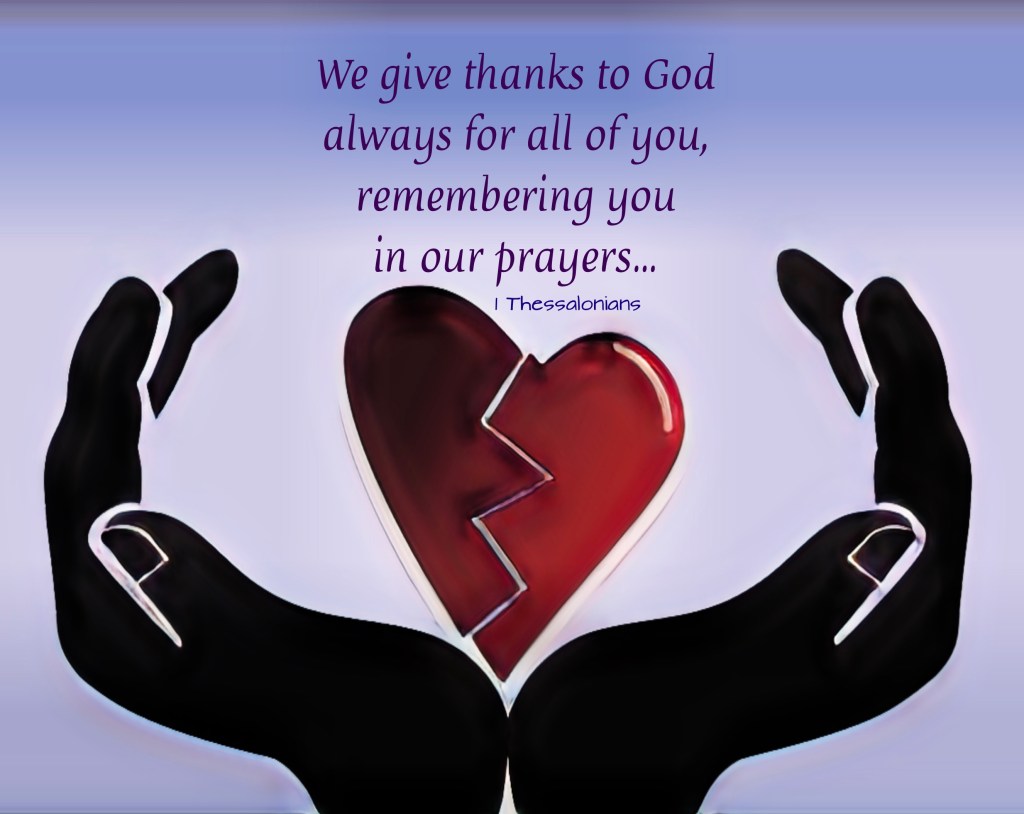
We give thanks to God always for all of you,
remembering you in our prayers,
unceasingly calling to mind your work of faith and labor of love
and endurance in hope of our Lord Jesus Christ,
before our God and Father,
knowing, brothers and sisters loved by God, how you were chosen.

1 Thessalonians: 2-4

photo by Martin Sanchez from Unsplash

Praying with this passage, I am moved to recall the “encouragers of faith” in my own life. At those few times in my life when the floor seemed to fall out and I felt like I was hanging on by a fingernail, there have always been those dear voices who called to me the way Paul calls to the Thessalonians today:

  • I am praying for you
  • You are part of a community who needs you and will sustain you
  • Know that who you are and what you do is appreciated
  • By faith, you have endured difficulty before. You can do it again.
  • You are loved and chosen by God. Be confident in that Power.

This kind of loving support is a key element of Christian community.

In today’s Gospel, Jesus condemns those who completely miss that point. He calls them hypocrites because they bury the heart of community in compliance to their controlling and self-promoting laws.

Jesus said to the crowds and to his disciples:
“Woe to you, scribes and Pharisees, you hypocrites.
You lock the Kingdom of heaven before others.
You do not enter yourselves,
nor do you allow entrance to those trying to enter.

Woe to you, scribes and Pharisees, you hypocrites.
You traverse sea and land to make one convert,
and when that happens you make him a child of Gehenna
twice as much as yourselves.

Matthew 23: 13-15

The fundamental charge laid against (the scribes and Pharisees) is hypocrisy—a gap between appearance and reality, between saying and doing, caused by a misplaced hierarchy of values and excessive emphasis on external matters to neglect of the interior.

Daniel J. Harrington – Sacra Pagina: The Gospel of Matthew

Jesus and Paul make it quite clear how we are to love and support one another in the Christian community. As we give thanks for those who have been such a support in our lives, let’s look into our own hearts for the same kind of behaviors. When we love one another in this way, we carry the otherwise invisible love of God to our sisters and brothers when they most need to see it.


Poetry: If I Can Stop One Heart from Breaking – Emily Dickinson

If I can stop one heart from breaking, I shall not live in vain;
If I can ease one life the aching,
Or cool one pain,
Or help one fainting robin
Unto his nest again, I
shall not live in vain.


Music: You Raise Me Up – written by Rolf Levland and sung by Josh Groban

Leadership: Service not Status

Saturday of the Twentieth Week in Ordinary Time
August 26, 2023

Today’s Readings:

https://bible.usccb.org/bible/readings/082623.cfm


Today, in God’s Lavish Mercy, we continue with the story of Ruth, prototype of the Servant Christ. And we pray our first reading in the light of today’s Gospel in which Jesus teaches his disciples a key lesson in servant leadership:

Jesus spoke to the crowds and to his disciples, saying,
“The scribes and the Pharisees
have taken their seat on the chair of Moses.
Therefore, do and observe all things whatsoever they tell you,
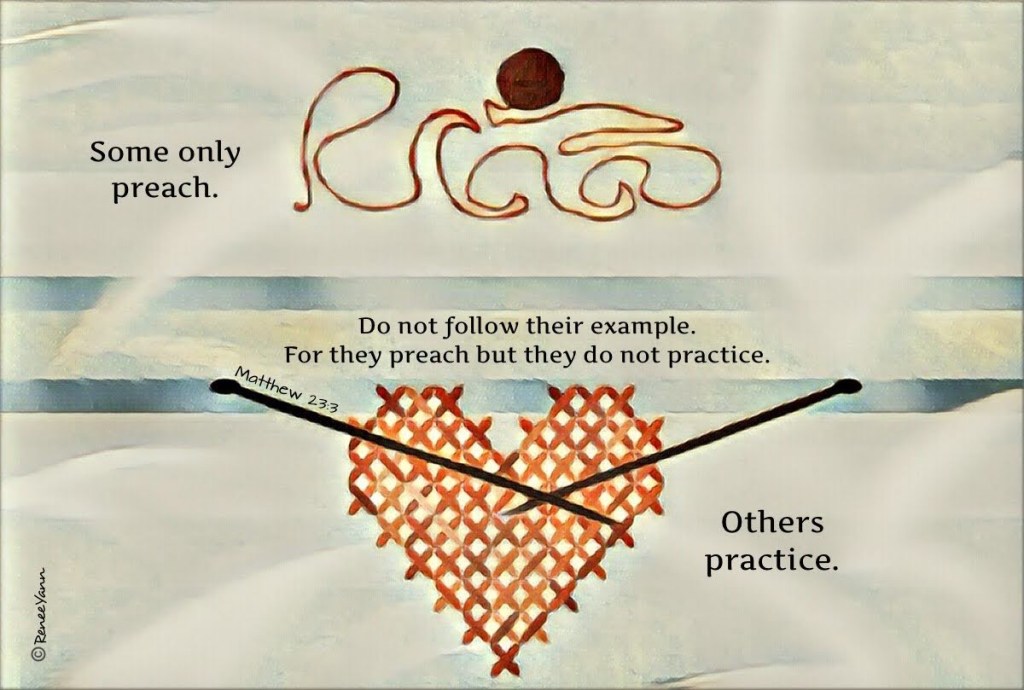
but do not follow their example.
For they preach but they do not practice.
They tie up heavy burdens hard to carry
and lay them on people’s shoulders,
but they will not lift a finger to move them.
All their works are performed to be seen.
They widen their phylacteries and lengthen their tassels.
They love places of honor at banquets, seats of honor in synagogues,
greetings in marketplaces, and the salutation ‘Rabbi.’

Matthew 23: 1-7

Jesus is so clear in this teaching. How is it that, even after 2000 years, we still don’t get it!

Stop and think about our culture – how we worship glitz, and bling, and “blow-em-up”! Listen to some of our political rhetoric filled with narcissistic “me-ism” and violent braggadocio. Look at some of the people in leadership positions around the world! They are tangled in their “phylacteries and tassels” and tripping us up with them.

Yes, even in our churches, we sometimes encounter supposed leaders who delight in places of honor and who lay burdens on the faithful rather than lift them.


Our first reading offers us humble Ruth who led and healed by selfless love.

Our Gospel reminds us that the Christian life is one of servant leadership fueled in a God-centered community to which all belong as sisters and brothers.

As for you, do not be called ‘Rabbi.’
You have but one teacher, and you are all brothers.
Call no one on earth your father;
you have but one Father in heaven.
Do not be called ‘Master’;
you have but one master, the Christ.
The greatest among you must be your servant.
Whoever exalts himself will be humbled;
but whoever humbles himself will be exalted.

Matthew 23:8-12

History is the story of our struggle to find that balance of leadership and community that will foster the life of all people. It is the great struggle between sin and goodness, between a life lived only for self and a life lived generously with others.

As we deepen our spiritual understanding with today’s readings, we may see ways that we want to act and choose more intentionally around the ministry of leadership – as it is exercised by ourselves and by others.


Prayer: from Jesuit Resources at Xavier University.org

A Leader’s Prayer

Leadership is hard to define.
Lord, let us be the ones to define it with justice.
Leadership is like a handful of water.
Lord, let us be the people to share it with those who thirst.
Leadership is not about watching and correcting.
Lord, let us remember it is about listening and connecting.
Leadership is not about telling people what to do.
Lord, let us find out what people want.
Leadership is less about the love of power,
and more about the power of love.

Lord, as we continue to undertake the role of leader let us be
affirmed by the servant leadership we witness in your son Jesus.
Let us walk in the path He has set and let those who will, follow.

Let our greatest passion be compassion.
Our greatest strength love.
Our greatest victory the reward of peace.

In leading let us never fail to follow.
In loving let us never fail.


Hymn: Prayer of St. Francis

Parable of the Trees

Wednesday of the Twentieth Week in Ordinary Time
August 23, 2023

Today’s Readings:

https://bible.usccb.org/bible/readings/082323.cfm


Today, in God’s Lavish Mercy, our first reading delivers a powerful message if we can decipher it. The passage, sometimes known as “Jotham’s Fable”, depicts the rise of Jotham’s felonious brother Abimelech as leader of Israel.

Abimelech was a bad guy, and the story of his tenure is so full of treacherous violence that it would be an “X” movie if shown in theaters today. Jotham, the only surviving brother of Abimelech’s fratricide, preaches his fable to warn the people against his murderous brother.

Jotham went to the top of Mount Gerizim and, standing there,
cried out to them in a loud voice:
“Hear me, citizens of Shechem, that God may then hear you!
Once the trees went to anoint a king over themselves.

Judges 9:7-8

Let’s take a look at the fable. What significance might it have for us today?

The fable describes humanized trees who seek a strong leader from among the most revered trees in Israel: the olive, the fig, and the grapevine. Each of the three trees is asked to assume leadership because each has proven honest and true in sustaining the people. However each, when asked, refuses because they are committed to the current success of their own chosen work. As a result, a vacuum of leadership is left. This vacuum allows the “bramble”, a self-absorbed, non-productive weed to slip in and grasp control over the people. It doesn’t turn out well.


Walter Bruggemann interprets the parable in this way:

The point of the parable is not obscure. The parable is simply a clever way to assert that if good people with positive political potential default on governing responsibility, then rule will be exercised by less desirable, more dangerous alternatives. The point is clear; nonetheless there is merit in lining out the parable. Not only is it entertaining in its imagery, but the repetition of patterned speech reinforces the danger and the possibility concerning governance. In the case of this narrative, the parable implies that Abimelech came to power because better candidates refused to have their productive lives interrupted by public responsibility.

It takes no great imagination for us to see the contemporaneity of the parable for us. If responsible people eschew public responsibility, the way is open for those who would misuse power in a governing space.

Walter Brueggemann: “Refusing the Bramble” from churchanew.org

It takes both generous courage and insightful self-examination to answer a call to true leadership which is a ministry of God’s merciful love. Every one of us will hear that call in some way in our lives – not necessarily to be President, Queen, or Pope – but as parent, teacher, coach, counselor, minister, board member, supervisor, or simply a true friend … and all the other ways we have the power to influence another’s life.


On the flip side, it takes reflective awareness to choose and support good leaders. In our complex society, we must be intentional not to be caught in the “brambles” of a self-absorbed wannabe who, like Jotham’s combustible weed, cannot nourish the community. Achieving that awareness is not as easy as it might seem. Potential leaders, at any level, can fool us by subtly appealing to our own unexamined “brambles” – those flashpoints which exploit our fears and prejudices rather than leading to a communally successful way through them.


In our Gospel, Jesus tells us what God’s “leadership” is like. God is like the selfless landowner who meets his people’s need with unmeasured generosity. Whether we come early or late to God’s vineyard, we are fully embraced and rewarded. Jesus’s parable suggests that we should be wary of “leaders” who divide communities into “them” and “us” in order to ration God’s Mercy.

Instead, the Gospel-inspired community is amazingly able to embrace each member at the place where they can best be led to wholeness. A sound, selfless leader is essential to building that kind of community whether it be civic or religious.

In reply, the landowner said to one of the complainers,
‘My friend, I am not cheating you.
Did you not agree with me for the usual daily wage?
Take what is yours and go.
What if I wish to give this last one the same as you?
Or am I not free to do as I wish with my own money?
Are you envious because I am generous?’
Thus, the last will be first, and the first will be last.”

Matthew 20:13-16

Praying with these passages, we might ask for “justice-eyes” and a “mercy-heart” as we navigate our world as both leaders and as those who discern leaders.


Poetry: Nobility by Alice Cary (1820-1871)

True worth is in being, not seeming,-
In doing, each day that goes by,
Some little good, not in the dreaming
Of great things to do by and by.
For whatever men say in their blindness,
And spite of the fancies of youth,
There’s nothing so kingly as kindness,
And nothing so royal as truth.


Music: Song for the Journey – not the greatest music ever written, but still the song captures the message of servant leadership.

In the Name of Mercy

August 22, 2023
Foundation Day: Sisters of Mercy Philadelphia/Merion


On August 22, 1861, a small group of hopeful women arrived at the railroad station in North Philadelphia. On that hot afternoon, the first Philadelphia Sisters of Mercy, led by a 27-year-old Irish immigrant Patricia Waldron, disembarked from the train and caught their first amazed glimpse of the busy city.  They carried few worldly possessions. They came with only a dream for Mercy.  It was a dream so alive in them that it still inspires us today, over 160 years later.


Can you see them standing on the cramped platform, the hissing steam trains encircling them in mist?  They must have felt “be-misted” themselves, these mostly Irish country girls engulfed in a noisy teeming city.

Union troops heading south crowded the platform.  Busy Broad Street crackled with news of the burgeoning national strife.  Lincoln himself would visit the city in the coming weeks.


Visiting Old Moyamensing Prison

Where would they begin? And how? Hidden within the seams of this bustling city’s garment lay the poor – the ones for whom they had come.  How to reach them?  How to help them change their lives?

Ranging from sixteen to twenty-seven years old, these brave young women had been charged with establishing a kind of “new nation” themselves – not of politics, but of mercy.  They, like the young stout-hearted soldiers around them, were also a little weak-kneed. They too had their battles to face. They too would see starvation, illness, attack, and death – but they would endure for the sake of the Mercy dream, God’s dream for all those in need.


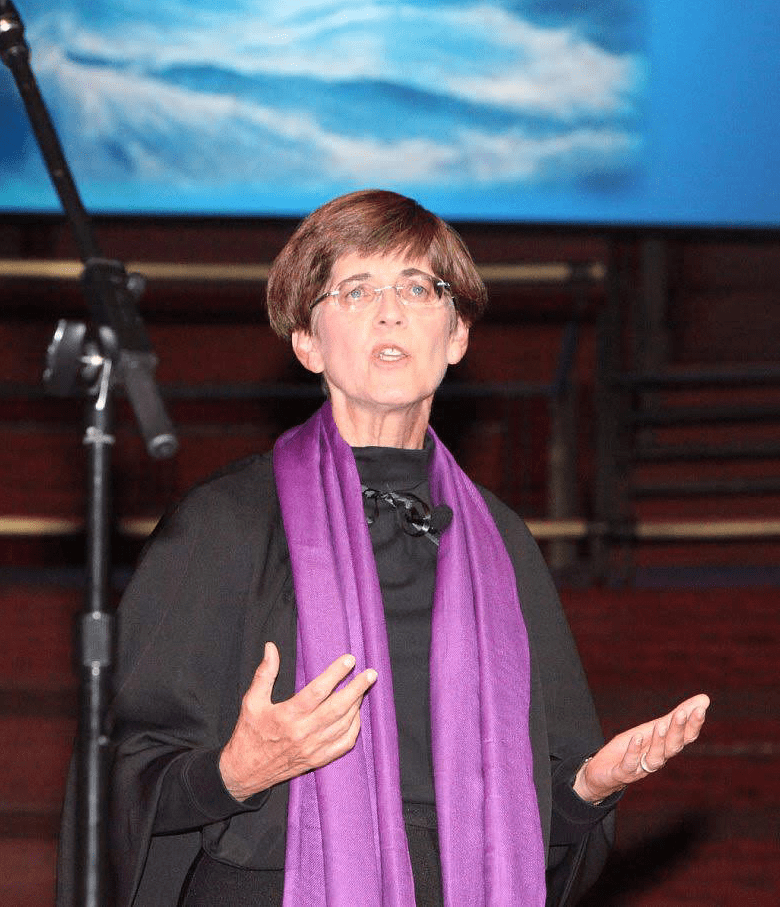
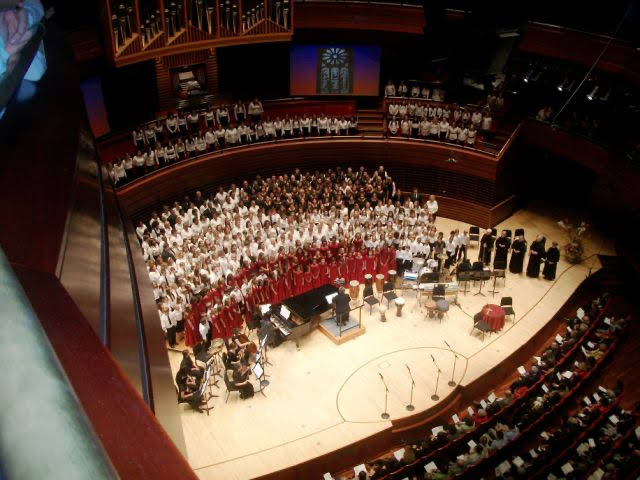
In 2011, the Philadelphia/Merion Sisters of Mercy celebrated our Sesquicentennial. One of our celebratory events was a thrilling performance at the Kimmel Center commemorating these founding sisters and the decades of ministry built on their commitment.

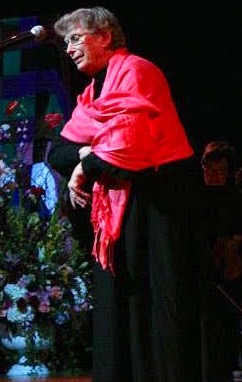
The performance opened with these imagined comments from Patricia Waldron.

Mother Patricia Waldron
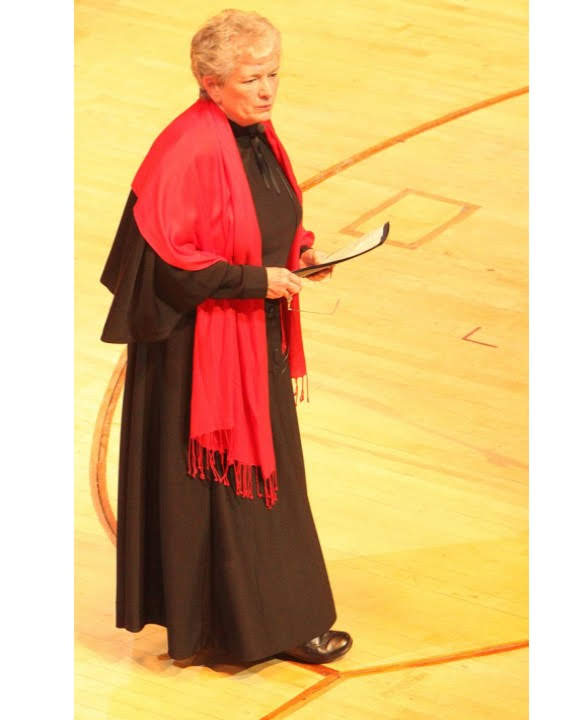
(played by our dear late Sister Mimi Connor, RSM
)

Have you ever noticed how our dreams unfold?
They never happen in the way we first imagined.
Instead, they weave – your dreams and mine ---
Among each other in a latticework of grace.
By the way, my name is Anne Waldron.
known in my life as Mother Patricia –
“Reverend Mother” really.
A rather weighty title, don’t you think?
But my own dream of mercy was not weighty.
I was born in Tuam (pronounced “Choom”), County Galway, Ireland.
‘Tis a precious place, a mere 20 miles from the glorious bay to the south,
Where the soft air carries a hint of the sea
And the sweet land holds both a deep promise and a deep scar of famine.
I must seem a long way from you now, after these 150 years 
– almost like a shadow on your memories.
And you must think me a particularly courageous part of your history.
After all, you have named buildings after me, I see!
But tonight, I want you to know me in a new way.

I was only 27 when I came here to this strange city.
I walked these same streets as you, fraught as they are with their dangers and beauties.
Do you know that a century and a half ago
we sisters lived just two miles north of this very spot -
you call it “The Kimmel” I think!
Ah, but the Philadelphia of the 1860s was a far different sight 
from what I saw outside tonight.
I see that a million and a half souls live here now!
Oh my! Just a third that number in the city then.
We thought it an amazing number having come mostly from our small villages.

I was young then – like all of you are or were once –
Young and full of dreams.
We all were – I and these my dear companions.

We were not different because of our courage, 
our spirit of adventure, our dedication, or our generosity—
although these marked our lives
as we grew deeper into God.

No – what made us who we were was this:
We clearly knew and trusted that the dream in us
was God’s dream for a wounded world.
In our deepest hearts,
we were Sisters of Mercy!

As you listen to our stories tonight,
Hold this question in your own hearts:
What dream lived in you when you were young?
What dream lives in you now?

Enduring dreams begin with small first steps.  So, hailing a horse-drawn carriage, Mother Patricia Waldron led her young band to their new lives.  Thus she began the grace-filled saga many of us know so well and of which we are a part today.  Their dream lives in us who love Mercy:

  • in our continued effort to find those who are poor and sick in a world that ignores their suffering
  • in our choice to be compassionate in a world that often chooses violence
  • in our commitment to care in a world of treacherous indifference
cemetery
Today we honor our beloved foremothers
who led the way in faith and commitment.

On that sultry August day in 1861, and on this one in 2023, people have choices to make.  They have vows to keep. Some choices live forever.  In the name of Mercy, what will you choose today?


I think many of you might enjoy a photo review of the Kimmel Celebration. I have only a few photos of the original sisters which I connected with the performer where possible.

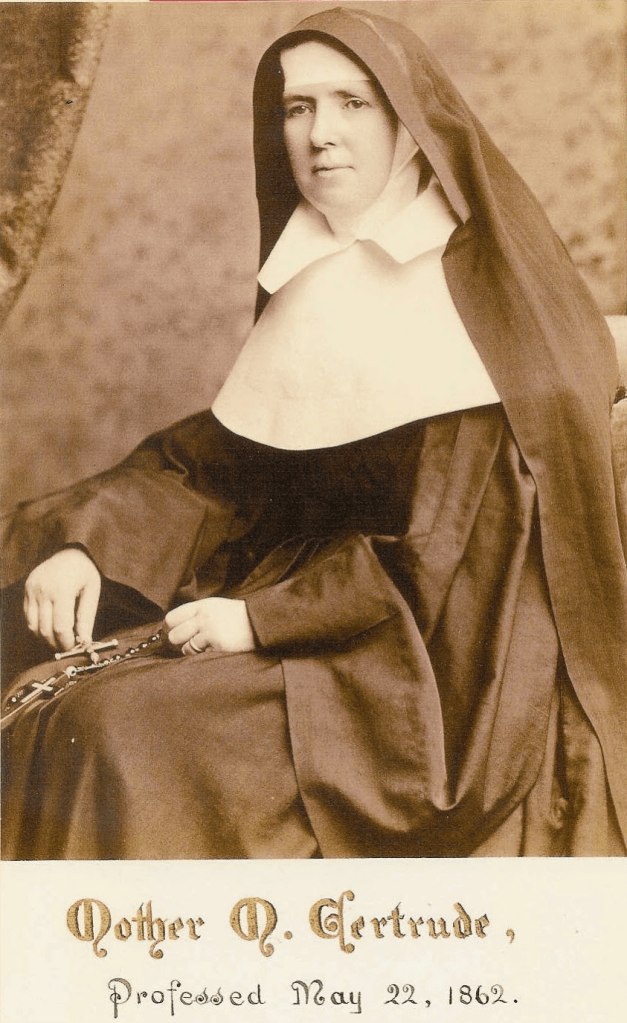
Mother Gertrude Dowling
(played by Sister Kathleen Mary Long)


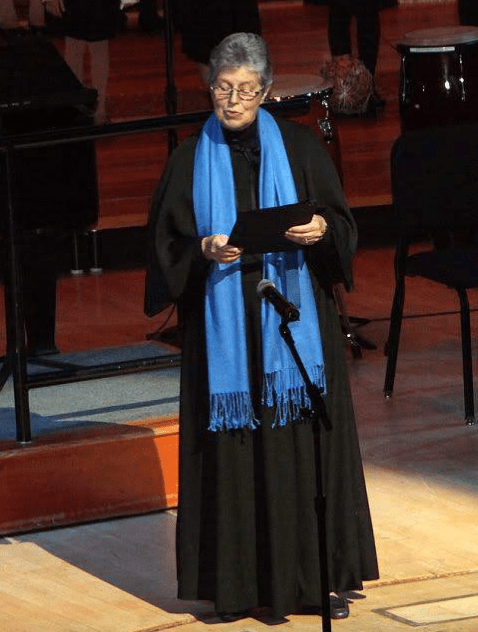
Sister Marie Madeleine Mathey
(played by Sister Suzanne Neisser)


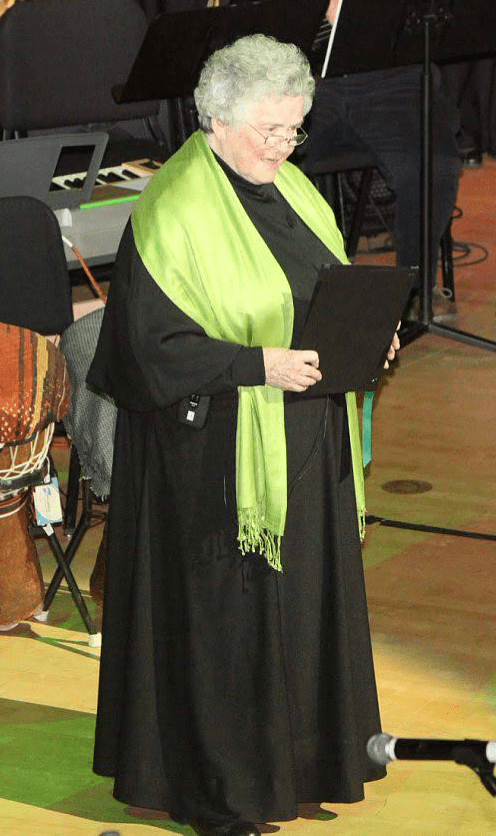
Sister Mary Philomena Hughes

(played by Sister Mary Hentz)


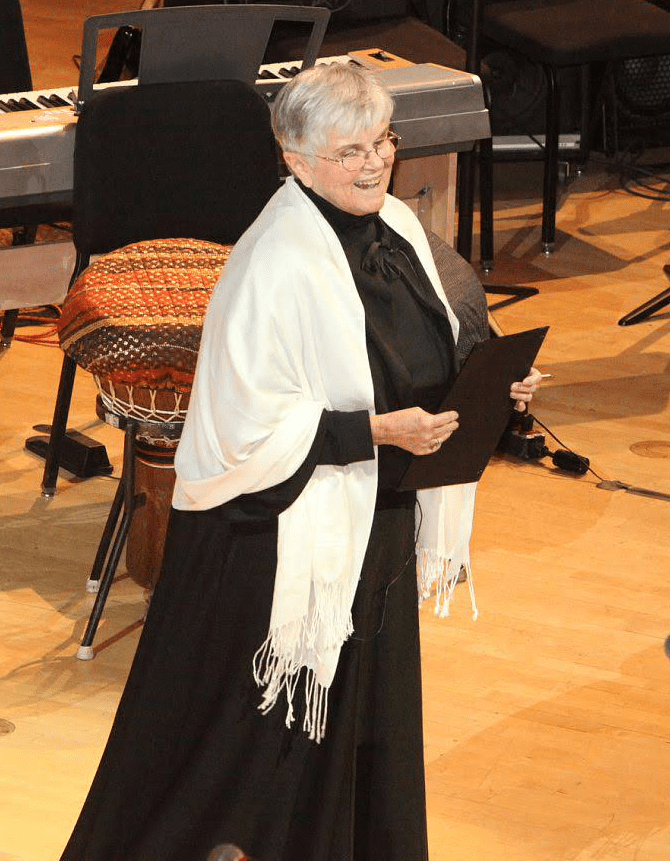
Sister Mary Angela Curtin
(played by Sister Connie Haughton)


Sister Mary Ann Coveney

(played by Sister Diane Guerin)


Sister Francis de Sales Geraghty
(played by Sister Mary Klock)


Sister Mary Rose Davies
(played by Sister Marie Carolyn Levand)


Sister Mary Veronica O’Reilley
(played by Sister Eileen Sizer)


Virtuoso Sister Marie Ann Ellmer plays the magnifcent
Kimmel organ


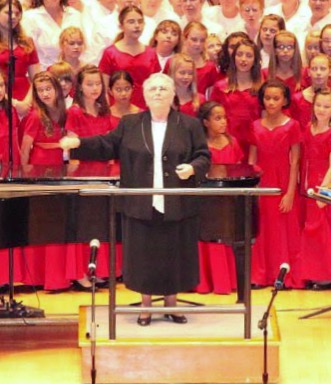
Maestro Sister Jeanette Goglia
leads a resounding rendition
of her composition “The Circle of Mercy”
sung by 2500 attendees

(Click the white arrowhead to enjoy “The Circle of Mercy” as you peruse these photos.
Happy Foundation Day to all who love and live Mercy!)