Beyond Fear

Memorial of Saint Martin of Tours, Bishop
November 11, 2023

Today’s Readings:

https://bible.usccb.org/bible/readings/111123.cfm


Today, in God’s Lavish Mercy, there is a graceful coincidence of several themes calling me to prayer. I share them with you:

  • On November 11th, Sisters of Mercy throughout the world commemorate the death of our beloved founder Catherine McAuley.
  • This year that commemoration falls on the feast of the beautiful St. Martin of Tours.
  • Our readings for the day prompt us to consider our beloved companions on our spiritual journey who provide a harbor of blessings in a fearsome world.

Not just today, but often, I think about what Catherine would be like if she lived among us today. In her day, she was ever practical, focusing on healing the greatest unmet needs around her.

Her “un-technologized” world was smaller than ours. She encountered need simply by a walk through Dublin’s neighborhoods. Were she here today, need would pour into her awareness from every corner of the earth via technological means. How would she focus the power of her merciful heart for our times?


Our readings prompt me to think that Catherine would do the same three things she did almost two hundred years ago:

  • She would gather her companions on the journey
  • Together, they would empty their spirits of anything that was not of God
  • In that profound spiritual clarity, they would see where God called them to be Mercy for the world.

In our first reading, Paul names a number of his companions, those who strengthened and assisted him in life and ministry. Catherine too had beloved companions without whom she could not have met the challenges of her call.


In our Gospel, Jesus affirms that our hearts must be emptied of the undue love of anything that distracts us from God and God’s Way:

No servant can serve two masters.
He will either hate one and love the other,
or be devoted to one and despise the other.
You cannot serve God and mammon.”
The Pharisees, who loved money,
heard all these things and sneered at him.And he said to them,
“You justify yourselves in the sight of others,
but God knows your hearts;
for what is of human esteem is an abomination in the sight of God.”

Luke 16: 12-15

While in her times, Catherine encountered the ravages of material poverty, I think that something much less tangible, but exponentially more destructive, would capture her ministerial awareness today.

Our world suffers from an intrinsic and debilitating fear which inclines us to amass power and possessions to the impoverishment of those around us. The fear of not being or having enough drives the systemic predation of the rich upon the poor, and the powerful over the weak. It is a fear that grows in a heart emptied of God.

While Catherine would continue to address the needs of those suffering from poverty and disenfranchisement, I think she would reach out in a new way to the healing of those underlying fears. These fears fester in a culture of spiritual ignorance endemic to our modern society. The naming and healing of that ignorance is deeply congruous with Catherine’s charism and calls to us urgently today.


About St. Martin de Porres, Pope John XXIII said this:

“He loved his neighbors with the benevolence
of the heroes of the Christian faith.”

So did Catherine McAuley. So must we.


Poetry: Where the Mind is Without Fear – Rabindranath Tagore

Where the mind is without fear and the head is held high
Where knowledge is free
Where the world has not been broken up into fragments
By narrow domestic walls
Where words come out from the depth of truth
Where tireless striving stretches its arms towards perfection
Where the clear stream of reason has not lost its way
Into the dreary desert sand of dead habit
Where the mind is led forward by thee
Into ever-widening thought and action
Into that heaven of freedom, my Father, let us awake.


Music: There is No Fear in Love – The Bible Project
Phat Phylacteries!

Thirty-first Sunday in Ordinary Time
November 5, 2023


Today’s Readings:

https://bible.usccb.org/bible/readings/110523.cfm


Today, in God’s Lavish Mercy, our readings perfectly complement one another delivering a clear message: all leadership, including spiritual leadership, requires the disciplines of humility, honesty, justice, mercy, and love.

These disciplines are so easy to lose in the euphoria of power and the delusions of superiority. Malachi, prophet of the 5th century before Christ, vehemently points this out. Speaking for God, the prophet states:

O priests, … I will send a curse upon you
and of your blessing I will make a curse.
You have turned aside from the way,
and have caused many to falter by your instruction;
you have made void the covenant of Levi,
says the LORD of hosts.
I, therefore, have made you contemptible
and base before all the people,
since you do not keep my ways,
but show partiality in your decisions.

Malachi 2:2

Five hundred years later, Jesus echoes the rebuke to his own generation:

Do not follow the example of the scribes and Pharisees.
For they preach but they do not practice.
They tie up heavy burdens hard to carry
and lay them on people’s shoulders,
but they will not lift a finger to move them.
All their works are performed to be seen.
They widen their phylacteries and lengthen their tassels.
They love places of honor at banquets, seats of honor in synagogues,
greetings in marketplaces, and the salutation ‘Rabbi.’

Matthew 23: 3-7

What are phylacteries anyway, and what is Jesus talking about when he describes them as widened?


The wearing of phylacteries in Jewish practice is similar to Christians wearing crosses or being signed with ashes on Ash Wednesday, All of these devotional acts are intended to demonstrate one’s faith and invite others to faithful practice. But when exaggerated, such practices draw attention to oneself rather than to the faith. It is often an attempt to proclaim the superiority of one’s faith perhaps because, in our hearts, we are unsure of it.


Jesus says that such exaggerated devotion is unnecessary when our lives speak for themselves, demonstrating faith through our works of mercy.

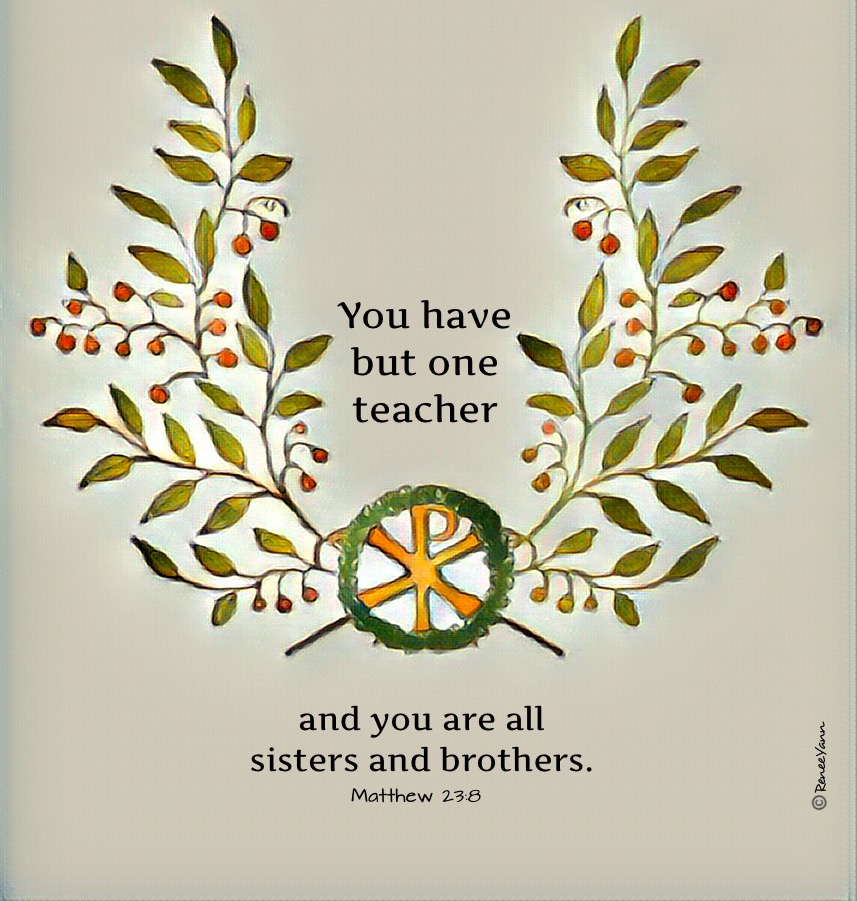
You have but one teacher, and you are all brothers.
Call no one on earth your father;
you have but one Father in heaven.
Do not be called ‘Master’;
you have but one master, the Christ.
The greatest among you must be your servant.
Whoever exalts himself will be humbled;
but whoever humbles himself will be exalted.

Matthew 23: 8-12

We are all leaders at some level in our lives — parents, teachers, supervisors, politicians, clinicians, and everyone who has influence over another’s life. In each of these roles, our soul’s lens can be turned toward ourselves, or it can be turned in merciful care toward the other. The way we effectively turn the lens is to continually deepen ourselves in the greatest commandment: Love God above all things and your neighbor as yourself.


Poetry: Some keep the Sabbath going to Church – Emily Dickinson

Some keep the Sabbath going to Church –
I keep it, staying at Home –
With a Bobolink for a Chorister –
And an Orchard, for a Dome –
Some keep the Sabbath in Surplice –
I, just wear my Wings –
And instead of tolling the Bell, for Church,
Our little Sexton – sings.
God preaches, a noted Clergyman –
And the sermon is never long,
So instead of getting to Heaven, at last –
I’m going, all along.

Music: Where I Find God – Larry Fleet

The night I hit rock bottom, sittin’ on an old barstool
He paid my tab and put me in a cab, but he didn’t have to
But he could see I was hurtin’, oh, I wish I’d got his name
‘Cause I didn’t feel worth savin’, but he saved me just the same

That day out on the water, when the fish just wouldn’t bite
I put my pole down, I floated around, was just so quiet
And I could hear my old man sayin’ “Son, just be still
‘Cause you can’t find peace like this in a bottle or a pill”

From a bar stool to that Evinrude
Sunday mornin’ in a church pew
In a deer stand or a hay field
An interstate back to Nashville
A Chevrolet with the windows down
Me and him just ridin’ around
Sometimes, whether I’m lookin’ for Him or not
That’s where I find God

Sometimes late at night, I lie there and listen
To the sound of her heart beatin’
And the song the crickets are singin’
And I don’t know what they’re sayin’
But it sounds like a hymn to me
Naw, I ain’t too good at prayin’
But thanks for everything

From a bar stool, to that Evinrude
Sunday mornin’ in a church pew
In a deer stand or a hay field
An interstate back to Nashville
A Chevrolet with the windows down
Me and him just ridin’ around
Sometimes, whether I’m lookin’ for Him or not
That’s where I find God

From a bar stool, to that Evinrude
Sunday mornin’ in a church pew
In a deer stand or a hay field
An interstate back to Nashville
A Chevrolet with the windows down
Me and him just ridin’ around
Talkin’, well I do that a lot
Well, I do that a lot
That’s where I find God

The Glory Yet to Come

Tuesday of the Thirtieth Week in Ordinary Time
October 31, 2023

Today’s Readings:

https://bible.usccb.org/bible/readings/103123.cfm


Today, in God’s Lavish Mercy, we pray with Psalm 126, a song of hope fulfilled:

When the LORD brought back the captives of Zion,
    we were like men dreaming.
Then our mouth was filled with laughter,
    and our tongue with rejoicing.

Then they said among the nations,
    “The LORD has done great things for them.”
The LORD has done great things for us;
    we are glad indeed.

Psalm 126: 1-3

In our readings, we are called to be people of hope – to live in gratitude for hopes fulfilled, and to live in confidence of future blessing.


Paul blesses us with some of his most powerful words:

I consider that the sufferings of this present time are as nothing
compared with the glory to be revealed for us.

Romans 8:18

How often, over the ensuing centuries, have these words uplifted and bravened a struggling heart! Paul reminds us of what he so passionately believed – that we are not here for this world alone; that we, with all Creation, are being transformed for eternal life in God.


Jesus too reminds us that our life in faith is so much bigger than we perceive. We see a tiny mustard seed, but God sees the whole tree of eternal life blossoming in us.  We see a fingertip of yeast, but God sees the whole Bread of Life rising in us.

Paul tells us to be People of Hope who do not yet expect to see the object of their hope but who, nonetheless, believe and love with all their hearts.

May we pray this today for ourselves, and for anyone burdened by suffering or hopelessness at this time in their lives.


Poetry: Hope – Czeslaw Milosz – poet, prose writer, translator, and diplomat. He primarily wrote his poetry in Polish. Regarded as one of the great poets of the 20th century, he won the 1980 Nobel Prize in Literature. In its citation, the Swedish Academy called Miłosz a writer who “voices our exposed condition in a world of severe conflicts”.

Hope is with you when you believe
The earth is not a dream but living flesh,
that sight, touch, and hearing do not lie,
That all thing you have ever seen here
Are like a garden looked at from a gate.
You cannot enter. But you're sure it's there.
Could we but look more clearly and wisely
We might discover somewhere in the garden
A strange new flower and an unnamed star.
Some people say that we should not trust our eyes,
That there is nothing, just a seeming,
There are the ones who have no hope.
They think the moment we turn away,
The world, behind our backs, ceases to exist,
As if snatched up by the hand of thieves.

Music:  Living Hope – Phil Wickham

Bear Witness to the Light

Thursday of the Twenty-ninth Week in Ordinary Time
October 26, 2023

Today’s Readings:

https://bible.usccb.org/bible/readings/102623.cfm


Today, in God’s Lavish Mercy,  Jesus says he has come to set fire on the earth! He says that, because of him, there will not be peace but division, setting households against one another. It’s not a comforting Gospel.

“I have come to set the earth on fire,
and how I wish it were already blazing!
There is a baptism with which I must be baptized,
and how great is my anguish until it is accomplished!
Do you think that I have come to establish peace on the earth?
No, I tell you, but rather division.

Luke 12: 49- 1

We don’t live in a comforting world, do we? We see human beings set against each other in war, political corruption, economic despoiling, human trafficking, ecological crime, and other deeply ingrained systemic abuses.


Pope John Paul II in his encyclical EVANGELIUM VITAE refers to these realities as a “culture of death”.

Some threats come from nature itself, but they are made worse by the culpable indifference and negligence of those who could in some cases remedy them. Others are the result of situations of violence, hatred and conflicting interests, which lead people to attack others through murder, war, slaughter and genocide.

And how can we fail to consider the violence against life done to millions of human beings, especially children, who are forced into poverty, malnutrition and hunger because of an unjust distribution of resources between peoples and between social classes? And what of the violence inherent not only in wars as such but in the scandalous arms trade, which spawns the many armed conflicts which stain our world with blood? What of the spreading of death caused by reckless tampering with the world’s ecological balance, by the criminal spread of drugs, or by the promotion of certain kinds of sexual activity which, besides being morally unacceptable, also involve grave risks to life? It is impossible to catalogue completely the vast array of threats to human life, so many are the forms, whether explicit or hidden, in which they appear today! 


Paul says that, through our Baptism, we are called and strengthened to bear witness against such a culture:

But now that you have been freed from sin and have become slaves of God,
the benefit that you have leads to sanctification,
and its end is eternal life.
For the wages of sin is death,
but the gift of God is eternal life in Christ Jesus our Lord.

Romans 6:22-23
poor child

Every day, each of us has the opportunity to stand up for mercy and justice by the choices we make, the attitudes we affirm, and the values we stand for. But sometimes it’s hard, because doing so can set us against some of the people around and close to us. That’s when the rubber meets the road! Do we belong to Christ, or not?


Poetry: A Blessing – Bob Holmes

May the quiet fire of God’s love
arise within you.
May its flames of joy and peace
Enlighten your steps in this world,
And may you be like the burning bush,
The presence of God for each other,
That holy healing of light of love,
The breath of God made manifest
In you.

Music: Gabriel’s Oboe – written by Ennio Morricone, played by Hauser

Be Brave!

Tuesday of the Twenty-ninth Week in Ordinary Time
October 24, 2023

Today’s Readings:

https://bible.usccb.org/bible/readings/102423.cfm

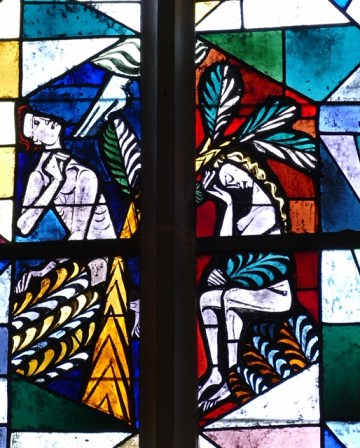
Today, in God’s Lavish Mercy, Paul contrasts the sin of “Adam” with the gift of Jesus, demonstrating the specifics of Christ’s redemptive act.

Adam

A key phrase for our prayer might be the following. The concupiscence of human nature will always make the sinful choice a possibility. But we can gain courage and strength from this powerful line from Paul:

Where sin increased,
grace overflowed all the more….

Romans 5:15

In our Gospel, Jesus teaches a lesson about perseverance in the spiritual life. He says if we stick with it, God will welcome us the way a generous master thanks and embraces a loyal servant. He adds a comforting thought for those of us of “a certain age”.

And should he come in the second or third watch
and find them prepared in this way,
blessed are those servants.

Luke 12:38

Speaking personally now, I find that moving into “the second or third watch” can be a little scary. As various physical functions occasionally fail me, and some of my joints are replaced with earth minerals, a line from Yeats’s poem comes to mind – “things fall apart“:

Turning and turning in the widening gyre
The falcon cannot hear the falconer;
Things fall apart; the centre cannot hold;
Mere anarchy is loosed upon the world...

As I look through my reading glasses at the information for my new titanium knee, I remember the young athlete who could drive a basketball down the lane for an explosive layup, often being knocked on her nethers by a powerful opponent. Nevertheless, she would jump up for the next rebound. What happened to that girl?

This Gospel reminds me that she is still inside me, but she is golden now — lifting her spirit, by God’s grace, to deeper challenge.


 I am beginning to understand that aging is its own life phase, not just a final comfortable fixity in one’s maturing. Just as every other life phase requires a gradual mastery of its challenges, so does aging. Toddlers must conquer balance and language skills. Teens must gain confidence and self-direction. Young adults work for greater wisdom and meaningful life relationships. Those “post-50” evaluate and may be challenged by the “successes” of their past years. And those in the sometimes not-so-really golden years are still doing all these earlier tasks while meeting the unique challenges of aging. One must be brave!


I hope some of you are Harry Potter fans. The books have powerful little encouragements tucked in their magical dialogue. One of my favorites is this. Harry, encouraging his elderly and fearful teacher to make a courageous choice, says, “Be brave, Professor… Otherwise, the bowl will remain empty… forever.”


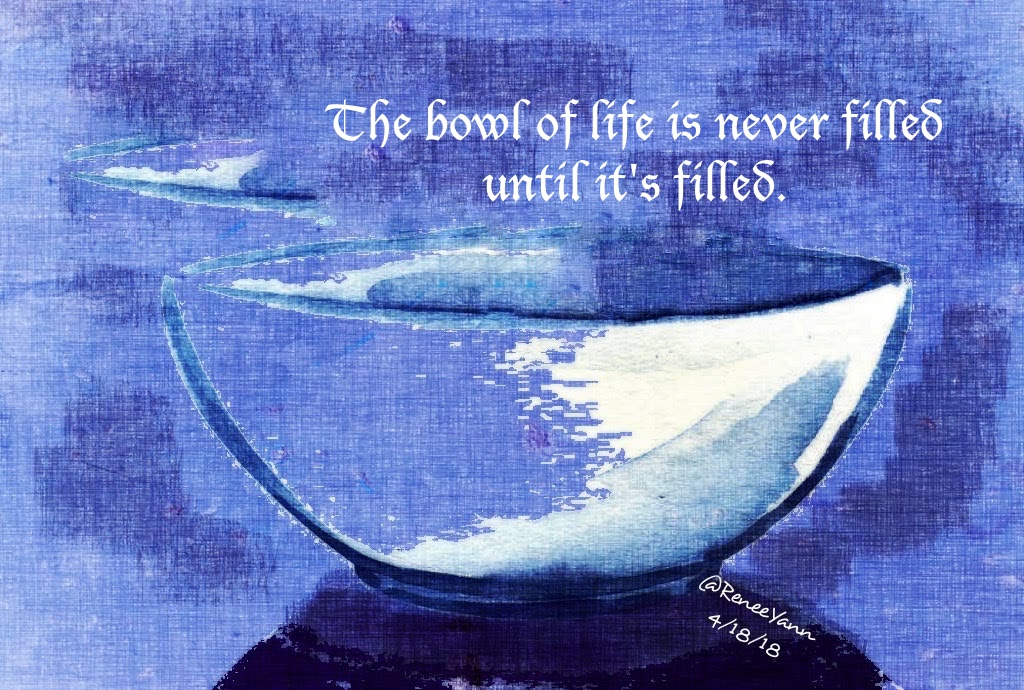
The bowl of our life is never filled until it’s filled. Jesus reminds us that none of us knows when that day of fulfillment will come and we must be vigilant for it until it does.

Blessed are those servants
whom the master finds vigilant on his arrival.
Amen, I say to you, he will gird himself,
have them recline at table, and proceed to wait on them.

Luke 12:37

We draw courage for that vigilance not from Harry Potter of course, but from Christ’s own promise to us that there is a special blessing especially for us 2nd or 3rd watchers:

And should he come in the second or third watch
and find them prepared in this way,
blessed are those servants.

Luke 12:38

I believe that if we prayerfully listen, we will find that this blessing already suggests itself this side of Christ’s final arrival. As Paul indicates in our first reading, when we remain open to graceful relationship with God, we already live in the peaceable kingdom.

… how much more will those who receive the abundance of grace
and the gift of justification
come to reign in life through the one Jesus Christ…

Romans 5:17

Poetry: Sailing to Byzantium – William Butler Yeats

I

That is no country for old men. The young
In one another’s arms, birds in the trees,
—Those dying generations—at their song,
The salmon-falls, the mackerel-crowded seas,
Fish, flesh, or fowl, commend all summer long
Whatever is begotten, born, and dies.
Caught in that sensual music all neglect
Monuments of unageing intellect.

II

An aged man is but a paltry thing,
A tattered coat upon a stick, unless
Soul clap its hands and sing, and louder sing
For every tatter in its mortal dress,
Nor is there singing school but studying
Monuments of its own magnificence;
And therefore I have sailed the seas and come
To the holy city of Byzantium.

III

O sages standing in God’s holy fire
As in the gold mosaic of a wall,
Come from the holy fire, perne in a gyre,
And be the singing-masters of my soul.
Consume my heart away; sick with desire
And fastened to a dying animal
It knows not what it is; and gather me
Into the artifice of eternity.

IV

Once out of nature I shall never take
My bodily form from any natural thing,
But such a form as Grecian goldsmiths make
Of hammered gold and gold enamelling
To keep a drowsy Emperor awake;
Or set upon a golden bough to sing
To lords and ladies of Byzantium
Of what is past, or passing, or to come.


Music: Candlelight – Ottmar Liebert

Liebert is a German classical guitarist, songwriter and producer best known for his Spanish-influenced music. A five-time Grammy Award nominee, he is also an ordained Zen monk.

Trusting the Promise

Monday of the Twenty-ninth Week in Ordinary Time
October 23, 2023

Today’s Readings:

https://bible.usccb.org/bible/readings/102323.cfm


Today, in God’s Lavish Mercy, Paul counsels us to be steadfast in our faith. Jesus counsels us to avoid greed. How might the two be connected?

Perhaps like this. Only by faith do we have the courage to repudiate the allurements of greed.

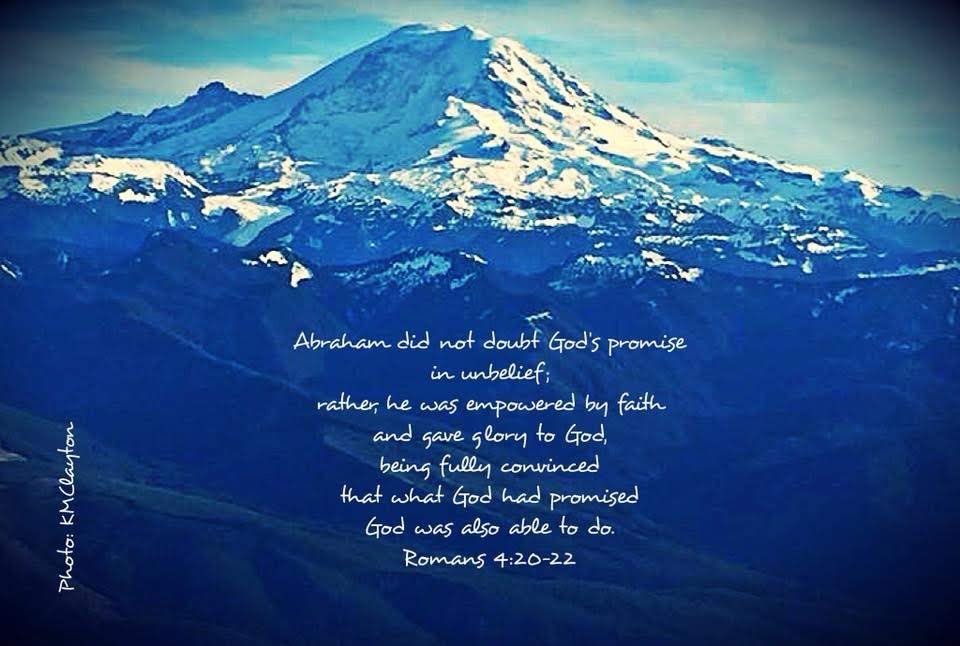
Paul lauds Abraham whose faith convinced him that God’s promise to him would be fulfilled. Jesus promises us eternal life in a realm apart from any earthly treasure. If we believe in Jesus’s promise, we realize the futility of possessiveness, greed and consumerism.

Abraham did not doubt God’s promise in unbelief;
rather, he was empowered by faith and gave glory to God
and was fully convinced that what God had promised
he was also able to do.
That is why it was credited to him as righteousness.

Romans 4:20-22

That’s a really hard call in our society which makes it hard to believe in anything including God and ourselves! Every type of media conspires to convince us that we are not enough as we are. We need a better car, house, clothes, haircut, and on and on to make us “acceptable”. Populism and racism ingrained in our politics convince us that we need to be a certain color, nationality, religion, speak a certain language to be worth anything.

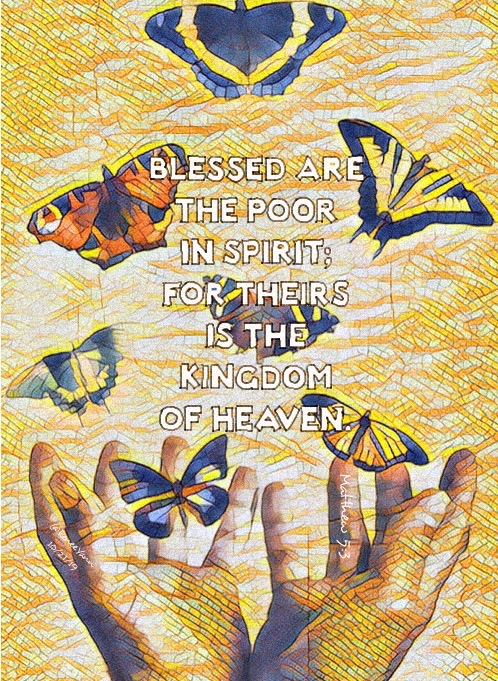
Mt5_3 poor

Jesus says NO. You are beautiful just as I created you. And you already have everything you need to merit my promise of eternal life. You have only one need in this world — to love yourself and one another so that my promise can be released in you and in all Creation.

Then Jesus said to the crowd,
“Take care to guard against all greed,
for though one may be rich,
one’s life does not consist of possessions.”

Luke 12:15

Poetry: from Rumi

When I am with you, everything is prayer.
I prayed for change,
so, I changed my mind.

I prayed for guidance
and learned to trust myself.

I prayed for happiness
and realized I am not my ego.

I prayed for peace
and learned to accept others unconditionally.

I prayed for abundance
and realized my doubt kept it out.

I prayed for wealth
and realized it is my health.

I prayed for a miracle
and realized I am the miracle.

I prayed for a soul mate
and realized I am with the One.

I prayed for love
and realized it is always knocking,
but I have to allow it in.

Music: How Could Anyone Ever Tell You – Shaina Noll

Be Like Luke!

Feast of Saint Luke, evangelist
October 18, 2023

Today’s Readings:

https://bible.usccb.org/bible/readings/101823.cfm


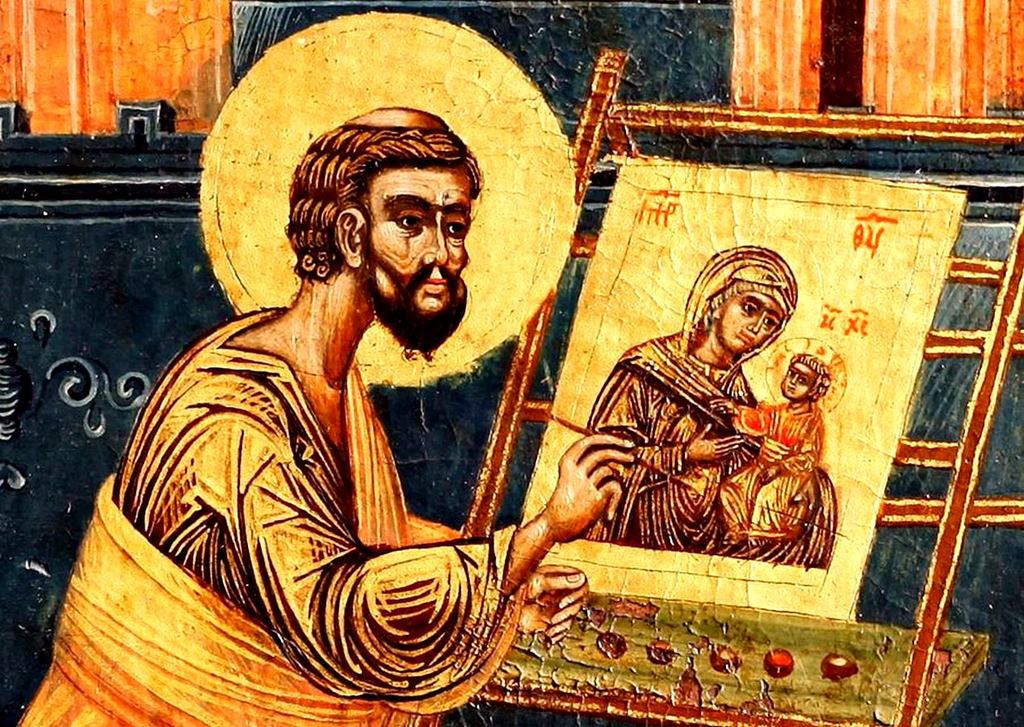
The Tradition of the Orthodox Church says that
Luke was a painter who created icons of Mary.
Historian Theodorus Lector mentions St Luke drawing the Virgin;
Saint Andrew of Crete wrote about St Luke depicting both Mary and Christ;
Saint Simeon the Metaphrast, historian and the author of many biographies of saints,
mentioned one icon of the Virgin Mary holding Christ.
He said that it was painted by St Luke and is “honored even to this day.”
(from the Convent of St. Elizabeth website: https://obitel-minsk.org/history)


Today, in God’s Lavish Mercy, we pray with St. Luke, the elegant author who has painted a tender picture of God on human hearts. That picture has the beautiful face of Jesus Christ, Incarnate Mercy for all people.

God is portrayed throughout the Old and New Testaments as a warrior or a stern judge, but Luke, through his parables, presents God as a loving, anxious father who forgives his erring son before the boy can ask to be forgiven and lavishes love on him.

Joseph Blenkinsopp: Luke’s Jesus

Today’s first reading gives us some insight into Luke’s character and personal committment to the spread of the Gospel:

Beloved:
Demas, enamored of the present world,
deserted me and went to Thessalonica,
Crescens to Galatia, and Titus to Dalmatia.
Luke is the only one with me.

2 Timothy 4:10

Apparently Luke, unlike Demas, was not “enamored of the present world”. Wow! What a packed description that is! Paul is obviously disappointed. It would appear that Demas, Crescens, and Titus decided to opt out of their contracts. Only Luke hung on with a rather gloomy-sounding Paul who is pining for his cloak and papyrus rolls.

I would imagine Paul was not an easy boss to work for. He was a firebrand – both when he fought against the Gospel and when he fought for it. No doubt he demanded the same intensity from those who directly assisted him. And the work itself was daunting. Luke recounts in the Acts of the Apostles the many trials that had to be met before any small success.

Some of the apostolic candidates just didn’t vibe with all of that. But Luke could work with Paul’s fire. And he could uncover the glorious story within the many challenging folds they navigated. What a blessing he must have been to the wildly dynamic and sometimes mercurial Paul!


Luke had incorporated into his own life Jesus’s ministerial call so clearly described in today’s Gospel:

Go on your way;
behold, I am sending you like lambs among wolves.
Carry no money bag, no sack, no sandals;
and greet no one along the way.
Into whatever house you enter,
first say, ‘Peace to this household.’
If a peaceful person lives there,
your peace will rest on him;
but if not, it will return to you.

Luke 10:3-6

Like Paul, Luke never met Jesus in person. Both were born shortly after Jesus’s time on earth. But the two of them knew Christ intimately and carried that inspirited knowledge to their own world and to the ages.

Our picture of Jesus would be a lot blurrier without Luke. Nearly half of Luke’s content is not found in the other three Gospels.

Many stories, sayings, and images found only in Luke have become an indispensable part of Christian consciousness. The Prodigal Son, the Good Samaritan, the Rich Man and Lazarus, the Pharisee and the Publican, the encounter with the Risen One on the Road to Emmaus, the Magnificat, the angel’s song Peace on Earth are only in Luke, but it is difficult to imagine the Christian tradition without them.

Eugene Boring: Introduction to the New Testament: History, Literature, Theology

Perhaps you have a favorite among the exclusive stories cited above. This feast of St. Luke may be a good day to remember why that story is important to you and to thank Luke for its gift.


Poetry: Luke – Malcolm Guite

His gospel is itself a living creature
A ground and glory round the throne of God,
Where earth and heaven breathe through human nature
And One upon the throne sees it is good.
Luke is the living pillar of our healing,
A lowly ox, the servant of the four,
We turn his page to find his face revealing
The wonder, and the welcome of the poor.
He breathes good news to all who bear a burden
Good news to all who turn and try again,
The meek rejoice and prodigals find pardon,
A lost thief reaches paradise through pain
The voiceless find their voice in every word
And, with Our Lady, magnify Our Lord.

Music: Luke’s Gospel contains four special canticles connected to the Birth of Jesus:

  • The Magnificat (Luke 1:46-56)
  • The Benedictus (Luke 1: 67-79)
  • The Gloria in Excelsis (Luke 2:13-14)
  • The Nunc Dimittis ( Luke 2:29-32)

Living Gratitude

Memorial of Saint Francis of Assisi
October 4, 2023

Today’s Readings:

https://bible.usccb.org/bible/readings/1004-memorial-francis-assisi.cfm

(I chose to offer a reflection on the readings for the Memorial of St. Francis rather than for Wednesday of the Twenty-sixth Week)


Today, in God’s Lavish Mercy, we pray with St. Francis of Assisi (1181-1226) , one of the most revered figures in Christianity, an Italian mystic and Catholic friar who founded the Franciscans.

The simple holiness of St. Francis has had an immeasurable effect not only on Christianity but even on secular culture. No matter their religious interest, most people would recognize this humble, medieval itinerant preacher and understand the witness of his life.


Our current Holy Father, in a surprise move, chose St. Francis as his patron and model:

When the former Cardinal Jorge Mario Bergoglio went over the 77 votes needed to become pope, he said that his friend Cardinal Hummes “hugged me, kissed me and said, ‘Don’t forget the poor.’”
At the time of his election, Pope Francis told thousands of journalists that he took to heart the words of his friend and chose to be called after St. Francis of Assisi, “the man of poverty, the man of peace, the man who loves and protects creation.”


In our readings today, both the Responsorial Psalm and the Gospel echo a spirituality deeply compatible with the Franciscan spirit.

Francis, who renounced his wealthy lifestyle and inheritance for the riches of Christ, surely found inspiration when he prayed Psalm 16:

You are my inheritance, O Lord.
Keep me, O God, for in you I take refuge.
I say to the LORD, “My Lord are you.”
O LORD, my allotted portion and my cup,
you it is who hold fast my lot.

I bless the LORD who counsels me;
even in the night my heart exhorts me.
I set the LORD ever before me;
with him at my right hand I shall not be disturbed.

You will show me the path to life,
fullness of joys in your presence,
the delights at your right hand forever.


Most of us reading this reflection have so much in life. We are blessed beyond description with everything we need and even want. Praying in the spirit of St. Francis can help us discern how to honor and use what we have in a way that pleases God.

Keep a clear eye toward life’s end. Do not forget your purpose and destiny as God’s creature. What you are in God’s sight is what you are and nothing more. Remember that when you leave this earth, you can take nothing that you have received…but only what you have given; a full heart enriched by honest service, love, sacrifice, and courage.

Francis of Assisi

Poetry: ST. FRANCIS OF ASSISI – A SERMON TO THE BIRDS
Francis made his deep spirituality and radical teaching easily accessible with unpretentious parables like this one. He imitated Jesus himself who taught us how to live by telling simple stories in which we could find ourselves. So let’s learn from this one, my little “birds”.

My little sisters the birds,
Ye owe much to God, your Creator,
And ye ought to sing his praise at all times and in all places, 
Because he has given you liberty to fly about into all places; 
And though ye neither spin nor sew,
He has given you a twofold and a threefold clothing
For yourselves and for your offspring.
Two of all your species He sent into the Ark with Noah
That you might not be lost to the world;
Besides which, He feeds you, though ye neither sow nor reap.
He has given you fountains and rivers to quench your thirst, 
Mountains and valleys in which to take refuge,
And trees in which to build your nests;
So that your Creator loves you much,
Having thus favored you with such bounties.
Beware, my little sisters, of the sin of ingratitude, 
And study always to give praise to God.” Amen

Music: St. Francis of Assisi by Mendoza Musicals

God’s Firewall

Memorial of Saint Jerome, Priest and Doctor of the Church
September 30, 2023

Today’s Readings:

https://bible.usccb.org/bible/readings/093023.cfm


Today, in God’s Lavish Mercy, we begin the first of three passages from the prophet Zechariah to be read over the next few days. These are the only times we meet Zechariah in our cycle of readings, other than December 12th, the Feast of Our Lady of Guadalupe.

For that reason, we could easily overlook Zechariah, a minor prophet whose visions, so specifically directed to the post-exilic Israelite community, may seem alien and extraneous to our own spirituality.


But we should not overlook Zechariah. Here’s why.

These two prophets (Zechariah and Haggai) seek to rally the identity and vocation of Jews in a time when faith is hard and prospects are lean. Such a time, they assert, is a time for vigorous action. The rebuilding of the temple is thus an act of faith, confident in the reality of God, and an act of defiance against the established imperial order of the world, even the imperial order that funded the project. We might well read these prophets in our own time of “small things” when the church seems to lack energy, courage, and imagination. In just such a time it is urgent to enact visible faithful gestures (like the temple building) that defy business as usual. Thus the prophetic imagination given here outruns historical possibility. That is the quality and depth of faith held here to which we are invited.

Walter Brueggeman: From Judgement to Hope

Zechariah invites the people to imagine a world vastly beyond their present perceptions. It is a world where the Temple is rebuilt as a symbol of God’s Presence, central to their identity. That Divine Presence provides any protection needed, thus removing the need for “walls” of isolation, fear, oppression, defensiveness, and exclusion.

People will live in Jerusalem as though in open country,
because of the multitude of men and beasts in her midst.
But I will be for her an encircling wall of fire, says the LORD,
and I will be the glory in her midst.

Zechariah 2:8-9

Surely we could use such holy imagination in our times! And surely this is the sacred energy Pope Francis seeks as he leads the Church in synodality.

As our shared geopolitical world seems daily to become more fragmented and hostile, the power of our communal, Resurrection faith is crucial to its graceful restoration.


Zechariah calls the people to sing, even in the midst of their disheartening exile, and to dream of a world without vicious walls. We are called to the same hope even in a world that conspires to feed cynicism and indifference rather than justice and mercy.

Sing and rejoice, O daughter Zion!
See, I am coming to dwell among you, says the LORD.
Many nations shall join themselves to the LORD on that day,
and they shall be his people and he will dwell among you.

Zechariah 2:14

Prose: The Monk Manifesto – Christine Valtners Paintner

Monk Manifesto is a public expression of one’s commitment to live a compassionate, contemplative, and creative life. When I read it, I find encouragement to act for a more integrated world, one without dissociative walls.

  • I commit to finding moments each day for silence and solitude, to make space for another voice to be heard, and to resist a culture of noise and constant stimulation.
  • I commit to radical acts of hospitality by welcoming the stranger both without and within. I recognize that when I make space inside my heart for the unclaimed parts of myself, I cultivate compassion and the ability to accept those places in others.
  • I commit to cultivating community by finding kindred spirits along the path, soul friends with whom I can share my deepest longings, and mentors who can offer guidance and wisdom for the journey.
  • I commit to cultivating awareness of my kinship with creation and a healthy asceticism by discerning my use of energy and things, letting go of what does not help nature to flourish.
  • I commit to bringing myself fully present to the work I do, whether paid or unpaid, holding a heart of gratitude for the ability to express my gifts in the world in meaningful ways.
  • I commit to rhythms of rest and renewal through the regular practice of Sabbath and resist a culture of busyness that measures my worth by what I do.
  • I commit to a lifetime of ongoing conversion and transformation, recognizing that I am always on a journey with both gifts and limitations.

Music: One World – Toby Mac

I’m not a big fan of rap, but I think this song is pretty good for today’s reflection.

Turn to Tenderness, Turn to God

Thursday of the Twenty-fifth Week in Ordinary Time
September 28, 2023

Today’s Readings:

https://bible.usccb.org/bible/readings/092823.cfm


Today, in God’s Lavish Mercy – and tomorrow – we will hear from Haggai, one of the twelve minor prophets of the Hebrew Scriptures. These dozen writers are referred to as “minor” because of the length of their writings, not their value.

So Haggai, even though many of us have never heard of him, has something important to say for Judeo-Christian tradition and for each of us who read him. Let’s see what that might be.

Hag1_9JPG

Haggai is prophesying during the Persian period of Jewish history, around the middle of the 6th century, BC. The Jewish people had been back home from the Babylonian captivity for almost 20 years. When they first returned they were passionate about rebuilding the Temple. But as the decades passed, and opposition from their non-Jewish neighbors increased, their commitment waned.


The building of worship places has always been an activity with fans on both sides of the aisle. Some argue that God needs a spot where the Divine Presence can be recognized and revered. Others believe that the effort and resources expended in such building could better be used in human services for God’s poor and needy people. Haggai’s community had people in both camps. (Sound familiar?)

Haggai offers a turning point for their arguments. He tells the people they are a mess. The absence of a central symbol for their faith has weakened and scattered them to their own selfish pursuits. He tells them to look at themselves:

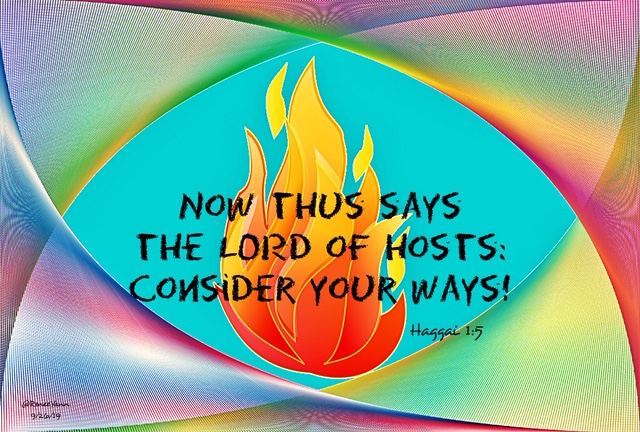
Consider your ways!
You have sown much, but have brought in little;
you have eaten, but have not been satisfied;
You have drunk, but have not been exhilarated;
have clothed yourselves, but not been warmed;
And whoever earned wages
earned them for a bag with holes in it.


The Temple, while it is important, isn’t the most important part of Haggai’s prophecy. He tells the people they have lost their souls. The lack of a central, shared faith has caused them to forget who they are. They will remember only when they remember God’s centrality in their lives.

Haggai appeals to the people to restore a public life which gives honor to God. For their time and circumstance, such a return is symbolized by the rebuilding of the Temple which had been destroyed at the time of their enslavement by Babylon.


We humans often forget what’s important. We chip away at, and ultimately destroy, what makes us who we are by little acts of faithlessness, deceit, covetousness, and envy. These small treacheries grow into big ones redeemable only by an impeachment of the soul and the renewal of a common moral purpose. Haggai offered that conversion to Israel. Pope Francis is offering it to us today.


Video: TED Talk by Pope Francis given at the Annual TED Conference in 2017 and pleading for a “Revolution of Tenderness”. (Yes, it’s long, but it is profound. When he delivered this talk, the Pope was given a standing ovation by some of the most prestigious business people of our time.)

https://www.npr.org/sections/thetwo-way/2017/04/26/525699847/in-surprise-ted-talk-pope-francis-asks-the-powerful-for-revolution-of-tenderness


Music: Come Back to Me – by Gregory Norbet, sung by John Michael Talbot