Today, in Mercy, our readings could be so reassuring about the power of our prayer, except …..
How often have you prayed
for something that you didn’t get?
Queen Esther – By Jean-François Portaels
In our reading from the Book of Esther, Esther certainly puts everything she has into her prayer for deliverance:
She lay prostrate upon the ground, together with her handmaids, from morning until evening, and said: “God of Abraham, God of Isaac, and God of Jacob, blessed are you. Help me, who am alone and have no help but you, for I am taking my life in my hand.
The passage, in isolation from the rest of the Book, might lead us to conclude that Esther’s prayer is simply about her asking for, and receiving, what she wants from God. It’s about much more.
Esther, like Christ, is in a position to save her people. She must risk her life to do so. She is praying for the courage to do God’s will, to look past her own comfort and become an agent of grace in her circumstances.
Now that’s some kind of prayer!
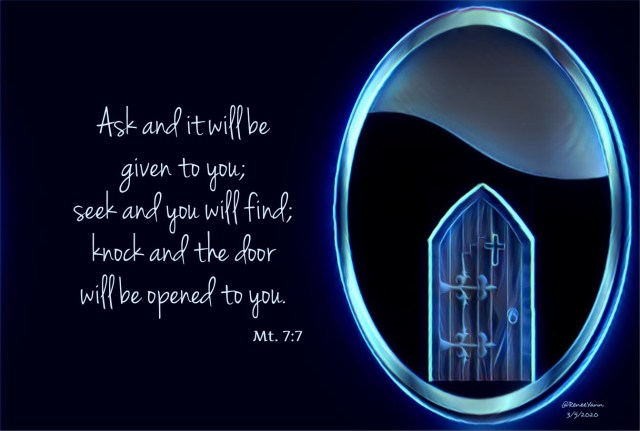
Prayer can be like looking in a mirror. All we see reflected back is our own need and desire. We don’t pray honestly and openly enough to let God open a door in the mirror – a door into God’s own will and hope for us.
That’s the door Jesus is talking about in today’s Gospel.
What we ASK is not just for something we want, but rather to know God’s heart.
What we SEEK is not our own satisfaction, but the grace to embrace God’s mysterious energy in our lives no matter how it comes to us.
What we KNOCK for and desire to be opened to us is deeper love and fuller relationship with our loving God.
Sometimes, the problem with prayer is that we think it’s like asking our rich uncle for a permanent loan. It’s only when we comprehend that prayer is a relationship that the RECEIVE, FIND, and OPENED parts become real for us.
Music: Prayer Is the Key to Heaven – Alan Brewster
( Uncharacteristically, I went old-time revival with this one — but I think the song has something to say. I hope you enjoy it, dear Friends. And for something more classically beautiful, see Handel’s piece below.)
Today, in Mercy, one line from our readings hit me like a lightening bolt:
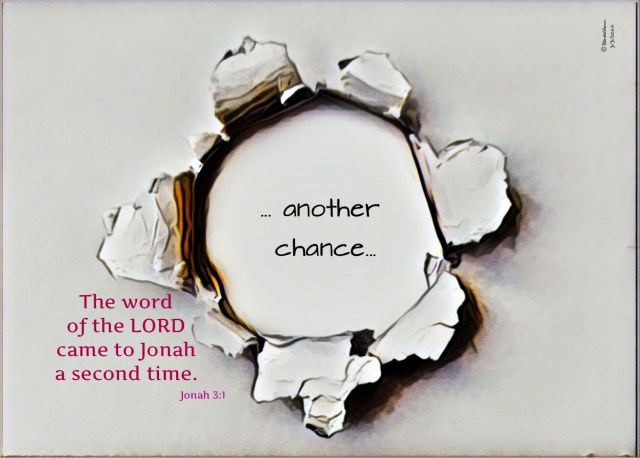
The word of the LORD came to Jonah a second time.
Yes, it’s the truth! God will keep coming back again and again to encourage us to hear his true message for our lives.
Our Gospel gives us a hint about how resistant we sometimes are to this deep listening:
This generation is an evil generation; it seeks a sign, but no sign will be given it, except the sign of Jonah.
What is the sign of Jonah anyway?
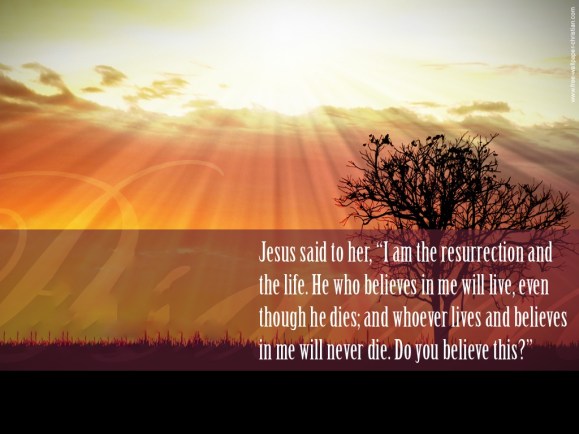
To put it simply, it is the witness of the Resurrection – that overarching event that changed everything for believers. For just as Jonah was able to return from certain death in the whale’s belly, so Christ conquered death and rose to new life, promising us the same power.
This is the central, life-changing belief for Christians. It should make a difference in how we live.
By our Lenten repentance, we can be like Jonah, grasping the second chance God always gives us to respond to our life circumstances with faith, hope, and love.
I would bet there is something in your life right now that is calling you to such a response. Someplace in your life, you may be caught in a bit of a “whale’s belly 🐳” about some issue, am I right?
God makes us ask ourselves questions most often when He intends to resolve them. He gives us needs that He alone can satisfy, and awakens capacities that He means to fulfill. Any perplexity is liable to be a spiritual gestation, leading to a new birth and a mystical regeneration.”― Thomas Merton, The Sign of Jonas
Today’s readings remind us that we already have the glorious sign of the Resurrection to inspire us to leap from that dark “belly” into God’s hope for us!
Music:a fun song “In the Belly ofWhale” – The Newsboys
Today, in Mercy, as I pray with today’s readings, I ask myself two questions:
“What has God’s Word accomplished in me?”
“What does God’s Word yet want to accomplish in me?”
If you’re like me, you’re always thinking about what you haven’t done, still must do, wish you had done.
STOP
Let’s STOP and praise our gracious God for the good accomplished through our lives. I know every one of you reading this blog is an amazingly good person. God has already done beautiful things through you. Thank God. Give God the glory.
Lyrics:
How can I say thanks
For the things You have done for me?
Things so undeserved,
Yet You gave to prove Your love for me;
The voices of a million angels
Could not express my gratitude.
All that I am and ever hope to be,
I owe it all to Thee.
To God be the glory,
To God be the glory,
To God be the glory
For the things He has done.
With His blood He has saved me,
With His power He has raised me;
To God be the glory
For the things He has done.
Just let me live my life,
Let it pleasing, Lord to Thee,
And if I gain any praise,
Let it go to Calvary.
And then ask to go on, to open up your heart, to see God’s next desire for your precious life.
For my young readers, give your dynamism to God’s imagination for you. There are great and holy things around every corner! Trust! Ride the grace-filled wave! Do not be afraid! Be a waterfall for God’s Word.
For some of us, as we get older, we do not have the physical energy to DO all that we once did. But oh, my dears, we can now BE more wonderful for God because of the long accumulation of his generous grace. Be a Well for God’s Word! Sink into grace! Do not be afraid!
For thus says the LORD: Just as from the heavens the rain and snow come down And do not return there till they have watered the earth, making it fertile and fruitful, Giving seed to the one who sows and bread to the one who eats, So shall my word be that goes forth from my mouth; It shall not return to me void, but shall do my will, achieving the end for which I sent it.
How amazing that promise is! Trust it! Let the Word transform you every day of your life.
Let’s consciously pray for one another today as today’s Gospel encourages us:
Our Father who art in heaven, hallowed be thy name, thy Kingdom come, thy will be done, on earth as it is in heaven. Give us this day our daily bread; and forgive us our trespasses, as we forgive those who trespass against us; and lead us not into temptation, but deliver us from evil.
Today, in Mercy, the deep undercurrent of our readings is about the power and difficulties of faith.
James talks about how our faith can be choked by the weeds of “bitter jealousy and selfish ambition”. These chokers make us “boast and be false to the truth”. They fill us with a “pretend wisdom” that is not from the Holy Spirit.
Praying with this passage, I asked myself why we allow these ugly constraints to grasp our souls when the alternative James describes is so beautiful:
… the wisdom from above is first of all pure, then peaceable, gentle, compliant, full of mercy and good fruits, without inconstancy or insincerity. And the fruit of righteousness is sown in peace for those who cultivate peace.
The Gospel helped me with an answer.
Unconditional faith is scary. It requires us to give control over to God. It asks us to let go of fear and to trust God’s Spirit within us. It needs us to empty our hearts of pretense and self-protection in order to make room for God’s transforming Mercy and Love.
This kind of faith will change us. It will make us “foolish” and insecure in worldly terms. It will cause us to live from a Wisdom the world misunderstands and mocks.
It’s hard to live that kind of faith. The dad in today’s Gospel admits it. He wants to have a faith that invites Christ’s power into his life. But he’s afraid. What if God wants something different for him and his son? What happens if he gives control over to God?
This yearning father confesses his ambivalence in a plea for Christ’s assistance:
We all find ourselves within that plea sometimes in our lives. It’s a faith of “if”, “maybe”, and “but” – all of which are hardly faith at all. Unconditional faith is “Yes”, no matter what. It is the place where Faith and Love merge.
Our faithful “Yes”, as the e.e.cummings poem might describe it:
love is a place
& through this place of
love move
(with brightness of peace)
all places
yes is a world
& in this world of
yes live
(skillfully curled)
all worlds
Music:When we live this “Yes Faith”, God’s love, God’s heart lives in us. This song by Michael Hedges, based on another poem by e.e.cummings, can be a prayer for us. We may be unused to calling God “my dear”, “my darling”. But a loving name for God can be helpful to our prayer. Substitute what works for you. Don’t be hesitant about being in love with God❤️
I Carry Your Heart – Michael Hedges (Lyrics below)
I carry your heart with me
I carry it in my heart
I am never without it
Anywhere i go you go, my dear
And whatever is done by only me
Is your doing, my darling.
I fear no fate
For you are my fate, my sweet
I want no world
For beautiful you are my world, my true
And it’s you are whatever a moon has always meant
And whatever a sun will always sing is you
Here is the deepest secret nobody knows
Here is the root of the root
And the bud of the bud
And the sky of the sky
Of a tree called life;
Which grows higher than the soul can hope
Or mind can hide
And this is the wonder that’s keeping the stars apart
I carry your heart
I carry it in my heart
Today, in Mercy, our readings focus us on how to live a good,honest, holy life.
Leviticus makes it simple:
But “simple” does not mean easy. Jesus makes that clear in the Gospel. He tells us that we may thinks it’s enough to love our neighbor by:
an “eye for an eye” justice
accepting that one slap on the cheek
giving over some of our possessions
serving them for the time they ask
But Jesus says, “No. Not enough!” We must go all in for love:
take no “eye”, no legal repayment
turn the other cheek
give both shirt AND jacket off your back
work twice as long and hard as demanded
Guess what? He’s not kidding. He goes on to double down on his words:
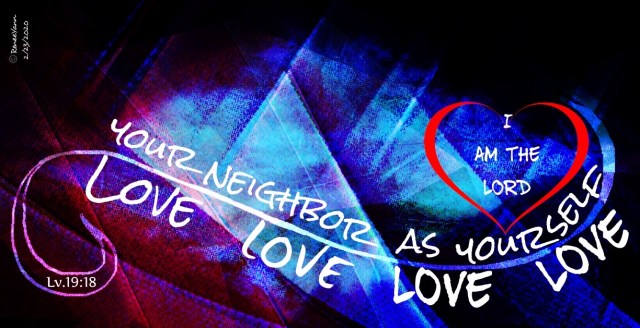
Don’t just love your neighbor as yourself, as Leviticus requires. Love your enemy that way too.
Do it because your Creator loves you, and all of us, that way — with Lavish Mercy.
Be that Mercy in the world.
Paul gives us an added incentive for living this challenge. He acknowledges that to live in Christian love and mercy seems foolish in the eyes of the world … BUT:
Let no one deceive himself. If any one among you considers himself wise in this age, let him become a fool, so as to become wise. For the wisdom of this world is foolishness in the eyes of God, for it is written: God catches the wise in their own ruses, and again: The Lord knows the thoughts of the wise,
that they are vain.
As I said at the outset, it’s simple, but it’s not easy. So much in our culture promotes the opposite approach to life – me first, exclude others, win at all costs, money matters over everything, use people and things then discard them, and on and on…..
Using our beautiful Responsorial Psalm, let us pray for the insight to see through to God’s Truth and Love, and for the courage to live them.
Music: The Lord Is Kind and Merciful – Jean Cotter
Refrain
The Lord is kind and merciful;
The Lord is kind and merciful.
Slow to anger, rich in kindness,
The Lord is kind and merciful.
Bless the Lord, O my soul;
All my being bless God’s name.
Bless the Lord, O my soul;
Forget not all God’s blessings.
The Lord is gracious and merciful,
Slow to anger, full of kindness.
God is good to all creation,
Full of compassion.
The goodness of God is from age to age,
Blessing those who choose to love.
And justice toward God’s children;
On all who keep the covenant.
Today, in Mercy, our reading is about God naming us.
The Apostle Peter – Rembrandt
We celebrate wonderful Saint Peter – so fully human, so fully holy, so fully in love with God! Today, as we pray with Peter’s naming, may we deepen in understanding our own naming by God.
I wrote about Peter like this on another of his feasts:
When Jesus asks Peter what he believes, Peter says,
“YOU ARE THE CHRIST, THE SON OF THE LIVING GOD.”
An ordinary man responding with a clear and extraordinary faith.
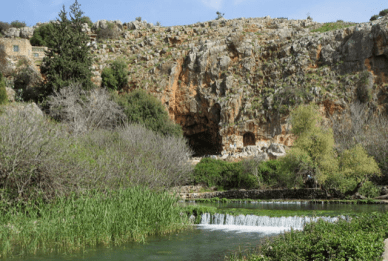
One June morning, about forty years ago, I sat in a sun-filled field in the Golan Heights of Israel at a spot called Caesarea Philippi. Thirty other pilgrims composed the group as we heard today’s Gospel being read. Listening, I watched the rising sun grow brilliant on the majestic rock face in the near distance.
I thought how Peter might have watched his day’s sun playing against the same powerful cliffs as Jesus spoke his name:
Jesus said to him,
You are Peter (which means “Rock”),
and upon this Rock
I will build my Church.
A few years later, I stood at the center of St. Peter’s Basilica in the Vatican. Looking up, I saw these words emblazoned around the awesome rotunda dome:
Tu es Petrus,
et super hanc petram
aedificabo ecclesiam.
On that lazy afternoon two-thousand years ago, Peter could never have imagined what God already saw for him. Yet, Peter responded – with his whole life. This is what makes a Saint.
Jesus calls us to be saints too. He lovingly speaks our name into a sacred future we cannot even imagine. But if, like Peter, we trust and believe, God does the rest.
Below the music is a powerful poem by John Poch. It captures the transformation of Peter’s humanness into God’s hope for him.
There are three things which are too wonderful for me, Yes, four which I do not understand. The way of an eagle in the air, The way of a serpent on a rock, The way of a ship in the heart of the sea, And the way of a man with a maid –Prov. 30:18, 19
I
Contagious as a yawn, denial poured over me like a soft fall fog, a girl on a carnation strewn parade float, waving at everyone and no one, boring and bored. There actually was a robed commotion parading. I turned and turned away and turned. A swirl
of wind pulled back my hood, a fire of coal brightened my face, and those around me whispered: You’re one of them, aren’t you? You smell like fish. And wine, someone else joked. That’s brutal. That’s cold, I said, and then they knew me by my speech. They let me stay and we told jokes like fisher-
men and houseboys. We gossiped till the cock crowed, his head a small volcano raised to mock stone.
II
Who could believe a woman’s word, perfumed in death? I did. I ran and was outrun before I reached the empty tomb. I stepped inside an empty shining shell of a room, sans pearl. I walked back home alone and wept again. At dinner. His face shone like the sun.
I went out into the night. I was a sailor and my father’s nets were calling. It was high tide, I brought the others. Nothing, the emptiness of business, the hypnotic waves of failure. But a voice from shore, a familiar fire, and the nets were full. I wouldn’t be outswum, denied
this time. The coal-fire before me, the netted fish behind. I’m carried where I will not wish.
Today, in Mercy, in this week and a half before Ash Wednesday, we begin the Epistle of James.
The Epistle of James- Chapter 1: Illustration provided to Wikimedia Commons by Distant Shores Media/Sweet Publishing as part of a cooperation project. Sweet Publishing released these images, which are taken from now-out-of-print Read’n Grow Picture Bible Illustrations (Biblical illustrations by Jim Padgett, courtesy of Sweet Publishing, Ft. Worth, TX, and Gospel Light, Ventura, CA. Copyright 1984.), under new license, CC-BY-SA 3.0
This letter is one of the very earliest of the New Testament. Scholars are mixed about exactly which “James” wrote it, but agree that it was one of several who were very close to Jesus – perhaps one of “the brothers of Jesus” mentioned in several New Testament passages:
Matthew 12:46-50
Mark 3:31
Luke 8:19
John 2:12
Acts 1:14
1 Corinthians 9:5
and specifically “the Lord’s brother James” in Galatians 1:19
James writes in the style of Wisdom Literature, those Old Testament books that give advice, proverbs, and insights for living a holy life. His immediate audience was a community of dispersed Christian Jews whose world was filled with increasing upheaval and persecution.
When I read the following description I thought how germane James’s letter could be for our world today. His themes echo the teachings of Pope Francis for our chaotic time:
The epistle is renowned for exhortions on fighting poverty and caring for the poor in practical ways (1:26–27; 2:1-4; 2:14-19; 5:1-6), standing up for the oppressed (2:1-4; 5:1-6) and not being “like the world” in the way one responds to evil in the world (1:26-27; 2:11; 3:13-18; 4:1-10). Worldly wisdom is rejected and people are exhorted to embrace heavenly wisdom, which includes peacemaking and pursuing righteousness and justice (3:13-18). (Jim Reiher, “Violent Language – a clue to the Historical Occasion of James.”Evangelical Quarterly. Vol. LXXXV No. 3. July 2013)
Be joyful in trials. (Wait! What!)
Let trials increase your perseverance not discourage you.
Doing this is a sign of wisdom.
When your wisdom is depleted, ask God for more with an open and trusting heart.
Honor all people, high or low in circumstances
Don’t be fooled by riches. They fade away.
In our Gospel, Jesus is frustrated with the Pharisees who insincerely demand a magical sign from him. They demonstrate none of the spiritual wisdom and openness to grace that James describes.
When we think about our own faith, where does it fall on the scale of sincerity, on the spectrum of counter-culturalism?
Today, in Mercy, our readings leave me wondering about what makes God tick.
In our first reading, God exacts justice for Solomon’s unfaithfulness, but He does it sort of like a prosecutor in a plea bargain.
I will deprive you of the kingdom … but not during your lifetime It is your son whom I will deprive … but I won’t take away the whole kingdom.
What’s going on with God in this reading? Well, it’s more like “What’s going on with the writer as he tries, retrospectively, to interpret God’s role in Israel’s history?”
The passage is much more than a report on exchanges between God and Solomon.
It is a testament to Israel’s unwavering faith that God is intimately involved in their lives. In every circumstance, the believing community returns to the fact that experience leads to God and not away from Him.
So “Solomon … had TURNED his heart to strange gods” BUT God had not turned from Solomon. Nor would God EVER turn because God has CHOSEN Israel.
In our Gospel, the Syrophoenician woman tries to get the favor of Jesus to turn toward her. And actually, Jesus sounds pretty mean and stingy about it.
Again the writer Mark is portraying, retrospectively, a significant time in Christ’s ministry. Jesus has really gone into hiding in a remote place. Apparently, he wants space to figure some things out. The story indicates that one of those things might be whether or not his ministry should embrace the Gentiles.
The persistence of this woman’s faith is a turning point for Jesus Who evolved, as we all do, in his understanding of his sacred role and meaning in the world.
These passages encourage us to constantly turn toward God Who lives our life with us. Such conversation helps us to grow spiritually. As we become bigger in heart and soul, so does our concept of God and what God’s hope is for us.
Music: Perfect Wisdom of Our God – The Gettys (See poem after music video)
All this “turning” brought to mind some favorites lines from T.S. Eliot:
At the still point of the turning world. Neither flesh nor fleshless; Neither from nor towards; at the still point, there the dance is, But neither arrest nor movement. And do not call it fixity, Where past and future are gathered. Neither movement from nor towards, Neither ascent nor decline. Except for the point, the still point, There would be no dance, and there is only the dance.
I happened across a website where Eliot himself reads “Burnt Norton”, the poem from which these lines are taken. Eliot fans might enjoy this. Eliot’s poems take time and work as well as simple reading. But the effort is so worth it!
Time present and time past
Are both perhaps present in time future
And time future contained in time past.
If all time is eternally present
All time is unredeemable.
What might have been is an abstraction
Remaining a perpetual possibility
Only in a world of speculation.
What might have been and what has been
Point to one end, which is always present.
Footfalls echo in the memory
Down the passage which we did not take
Towards the door we never opened
Into the rose-garden. My words echo
Thus, in your mind.
But to what purpose
Disturbing the dust on a bowl of rose-leaves
I do not know.
Other echoes
Inhabit the garden. Shall we follow?
Quick, said the bird, find them, find them,
Round the corner. Through the first gate,
Into our first world, shall we follow
The deception of the thrush? Into our first world.
There they were, dignified, invisible,
Moving without pressure, over the dead leaves,
In the autumn heat, through the vibrant air,
And the bird called, in response to
The unheard music hidden in the shrubbery,
And the unseen eyebeam crossed, for the roses
Had the look of flowers that are looked at.
There they were as our guests, accepted and accepting.
So we moved, and they, in a formal pattern,
Along the empty alley, into the box circle,
To look down into the drained pool.
Dry the pool, dry concrete, brown edged,
And the pool was filled with water out of sunlight,
And the lotos rose, quietly, quietly,
The surface glittered out of heart of light,
And they were behind us, reflected in the pool.
Then a cloud passed, and the pool was empty.
Go, said the bird, for the leaves were full of children,
Hidden excitedly, containing laughter.
Go, go, go, said the bird: human kind
Cannot bear very much reality.
Time past and time future
What might have been and what has been
Point to one end, which is always present.
II
Garlic and sapphires in the mud
Clot the bedded axle-tree.
The trilling wire in the blood
Sings below inveterate scars
Appeasing long forgotten wars.
The dance along the artery
The circulation of the lymph
Are figured in the drift of stars
Ascend to summer in the tree
We move above the moving tree
In light upon the figured leaf
And hear upon the sodden floor
Below, the boarhound and the boar
Pursue their pattern as before
But reconciled among the stars.
At the still point of the turning world. Neither flesh nor fleshless;
Neither from nor towards; at the still point, there the dance is,
But neither arrest nor movement. And do not call it fixity,
Where past and future are gathered. Neither movement from nor towards,
Neither ascent nor decline. Except for the point, the still point,
There would be no dance, and there is only the dance.
I can only say, there we have been: but I cannot say where.
And I cannot say, how long, for that is to place it in time.
The inner freedom from the practical desire,
The release from action and suffering, release from the inner
And the outer compulsion, yet surrounded
By a grace of sense, a white light still and moving,
Erhebung without motion, concentration
Without elimination, both a new world
And the old made explicit, understood
In the completion of its partial ecstasy,
The resolution of its partial horror.
Yet the enchainment of past and future
Woven in the weakness of the changing body,
Protects mankind from heaven and damnation
Which flesh cannot endure.
Time past and time future
Allow but a little consciousness.
To be conscious is not to be in time
But only in time can the moment in the rose-garden,
The moment in the arbour where the rain beat,
The moment in the draughty church at smokefall
Be remembered; involved with past and future.
Only through time time is conquered.
III
Here is a place of disaffection
Time before and time after
In a dim light: neither daylight
Investing form with lucid stillness
Turning shadow into transient beauty
Wtih slow rotation suggesting permanence
Nor darkness to purify the soul
Emptying the sensual with deprivation
Cleansing affection from the temporal.
Neither plentitude nor vacancy. Only a flicker
Over the strained time-ridden faces
Distracted from distraction by distraction
Filled with fancies and empty of meaning
Tumid apathy with no concentration
Men and bits of paper, whirled by the cold wind
That blows before and after time,
Wind in and out of unwholesome lungs
Time before and time after.
Eructation of unhealthy souls
Into the faded air, the torpid
Driven on the wind that sweeps the gloomy hills of London,
Hampstead and Clerkenwell, Campden and Putney,
Highgate, Primrose and Ludgate. Not here
Not here the darkness, in this twittering world.
Descend lower, descend only
Into the world of perpetual solitude,
World not world, but that which is not world,
Internal darkness, deprivation
And destitution of all property,
Dessication of the world of sense,
Evacuation of the world of fancy,
Inoperancy of the world of spirit;
This is the one way, and the other
Is the same, not in movement
But abstention from movement; while the world moves
In appetency, on its metalled ways
Of time past and time future.
IV
Time and the bell have buried the day,
the black cloud carries the sun away.
Will the sunflower turn to us, will the clematis
Stray down, bend to us; tendril and spray
Clutch and cling?
Chill
Fingers of yew be curled
Down on us? After the kingfisher’s wing
Has answered light to light, and is silent, the light is still
At the still point of the turning world.
V
Words move, music moves
Only in time; but that which is only living
Can only die. Words, after speech, reach
Into the silence. Only by the form, the pattern,
Can words or music reach
The stillness, as a Chinese jar still
Moves perpetually in its stillness.
Not the stillness of the violin, while the note lasts,
Not that only, but the co-existence,
Or say that the end precedes the beginning,
And the end and the beginning were always there
Before the beginning and after the end.
And all is always now. Words strain,
Crack and sometimes break, under the burden,
Under the tension, slip, slide, perish,
Will not stay still. Shrieking voices
Scolding, mocking, or merely chattering,
Always assail them. The Word in the desert
Is most attacked by voices of temptation,
The crying shadow in the funeral dance,
The loud lament of the disconsolate chimera.
The detail of the pattern is movement,
As in the figure of the ten stairs.
Desire itself is movement
Not in itself desirable;
Love is itself unmoving,
Only the cause and end of movement,
Timeless, and undesiring
Except in the aspect of time
Caught in the form of limitation
Between un-being and being.
Sudden in a shaft of sunlight
Even while the dust moves
There rises the hidden laughter
Of children in the foliage
Quick now, here, now, always —
Ridiculous the waste sad time
Stretching before and after.
Today, in Mercy, “journey” is a central theme. David takes his final journey after commissioning his son Solomon as his successor. In our Gospel, Jesus commissions the disciples for their first missionary journey.
Each of these journeys has its own “baggage requirements”.
David’s situation is easy and can be stated in a phrase we are all familiar with:
“You can’t take it with you.”
The writer of Job expresses the same sentiment:
And Job said,
“Naked I came from my mother’s womb,
and naked shall I return.
The LORD gave,
and the LORD has taken away;
blessed be the name of the LORD.” Job 1:2
It’s a lesson we seem to have a hard time learning. Whenever I pack for a trip, the challenge resurfaces.
For anyone wondering, yes this is actually me at the airport, except for the heels! 🙂
Back in my early days of flying, when there were no baggage fees, some passengers took everything but the kitchen sink on their journeys. I have a clear picture of petite women hauling suitcases bigger than themselves over to the check-in counter.
Often in life we carry a lot of baggage we don’t need. Some of it is good stuff we just can’t part with, and some of it is junk we should have tossed long ago. The point is that it’s all weight we don’t need if we want to reach our desired destination easily.
Jesus drives that point home to his disciples in today’s Gospel:
He instructed them to take nothing for the journey but a walking stick – no food, no sack, no money in their belts.
Now that’s a pretty stringent packing list! So what might it mean for our spiritual journey?
Let’s ask ourselves this:
What weighs me down from being a loving, generous, just and merciful person?
Are there things I won’t let go of because I am fearful, insecure, or selfish?
When the disciples heeded Jesus’s advice, their ensuing freedom made them capable of miracles. Might such courage do the same thing for us?
Music: Have a little fun this morning with this great old country song. Apologies to all grammarians who will spot the blatant contradiction in the title!
I Wouldn’t Take Nothing for My Journey Now – Goodman Revival
Refrain:
Well, I wouldn’t take nothin’ for my journey now
Gotta make it to Heaven somehow
Though the devil tempt me and he tried to turn me around
He’s offered everything that’s got a name
All the wealth I want and worldly fame
If I could still I wouldn’t take nothin’ for my journey now
Well, I started out travellin’ for the Lord many years ago
I’ve had a lot of heartache and I met a lot of grief and woe
But when I would stumble then I would humble down
And there I’d say, I wouldn’t take nothin’ for my journey now
Oh, there’s nothin’ in this world that’ll ever take the place of God’s love
All the silver and gold wouldn’t buy a touch from above
When the soul needs healin’ and I begin to feelin’ His power
Then I can say, thank the Lord, I wouldn’t take nothing for my journey now
Oh, I wouldn’t take nothin’ for my journey now
Gotta make it to Heaven somehow
Though the devil tempts me and he tried to turn me around
He’s offered everything that’s got a name
All the wealth I want and worldly fame
If I could still I wouldn’t take nothin’ for my journey now.
Today, in Mercy, we begin with a reading from the prophet Malachi, a hurler of fire and brimstone in the 4th-5th century before Christ. It’s an interesting choice and begs the question of how it relates to this Feast when a little baby comes to be blessed in the Temple.
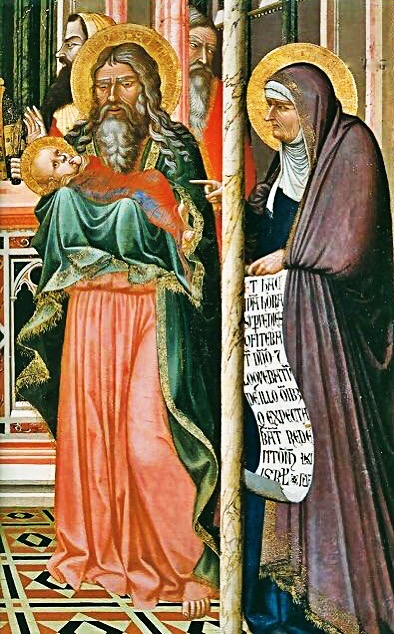
Presentation of Our Lord – Ambrogio Lorenzetti (Wikipedia.org_ not for commercial use)
Ah, perhaps that’s the hinge – the Temple, both actual and symbolic.
Malachi writes at a time when the second Temple has been restored. In other words, God is about giving the people a second chance to behave according to the Covenant. But they’re not doing such a good job — especially those in charge, the priests:
A son honors his father, and a servant fears his master; If, then, I am a father, where is the honor due to me? And if I am a master, where is the fear due to me? So says the LORD of hosts to you, O priests, who disdain my name. Malachi 1:6
A Little Extra Music: Handel – But Who May Abide (You know you have time to listen just before the Super Bowl!)
Through a series of prophetic oracles, Malachi admonishes the people to repent before it is too late because no unrepentant soul will withstand the judgement.
Yes, he is coming, says the LORD of hosts. But who will endure the day of his coming? And who can stand when he appears? For he is like the refiner’s fire, or like the fuller’s lye.
In the passage from Hebrews, Paul presents the perfect priest, Jesus Christ. In taking flesh, Christ’s Body becomes the new Temple of our redemption. We stand before judgement already saved by his Passion, Death, and Resurrection.
In our Gospel, two aged and venerable prophets wait in the Temple for the Promised One. Their long years of prayer have already proven them faithful. Now, Simeon’s and Anna’s long and complete fidelity is rewarded by seeing their Savior. They know Him because they have already created a place for him in the Temple of their hearts. Now, they will meet their judgement in total peace. As Simeon’s prays:
“Now, Master, you may let your servant go in peace, according to your word, for my eyes have seen your salvation, which you prepared in the sight of all the peoples: a light for revelation to the Gentiles, and glory for your people Israel.”
It’s a beautiful, total-hearted prayer!Don’t we all hope to be able to offer it one day?
Music: Nunc Dimittis – Taizé (Latin and English text below)
Nunc dimittis servum tuum, Now dismiss your servant Domine, Domine, Lord, Lord, Secundum verbum tuum in pace. according to your word in peace Domine. Lord.



 For some of us, as we get older, we do not have the physical energy to DO all that we once did. But oh, my dears, we can now BE more wonderful for God because of the long accumulation of his generous grace. Be a Well for God’s Word! Sink into grace! Do not be afraid!





 And Job said,

 Lavish Mercy