Turn, Turn, Turn!

Thursday of the Fifth Week in Ordinary Time

February 13, 2020

Click here for readings

Today, in Mercy, our readings leave me wondering about what makes God tick.

In our first reading, God exacts justice for Solomon’s unfaithfulness, but He does it sort of like a prosecutor in a plea bargain.

I will deprive you of the kingdom … but not during your lifetime
It is your son whom I will deprive … but I won’t take away the whole kingdom.

What’s going on with God in this reading? Well, it’s more like “What’s going on with the writer as he tries, retrospectively, to interpret God’s role in Israel’s history?

The passage is much more than a report on exchanges between God and Solomon.

It is a testament to Israel’s unwavering faith that God is intimately involved in their lives. In every circumstance, the believing community returns to the fact that experience leads to God and not away from Him.

So “Solomon … had TURNED his heart to strange gods”
BUT God had not turned from Solomon.
Nor would God EVER turn because
God has CHOSEN Israel.


In our Gospel, the Syrophoenician woman tries to get the favor of Jesus to turn toward her. And actually, Jesus sounds pretty mean and stingy about it.

Again the writer Mark is portraying, retrospectively, a significant time in Christ’s ministry. Jesus has really gone into hiding in a remote place. Apparently, he wants space to figure some things out. The story indicates that one of those things might be whether or not his ministry should embrace the Gentiles.

The persistence of this woman’s faith is a turning point for Jesus Who evolved, as we all do, in his understanding of his sacred role and meaning in the world.

These passages encourage us to constantly turn toward God Who lives our life with us. Such conversation helps us to grow spiritually. As we become bigger in heart and soul, so does our concept of God and what God’s hope is for us.

Music: Perfect Wisdom of Our God – The Gettys (See poem after music video)


All this “turning” brought to mind some favorites lines from T.S. Eliot:


At the still point of the turning world. Neither flesh nor fleshless;
Neither from nor towards; at the still point, there the dance is,
But neither arrest nor movement. And do not call it fixity,
Where past and future are gathered. Neither movement from nor towards,
Neither ascent nor decline. Except for the point, the still point,
There would be no dance, and there is only the dance.


I happened across a website where Eliot himself reads “Burnt Norton”, the poem from which these lines are taken. Eliot fans might enjoy this. Eliot’s poems take time and work as well as simple reading.  But the effort is so worth it!

Time present and time past
Are both perhaps present in time future
And time future contained in time past.
If all time is eternally present
All time is unredeemable.
What might have been is an abstraction
Remaining a perpetual possibility
Only in a world of speculation.
What might have been and what has been
Point to one end, which is always present.
Footfalls echo in the memory
Down the passage which we did not take
Towards the door we never opened
Into the rose-garden. My words echo
Thus, in your mind.
But to what purpose
Disturbing the dust on a bowl of rose-leaves
I do not know.
Other echoes
Inhabit the garden. Shall we follow?
Quick, said the bird, find them, find them,
Round the corner. Through the first gate,
Into our first world, shall we follow
The deception of the thrush? Into our first world.
There they were, dignified, invisible,
Moving without pressure, over the dead leaves,
In the autumn heat, through the vibrant air,
And the bird called, in response to
The unheard music hidden in the shrubbery,
And the unseen eyebeam crossed, for the roses
Had the look of flowers that are looked at.
There they were as our guests, accepted and accepting.
So we moved, and they, in a formal pattern,
Along the empty alley, into the box circle,
To look down into the drained pool.
Dry the pool, dry concrete, brown edged,
And the pool was filled with water out of sunlight,
And the lotos rose, quietly, quietly,
The surface glittered out of heart of light,
And they were behind us, reflected in the pool.
Then a cloud passed, and the pool was empty.
Go, said the bird, for the leaves were full of children,
Hidden excitedly, containing laughter.
Go, go, go, said the bird: human kind
Cannot bear very much reality.
Time past and time future
What might have been and what has been
Point to one end, which is always present.

II

Garlic and sapphires in the mud
Clot the bedded axle-tree.
The trilling wire in the blood
Sings below inveterate scars
Appeasing long forgotten wars.
The dance along the artery
The circulation of the lymph
Are figured in the drift of stars
Ascend to summer in the tree
We move above the moving tree
In light upon the figured leaf
And hear upon the sodden floor
Below, the boarhound and the boar
Pursue their pattern as before
But reconciled among the stars.

At the still point of the turning world. Neither flesh nor fleshless;
Neither from nor towards; at the still point, there the dance is,
But neither arrest nor movement. And do not call it fixity,
Where past and future are gathered. Neither movement from nor towards,
Neither ascent nor decline. Except for the point, the still point,
There would be no dance, and there is only the dance.
I can only say, there we have been: but I cannot say where.
And I cannot say, how long, for that is to place it in time.
The inner freedom from the practical desire,
The release from action and suffering, release from the inner
And the outer compulsion, yet surrounded
By a grace of sense, a white light still and moving,
Erhebung without motion, concentration
Without elimination, both a new world
And the old made explicit, understood
In the completion of its partial ecstasy,
The resolution of its partial horror.
Yet the enchainment of past and future
Woven in the weakness of the changing body,
Protects mankind from heaven and damnation
Which flesh cannot endure.
Time past and time future
Allow but a little consciousness.
To be conscious is not to be in time
But only in time can the moment in the rose-garden,
The moment in the arbour where the rain beat,
The moment in the draughty church at smokefall
Be remembered; involved with past and future.
Only through time time is conquered.

III

Here is a place of disaffection
Time before and time after
In a dim light: neither daylight
Investing form with lucid stillness
Turning shadow into transient beauty
Wtih slow rotation suggesting permanence
Nor darkness to purify the soul
Emptying the sensual with deprivation
Cleansing affection from the temporal.
Neither plentitude nor vacancy. Only a flicker
Over the strained time-ridden faces
Distracted from distraction by distraction
Filled with fancies and empty of meaning
Tumid apathy with no concentration
Men and bits of paper, whirled by the cold wind
That blows before and after time,
Wind in and out of unwholesome lungs
Time before and time after.
Eructation of unhealthy souls
Into the faded air, the torpid
Driven on the wind that sweeps the gloomy hills of London,
Hampstead and Clerkenwell, Campden and Putney,
Highgate, Primrose and Ludgate. Not here
Not here the darkness, in this twittering world.

Descend lower, descend only
Into the world of perpetual solitude,
World not world, but that which is not world,
Internal darkness, deprivation
And destitution of all property,
Dessication of the world of sense,
Evacuation of the world of fancy,
Inoperancy of the world of spirit;
This is the one way, and the other
Is the same, not in movement
But abstention from movement; while the world moves
In appetency, on its metalled ways
Of time past and time future.

IV

Time and the bell have buried the day,
the black cloud carries the sun away.
Will the sunflower turn to us, will the clematis
Stray down, bend to us; tendril and spray
Clutch and cling?
Chill
Fingers of yew be curled
Down on us? After the kingfisher’s wing
Has answered light to light, and is silent, the light is still
At the still point of the turning world.

V

Words move, music moves
Only in time; but that which is only living
Can only die. Words, after speech, reach
Into the silence. Only by the form, the pattern,
Can words or music reach
The stillness, as a Chinese jar still
Moves perpetually in its stillness.
Not the stillness of the violin, while the note lasts,
Not that only, but the co-existence,
Or say that the end precedes the beginning,
And the end and the beginning were always there
Before the beginning and after the end.
And all is always now. Words strain,
Crack and sometimes break, under the burden,
Under the tension, slip, slide, perish,
Will not stay still. Shrieking voices
Scolding, mocking, or merely chattering,
Always assail them. The Word in the desert
Is most attacked by voices of temptation,
The crying shadow in the funeral dance,
The loud lament of the disconsolate chimera.

The detail of the pattern is movement,
As in the figure of the ten stairs.
Desire itself is movement
Not in itself desirable;
Love is itself unmoving,
Only the cause and end of movement,
Timeless, and undesiring
Except in the aspect of time
Caught in the form of limitation
Between un-being and being.
Sudden in a shaft of sunlight
Even while the dust moves
There rises the hidden laughter
Of children in the foliage
Quick now, here, now, always —
Ridiculous the waste sad time
Stretching before and after.

Got Baggage?

Memorial of Saint Paul Miki and Companions, martyrs

February 6, 2020

Click here for readings

Today, in Mercy, “journey” is a central theme. David takes his final journey after commissioning his son Solomon as his successor. In our Gospel, Jesus commissions the disciples for their first missionary journey.

Each of these journeys has its own “baggage requirements”.


David’s situation is easy and can be stated in a phrase we are all familiar with:

“You can’t take it with you.”

The writer of Job expresses the same sentiment:

chick-154490_960_720And Job said,
“Naked I came from my mother’s womb,
and naked shall I return.
The LORD gave,
and the LORD has taken away;
blessed be the name of the LORD.”
Job 1:2


It’s a lesson we seem to have a hard time learning. Whenever I pack for a trip, the challenge resurfaces.

baggage
For anyone wondering, yes this is actually me at the airport, except for the heels! 🙂

Back in my early days of flying, when there were no baggage fees, some passengers took everything but the kitchen sink on their journeys. I have a clear picture of petite women hauling suitcases bigger than themselves over to the check-in counter.

Often in life we carry a lot of baggage we don’t need. Some of it is good stuff we just can’t part with, and some of it is junk we should have tossed long ago. The point is that it’s all weight we don’t need if we want to reach our desired destination easily.


Mk6_8journey
Jesus drives that point home to his disciples in today’s Gospel:

He instructed them to take nothing for the journey but a walking stick
– no food, no sack, no money in their belts.


Now that’s a pretty stringent packing list! So what might it mean for our spiritual journey?

Let’s ask ourselves this:

  • What weighs me down from being a loving, generous, just and merciful person?
  • Are there things I won’t let go of because I am fearful, insecure, or selfish?

When the disciples heeded Jesus’s advice, their ensuing freedom made them capable of miracles. Might such courage do the same thing for us?


Music: Have a little fun this morning with this great old country song. Apologies to all grammarians who will spot the blatant contradiction in the title!
I Wouldn’t Take Nothing for My Journey Now – Goodman Revival

Refrain:
Well, I wouldn’t take nothin’ for my journey now
Gotta make it to Heaven somehow
Though the devil tempt me and he tried to turn me around
He’s offered everything that’s got a name
All the wealth I want and worldly fame
If I could still I wouldn’t take nothin’ for my journey now

Well, I started out travellin’ for the Lord many years ago
I’ve had a lot of heartache and I met a lot of grief and woe
But when I would stumble then I would humble down
And there I’d say, I wouldn’t take nothin’ for my journey now

Oh, there’s nothin’ in this world that’ll ever take the place of God’s love
All the silver and gold wouldn’t buy a touch from above
When the soul needs healin’ and I begin to feelin’ His power
Then I can say, thank the Lord, I wouldn’t take nothing for my journey now

Oh, I wouldn’t take nothin’ for my journey now
Gotta make it to Heaven somehow
Though the devil tempts me and he tried to turn me around
He’s offered everything that’s got a name
All the wealth I want and worldly fame
If I could still I wouldn’t take nothin’ for my journey now.

It’s All About the Temple

Feast of the Presentation of the Lord

February 2, 2020

Click here for readings

Today, in Mercy, we begin with a reading from the prophet Malachi, a hurler of fire and brimstone in the 4th-5th century before Christ. It’s an interesting choice and begs the question of how it relates to this Feast when a little baby comes to be blessed in the Temple.

Presentation of Our Lord
Presentation of Our Lord – Ambrogio Lorenzetti (Wikipedia.org_ not for commercial use)

Ah, perhaps that’s the hinge – the Temple, both actual and symbolic.

Malachi writes at a time when the second Temple has been restored. In other words, God is about giving the people a second chance to behave according to the Covenant. But they’re not doing such a good job — especially those in charge, the priests:

A son honors his father,
and a servant fears his master;
If, then, I am a father,
where is the honor due to me?
And if I am a master,
where is the fear due to me?
So says the LORD of hosts to you, O priests,
who disdain my name.
Malachi 1:6

A Little Extra Music: Handel – But Who May Abide (You know you have time to listen just before the Super Bowl!)

Through a series of prophetic oracles, Malachi admonishes the people to repent before it is too late because no unrepentant soul will withstand the judgement.

Yes, he is coming, says the LORD of hosts.
But who will endure the day of his coming?
And who can stand when he appears?
For he is like the refiner’s fire,
or like the fuller’s lye.


In the passage from Hebrews, Paul presents the perfect priest, Jesus Christ. In taking flesh, Christ’s Body becomes the new Temple of our redemption. We stand before judgement already saved by his Passion, Death, and Resurrection.


In our Gospel, two aged and venerable prophets wait in the Temple for the Promised One. Their long years of prayer have already proven them faithful. Now, Simeon’s and Anna’s long and complete fidelity is rewarded by seeing their Savior. They know Him because they have already created a place for him in the Temple of their hearts. Now, they will meet their judgement in total peace. As Simeon’s prays:

“Now, Master, you may let your servant go
in peace, according to your word,
for my eyes have seen your salvation,
which you prepared in the sight of all the peoples:
a light for revelation to the Gentiles,
and glory for your people Israel.”

It’s a beautiful, total-hearted prayer!  Don’t we all hope to be able to offer it one day?

( I wrote an earlier reflection about dear Anna.  You might like to see it again here:

Music: Nunc Dimittis – Taizé (Latin and English text below)

Nunc dimittis servum tuum,
Now dismiss your servant
Domine, Domine,
Lord, Lord,
Secundum verbum tuum in pace.
according to your word in peace
Domine.
Lord.

God loves …. always!

Saturday of the Third Week in Ordinary Time

February 1, 2020

Click here for readings

Today, in Mercy, David gets his comeuppance after his sinful forays.

david weeps
David Weeps – wikipedia.org – not for commercial use

The passage is hard to deal with. It suggests that God is vengeful, and gets us back for going against him. That’s not the God Who loves me.

Like much of the Old Testament, the writer is interpreting the circumstances of life in order to teach a lesson. The lesson here is not that God is a payback God. The core lesson is that our choices have repercussions, and should always be made in the light of God’s hope for us.

Sometimes in our own lives, we think of God as reacting in a human way to us – getting angry, forgetting us, paying us back, testing us, punishing us. Like the disciples in today’s storm-tossed boat, our faith is weak and maybe misdirected.

God is Love, and Love only. God is NEVER “I’ll getcha’ “. Deep faith directs us to find God’s love – God’s continuing call to intimacy – in every circumstance of our lives. 

God didn’t kill David’s illegitimate son. It just happened, the way so much of life happens. We can blame God if we want to, but we’re missing the point. 

The point is that God is with us in the inevitable joys and sorrows of our lives saying, as he did to his distraught shipmates:

“Why are you terrified?
Do you not yet have faith?”

Ps51

Our Gospel assures us that God is with us, “sleeping” even in our rocky boat. By faith and prayer, we “wake God”, as we actually wake ourselves to the truth of God’s immutable, loving Presence in our lives.

Music:  You Raise Me Up – Selah

Facing the Demons

Monday of the Third Week in Ordinary Time

January 27, 2020

Click here for readings

(Sorry for the late post.  I had a brief episode of social life this afternoon. 🙂 )

Today, in Mercy, our readings talk about the polar opposites of unity and division.

Our first reading gives us David, embraced by his kinsmen, and anointed King. Strong in his unified reign, David leads his people to victory over all their enemies. His is the idyllic kingdom – the “Camelot” of the Old Testament.

Then Mark gives us Jesus, of whom David was but a pale foreshadowing. Today’s passage follows the incident in which Jesus’s kinsmen, rather than embrace him, try to “seize”him because they think he’s “out of his mind”.

Clearly, the Kingdom of Mercy for sinners and outcasts is not as acceptable as David’s kingdom of prosperity and military might. Jesus had a hard sell on his hands as his listeners have their old definitions and expectations shattered. His family can’t accept his challenge – they think he’s crazy. And now his neighbors say he is possessed by the devil!

Pretty dispiriting for Jesus, right? 

No way! Here, very early in Mark, Jesus – despite challenge – emerges as “the stronger one”:

But no one can enter a strong man’s house to plunder his property
unless he first ties up the strong man.

Jesus’s strength lies in his Oneness with the Father and the Holy Spirit, the Divine Community that embraces and inspires his mission. Human rejection, even in the ultimate form of Calvary, will not change or diminish his Truth.

Mk3_29 demons


When Jesus talks about blaspheming against the Holy Spirit, it is that kind of rejection he is describing – that place where a human heart is hardened against an abandonment to grace.

Here the sin is unforgivable because those who charge Jesus
with demonic possession see goodness as evil, and therefore
are closed to the action of God’s Spirit. This makes sense for
Mark’s readers only in terms of the preceding narrative
where Jesus, endowed with the Spirit, preaches the good news of God.  The unforgivable sin in biblical thought is similar to “hardness of heart”.

The Gospel of Mark ~ John R. Donahue, SJ, Daniel J. Harrington, SJ


Today’s Gospel reminds us to continually purify that inner heart where God wants to dwell in us. The demons that would petrify us are often more subtle than the ones in our Gospel story. They masquerade under the guise of a false “gospel” that fails to require our inner conversion to mercy, justice and love.

May we pray with today’s Responsorial Psalm that God’s faithfulness and mercy guide us as we seek to deepen in the Mystery of Christ.

Music: Deeper – Hillsong

Fill the World with Love

Memorial of Saint Francis de Sales, bishop and doctor of the Church

January 24, 2020

Click here for readings

Today, in Mercy, David spares Saul’s life even though Saul is in murderous pursuit of him. (Here is a video for kids featuring the moment. But I thought it was pretty cool. Maybe you will too.)

Is David noble or naïve? Is he magnanimous or stupid? As I pray this morning, I ask myself what it is that God might be saying to me through this passage.

Two things rise up:

  1. Above all else, David is motivated by a deep respect for God’s Will and Presence in his life.

David said to his men,
“The LORD forbid that I should do such a thing to my master,
the LORD’s anointed, as to lay a hand on him,
for he is the LORD’s anointed.”

    2.  David engages Saul directly and respectfully in the hope of reaching a resolution of    their issues.

When David finished saying these things to Saul, Saul answered,
“Is that your voice, my son David?”
And Saul wept aloud.

Reverence and honesty rooted in sincere love and respect for one another! What a world we would live in if each of us practiced these things unfailingly!


In our Gospel, Jesus calls his disciples to live in the world in just such a way – to bring healing and wholeness in the Name of Christ, for the sake of Love.

Our Alleluia Verse today captures the essence of Christ’s call to them —- and to us:

God was reconciling the world to himself in Christ,
and entrusting to us the message of that reconciliation.


Music: To Fill the World with Love sung by Richard Harris
(Lyrics below, but you will no doubt recall them from the fabulous film “Goodbye Mr. Chips”.)

In the morning of my life I shall look to the sunrise.
At a moment in my life when the world is new.
And the blessing I shall ask is that God will grant me,
To be brave and strong and true,
And to fill the world with love my whole life through.

And to fill the world with love
And to fill the world with love my whole life through

In the noontime of my life I shall look to the sunshine,
At a moment in my life when the sky is blue.
And the blessing I shall ask shall remain unchanging.
To be brave and strong and true,
And to fill the world with love my whole life through

In the evening of my life I shall look to the sunset,
At a moment in my life when the night is due.
And the question I shall ask only You can answer.
Was I brave and strong and true?
Did I fill the world with love my whole life through?

The Green-Eyed Monster

Thursday of the Second Week in Ordinary Time

January 23, 2020

Click here for readings

Today, in Mercy, both David and Jesus deal with the effects of immense popularity.

jealous

In David’s case, Saul is so jealous and threatened by David’s military success that he plots to murder him. Saul’s son Jonathan, David’s dear friend intervenes to turn his father’s evil intention. Ultimately though, Saul remains a man destroyed by jealousy.


green eye

Jealousy is aptly characterized as the “Green-Eyed Monster”:

The phrase ‘green-eyed jealousy’ was used by, and possibly coined by, Shakespeare to denote jealousy, in The Merchant of Venice, 1596.

In Othello, 1604, Shakespeare refers explicitly to the ‘green-eyed monster’ as jealousy when treacherous Iago counsels Othello:

O, beware, my lord, of jealousy;
It is the green-eyed monster which doth mock
The meat it feeds on; that cuckold lives in bliss
Who, certain of his fate, loves not his wronger;
But, O, what damned minutes tells he o’er
Who dotes, yet doubts, suspects, yet strongly loves!


These powerful words capture what it is like to feel, or to be the object of, jealousy – a feeling which grows out of one’s own insecurity. But since it is a feeling, it is not a sin. It is when we act on our jealousy, as Saul planned to do, that we sin.

I think, at sometime in our lives, most of us have experienced jealousy- either as donor or recipient. How we responded either fortified or eroded our character. Sincere reflection on those responses can continue to help us grow in charity.

Thinking about that, I benefitted from reading this passage from the Catholic Encyclopedia:

Jealousy is here taken to be synonymous with envy. It is defined to be a sorrow which one entertains at another’s well-being because of a view that one’s own excellence is in consequence lessened. Its distinctive malice comes from the opposition it implies to the supreme virtue of charity. The law of love constrains us to rejoice rather than to be distressed at the good fortune of our neighbor.

Our daily prayer and ever-deepening relationship with God can free us to face any “green-eyed monsters” we encounter, turning them into occasions of grace. Let’s pray for that!

Music:  Envy and Jealousy – Sweet Comfort Band (Lyrics below)

David, God’s Servant

Memorial of Saint Agnes, virgin and martyr

January 21, 2020

Click here for readings

Ps89_David

Today, in Mercy, we meet David, whose thrilling and passionate story unfolds and echoes throughout the rest of biblical history.

In today’s passage, David is called in from the fields to receive, quite unexpectedly, Samuel’s anointing:

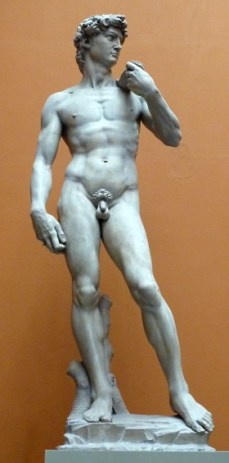
David
Michaelangelo’s David


“The LORD has not chosen any one of these.”
Then Samuel asked Jesse,
“Are these all the sons you have?”
Jesse replied,
“There is still the youngest, who is tending the sheep.”
Samuel said to Jesse,
“Send for him;
we will not begin the sacrificial banquet until he arrives here.”
Jesse sent and had the young man brought to them.
He was ruddy, a youth handsome to behold
and making a splendid appearance.


Now, the passage doesn’t indicate which field David was in. But maybe he was out in proverbial “left field”, the place from which many human beings are called to do important things, to respond in courageous ways.


Most of us, like David, are just living our ordinary daily lives –relatively oblivious to grace – when the life-changing moments come. Those moments may not be as momentous as David’s, but they are big deals for us. 

  • We get a college acceptance (or rejection) letter.
  • We get a job offer (or we get laid off).
  • We get elected to a position (or we don’t)

Someone asks us:

  • Want to go steady?
  • Will you marry me?
  • Have you ever considered religious life?

Young people, like young David, seem to meet a lot of these obvious directional points in their unfolding lives. But, in reality, we continue to meet them as we move to full maturity. Until the day we die, God is always calling to become deeper, more honest, more loving, more gracefully beautiful, more fully in God’s image.

Where have the pivotal calls and turning points come in your life? What are the junctures at which everything would have been different had you made another choice?What made young, innocent David ready when his first, and ensuing, calls came? 

Here’s why:
David had an exquisite love and constant relationship with God.
And God loved him back, just like God loves us.

Every critical point in our life’s journey is charged with the power of God’s love. That power comes disguised in routine circumstances, like a parent calling his shepherd son home for dinner. But if our hearts are tuned to God, we hear the call deep within those ordinary appearances and we receive the moment’s anointing.

May it be so, until we meet the Beloved Face to face.

Music: Anoint Me, Lord – written by Vickie Yohe, sung by Jonathan Matthews

So Much More Than a Holiday!

photo-1570492886075-77b6014064ab

Some of us begin this day simply grateful for a holiday. Perhaps some of us forget, or some are too young to remember, how this “holiday” came to be.

But there are some among us who are old enough to remember his actual voice; to have listened — live – on that sweltering August day in 1963 when he inspired us with the words:

I have a dream.

gty_march_on_washington_martin_luther_king_ll_130819_16x9_992

There are some of us who saw him stand on the steps of the Lincoln Memorial on that golden day, the personification of President Lincoln’s vision of justice and equality.

 There are some of us who listened and watched every step he took, every prayer he said, every challenge he met with equanimity and courage.


 There are some of us who remember the very night he told us:

I have been to the mountaintop 
and I have seen the Promised Land.
I may not get there with you.
But I want you to know that we,
as a people,
will get to the promised land.


There was a whole world of us who cried when he was martyred the very next day.


Monday is no mere holiday. It is the commemoration of a giant soul who changed the world forever. And he did it not in the way that many have done it throughout history — through wars and conquest.

Martin Luther King changed the world by non-violent protest, by a leadership of love, by a faith that endures beyond the assassin’s gun.

Say his name in reverence on this commemorative day. He has given all of us — no matter our color — the hope of a more human existence. If you have not had the gift of living in his time, ask your elders who remember his face, his sound, his power to tell you the story of the freedom God gave each of us.

 In his memory, and to continue to realize his dream, we might consider these 12 steps to non-violence for our own lives.


12 Steps to Non-Violence

  1. Acknowledge your powerlessness — that our lives/culture are co-opted by subversive and pervasive violence
  2. Believe that a Power greater than ourselves can restore us to right relationship.
  3. Decide to turn our will and our lives over to that Power.
  4. Examine fearlessly our own violent inclinations.
  5. Admit to that Power, to ourselves and to another person the exact nature of our own violence.
  6. Be open to have that inclination removed.
  7. Ask to have all violence removed from our hearts and actions.
  8. List all persons to whom we have been violent by word or deed and be willing to make amends to them.
  9. Amend directly to these people wherever possible and prudent.
  10. Self-examine continuously; promptly admit recurring violence in ourselves.
  11. Seek through prayer and meditation to know the nature of Peace and Mercy.
  12. Carry the message of non-violence to others and practice it in all our interactions.

Music: “Abraham, Martin and John” is a 1968 song written by Dick Holler and sung here by Marvin Gaye. It is a tribute to the memory of four assassinated Americans, all icons of social change: Abraham Lincoln, Martin Luther King Jr., John F. Kennedy, and Robert F. Kennedy. It was written in response to the assassination of King and that of Robert Kennedy in April and June 1968, respectively. (Wikipedia)

The song reflects the mix of awe, hope, sorrow and disappointment the nation felt in those tumultuous times.


The Sacred Legacy of MLK

Monday of the Second Week in Ordinary Time

January 20, 2020

Click here for readings

MLKJPG

Today, in Mercy, as we memorialize the life and legacy of Dr. Martin Luther King, Jr., our readings speak about leadership and its continuing call to renew the world in the image of its Creator.

In our first reading, Samuel relays God’s displeasure to Saul who, though a conquering hero, has failed in humility and obedience before the Lord. 

In the story, God has given a clear direction to Saul to obliterate Israel’s centuries-old enemy, the Amalekites. Instead Saul, after executing the masses, keeps the enemy king alive as a war trophy. He appropriates the cattle as personal spoil. He also sets up a shrine to commemorate the victory as his own.

God is not happy. When we profess to lead in God’s name we must act as God directs us. In order to understand God’s direction, we must cultivate an honest, just and merciful heart.


Martin Luther King was such a leader. By his faithful obedience to God’s inspiration, Martin, at the ultimate cost, turned the tides of history toward justice and freedom.

But the tides still need turning, because there will always be those who seek “war trophies”, and personal spoil, and domination for themselves. Our times are tortured by such selfish and failed leadership, just as all of history has been from ancient Israel until 1968 and until now.

Today, as we pray with this great prophet and leader, we ask that selfless, merciful and faith-impelled souls continue to hear the call to justice in our day. May Martin’s witness strengthen and inspire us.


Music: Precious Lord, Take My Hand – Mahalia Jackson (Lyrics below)

Per Dr. King’s request, his good friend Mahalia Jackson sang his favorite hymn, “Take My Hand, Precious Lord”, though not as part of the morning funeral service but later that day at a second open-air service at Morehouse College.

Precious Lord, take my hand
Lead me on, let me stand
I am tired, I am weak, I am worn
Through the storm, through the night
Lead me on through the light
Take my hand, precious Lord
And lead me home

When my way grows dreary
Precious Lord, lead me near
When my life is almost gone
At the river I will stand
Guide my feet, hold my hand
Take my hand, precious Lord
And lead me home