The 5th of July!

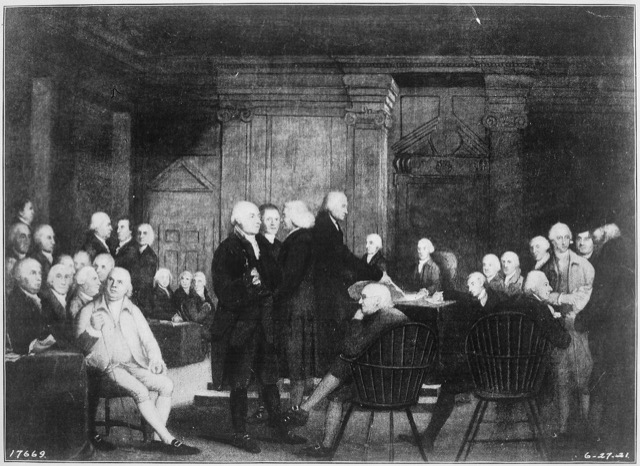
After all the speeches, sparklers and spectaculars, the “Next Day” dawns. I wonder what it was like for Jefferson, Franklin and Adams on the fifth of July in 1776. Did they wake up thinking, “Declaration of Independence – signed. Now, make it happen!”?

congress

When you get right down to it, most of our days are 5th, 6th, 7th and 8ths of July. They are the days after graduation when we need to get a job. They are the days after the honeymoon when somebody needs to cook dinner and take out the trash. They are the days after the promotion when the first deadline looms and a bunch of faces are looking to you for the plan.

If the 4th of July is Independence Day, the 5th is Dependability Day, a day to celebrate the people we can always count on. They are there for the parades but they are there for the clean up afterward. They light the spark for the fireworks, but they have a hose nearby just in case. They put their “John Hancock” on the brave new dream and they show up the next morning to design its daunting execution.

WIP

The 5th of July is a day to celebrate our own sense of responsibility or “Dependability” – to realize that most of us really do try to be good spouses, parents, employees, neighbors, sons, daughters and friends – that we do keep making the effort every day to be someone for others and not just for ourselves. It is a day to look around at the people in our lives and be grateful that most of them are trying to do the same thing.

Like Jefferson, Franklin and Adams, we all need to wake up the next day, consider the “dependabilities” in our lives and put our shoulders to the task of making a better world. Each of our lives is its own small country where the future really depends on how we show up on our “5th of Julys”. The fact that you get up every day and engage that challenge is cause for its own celebration. So if you have a little sparkler left in your back yard, light it for yourself tonight – and for your spouse, your boss, your kids, your co-workers – who all showed up today to do the best they could on the 5th of July.

Thanks for that and have a great day!

Music: A Morning After – Maureen McGovern

Chapter Closed

Friday of the Thirteenth Week in Ordinary Time

July 5, 2019

Click here for readings

Today, in Mercy, our passage from Genesis concludes the story of Abraham.

Like any good drama, the passage ties the plot with a final ribbon, but leaves a little thread to suggest an ensuing story.

Gen24_7 promise

Sarah dies and Abraham negotiates a deal to bury her in the “promised”, but as yet unowned, land. So, in essence, Sarah’s grave is the first parcel of this Promised Land.

Soon after, Abraham prepares for his own death by assuring the future of Isaac, both to remain in the Promised Land, and to have a wife from his own people. To secure these things, Abraham commissions his faithful, unnamed, senior servant who travels back to Assyria and finds Rachel. She becomes Isaac’s wife, the mother of the next generation of The Promise.

The two main themes for us to pray with are these:
the land and
the promise secured for the future

Certainly these themes might lead us to consider what promise we cherish, and where we have set the stakes of our “residence”. In other words, where do our heart and soul live in this world?

Lord, you alone are my portion and my cup;
you make my lot secure.
The boundary lines have fallen for me in pleasant places;
surely I have a delightful inheritance. (Psalm 15:5-6)

But I also cannot pray these verses without thinking of the many immigrants and refugees who have left their homes on the hope and promise of a more secure life.

So many languish in a place of unfulfillment and outright suffering. So many see their posterity taken from them by death or human cruelty. As we think of them today, where does our prayer lead us in compassion and Christian love?

(P.S. Look for a second post today of an old favorite, for those who may never have seen it, or those who might like to read it again. Thanks!)

Music:  When We Go Home, We Go Together – Pure Heart Ensemble

The Flag

Independence Day

July 4, 2019

Suggested Reading for the Day

Today, in Mercy, I offer this opinion piece.


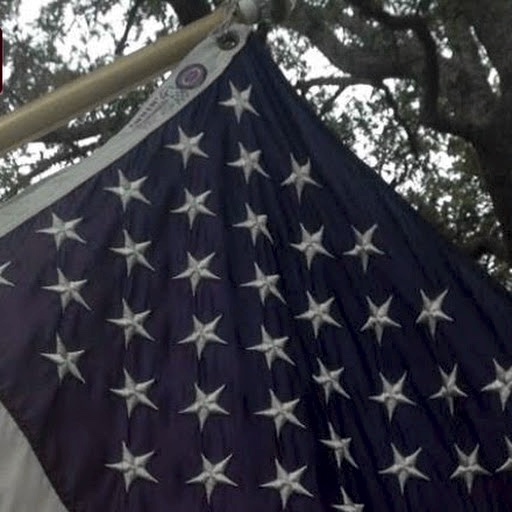
flag

In some ways, it’s hard to be an American today. We live in a country confused about its identity, a country enmeshed in questions about “who we really are” – about both the good and the evil we are capable of. Those questions, on days like July 4th, get all tangled up in symbols like our beautiful flag.

I don’t have the answers but, as usual, I have an opinion. I think we all do. And I’ll share mine for those who might want to read it.

Our flag, cobbled together on a narrow Philadelphia street, has run with the Massachusetts 54th up the Fort Wagner rampart, and has been hoisted on a bloody hill in Iwo Jima. It has been raised over singing, saluting schoolchildren, and wrapped around the caskets of our heroes. It has wafted from the shoulders of Olympians, and stretched – supersized -across our nation’s stadiums.

Woven into its stately stripes is our desire for human freedom, strength, pride, happiness, and peace. For me, our flag stands for this ideal and thus I will always respect and value it.

What I will not salute is the hijacking of our beloved symbol to stand for militarism, white nationalism, religious extremism, isolationism, imperialism, or racial and ethnic exceptionalism. These poisonous misappropriations have so clouded our flag that we struggle to retain the purity of its original call to us:

We hold these truths to be self-evident, that all men are created equal, that they are endowed by their Creator with certain unalienable Rights, that among these are Life, Liberty and the pursuit of Happiness.

The men who wrote these lofty words didn’t fully comprehend or achieve their reach. They ignored whole segments of people – women, people of color, Native Americans – who should have been immediately embraced within the nascent ideal.

And now, after centuries, we still struggle to secure the full promise of these words for all people. In many ways we have even regressed in our efforts, retreating to the deadly “isms” mentioned above.

Whenever an ideology is used to suppress and control the legitimate freedoms of others, a malignant force is unleashed. And when that force conceals itself with our flag, we all suffer.

I believe that’s why Americans like Colin Kaepernick and Megan Rapinoe protest the flag as they do. They are protesting the poisons poured into our flag  by these toxic ideologies. Rather than immortalizing or demonizing such protesters, we would do well to listen to them, discerning the truth they attempt to reveal to us.

But, as we face these challenges, let us not blame the flag. Let us blame ourselves and, in that honesty, resolve to go forward in the strength of our common humanity.

Today, let the flag do what it was intended to do. Let it call us to a determined commitment to freedom and mutual responsibility for one another’s well-being. Let the flag make us brave to face where we have failed one another – often grievously- in this pursuit. But let it also make us confident that the courage it has drawn from us over centuries will strengthen us as a just, compassionate, inclusive, free and strong nation.

Music: The Star-Spangled Banner- sung by The Voices of Gwynedd; arranged and conducted by Musical Director Carol Evans.

Believe

Feast of Saint Thomas, Apostle

Wednesday, July 3, 2019

 Click here for readings

Today, in Mercy, our readings lead us to pray for faith.

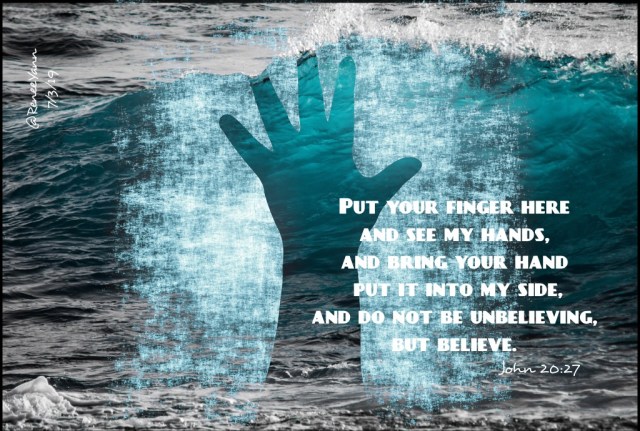
John20_27 Thomas

Faith is not a commodity or an achievement.
Faith is a relationship and a journey.

It is a gift and an exercise of grace.
Never stretched, it withers like an broken ligament.

It ebbs and tides with our personal and communal dramas.
It deepens with prayer, silent reaching, and a listening obedience to our lives.
It shallows with our demands, like Thomas, only to see and to touch.

It is fed by the Lavish Mercy of God Who never cuts its flow to our souls
if we but take down the seawall around our heart.

On this day when we celebrate the power of tested and proven faith,
may we bring our needs into the circle gathered in that Upper Room.

Standing beside Thomas today in our prayer,
may we place our trust in the glorified wounds of Christ.

A video today for your prayer: Blessed Are They That Have Not Seen

After the Tumult

Tuesday of the Thirteenth Week in Ordinary Time

July 2, 2019

Click here for readings

Today, in Mercy, we stand with Abraham as he reflects over the demolished plains surrounding Sodom and Gomorrah. He has been through a traumatic upheaval with God. Now he lets the reality of its teaching sink into his soul.

Genesis19_28 sodomJPG

The smoldering land over which Abraham meditates has been flattened by earthquake and ensuing fire. It is a striking symbol for us of those events or circumstances in our lives that have crushed our hope and joy. At some time, we have all stood at the edge of such a scorched plain, one to be traced not on a paper map but on the map of our soul.

The upheaval may have been spawned by a death, a broken vow, a trust revealed as false, a devastating illness of spirit, mind or body. Whatever the trauma, something of us did not survive – at least not in the way it was before the fire.

Abraham is full of such considerations on this now quiet morning. And he, as many of us in the aftermath of our storms, has learned a new depth of God. God has stayed with Abraham, listened to him, shown mercy to Lot and his family.

What we see in this reading is Abraham, our earliest ancestor in faith, growing in his understanding of the nature of God. Even the upheavals of life can bring us to the fullness of God’s mercy. Though life may unfold differently from what we would choose, it will always bring us grace if we stay in relationship with Abiding Love.

May God give us the faith to hold on to that Lavish Mercy in any upheaval we encounter. May we, like Abraham, stand quiet and trusting in the power of God – perhaps not to change things, but to change us.

Music: Though the Mountains May Fall – Dan Schutte 

Well, Will You?

Monday of the Thirteenth Week in Ordinary Time

July 1, 2019

Click here for readings

Today, in Mercy, we have the rather charming passage in Genesis where Abraham nickels and dimes God. We might dismiss it as childlike lore if we hadn’t tried it with God ourselves a hundred times. 😂

At least I know I bargain with God? Don’t you? When I really want life to go in a way I don’t expect it to, I might try to make a deal with God. It goes something like this:

Dear God, if you only please do “X”, I promise that I will do “Y”.

Or it might go like this:

Dear God, I know You can’t possibly want this suffering to be happening.
Won’t You please fix it? I promise to be grateful!

Even now, when faith has brought me to a deeper understanding of God’s presence in my life, these little bargains still creep through.

follow me

But, if I wait, Grace teaches. God is not the Omnipotent Fixer. God is rather the Omnipresent Mercy bearing our blessings and sorrows with us. God is the Infinite Revelation, leading us in both light and darkness into the depth of a Love we will never fully comprehend:

For as the heavens are high above the earth,
so surpassing is God’s mercy
toward those who live within its awe.

(today’s responsorial Pslam 103)

Sometimes when I feel, like Abraham, that God may have turned and walked away from my pleading prayer, I hear God’s fading footsteps calling me to follow into an unexpected depth.

It is a radical call, like the one in Matthew’s Gospel, to follow and know the Face of God hidden in life’s suffering.

“Teacher, I will follow you wherever you go.”
Jesus answered him,
“Foxes have dens and birds of the sky have nests,
but the Son of Man has nowhere to rest his head.”
Another of his disciples said to him,
“Lord, let me go first and bury my father.”
But Jesus answered him, “Follow me,
and let the dead bury their dead.”

It is not easy to put the following of Christ above all our human considerations, but this is our invitation and call. May we be gifted with the grace to respond.

Music: Will You Come and Follow Me? – John Bell

The Yoke, Indeed, Is On Us!

Thirteenth Sunday in Ordinary Time

June 30, 2019

Click here for readings

Today, in Mercy, the symbols of yokes and plows shout out across our readings. Again, we are dealing with metaphors not in everyday usage for most of us. But those listening to Elijah, Paul, and Jesus absorbed the symbolism easily.

Gal5_yoke

The yoke has connotations of subservience and toiling; in some ancient cultures it was traditional to force a vanquished enemy to pass beneath a symbolic yoke of Spears or swords.The yoke may be a metaphor for something oppressive or burdensome, such as feudalism or totalitarianism. (Wikipedia)

The writer of Kings has fiery Elijah engaged in one of his several highly dramatic episodes. What a scene, right? But what is the point for us?

The point is the same in all three readings: yoke=commitment. Each of our writers is talking about a further understanding of the word “yoke” —a freely chosen commitment made, by grace, for Love.

Sometimes, as in Kings, we need to break an enslavement in order to commit to something life-giving, such as Elisha’s call to follow Elijah.

Other times, as in Galatians, we must remind ourselves of the freedom and power we have chosen by breaking the old yokes that bound us.

In our Gospel, Jesus acknowledges the cost of a commitment to his Way. He has already told us in Matthew 11:

Take my yoke upon you and learn from me,
for I am gentle and humble in heart,
and you will find rest for your souls.

Today, in Luke, Jesus doubles down on his invitation /challenge to follow him:

No one who sets a hand to the plow
and looks to what was left behind
is fit for the kingdom of God.

The question left for our prayer today? Is my heart fully yoked to the heart Christ? Is my hand firmly grasping the plow?

Music: My Yoke is Easy – Dennis Jernigan

The Challenge of Peter & Paul

Solemnity of Saints Peter and Paul, Apostles

June 29, 2019

Click here for readings

Today, in Mercy, we celebrate the great Apostles Peter and Paul, first architects of the Christian faith.

Peter and Paul

From our 21st century perspective, we may be tempted today to celebrate the totality of their accomplishments – the scriptures ascribed to them, the theology traced to them, the cathedrals named for them.

But there is a deeper message given to us in today’s readings, one that challenges our practice of faith. We can access that message by asking an obvious question:

Why were Peter and Paul, simple religious leaders, persecuted, imprisoned, harassed, and eventually executed? What was the terrible threat these unarmed preachers presented to political power?

The answer:

It was their testimony to the transformative Gospel message of Jesus Christ – the Gospel of Mercy and Justice.

But Jesus’ proclamation of God’s kingdom constituted a serious challenge to the Romans who ruled Israel during his lifetime. The cheering crowds who greeted him, especially during his entry into Jerusalem, as well as his confrontation with the moneychangers in the Temple, constituted such a threat to the unjust power of empire that the rulers crucified Jesus in order to silence him. – Elizabeth Johnson, CSJ

Peter and Paul, and every committed Christian after them, bears the same holy threat to ensuing cultures of domination, violence and greed.

As Jesus, Peter, Paul and so many others down through Pope Francis show us, faith and politics always work hand in hand. The work of faith is to build a world where every person can live, and find their way to God, in dignity and peace. It is to witness to an alternative to any power that feeds on the freedom, joy and peace of another person – especially those who are poor, sick and vulnerable.

May Peter and Paul inspire us to continue the daunting task of such an apostolic faith.

Music:  They Who Do Justice – David Haas

They who do justice will live in the presence of God!
Those who walk blamelessly and live their lives doing justice,
who keep the truth in their heart, and slander not with their tongue!
Who harm not another, nor take up reproach to their neighbor,
who hate the site of the wicked, but honor the people of God!
Who show no condition in sharing the gifts of their treasure,
who live not off the poor: they shall stand firm forever!

Here’s the Problem

Thursday of the Twelfth Week in Ordinary Time

Wednesday, June 27, 2010

Click here for readings

Here’s the Problem

Gen16_1 Sarai

Today, in Mercy, Abram and Sarai fall back into a struggle with God’s promise. God tarries with fulfillment and has not yet removed Sarai’s barrenness. The aging couple become impatient.

So, as we all sometimes do when God appears deaf to our prayers, Sarai comes up with her own strategy, clearly outside God’s outlined promise. They will use their slave Hagar to bear Abram’s heir.

The passage doesn’t mean that we should not work hard to fulfill our lives. It isn’t intended to contradict that old wisdom:

Work as if everything depended on you.
Pray as if everything depended on God.

Or as St. Ignatius puts it in a more precise way:

I consider it an error to trust and hope in any means or efforts in themselves alone; nor do I consider it a safe path to trust the whole matter to God our Lord without desiring to help myself by what he has given me; so that it seems to me in our Lord that I ought to make use of both parts, desiring in all things his greater praise and glory, and nothing else.

What this reading does hold up before us is the quality of our faith, the depth of our relationship with God. 

  • Do I consider every aspect of my experience in the light of prayer, sharing it with God, listening for God’s voice?
  • Do I inform my spirit through scripture and spiritual reading, (with what I like to call “a holy culture”), so that I can trust my discernment and be patient for its fulfillment?
  • Do I seek the counsel and companionship of those who strengthen the resolve of my spirit?

Abram was making good progress with these stepping stones, then Sarai threw him a curve with the offer of Hagar as his concubine. But don’t just blame Sarai. Good old Abram caught the curve and ran with it!🙂

Life pitches us all a lot of curves. It can be hard to catch God’s Voice as the curve buzzes by us!

Let’s pray today to let this story teach us whatever we need to learn about our own faith, discernment, patience, and “holy culture”.

Music: I Can Hear Your Voice – Michael W. Smith

Will We Live Our Faith Out Loud?

Tuesday of the Twelfth Week in Ordinary Time

June 25, 2019

Click here for readings

Today, in Mercy, we begin several weeks of readings from the Book of Genesis. 

Some people think of Genesis as a literal history. Others think of it more as a myth. Was there a real Adam and Eve? A real apple? A real snake?

When we get caught up in these ambivalences about Genesis, we are likely to miss the whole point. And the whole point, according to Hebrew Scripture scholar Walter Brueggemann is this:

… these texts should be taken neither as history nor as myth.
Rather, we insist that the text is a proclamation
of God’s decisive dealings with his creation. 


“God’s decisive dealings with God’s Creation…”

What a powerful phrase! So over the next few weeks, here is our opportunity:

How does God want to be with us,
to love us,
and to share the ongoing Creation with us?


Today’s reading, according to Brueggemann, is the second part of a four-part drama:

Genesis 11: 30—25: 18 “The Embraced Call of God”
Will Abraham live by faith? 

This second segment poses a profound question to us, and to our Church:
Have we embraced God’s call in our lives and will we live our faith OUT LOUD!

Jesus asks us the same question in today’s Gospel: Will we live our faith OUT LOUD?


Will we:
“Do to others whatever you would have them do to you.”

cage

How to help children at the border and in inhuman detention centers:

Click here.


Music: By Faith -Keith and Kristyn Getty