Today, in Mercy, we have powerful readings – they get really serious about repentance!
In our first reading, Moses has been on a kind of decades-long sabbatical on his father-in-law’s homestead. After the young glory days of Egypt, and the ensuing drama that exiled him, Moses had settled into being a humble shepherd in Midian. He probably wasn’t expecting a fiery, direct telegram from God.
But God never gives up on his plan for us. So God, divinely expert at getting our attention, conflagrates a bush right in front of Moses.Supposedly, it was not that unusual for this type of bush to spontaneously combust in the desert heat. What was unusual was for it not to be consumed by the fire.
God then delivers a message of overwhelming fidelity to Moses:
Thus shall you say to the Israelites: The LORD, the God of your fathers, the God of Abraham, the God of Isaac, the God of Jacob, has sent me to you. This is my name forever; thus am I to be remembered through all generations.
Because of God’s mercy and fidelity, the Israelites – and Moses – are getting another chance to live in covenant with God.
In our Gospel, Jesus tells his followers not to ignore such chances. He reminds his listeners that life is fragile and transitory. If we haven’t acted on God’s invitation to grace, we might lose the opportunity.
If we look back over our lives, we might realize that there have been burning bushes all over the place – times and events where life offered us a choice between grace and sin, smallness of heart, selfishness. When we chose grace, the bush kept burning and was not consumed. It lit our way to deeper covenant with God.
These final weeks of Lent offer us countless encouragements to look for God’s Fire in our hearts and to go deeper toward the Light. Let’s not ignore them.
Today, in Mercy, we begin with the powerful and moving story of Joseph – sweet, innocent son of of Jacob who was betrayed by his brothers. Jacob sends Joseph to work with his brothers, believing they love him. He was wrong.
Our Gospel then tells the story of the frustrated landowner who sent his son on mission to settle his accounts. though the landowner’s servants had been abused by the tenants, he believed his son would be respected. He was wrong.
Both these stories are prototypes of the Father sending Jesus to redeem us. The intention is the same. The hope is the same. Unfortunately, the result is the same.
In our Gospel, Jesus realizes that the Father’s hope for him will not be met with openness and acceptance. He sees the Pharisees milling around in hateful conversation.Referencing the parable, Jesus says:
“The Kingdom of God will be taken away from you
and given to a people that will produce its fruit.”
When the chief priests and the Pharisees heard his parables,
they knew that he was speaking about them.
And although they were attempting to arrest him,
they feared the crowds, for the crowds regarded him as a prophet.
This morning, let’s pray for all those who send their beloveds out in hope to do good in the world:
for police officers, firefighters, first responders whose families send them out each day always fearing for their safety
for medical personnel who risk sickness in their care for others
for missionaries and justice workers who encounter threat and danger in helping others
for peacekeepers and military who work to end war and tyranny
for all of us when we reach out in justice and courage, hoping to be received with respect and mutuality
May the example of Christ inspire and sustain us to do our part for God’s continuing redemption of the world.
Today, in Mercy, our Gospel gives us the disturbing parable of the rich man, sometimes called Dives, and Lazarus, a very poor man.
The story is disturbing because
Lazarus suffers so desperately
Dives is impervious to that suffering
God won’t give Dives a break after his death
We fear being in either of these guys’ situations
Probably, like most people, we’d rather be rich than poor. But would we rather be generous with that wealth or selfish? Do we ever find ourselves thinking thoughts like this, deciding we’re not responsible for the gap between rich and poor:
“I worked hard for what I have. Let everybody else do the same!”
That wealth gap cannot be mended simply by giving a dollar to a corner beggar nor by donating our wornout clothes to Goodwill. This kind of re-balancing requires a conversion of heart which touches our economic, political and moral understanding.
I was struck this morning by this headline from The Economist, a British weekly magazine.
How can today’s Gospel inspire and encourage us in a global culture that infcreasingly marginalizes persons who are poor, resourceless, and politically oppressed?
May the story of Lazarus and Dives influence us to use the powers we have to make just and generous decisions.
We can vote for just, generous and moral leaders.
We can advocate for universally just policies.
We can donate to compassionate causes.
We can confront hateful speech and stereotyping.
We can speak and act for justice, peace, inclusivity and mercy.
We just have to be courageous before, like Dives, it is too late for us.
Today, in Mercy, we celebrate the Solemnity of St. Joseph, husband of the Blessed Virgin Mary.
St. Theresa of Avila wrote, “I took for my patron the glorious St. Joseph and recommended myself earnestly to him. It is now very many years since I began asking St. Joseph for something on his feast, and I always received it. If the petition was in any way amiss, he rectified it for my greater good.”
The very way the Church defines the Feast tells us a great deal about Joseph. Men are seldom described by their relationship to a woman.It is more often the other way around. Consider our lingering custom of wives assuming their husband’s surnames, for example.
But Joseph is known because of his connection to Mary. He is a steady force in the background of her life and the life of Jesus. Joseph is the kind, generous and faithful one who nurtures and protects them.
And he is the silent one. Not a single word was ever recorded from him. What we know of Joseph issues from his actions. For example, before he knew that Mary had conceived through the Holy Spirit:
Joseph her husband, since he was a righteous man, yet unwilling to expose her to shame, decided to divorce her quietly.
This virtue of righteousness sums up the character of Joseph as we find him in scripture. Righteousness is complementary to justice.
Walter Brueggemann in his book, Journey to the Common Good, says this about the relationship between justice and righteousness:
“Justice in the Old Testament concerns distribution in order to make sure that all members of the community have access to resources and goods for the sake of a viable life of dignity…. Righteousness concerns active intervention in social affairs, taking an initiative to intervene effectively in order to rehabilitate society, to respond to social grievance, and to correct every humanity-diminishing activity.”
Joseph exercised such righteousness not only in responding to Mary’s unexpected pregnancy. He took the risk of becoming a refugee family in order to save Jesus’s infant life. After the finding in the Temple, he stepped into the background in order to allow young Jesus to assume his teaching vocation. No doubt, during the silent years which then surround Joseph, he continued to live an active life doing good for his family and community, and quietly fostering the ministry of Jesus.
Despite the scarcity of recorded knowledge about Joseph, there is an ample devotional treasury describing him. It is captured in outline form in the Litany to St. Joseph, a prayer I learned to love because it was one of my father’s favorites. I sometimes say just a few lines, slowly, to let the holiness of Joseph call me deeper into my own spiritual life.
(Music is below the Litany.)
Lord, have mercy. Christ, have mercy.
Lord, have mercy.
Christ, hear us. Christ, graciously hear us.
God, the Father of Heaven, have mercy on us.
God the Son, Redeemer of the world, have mercy on us.
God the Holy Spirit, have mercy on us.
Holy Trinity, One God, have mercy on us.
Holy Mary, pray for us (after each line)
Saint Joseph,
Renowned offspring of David,
Light of Patriarchs,
Spouse of the Mother of God,
Chaste guardian of the Virgin,
Foster-father of the Son of God,
Diligent protector of Christ,
Head of the Holy Family,
Joseph most just,
Joseph most chaste,
Joseph most prudent,
Joseph most strong,
Joseph most obedient,
Joseph most faithful,
Mirror of patience,
Lover of poverty,
Model of artisans,
Glory of home life,
Guardian of virgins,
Pillar of families,
Solace of the wretched, Hope of the sick,
Patron of the dying,
Protector of Holy Church,
Lamb of God, who take away the sins of the world, Spare us, O Lord.
Lamb of God, who take away the sins of the world, Graciously hear us, O Lord.
Lamb of God, who take away the sins of the world, Have mercy on us.
V. He made him the lord of His house:
R. And ruler of all His substance.
Let us pray.
O God, who in Your unspeakable providence chose blessed Joseph to be the spouse of Your own most holy Mother: grant, we ask, that we may deserve to have him for our intercessor in heaven, whom we reverence as our defender on earth. Amen.
Today, in Mercy, our readings are steeped with the scent of Lent, coming this week.
Sirach appeals to us to be penitent, to turn around and look at the Lord with new eyes. Mark describes the entrance to God’s Kingdom as smaller than a needle’s eye!
The word “penitent” comes from a Latin root paenitere which carries a sense of being filled with regret at what is missing or lacking in our lives.
In Mark, Jesus meets a good young man longing for something more in his life.
Jesus, looking at him, loved him and said to him,
“You are lacking in one thing. Go, sell what you have, and give to the poor and you will have treasure in heaven; then come, follow me.”
These readings set us up perfectly for the coming Lenten season. It is a good day to think about what is lacking in our spiritual life, what it will take for us to follow Jesus more wholeheartedly.
Let us turn our hearts to look at Jesus who loves us as much as he loved that young man. Let us ask Jesus to accompany us on the coming journey, giving us the courage to change whatever in us needs change in order to pass through the needle’s eye.
Today, in Mercy, we celebratethe Feast of the Chair of Saint Peter, Apostle. It seems both fitting and painfully ironic that this feast should coincide with the Pope’s Summit on Protection of Minors in the Church. When He handed the “keys” to Peter, could Christ ever have foreseen that his beloved church would descend to this shame?
Factions in the Catholic Church argue over where to place the blame for this horror. Some point to the entitlements of clericalism. Some point to more liberal stances on sexuality. The most vocal factions use their voices to blame others rather than look to their own faults.
But today’s Gospel suggests that none of these explanations goes to the root of the crisis.
What Christ handed Peter was POWER. Our Gospel says that this power was to be used to map the journey to heaven for the rest of us – appropriately “binding” and “loosening” the guidelines of that journey.
That’s a lot of power!
Unfortunately, the famous quote of John Dalberg-Acton, a 19th century Catholic writer, too often proves true. He said:
Power tends to corrupt.
And absolute power corrupts absolutely.
What was it that Jesus saw in Peter to give him hope for Peter’s incorruptibility?
Peter, who abandoned his livelihood in full devotion to the call.
Peter, who tried to protect his beloved Lord from the wrath of the Pharisees
Peter who, defending Jesus in the Garden, cut off the ear of Malchus
Peter, who recognized and begged forgiveness for his weakness
Peter, who chose an inverted crucifixion because he deemed himself unworthy to die as his master did.
Power fueled by this kind of single-hearted devotion and humility is the true “Power of the Keys”. It suffers no shadow of greed, self-importance, domination, or lust. It is always “power for” not “power over” others.
Until our church structures foster this kind of mutual, non-exclusionary power in our leaders AND members, we have little hope of transformation.
Let us pray for true insight and courage for those gathered in Rome.
Music: (Maybe the Cardinals could sing this song in their hearts on the way to their meetings? Maybe we could sing it too sometimes?)
Sent to me this morning by my beautiful niece in Atlanta where they are having rain
Today, in Mercy, and for the next few days we have the story of Noah. It’s both a terrifying and delightful story.
It is frightening to think of the earth inundated by flood, all Creation wiped out because of the Creator’s disappointment!
But it is delightful to think of these thousands of animal couples, holding hands, paws, fins or tentacles and skipping into Noah’s big boat.
In this passage, the writer imbues God with the same emotions and responses we have when our project fails mightily. We crumple it up, press delete, throw it in the garbage disposal, or smash it on the ground. In Genesis, God decides to “erase by flood”.
Despite the woeful drama, the story is filled with hope. God has not completely given up. He just wants to start over again.
Throughout the voluminous rest of scripture, God starts over with us innumerable times. Think of the Prodigal Son, the Adulterous Woman, Joseph and his Brothers.Forgiveness and new beginnings are the story of our relationship with a God Who loves us too much to let us fail.
So, if your faith life is a little stormy just now, take refuge in the “ark of your heart” – your trust, hope and faith in God. Pray for fairer weather and believe that God will send it. Ask for the eyes to recognize it when it comes.
Music: Eye of the Storm ~ Ryan Stevenson (a little bit country, but the message works)
Today, in Mercy, our readings are about being opened by the grace and power of God.
In the Genesis passage, Eve and Adam eat fruit from the tree of knowledge. Their eyes are opened to good and evil.
In our reading from Mark, Jesus opens the ears of a deaf man, allowing him both to hear and to speak clearly.
In the first passage, Adam and Eve’s new “openness” brings a burden. Their innocence now fractured, they must forever exercise their free will to choose good over evil.
In the second passage, the deaf man’s burdens are lifted. He now has no obstacle to hearing and proclaiming God’s mercy.
Like Adam and Eve, we bear the burden of knowledge in a disturbing and sinful world. Every choice challenges us to be and do good in a culture of human degradation.
But like the man who was cured, we have been transformed by Christ’s touch. We see, not just with the discernment of good and evil, but with God’s eyes – with the power to see past death to life.
This power is expressed in our lives by:
our faith in a world filled with uncertainty
our hope in a world trapped in despair
our love in a world blinded by selfishness and greed
Every morning, God wakes us and says, “Ephphatha – be a sign of my gracious openness in your world because I am that Openness for you.”
Today, in our prayer, let us find what is closed in us. We may have judged and shut out someone. We may have given up on a good and necessary practice. We may have withdrawn from a generous responsibility. We may have capitulated to a life-sapping addiction. Inside us somewhere, we may have curled up into“No”!
God calls us to be a “Yes” to the abundance of life and grace God offers us. We are called to open, to be “uncurled”. This poem by e.e.cummings has helped me on occasion with such uncurling.
love is a place
& through this place of
love move
(with brightness of peace)
all places
yes is a world
& in this world of
yes live
(skillfully curled)
all worlds
I bet I know the first word that popped into your mind when you read today’s headline:PROSECUTION!
Today, in Mercy, our readings invite us to consider WITNESS — not for the prosecution, but for the RESURRECTION!
In our first reading, we see Isaiah dramatically commissioned to WITNESS to the vision of faith in his heart. He responds wholeheartedly:
Then I heard the voice of the Lord saying, “Whom shall I send? Who will go for us?” “Here I am,” I said; “send me!”
Our second reading, Paul describes how Christ appeared to him and commissioned him, “the least of the Apostles” to be his WITNESS. Paul, too, responds wholeheartedly:
He appeared to me. Therefore, … so we preach and so you believed.
In our Gospel, Simon Peter, James and John are awed by the miraculous power of Jesus as their nets pull hundreds of fish from the otherwise unproductive sea. Jesus tells them that, by their WITNESS, they will attract hundreds of souls to his message. They also respond wholeheartedly:
When they brought their boats to the shore, they left everything and followed him.
For the Word of God to live,
WITNESS is everything.
Macrina Wiederkehr, OSB, in her beautiful book, “Seven Sacred Pauses”, describes the level of WITNESS in the first disciples:
They were impelled to continue proclaiming the Gospel in the face of opposition. They were zealous in preaching because they felt passionate about being entrusted with the sacred message.
Think of this often-heard philosophical conundrum:
If a tree falls in the forest, and no one is there to hear it, does it make a sound?
Logic tells us that it does. But what does it matter if no one hears it?
If the Resurrection happened, and no one bears witness to it, what does it matter? That is the importance of our call to WITNESS – just like Isaiah, Paul, Peter, James, John, and two millennia of believers who carry on the sound of that tomb bursting open to eternal life.
How will we witness to our faith today – not by preachy words or empty opinions, but by our active passion for justice and mercy in the world, and in our own choices?
Today, in Mercy, Jesus’s disciples set out on their first solo mission. Most of us can relate to their feelings that morning.
Remember your first real job? You had studied, trained, prepared. You had aced the interview. You bought a new blouse, shirt or pair of shoes. You were IN!
And you were scared. You might have done a dry run to make sure you wouldn’t be late your first day. You checked that your gas tank was topped off. You packed a lunch (or someone who loved you did), and wondered who would eat with you.
The disciples were probably scared too. Look at whose shoes they were following in! And Jesus sets out some tough dress code for their work life:
take nothing but a walking stick
no food, no sack, no money in their belts
wear sandals but not a second tunic.
The behavior code was just as lean:
take a buddy for support
when you enter a house, stay there the whole time
if they don’t welcome you or listen to you, don’t argue
leave there and shake the dust off your feet
As we set out to work each day, do we think of our labor as “ministry”? Do we see that our work in some way benefits the life of the community? Do our interactions with our peers encourage their contributions to the common good?
We all need jobs to earn the means to live. But if that’s all our job is, we will never find happiness in it. Meaningful work must benefit more than ourselves and, in that, it can become a ministry.
If Jesus were sending us out to our workday this morning, he might give instructions like these:
work responsibly, mutually and unselfishly
earn all that you need to be happy, but avoid greed
make sure your labors enhance life for others as well as yourself
if your job chokes your soul, move on
What we do does not determine our worth. How we do it does. We may be sewing buttons on shirts. If we do that with attention and pride, our work will have meaning for us and for others.
Every meaningful job gives us the chance to make the world better for those we serve, and for those with whom we work – to add to the beauty of the world already begun in the blessing of God. Does our work offer us that life-giving opportunity? Do we respond to it wholeheartedly?





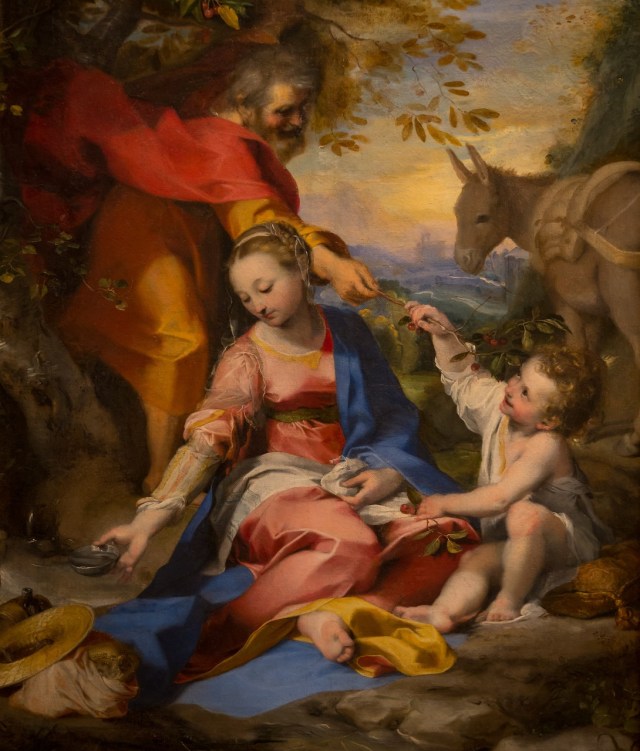







 Lavish Mercy