Learn What’s Important

Memorial of Saint Francis of Assisi
October 4, 2022

Today’s Readings:

https://bible.usccb.org/bible/readings/100422.cfm

Today, in God’s Lavish Mercy, we pray with Martha and Mary. These sisters are the personification of the Benedictine motto: Ora et labora: Pray and work – the two essentials that we all struggle to balance in our lives.

They, with their brother Lazarus, are dear friends of Jesus. The scriptures show us that Jesus felt comfortable at their home, and that they loved to have him stay with them.

As all of us do with our closest friends, Jesus understood the lights and shadows of their personalities – and they of his. He knew that Martha was the organizer, the one who planned and worried about the incidentals. Mary was deeply spiritual, but maybe had her head in the clouds a bit when it came to getting things done. 

Perhaps these personality differences caused some tensions between the sisters, as they might between us and our family members or close friends. Sometimes these little, unnoticed frictions can suddenly become chasms between us and those we love. 

How and why does it happen?

Jesus gives us the answer in this Gospel passage. He hears Martha’s simmering frustration. He calms her, as one might a child – “Martha, Martha…”. We can hear his gentle tone. Jesus tells her that worry and anxiety are signs that we are not spiritually free. He tells her that Mary has focused on the important thing.

This may sound repetitious, but just think about it a while:

It is so important to know what is important. 

It is so freeing to agree on what matters with those closest to us. Talking with each other in openness, respect, and unconditional love is the only path to that freedom.

Maybe Martha and Mary slipped off that path a bit in this situation. But with Jesus’ help, they righted their relationship. 

That’s the best way for us to do it too. Let Jesus show us what is most important through sharing our faith, and even our prayer, with those closest to us. Let him show us where our self-interests, need for control, fears and anxieties are blocking us from love and freedom.

It is the same way that we, like Mary, can strengthen our relationship with God. It is not sufficient for our prayer to consist of incidentals — pretty words and empty practices. 

We must sit open-hearted at the feet of Jesus and let him love us, let him change us. Even in the midst of our responsibilities and duties, we must balance “the better part”.


Poetry: Bethany Decisions – Irene Zimmerman, OSF – How appropriate to have this wonderful Franciscan poet speak to us on this Feast of St. Francis. Let us thank God today for the wonderful charism of this saint from Assisi, and for the amazingly gifted women and men who carry it to us today.

As Jesus taught the gathered brothers
and Martha boiled and baked their dinner,
Mary eavesdropped in the anteroom
between the great hall and the kitchen.
Her dying mother’s warning words
clanged clearly in her memory—
“Obey your sister. She has learned
the ways and duties of a woman.”

She’d learned her sister’s lessons well
and knew a woman’s place was not
to sit and listen and be taught.
But when she heard the voice of Jesus
call to her above the din
of Martha’s boiling pots and pans,
she made her choice decisively—
took off her apron and traditions,
and walked in.


Music: a charming little song by Peg Angell which leaves me with same practical question I always have when reading this passage: who actually did get the dinner ready?

Your Life Spells It Out!

Twenty-seventh Sunday in Ordinary Time
October 2, 2022

Today’s Readings:

https://bible.usccb.org/bible/readings/100222.cfm

Today, in God’s Lavish Mercy,  our readings combine to offer us a powerful message: we are the translators of God’s Word for our time. Our choices and actions for justice and mercy make the vision “readable” – visible for our sisters and brothers.

Hab2_2 vision

Habakkuk starts our challenge. He is in a bit of a struggle with God, asking repeatedly how long God is going to allow the people to suffer. ( I have had similar conversations with God, especially during these charged political times).

In so many words, God tells Habakkuk to look to his faith – his vision through God’s eyes. God sees that “the just one, because of his faith, shall live.” God tells him to “write the vision down”, to make it apparent in his own choices and actions for justice and mercy. In other words, Habakkuk, I’ve done what I am going to do. The rest is up to you, Buddy!


In a similar way, Paul reminds Timothy to “stir up the flame” – the gift of God given at his profession of faith. Paul reminds Timothy that, by grace, he knows what is right and just. He must not be chicken about living and speaking that Truth – to write the vision down by his choices and actions for justice and mercy.


In our Gospel, the disciples seem to want their faith increased because the commitment to witness is scary. They think they might feel a little better about it all if their faith consoled them more. But “writing the vision with our lives” takes guts, and the disciples seem a little lacking in today’s reading.

Jesus tells them to buck up. They are blessed to serve the Word of God by the witness of their lives. It won’t always feel good, safe or successful. Still they, and we, must unfailingly write the vision down by our choices and actions for justice and mercy, because even …

When you have done all you have been commanded,
say, ‘We are unprofitable servants;
we have done what we were obliged to do.

Jesus calls it like it is today. We are blessed to be God’s translators. We have an undeniable call to live God’s just and merciful vision. No excuses. Get it together. Keep the pencil sharp. No asking God when He’s going to make things better. The legible (just and merciful) translation depends on us!

Poetry: Abou Ben Adhem – Leigh Hunt

Abou Ben Adhem (may his tribe increase!) 
And saw, within the moonlight in his room, 
Making it rich, and like a lily in bloom, 
An angel writing in a book of gold:— 
Exceeding peace had made Ben Adhem bold, 
And to the presence in the room he said, 
“What writest thou?”—The vision raised its head, 
And with a look made of all sweet accord, 
Answered, “The names of those who love the Lord.” 
“And is mine one?” said Abou. “Nay, not so,” 
Replied the angel. Abou spoke more low, 
But cheerly still; and said, “I pray thee, then, 
Write me as one that loves his fellow men.” 

The angel wrote, and vanished. The next night 
It came again with a great wakening light, 
And showed the names whom love of God had blest, 
And lo! Ben Adhem’s name led all the rest.

Music: The Vision – Patrick Love

The Spread of the Gospel

Feast of Saint Matthew, Apostle and evangelist
September 21, 2022

Today’s Readings:

https://bible.usccb.org/bible/readings/092122.cfm

Today, in God’s Lavish Mercy, on this feast of St. Matthew, Apostle and Evangelist, we are blessed with an inspiring reading from Ephesians. We are reminded that each of us is called in God according to our particular gifts. Paul encourages us to live “in a manner worthy of the call we have received” in our Baptism.

evangel Matthew

For most of us, it has been quite a while since we were washed in the waters of our Baptism. A lot of other waters have passed under the bridge since then. We may, or may not, have recognized and responded to our call, continually carried to us on those life waters.

Each moment, each choice, each act and decision asks us once again to choose Christ – over sin, over self, over meaninglessness. Each life opportunity calls us closer to Jesus, to the pattern of his Cross, to the witness of his Resurrection.


Matthew heard such a call as he sat, perhaps dulled by the unconscious disengagement of his life, by the failure to live with intention and openness to grace. As He passed by Matthew, Jesus reached into that ennui, calling Matthew to evangelize all the future generations by his Gospel.

Jesus calls us to be evangelists too – every moment, every day. Our “Yes” to our particular call writes its own Gospel, telling the Good News through our faith, hope and love.


Pope Francis says this:

The spread of the Gospel is not guaranteed either by the number of persons, or by the prestige of the institution, or by the quantity of available resources. What counts is to be permeated by the love of Christ, to let oneself be led by the Holy Spirit and to graft one’s own life onto the tree of life, which is the Lord’s Cross.


Poetry: The Calling of Matthew by James Lasdun

Not the abrupt way, frozen
In the one glance of a painter’s frame
Christ in the doorway pointing. Matthew’s face
Bright with perplexity, the glaze
Of a lifetime at the countinghouse
Cracked in the split second’s bolt of being chosen.
But over the years, slowly,
Hinted at, an invisible curve;
Persistent bias always favoring
Backwardly the relinquished thing
Over the kept, the gold signet ring
Dropped in a beggar’s bowl, the eye not fully
Comprehending the hand, not yet;
Heirloom damask thrust in a passing
Stranger’s hand, the ceremonial saddle
(Looped coins, crushed clouds of inline pearl)
Given on an irresistible
impulse to a servant. Where it sat
A saddle-shaped emptiness
Briefly, obscurely brimming … Flagons
Cellars of wine, then as impulse steadied
into habit, habit to need,
Need to compulsion, the whole vineyard
The land itself, graves, herds, the ancestral house,
Given away, each object’s
Hollowed-out void successively
More vivid in him than the thing itself,
As if renouncing merely gave
Density to having; as if
He’s glimpsed in nothingness a derelict’s
Secret of unabated,
Inverse possession … And only then,
Almost superfluous, does the figure
Step softly to the shelter door;
Casual, foreknown, almost familiar,
Calmly received, like someone long awaited.

Music: When You Call My Name ~ Brian Doerksen & Steve Mitchinson

Presence

Memorial of Saints Andrew Kim Tae-gŏn, Priest, and
Paul Chŏng Ha-sang, and Companions, Martyrs
September 20, 2022

Today’s Readings:

https://bible.usccb.org/bible/readings/092022.cfm

Today, in God’s Lavish Mercy, our readings instruct us on what it means to belong to God – heart and soul.

Proverbs tosses out a series of minstrel-like two-liners that, because of their simplicity, might be overlooked for their beauty and depth. For example, the first couplet says: 

Like a stream is the king’s heart
in the hand of the LORD;

wherever it pleases God, God directs it.

Would we all not desire that kind of heart, where our thoughts and choices are so directed by God’s power and grace – held and guided into freedom by God’s loving hand? How confident, peaceful and joyful our lives would be!

Psalm 199 discern

Today’s Psalm 119 is a passionate prayer to be guided through an entangling world by our deep loyalty to God’s own truth, learned by meditating day and night on God’s goodness.


Our Gospel, in an often misinterpreted incident, shows us how Jesus considers his true disciples as close to him as his own mother and family.

So today, to deepen our own closeness to God, let us practice making our ordinary life into a constant prayer – allowing it to flow, like water, over God’s tender, guiding hand. 

We can do this by gratefully noticing God’s Presence in nature, in our companions, in the opportunities for kindness, honesty and service  that come to us today. 

Or, sadly, our experiences today might cause us to notice God’s absence in these places. This offers us an incentive to invite, beg and pester God to transform the desert places in our lives and world.

Whichever approach we take, it will open up a constant conversation with God about our life as we experience it at each moment. We begin to listen better to the Word of God revealing itself in our daily life. We begin to live more consciously in God’s Presence… in God’s dear family.

God’s Law is already written deep in the fabric of our lives. We pray for discernment to discover that guiding grace by opening our hearts to God’s Presence in our every experience.


Poetry: All Things – by Hadewijch

All things
are too small
to hold me,
I am so vast
In the Infinite
I reach
for the Uncreated
I have
touched it,
it undoes me
wider than wide
Everything else
is too narrow
You know this well,
you who are also there.

Music: Morning Prayer – Kitaro

Lessons in Love and Light

Monday of the Twenty-fifth Week in Ordinary Time
September 19, 2022

Today’s Readings

https://bible.usccb.org/bible/readings/091922.cfm

Today, in God’s Lavish Mercy, our readings encourage us to live lives of Charity and Light.

Today’s first reading opens two weeks of inspiration from the Wisdom Literature of the Hebrew Scriptures. These books include Job, Proverbs, Ecclesiastes, Song of Solomon, and parts of Psalms.

Wisdom literature differs from other books in the Old Testament in that the authors were sages rather than prophets or priests. Priests and prophets typically dealt with religious and moral concerns whereas sages generally focused on the practical aspects of how to live and the intellectual challenges that arise when contemplating the human experience. 

from: compellingtruth.org

Our passage from Proverbs offers a good dose of that sage advice with these basics of mutual charity:

  • Refuse no one the good on which they have a claim
  • Plot no evil against your neighbor,
  • Quarrel not with someone without cause,
  • Envy not lawless persons
  • Choose not their ways …

If we all followed that list, the world would be in pretty good shape. And, in Luke’s Gospel, Jesus says that once we get that shaped-up, we can take it up a notch — into the Light:

No one who lights a lamp conceals it with a vessel
or sets it under a bed;
rather, you place it on a lampstand
so that those who enter may see the light.

Matthew’s version adds this line:

Let your light shine before others,
that they may see your good deeds 
and glorify God in heaven.

So how do I let Charity kindle God’s Light in me? The list from Proverbs can get me started, but what might my own “Charity Challenges” look like?

Poetry: Charity — The Greatest of All Three – Robert Morris

The soul serene, impenetrably just, 
Is first in CHARITY; we love to muse 
On such a model; knit in strictest bonds 
Of amity with spirits like disposed; 
Aiming at truth for her own sake, this one 
Passes beyond the golden line of Faith, 
Passes beyond the precious line of Hope, 
And sets foot unmoved on CHARITY . 
“A soul so softly radiant and so white, 
The track it leaves seems less of fire than light.”


Music: Lampstand – Ben Bigelow

(Spoiler alert: Those who are still able may want to dance by the end of this video!🤩 I just did a very good finger-snapping routine)

Earthshine & Bling!

Twenty-fifth Sunday in Ordinary Time
September 18, 2022

Today’s Readings:

https://bible.usccb.org/bible/readings/091822.cfm

Today, in God’s Lavish Mercy, our readings make one thing very clear: we cannot serve both God and “mammon”.

The problem is that we have a hard time figuring out what mammon is. Experience tells us that it’s a lot more than just money, because there are people with money who do a good job serving God.

It seems to me that “mammon” is more the illusion that we are only our “possessions” — our money, house, car, looks, degrees, physical abilities — and that we (or anybody else) is nothing without them.

This misperception is so intrinsic to our inability to live the Gospel that it cripples our souls. The love of “mammon” becomes an overwhelming, incurable addiction that feeds on the well-being of our neighbor.

As our first reading tells us, living by this addiction invokes God’s eternal anger. Describing the abuse heaped upon the poor, God warns the abusers:

The LORD has sworn by the pride of Jacob:
Never will I forget a thing they have done!

Amos 8:7

Our Gospel tells us that we can’t have it both ways. We either live within the generosity and inclusivity of God, or we’re outside it:

No servant can serve two masters.
He will either hate one and love the other,

or be devoted to one and despise the other.

Luke 16:13

This is a challenging but fundamental teaching of the Gospel. It is essential that we consider how we live it.

Walter Bruggemann, in his book Money and Possessions says this:

Jesus said it … succinctly. You cannot serve God and mammon. You cannot serve God and do what you please with your money or your sex or your land. And then he says, “Don’t be anxious, because everything you need will be given to you.” But you must decide. Christians have a long history of trying to squeeze Jesus out of public life and reduce him to a private little Savior. But to do this is to ignore what the Bible really says. Jesus talks a great deal about the kingdom of God—and what he means by that is a public life reorganized toward neighborliness. . . .

Let’s have the courage to pray with that thought today. Although challenging, the question is rather simple: how do we use what we have to live a Gospel life, the essence of which Jesus stated like this:

Love God above all things

and your neighbor as yourself.

Mark 12:30-31


Poetry: Cullen in the Afterlife – P. K. Page

(This poet is new to me. She is a Canadian poet whose work is noted for its vibrant images. I liked this poem in which she imagines the experience of finding oneself in the afterlife. She notes the difficulty of embracing Love when hampered by “mammon” which she called “Earthshine”.

And how partake of such a gift when he
was handicapped by Earthshine—wore the stars,
badges and medals of privilege and success?
Desensitizers, brutalizers—all 
the tricks that mammon plays to make one sleep.


Cullen in the Afterlife – P. K. Page

He found it strange at first. A new dimension.  
One he had never guessed. The fourth? The fifth? 
How could he tell, who’d only known the third?
Something to do with eyesight, depth of field.
Perspective quite beyond him. Everything flat
or nearly flat. The vanishing point 
they’d tried to teach at school was out of sight
and out of mind. A blank.

Now, this diaphanous dimension—one
with neither up nor down, nor east nor west,
nor orienting star to give him north.
Even his name had left him. Strayed like a dog. 
Yet he was bathed in some unearthly light,
a delicate no-color that made his flesh
transparent, see-through, a Saran-Wrap self.
His body without substance and his mind
with nothing to think about—although intact—
was totally minus purpose. He must think.

Think of a Rubens, he said to himself. But where
Rubens had been there was a void, a vast
emptiness—no opulence. And then
Cézanne who broke all matter up—
made light of it, in fact. And mad Van Gogh
who, blinded by the light, cut off his ear.
Gone—that shadowy assembly—vanished, done. 
Gone without substance. Like himself. A shell.
Insensate in a flash. (What was that flash—
bereft of all but essence?) Was it death?
He wondered about the word, so filled with breath
yet breathless, breathless, breathless. A full stop.

“Divino Espirito Santo,” he had said
once in Brazil, “Soul of my very soul.”
He’d prayed in Portuguese, an easier tongue—
for newly agnostic Anglos—than his own,
burdened with shibboleths and past beliefs.
“Alma de minha alma”—liquid words
that made a calm within him. Where within?
Was there a word for it? Was it his heart?

Engulfed by love. Held in a healing beam
of love-light. Had he earned such love?
And how partake of such a gift when he
was handicapped by Earthshine—wore the stars,
badges and medals of privilege and success?
Desensitizers, brutalizers—all 
the tricks that mammon plays to make one sleep.
He must wake up. He must expose and strip
successive layers to find his soul again.
Where had the rubble come from? He was like
a junkyard—cluttered, filled with scrap iron, tin.
As dead as any metal not in use.
So he must start once more. He had begun
how many times? Faint glimmerings and dim
memories of pasts behind the past
recently lived—the animal pasts and vague
vegetable pasts—those climbing vines and fruits;
and mineral pasts (a slower pulse) the shine
of gold and silver and the gray of iron.
The “upward anguish.”
                                   What a rush of wings
above him as he thought the phrase and knew 
angels were overhead, and over them
a million suns and moons.

Music: a simple mantra, but powerful if we can live it: Love God, Love Neighbor by Dale Sechrest

Choose to Believe

Saturday of the Twenty-fourth Week in Ordinary Time
September 17, 2022

Today’s Readings:

https://bible.usccb.org/bible/readings/091722.cfm

Today, in God’s Lavish Mercy, Paul strongly confronts the doubts of the Corinthian community regarding the Resurrection.

Someone may say, “How are the dead raised? 
With what kind of body will they come back?”
You fool!

1 Corinthians 15:35

Remember that these post-Resurrection Christians had expected an immediate Parousia, or end of time. They thought that with the completion of Christ’s redemptive act, that was it! Time for heaven for all us believers. Yippee!

Well, not so fast!

When Parousia didn’t happen, the people grew a little confounded. They began to awaken to  the hard lesson  that redemption is not time-bound, but continues in the timeless gift of grace given to new generations. It is up to us to work through our own lives to become one with the Pascal Mystery of Christ.

In the miracle of God’s eternity, each of us has the chance to engage the power of Christ’s Passion, Death and Resurrection by the faithful living of our own lives – no matter if we have lived in the first or the twenty-first century. 


God doesn’t do “time” and doesn’t have a calendar.

But still I feel for those struggling Corinthians! It’s hard to believe sometimes, don’t you agree? It’s hard to wade through the sometimes tumultuous unfolding of our lives and history to find God.

When I taught eighth graders many years ago, one intelligent young girl asked me this question:

What if everything you believe is wrong? 
Was the way you live your life worth it?

It was a powerful question and it has stayed with me for half a century. I continue to ask myself versions of the same question especially when I can’t find God in the circumstances of my life or world – when children are sick, or old people suffer, or human beings dreadfully hurt one another – and I have no answers.

Like the early Corinthians, I ask God, “Where are You? I thought your Resurrection healed all this? I thought You had redeemed our suffering world! 


Paul and Jesus, in our readings today, give us images to help us mature in a long and lasting faith that doesn’t answer but receives these questions with trust and hope.

What you sow is not brought to life unless it dies.
And what you sow is not the body that is to be
but a bare kernel of wheat, perhaps, or of some other kind.

So also is the resurrection of the dead.
It is sown corruptible; it is raised incorruptible.
It is sown dishonorable; it is raised glorious.
It is sown weak; it is raised powerful.
It is sown a natural body; it is raised a spiritual body.
If there is a natural body, there is also a spiritual one.

1 Corinthians 15

By faith, the power of Christ’s Resurrection has been sown in us like a seed. Because we are creatures of time, that power needs time to root itself in every aspect of our lives – our choices, actions, our very nature.

Jesus tells us that God is sowing the seeds of the Resurrection in our lives. Our job is simply provide good soil by choosing to believe and act on God’s Word.

“This is the meaning of the parable. 
The seed is the word of God.
Those on the path are the ones who have heard,
but the Devil comes and takes away the word from their hearts
that they may not believe and be saved.
Those on rocky ground are the ones who, when they hear,
receive the word with joy, but they have no root;
they believe only for a time and fall away in time of temptation.
As for the seed that fell among thorns,
they are the ones who have heard, but as they go along,
they are choked by the anxieties and riches and pleasures of life, 
and they fail to produce mature fruit.
But as for the seed that fell on rich soil,
they are the ones who, when they have heard the word,
embrace it with a generous and good heart,
and bear fruit through perseverance.”

Luke 8:5-11

Poetry: Flickering Mind – Denise Levertov

Lord, not you
it is I who am absent.
At first
belief was a joy I kept in secret,
stealing alone
into sacred places:
a quick glance, and away -- and back,
circling.
I have long since uttered your name
but now
I elude your presence.
I stop
to think about you, and my mind
at once
like a minnow darts away,
darts
into the shadows, into gleams that fret
unceasing over
the river's purling and passing.
Not for one second
will my self hold still, but wanders
anywhere,
everywhere it can turn.  Not you,
it is I am absent.
You are the stream, the fish, the light,
the pulsing shadow.
You the unchanging presence, in whom all
moves and changes.
How can I focus my flickering, perceive
at the fountain's heart
the sapphire I know is there?

Music: Out of Time – Liz Story

God’s Eye-Apple

Memorial of Saints Cornelius, Pope, and Cyprian, Bishop, Martyrs
September 16, 2022

Today’s Readings:

https://bible.usccb.org/bible/readings/091622.cfm

Today, in God’s Lavish Mercy, we pray with Psalm 17, a confident prayer calling on God’s intervention.

The psalmist tenders a plea:

Hear, O LORD, a just suit;
attend to my outcry;
hearken to my prayer 
from lips without deceit. Psalm 17:1

But before reiterating that plea, the pray-er convinces God that she is worthy of an answer:

You have tested my heart,
searched it in the night.
You have tried me by fire,
but find no malice in me.
My mouth has not transgressed
as others often do.
As your lips have instructed me,
I have kept from the way of the lawless.Psalm 17: 3-4


It sounds a little boastful but it really isn’t. The one who prays this psalm is very familiar with God and God with her. There are no secrets between them. She knows that she is infinitely loved and protected, not despite her vulnerability but because of it. 

The psalmist, from long experience, is confident asking for help, as we would be asking a friend to turn and listen to us:

I call upon you; answer me, O God.
Turn your ear to me; hear my speech.Psalm 17: 7


Have you ever been asked for prayers because you are “a good prayer”? 
It happens to nuns all the time.

But no one’s prayer is more powerful than another. We say “Of course” to such requests because it is our intention to join our prayer with that of the requester.

Show your wonderful mercy,
you who deliver with your right arm
those who seek refuge from their foes.
Keep me as the apple of your eye;
hide me in the shadow of your wingsPsalm 17: 8-9

Each of us is God’s “eye-apple”. Each of us, when we give ourselves to a long familiarity with God, will be wrapped in the confidence of one whose prayer is always answered.

( In a second posting, I’ll be sending on an extra meditation on The Eye of God by Macrina Wiederkehr – beautifully profound.)


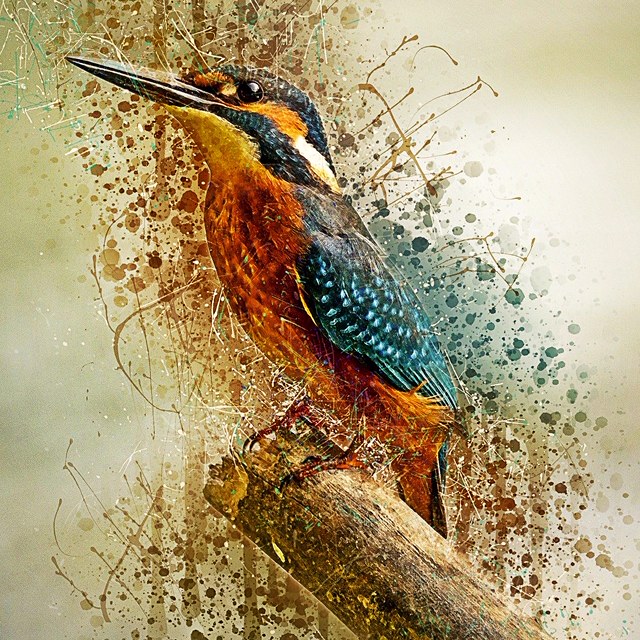
Poetry: As Kingfishers Catch Fire – Gerard Manley Hopkins

by Alcedo Atthis

As kingfishers catch fire, dragonflies draw flame; 
As tumbled over rim in roundy wells 
Stones ring; like each tucked string tells, each hung bell’s 
Bow swung finds tongue to fling out broad its name; 
Each mortal thing does one thing and the same: 
Deals out that being indoors each one dwells; 
Selves — goes itself; myself it speaks and spells, 
Crying Whát I dó is me: for that I came. 

I say móre: the just man justices; 
Keeps grace: thát keeps all his goings graces; 
Acts in God’s eye what in God’s eye he is — 
Chríst — for Christ plays in ten thousand places, 
Lovely in limbs, and lovely in eyes not his 
To the Father through the features of men’s faces. 


Music:   The Apple of My Eye by Umb-5 and Sam Carter

Sometimes a non-spiritual song captures a spiritual meaning in a beautiful way. Let God sing to you with this lovely song.

Mater Dolorosa

Memorial of Our Lady of Sorrows
September 15, 2022

Today’s Readings for Our Mother of Sorrows

https://bible.usccb.org/bible/readings/0915-memorial-our-lady-sorrows.cfm

Today, in God’s Lavish Mercy, we pray with Our Mother of Sorrows.

sorrows

Poetry: Pieta – R.S. Thomas

Always the same hills
Crown the horizon,
Remote witnesses
Of the still scene
And in the foreground
The tall Cross,
Sombre, untenanted,
Aches for the Body
That is back in the cradle
of a maid's arms.

Mary’s greatest sorrows came, not from circumstances she bore personally, but from her anguish at the sufferings of Jesus. Like so many mothers, fathers, spouses, children and friends, Mary suffered because she loved.

It is so hard to watch someone we love endure pain. We feel helpless, lost and perhaps angry. We may be tempted to turn away from our beloved’s pain because it empties us as well as them.

This is the beauty and power of Mary’s love: it did not turn. Mary’s devotion accompanied Jesus – even through crucifixion and death – for the sake of our salvation.

Today’s liturgy offers us the powerful sequence “Stabat Mater”.

Stabat Mater Dolorosa is considered one of the seven greatest Latin hymns of all time. It is based upon the prophecy of Simeon that a sword was to pierce the heart of His mother, Mary (Lk 2:35). The hymn originated in the 13th century during the peak of Franciscan devotion to the crucified Jesus and has been attributed to Pope Innocent III (d. 1216), St. Bonaventure, or more commonly, Jacopone da Todi (1230-1306), who is considered by most to be the real author.

The hymn is often associated with the Stations of the Cross. In 1727 it was prescribed as a Sequence for the Mass of the Seven Sorrows of Mary (September 15) where it is still used today. (preces-latinae.org)

Music: Stabat Mater Dolorosa – Giovanni Battista Pergolesi (1710-1736)
This is a glorious rendition. If you have time, you might listen to it on a rainy afternoon or evening as you pray.

STABAT Mater dolorosa
iuxta Crucem lacrimosa,
dum pendebat Filius. 
At the Cross her station keeping,
stood the mournful Mother weeping,
close to Jesus to the last. 
Cuius animam gementem,
contristatam et dolentem
pertransivit gladius. 
Through her heart, His sorrow sharing,
all His bitter anguish bearing,
now at length the sword has passed. 
O quam tristis et afflicta
fuit illa benedicta,
mater Unigeniti! 
O how sad and sore distressed
was that Mother, highly blest,
of the sole-begotten One. 
Quae maerebat et dolebat,
pia Mater, dum videbat
nati poenas inclyti. 
Christ above in torment hangs,
she beneath beholds the pangs
of her dying glorious Son. 
Quis est homo qui non fleret,
matrem Christi si videret
in tanto supplicio? 
Is there one who would not weep,
whelmed in miseries so deep,
Christ’s dear Mother to behold? 
Quis non posset contristari
Christi Matrem contemplari
dolentem cum Filio? 
Can the human heart refrain
from partaking in her pain,
in that Mother’s pain untold? 
Pro peccatis suae gentis
vidit Iesum in tormentis,
et flagellis subditum. 
Bruised, derided, cursed, defiled,
she beheld her tender Child
All with bloody scourges rent: 
Vidit suum dulcem Natum
moriendo desolatum,
dum emisit spiritum. 
For the sins of His own nation,
saw Him hang in desolation,
Till His spirit forth He sent. 
Eia, Mater, fons amoris
me sentire vim doloris
fac, ut tecum lugeam. 
O thou Mother! fount of love!
Touch my spirit from above,
make my heart with thine accord: 
Fac, ut ardeat cor meum
in amando Christum Deum
ut sibi complaceam. 
Make me feel as thou hast felt;
make my soul to glow and melt
with the love of Christ my Lord. 
Sancta Mater, istud agas,
crucifixi fige plagas
cordi meo valide. 
Holy Mother! pierce me through,
in my heart each wound renew
of my Savior crucified: 
Tui Nati vulnerati,
tam dignati pro me pati,
poenas mecum divide. 
Let me share with thee His pain,
who for all my sins was slain,
who for me in torments died. 
Fac me tecum pie flere,
crucifixo condolere,
donec ego vixero. 
Let me mingle tears with thee,
mourning Him who mourned for me,
all the days that I may live: 
Iuxta Crucem tecum stare,
et me tibi sociare
in planctu desidero. 
By the Cross with thee to stay,
there with thee to weep and pray,
is all I ask of thee to give. 
Virgo virginum praeclara,
mihi iam non sis amara,
fac me tecum plangere. 
Virgin of all virgins blest!,
Listen to my fond request:
let me share thy grief divine; 
Fac, ut portem Christi mortem,
passionis fac consortem,
et plagas recolere. 
Let me, to my latest breath,
in my body bear the death
of that dying Son of thine. 
Fac me plagis vulnerari,
fac me Cruce inebriari,
et cruore Filii. 
Wounded with His every wound,
steep my soul till it hath swooned,
in His very Blood away; 
Flammis ne urar succensus,
per te, Virgo, sim defensus
in die iudicii. 
Be to me, O Virgin, nigh,
lest in flames I burn and die,
in His awful Judgment Day. 
Christe, cum sit hinc exire,
da per Matrem me venire
ad palmam victoriae. 
Christ, when Thou shalt call me hence,
by Thy Mother my defense,
by Thy Cross my victory; 
Quando corpus morietur,
fac, ut animae donetur
paradisi gloria. Amen. 
While my body here decays,
may my soul Thy goodness praise,
safe in paradise with Thee. Amen.
From the Liturgia Horarum. Translation by Fr. Edward Caswall (1814-1878)

The Sign of the Cross

Feast of the Exaltation of the Holy Cross
Wednesday, September 14, 2022

Today’s Readings

https://bible.usccb.org/bible/readings/091422.cfm

Today, in God’s Lavish Mercy, on this Feast of the Exaltation of the Holy Cross, our readings include the sublime Philippians Canticle.

To me, this is the most beautiful passage in the Bible – so beautiful that nothing else needs to be said about it.

As we read this canticle lovingly and prayerfully today, may we take all the suffering of the world to Christ’s outstretched arms – even our own small or large heartaches and longings.


Poetry: Jessica Powers – The Sign of the Cross

The lovers of Christ lift out their hands 
to the great gift of suffering. 
For how could they seek to be warmed and clothed 
and delicately fed, 
to wallow in praise and to drink deep draughts 
of an undeserved affection,
have castle for home and a silken couch for bed, 
when He the worthy went forth, wounded and hated, 
and grudged of even a place to lay His head?
This is the badge of the friends of the Man of Sorrows: 
the mark of the cross, faint replica of His, 
become ubiquitous now; it spreads like a wild blossom 
on the mountains of time and in each of the crevices. 
Oh, seek that land where it grows in a rich abundance 
with its thorny stem and its scent like bitter wine, 
for wherever Christ walks He casts its seed
and He scatters its purple petals. 

It is the flower of His marked elect, 
and the fruit it bears is divine. 
Choose it, my heart. It is a beautiful sign.

Music: Philippians Canticle ~ John Michael Talbot

And if there be therefore any consolation
And if there be therefore any comfort in his love
And if there be therefore any fellowship in spirit
If any tender mercies and compassion

We will fulfill His joy
And we will be like-minded
We will fulfill His joy
We can dwell in one accord
And nothing will be done
Through striving or vainglory
We will esteem all others better than ourselves

This is the mind of Jesus
This is the mind of Our Lord
And if we follow Him
Then we must be like-minded
In all humility
We will offer up our love

Though in the form of God
He required no reputation
Though in the form of God
He required nothing but to serve
And in the form of God
He required only to be human
And worthy to receive
Required only to give