David, the King

January 24, 2022
Monday of the Third Week in Ordinary Time
Memorial of Saint Francis de Sales, Bishop and Doctor of the Church

Today, in God’s Lavish Mercy, our readings place us at watershed moments in the lives of David and Jesus.

All the tribes of Israel came to David in Hebron and said:
“Here we are, your bone and your flesh.
In days past, when Saul was our king, 
it was you who led the children of Israel out and brought them back.
And the LORD said to you, ‘You shall shepherd my people Israel 
and shall be commander of Israel.’”
When all the elders of Israel came to David in Hebron, 
King David made an agreement with them there before the LORD, 
and they anointed him king of Israel.

2 Samuel 5:1-4

In 2 Samuel 5, David fully assumes the kingship through the approbation of the community. The scene marks the culmination of his rise to power and “the beginning of the rest of his life”.

Through our readings in Samuel until now, we have ascended with David to the pinnacle of his life. We are about to begin weeks of moving down “the other side of the mountain”.


Scholars generally see the David narrative in two primary units, the Rise of David (I Sam. 16:1—II Sam. 5:10) and the Succession Narrative (II Sam. 9:1—20:26; I Kings 1:1—2:46). Chapters 5:11—8:18, fall between two larger units. Whereas the first presents David in his ascendancy, the second presents David in his demise and expresses pathos and ambiguity. Our chapters thus come after the raw vitality of the rise of David and before the terrible pathos of the succession narrative. They show the painful process whereby this beloved chieftain is transformed into a hardened monarch, who now has more power than popular affection.

Walter Brueggemann, First and Second Samuel

In our Gospel, Jesus also comes to a sort of “continental divide”. But rather than community approbation, Jesus encounters the condemnation of the scribes who have come from Jerusalem to assess him.

The scribes who had come from Jerusalem said of Jesus, 
“He is possessed by Beelzebul,” and
“By the prince of demons he drives out demons.”

Mark 3:22

From this moment in his life, Jesus too launches into his “kingship”, one that looks very different from David’s. The ensuing chapters of Samuel will reveal how David struggles and succumbs to the temptations of power and domination. The Gospels, on the other hand, describe Jesus’s “kingdom” as one of humility, mercy, and love for those who are poor and suffering.

Only through faith can we understand the inverse power of God present in the Life, Death and Resurrection of Jesus, and in our own lives. Jesus, the “new David”, is anointed in the Spirit to reveal and incorporate us into the kingdom of God.


Prose: from Immanuel Jakobovits who was the Chief Rabbi of the United Hebrew Congregations of the Commonwealth from 1967 to 1991.

To those without faith
there are no answers.
To those with faith, 
there are no questions.

Music: King David, music by Herbert Howells, sung by Sarah Connolly from a poem by Walter de la Mare

King David – Walter de la Mare

King David was a sorrowful man:
    No cause for his sorrow had he;
    And he called for the music of a hundred harps,
    To ease his melancholy.

    They played till they all fell silent:
    Played-and play sweet did they;
    But the sorrow that haunted the heart of King David
    They could not charm away.

    He rose; and in his garden
    Walked by the moon alone,
    A nightingale hidden in a cypress-tree
    Jargoned on and on.

    King David lifted his sad eyes
    Into the dark-boughed tree-
    ''Tell me, thou little bird that singest,
    Who taught my grief to thee?'

    But the bird in no wise heeded
    And the king in the cool of the moon
    Hearkened to the nightingale's sorrowfulness,
    Till all his own was gone.

Sunset for Saul

January 21, 2022
Memorial of Saint Agnes, Virgin and Martyr
Friday of the Second Week in Ordinary Time

Today, in God’s Lavish Mercy, our readings are full of drama and meaning enveloped in two of the greatest speeches of the Hebrew Scriptures – one from David, the other from Saul. The use of speeches to unfold the narrative is characteristic of the high points of Scripture. And these are two winners.

In the passage from Samuel, David spares Saul’s life even though Saul is in murderous pursuit of him. The result is the final dissolution of Saul’s kingship. It is a scene that could be right out of MGM! (Here is a video for kids featuring the moment. But I thought it was pretty cool. Maybe you will too.)

Is David noble or naïve? Is he magnanimous or stupid? Is he sincere or clever? Various scripture scholars interpret these passages in a host of ways. But as I pray this morning, I ask myself what it is that God might be saying to me through this passage.

Two things rise up:

  1. Above all else, David is motivated by a deep respect for God’s Will and Presence in his life. He doesn’t force God’s Will by seizing the kingship. David waits and listens for God’s intention.

David said to his men,
“The LORD forbid that I should do such a thing to my master,
the LORD’s anointed, as to lay a hand on him,
for he is the LORD’s anointed.”

    2.  David engages Saul directly and respectfully, perhaps in the hope of reaching a resolution of their issues. This honesty appears to motivate Saul to see himself and his situation clearly. It is a consummate act of reconciliation.

When David finished saying these things to Saul, Saul answered,
“Is that your voice, my son David?”
And Saul wept aloud.


Reverence and honesty rooted in
sincere love and respect for one another!
What a world we would live in
if each of us practiced these things unfailingly!

In our Gospel, Jesus calls his disciples to live in the world in just such a way – to bring healing and wholeness in the Name of Christ, for the sake of Love.

Our Alleluia Verse today captures the essence of Christ’s call to them —- and to us:

God was reconciling the world to himself in Christ,
and entrusting to us the message of that reconciliation.


Poetry: Saul And David by Anthony Hecht, 1923 – 2004, was an American poet. His work combined a deep interest in form with a passionate desire to confront the horrors of 20th century history, with the Second World War, in which he fought, and the Holocaust being recurrent themes in his work.

It was a villainous spirit, snub-nosed, foul
Of breath, thick-taloned and malevolent,
That squatted within him wheresoever he went
…….And possessed the soul of Saul.

There was no peace on pillow or on throne.
In dreams the toothless, dwarfed, and squinny-eyed
Started a joyful rumor that he had died
…….Unfriended and alone.

The doctors were confounded. In his distress, he
Put aside arrogant ways and condescended
To seek among the flocks where they were tended
…….By the youngest son of Jesse,

A shepherd boy, but goodly to look upon,
Unnoticed but God-favored, sturdy of limb
As Michelangelo later imagined him,
…….Comely even in his frown.

Shall a mere shepherd provide the cure of kings?
Heaven itself delights in ironies such
As this, in which a boy’s fingers would touch
…….Pythagorean strings

And by a modal artistry assemble
The very Sons of Morning, the ranked and choired
Heavens in sweet laudation of the Lord,
…….And make Saul cease to tremble.

Music: To Fill the World with Love sung by Richard Harris
(Lyrics below, but you will no doubt recall them from the fabulous film “Goodbye Mr. Chips”.)

In the morning of my life I shall look to the sunrise.
At a moment in my life when the world is new.
And the blessing I shall ask is that God will grant me,
To be brave and strong and true,
And to fill the world with love my whole life through.

(Chorus)
And to fill the world with love
And to fill the world with love my whole life through

In the noontime of my life I shall look to the sunshine,
At a moment in my life when the sky is blue.
And the blessing I shall ask shall remain unchanging.
To be brave and strong and true,
And to fill the world with love my whole life through

(Chorus)

In the evening of my life I shall look to the sunset,
At a moment in my life when the night is due.
And the question I shall ask only God can answer.
Was I brave and strong and true?
Did I fill the world with love my whole life through?

Faithful Heart

January 17, 2022
Monday of the Third Week in Ordinary Time
Memorial of Saint Anthony. Abbot

Today, in God’s Lavish Mercy, our readings help us understand the basic process for spiritual growth – the evolution from self-centered practice to God-centered faith.

The passages highlight three elements of a deeply faithful life:

Obedience – a listening heart
Discipline – a right heart
Freedom – a selfless heart

Obedience – The Listening Heart

In our first reading, Saul has fulfilled all God’s commands regarding the mission against the Amalekites – but he has still missed the point. Saul was given a divine mandate through Samuel to completely destroy the Amalekites. Instead, Saul kept the plunder, using some as a burnt sacrifice to God.

According to Samuel, Saul messed up big time. He had an unlistening heart. God didn’t want sacrifice, but rather a fully listening obedience.

But Samuel said:
            “Does the LORD so delight in burnt offerings and sacrifices
            as in obedience to the command of the LORD?
            Obedience is better than sacrifice,
                        and submission than the fat of rams.
            For a sin like divination is rebellion,
                        and presumption is the crime of idolatry.
            Because you have rejected the command of the LORD,
                        the LORD too, has rejected you as ruler.”

1 Samuel 15: 22-23

Discipline – The Right Heart

Our Responsorial Psalm continues the theme:

Why do you recite my statutes,
            and profess my covenant with your mouth,
Though you hate discipline
            and cast my words behind you?”…

The ones that offers praise as a sacrifice glorifies me;
            and to them that go the right way I will show the salvation of God

Psalm 50: 16-17;23

Freedom – The Selfless Heart

Mark’s Gospel complements the lessons of our first two readings. It paints a joyful picture of Jesus and his disciples. 

They are in the “salad days” of Christ’s earth-shaking ministry. Listening to Jesus, these disciples are in the Presence of a new and radical Truth. They fill their hearts and minds with its transformative power. Cherishing God’s Presence with them allows the disciples to release a inner love and generosity to fuel their ministry.

The nosy Pharisees, seeing all this joyful exuberance, question their unpenitential attitude:

The disciples of John and of the Pharisees were accustomed to fast.
People came to Jesus and objected,
“Why do the disciples of John and the disciples of the Pharisees fast,
 but your disciples do not fast?”

MARK 2:18

Does all this mean that there is never a time in the spiritual life for sackcloth, ashes and fasting? No – even Jesus didn’t say that:

Jesus answered the Pharisees,
“Can the wedding guests fast while the bridegroom is with them?
As long as they have the bridegroom with them they cannot fast.
But the days will come when the bridegroom is taken away from them,
and then they will fast on that day.

Mark 2:20

What I think it does mean is that a healthy spiritual life is centered on the Presence of God with us, not the absence. There are times when we should take stock of those “absences” and open them to repentance and healing. But then our spiritual energy should be turned to God in praise not toward our own penitential achievements.


Poetry: Flickering Mind – Denise Levertov

Lord, not you
it is I who am absent.
At first
belief was a joy I kept in secret,
stealing alone
into sacred places:
a quick glance, and away -- and back,
circling.
I have long since uttered your name
but now
I elude your presence.
I stop
to think about you, and my mind
at once
like a minnow darts away,
darts
into the shadows, into gleams that fret
unceasing over
the river's purling and passing.
Not for one second
will my self hold still, but wanders
anywhere,
everywhere it can turn.  Not you,
it is I am absent.
You are the stream, the fish, the light,
the pulsing shadow.
You the unchanging presence, in whom all
moves and changes.
How can I focus my flickering, perceive
at the fountain's heart
the sapphire I know is there?

Music: Sapphire Days – Anne Sweeten

Catching the Vision

January 15, 2022
Saturday of the First Week in Ordinary Time

Today, in God’s Lavish Mercy, we are introduced to Saul and Matthew. Both these friends of God went through a spiritual process to confirm that Friendship. The process included:

Seeing
Trusting
Choosing


Seeing

In our first reading, Saul first appears chasing a bunch of asses. (I’m not even going there. Draw your own parallels 🤣)

But in his heart of hearts, Saul had another agenda. He wanted to confirm that a growing vision within him was also God’s vision:

Saul met Samuel in the gateway and said,
“Please tell me where the seer lives.”
Samuel answered Saul: “I am the seer.
Go up ahead of me to the high place and eat with me today.
In the morning, before dismissing you,
I will tell you whatever you wish.”

1 Samuel 9:1-19


Trusting

Once our inner horizon begins to clear, our greatest challenge may be to trust what we see. For Saul, that power to trust came by benefit of Samuel’s anointing with oil.

As our jubilant psalm exerts, when we recognize God as our strength, our trust is confirmed:

O LORD, in your strength the king is glad;
            in your victory how greatly he rejoices!
You have granted him his heart’s desire;
            you refused not the wish of his lips.

Psalm 21: 2-3

Choosing

Each one of us, in our own way, experiences this spiritual process. Certainly we see it in how we find our life’s vocation. But we see it in smaller, daily ways as well. Each choice we make in life is a step toward or away from God – toward or away from Love, Mercy, Wholeness and Justice as we learn it in the Gospel.

In our reading from Mark, we witness Matthew in a critical process of “seeing-trusting-choosing”. 

Could more hidden drama
be packed in two simple lines than in these!

Jesus said to him, “Follow me.”
And he got up and followed Jesus.

Wrapped in those verses is Matthew’s whole life up to this point – all the choices that left him leaning so toward God that he could drop everything in one transforming moment to follow God’s call.

Ah, what might Saul and Matthew inspire in us today?

The Calling of St. Matthew – Caravaggio

Poetry: The Calling of the Apostle Matthew – James Lasdun

Not the abrupt way, frozen 
In the one glance of a painter’s frame,
Christ in the doorway pointing, Matthew’s face
Bright with perplexity, the glaze
Of a lifetime at the counting house

Cracked in the split-second’s bolt of being chosen,
But over the years,slowly, Hinted at, an invisible curve;
Persistent bias always favoring
Backwardly the relinquished thing
Over the kept, the gold signet ring
Dropped in a beggar’s bowl, the eye not fully

Comprehending the hand, not yet;
Heirloom damask thrust in passing
Stranger’s hand, the ceremonial saddle
(Looped coins, crushed clouds of inlaid pearl)
Given on an irresistible
Impulse to a servant. Where it sat,

A saddle-shaped emptiness
Briefly, obscurely brimming … Flagons
Cellars of wine, then as impulse steadied
Into habit, habit to need,
Need to compulsion, the whole vineyard,
The land itself, groves, herds, the ancestral house,

Given any, each object’s
Hollowed-out void successively
More vivid in him than the thing itself,
As if renouncing merely gave
Density to having, as if
He’d glimpsed in nothingness a derelict’s

Secret of unabated
Inverse possession … And only then
Almost superfluous, does the figure
Step softly to the shelter door,
Casual, foreknown, almost familiar,
Calmly received, like someone long awaited.

Music: The Call – Vaughn Williams from a poem by George Herbert

Herbert’s short poem is simple and direct. It is almost completely composed of words of one syllable. Allusions to the Old and New testaments, as well as to the Church of England liturgy, abound in Herbert’s poetry. In this short poem there are references to Revelations 22:26: ‘Come, Lord Jesus..’ and to John 14:6, where Jesus is described as ‘the way, the truth and the life’. ‘Come’ is the call of the poet to God, but it is also the response of the poet to a call from God.

This poem has been set to music several times, notably by Ralph Vaughan Williams in his ‘Five Mystical Songs’.

Come, my Way, my Truth, my Life:
Such a Way, as gives us breath:
Such a Truth, as ends all strife:
Such a Life, as killeth death.

Come, My Light, my Feast, my Strength:
Such a Light, as shows a feast:
Such a Feast, as mends in length:
Such a Strength, as makes his guest.

Come, my Joy, my Love, my Heart:
Such a Joy, as none can move:
Such a Love, as none can part:
Such a Heart, as joys in love.

A Soul’s Evolution

January 12, 2022
Wednesday of the First Week in Ordinary Time

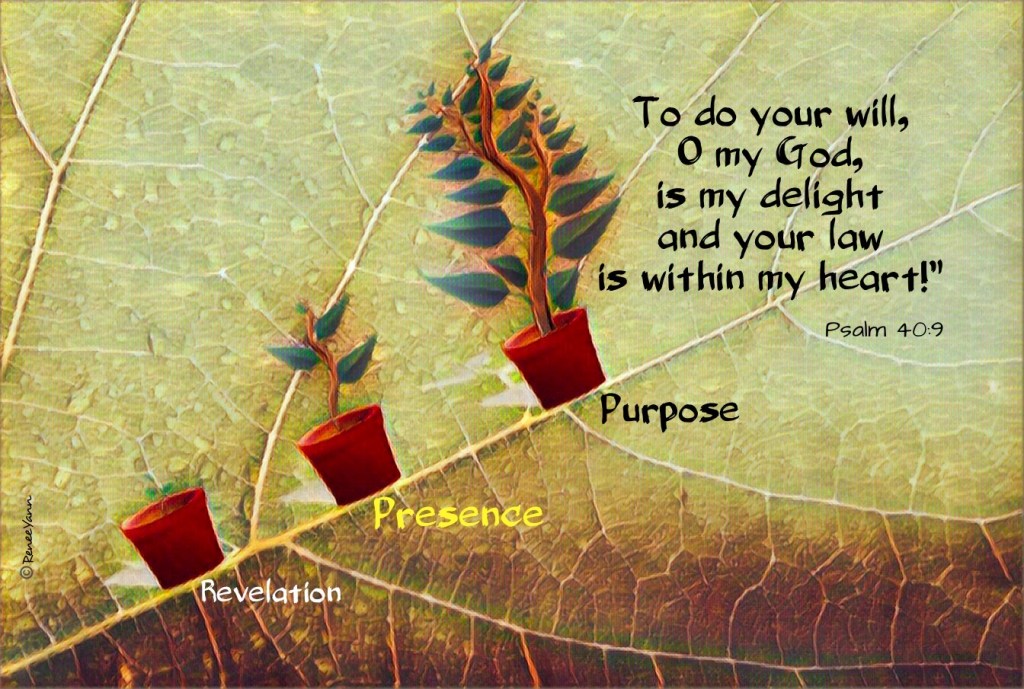
Today, in God’s Lavish Mercy, our readings lead us through an evolution of grace from:

Revelation
to
Presence
to
Purpose 

How simply charming yet powerful is the wonderful story of Samuel’s call! We can picture the tousled-hair boy sleeping near the Ark of the Covenant, youthfully unaware of his awesome surroundings.

God’s voice insists into Samuel’s unawareness, finally capturing his attention after four tries.

Oil painting on canvas, The Calling of Samuel by Sir Joshua Reynolds PRA (Plympton 1723 – London 1792), circa 1770-6. A half-length portrait of a young boy, turned to the left, gazing upwards, his right hand outstretched, wearing a loose brown cloak. Stormy sky.

Extraordinary Revelation 


From that moment, Samuel lives fully in the Presence of the Lord:

Samuel grew up, and the LORD was with him,
not permitting any word of his to be without effect.
Thus all Israel from Dan to Beersheba
came to know that Samuel was an accredited prophet of the LORD.

1 Samuel 3: 19-20
The Prophet Samuel – Claude Vignon

Extraordinary Presence


Mark’s Gospel narrates another call for us – the emerging call of Jesus and his mentoring of his disciples to share his sacred ministry:

Rising very early before dawn, 
he left and went off to a deserted place, where he prayed.
Simon and those who were with him pursued him
and on finding him said, “Everyone is looking for you.”
He told them, “Let us go on to the nearby villages
that I may preach there also.
For this purpose have I come.”
So he went into their synagogues, preaching and driving out demons 
throughout the whole of Galilee.

Mark 1: 35-39

Extraordinary Purpose


As we pray this reflection today, we may be just waking up as Samuel was. We may be slowly emerging from the desert of our sleep. Or we may be at a point in our spiritual lives where the Light is dawning on us for some other reason.

Wherever we are, let’s be aware that each “dawning” brings 

  • a new Revelation of grace
  • a deeper invitation to God’s Presence
  • a fresh call to engage God’s Purpose for our lives

Poetry: The Collar by George Herbert (1593 – 1633) a poet, orator, and priest of the Church of England. Herbert is considered one of the great metaphysical poets.
In this poem, he writes about the evolution of his desire to fully answer God’s call, symbolized in the priestly collar that he wore. The final lines remind me of Samuel’s call.

I struck the board, and cried, “No more; 

                         I will abroad! 

What? shall I ever sigh and pine? 

My lines and life are free, free as the road, 

Loose as the wind, as large as store. 

          Shall I be still in suit? 

Have I no harvest but a thorn 

To let me blood, and not restore 

What I have lost with cordial fruit? 

          Sure there was wine 

Before my sighs did dry it; there was corn 

    Before my tears did drown it. 

      Is the year only lost to me? 

          Have I no bays to crown it, 

No flowers, no garlands gay? All blasted? 

                  All wasted? 

Not so, my heart; but there is fruit, 

            And thou hast hands. 

Recover all thy sigh-blown age 

On double pleasures: leave thy cold dispute 

Of what is fit and not. Forsake thy cage, 

             Thy rope of sands, 

Which petty thoughts have made, and made to thee 

Good cable, to enforce and draw, 

          And be thy law, 

While thou didst wink and wouldst not see. 

          Away! take heed; 

          I will abroad. 

Call in thy death’s-head there; tie up thy fears; 

          He that forbears 

         To suit and serve his need 

          Deserves his load.” 

But as I raved and grew more fierce and wild 

          At every word, 

Methought I heard one calling, Child! 

          And I replied My Lord. 


Music: God’s Calling – George Melendez

I wonder if George Herbert could have appreciated this rap song😀

Joy Complete

January 8, 2022
Saturday after Epiphany

Today, in God’s Lavish Mercy, our readings offer us a theme of CONFIDENCE with a dash of JOY.

John begins with the reassuring verse:

From the Latin root meaning “to have full trust”, confidence is a rare and beautiful blessing in our lives. How many people or things are you able to trust that deeply? Are you blessed with a true confidant in your life?

John tells us that this is the kind of relationship we can and should have with God.

He says that when we pray with this confidence, we trust whatever answer we receive to bring us grace and life.


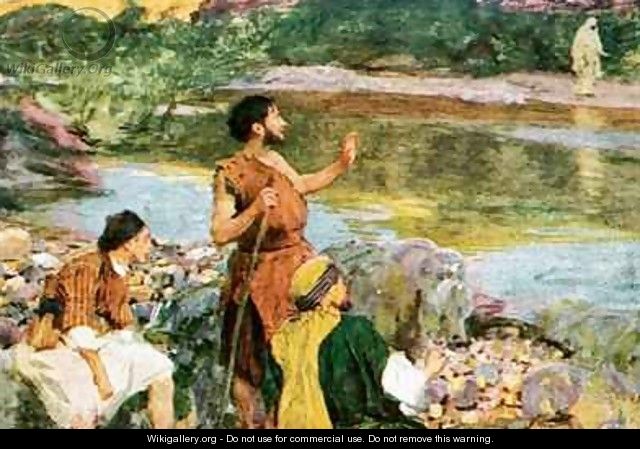
Behold the Lamb of God – William Hatherell, from wiki gallery

In our Gospel, John the Baptist’s followers are having a little trouble with their confidence. They are unsettled by the appearance and rising popularity of Jesus. John says to trust what is happening. He had already told them that a greater One would come after him.

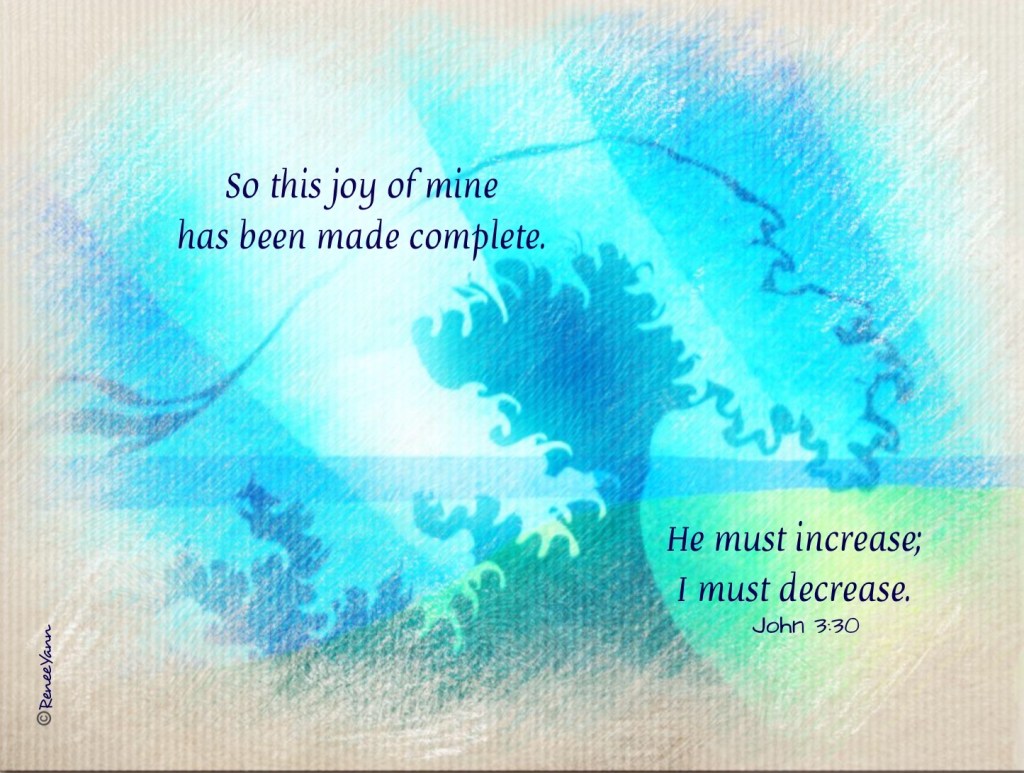
John’s ultimate response is worth repeating in prayer, “So this joy of mine has been made complete. He must increase; I must decrease.”

When Christ shines through us
without hindrance of our pride or fears,
how complete our joy will be,
how profoundly rooted our confidence!

Poetry: JOHN THE BAPTIST: THE PASSOVER (JOHN 1:35–39) by Irene Zimmerman, OSF

For years he’d preached the coming was at hand.
Now John saw Jesus walking on the strand.
“Behold the Lamb of God!” he called, and sent
his own disciples hurrying. They went,
filling Jesus’ footprints in the sand
faster than the water could. John stayed and poured
the river on the people and passed them over to his Lord.

Zimmerman, Irene. Incarnation (p. 42). Cowley Publications. Kindle Edition.

Music: Jesu, Joy of Our Desiring – J.S. Bach (interpreted by Daniel Kobialka)

Who Would I Be?

January 5, 2022
Wednesday after the Epiphany
Memorial of Saint John Neumann, Bishop

Today, in God’s Lavish Mercy, we have a few references to fear — and to its perfect antidote, Love.

John continues to instruct us in prose that stuns us with its sacred clarity:

There is no fear in love,
but perfect love drives out fear
because fear has to do with punishment,
and so one who fears is not yet perfect in love.

1 John 4:18

In our Gospel, we meet some pretty fearful disciples. First of all, they are still spinning from the avalanche of loaves and fishes gushing forth from the perfect faith of Jesus.

Jesus Walks on Water- William Brassey Hole

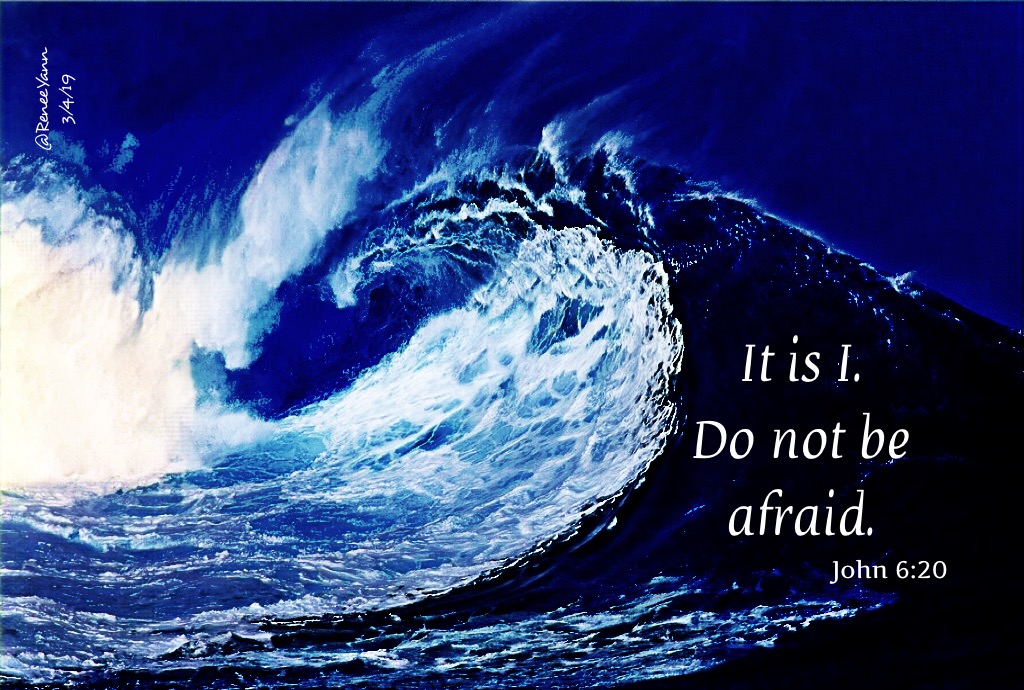
Today, they are rowing a storm-tossed lake in the pitch of night. Enough to strike fear into even a crusty fisherman’s heart! But wait a minute! As if all these scary things are not enough, here comes a ghost across the threatening waves!

And how about Jesus in this passage? A little nonchalant, or what? 

About the fourth watch of the night,
he came toward them walking on the sea.
He meant to pass by them.
But when they saw him walking on the sea,

they thought it was a ghost and cried out.

Jesus wasn’t worried about the waves.

Jesus, full of Love, and eternally perfected in the Creator’s Presence, has no need or place for fear. He lives in the accomplished wholeness of God where, as Julian of Norwich says, “All manner of things shall be well.”


Like me, you may not think about your fears very often. But when I read this line from Paula D’Arcy, I consider that there are all kinds of unrecognized fears inhibiting us:

Who would I be, 
and what power
would be expressed in my life, 

if I were not dominated by fear?

Paula D’Arcy

Fears. What are some that we may not recognize:

  • Fear of feeling unimportant, overlooked, naive.
  • Fear of failure, loss, death, loneliness, dependence.
  • Fear of looking foolish, of making a mistake
  • Fear of getting old, being sick, losing my comfort zone.
  • Fear of meaninglessness, unusefulness, of being held responsible?

Could we go on and on?

But what about the biggest fear – of being unloved, and maybe even unlovable.

Dear God, as we pray today, 
help us to grow into your amazing love for us. 
Help us to recognize the fears that limit our love,
to cast them out upon the choppy waters of our life
and to live in your perfect freedom and joy.

Music:  All Shall Be Well – Michelle Sherliza

Begin Again…

January 3, 2022
Monday after Epiphany

Today, in God’s Lavish Mercy, in this week after the Epiphany, we continue with John’s inspirational readings. They are intended to deepen us in love, truth and simplicity.

And we also have several Gospels this week that take us with Jesus as he begins his public ministry.


Today’s Gospel opens with a tinge of sadness. Jesus has just heard that John had been arrested. Reality dawns on them both that theirs will be no easy missionary journey. Wouldn’t it have been wonderful if these cousins could have teamed up, gone about preaching unhindered by the fears and bullying of the powerful?

But a free and easy story is not the one God chose to tell us, because our own stories are not always free and easy. Some, yes, more so than others. But all people suffer in some way and we all need a God who understands and shares that suffering.

So, “hearing that John had been arrested”, Jesus bravely begins. He goes to the Capernaum lakeshore where the common people gather to refresh themselves. He will find them hungry, confused, sinful, questioning, bereft, and battered. And he will begin by feeding and soothing them.


Where would Jesus begin with you? If you sat along that seashore in those first days, what would you lay before his tender mercy? Perhaps the need does not belong precisely to you, but to someone you love, someone who needs love in a harsh world.

Photo by Taryn Elliott on Pexels.com

Picture yourself there this morning. The sun begins to warm the salty edges of the sea. The crowd is large but quiet, as if they think themselves in church. Jesus looks out over all the gathered. But for one moment, his eyes meet yours, and that moment is enough to begin.


Poetry: To the Sea of Galilee – Benjamin Waugh (1839-1908)
(It’s not a great voice of literature, but I think this little poem is charming.)

O PEARL of seas! how fairly set, thou lovely Galilee!
Well may all waters of the world for beauty envy thee.

For more than beauty! On thy shores heaven’s purest feet have trod;
And in thy face, as now yon sun, was mirrored once my God.

He loved to walk with thee beside; He gazed into thy face; 5
Thy troubled moods He calmed for thee; thou seem’st His child of grace.

But yet why envy thee, fair sea, by Jesus favoured thus?
Far more than He hath favoured thee hath Jesus favoured us.

Not for thy waters Jesus came His precious work to do;
’Twas not to give thy troubles peace that Him from glory drew. 10

Thine was a brief, a passing joy, as transient as thy flowers;
Thy side He left, and went away—He never leaveth ours.

Yet, sea of seas, I envy thee, thou small, but greatest deep
For on thy bosom Jesus found the place where He might sleep.

His weary frame, His heavy heart were pillowed on thy breast. 15
As John on Him, so He on thee found place where He might rest.

Jesus, if thou, by work or wrong, should’st sad or weary be,
Come seek within my heart the place once found on Galilee.


Music: Lord, You Have Come to the Seashore

No More Tears

December 4, 2021
Saturday of the First Week of Advent

Today, in Mercy, Isaiah – in glorious prophecy – promises God’s People better times.

Thus says the Lord GOD,
    the Holy One of Israel:
O people of Zion, who dwell in Jerusalem,
    no more will you weep;
GOD will be gracious to you when you cry out,
    answering as soon as you are heard.
The Lord will give you the bread you need
    and the water for which you thirst.
No longer will your Teacher be hidden,
    but with your own eyes you shall see your Teacher,
While from behind, a voice shall sound in your ears:
    “This is the way; walk in it,”
    when you would turn to the right or to the left.

Isaiah 30: 19-21

Oh my, don’t we all long for the fulfillment of that promise! So much in both our larger and smaller worlds longs for healing!


Perhaps we can use our prayer within these readings today to call on God for the promised healing.

It is a healing that requires our cooperation. Isaiah says that we must name our pain to God – for ourselves and for all who suffer in our world:

The Lord will be gracious to you when you cry out,
answering as soon as you are heard.


The prophet says that this crying out will change us. We will see the Lord with us in our suffering. God will lead us through that suffering by our acts of faith, hope, love, justice and mercy:

No longer will your Teacher be hidden,
but with your own eyes you shall see your Teacher,
While from behind, a voice shall sound in your ears:
“This is the way; walk in it,”
when you would turn to the right or to the left.


Our Gospel tells us that we are called to be Christ’s disciples, and that disciples are healers. By letting our lives become sources of healing in the world, Isaiah’s prophecy is fulfilled for our time.

Jesus sent out these twelve after instructing them thus,
“Go to the lost sheep of the house of Israel.
As you go, make this proclamation: ‘The Kingdom of heaven is at hand.’
Heal the sick, raise the dead, cleanse lepers, drive out demons.

Without cost you have received; without cost you are to give.”

Matthew 10:5-8

How we do these wondrous deeds in the world is an ongoing revelation. When I was very young, I took the proclamation quite literally. But I soon lost the expectation that I would ever help “cure” anyone of anything!

Life has blessed me with the realization that there is a difference between “curing” and “healing” – and that there are many degrees of healing.

  • There are many ways in which living people are caught in deadly lives.
  • There are all kinds of “lepers” in our society, rendered so by the prejudices of others.
  • Certainly, many of us carry all sorts of crippling demons.

All these situations, and others like them, invite us to offer the gift of sacred healing implanted in us at our Baptism.

Acknowledging the pain in ourselves and others,
and trusting that God wants us to be healed and whole,
is the work of true discipleship.

Let’s draw strength from Isaiah’s promise in order to find a generous, merciful courage for our call to be “healed healers”.


Poetry: The Cure of Souls – Denise Levertov

The pastor
of grief and dreams

guides his flock towards
the next field

with all his care.
He has heard

the bell tolling
but the sheep

are hungry and need
the grass, today and

every day. Beautiful
his patience, his long

shadow, the rippling
sound of the flocks moving

along the valley.


Music: Your Healing Touch – Joe Bongiorno

The Heart’s Temple

November 19, 2021
Friday of the Thirty-third Week in Ordinary Time

Today, in God’s Lavish Mercy, we pray with a passage from Chronicles as our Responsorial Psalm:

Yours, O LORD, are grandeur and power,
    majesty, splendor, and glory.
For all in heaven and on earth is yours.

1 Chronicles 29:11

This passage inclines us to worship God whose “temple” is all of Creation.


Both readings today speak about the “Temple”. After the victory of Judas Maccabeus, the Jewish people restore their physical Temple with exuberant celebration, recognizing it as a symbol of God’s Presence with them.


In today’s Gospel. Jesus also “restores” the Temple by driving out the merchants who have diverted the Temple’s purpose as representative of God’s Presence.


Our bodies too are temples of the Holy Spirit. Paul, in his letter to the Corinthians tells us:

Do you not know
that your bodies are temples of the Holy Spirit,
who is in you, whom you have received from God?
You are not your own; you were bought at a price.

1 Corinthians 6:19

Through our Baptism into the Passion, Death and Resurrection of Christ, the Holy Spirit dwells in us. We are called to be transformed by this Indwelling. As in any relationship, this transformation is accomplished through transparency, communication, listening and acting on behalf of the Beloved.


Poetry: Go Not to the Temple – Tagore

Go not to the temple to put flowers upon the feet of God,
First fill your own house with the Fragrance of love…

Go not to the temple to light candles before the altar of God,
First remove the darkness of sin from your heart…

Go not to the temple to bow down your head in prayer,
First learn to bow in humility before your fellowmen…

Go not to the temple to pray on bended knees,
First bend down to lift someone who is down-trodden. ..

Go not to the temple to ask for forgiveness for your sins,
First forgive from your heart those who have sinned against you.


Music: In the Temple Garden – Aaron Kenny