Tuesday of Fifth Week of Easter

May 4, 2021

Today, in God’s Lavish Mercy, we pray with Psalm 145 which reveals a wonderful secret – how to be a Friend of God:

Pope Francis describes friendship with God in a recent Angelus address:

God is not a distant and anonymous being: God is our refuge, the wellspring of our peace and tranquility. God is the rock of our salvation, to which we can cling with the certainty of not falling; one who clings to God never falls! God is our defence against the evil which is ever lurking. God is a great friend, ally, parent to us, but we do not always realize it. We do not realize that we have a friend, an ally, a parent who loves us, and we prefer to rely on immediate goods that we can touch, on contingent goods, forgetting and at times rejecting the supreme good, which is the  love of God. Feeling that God is our Parent, in this epoch of orphanhood, is so important! In this orphaned world…


The early Christians persevered in unfolding this secret as told in Acts today:

After they had proclaimed the good news to that city
and made a considerable number of disciples,
they returned to Lystra and to Iconium and to Antioch.
They strengthened the spirits of the disciples
and exhorted them to persevere in the faith, saying,
“It is necessary for us to undergo many hardships
to enter the Kingdom of God.”

Acts 14: 21-22

In our Gospel, Jesus speaks to his disciples before his Ascension. He gives them the secret of hope, peace and encouragement. In that gift, they will stay true friends to him as he is to them:

And now I have told you this before it happens,
so that when it happens you may believe.
I will no longer speak much with you,
for the ruler of the world is coming.
He has no power over me,
but the world must know that I love the Father
and that I do just as the Father has commanded me.

John 14: 29-31

May we live joyfully as Friends of God, confident of and making known God’s merciful Name by our faith, love, mercy, generosity, and hope.

May my mouth speak the praise of the LORD,
    and may all flesh bless God’s holy name forever and ever.

Psalm 145: 21

Poetry: I Am – Rainer Maria Rilke

I am, you anxious one. Do you not hear me
rush to claim you with each eager sense?
Now my feelings have found wings, and, circling,
whitely fly about your countenance.

Here my spirit in its dress of stillness
stands before you, — oh, do you not see?
In your glance does not my Maytime prayer
grow to ripeness as upon a tree?

Dreamer, it is I who am your dream.
But would you awake, I am your will,
and master of all splendor, and I grow
to a sphere, like stars poised high and still,
with time’s singular city stretched below.


Music: Friend of God written by Israel Houghton and sung by the Brooklyn Tabernacle Choir

I am a friend of God
He calls me friend

Who am I that You are mindful of me?
That You hear me when I call
Is it true that You are thinking of me?
How You love me
It's amazing

Who am I, Lord
Who am I that You are mindful of me?
That You hear me when I call (is it true O Lord?)

Is it true that You are thinking of me?
How You love me (it's amazing Jesus)
It's amazing (I am a friend of God)
I am a friend of God ....(repeated)

What a priviledge it is, yeah
Who am I that You are mindful of me?
That You hear me when I call (is it true, is it true?)
Is it true that You are thinking of me? 

(Oh Lord sometimes I don't understand)
How You love me (how You love me Lord?)
It's amazing (oh it's so amazing)
It's amazing (Lord it's so amazing)
It's amazing
I am a friend of God

(These phrases are repeated with lots of praise in between.
I hope you feel it too!❤️😇)

Feast of Saints Philip and James, Apostles

May 3, 2021


Today, in God’s Lavish Mercy, we pray with Psalm 19 in which the psalmist draws on nature’s beauty to praise God.

The heavens declare the glory of God;
    and the firmament proclaims his handiwork.
Day pours out the word to day;
    and night to night imparts knowledge.

Psalm 19: 2-3

Psalm 19 is used today to highlight the apostolic work of Philip and James who chose to declare the Gospel by their lives.

We note that these men are no longer called simply “disciples” or learners of the Word. They are now “apostles”, charged with spreading the Word for the benefit of all.

In our Christian vocations, we each are called to live both these aspects of our call. We are continual learners of the faith through our prayer, reading, and listening.  At the same time, we have an apostolic charge to spread the Gospel by the way we live.


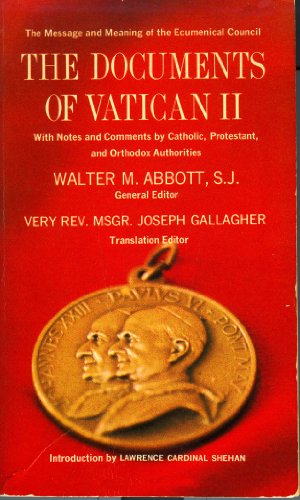
This double call was clearly proclaimed through Vatican II in the magnificent document Lumen Gentium, the Dogmatic Constitution on the Church.

I remember with great joy how this document, with its companions, released a surge of enthusiastic faith in the People of God when published in the 1960s. Many of us read and re-read our paperback copies of the Documents until they have long since fallen apart.

There is a Kindle edition available, but now when I want to be refreshed by their power, I access them for free on my iPad at the Vatican site:


Here is a favorite passage I used today to inform my prayer on this feast of two apostles

Lumen Gentium
(The Dogmatic Constitution on the Church)
promulgated by Pope Paul VI

The laity are gathered together in the People of God and make up the Body of Christ under one head. Whoever they are they are called upon, as living members, to expend all their energy for the growth of the Church and its continuous sanctification, since this very energy is a gift of the Creator and a blessing of the Redeemer.

The lay apostolate, however, is a participation in the salvific mission of the Church itself. Through their baptism and confirmation all are commissioned to that apostolate by the Lord. Moreover, by the sacraments, especially Holy Eucharist, that charity toward God and our brothers and sisters which is the soul of the apostolate is communicated and nourished. Now the laity are called in a special way to make the Church present and operative in those places and circumstances where only through them can it become the salt of the earth. Thus every lay person, in virtue of the very gifts bestowed upon them, is at the same time a witness and a living instrument of the mission of the Church itself “according to the measure of Christ’s bestowal”.

Besides this apostolate which certainly pertains to all Christians, the laity can also be called in various ways to a more direct form of cooperation in the apostolate of the Hierarchy. This was the way certain men and women assisted Paul the Apostle in the Gospel, laboring much in the Lord. Further, they have the capacity to assume from the Hierarchy certain ecclesiastical functions, which are to be performed for a spiritual purpose.

Upon all the laity, therefore, rests the noble duty of working to extend the divine plan of salvation to all persons of each epoch and in every land. Consequently, may every opportunity be given them so that, according to their abilities and the needs of the times, they may zealously participate in the saving work of the Church.


This morning’s question:
how am I hearing
and responding
to my apostolic call?

Poetry: An Apostle’s Prayer – Edward Henry Bickersteth, Bishop of Exeter (1825-1906)

My God, my Father, let me rest
In the calm sun-glow of Thy face,
Until Thy love in me express’d
Draws others to Thy throne of grace.

O Jesu, Master, let me hold
Such secret fellowship with Thee,
That others, careless once and cold,
Won to my Lord and theirs may be.

Eternal Spirit, heavenly Dove,
The light of life to me impart,
Till fire descending from above
Burns on and on from heart to heart.

O Father, Son, and Holy Ghost,
Still, still may love to love respond;
And teach me, when I love Thee most,
Depths all unfathom’d lie beyond.

Music: The Call – from Five Mystical Songs – Vaughan Williams

Come, my Way, my Truth, my Life:
such a way as gives us breath;
such a truth as ends all strife;
such a life as killeth death.

Come, my Light, my Feast, my Strength:
such a light as shows a feast;
such a feast as mends in length;
such a strength as makes a guest.

Come, my Joy, my Love, my Heart:
such a joy as none can move:
such a love as none can part;
such a heart as joys in love.

Fifth Sunday of Easter

May 2, 2021

Today, in God’s Lavish Mercy, we pray with Psalm 22 which captures the message of all our readings this Sunday: how we receive, cherish, grow and share our faith.

When I read these passages this morning, an image came to my mind.

Sister Bernard Mary was a special, and rather unique Sister of Mercy. Born in 1917, and a true representative of “The Greatest Generation”, she served as a Navy nurse in WWII. Afterward she joined the Sisters of Mercy and lived a long life of expert care in our hospitals and other institutions. Among her many clinical talents, she was the supreme phlebotomist. She could stick even a difficult vein with you never ever noticing the pinch.


When Bernard died at the age of 91, a lone sailor stood in our community cemetery to bugle “Taps” over her flag-draped coffin. The melody captured all the singular simplicity of her dedicated and faithful ministry, sending it to heavens that welcomed her.

Bernard was one of those iconic sisters whose life was fully focused on her faith and ministry. She worked every day, all day and, as far as I could tell, had few other interests than a love of her family. 


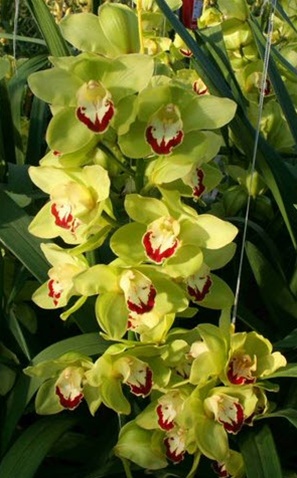
But she had an orchid plant. And it was a doozy. Given the plant as a small gift, she had nurtured that flower like the practiced healer that she was. She understood it, spoke to it, listened to it, responded to it, providing it deeper roots as it grew to an impressive size.  Like any plant, it went through cycles. Bernard patiently accompanied and nourished it through every one.

As a result, the orchid was huge and astoundingly beautiful – to the point that each year, it would be entered in the Philadelphia Flower Show. At least on one occasion, it won first prize!

(The Philadelphia Flower Show is an annual event produced by The Pennsylvania Horticultural Society. Said to be the “largest indoor flower show in the world”, it attracts more than a quarter million people annually.)


The image? That magnificent plant was a symbol – the visible expression of Bernard’s quiet but powerful faith.

Let’s consider our own faith. It’s a gift. It deserves our complete and loving attention. It must remain deeply rooted within us.  And it should be displayed for the benefit of others through our loving and merciful ministry to those in need.

Psalm 22 says so:

I will offer praise in the great assembly;
my vows I will fulfill before those who reverence the Lord.

The needy will eat their fill;
those who seek the LORD will offer praise.
May your hearts enjoy life forever!

Psalm 22: 26-27

The Acts of the Apostles says so:

The church throughout all Judea, Galilee, and Samaria was at peace.
It was being built up and walked in the fear of the Lord,
and with the consolation of the Holy Spirit it grew in numbers.

Acts 9:31

John’s letter says so:

And God’s commandment is this:
we should believe in the name of the Son, Jesus Christ,
and love one another just as commanded us.
Those who keep these commandments remain in himGod, and God in them,
and the way we know that God remains in us
is from the Spirit he gave us.


And our Gospel today says so:

Remain in me, as I remain in you.
Just as a branch cannot bear fruit on its own
unless it remains on the vine,
so neither can you unless you remain in me.
I am the vine, you are the branches.
Whoever remains in me and I in him will bear much fruit,
because without me you can do nothing.

John 15: 4-5

Dear Bernard, simple, faithful sister – you taught me so many things without your ever realizing it… thank you!


Poetry: Re-planting – Renee Yann,RSM

That afternoon,
winter framed sunlight
in the cold windows.

I watched you spread small greens
across a wooden table,
fingering their thready roots
like harp strings.

A song fell from that,
like quiet, nurturing rain.
Unable to sing,
I let the song seep quietly into me,
bathing my uprooted soul
in the warm silence between us.

There, in that comfort,
the small cutting at my core
sought earth,
sought healing.

Finally, I spoke
and laid the whole parched root
upon the table of your mercy. And
you, ever-tender gardener, lifted it
and blew the dust away, and
spitting gently in your hand,
massaged the feeble life it hid
before you stood it carefully in soil.

You said, “Life is like this sometimes.
Be gentle with it.  It will bloom again.” 

Music: With An Orchid – Yanni

Friday of the Fourth Week of Easter

April 30, 2021


Today, in God’s Lavish Mercy, we pray with Psalm 2 which, at the beginning of the Psalter, highlights the centrality of King David to Israel’s faith.

For Christians, the archetype of King David serves as point of insight to explore who Jesus Christ is for us. Of course we know that Christ is God, but we have no direct experience of God. So we try to understand God through symbols which, although inadequate, give us a context to form our relationship with God.

Psalm 2 gives us two such archetypal symbols: king and son. For us, that combination signals not only Christ’s power but the fact that it is directly derived from God. Christ’s power is divine, just as the Creator’s power is divine.

Because of that divine intimacy, the “King-Son” may ask and will receive whatever is requested.


Ask of me and I will give you
    the nations for an inheritance
    and the ends of the earth for your possession.

Psalm 2; 8-9

Christ’s whole life – Passion, Death, and Resurrection – was that Messianic “Ask” foretold in David. Through Jesus, we too become daughters and sons of God. This is the Good News the disciples preach in today’s first reading. 

We ourselves are proclaiming this good news to you
that what God promised our fathers
God has brought to fulfillment for us, their children, by raising up Jesus,
as it is written in the second psalm,
    “You are my Son; this day I have begotten you.”

Acts 13:33

This is the Way, the Truth and the Life that Jesus offers in today’s Gospel.

“Master, we do not know where you are going;
how can we know the way?” 
Jesus said to him, “I am the way and the truth and the life. 
No one comes to the Father except through me.”

John 14: 5-6

The gender-heavy symbols of king and son don’t speak strongly to me, but the image of Christ as my “Requestor” does. I think this morning of another Gospel assurance that I love:

I tell you, whoever believes in me will do the works I have been doing,
and they will do even greater things than these,
because I am going to the Father.
And I will do whatever you ask in my name,
so that the Father may be glorified in the Son.
You may ask me for anything in my name, and I will do it.

John 14: 12-14

Dear Jesus, may we learn what it is
to live fully in your Name.


Music: What a Beautiful Name – Hillsong

Saint Catherine of Siena, Doctor of the Church

April 29, 2021

Catherine of Siena Writing – Rutilio di Lorenzo Manetti

Today, in God’s Lavish Mercy, we pray with Psalm 89 which captures the spirit of Catherine of Siena, one of the Church’s greatest treasures.

The favors of the LORD I will sing forever;
    through all generations my mouth shall proclaim your faithfulness.
For you have said, “My kindness is established forever”;
    in heaven you have confirmed your faithfulness.

Psalm 89:2-3

The beauty of Catherine’s life and spirituality has blessed the world for nearly seven centuries. Still, it has never grown old because it was fully rooted in an eternal God.

Catherine’s sanctity was born of:
transcendent FAITH,
uncompromising TRUTH,
and overarching LOVE
for God
and God’s Creation.


She lived the Lord’s promise as we find it in Psalm 89:

My faithfulness and my mercy shall be with you,
    and through my name shall your spirit be exalted.
You shall say of me, ‘You are my father,
    my God, the Rock, my savior.

Psalm 89: 25-27

Here are a few of thoughts from Catherine’s extensive writings:

FAITH

The soul is in God and God is in the soul. 
God is closer to us than water is to a fish. 
Turn over the rudder in God's name, 
and sail with the wind heaven sends us.

TRUTH

Proclaim the truth 
and do not be silent through fear.
We've had enough exhortations to be silent. 
Cry out with a thousand tongues - 
I see the world is rotten because of silence.

LOVE

You know that every evil is founded in self-love, 
and that self-love is a cloud that takes away the light of reason, 
which reason holds in itself the light of faith, 
and one is not lost without the other.
Love transforms one 
into what one loves.

Poetry: My Nature Is Fire – Prayer of St. Catherine of Siena

In your nature, eternal Godhead,
I shall come to know my nature.
And what is my nature, Boundless Love?
It is fire,
because you are nothing but a fire of love.
And you have given humankind
a share in this nature,
for by the fire of love you created us.
And so with all other people
and every created thing;
you made them out of love.

O eternal Trinity, my sweet love!
You, Light, give us light.
You, Wisdom, give us wisdom.
You, Supreme Strength, strengthen us.
Today, eternal God,
let our cloud be dissipated
so that we may perfectly know and follow your Truth in truth,
with a free and simple heart.
God, come to our assistance!
Lord, make haste to help us!
Amen.

Music: The Prayer – given by violinist SJCelestin and saxophonist Ketler Macome

Tuesday of the Fourth Week of Easter

April 27, 2021

Today, in God’s Lavish Mercy, we pray with Psalm 87 which is both a celebration of and a longing for God’s Presence as symbolized for the psalmist in Jerusalem, Zion, the Temple.

His foundation upon the holy mountains
    the LORD loves:
The gates of Zion,
    more than any dwelling of Jacob.
Glorious things are said of you,
    O city of God!

Psalm 87: 1-3

For the psalmist, who is in exile, Zion was the visible expression of God’s exclusive relationship with Israel – the longed-for Kingdom.


In our reading from Acts, the concept of God’s Kingdom takes a larger shape. Jewish Christians, scattered in persecution, began to share the Good News with Gentiles. Barnabas blesses this sharing. He and Paul spend a year in Antioch teaching these new Christians who will not have the same devotion to “Zion”.


So where is “the Kingdom” now?

Our Gospel shows us Jesus, walking in the Temple portico one winter morning. He stands amidst the very symbols extolled in Psalm 87. He points his listeners, who are still resistant, toward the only true “kingdom”, one he has described before:

Now when He was asked by the Pharisees when the kingdom of God would come, He answered them and said, “The kingdom of God does not come with observation; nor will they say, ‘See here!’ or ‘See there!’ For indeed, the kingdom of God is within you.”

Luke 17: 20-21

We know from the Beatitudes that the “kingdom of God” belongs to the poor and the persecuted:

Blessed are the poor in spirit,
    for theirs is the Kingdom of Heaven…..
……Blessed are those who are persecuted because of righteousness,
    for theirs is the Kingdom of Heaven.


Perhaps there is a touch of biblical irony in the fact that our poor and persecuted psalmist, exiled from beautiful Zion, already possessed the “kingdom” within! But, without the benefit of Jesus’s teaching, it seems he didn’t realize it.

Do we realize it? 


Prose: from Hans Küng

(For my spiritual reading recently , I returned to an old favorite Hans Küng, a revered Catholic priest and Vatican II theologian who died earlier this month. Word of his death took me back to my 1960s heady theology days.🙏😇)

Here are two relevant quotes to our thoughts on “the Kingdom” today:

The meaning of the church does not reside in what it is but in what it is moving towards. It is the reign of God which the church hopes for, bears witness to and proclaims.

Hans Küng: The Church

The kingdom of God is creation healed.

Hans Küng: On Being a Christian

Music: The Holy City, Jerusalem sung by Jessye Norman

Friday of the Third Week of Easter

April 23, 2021

Today, in God’s Lavish Mercy, we pray with Psalm 117. Consisting of only two verses, it is the shortest psalm and also the shortest chapter in the whole Bible. But it is packed with spiritual meaning.

Our Responsorial Psalm, anchored on Mark 16:15, sums up the whole mission of Jesus with which we have been gifted and entrusted.

  1. There is Good News – the “goodest” possible news – In Jesus Christ, God has fulfilled the Promise to redeem us.

Steadfast is God’s kindness toward us,
    and the fidelity of the LORD endures forever.


  1. We should totally rejoice in this Good News

Praise the LORD, all you nations;
    glorify him, all you peoples!


  1. We are charged to preach this Good News to the whole world.

Go out to all the world and tell the Good News.


I think it is worth noting that as an alternative to this final verse, the liturgical directions indicate that we may respond simply with the word, “Alleluia”.

When we live in vibrant faith, our life is its own preaching – our life is an “Alleluia!” Our whole life proclaims the Good News”.


Prose Picture: taken from St. Augustine of Hippo


Music: Laudate Dominum – Taizé

Third Sunday of Easter

April 18, 2021

Today, in God’s Lavish Mercy, we pray with Psalm 4 which describes the spiritual contentment of one who tries to respond faithfully to an ever-faithful God:

The psalmist’s faithful response is driven by a deep repentance – a conversion, a turning toward the Light.

Let your heart be awestruck by God’s steadfast love.
Sin no more;
Turn to God in the depth of your spirit.
Examine your heart in silence 
as you offer your evening prayer.

Psalm 4: 4-5

I think that, even in the most brilliant souls, there are still corners yearning for Light. Until we are transfigured by death, such is the human condition. This is the case with the people Peter addresses in our first reading, John in our second. Even the faithful disciples are called to greater Light in today’s Gospel.

Jesus said to them:
Thus it is written that the Christ would suffer
and rise from the dead on the third day
and that repentance, for the forgiveness of sins,
would be preached in his name
to all the nations, beginning from Jerusalem.
You are witnesses of these things.

Luke 24:46-48

Today, as we pray, might there be a shadowed corner we would like to turn toward Grace? What places in our sometimes darkened world shall we plead before the Merciful Light?

Poetry: Light – Today’s poem by George Macdonald is long, but oh so worth the time and focus. I encourage you to revisit often, taking small excerpts to cherish.

George Macdonald (10 December 1824 – 18 September 1905) was a Scottish author, poet and Christian minister. He was a pioneering figure in the field of fantasy literature and the mentor of fellow writer Lewis Carroll. In addition to his fairy tales, MacDonald wrote several works on Christian apologetics.

His writings have been cited as a major literary influence by many notable authors including W. H. Auden, J. M. Barrie, Lord Dunsany, Hope Mirrlees, Robert E. Howard, L. Frank Baum, T.H. White, Lloyd Alexander, C. S. Lewis, J. R. R. Tolkien, Walter de la Mare, E. Nesbit, Peter S. Beagle, Neil Gaiman and Madeleine L’Engle. 

C. S. Lewis wrote that he regarded MacDonald as his “master”: “Picking up a copy of Phantastes one day at a train-station bookstall, I began to read. A few hours later”, said Lewis, “I knew that I had crossed a great frontier.” G. K. Chesterton cited The Princess and the Goblin as a book that had “made a difference to my whole existence”.


Light 

First-born of the creating Voice!
Minister of God’s Spirit, who wast sent
Waiting upon him first, what time he went
Moving about mid the tumultuous noise
Of each unpiloted element
Upon the face of the void formless deep!
Thou who didst come unbodied and alone
Ere yet the sun was set his rule to keep,
Or ever the moon shone,
Or e’er the wandering star-flocks forth were driven!
Thou garment of the Invisible, whose skirt
Sweeps, glory-giving, over earth and heaven!
Thou comforter, be with me as thou wert
When first I longed for words, to be
A radiant garment for my thought, like thee!

We lay us down in sorrow,
Wrapt in the old mantle of our mother Night;
In vexing dreams we strive until the morrow;
Grief lifts our eyelids up-and Lo, the light!
The sunlight on the wall! And visions rise
Of shining leaves that make sweet melodies;
Of wind-borne waves with thee upon their crests;
Of rippled sands on which thou rainest down;
Of quiet lakes that smooth for thee their breasts;
Of clouds that show thy glory as their own;
O joy! O joy! the visions are gone by!
Light, gladness, motion, are reality!

Thou art the god of earth. The skylark springs
Far up to catch thy glory on his wings;
And thou dost bless him first that highest soars.
The bee comes forth to see thee; and the flowers
Worship thee all day long, and through the skies
Follow thy journey with their earnest eyes.
River of life, thou pourest on the woods,
And on thy waves float out the wakening buds;
The trees lean toward thee, and, in loving pain,
Keep turning still to see thee yet again;
South sides of pines, haunted all day by thee,
Bear violins that tremble humanly.
And nothing in thine eyes is mean or low:
Where’er thou art, on every side,
All things are glorified;
And where thou canst not come, there thou dost throw
Beautiful shadows, made out of the dark,
That else were shapeless; now it bears thy mark.

And men have worshipped thee.
The Persian, on his mountain-top,
Waits kneeling till thy sun go up,
God-like in his serenity.
All-giving, and none-gifted, he draws near,
And the wide earth waits till his face appear-
Longs patient. And the herald glory leaps
Along the ridges of the outlying clouds,
Climbing the heights of all their towering steeps.
Sudden, still multitudinous laughter crowds
The universal face: Lo, silently,
Up cometh he, the never-closing eye!
Symbol of Deity, men could not be
Farthest from truth when they were
kneeling unto thee!

Thou plaything of the child,
When from the water’s surface thou dost spring,
Thyself upon his chamber ceiling fling,
And there, in mazy dance and motion wild,
Disport thyself-etherial, undefiled.
Capricious, like the thinkings of the child!
I am a child again, to think of thee
In thy consummate glee.
How I would play with thee, athirst to climb
On sloping ladders of thy moted beams,
When through the gray dust darting in long streams!
How marvel at the dusky glimmering red,
With which my closed fingers thou hadst made
Like rainy clouds that curtain the sun’s bed!
And how I loved thee always in the moon!
But most about the harvest-time,
When corn and moonlight made a mellow tune,
And thou wast grave and tender as a cooing dove!
And then the stars that flashed cold, deathless love!
And the ghost-stars that shimmered in the tide!
And more mysterious earthly stars,
That shone from windows of the hill and glen-
Thee prisoned in with lattice-bars,
Mingling with household love and rest of weary men!
And still I am a child, thank God!-to spy
Thee starry stream from bit of broken glass
Upon the brown earth undescried,
Is a found thing to me, a gladness high,
A spark that lights joy’s altar-fire within,
A thought of hope to prophecy akin,
That from my spirit fruitless will not pass.

Thou art the joy of age:
Thy sun is dear when long the shadow falls.
Forth to its friendliness the old man crawls,
And, like the bird hung out in his poor cage
To gather song from radiance, in his chair
Sits by the door; and sitteth there
His soul within him, like a child that lies
Half dreaming, with half-open eyes,
At close of a long afternoon in summer-
High ruins round him, ancient ruins, where
The raven is almost the only comer-
Half dreams, half broods, in wonderment
At thy celestial ascent
Through rifted loop to light upon the gold
That waves its bloom in some high airy rent:
So dreams the old man’s soul, that is not old,
But sleepy mid the ruins that infold.

What soul-like changes, evanescent moods,
Upon the face of the still passive earth,
Its hills, and fields, and woods,
Thou with thy seasons and thy hours art ever calling forth!
Even like a lord of music bent
Over his instrument,
Giving to carol, now to tempest birth!
When, clear as holiness, the morning ray
Casts the rock’s dewy darkness at its feet,
Mottling with shadows all the mountain gray;
When, at the hour of sovereign noon,
Infinite silent cataracts sheet
Shadowless through the air of thunder-breeding June;
When now a yellower glory slanting passes
‘Twixt longer shadows o’er the meadow grasses;
And now the moon lifts up her shining shield,
High on the peak of a cloud-hill revealed;
Now crescent, low, wandering sun-dazed away,
Unconscious of her own star-mingled ray,
Her still face seeming more to think than see,
Makes the pale world lie dreaming dreams of thee!
No mood, eternal or ephemeral,
But wakes obedient at thy silent call!

Of operative single power,
And simple unity the one emblem,
Yet all the colours that our passionate eyes devour,
In rainbow, moonbow, or in opal gem,
Are the melodious descant of divided thee.
Lo thee in yellow sands! Lo thee
In the blue air and sea!
In the green corn, with scarlet poppies lit,
Thy half-souls parted, patient thou dost sit.
Lo thee in dying triumphs of the west!
Lo thee in dew-drop’s tiny breast!
Thee on the vast white cloud that floats away,
Bearing upon its skirt a brown moon-ray!
Gold-regent, thou dost spendthrift throw
Thy hoardless wealth of gleam and glow!
The thousand hues and shades upon the flowers
Are all the pastime of thy leisure hours;
The jewelled ores in mines that hidden be,
Are dead till touched by thee.

Everywhere,
Thou art lancing through the air!
Every atom from another
Takes thee, gives thee to his brother;
Continually,
Thou art wetting the wet sea,
Bathing its sluggish woods below,
Making the salt flowers bud and blow;
Silently,
Workest thou, and ardently,
Waking from the night of nought
Into being and to thought;

Influences
Every beam of thine dispenses,
Potent, subtle, reaching far,
Shooting different from each star.
Not an iron rod can lie
In circle of thy beamy eye,
But its look doth change it so
That it cannot choose but show
Thou, the worker, hast been there;
Yea, sometimes, on substance rare,
Thou dost leave thy ghostly mark
Even in what men call the dark.
Ever doing, ever showing,
Thou dost set our hearts a glowing-
Universal something sent
To shadow forth the Excellent!

When the firstborn affections-
Those winged seekers of the world within,
That search about in all directions,
Some bright thing for themselves to win-
Through pathless woods, through home-bred fogs,
Through stony plains, through treacherous bogs,
Long, long, have followed faces fair,
Fair soul-less faces, vanished into air,
And darkness is around them and above,
Desolate of aught to love,
And through the gloom on every side,
Strange dismal forms are dim descried,
And the air is as the breath
From the lips of void-eyed Death,
And the knees are bowed in prayer
To the Stronger than despair-
Then the ever-lifted cry,
Give us light, or we shall die,
Cometh to the Father’s ears,
And he hearkens, and he hears:-

As some slow sun would glimmer forth
From sunless winter of the north,
We, hardly trusting hopeful eyes,
Discern and doubt the opening skies.
From a misty gray that lies on
Our dim future’s far horizon,
It grows a fresh aurora, sent
Up the spirit’s firmament,
Telling, through the vapours dun,
Of the coming, coming sun!
Tis Truth awaking in the soul!
His Righteousness to make us whole!
And what shall we, this Truth receiving,
Though with but a faint believing,
Call it but eternal Light?
‘Tis the morning, ’twas the night!

All things most excellent
Are likened unto thee, excellent thing!
Yea, he who from the Father forth was sent,
Came like a lamp, to bring,
Across the winds and wastes of night,
The everlasting light.
Hail, Word of God, the telling of his thought!
Hail, Light of God, the making-visible!
Hail, far-transcending glory brought
In human form with man to dwell-
Thy dazzling gone; thy power not less
To show, irradiate, and bless;
The gathering of the primal rays divine
Informing chaos, to a pure sunshine!

Dull horrid pools no motion making!
No bubble on the surface breaking!
The dead air lies, without a sound,
Heavy and moveless on the marshy ground.

Rushing winds and snow-like drift,
Forceful, formless, fierce, and swift!
Hair-like vapours madly riven!
Waters smitten into dust!
Lightning through the turmoil driven,
Aimless, useless, yet it must!

Gentle winds through forests calling!
Bright birds through the thick leaves glancing!
Solemn waves on sea-shores falling!
White sails on blue waters dancing!
Mountain streams glad music giving!
Children in the clear pool laving!
Yellow corn and green grass waving!
Long-haired, bright-eyed maidens living!
Light, O radiant, it is thou!
Light!-we know our Father now!

Forming ever without form;
Showing, but thyself unseen;
Pouring stillness on the storm;
Breathing life where death had been!
If thy light thou didst draw in,
Death and Chaos soon were out,
Weltering o’er the slimy sea,
Riding on the whirlwind’s rout,
In wild unmaking energy!
God, be round us and within,
Fighting darkness, slaying sin.

Father of Lights, high-lost, unspeakable,
On whom no changing shadow ever fell!
Thy light we know not, are content to see;
Thee we know not, and are content to be!-
Nay, nay! until we know thee, not content are we!
But, when thy wisdom cannot be expressed,
Shall we imagine darkness in thy breast?
Our hearts awake and witness loud for thee!
The very shadows on our souls that lie,
Good witness to the light supernal bear;
The something ‘twixt us and the sky
Could cast no shadow if light were not there!
If children tremble in the night,
It is because their God is light!
The shining of the common day
Is mystery still, howe’er it ebb and flow-
Behind the seeing orb, the secret lies:
Thy living light’s eternal play,
Its motions, whence or whither, who shall know?-
Behind the life itself, its fountains rise!
In thee, the Light, the darkness hath no place;
And we have seen thee in the Saviour’s face.

Enlighten me, O Light!-why art thou such?
Why art thou awful to our eyes, and sweet?
Cherished as love, and slaying with a touch?
Why in thee do the known and unknown meet?
Why swift and tender, strong and delicate?
Simple as truth, yet manifold in might?
Why does one love thee, and another hate?
Why cleave my words to the portals of my speech
When I a goodly matter would indite?
Why mounts my thought of thee beyond my reach?
-In vain to follow thee, I thee beseech,
For God is light.

Music: Heaven’s Window – Peter Kater

Wednesday of the Second Week of Easter

April 14, 2021

Today, in God’s Lavish Mercy, we pray with Psalm 34, an exultation in our God who protects and delivers us from harm:

The angel of the LORD encamps
    around those who fear him, and delivers them.
Taste and see how good the LORD is;
    blessed the man who takes refuge in him.

Psalm 34:8-9

Why is it that the Sadducees and Pharisees, as told in our first reading, so strongly resisted the gift of spiritual freedom and life?

We get used to our ways, don’t we? We get stuck in our compensations. We can even reach a point of comfort with things that sap and lessen us – that keep us from being our best selves – as long as we can maintain even a false sense of security and control.

This is what happened to the Pharisees and Sadducees. If they now accepted Jesus, their whole pretend world of domination and abusive power, a world in which they were very comfortable, would be turned upside down!

So they chose not to believe in Love. 

They tried to lock up the call to mercy and justice. They tried to chain Grace in a dungeon. They tried to stifle the cry of the poor so that the Lord wouldn’t hear! 


But, despite their blind efforts, the truth of Psalm 34 endures:

Come, children,listen to me;
I will teach you fear of the LORD.
Who is the man who delights in life,
who loves to see the good days?
Keep your tongue from evil,
your lips from speaking lies.
Turn from evil and do good;
seek peace and pursue it.
The eyes of the LORD are directed toward the righteous
and his ears toward their cry.

Psalm 34: 12-16

In our Gospel, Jesus gently but firmly teaches Nicodemus that our choice to believe matters:

God so loved the world that he gave his only-begotten Son,
so that everyone who believes in him might not perish
but might have eternal life.
For God did not send his Son into the world to condemn the world,
but that the world might be saved through him.
Whoever believes in him will not be condemned,
but whoever does not believe has already been condemned,
because he has not believed in the name of the only-begotten Son of God.

John 3:16-20

Prose Poetry: from an interview with Ilia Dileo Ilia Delio, a Franciscan Sister of Washington, DC. She holds the Josephine C Connelly Endowed Chair in Theology at Villanova University, and is he author of seventeen books, several of which have won awards.

You know, love is always a little tipsy.
If you’re really ecstatically in love, 
you are always a little bit falling over yourself 
and God is that.
God is the absolute being in love 
and always a little tipsy, 
falling over God’s self to share that love with an other. 
That dynamic engagement of God 
in the personal beingness of life, 
in the person of Jesus Christ -
if we bring in Jesus as that fullest manifestation of God’s love
in our own lives.
This is right from Pseudo-Dionysius, the 5th century writer 
who spoke of God as being superly drunk, drunk with love. 
That’s the kind of God we are dealing with here. 
Not some kind of the philosopher God, 
not the mechanical God, not a self-thinking, thought God…
This is a God who is drunk with love. 
Spilling over in love for us. 
And that’s what we are called to be. 
As image of God we are to be drunk with love, 
spilling over in our lives to be love in relation to another.
Every thing that exists, 
every person, every being, every creature 
every star, every lepton, every little cell
is a little word of the word of God...
God speaking that divine word of love 
throughout the rich variety of creation.

Music: God So Loved the World

God so loved the world

So loved the world

So loved the world

That He gave His only son

That He gave His only son

God so loved the world

That everyone who would believe

Who believed in His only son

Shall have everlasting life

For God sent not his son into the world

To condemn the world

But God so loved the world

That through His son the world might be saved

The world might be saved (the world might be saved)

The world might be saved

God so loved the world (so loved)

So loved the world (so loved)

So loved the world (that He)

That He gave His only son (only son)

That He gave His only son (only son)

That everyone who would believe (believe)

Believe in Him

Who would believe in Him

Would have everlasting life

Would have everlasting

Life (everlasting life)

Second Sunday of Easter

Sunday of Divine Mercy

April 11, 2021

Today, in God’s Lavish Mercy, we pray with Psalm 118 which ties together our other readings in a celebration of confirmed faith:

  • Christ IS risen
  • He has been SEEN even by one with severest doubts
  • the community IS RESPONDING wholeheartedly to the Easter mission

The stone which the builders rejected
    has become the cornerstone.
By the LORD has this been done;
    it is wonderful in our eyes.
This is the day the LORD has made;
    let us be glad and rejoice in it.

Psalm 118

For the early Church, which comes alive in today’s readings, faith and experience have been “married”. These are early “honeymoon days” for a young faith community where Jesus might still pop up any minute by a charcoal fire or in a locked Upper Room.

These are days of heady enthusiasm where everything seems possible in the healing tenderness of five transfigured wounds.

The Incredulity of St. Thomas – Caravaggio

Last week, I offered a staff presentation during which we discussed the blocks to effective communication – poor planning, noise, cultural differences, assumptions, etc. But I think of one block in particular this morning.

Time and Distance

The farther we are from the original message the more likely we might lose its full power and truth.

Think of that childhood game, “Whisper Down the Lane”. As the original message traveled along the long line of squirming children, it repeatedly morphed into its multiple distortions.


Our readings today enjoin us to take care that such distortion never weakens our Easter Truth: Jesus Christ is risen and lives in us, the faith community.

… whoever is begotten by God conquers the world.
And the victory that conquers the world is our faith.
Who indeed is the victor over the world
but the one who believes that Jesus is the Son of God?

As Jesus describes us in today’s Gospel, we are the ones “who have not SEEN”. Still, we long for the blessing that comes from our unseeing fidelity:

You believe in me, Thomas, because you have seen me.
Blessed are those who have not seen me, but still believe!

Let us pray for one another, the whole faith community. As the Easter Word passes down through the ages and out over the earth, may it stay fully alive in our faithful love and active mercy:

The community of believers was of one heart and mind,
and no one claimed that any of his possessions was his own,
but they had everything in common.
With great power the apostles bore witness
to the resurrection of the Lord Jesus,
and great favor was accorded them all.


Poem:

St. Thomas Didymus by Denise Levertov

In the hot street at noon I saw him
a small man
gray but vivid, standing forth
beyond the crowd’s buzzing
holding in desperate grip his shaking
teethgnashing son,

and thought him my brother.

I heard him cry out, weeping and speak
those words,
Lord, I believe, help thou
mine unbelief,

and knew him
my twin:

a man whose entire being
had knotted itself
into the one tightdrawn question,
Why,
why has this child lost his childhood in suffering,
why is this child who will soon be a man
tormented, torn, twisted?
Why is he cruelly punished
who has done nothing except be born?

The twin of my birth
was not so close
as that man I heard
say what my heart
sighed with each beat, my breath silently
cried in and out,
in and out.

After the healing,
he, with his wondering
newly peaceful boy, receded;
no one
dwells on the gratitude, the astonished joy,
the swift
acceptance and forgetting.
I did not follow
to see their changed lives.
What I retained
was the flash of kinship.
Despite
all that I witnessed,
his question remained
my question, throbbed like a stealthy cancer,
known
only to doctor and patient. To others
I seemed well enough.

So it was
that after Golgotha
my spirit in secret
lurched in the same convulsed writhings
that tore that child
before he was healed.
And after the empty tomb
when they told me that He lived, had spoken to Magdalen,
told me
that though He had passed through the door like a ghost
He had breathed on them
the breath of a living man —
even then
when hope tried with a flutter of wings
to lift me —
still, alone with myself,
my heavy cry was the same: Lord
I believe,
help thou mine unbelief.

I needed
blood to tell me the truth,
the touch
of blood. Even
my sight of the dark crust of it
round the nailholes
didn’t thrust its meaning all the way through
to that manifold knot in me
that willed to possess all knowledge,
refusing to loosen
unless that insistence won
the battle I fought with life

But when my hand
led by His hand’s firm clasp
entered the unhealed wound,
my fingers encountering
rib-bone and pulsing heat,
what I felt was not
scalding pain, shame for my
obstinate need,
but light, light streaming
into me, over me, filling the room
as I had lived till then
in a cold cave, and now
coming forth for the first time,
the knot that bound me unravelling,
I witnessed
all things quicken to color, to form,
my question
not answered but given
its part
in a vast unfolding design lit
by a risen sun.

Music: Thomas Song

Thomas’ Song – Hallal Music

Jesu you were all to me,
Why did you die on Calvary?
O Lamb of God, I fail to see
How this could be part of the plan.
They say that you’re alive again
But I saw death and every sin
Reach out to claim their darkest whim
How could this part if the plan?
If I could only
Hold your hand
And touch the scars
Where nail were driven,
I would need
To feel your side
Where holy flesh
A spear was riven,
Then I’d believe,
Only then I’d believe
Your cruel death
Was part of a heavenly plan.
Holy presence, holy face
A vision filling time and space
Your newness makes my spirit race
Could this be part of the plan?
I see the wounds that caused the cry
From heaven, ocean, earth, and sky
When people watched their savior die
Could this be part of the plan?
Reaching out
To hold your hand
And touch the scars
Where nails were driven
Coming near
I feel your side
Where holy flesh
A spear was riven
Now I believe
Jesus now I believe
Your cruel death
Was part of a heavenly plan
I proudly say
With blazen cry
You are my Lord and my God