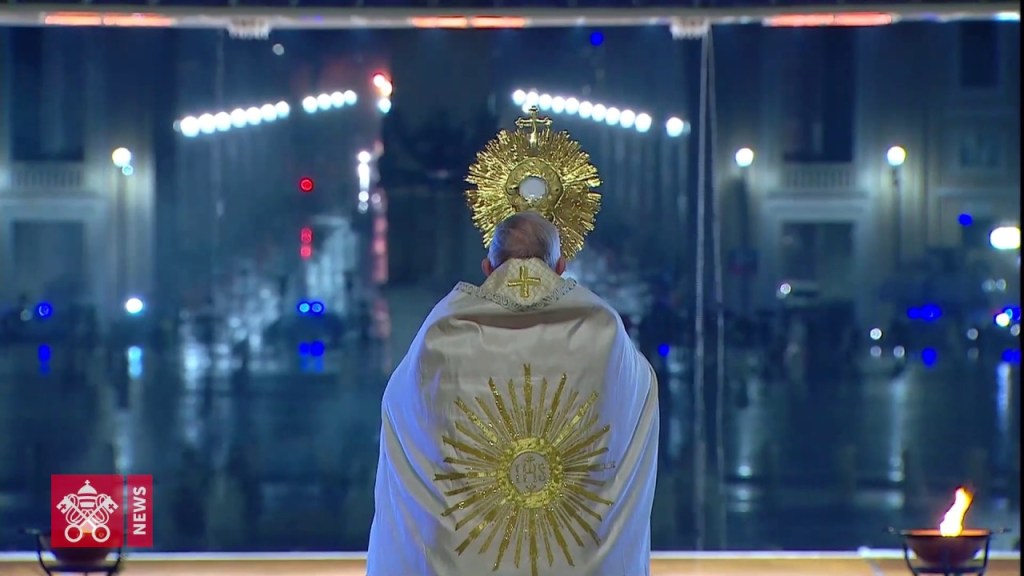
Today, in God’s Lavish Mercy, as we return to “Ordinary Time”, we pray with Psalm 50.
Gather my faithful ones before Me, those who have made a covenant with me by sacrifice. And the heavens proclaim the Lord’s justice; for God is the judge.
Psalm 50: 5-6
It’s been quite a journey, hasn’t it?
We left Ordinary Time in mid-February to walk the annual road of the Paschal Mystery. Throughout Lent, Holy Week, and Eastertide, we assiduously laid the pattern of Christ’s life over our own experience, praying to be stretched into its redemptive wholeness.
Now we enter a new time as new people. Our readings restart with a few weeks of:
advice from Sirach,
some stories from the delightful apocryphal Book of Tobit,
and the middle of Mark’s Gospel during the journey to Jerusalem
These passages invite us to return to a graced dailyness which realizes that nothing is ever really “ordinary”.
Psalm 50, particularly as it is interpreted here by Christine Robinson, inspires us to carry the grace of Pentecost to our ordinary tasks:
Spirit is everywhere
In the eternal circle of sunrise and sunset
In the beauty of the earth and in the power of her storms
In the laws that are written in our hearts, and
in the voice of conscience that marches us to goodness.
God is spirit.
We may need ritual, but what God wants is
Our hearts
open in gratitude, or in a cry for help, or
in willingness to treat our neighbors decently
seek the truth
live in love.
These ways bring us to God.
So, in our prayer today, let’s reignite this “ordinary time” with the insight of Abraham Heschel who wrote:
Our goal should be to live life in radical amazement. ….get up in the morning and look at the world in a way that takes nothing for granted. Everything is phenomenal; everything is incredible; never treat life casually. To be spiritual is to be amazed.
Poetry: Morning – Mary Oliver
Salt shining behind its glass cylinder. Milk in a blue bowl. The yellow linoleum. The cat stretching her black body from the pillow. The way she makes her curvaceous response to the small, kind gesture. Then laps the bowl clean. Then wants to go out into the world where she leaps lightly and for no apparent reason across the lawn, then sits, perfectly still, in the grass. I watch her a little while, thinking: what more could I do with wild words? I stand in the cold kitchen, bowing down to her. I stand in the cold kitchen, everything wonderful around me.
Today, in God’s Lavish Mercy, we pray with Psalm 87, allowing it to focus us on Mary, the Mother of Christ and thus of the Church.
With her “Yes”, Mary engaged the Spirit of God and, like the ancient Holy City, became a dwelling place of Grace.
Glorious things are said of you, O city of God! And of Zion they shall say: “One and all were born in her; And the One who has established her is the Most High LORD.”
Psalm 87
In her book “Truly Our Sister”, theologian Elizabeth Johnson helps us to understand Mary as a companion, guide, and inspiration:
One fruitful approach to the theology of Mary, historically the mother of Jesus, called in faith the Theotokos or God-bearer, is to envision her as a concrete woman of our history who walked with the Spirit.
As I pray with Mary today, I picture her sitting with the young disciples after the mind-blowing experience of Pentecost. The whiff of Divine Electricity still pervades the room, still jars their senses to an indescribable timbre!
Mary is stilled with a silent understanding. From the abundance of her wisdom, gained in her daily presence with Jesus, Mary gently focuses, calms and directs these new evangelists for the task before them.
Mary is someone who has had her own “visitation by the Spirit”, many years before. Pentecost, for Mary, is a kind of “second Annunciation “. She knows what the willing reception of the Spirit will mean for one’s life.
Indeed, this moment – and their response, like hers so long ago – will bear God’s life into their world.
We call on Mary today, as Church and as individuals, to be with us as we are re-fired in the Holy Spirit. As we reflect on her and the way she opened her life to God, may we grow in faith and desire to open our own lives to the Spirit’s transformative power.
Elizabeth Johnson encourages us:
“to relate to Miriam of Nazareth as a partner in hope in the company of all the graced women and men who have gone before us; to be encouraged by her mothering of God to bring God to birth in our own world; to reclaim the power of her dangerous memory for the flourishing of suffering people; and to draw on the energy of her memory for a deeper relationship with the living God and stronger care for the world.”
Poetry: Annunciation – Denise Levertov
We know the scene: the room, variously furnished, almost always a lectern, a book; always the tall lily. Arrived on solemn grandeur of great wings, the angelic ambassador, standing or hovering, whom she acknowledges, a guest.
But we are told of meek obedience. No one mentions courage.
The engendering Spirit did not enter her without consent. God waited.
She was free to accept or to refuse, choice integral to humanness.
____________________
Aren’t there annunciations of one sort or another in most lives? Some unwillingly undertake great destinies, enact them in sullen pride, uncomprehending. More often those moments when roads of light and storm open from darkness in a man or woman, are turned away from
in dread, in a wave of weakness, in despair and with relief. Ordinary lives continue. God does not smite them.
But the gates close, the pathway vanishes.
____________________
She had been a child who played, ate, slept like any other child–but unlike others, wept only for pity, laughed in joy not triumph. Compassion and intelligence fused in her, indivisible.
Called to a destiny more momentous than any in all of Time, she did not quail, only asked a simple, ‘How can this be?’ and gravely, courteously, took to heart the angel’s reply, the astounding ministry she was offered:
to bear in her womb Infinite weight and lightness; to carry in hidden, finite inwardness, nine months of Eternity; to contain in slender vase of being, the sum of power– in narrow flesh, the sum of light.
Then bring to birth, push out into air, a Man-child needing, like any other, milk and love–
but who was God.
This was the moment no one speaks of, when she could still refuse.
A breath unbreathed, Spirit, suspended, waiting. ____________________
She did not cry, ‘I cannot. I am not worthy,’ Nor, ‘I have not the strength.’ She did not submit with gritted teeth, raging, coerced. Bravest of all humans, consent illumined her.
The room filled with its light, the lily glowed in it, and the iridescent wings. Consent, courage unparalleled, opened her utterly.
Music: Vespro Della Beata Vergine – Claudio Monteverdi
From the baroque period, Monteverdi praises Mary in his masterpiece, Vespro Della Beata Vergine commonly referred to as Vespers of 1610. The work is monumental in scale and difficult to perform, requiring two large choirs who are skillful enough to cover up to 10 voice parts accompanied by an orchestral ensemble. Here is just an excerpt.
Lauda, Jerusalem, Dominum: lauda Deum tuum, Sion. Quoniam confortavit seras portarum tuarum: benedixit filiis tuis in te. Qui posuit fines tuos pacem: et adipe frumenti satiat te. Qui emittit eloquium suum terræ: velociter currit sermo ejus. Qui dat nivem sicut lanam: nebulam sicut cinerem spargit. Mittit crystallum suam sicut buccellas: ante faciem frigoris ejus quis sustinebit? Emittet verbum suum, et liquefaciet ea: flabit spiritus ejus, et fluent aquæ. Qui annunciate verbum suum Jacob: justitias et judicia sua Isræl. Non fecit taliter omni nationi: et judicia sua non manifestavit eis. Gloria Patri et Filio et Spiritui Sancto. Sicut erat in principio, et nunc, et semper, et in sæcula sæculorum. Amen
Praise the Lord, O Jerusalem; praise thy God, O Zion. For he hath strengthened the bars of thy gates; he hath blessed thy children within thee. He maketh peace in thy borders, and filleth thee with the finest wheat. He sendeth his commandment to the earth; his word runneth swiftly. He giveth snow like wool; he scattereth hoar frost like ashes. He casteth forth his ice like morsels; before his cold who can stand? He sendeth out his word, and melteth them; his spirit blows, and the waters flow. He sheweth his word unto Jacob, his statutes and judgements to Isræl. He hath not dealt so with any nation; and his judgments he hath not made manifest. Glory be to the Father and to the Son and to the Holy Spirit. As it was in the beginning, is now, and ever shall be, without end. Amen.
Today, in God’s Lavish Mercy, we pray with Psalm 104 – a fitting prayer for this glorious Feast of Pentecost.
Lord, send out your Spirit, and renew the face of the earth.
It is a bold prayer, an extravagant request. It asks for everything – a Fire of Love so complete that the whole earth is remade in its Divine Power.
It is a prayer based in mutual invitation as, in the Sequence, we invite the Holy Spirit to renew us:
Come, Holy Spirit, come! And from your celestial home Shed a ray of light divine!
Pentecost Sequence
And, as in any true relationship, the Spirit invites us too – to open our hearts to the infinite grace of this feast. The Book of Revelation describes this reciprocity in this profound passage:
“ I, Jesus, have sent my angel to give you this testimony for the churches. I am the Root and the Offspring of David, and the bright Morning Star.”
The Spirit and the bride say, “Come!” And let the one who hears say, “Come!” Let the one who is thirsty come; and let the one who wishes take the free gift of the water of life.
Revelation 22: 16-17
Today, on the Birthday of the Church, we pray not only for our own soul’s kindling, but for the whole People of God. May the Grace of Pentecost ignite a new fire of charity over all the earth. May that fire clear the way for the Spirit’s gifts to flower, for Her fruits to blossom, for Her power to surprise us as it bursts forth in our hearts!
Poetry: The Golden Sequence
Veni Sancte Spiritus, sometimes called the Golden Sequence, is a sequence prescribed in the Roman Liturgy for the Masses of Pentecost and its octave. It is usually attributed to either the thirteenth-century Pope Innocent III or to the Archbishop of Canterbury, Cardinal Stephen Langton, although it has been attributed to others as well.
“Veni Sancte Spiritus” is one of only four medieval Sequences which were preserved in the Roman Missal published in 1570 following the Council of Trent (1545–63).
The other three occasions when we hear these beautiful ancient hymns are Easter Sunday (“Victimae Paschali Laudes”), Corpus Christi (“Lauda Sion Salvatorem”) and Our Lady of Sorrows (“Stabat Mater Dolorosa”). On Easter Sunday and Pentecost, the sequence must be sung, whereas on Corpus Christi and Our Lady of Sorrows, the sequence is optional.
Wikipedia
Come, Holy Spirit, come!
And from your celestial home
Shed a ray of light divine!
Come, Father of the poor!
Come, source of all our store!
Come, within our bosoms shine.
You, of comforters the best;
You, the soul’s most welcome guest;
Sweet refreshment here below;
In our labor, rest most sweet;
Grateful coolness in the heat;
Solace in the midst of woe.
O most blessed Light divine,
Shine within these hearts of yours,
And our inmost being fill!
Where you are not, we have naught,
Nothing good in deed or thought,
Nothing free from taint of ill.
Heal our wounds, our strength renew;
On our dryness pour your dew;
Wash the stains of guilt away:
Bend the stubborn heart and will;
Melt the frozen, warm the chill;
Guide the steps that go astray.
On the faithful, who adore
And confess you, evermore
In your sevenfold gift descend;
Give them virtue’s sure reward;
Give them your salvation, Lord;
Give them joys that never end. Amen.
Alleluia.
Today, in God’s Lavish Mercy, we pray with Psalm 11, inviting us to enter the eye of God:
The just will gaze on your face, O Lord.
Psalm 11:7
To rest in someone’s loving gaze is the greatest of blessings. Such a look carries understanding, acceptance, hope, encouragement, and a rainbow of other gifts.
We easily look at newborns and young children with such unconditional regard. As people age though, it may become more complex always to see them in such positive light. Life’s big and little dramas block our sight, right?
But, as Psalm 11 assures us, God will never look at us without that kind of love. Wow!
God’s eyes behold us; God’s searching glance wraps us round with love.
Psalm 11: 4-5
For our prayer today, we may just want to let God look at us. And we might want to look back with that mutual glance that sings, “Beloved”.
Poetry: Beloved – by Rumi
All through eternity
Beauty unveils His exquisite form
in the solitude of nothingness;
He holds a mirror to His Face
and beholds His own beauty.
he is the knower and the known,
the seer and the seen;
No eye but His own
has ever looked upon this Universe.
His every quality finds a Word:
Eternity becomes the verdant field of Time and Space;
Love, the life-giving garden of this world.
Every branch and leaf and fruit
Reveals an aspect of His perfection-
The cypress give hint of His majesty,
The rose gives tidings of His beauty.
Whenever Beauty looks,
Love is also there;
Whenever beauty shows a rosy cheek
Love lights Her fire from that flame.
When beauty dwells in the dark folds of night
Love comes and finds a heart
entangled in tresses.
Beauty and Love are as body and soul.
Beauty is the mine; Love is the diamond.
They have been together
since the beginning of time-
Side by side, step by step.
I swear, since seeing Your face,
the whole world is fantasy.
The garden is bewildered as to what is leaf
or blossom. The distracted birds
can’t distinguish the birdseed from the snare.
A house of love with no limits,
a presence more beautiful than Venus or the moon,
a beauty whose image fills the mirror of the heart.
Today, in God’s Lavish Mercy, we pray with Psalm 103 which, set between our two readings, reminds us that the Ascension has occurred and that:
The Lord has established a throne in heaven.
Therefore, we are in a New Creation and thus invoke one of the most beautiful Creation psalms.
Psalm 103 invites us to stand at the edge of First Creation as it breathes in the spirit of God. With the angels and all the intricate works of the Lord, we inhale Divinity. We quicken with the “ruach” of God, (Hebrew for “breath”.)
What we read in our translations of the Bible as “spirit”, “wind” or “breath” are translated from one Hebrew word, ruach. Walter Brueggemann says; “The Bible struggles to find adequate vocabulary to speak about and name this unutterable, irresistible, undomesticated force that surges into history to liberate, heal, remake, and transform. We are left with this code term, ruach, to speak about what we know but cannot say.” Ruach is the wind that parted the waters and created dry land, it is the very breath that God breathed into humans in our creation, it was this spirit that parted the seas and allowed the people to escape from slavery in Egypt, it is the same spirit that Jesus claims and empowers the early church in Acts. This ruach is active throughout our sacred stories.
As we approach the feast of the great Inspiration of the Spirit, let us bless and praise our God for outpouring every form of infinite life upon us. May our humble prayer make room in us for ever deeper grace.
With all Creation, let us prepare our hearts to welcome the illuminating fire of the Spirit’s gifts and fruits to be renewed in us this Pentecost:
Bless the Lord, you angels, you mighty ones who do the bidding of God, and hearken to the voice of the word of the Lord.
Bless the Lord, all you hosts, you ministers who do the will of God.
Bless the Lord, all you works of the Lord, in all places of the dominion of the Lord; bless the Lord, O my soul.
Psalm 103: 20-22
Poetry: Breathe on me, Breath of God – Edwin Hatch (1835-1889)
Breathe on me, breath of God,
Fill me with life anew,
That I may love what Thou dost love,
And do what Thou wouldst do.
Breathe on me, breath of God,
Until my heart is pure,
Until with Thee I will one will,
To do and to endure.
Breathe on me, breath of God,
Blend all my soul with Thine,
Until this earthly part of me
Glows with Thy fire divine.
Breathe on me, breath of God,
So shall I never die,
But live with Thee the perfect life
Of Thine eternity.
Unnamable God, I feel you with me at every moment. You are my food, my drink, my sunlight, and the air I breathe. You are the ground I have built on and the beauty that rejoices my heart. I give thanks to you at all times for lifting me from my confusion, for teaching me in the dark and showing me the path of life. I have come to the center of the universe; I rest in your perfect love. In your presence there is fullness of joy and blessedness forever and ever.
The psalmist’s prayer is so beautiful that I will just leave it without my interpretations today. Instead, here are a few settings – poetry and music – to lift this gem of a psalm before your prayer.
Let each phrase rest in your spirit. Breathe with its rhythm. As you savor it, let it release a precious and holy truth into your life.
Poetry: Two of my poems, both written when I was very young in my spiritual journey.
Awaking
Sunrise paints the hedge’s morning side rose-petal gold.
But I choose the western side. There, midnight’s purple leaves
awake in lazy grey, then stripes of green and silver.
There, the awesome grace of living rises slowly in the heart,
a liquor savored, a prayer lingering in genuflected silence.
Contemplation
It happened in that distant winter, deep in pristine mornings like Venetian glass. Everyday I’d turn to face You as frozen orange sun slid up a whitening sky.
Every day, You would be silent, until finally You folded me in silence, like a nestling child comes quiet in the rhythm of its mother’s breath.
Even now, on such a morning I remember how it was when first I came to love You from the inside, out – the way the leaves love green.
Today, in God’s Lavish Mercy, we pray with Psalm 68, some different verses for this second day:
Show forth, O God, your power, the power, O God, with which you took our part; For your temple in Jerusalem let the kings bring you gifts. You kingdoms of the earth, sing to God, chant praise to the Lord who rides on the heights of the ancient heavens. Behold, God’s voice resounds, the voice of power: “Confess the power of God!”
Psalm 68 is a prayer that gives full voice to Israel’s gratitude for being God’s chosen people. And in that way, it is a challenging psalm to pray with today as modern Israel and Palestine descend into all out war which disproportionately affects the poor, elderly, women and children.
The contradiction of our psalm, placed against this war scenario, is deeply unsettling. Does God really want the nation of Israel to dominate a geography to the annihilation of other peoples?
What I remind myself of this morning is this: biblical Israel is not the same as the political state of Israel. After WWII, the political state was initiated as part of a partition plan in which both Palestine and Israel would be independent states. The plan didn’t work out, creating multiple ensuing conflicts. The current one is just the latest edition.
Biblical Israel, on the other hand, is not a physical territory but instead a relationship – the foundational heritage of all Abrahamic faiths. For Christians it is a heritage that led to our faith in Jesus Christ, the fulfillment of God’s promise to Abraham. Although once rooted in a geography, that faith is now rooted in a universal love which reverences life for all people, particularly the poor, the orphaned, and the disenfranchised.
As I pray Psalm 68 today, I pray it with a woman named Arlette in my mind and heart. My friend Eileen McGovern introduced me to her friend, who wishes not to be named, with the following story. As we pray today, let this woman and all who suffer in war be with us.
I write for a friend who is voiceless. She lives in Bethlehem, Palestine.
I met her during a pilgrimage in October 2019, and we became friends. We have kept in touch and have grown to know and to respect one another. She is teaching me Arabic phrases. I am not a good student so we both laugh at my efforts. Or, we used to until the recent outbreak of violence.
She was born in 1948 when Palestine was a French protectorate. French is her first language, one of four. Yet she is voiceless. Who will hear her?
As a young school girl she pledged allegiance to the French flag and sang La Marseillaise when her home was a French protectorate. When Transjordan was created, as a teenager she sang the Jordanian anthem as she struggled to learn Arabic. At age 40 she became a Palestinian with the creation of the Israeli and Palestine states. She still lives in the West Bank. She has not moved, but politics again have upended her life.
She loves children. Before the Covid-19 pandemic she volunteered at a school for deaf children. At Christmas she runs a charity to give poor Christian children a gift card and food so that their families can celebrate the feast with the traditional chicken dinner, a luxury they cannot afford. During the previous intifada she used to gather Palestinian children into her home and give them chocolates and tell them stories so they would not throw stones at Israeli soldiers.
She is a woman of peace who has seen too much war. She is haunted by the memory of looking out her window to see a man standing outside her house disappear in a phosphorescent flash. This morning she told me of watching TV and seeing men desperately digging, some with their bare hands, in the rubble of a Palestinian home where the cries of an infant girl could be heard. The men did not have heavy equipment so I do not know if they were able to save her.
Now she asks: “Who am I? The Israelis do not want us here. They want me to leave the home of my birth, but I am a devout Christian who loves this land, a sacred land, the Holy Land, the land of Jesus’ birth. I do not want to leave, and where would I go? Who wants Palestinians? No one wants us. I want only to live in peace and to see people of all faiths be able to come to Jerusalem without fear. I live in fear, especially for my son who can be taken from me at any time by Israeli police. I pray, but I am afraid to hope again.”
Music: Desert – Rasha Nahas is a Palestinian artist. Below is her song “Desert” which I find both profound and disturbing. It can be interpreted as a personification poem describing the experience of the Palestinian people in the story of a single individual.
Here is a link to learn more about Rasha from America magazine:
Please just take it all away I am nobody I could name My self I float upon Pearls some songs They’ve been buried for years
My self I’m a desert torn I was born on the mountain by the sea The west rapes east My west disease I’m a little beast Hiding up the street In a little room With a little bed On the dusty floor Lies human flesh
Time melts out my eyes As my heart is bleeding quarter tones and I sail on this song
The dead sea used to be alive She had a woman and a child And she couldn’t live at home she said She wandered lost and she wandered west to the place where the bible spoke of gods All their temples and their floods They hung her on a cross She is a language no one dares to talk Sweet bleeding palms and the breeze of death They buried her She’s a roaring breath
Time melts out her eyes As her heart is bleeding Quarter tones and she sails on this song
Sweet bleeding palms And the cheering men They buried me I am a roaring breath
Today, in God’s Lavish Mercy, we pray with Psalm 68 which captures a solemn yet glorious theme running through today’s readings: in God’s time, things end and new things emerge.
A bountiful rain you showered down, O God, upon your inheritance; you restored the land when it languished; Your flock settled in it; in your goodness, O God, you provided it for the needy.
Psalm 68: 10-11
This eternal dynamism of life-death-life is wrapped in multi-colored spools around the emotions of our lives. We can hear Paul negotiating his ebbing joys and sorrows in our first reading.
In Acts, Paul is facing his physical diminishment and impending death. Like others throughout all of time, he is retelling his life story, motivations, and achievements so that their significance may be stamped on the hearts of those he will leave behind. In all things, Paul gives the glory to God:
Yet I consider life of no importance to me, if only I may finish my course and the ministry that I received from the Lord Jesus, to bear witness to the Gospel of God’s grace.
Acts 20:24
In our Gospel, Jesus is giving a similar summary and farewell. He prays aloud to the Father so that his disciples may be instructed by hearing his final prayer:
I revealed your name to those whom you gave me out of the world. They belonged to you, and you gave them to me, and they have kept your word. Now they know that everything you gave me is from you, because the words you gave to me I have given to them, and they accepted them and truly understood that I came from you, and they have believed that you sent me. I pray for them.
John 17: 6-9
Both Paul and Jesus have brought the “abundant rain” of Psalm 68 to their ministries. But now it is time for others to carry on the work:
God is a saving God for us; the LORD, my Lord, controls the passageways of life and death.
Psalm 68:21
As the tides of God’s eternity rise and ebb through our lives, we too at times must hand over and/or receive that eternal heritage of grace. May we exercise these rituals with the greatest of reverence and awareness.
Blessed be the Lord day by day, God, our salvation, who carries us. Our God is a God who saves; deliverance from death to life belongs to God.
Psalm 68: 20-21
Like Jesus and Paul, may we open our stories in faith and love to the community that surrounds us. Especially as we mature both in years and experience, may we share our truth with grace and the gift of encouragement to others. And may those younger ministers take up new responsibilities with reverence, joy, and trust.
Poetry: When Someone Goes Away – Nikola Madzirov
In the embrace on the corner you will recognize someone’s going away somewhere. It’s always so. I live between two truths like a neon light trembling in an empty hall. My heart collects more and more people, since they’re not here anymore. It’s always so. One fourth of our waking hours is spent in blinking. We forget things even before we lose them – the calligraphy notebook, for instance. Nothing’s ever new. The bus seat is always warm. Last words are carried over like oblique buckets to an ordinary summer fire. The same will happen all over again tomorrow— the face, before it vanishes from the photo, will lose the wrinkles. When someone goes away everything that’s been done comes back.
Music: Music by Giovanni Marradi – several hours of beautiful music. You may wish to listen for awhile.
Today, in God’s Lavish Mercy, we pray with Psalm 68, an assertive call for God to show up and do something about evil in the world:
Arise, O God, and let your enemies be scattered; let those who hate you flee. Let them vanish like smoke when the wind drives it away; as the wax melts at the fire, so let the wicked perish at your presence. But let the righteous be glad and rejoice before you; let them also be merry and joyful.
Psalm 68: 1-3
Haven’t we said a similar prayer many times in our lives? Doesn’t it rise up in us now as we watch war erupt in the Middle East, as we see India overwhelmed by COVID 19?
Don’t we want God to just fix things!
But the psalm itself reveals the only way healing and peace come into the world – it is through the triumph of justice in each of our hearts. Ultimately, God has made us the means to peace:
But the just rejoice and exult before God; they are glad and rejoice. Sing to God, chant praise to his name whose name is the LORD.
Psalm 68: 4-5
The psalmist prays for communal wholeness by describing God’s active Mercy:
Protector of orphans, defender of widows, the One who dwells in holiness, who gives the solitary a home and brings forth prisoners into freedom.
Psalm 68: 6-7
But God can only touch the suffering through our hands, prayers, and actions of justice. When we allow God to do that, then we can rejoice.
Sing to God, O dominions of the earth; sing praises to the Lord. You ride in the heavens, the ancient heavens, O God; sending forth your voice, your mighty voice into our spirits
Psalm 68: 32-33
Poetry: Come to Dust – Ursula LeGuin
Spirit, rehearse the journeys of the body that are to come, the motions of the matter that held you. Rise up in the smoke of palo santo. Fall to the earth in the falling rain. Sink in, sink down to the farthest roots. Mount slowly in the rising sap to the branches, the crown, the leaf-tips. Come down to earth as leaves in autumn to lie in the patient rot of winter. Rise again in spring’s green fountains. Drift in sunlight with the sacred pollen to fall in blessing. All earth’s dust has been life, held soul, is holy.
Music: Let There Be Peace – Vince Gill
Sorry, it’s the non-inclusive version, but the pictures are so pretty😇
Today, in God’s Lavish Mercy, we pray with Psalm 103, the best known and best loved of the psalms of praise.
Bless the LORD, O my soul; and all my being, bless God’s holy name. Bless the LORD, O my soul, and forget not all God’s benefits.
Psalm 103:1-2
Blessing the Lord is easy for me today.
My life is filled with those “benefits” – happiness, love, friends, and celebration.
My dear brother and sister-in-law are visiting from Tennessee after nearly a two year hiatus.
My precious grandniece is being baptized today.
And my Sister in community is celebrating her 75th birthday. (And, yes, I did just about find time to write this blog! 🙂
Psalm 103 reminds us that in both joyful and sorrowful days, God’s Presence is our abiding blessing. And for this, we can always bless God:
In a 2016 Facebook post (a precursor of the blog) for this day, I wrote:
Today, in Mercy, we humbly praise God for being present in every moment of our lives. We lift our hands in praise for the joys that have revealed God’s beauty, and for the sorrows that have revealed God’s compassion. May we reverently live our thanks by our kindness to one another.