Today, in God’s Lavish Mercy, we pray once again with the beautiful words of Psalm 34:
I will bless the LORD at all times; praise shall be ever in my mouth. Taste and see how good the LORD is; blessed the one who takes refuge in the Lord.
Psalm 34:2-9
Today’s verses offer us this tender image of God’s lavish mercy:
The LORD is close to the brokenhearted; and those who are crushed in spirit God saves. Many are the troubles of the just one, but out of them all the LORD delivers us.
Psalm 34: 19-20
And John’s Gospel today affirms God’s extravagant tenderness toward us:
May we just rest in these images letting the Lord cradle our heartbreaks and those of our suffering world.
Poetry: The Merchant of Venice, Act IV, Scene I –William Shakespeare
The quality of mercy is not strained;
It droppeth as the gentle rain from heaven
Upon the place beneath. It is twice blest;
It blesseth him that gives and him that takes:
'T is mightiest in the mightiest; it becomes
The throned monarch better than his crown:
His sceptre shows the force of temporal power,
The attribute to awe and majesty,
Wherein doth sit the dread and fear of kings;
But mercy is above this sceptred sway;
It is enthronèd in the hearts of kings,
It is an attribute to God himself;
And earthly power doth then show likest God's
When mercy seasons justice.
Today, in God’s Lavish Mercy, we pray with Psalm 34, an exultation in our God who protects and delivers us from harm:
The angel of the LORD encamps around those who fear him, and delivers them. Taste and see how good the LORD is; blessed the man who takes refuge in him.
Psalm 34:8-9
Why is it that the Sadducees and Pharisees, as told in our first reading, so strongly resisted the gift of spiritual freedom and life?
We get used to our ways, don’t we? We get stuck in our compensations. We can even reach a point of comfort with things that sap and lessen us – that keep us from being our best selves – as long as we can maintain even a false sense of security and control.
This is what happened to the Pharisees and Sadducees. If they now accepted Jesus, their whole pretend world of domination and abusive power, a world in which they were very comfortable, would be turned upside down!
So they chose not to believe in Love.
They tried to lock up the call to mercy and justice. They tried to chain Grace in a dungeon. They tried to stifle the cry of the poor so that the Lord wouldn’t hear!
But, despite their blind efforts, the truth of Psalm 34 endures:
Come, children,listen to me; I will teach you fear of the LORD. Who is the man who delights in life, who loves to see the good days? Keep your tongue from evil, your lips from speaking lies. Turn from evil and do good; seek peace and pursue it. The eyes of the LORD are directed toward the righteous and his ears toward their cry.
Psalm 34: 12-16
In our Gospel, Jesus gently but firmly teaches Nicodemus that our choice to believe matters:
God so loved the world that he gave his only-begotten Son, so that everyone who believes in him might not perish but might have eternal life. For God did not send his Son into the world to condemn the world, but that the world might be saved through him. Whoever believes in him will not be condemned, but whoever does not believe has already been condemned, because he has not believed in the name of the only-begotten Son of God.
John 3:16-20
Prose Poetry: from an interview with Ilia Dileo Ilia Delio, a Franciscan Sister of Washington, DC. She holds the Josephine C Connelly Endowed Chair in Theology at Villanova University, and is he author of seventeen books, several of which have won awards.
You know, love is always a little tipsy.
If you’re really ecstatically in love,
you are always a little bit falling over yourself
and God is that.
God is the absolute being in love
and always a little tipsy,
falling over God’s self to share that love with an other.
That dynamic engagement of God
in the personal beingness of life,
in the person of Jesus Christ -
if we bring in Jesus as that fullest manifestation of God’s love
in our own lives.
This is right from Pseudo-Dionysius, the 5th century writer
who spoke of God as being superly drunk, drunk with love.
That’s the kind of God we are dealing with here.
Not some kind of the philosopher God,
not the mechanical God, not a self-thinking, thought God…
This is a God who is drunk with love.
Spilling over in love for us.
And that’s what we are called to be.
As image of God we are to be drunk with love,
spilling over in our lives to be love in relation to another.
Every thing that exists,
every person, every being, every creature
every star, every lepton, every little cell
is a little word of the word of God...
God speaking that divine word of love
throughout the rich variety of creation.
Music: God So Loved the World
God so loved the world
So loved the world
So loved the world
That He gave His only son
That He gave His only son
God so loved the world
That everyone who would believe
Who believed in His only son
Shall have everlasting life
For God sent not his son into the world
To condemn the world
But God so loved the world
That through His son the world might be saved
The world might be saved (the world might be saved)
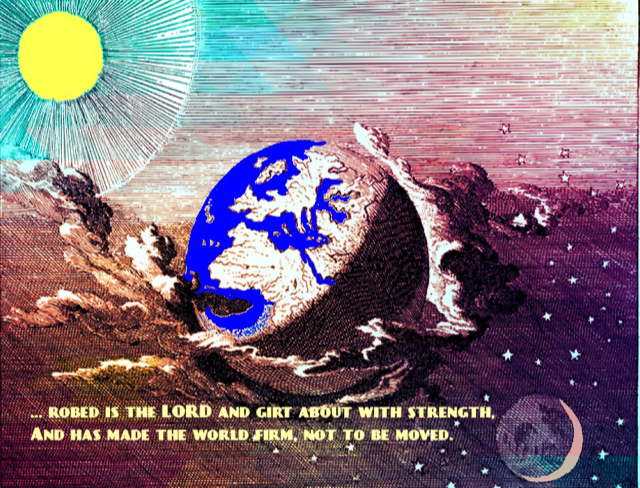
Today, in God’s Lavish Mercy, we pray with Psalm 93, a resounding song of praise to our majestic God.
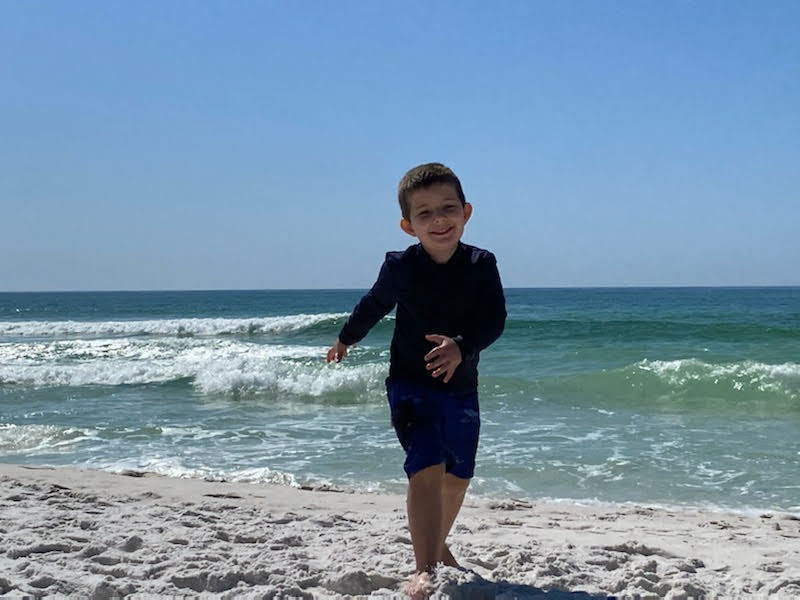
As I read the whole psalm, which is brief, I find myself standing at the Atlantic’s edge with my mother. I was just old enough to appreciate the enormity of the ocean. I asked Mom what made the waves stop at our tiptoes. She told me that God held it in place like soup in a big bowl. I remember being glad that God was in charge because the waves seemed awesome to me.
A little personal distraction: My grand-nephews enjoying the ever-awesome ocean
Today’s psalmist seems to share some of these young feelings:
The flood has raised up, LORD; the flood has raised up its roar; the flood has raised its pounding waves.
More powerful than the roar of many waters, more powerful than the breakers of the sea, powerful in the heavens is the LORD.
Psalm 93:4-5
Set between today’s two readings, our psalm invites us to entrust ourselves completely to this all-powerful God whose merciful rule goes infinitely beyond earth’s seas.
Jesus said to Nicodemus: “‘You must be born from above.’ The wind blows where it wills, and you can hear the sound it makes, but you do not know where it comes from or where it goes; so it is with everyone who is born of the Spirit.”
Dear, questioning Nicodemus struggled a bit to open his heart in complete faith. But he stayed with the struggle until the power of the Resurrection transformed him.
As we pray Psalm 93, we might stand with the psalmist or with Nicodemus at the edge of any ocean which challenges, mystifies, delights or frightens us. May we grow in confidence, as they did, that our eternal, omnipotent God ever reigns with merciful love – over the vastness of Creation and the small intimate waves of our lives.
Your decrees are firmly established; holiness befits your house, LORD, for all the length of days.
Psalm 93:5
Poetry: A Hymn – Ann Brontë
Eternal power of earth and air,
Unseen, yet seen in all around,
Remote, but dwelling everywhere,
Though silent, heard in every sound.
If e'er thine ear in mercy bent
When wretched mortals cried to thee,
And if indeed thy Son was sent
To save lost sinners such as me.
Then hear me now, while kneeling here;
I lift to thee my heart and eye
And all my soul ascends in prayer;
O give me - give me Faith I cry.
Without some glimmering in my heart,
I could not raise this fervent prayer;
But O a stronger light impart,
And in thy mercy fix it there!
While Faith is with me I am blest;
It turns my darkest night to day;
But while I clasp it to my breast
I often feel it slide away.
Then cold and dark my spirit sinks,
To see my light of life depart,
And every fiend of Hell methinks
Enjoys the anguish of my heart.
What shall I do if all my love,
My hopes, my toil, are cast away,
And if there be no God above
To hear and bless me when I pray?
If this be vain delusion all,
If death be an eternal sleep,
And none can hear my secret call,
Or see the silent tears I weep.
O help me God! for thou alone
Canst my distracted soul relieve;
Forsake it not -- it is thine own,
Though weak yet longing to believe.
O drive these cruel doubts away
And make me know that thou art God;
A Faith that shines by night and day
Will lighten every earthly load.
If I believe that Jesus died
And waking rose to reign above,
Then surely Sorrow, Sin and Pride
Must yield to peace and hope and love.
And all the blessed words he said
Will strength and holy joy impart,
A shield of safety o'er my head,
A spring of comfort in my heart.
Music: Here Is Love, Vast as an Ocean, beautifully sung by Huw Priday, first in Welsh then in English.
The text of this hymn was originally in Welsh, “Dyma gariad fel y moroedd,” written by William Rees (1802–1883, also known as Gwilym Hiraethog). By one account, Rees was “one of the most versatile and gifted Welshmen of the nineteenth century and exercised a powerful influence on politics, religion, poetry, and literature in Wales.”
Rees’ text played a prominent role in the Welsh revival of 1904–1905, led by evangelist Evan Roberts (1878–1951) of Glamorganshire. As with any great evangelistic movement, its success was closely associated with music and musicians.
VERSE 1
Here is love vast as the ocean,
Loving-kindness as the flood,
When the Prince of Life, our ransom,
Shed for us His precious blood.
Who His love will not remember?
Who can cease to sing His praise?
He can never be forgotten
Throughout heav’n’s eternal days.
VERSE 2
On the Mount of Crucifixion,
Fountains opened deep and wide;
Through the flood-gates of God’s mercy
Flowed a vast and gracious tide.
Grace and love like mighty rivers
Poured incessant from above;
Heaven’s peace and perfect justice
Kissed a guilty world in love.
VERSE 3
Here is love that conquered evil:
Christ, the firstborn from the grave;
Death has failed to be found equal
To the life of Him Who saves.
In the valley of our darkness
Dawned His everlasting light;
Perfect love in glorious radiance
Has repelled death’s hellish night.
VERSE 4
That same love beyond all measure,
Mocked and slain by hateful men,
Lives and reigns in resurrection
And can never die again.
Here is love for all the ages,
Radiant Sun of Heav’n He stands,
Calling home His Father’s children,
Holding forth His wounded hands.
VERSE 5
Here is love, vast as the heavens;
Countless as the stars above
Are the souls that He has ransomed,
Precious daughters, treasured sons.
We are called to feast forever on a love beyond our time;
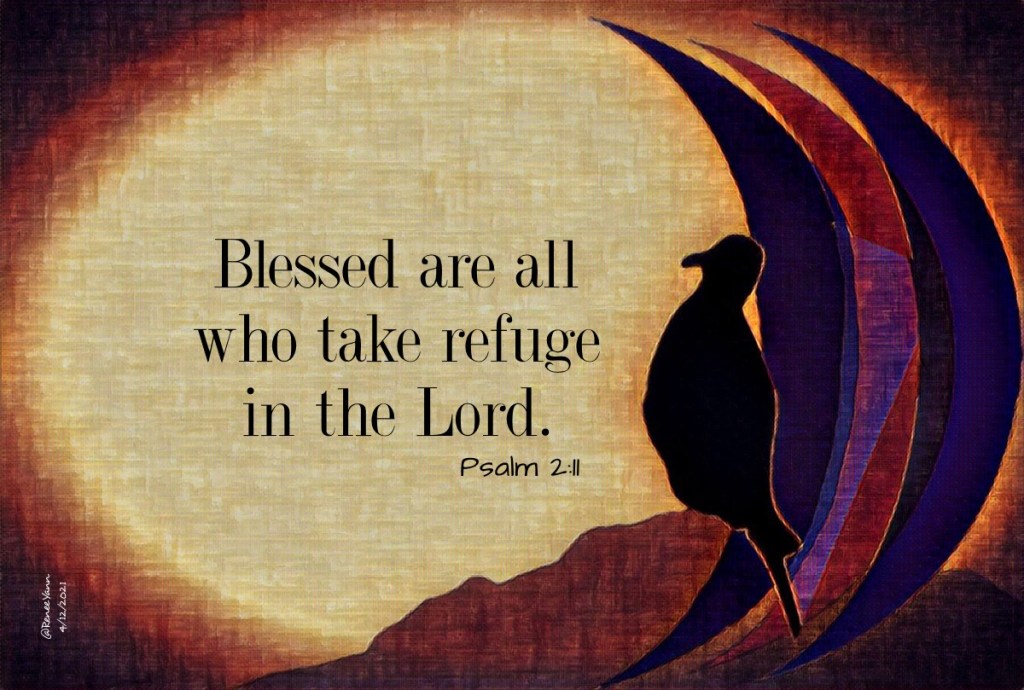
Today, in God’s Lavish Mercy, we pray with Psalm 2 which poses an eternally recurring question:
Yesterday I read that it was the 21st anniversary of The Belfast Agreement. This is also known as the Good Friday Agreement, because it was reached on Good Friday, 10 April 1998. It was an agreement between the British and Irish governments, and most of the political parties in Northern Ireland, on how Northern Ireland should be governed. The talks leading to the Agreement addressed issues which had caused conflict during previous decades. The aim was establish a new, “devolved government” for Northern Ireland in which unionists and nationalists would share power.
But at the same time I also read another current article:
For nearly a week, crowds of Protestant and Catholic youth have provoked one another through the gaps in the wall, video footage from journalists at the scene shows. Stemming from decades-old tensions referred to as “the troubles,” the reignited violence has been, in part, caused by Britain’s exit from the European Union.
On any given day, we could take these stories and substitute the names of other countries, each struggling through cycles of strife, attempts at peace, and recurrence of violence.
The psalmist’s question echoes and the answer, over the ages, remains the same.
Why do the nations rage? They rage from the abuse of power, money, and human dignity.
What is the antidote to this recurring rage? Our psalm tells us it is simple – not easy – but simple. We must take refuge in God, govern our lives by God’s desire for good for every person, every creature.
Every war leaves our world worse than it was before. War is a failure of politics and of humanity, a shameful capitulation, a stinging defeat before the forces of evil. Let us not remain mired in theoretical discussions, but touch the wounded flesh of the victims. Let us look once more at all those civilians whose killing was considered “collateral damage”. Let us ask the victims themselves. Let us think of the refugees and displaced, those who suffered the effects of atomic radiation or chemical attacks, the mothers who lost their children, and the boys and girls maimed or deprived of their childhood. Let us hear the true stories of these victims of violence, look at reality through their eyes, and listen with an open heart to the stories they tell. In this way, we will be able to grasp the abyss of evil at the heart of war. Nor will it trouble us to be deemed naive for choosing peace.
Pope Francis: Fratelli Tutti #261
Poetry: Dover Beach by Matthew Arnold
The sea is calm to-night,
The tide is full, the moon lies fair
Upon the straits; on the French coast the light
Gleams and is gone; the cliffs of England stand,
Glimmering and vast, out in the tranquil bay.
Come to the window, sweet is the night-air!
Only, from the long line of spray
Where the sea meets the moon-blanched land,
Listen! you hear the grating roar
Of pebbles which the waves draw back, and fling,
At their return, up the high strand,
Begin, and cease, and then again begin,
With tremulous cadence slow, and bring
The eternal note of sadness in.

Sophocles long ago
Heard it on the Aegean, and it brought
Into his mind the turbid ebb and flow
Of human misery; we
Find also in the sound a thought,
Hearing it by this distant northern sea.

The sea of faith
Was once, too, at the full, and round earth's shore
Lay like the folds of a bright girdle furled.
But now I only hear
Its melancholy, long, withdrawing roar,
Retreating, to the breath
Of the night-wind, down the vast edges drear
And naked shingles of the world.

Ah, love, let us be true
To one another! for the world which seems
To lie before us like a land of dreams,
So various, so beautiful, so new,
Hath really neither joy, nor love, nor light,
Nor certitude, nor peace, nor help for pain;
And we are here as on a darkling plain
Swept with confused alarms of struggle and flight,
Where ignorant armies clash by night.
Today, in God’s Lavish Mercy, we pray with Psalm 118 which ties together our other readings in a celebration of confirmed faith:
Christ IS risen
He has been SEEN even by one with severest doubts
the community IS RESPONDING wholeheartedly to the Easter mission
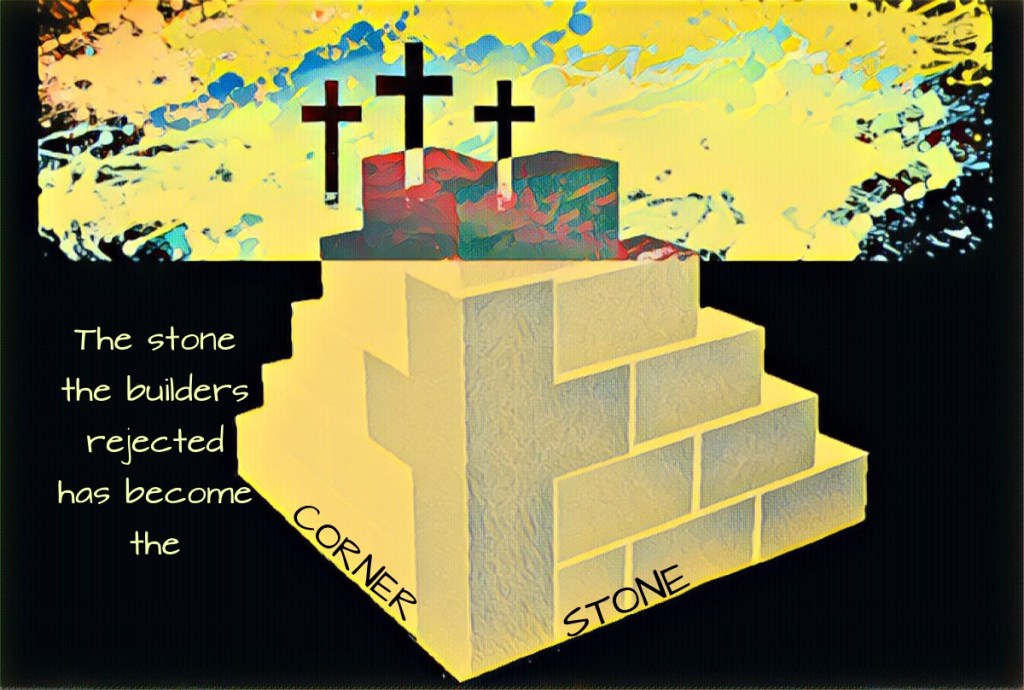
The stone which the builders rejected has become the cornerstone. By the LORD has this been done; it is wonderful in our eyes. This is the day the LORD has made; let us be glad and rejoice in it.
Psalm 118
For the early Church, which comes alive in today’s readings, faith and experience have been “married”. These are early “honeymoon days” for a young faith community where Jesus might still pop up any minute by a charcoal fire or in a locked Upper Room.
These are days of heady enthusiasm where everything seems possible in the healing tenderness of five transfigured wounds.
The Incredulity of St. Thomas – Caravaggio
Last week, I offered a staff presentation during which we discussed the blocks to effective communication – poor planning, noise, cultural differences, assumptions, etc. But I think of one block in particular this morning.
Time and Distance
The farther we are from the original message the more likely we might lose its full power and truth.
Think of that childhood game, “Whisper Down the Lane”. As the original message traveled along the long line of squirming children, it repeatedly morphed into its multiple distortions.
Our readings today enjoin us to take care that such distortion never weakens our Easter Truth: Jesus Christ is risen and lives in us, the faith community.
… whoever is begotten by God conquers the world. And the victory that conquers the world is our faith. Who indeed is the victor over the world but the one who believes that Jesus is the Son of God?
As Jesus describes us in today’s Gospel, we are the ones “who have not SEEN”. Still, we long for the blessing that comes from our unseeing fidelity:
You believe in me, Thomas, because you have seen me. Blessed are those who have not seen me, but still believe!
Let us pray for one another, the whole faith community. As the Easter Word passes down through the ages and out over the earth, may it stay fully alive in our faithful love and active mercy:
The community of believers was of one heart and mind, and no one claimed that any of his possessions was his own, but they had everything in common. With great power the apostles bore witness to the resurrection of the Lord Jesus, and great favor was accorded them all.
Poem:
St. Thomas Didymus by Denise Levertov
In the hot street at noon I saw him
a small man
gray but vivid, standing forth
beyond the crowd’s buzzing
holding in desperate grip his shaking
teethgnashing son,

and thought him my brother.

I heard him cry out, weeping and speak
those words,
Lord, I believe, help thou
mine unbelief,

and knew him
my twin:

a man whose entire being
had knotted itself
into the one tightdrawn question,
Why,
why has this child lost his childhood in suffering,
why is this child who will soon be a man
tormented, torn, twisted?
Why is he cruelly punished
who has done nothing except be born?

The twin of my birth
was not so close
as that man I heard
say what my heart
sighed with each beat, my breath silently
cried in and out,
in and out.

After the healing,
he, with his wondering
newly peaceful boy, receded;
no one
dwells on the gratitude, the astonished joy,
the swift
acceptance and forgetting.
I did not follow
to see their changed lives.
What I retained
was the flash of kinship.
Despite
all that I witnessed,
his question remained
my question, throbbed like a stealthy cancer,
known
only to doctor and patient. To others
I seemed well enough.

So it was
that after Golgotha
my spirit in secret
lurched in the same convulsed writhings
that tore that child
before he was healed.
And after the empty tomb
when they told me that He lived, had spoken to Magdalen,
told me
that though He had passed through the door like a ghost
He had breathed on them
the breath of a living man —
even then
when hope tried with a flutter of wings
to lift me —
still, alone with myself,
my heavy cry was the same: Lord
I believe,
help thou mine unbelief.

I needed
blood to tell me the truth,
the touch
of blood. Even
my sight of the dark crust of it
round the nailholes
didn’t thrust its meaning all the way through
to that manifold knot in me
that willed to possess all knowledge,
refusing to loosen
unless that insistence won
the battle I fought with life

But when my hand
led by His hand’s firm clasp
entered the unhealed wound,
my fingers encountering
rib-bone and pulsing heat,
what I felt was not
scalding pain, shame for my
obstinate need,
but light, light streaming
into me, over me, filling the room
as I had lived till then
in a cold cave, and now
coming forth for the first time,
the knot that bound me unravelling,
I witnessed
all things quicken to color, to form,
my question
not answered but given
its part
in a vast unfolding design lit
by a risen sun.
Music: Thomas Song
Thomas’ Song – Hallal Music
Jesu you were all to me, Why did you die on Calvary? O Lamb of God, I fail to see How this could be part of the plan. They say that you’re alive again But I saw death and every sin Reach out to claim their darkest whim How could this part if the plan? If I could only Hold your hand And touch the scars Where nail were driven, I would need To feel your side Where holy flesh A spear was riven, Then I’d believe, Only then I’d believe Your cruel death Was part of a heavenly plan. Holy presence, holy face A vision filling time and space Your newness makes my spirit race Could this be part of the plan? I see the wounds that caused the cry From heaven, ocean, earth, and sky When people watched their savior die Could this be part of the plan? Reaching out To hold your hand And touch the scars Where nails were driven Coming near I feel your side Where holy flesh A spear was riven Now I believe Jesus now I believe Your cruel death Was part of a heavenly plan I proudly say With blazen cry You are my Lord and my God
Today, in God’s Lavish Mercy, we pray again with Psalm 118, today’s verses a song of utter confidence in, and thanks for, God’s faithfulness.
Give thanks to the LORD who is is good, whose mercy endures forever. My strength and my courage is the LORD, who has been my savior. The joyful shout of victory in the tents of the just.
Psalm 118: 1, 14-15
That profound trust and gratitude are captured in the enduring word:
“Forever” is a word we tend to toss about carelessly, as in:
It took my pizza forever to get here!
I promise I’ll love you forever.
Really? Could “forever” possibly apply in both these cases????
I think, in fact, we cannot begin to conceptualize “forever”, just as we cannot possibly conceptualize God.
What we can do is
to pick up the fabric of our life as it flows through time,
to place it with trust in God’s enduring love,
to slowly, continually become knit into God’s faithfulness,
to finally become still as, in each moment, that Love carries us to “forever”.
Poetry: two selections today
Forever – is composed of Nows by Emily Dickinson
Forever – is composed of Nows –
‘Tis not a different time –
Except for Infiniteness –
And Latitude of Home –
From this – experienced Here –
Remove the Dates – to These –
Let Months dissolve in further Months –
And Years – exhale in Years –
Without Debate – or Pause –
Or Celebrated Days –
No different Our Years would be
From Anno Dominies
From Miracles by C.S. Lewis

It is probable that Nature is not really in Time
and almost certain that God is not.
Time is probably (like perspective) the mode of our perception.
There is therefore in reality no question of God's
at one point in time (the moment of creation)
adapting the material history of this universe
in advance to free acts
which you or I are to perform
at a later point in Time.

To God
all the physical events and all the human acts
are present in an eternal Now.
The liberation of finite wills
and the creation of the whole material history of the universe
(related to the acts of those wills in all the necessary complexity)
is to God a single operation.
In this sense God did not create the universe long ago
but creates it at this minute—at every minute.
Today, in God’s Lavish Mercy, we pray with Psalm 118:
The stone which the builders rejected has become the cornerstone. By the LORD has this been done; it is wonderful in our eyes.
Psalm 118:22
That “Stone”, rejected by the builders, is the Crucified Christ, the sight of whom was an abomination to those who expected a battle-victorious messiah.
But Jesus is among us to stand in contradiction to everything that limits the power of God. In Jesus’s Name
the poor are rich
the lost are found
the foolish are wise
the persecuted are blessed
the dead are raised to life
As Peter says in Acts, worldly rejection holds no sway over the power of this Name:
There is no salvation through anyone else, nor is there any other name under heaven given to the human race by which we are to be saved
Acts 4:12
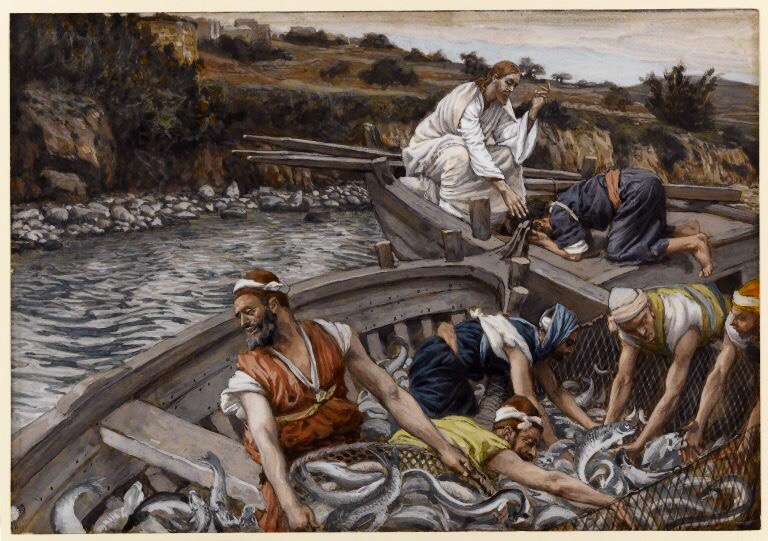
The Miraculous Catch – James Tissot
This is the mysterious lesson of the Cross, a lesson accessed only through faith, a faith the disciples exercise in today’s beautiful Gospel story.
This morning, we might wish to join Jesus for his “Breakfast on the Beach”, feeding our spirits in his resurrected Light. The truth he gives us goes beyond any purely human understanding. Let us listen with our deep hearts; see with grace-filled eyes.
Poetry: True Cornerstone by Robert Morris, a prominent American poet of the mid-19th century
What is the Mason's cornerstone?
Does the mysterious temple rest
On earthly ground — from east to west —
From north to south — and this alone?

What is the Mason's cornerstone?
Is it to toil for fame and pelf,
To magnify our petty self,
And love our friends — and this alone?

No, no; the Mason's cornerstone —
A deeper, stronger, nobler base,
Which time and foe cannot displace —
IS FAITH IN God — and this alone!

'Tis this which makes the mystic tie
Loving and true, divinely good,
A grand, united brotherhood,
Cemented 'neath the All-seeing Eye.

'Tis this which gives the sweetest tone
To Mason's melodies; the gleam
To loving eyes; the brightest gem
That sparkles in the Mason's crown.

'Tis this which makes the Mason's grip
A chain indissolubly strong;
It banishes all fraud, and wrong,
And coldness from our fellowship.

Oh, cornerstone, divine, divine!
Oh, FAITH IN God ! it buoys us up,
And gives to darkest hours a hope,

And makes the heart a holy shrine.
Brothers, be this your cornerstone;
Build every wish and hope on this;
Of present joy, of future bliss,
On earth, in Heaven — and this alone!
Music: Loed, When You Came – Kitty Cleveland
Lord, when you came to the seashore you weren’t seeking the wise or the wealthy, but only asking that I might follow.
O Lord, in my eyes you were gazing, Kindly smiling,My name you were saying; All I treasured,I have left on the sand there; Close to you, I will find other seas.
Señor me has mirado a los ojos, Sonriendo has dicho mi nombre, En la rena he dejado mi barca, junto a ti buscaré otro mar.
Lord, you knew what my boat carried: Neither money nor weapons for fighting, but nets for fishing my daily labor.
Lord, have you need of my labor, hands for service, A heart made for loving, my arms for lifting the poor and broken?
Lord, send me where you would have me, to a village, Or heart of the city; I will remember that you are with me.
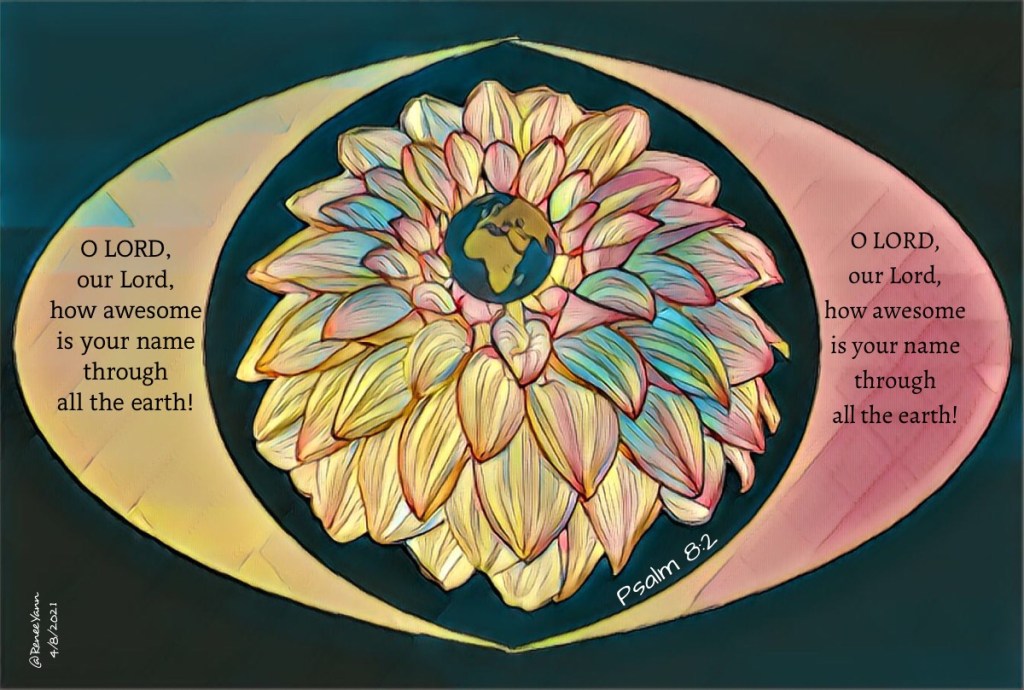
Today, in God’s Lavish Mercy, we pray with Psalm 8 – “a unique hymn of praise of God as Creator”, according to scripture scholar Roland Murphy, O.Carm.
Murphy goes on to explain:
Normally a hymn calls upon people to praise God, but not here. A communal refrain forms an inclusio (vv.2,10) for an individual hymn of admiration (vv.3-9)
(“Inclusio” is biblical theology jargon. It means a literary device based on a concentric principle, also known as bracketing or an envelope structure, which consists of creating a frame by placing similar material at the beginning and end of a section)
We might like to use the idea of an “inclusio” in our own prayer –
just taking that one phrase from the psalm which strikes our heart
beginning our prayer time with its rhythm
repeating it gently and continuously
letting it speak to us without further words
letting its images blossom in our prayer
letting it take us deeper into God’s heartbeat
closing our prayer time and entering our day with its cadence informing our spirit.
Prose: from William Butler Yeats
The purpose of rhythm … is to prolong the moment of contemplation – the moment when we are both asleep and awake, which is the one moment of creation — by hushing us with an alluring monotony, while it holds us waking by variety…
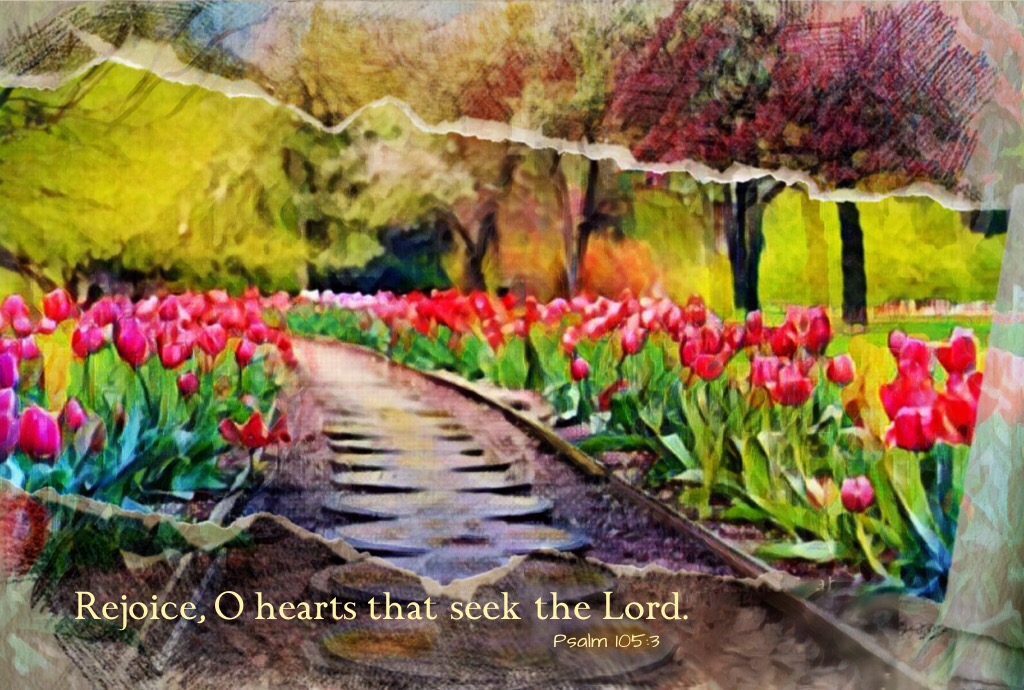
Today, in God’s Lavish Mercy, we pray with Psalm 105 as the psalmist rejoices in seeking and being found by God.
Our scripture passages today invite us to walk:
beside one long crippled and amazed at unexpected healing
beside the psalmist and all who seek the Lord
beside the Emmaus disciples as they shed their confusion into the already present Light
The readings call us to deeper, more faith-filled journeys that
challenge our passively accepted inhibitions
appreciate the journey as part of the destination
open our eyes to Grace otherwise invisible to our unhopeful hearts
Poetry: excerpt from The Wasteland by T.S.Eliot
Who is the third who walks always beside you?
When I count, there are only you and I together
But when I look ahead up the white road
There is always another one walking beside you
Gliding wrapt in a brown mantle, hooded
I do not know whether a man or a woman
—But who is that on the other side of you?
Today, in God’s Lavish Mercy, we pray with Psalm 33 which connects two powerful readings from Acts and John’s Gospel.
Acts describes for us a gathered crowd which, upon Peter’s inspired preaching, become a repentant, converting community. Peter speaks a word that changes them. They are struck through to their core by the enormity of Christ’s sacrifice for them.
Now when they heard (Peter’s preaching), they were cut to the heart, and they asked Peter and the other Apostles, “What are we to do, my brothers?”
Acts 2:37
In our Gospel, a bereaved Mary Magdalene’s heart is cut as well – with sorrow, confusion, and grief. But in that moment when Jesus simply speaks her name, she is awakened, healed, and energized.
What Word is it that our heart longs for today as we pray? What healing, light, and conversion do these readings hold for us as we open our hearts to Easter grace?
We, too, like Peter’s congregation, have come to hear a Word that transforms us. We, too, like Mary have been waiting in Hope outside the tomb. As we pray today’s scriptures, let’s listen for our name.
Our soul waits for the LORD, who is our help and our shield. May your kindness, O LORD, be upon us who have put our hope in you.
Psalm 33:20,22
Poetry: Say My Name – Meleika Gesa-Fatafehi
It is a good day to think about how important one’s name is to them, especially as it expresses our spiritual, familial and cultural rootedness. Meleika Gesa-Fatafehi is a proud Black/Indigenous, Pasifika and West Asian writer. She is from Murray (Mer) Island, from the Zagareb and Dauareb tribes.
My name was my name before I walked among the living before I could breathe before I had lungs to fill before my great grandmother passed and everyone was left to grieve
My name was birthed from a dream A whisper from gods to a king A shout into the stars that produced another that shone as bright They held me without being burnt, humming lullabies in pidgin
My name was passed down from my ancestors They acknowledged my roots grew in two places So, they ripped my name from the ocean and mixed it into the bloodlines of my totems
My name has survived the destruction of worlds and the genocidal rebirthing of so-called ones It’s escaped the overwhelmed jaw of the death bringer Many a time It has survived the conflicts that resulted in my gods, from both lands, knowing me as kin, but noticing that I am painfully unrecognisable and lost They are incapable of understanding the foreign tongue that was forced on me
My name has escaped cyclones and their daughters It has been blessed by the dead As they mixed dirt, salt and liquid red, into my flesh My name is the definition of resilience It is a warrior that manifested because of warriors
So, excuse me as I roll my eyes or sigh as you mispronounce my name over and over again Or when you give me another that dishonours my mother and father That doesn’t acknowledge my lineage to my island home or the scents of rainforest and ocean foam You will not stand here on stolen land and whitewash my name For it is two words intertwined holding as much power as a hurricane Say it right or don’t say it at all For I am Meleika I will answer when you call
Music: You Know My Name – Brooklyn Tabernacle Choir
(You may come upon an ad in the middle of today’s music — because it is rather long. Just clip the “Skip Ads” after a few seconds and you’ll get back to the choir)









 Lavish Mercy