Today, in God’s Lavish Mercy, we pray with Psalm 111, an elegant and simple hymn of praise to God.
Wikipedia says that the psalm praises God for a few specific things:
God’s great works v.2
God’s enduring Righteousness v.3
God’s grace and compassion v.4
God’d provision v.5
Truth and Justice v.7
Redemption for God’s people v.9
Granting of wisdom to those who revere God v.10
As I pray this psalm this morning, I will thank and praise God for these things. But I also want to be more personal in my gratitude, to thank God for the elegant Divine Presence in my life and in our world.
How blessed are we even to have been born, let alone loved, sanctified, and redeemed by God!
How blessed are we to know God and to seek the depths of God in our lives!
How blessed are we to share our moment in time with other beloveds of God who enrich and challenge us!
How blessed are we to be enlivened with the exquisite grace of God’s own life, and to know that our eternity will be the fulfillment of that grace!
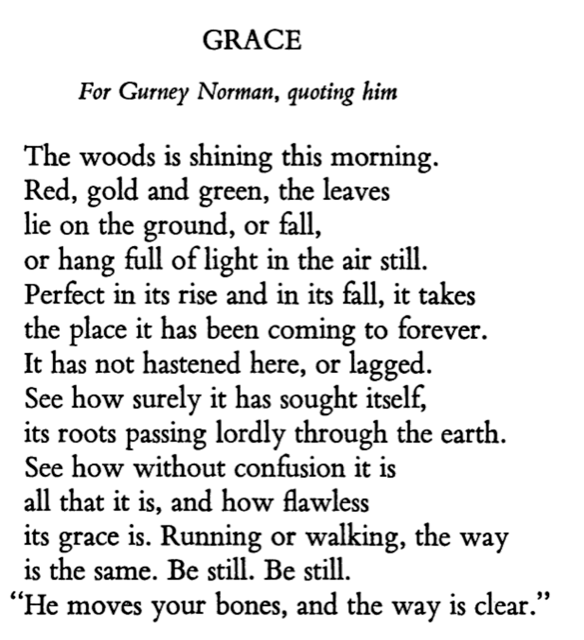
Poem: Grace by Wendell Berry
Music: Arioso, Cantata 156 – Johann Sebastian Bach played by Susanne Beer
Today, in God’s Lavish Mercy, for our Responsorial, we pray with a passage from Luke’s Gospel. This passage is known as the Benedictus or Canticle of Zechariah. It is one of three canticles in the first two chapters of Luke, the others being the Magnificat and the Nunc Dimittis. The Angelic Hymn is often considered a fourth.
At the Wednesday General Audiences given by the Pope, a theme is chosen for “catechesis” or teaching. From October 2001 until February 2006, Popes John Paul II and Benedict XVI gave their teachings based on the Psalms. JPII closed the first section of these audiences with these words:
“Our commentary on the Psalms and canticles from Morning Prayer concludes today with the Canticle of Zechariah, commonly known as the Benedictus. It is a prophetic canticle, in which the father of John the Baptist, indicates three events in God’s liberation of Israel: the covenant with Abraham, the covenant with David, and the new covenant with Christ. Like the “dawn from on high,” Christ gives light and guides us into the way of peace.”
Wednesday General Audience, October 1, 2003
As we pray with the hope-filled verses of the Benedictus, we pray in a world still seeking the fullness of that Dawn of Tender Mercy …
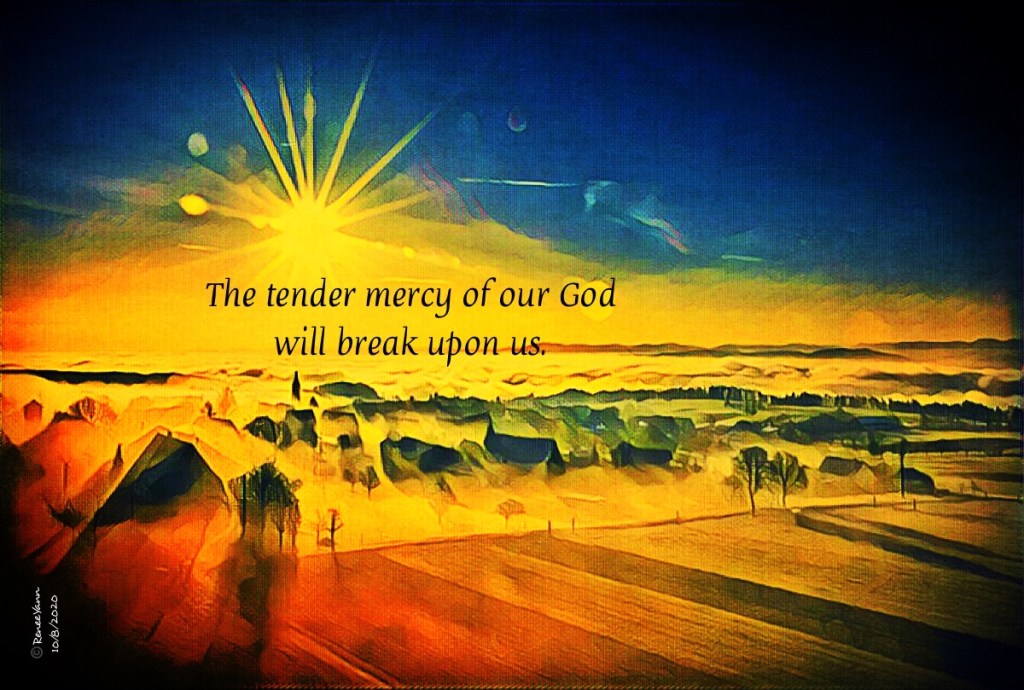
… the tender mercy of our God by which the daybreak from on high will visit us to shine on those who sit in darkness and death’s shadow, to guide our feet into the path of peace.
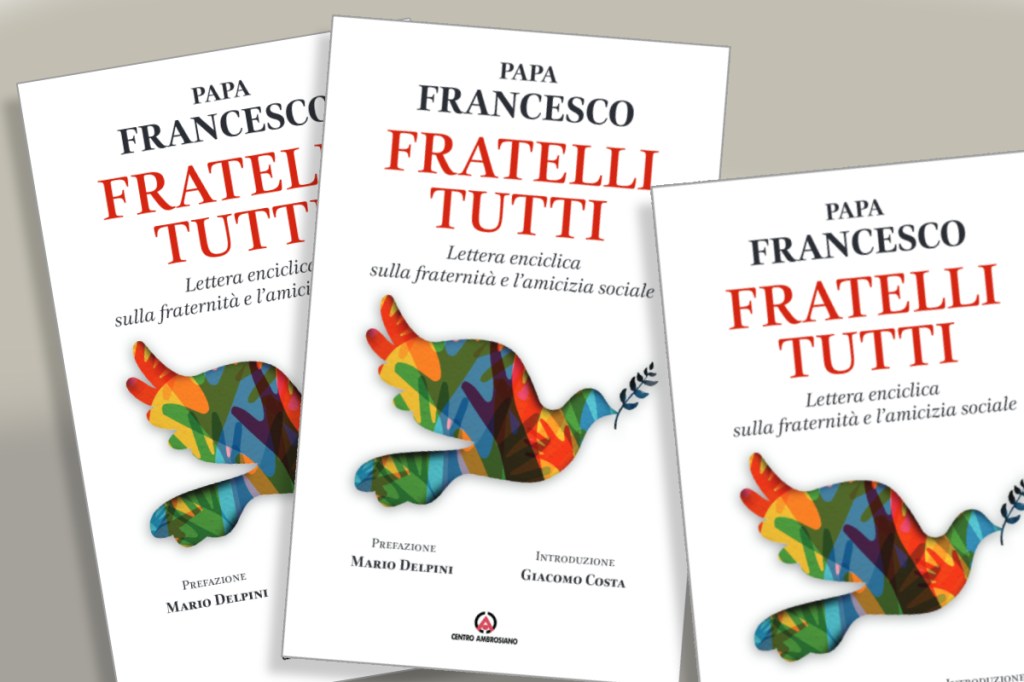
Pope Francis’s closing prayer in Fratelli Tutti reflects the same hope as his predecessors for that universal Dawn, that rising of Love in our hearts.
O God, Trinity of love,
from the profound communion
of your divine life,
pour out upon us a torrent
of fraternal love.

Grant us the love reflected
in the actions of Jesus,
in his family of Nazareth,
and in the early Christian community.

Grant that we Christians
may live the Gospel,
discovering Christ in each human being,
recognizing him crucified
in the sufferings of the abandoned
and forgotten of our world,
and risen in each brother or sister
who makes a new start.

Come, Holy Spirit,
show us your beauty,
reflected in all the peoples of the earth,
so that we may discover anew
that all are important
and all are necessary,
different faces of the one humanity
that God so loves. Amen.
Today, in God’s Lavish Mercy, we pray with Psalm 117. Since it is also the Memorial of Our Lady of the Holy Rosary, I’ll refer you to a previous post on Psalm 117.
For today, the Feast of the Holy Rosary, we may wish to focus on that venerable prayer which had its origins in the very early Church. In fact, those early versions of a rosary are connected to the Psalms:
Prayers with beads like the rosary may have begun as a practice by the laity to imitate the Christian monasticism of the Liturgy of the Hours during the course of which the monastics prayed the 150 Psalms daily. As many of the laity could not read, they substituted 150 repetitions of the Our Father for the Psalms, sometimes using a cord with knots on it to keep an accurate count. (The Catholic Encyclopedia)
The shape of the rosary as we pray it today emerged more clearly in the 13th century as Marian devotion blossomed in the Church. The tendency of that devotion was to place Mary, and other saints, between us and God. They, having already gained heaven, were deemed to have intercessory power we lacked. So praying the rosary became an “asking prayer” rather than a meditation on the whole of Christ’s life. In many ways, our relationship with Mary also took on a sentimentalism which lessened her true and unique power as witness and companion in the Communion of Saints.
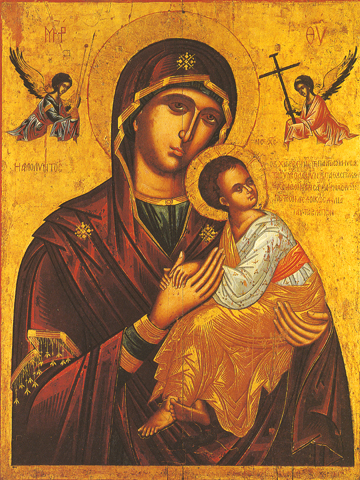
Theotokos of the Passion – 17th century
Today, Marian theology, as well as rosary devotion, looks to a clearer understanding of Mary’s role as participant in the continuing redemptive act of Jesus. Praying with her, in any form, is an opportunity to experience Jesus from her perspective and to apply that grace to our own life and world.
“Remembering Mary as a friend of God and prophet in the communion of saints, a woman who is truly sister to our strivings, allows the power of her life to play in the religious consciousness of the church, encouraging ever-deeper relationship with the living God in whom our spirits rejoice, and allying us with God’s redemptive designs for the hungry, the lowly, and all those who suffer, including in an unforgettable way women with their children in situations of poverty, prejudice, and violence.”
Elizabeth Johnson, CSJ – Truly Our Sister
I try, as I pray the rosary, to imagine Mary within each particular mystery or circumstance of Christ’s life. What did she experience? How did she grow in grace? What is she guiding me toward in my relationship with God?
I also ask Mary to allow those graces and insights to bless and heal not only my life but the life of the world, particularly where there is great pain or suffering for women and children.
In Whom We Live and Move and Have Our Being ~ Denise Levertov (Reading this poem, we may think of our prayer as a “breathing” enveloped in the Presence of God. The “holy ones”, like Mary, easily ride that breath of prayer. When we pray with them, as in the Rosary, they “rock” us into the silent rhythm of God.)
Photographer: Johannes Plenio
Birds afloat in air's current,
sacred breath?  No, not breath of God,
it seems, but God
the air enveloping the whole
globe of being.
It's we who breathe, in, out, in, in the sacred,
leaves astir, our wings
rising, ruffled -- but only the saints
take flight.  We cower
in cliff-crevice or edge out gingerly
on branches close to the nest.  The wind
marks the passage of holy ones riding
that ocean of air.  Slowly their wake
reaches us, rocks us.
But storms or still,
numb or poised in attention,
we inhale, exhale, inhale,
encompassed, encompassed.
Music: Beneath Your Compassion (Sub Tuum Praesidium) performed here in Russian by the PaTRAM Institute Singers
The oldest known devotion to Mary can be found in the words of a hymn that is documented to have existed and been sung before the middle of the 3rd century.
Beneath your compassion, We take refuge, O Theotokos: do not despise our petitions in time of trouble; but rescue us from dangers, only pure, only blessed one.
Today, in God’s Lavish Mercy, we pray with Psalm 139 with its powerful image of God, the Life Knitter.
This psalm is hauntingly beautiful as it carries us in prayer to the moment of our own incarnation. We are awed by the thought of God touching us into life deep in the darkness of our mother’s womb.
Paul, in our first reading, says that even from that first moment, he was “set apart and called through grace.”
Every one of us receives the same divine mark as Paul. Every one of our lives is known full well in God’s love:
My soul also you knew full well; nor was my frame unknown to you When I was made in secret, when I was fashioned in the depths of the earth.
Praying with this psalm, I am profoundly aware of the “life issues” at the root of U.S. culture and politics which face us in this election. I place myself before my Creator as I grapple with my abhorrence of abortion and my deep commitment to a “whole life” morality.
The document I share below has guided me as I try to faithfully discern the best moral choice in voting. As the document points out, “Faith does not fit into political parties neatly”. Indeed there is currently no party platform that fully and perfectly responds to the moral demands of our faith. Yet that faith requires that we participate in the political process of moving toward such a response.
Faithful voters are presented with a dilemma in the fullest sense of that word, that is, ” a circumstance in which a choice must be made between two or more alternatives that seem equally undesirable.”
Still, it is not enough to abandon our discernment to a single-issue mentality.
Besides considering the whole range of life and justice concerns, we must calculate the moral character of those we choose to govern and set national policy:
their honesty, compassion, decency, respect, toward all people;
their capacity for mutuality, dialogue, and peace-building;
their “economics morality”, (i.e. who shares in the basic rights necessary for a decent life)
their vision of democracy, human rights, and international power
their compatibility with the total legacy of Catholic social teaching
As we pray with Psalm 139 today, let us bring our concerns and hopes to God and ask for inspiration and courage.
Click below for the voting discernment document Equally Sacred Priorities
Celebrating the Feast of St. Francis of Assisi October 4-5, 2020
This year, in normal liturgical custom, our Sunday celebration supersedes the Feastday of Francis. But I can’t let this special day go by without notice. Therefore, I am publishing tomorrow’s reflection early, hoping that you will read some of it today. I write with warmest greeting to all Franciscans, especially my dear Sisters in Aston. PA. (The Franciscan Spiritual Center has designed some wonderful programs and made them accessible even during the pandemic. Here is a link to explore their wonderful offerings.)
For reflection, I plan to spend this evening and tomorrow morning with Pope Francis’s new encyclical Fratelli Tutti (Brothers and Sisters All), issued on this feast. St. Francis inspired the world with a renewed Gospel vision. Our Holy Father seeks to do the same with this ground-breaking teaching.
These will be the first of many prayerful days with this powerful document which Michael Sean Winters, in the National Catholic Reporter, describes:
What is clear is that Pope Francis has given the church a testament of authentic solidarity at a time when our president — and his nationalistic allies abroad — offers a counterfeit of solidarity. Both varieties of solidarity are responses to the excesses and the poverties created by neo-liberalism. Yes, poverties, it is clear, … that the material wealth neoliberal economies generate is precisely coincident with the generation of spiritual and moral poverty. The whole world groans to move beyond the moral slovenliness of laissez-faire ideas. But only the pope’s version represents an authentically Christian version of solidarity and, I would add, an authentically human version. This text challenges Christians in unique ways, but it challenges all…. …. If this pandemic does not shake us out of our post-modern cultural and moral and spiritual lethargy, what will? Pope Francis is throwing the Catholic Church and the whole world a lifeline. Will we grab it?
If you would like to pray with this profound and challenging instruction from Pope Francis, here is a link to it.
A second opportunity for prayer over today and tomorrow comes from our Mercy Sister Eileen Dooling. On our Sisters of Mercy blog, Eileen offers a lovely reflection on the Franciscan-Mercy connection. I’m sure you will enjoy it.
As you can see, there are so many ways to reflect, pray and grow on this beautiful feast. May your prayer be blessed by Francis (both of them) and by this amazing music!
Music: St. Francis Preaching to the Birds by Franz Liszt, played by Kotaro Fukuma
Today, in God’s Lavish Mercy, we pray with Psalm 80, rather a desperate plea in the midst of devastation.
… the vineyard which you planted … Why have you broken down its walls, so that every passer-by plucks its fruit, The boar from the forest lays it waste, and the beasts of the field feed upon it?
Psalm 80: 13-14
Angelus – Jean Francois Millet
Among my readers there are probably not too many farmers, but there may be a few serious gardeners. You would know what it feels like to lose a valued and tendered crop. And all of us have probably seen a movie or two where early settlers lose the crop which sustained their existence, or a news story of the same tragedy in real life. No words.
So Isaiah tells us that Israel, and by extension the People of God, is that precious vineyard, lovingly planted in hope by the Creator. The prophet paints the image of a deeply disappointed God:
The vineyard of the LORD of hosts is the house of Israel, and the people of Judah are his cherished plant; he looked for judgment, but see, bloodshed! for justice, but hark, the outcry!
Isaiah 5;7
But Psalm 80 calls out to that “disappointed” God and asks for forgiveness and restoration. The psalmist is inspired by the same kind of relentless hope Paul encourages in our second reading:
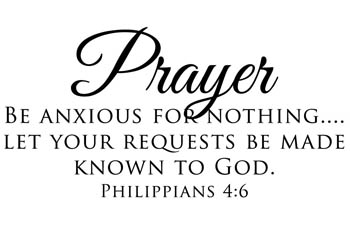
Have no anxiety at all, but in everything, by prayer and petition, with thanksgiving, make your requests known to God. Then the peace of God that surpasses all understanding will guard your hearts and minds in Christ Jesus.
Philippians 4:6-7
Our Gospel demonstrates for us that the cycle continues throughout history: hope – sin – devastation- repentance – forgiveness – renewed hope. It continues in individuals, families, societies, churches.
But that cycle has been forever absorbed into the Passion, Death and Resurrection of Christ who once and for all redeemed us from its clutches. We can never remain devastated or bereft of life in the grace of Jesus Christ. This is the glory of our Baptism into Christ, if we will but claim it!
Paul guides us, himself like a tender gardener, in this passage that is so worth our quiet reflection. It will be our “poem” for today!
Finally, brothers and sisters, whatever is true, whatever is honorable, whatever is just, whatever is pure, whatever is lovely, whatever is gracious, if there is any excellence and if there is anything worthy of praise, think about these things. Keep on doing what you have learned and received and heard and seen in me. Then the God of peace will be with you.
Music: Shen Khar Venakhi ( You are a Vineyard ) A hymn of praise to God’s perfect vineyard, the Virgin Mary who brought forth Christ
You are a vineyard newly blossomed. Young, beautiful, growing in Eden, A fragrant poplar sapling in Paradise. May God adorn you. No one is more worthy of praise. You yourself are the sun, shining brilliantly.
Thou Art a Vineyard (Georgian: შენ ხარ ვენახი, transliterated: Shen Khar Venakhi) is a medieval Georgian hymn. The text is attributed to King Demetrius I of Georgia(1093–1156). The composer of the music is unknown. Supposedly Demetrius I wrote it during his confinement as a monk in the monastery. The hymn is dedicated to Georgia and the patronage of the Virgin Mary: it is also a prayer of praise to Mary in the Georgian Orthodox Church
As the lyrics did not mention any saints or gods, this was the only church-song that was permitted to be performed in the anti-religiousSoviet Union. There are East Georgian (Kartli-Kakhetian) and West Georgian (Gurian) versions of this chant with very different musical compositions.
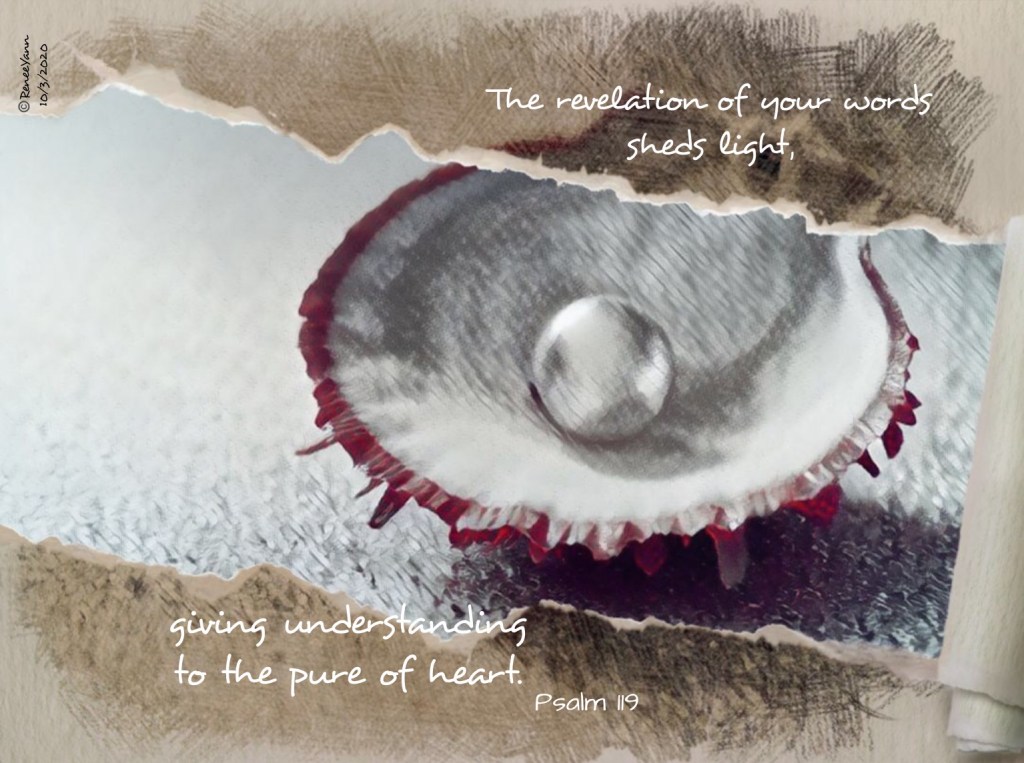
Today, in God’s Lavish Mercy, we pray with Psalm 119 – the longest psalm, as you might remember from one of my seven previous reflections on this rich piece of scripture.
From that wealth, we pluck this one pearl today:
I focus on this phrase to bring our attention to a beautiful document issued by Pope Francis on September 30th, the feast of St. Jerome: APOSTOLIC LETTER – SCRIPTURAE SACRAE AFFECTUS (Devotion to Sacred Scripture)
In this letter, our Holy Father describes scriptural devotion as “a living and tender love”. As we pray the scriptures each day, we ask that Love to form and instruct our hearts.
Lord, let your face shine on me. Teach me wisdom and knowledge, for in your commands I trust.
Pope Francis’s letter is an interesting exposition on the life and spirituality of Jerome sixteen hundred years after his death. I enjoyed reading it. But what I benefitted from most was the Pope’s encouragement to school our own hearts in a passion and pursuit of scripture. We can all learn from Francis’s words such as these:
This present anniversary can be seen as a summons to love what Jerome loved, to rediscover his writings and to let ourselves be touched by his robust spirituality, which can be described in essence as a restless and impassioned desire for a greater knowledge of the God who chose to reveal himself.
How can we not heed, in our day, the advice that Jerome unceasingly gave to his contemporaries: “Read the divine Scriptures constantly; never let the sacred volume fall from your hand”?
A radiant example of this is the Virgin Mary, evoked by Jerome above all as Virgin and Mother, but also as a model of prayerful reading of the Scriptures. Mary pondered these things in her heart (cf. Lk 2:19.51) “because she was a holy woman, had read the sacred Scriptures, knew the prophets, and recalled that the angel Gabriel had said to her the same things that the prophets had foretold…
She looked at her newborn child, her only son, lying in the manger and crying. What she saw was, in fact, the Son of God; she compared what she saw with all that she had read and heard”. Let us, then, entrust ourselves to Our Lady who, more than anyone, can teach us how to read, meditate, contemplate and pray to God, who tirelessly makes himself present in our lives.
Today, in God’s Lavish Mercy, we pray with Psalm 139, one of the most beautiful psalms. It is a perfect choice for the feast of the Guardian Angels, those magnificent beings who carry God’s Presence to us in every situation of our lives.
Where can I go from your spirit? From your presence where can I flee? If I go up to the heavens, you are there; if I sink to the nether world, you are present there.
If I take the wings of the dawn, if I settle at the farthest limits of the sea, Even there your hand shall guide me, and your right hand hold me fast.
Angels are woven throughout the scriptures. They are mentioned nearly 300 times. I found this website so interesting. I enjoyed going over the stories, some of which I had never noticed before.
But today, what we celebrate is that each one of us has our own Guardian Angel. We might think of that Being as a friend, a guide, a protector, a bridge to the Divine, an inspirer.
Maybe the only angels we ever think about are chubby little cherubs on Christmas cards. The cultural tendency to represent angels in that way diminishes the real power of these mighty and loving beings to inspire and guide us. Today might be a day to rethink our relationship with our Guardian Angels.
Poem: Touched by an Angel by Maya Angelou
We, unaccustomed to courage
exiles from delight
live coiled in shells of loneliness
until love leaves its high holy temple
and comes into our sight
to liberate us into life.
Love arrives
and in its train come ecstasies
old memories of pleasure
ancient histories of pain.
Yet if we are bold,
love strikes away the chains of fear
from our souls.
We are weaned from our timidity
In the flush of love's light
we dare be brave
And suddenly we see
that love costs all we are
and will ever be.
Yet it is only love
which sets us free
Today, in God’s Lavish Mercy, we pray with Psalm 27 – and gosh, did I need it!
I believe that I shall see the bounty of the LORD in the land of the living. Wait for the LORD with courage; be stouthearted, and wait for the LORD.
I woke up this morning still half sick from watching last night’s “debate”. I fully agree with this estimation from Jon Meacham:
“No hyperbole: The incumbent’s behavior this evening is the lowest moment in the history of the presidency since Andrew Johnson’s racist state papers.”
(Jon Meacham, the 2009Pulitzer Prize for Biography for American Lion: Andrew Jackson in the White House. Meacham holds the Carolyn T. and Robert M. Rogers Endowed Chair in American Presidency at Vanderbilt University)
I care about how my country’s leadership has degenerated. I care about how that collapse affects all of our lives especially poor, sick, and marginalized persons. It is painful to witness a situation where leadership suffers from an egregious forfeiture of responsibility and care for anything but its own self-interests.
It’s very hard to find prayer’s central clarity when a dysfunctional world spins around us. I asked myself today,: “Can Psalm 27 help me? Can the Little Flower shed some light for me?”.
Psalm 27 is a prayer that moves from relentless hope to deeply rooted faith. It is a remedy I crave.
Hear my voice, LORD, when I call; have mercy on me and answer me. “Come,” says my heart, “seek God’s face”; your face, LORD, do I seek!
Walter Brueggemann places great emphasis on verse 27:3 and the particular word “though”….
Though an army encamp against me, my heart does not fear; Though war be waged against me, even then do I trust.
Bruggemann says this:
I suggest that the psalm pivots in verse 3 on the word “though,” which is an act of defiance. It is a bold and brave “nevertheless, notwithstanding”… … This “though” is a well-grounded, adamant refusal to participate in the anxiety that is all around.
St. Thérèse of Lisieux wasn’t into “politics” as we commonly define the term. But her life in the abbey presented a good deal of human “politics” which challenged her spiritual growth. Here are a few quotes that I plan to pray with today to invite their blessings on my own anxieties, and to listen for where they might call me to hope, trust and faith, as well as productive, not fretful, action. You might like to do the same.
My whole strength lies in prayer and sacrifice, these are my invincible arms; they can move hearts far better than words, I know it by experience. ― The Little Way for Everyone Day: Thoughts from Thérèse of Lisieux
Joy is not found in the things which surround us, but lives only in the soul. ― The Story of a Soul: The Autobiography of St. Thérèse of Lisieux
It is wrong to pass one’s time in fretting, instead of sleeping on the Heart of Jesus. ― ibid.
In place of a poem today, this tidbit about Psalm 27 from Pope John Paul II:
The faithful know that being consistent creates ostracism and even provokes
contempt and hostility in a society that often chooses to live under the banner
of personal prestige, ostentatious success, wealth, unbridled enjoyment.
They are not alone, however, and preserve a surprising interior peace in their hearts because, as the marvellous “antiphon” that opens the Psalm says,
“the Lord is light and salvation… the stronghold of life” (cf. Ps 27: 1) of the just.
He continuously repeats: “Whom shall I fear?”, “Of whom shall I be afraid?”,
“My heart shall not fear”, “Yet I will trust” (cf. vv. 1, 3).
JOHN PAUL II- GENERAL AUDIENCEWednesday, 21 April 2004
Music: The Lord is My Light and My Salvation – Haas and Haugen
Refrain: The Lord is my light and my salvation, of whom shall I be afraid?
The Lord is my light and my help; whom should I fear?The Lord is the stronghold of my life; before whom should I shrink?
There is one thing I ask of the Lord; for this I long; to live in the house of the Lord all the days of my life.
I believe I shall see the goodness of the Lord, in the land of the living; hope in him and take heart, hope in the Lord!
Today, in God’s Lavish Mercy, we pray with Psalm 88. It’s supposed to be a gloomy, rainy day around here where I live, and Psalm 88 isn’t going to help! It is the desperate prayer of one who hears no answer from God:
But I, O LORD, cry out to you; with my morning prayer I wait upon you. Why, O LORD, do you reject me; why hide from me your face?
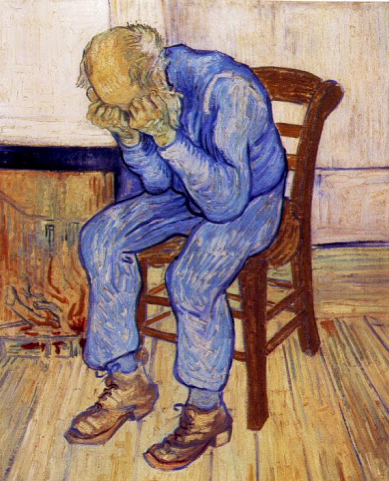
Sorrowful Man – Vincent Van Gogh
According to Martin Marty, a professor of church history at the University of Chicago, Psalm 88 is “a wintry landscape of unrelieved bleakness.” Psalm 88 ends by saying: You have taken my companions and loved ones from me; the darkness is my closest friend. Indeed, in Hebrew the last word of the psalm is “darkness”. ~ from Wikipedia
Also from Wikipedia:
J.M.Neale and R.F. Littledale, writing in the 19th century, find that Psalm 88 “stands alone in all the Psalter for the unrelieved gloom, the hopeless sorrow of its tone. Even the very saddest of the others, and the Lamentations themselves, admit some variations of key, some strains of hopefulness; here only all is darkness to the close.”
Gratefully, I have seldom been in the place of this psalm … but that doesn’t mean never. Many of you, I imagine, could say the same.
So what do we do when life, by our choices or despite them, finds us irrevocably caught in spiritual darkness? What happens to us when we think God isn’t listening to our prayer, or maybe that there was never any God in the first place?
St. John of the Cross says this:
Live in faith and hope, though it be in darkness, for in this darkness God protects the soul. Cast your care upon God for you are His and He will not forget you. Do not think that He is leaving you alone, for that would be to wrong Him.
John’s further writings show us that this darkness, rather than alienate John from God, was the source of unparalleled union with God.
May we be blessed in the same way.🙏
One dark night,
Kindled in love with yearnings—oh, happy chance!—
I went forth without being observed,
My house being now at rest.
In darkness and secure,
By the secret ladder, disguised—oh, happy chance!—
In darkness and in concealment,
My house being now at rest.
In the happy night,
In secret, when none saw me,
Nor I beheld aught,
Without light or guide, save that which burned in my heart.
This light guided me
More surely than the light of noonday
To the place where he (well I knew who!) was awaiting me—
A place where none appeared.
Oh, night that guided me,
Oh, night more lovely than the dawn,
Oh, night that joined Beloved with lover,
Lover transformed in the Beloved!
~ John of the Cross
Poetry: Sorrow – Renee Yann, RSM
You must be alone
    with sorrow
    before you can leave it,
    or it will crush you
    like a dark, heavy rock.

    You must drive into
    the hollow of its face,
    under the ledges
    it projects against you.
    Feel its cold granite
    pressed to your grain.

    In time,
    it will allow your turning
    to rest your back
    within its curve.

    Only then,
    you will be free to leave it,
    walking lightly once again
    on yielding earth.

    When you return, it will be freely,
    on a pilgrimage,
    to touch the name you carved once
    in your heart’s anguish.














 Lavish Mercy