September has barely poked its nose through the door, but already we see signs of Autumn. A slight gold shimmers on the trees. Geese gather in noisy expectation. Early morning sheds its night veil in slower layers of magenta and blue. There have even been a few sweet nights when we can open the windows wide and sleep in the suggestively crisp air. All the signs are there — it is a new season – “The Season of Freshness”.
“Fresh” is a powerful word. Who can resist the crisply-aproned waiter suggesting, “Fresh ground pepper?” Who can ignore the aroma of fresh baked bread? Some of us even remember with appreciation the scent of linens fresh from our mother’s clothesline.
Let this beautiful season remind us that each day the Creator shakes out a fresh beginning for every one of us. With every radiant morning, the slate is clear with mercy. The opportunity to re-create the world awaits us. Our lives, our work, our relationships are the fresh bread of God’s hope for us. Within them, we are invited to reveal the powerful grace which runs just under the visibility of the ordinary. It whispers to us, “You are Beloved, and I want your life to be a fountain of joy.”
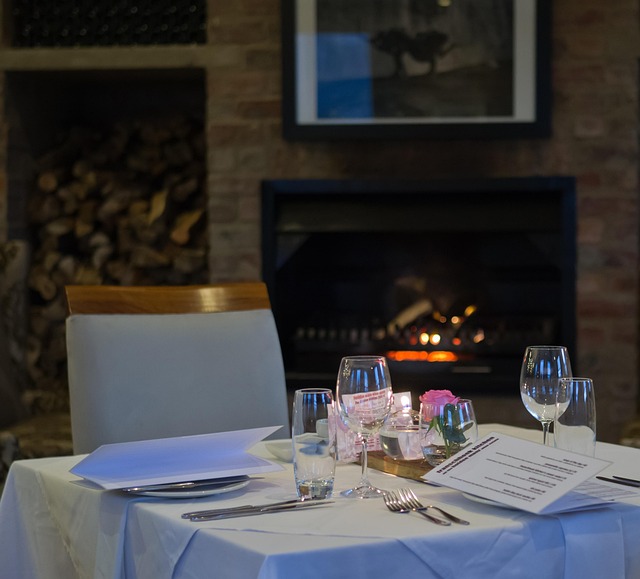
September is for fresh beginnings: a sparkling season, an unmarked semester, a turning of the garden, a clean page. It is nature’s way of saying forgiveness is possible, life is resilient, hope is eternal. Imagine September as the white-aproned waiter inviting you to freshness. At the Creator’s table, the tablecloth is clean and the sacred menu is forgiveness, hope, mercy and renewed beginnings. Don’t miss this opportunity to assess what needs refreshment in your life. Feast on September’s graces! They can be life-changing!
Music: September Song – Alexis Ffrench
For Your Reflection
What feelings or reactions do I have after reading this reflection?
Do my feelings or reactions remind me of any passage or event in scripture, especially in the life of Christ?
What actions might I take today because of my response to these readings?
1812 Overture in E-Flat Major, Op.49: I. Largo – Allegro giusto
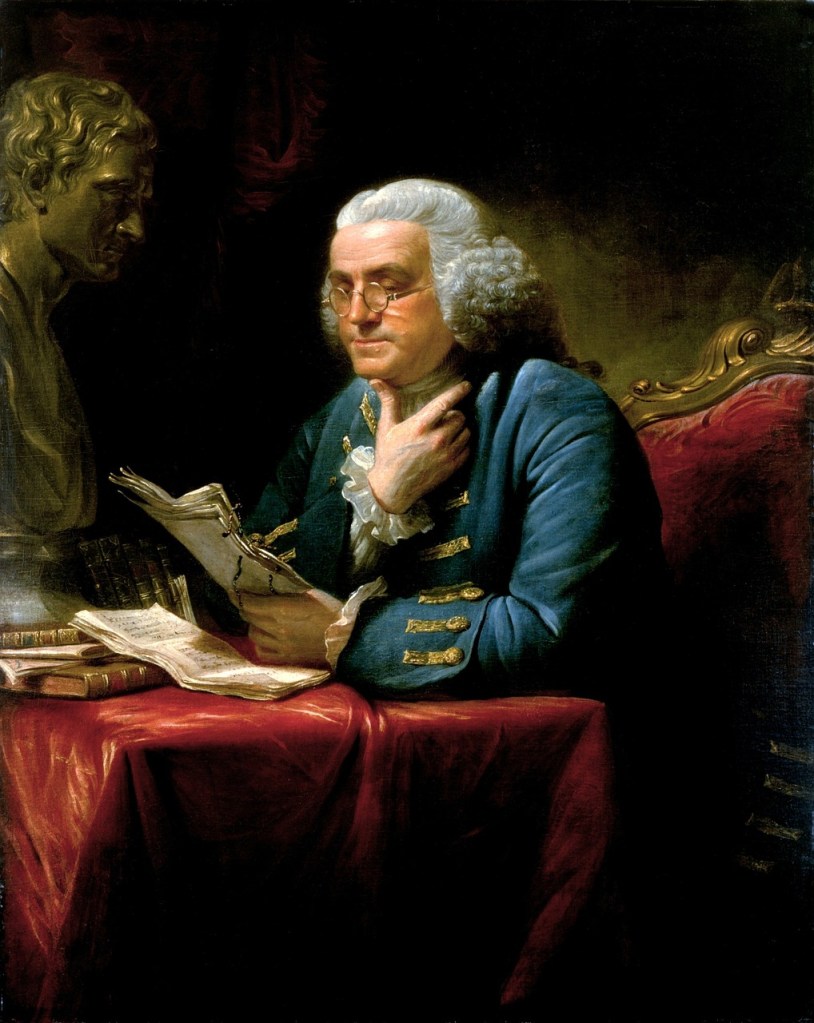
After all the speeches, sparklers, and spectaculars, the “Next Day” dawns. I wonder what it was like for Jefferson, Franklin, Hamilton, and Adams on the fifth of July in 1776. Did they wake up thinking, “Declaration of Independence – signed. Now, make it happen!”?
When you get right down to it, most of our days are 5th, 6th, 7th, and 8ths of July. They are the days after graduation when we need to get a job. They are the days after the honeymoon when somebody needs to cook dinner and take out the trash. They are the days after the promotion when the first deadline looms and a bunch of faces are looking to you for the plan. They are the days that follow any major life decision, when we must take stock and determine who we are now – in this new dimension.
If the 4th of July is Independence Day, the 5th is Dependability Day, a day to celebrate the people we can always count on. They are there for the parades but they are there for the clean up afterward. They light the spark for the fireworks, but they have a hose nearby just in case. They put their “John Hancock” on the brave new dream and they show up the next morning to design its daunting execution.
The 5th of July is a day to celebrate our own sense of responsibility or “Dependability” – to realize that most of us really do try to be good spouses, parents, employees, neighbors, sons, daughters and friends – that we do keep making the effort every day to be someone for others and not just for ourselves. It is a day to look around at the people in our lives and be grateful that most of them are trying to do the same thing.
Like the founding patriots, we all need to wake up the next day, consider the “dependabilities” in our lives, and put our shoulders to the task of making a better world. Each of our lives is its own small country where the future really depends on how we show up on our “5th of Julys”. The fact that you get up every day and engage that challenge is cause for its own celebration. So if you have a little sparkler left in your back yard, light it for yourself tonight – and for your spouse, your community, your friends, your boss, your kids, your co-workers – who all showed up today to do the best they could on the 5th of July.
Thanks for that and Happy Fifth!
Music: We Need Each Other – PROSKUNED
For Your Reflection:
What feelings or reactions do I have after reading this reflection?
Do my feelings or reactions remind me of any passage or event in scripture, especially in the life of Christ?
What actions might I take today because of my response to these readings?
When I was a little girl, I hated the monkey bars. I knew it was cool to be able to do them — but I wasn’t any good at it! I can remember jumping up to hang on to the first bar, and thinking, “O.K. — this is as far as I can go”! For me, it was really a challenge to loosen the grip on one of those secure, sweaty hands and reach out in both hope and anxiety for the next stabilizing bar.
I remember one particularly challenging day at the playground. It had rained heavily the night before, and the ground under the bars was a muddy mess. Big Jimmy, the neighborhood bully, had challenged me to a monkey bar duel. Within a flash of the challenge, he had powerfully swung his way from one end to the other. He stood egging me on from his place of success.
I tentatively climbed up and hung on the first bar. Painstakingly, I lurched my way to the second. My hands were slippery, nervous pools. As I stretched for the third bar, I felt my grip slipping. I tried to re-grab — but I couldn’t. I hung by the fingernails of one hand over a two-inch muddy pool. There seemed to be no hope!
Suddenly I felt two strong hands around my little waist. They lifted me so that I could regain my grasp and they supported me while I hand-over-handed my way to the end. My Uncle Joe, who had been passing by the playground, saw me struggling and had come to my assistance. Without words, he told Big Jimmy, who was three years my senior, that someday I would catch up to him. But until then, I needed a little help to negotiate some of my challenges.
We’re not little kids anymore, but we can still get unnerved by the demands of life and of the world at large. The once-lithe body that reached for the monkey bars may now struggle to get out of a chair. The “Uncle Joe” saviors may no longer magically appear to support us when we are uncertain. The “Big Jimmy” bullies may seem to have poisoned our political culture with violence and fear. Yes, sometimes growing up and growing old can be worrisome.
No matter how challenging or scary life’s passages, God accompanies and supports us. There is no circumstance so muddy that God will not carry us through. No matter how slippery our grip feels, God’s hands are at the center of our lives, holding us in unassailable grace. We can trust God infinitely more than even our “Uncle Joe”s.
Yes, life can sometimes feel like we are swinging from slippery monkey bars, but by trust and faith, we can invite God’s loving support to surprise and uplift us.
Music: You Raise Me Up – Josh Groban
For Your Reflection
What feelings or reactions do I have after reading this reflection?
Do my feelings or reactions remind me of any passage or event in scripture, especially in the life of Christ?
What actions might I take today because of my response to these readings?
A perfect summer night is a treasure, isn’t it? … the kind you remember from when you were a kid: • cool enough to play for hours without sweat and exhaustion… • the long light lingering until almost nine o’clock… • the jingle of the ice cream truck tantalizing in the distance….
It would have been fine with me if those nights had lasted forever. But like childhood, such summer nights do not last.
The challenge is this: can we retain the spirit of those nights in the heat or chill that follows In the long seasons of our adult responsibilities and choices, can we invoke our free and joyful inner child?
I remember one June Saturday a few years ago. I sat concentrating by my open window as a warm breeze drifted in. The street outside bustled with the sounds of the busy inner city. Inside, my mind bustled with all the work I had to accomplish in the short weekend.
Suddenly, like gentle bells amid the noise, children’s laughter threaded into my seriousness. Their roller skates softly clacked across the hard concrete of my sidewalk and my awareness. I thought to myself, “When was the last time you experienced pure, childlike joy and freedom? — AND what are you going to do about it?”
There are a few tender summer nights left in 2025. Turn the TV off and go out to your patio or front step. Play with your children. Listen for the ice cream truck. Sit on the porch with someone you enjoy and just talk. Or sit alone in the grateful stillness with our Creator Whose best gift to us is joyful freedom – Whose own playful heart created the zebra, the giraffe, the flamingo, the Blue-footed Booby … and, yes, even us 🙂
We know all too well that we were created to work. Let’s remind ourselves that we were also created to play with the simplicity and sincerity of our remembered childhood.
Music: Like a Child
For Your Reflection:
What feelings or reactions do I have after reading this reflection?
Do my feelings or reactions remind me of any passage or event in scripture, especially in the life of Christ?
What actions might I take today because of my response to these readings?
The neighborhoods of my youth were safe playgrounds. On a summer morning, a score of sparkling kids would tumble out onto the bricks like polished marbles rolling to their sparsely equipped games. Occasionally, some kid would have a new pimple ball, prompting an hours-long boxball game, guttered corners serving as bases.
When, over the weeks, that ball grew smooth and airless, we cut it in half, grabbed a doctored broomstick, and hit the halfball up over the electric wires fringing our city street. Top one wire, a single; top two, a double. Lose it on the roof and you had to find a four-inch length of hose to replace it. This until the next kid lost a tooth, got a dime from the tooth fairy, and contributed a new ball.
On those afternoons, the surrounding porches and stoops were dotted with grandparents in folding chairs, escaping the swelter of the unairconditioned houses. They served to arbitrate any particularly sticky play, precursors of instant replay. Behind the houses, our mothers held council together over their billowing clotheslines.
By the time our dads came home, carrying their empty black lunch pails, we shiny kids were dusty with city soot. The beach-chaired elders had solved all the problems of world affairs and our moms had rendered the house ready for the daily family dinner liturgy.
These were such simple times, so simple that they may seem even naïve in today’s complex society. But their symbols assure me that, though things change, they remain the same. The shared play, the community of conversation, the neighborly support group, the evening gathering to home – these were the holy anchors that fed our spirits and honed our souls.
The outline of these sacramentals may look different today, but their substance must remain if we are ever to be happy people – people who live in the world as playmates, neighbors, friends, and family. That, dear friends, is what we were created to be.
Music: Won’t You Be My Neighbor?
For Your Reflection:
What feelings or reactions do I have after reading this reflection?
Do my feelings or reactions remind me of any passage or event in scripture, especially in the life of Christ?
What actions might I take today because of my response to these readings?
There was a quote floating around the internet some time ago. It was a loose translation from the classic poem “The Rubaiyat of Omar Khayyam”. The quote, popularized through the film “Unfaithful”, goes like this:
“Be happy for this moment. This moment is your life.”
There are so many ways to interpret this quote! We might see it as a cheap excuse to ignore the responsibilities of life and live in a fantasyland (along the lines of that famous song, “Don’t Worry. Be Happy”). We might see the quote as a failure to acknowledge the suffering and difficulty life sometimes brings us. Or we may see it as an invitation to let nothing in life destroy our joy.
How we interpret this saying has a lot to do with our personal definition of the word “happy.” If we think of happiness as freedom from any sorrow, burden, or difficulty, then the quote is unattainable. But if we view happiness as a deep, abiding peace and self-confidence, steadfast in the face of challenge, then the quote can open up a rich world of application.
With this deeper view of what it means to be happy, the quote invites us to live in our “now”. This particular moment is all that we really have. We can no longer influence the past, and the future is beyond our grasp. This moment is where we have the power to create possibility. In the action of this moment, we shape our world. Most of us won’t ever make the newspaper headlines or history books. Simple things – the things we need to pay attention to in our everyday lives – will make our mark on the world.
Each day, there seem to be so many realities asking for our attention. Certainly our families, our work, our communities are all seeking our focus. But other inanimate things call us as well: that undiagnosed knock in our car engine, the leak in the basement, the bad weather forecast, the unpaid bills on the kitchen table. All of these call on our attention, and can block us from living in the moment fully and joyously. But with discipline, it is possible.
We’ve all been around people who live in the deep moment. They pay exquisite attention to us, and to the life we share with all Creation. They seem able to peel away what is unimportant and to re-focus us on the essentials. They don’t do a lot of talking, but they do a lot of quality listening. When they speak, their words plant themselves inside us and create a sheltering shade for our decisions.
How do these “deep moment” people do that? The secret may lie in a few simple intentional choices: • know to whom your life belongs and trust that Creator to sustain you no matter what happens. • build some time – no matter how brief – into each day to acknowledge and connect to that Abiding Presence in your life. • continually choose to see every person and every encounter as an opportunity for grace and possibility.
Living in such a way is simple but it is not easy. It requires the commitment of a spiritual athlete whose goal is to fully engage life. But look at it this way. Wouldn’t it be sad to come to the end of this one precious life and to realize that we had missed the whole point!
Music: Jesu, Joy of Our Desiring – J. S. Bach (New Age version by Lanfranco Perini)
For Your Reflection:
What feelings or reactions do I have after reading this reflection?
Do my feelings or reactions remind me of any passage or event in scripture, especially in the life of Christ?
What actions might I take today because of my response to these readings?
After my mother died, it was my sad honor to sift through our home in preparation for its sale. The long years of our family’s story had accumulated in closets, cabinets, and a few storage boxes. So many half-forgotten treasures lay hidden in the corners and niches of our now-empty home.
Among these ordinary reliquaries was one unique spot, reserved for the most precious markers on our ancestral line. It was a 19th century “games table” whose leaf folded and whose top swiveled to reveal a hidden compartment. Inside this table, in a shallow space spiced with the essence of history, lay our family’s sad and joyful relics.
Each was a treasure, but as Memorial Day dawns, I remember one in particular. The telegram had been tear-stained and folded into a three-inch square, almost as if to hold the words inside and prevent them from wounding again. Its message, like so many messages down through the ages, fell like a guillotine on the heart of another “Gold Star Mother”: “We deeply regret to inform you that your son James…”
None of our currently living family ever met Uncle Jim. But his memory lives with us. The dreaded telegram resides with me. His Purple Heart and other medals are with my brother. A cousin treasures a picture of Jim’s memorial at the USS Arizona. The story of his death on the shores of Iwo Jima saddens us. Although we never knew his presence, we have espoused his legend as part of our legacy.
But beyond his legend, we need to embrace his truth: he must have been a frightened hero, as are most heroes. He was a 19-year-old boy who loved his country and was brave enough to stand for its ideal of freedom. But he was nonetheless conscripted to an untimely death because more powerful men succumbed to the moral failures of aggression, greed, rampant nationalism, and war.
Each Memorial Day offers us the challenge to balance two eternally contradictory realities: the awesome self-sacrifice of our brave warriors against the moral imperative to disavow war as a means to peace.
Sadly, every family has its fallen and broken heroes. Their relics may rest on our mantle pieces or hide folded in our cedar-scented wardrobes. They may be creased and softened with age or as painfully fresh as the rip of yesterday’s mail.
On Memorial Day, let us remember and honor these heroes for their courage, generosity, and hope. Let us treasure their willingness to stand in harm’s way for us and for their belief that war could be won.
But let us recognize in their loss that wars are never won. War’s collateral loss — fractured bodies, stunted dreams, orphaned children, victimized women, hopeless elders, and a ravaged earth — is a price too great to pay. These expenses of war break the heart of God and God’s people. War, despite its profound costs, is a cheap answer to the failed pursuit of peace.
Let us commit ourselves and commission our leaders to do the daunting work of building true peace through honest politics, globally sensitive financial policies, mutual nation-building, and respect for human life. The sacrifice of our heroes demands it of us. The unfolded memory of Uncle Jim demands it of me.
For Your Reflection
What feelings or reactions do I have after reading this reflection?
Do my feelings or reactions remind me of any passage or event in scripture, especially in the life of Christ?
I had been away – busy and incommunicado for several days. The message was the last one on my answering machine when I got home. It lay curled like a wounded kitten at the end of a long line of incidentals.
Mag had died at 101 years of age – the long faithful friend of my grandmother, my mother, and me.
My Grandmother
The manner of Mag’s faithfulness to each of our generations had been different: a companion to Grandmom, a guide and confidant to Mom, a distant but vigilant observer and encourager of my life in my mother’s stead after Mom had died.
When I called back to acknowledge the message, there was only one meaningful way to announce myself: “This is Eleanor’s daughter.” Just that said everything – it paid tribute to both Mag’s and my mother’s lives. It recognized the duty I owed in both their names. Mag’s daughter said, “We don’t expect you to come… we just wanted you to know.” My mother’s voice spoke in the silence of my heart – “Of course, you will go.”
Eleanor, my Mother
So I traveled to the place where I grew up. There will never be any place that you know more intimately than your childhood neighborhood. You ran through its alleyways and knew its secret hiding places. You explored every inch of its terrain and, to this day, can remember its textures, smells, dangers, and promises. That day, I drove into its heart, remembering.
As I approached the neighborhood, I saw that its edge had frayed like a tattered fabric. The industrial and commercial corridor that had hemmed the old neighborhood had disappeared. Abandoned lots had replaced the thriving factories and immigrant-run shops of my youth. The bustling avenues where I had once threaded my shiny Schwinn bike now echoed like empty canyons under my tires. Loss rose up in my throat like a bitter aftertaste.
But as I neared the church, the fabric began to re-weave. People still lived in the houses and gathered on the brick pavements. I saw neighbors walking to church, as my family had when I was young. I was to learn that the deep human links that had embraced our parish family remained unbroken.
It had been nearly fifty years since I last worshipped in St. Michael’s, but the church of my childhood was perfectly intact. Not only had it been physically restored to the perfection of its 200-year-old origin, but the descendants of many original families remained or had returned for the funeral. During the wake, we reconnected, weaving names and histories into a warm swaddling of belonging.
During preparation for the solemn funeral service, many people came to visit me in the silence of my heart: my parents who had taught me to pray, the sisters and priests who had nurtured my call to religious life, my neighbors and friends whose lives had found graceful regeneration each Sunday in this sanctuary. This place had been the heart of our “village”. It was where we learned and acknowledged that we live life together, not alone – and that the myriad pieces which make up who we are belong in some way to every person who has ever touched us. Every one of us attending Mag’s funeral was paying honor to that reality.
It takes a lifetime to fully learn the office of honor. As a teenager, I was uncomfortable accompanying my mother on her many dutiful journeys: not wanting to visit my old maiden aunts in their very Victorian home, to take a pot of soup to a house in mourning, not knowing what to say at a neighbor’s wake. I remember my mother’s words on such occasions: “We show up. It’s what we do – because it’s all that we can do. It’s an honor to be with someone at these moments of their lives.”
I am old enough now to cherish that role of honor guard. I have learned its beauty and character from the many – including Mag — who have kept vigil beside me and my family in the challenges and blessings of life. I went to Mag’s funeral privileged to exercise that role in my mother’s name – to assume the duty of our family to “show up”.
To stand within duty is to be like a surfer poised inside the huge curl of a powerful wave. It is to ride on an energy that does not belong to you – to open yourself to it with gratitude, awe, and trust. It is to know – in an indescribable way – the profound power of God that holds all life together beyond time and beyond burden.
At Mag’s funeral, I was – once again – proud to be Eleanor’s daughter. I know that she and Mag smiled as I rejoiced in that pride. On this Mother’s Day, I remember that day as a very intentional gift to me, and I treasure it beyond telling.
Mom and I when Pope John Paul II visited for the Eucharistic Congress
Music: Thank You
For Your Reflection
What feelings or reactions do I have after reading this reflection?
Do my feelings or reactions remind me of any passage or event in scripture, especially in the life of Christ?
What actions might I take today because of my response to these readings?
Suggested Scripture: Proverbs 31 (Adaptation)
Who can find a valiant woman? She is worth far more than rubies. Her family has full confidence in her and lacks nothing of value. She brings them good, not harm, all the days of her life. She gets up while it is still night; she provides food for her neighbors and portions for the very poor. She considers a field and buys it; out of her earnings she plants a vineyard. She sets about her work vigorously; her arms are strong for her tasks. She sees that her work is fruitful, and her lamp does not go out at night. In her hand she holds the distaff and grasps the spindle with her fingers. She opens her arms to the poor and extends her hands to the needy. When it snows, she has no fear for her household; for all of them are clothed in scarlet. She is clothed with strength and dignity; she can laugh at the days to come. She speaks with wisdom, and faithful instruction is on her tongue. She watches over the affairs of her beloveds and does not eat the bread of idleness. Her neighbors arise and call her blessed; her family also praises her: “Many women do noble things, but you surpass them all.” Charm is deceptive, and beauty is fleeting; but a generous woman is to be praised. Honor her for all that her hands have done, and let her works bring her praise at the heavenly gate.
It could have been at the coaxing of the first mild, peaceful spring night. Its soft breezes and lingering sunlight might have redeemed me from the scars of winter.
A nearby high school was holding a dance. The music pulsated throughout the neighborhood like the heartbeat of an excited giant. Any hope of a peaceful evening died with the first note. Yes, I had succumbed to the old person’s complaint that I so derided in my own youth: “They call THAT music?!”
But eventually, I stopped resisting the thrumping bass and let myself imagine the joyful young dancers perfectly liberated within their chosen music.
What a great gift it is to dance, to have reason to dance, to have someone to dance with!
Do you remember the dances of your early years: girls and boys huddled along opposite walls around a vacant dance floor? Remember the furtive glances across that chasm to assess who might be brave enough to enter the music with you? And then somehow, the invitation was given, the possibility embraced, and we gave ourselves to the song.
The music of life is playing all around us. But we may be lingering at the edge of the great song of Creation. Standing in the middle of the dance floor, God looks at each of us and beckons us to step into the melody.
Music: I Hope You Dance – Lee Ann Womack
For Your Reflection
What feelings or reactions do I have after reading this reflection?
Do my feelings or reactions remind me of any passage or event in scripture, especially in the life of Christ?
What actions might I take today because of my response to these readings?
I know that readers of this blog are people of deep prayer. Your faith, love, and generosity have built my spirit and lifted my heart many times.
On this National Day of Prayer, I encourage us all to focus on our deepest beliefs about what sustains us in life. Ask that Source of Love, Peace, and Wisdom – by whatever Name you give – to heal our broken world and to make us people of truth, generosity, and goodness.
As we pray, remember those who struggle with life, with faith, with hope. Wrap your prayer around their need this day. If you are one who struggles today with these things, let your spirit hand that struggle over to the prayers of those who lift you up and to the Source of Life Who longs to embrace you.
The Creator and Source of Life wants to heal and encourage us all. Today, in a more conscious way, let us seek that healing and encouragement together. In particular, let us pray for our nation and for our world, that we may find healing from the terrible divisions generated among us by political aggression and despotic greed.
Prose: from C.S. Lewis
For many years after my conversion, I never used any ready-made forms except the Lord’s Prayer. In fact, I tried to pray without words at all – not to verbalize the mental acts. Even in praying for others, I believe I tended to avoid their names and substituted mental images of them. I still think that the prayer without words is the best – if one can really achieve it.
Music: The Prayer – Celine Dion, Andrea Bocelli
For Your Reflection
What feelings or reactions do I have after reading this reflection?
Do my feelings or reactions remind me of any passage or event in scripture, especially in the life of Christ?
What actions might I take today because of my response to these readings?

















 Lavish Mercy