Brothers and sisters: You are no longer strangers and sojourners, but you are fellow citizens with the holy ones and members of the household of God, built upon the foundation of the Apostles and prophets, with Christ Jesus himself as the capstone.
Ephesians 2:19-20
Today, in God’s Lavish Mercy, we celebrate the feast of the Apostles Simon and Jude. Not much is really known about either of these men. One tradition suggests that after the Ascension, they went together to carry the Gospel to Persia where they were eventually martyred.
Since we have so few facts, many legends and interpretations have grown up around these saints. Probably the strongest and most familiar of these is of St. Jude as the patron of hopeless cases.
There are probably very few of us who haven’t asked at least one favor from St. Jude in our lifetimes. This probability begs the question of why and how do we pray with the saints.
Our tradition holds that we exist in the Communion of Saints with all of God’s creatures, and that we inspire and support one another by the sharing of our lives. This sharing is not limited by time, nor is it constricted by death.
When we pray with the saints, we draw on their faithful witness to inspire, motivate and sustain us in our lives.
Today, we might pray within the spirit of these two great Christians whose witness, though historically muted, transcends time. May they inspire in us the passion and joy to speak Christ in our lives.
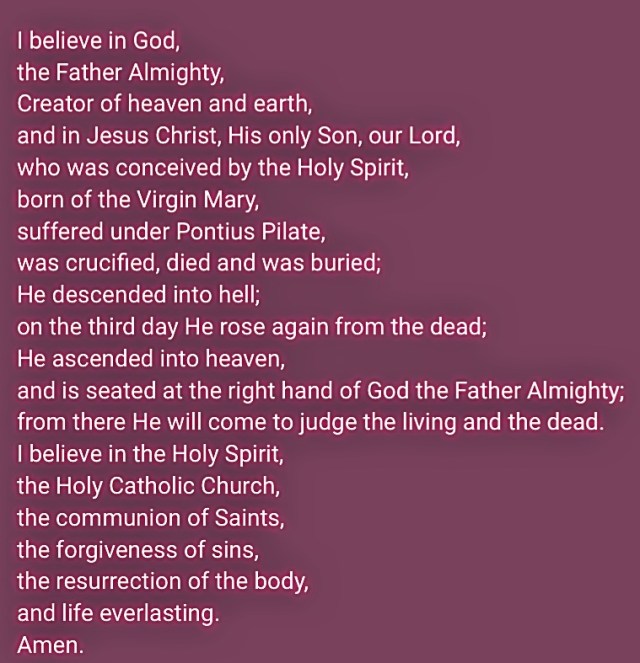
Prose: Since we celebrate two Apostles today, we might want to slowly and carefully pray this prayer. The Apostles’ Creed is a statement of Christian belief that is used by Western churches, both Catholic and Protestant. While it is explicitly affirmed only in Western churches, it reflects traditions that were affirmed officially by the entire Church in the Nicene Creed. Although its roots are much earlier, in its present form it dates to about the eighth century.
Music: Apostles’ Creed – sung here by Rebecca Gorzynska, a beautiful and talented artist (Latin and English text below.)
Today, in God’s Mercy, Paul sounds a lot like someone approaching the microphone at “Sinners Anonymous“:
I know that good does not dwell in me, that is, in my flesh. The willing is ready at hand, but doing the good is not. For I do not do the good I want, but I do the evil I do not want.
Romans 7:18-19
Paul basically attests to the fact that for human beings, even him, will and actions often don’t synch up. Sure, we want to be good people, but as Nike says, do we:
Paul says no, we don’t. The only way we do the good we will to do is by the grace of Jesus Christ.
In our Gospel, Jesus affirms the slowness of the human spirit to act on the realities around us. In some translations, Jesus uses a phrase which caught on with the architects of Vatican II: the signs of the times.
You hypocrites! You know how to interpret the appearance of the earth and the sky; why do you not know how to interpret the present time? “Why do you not judge for yourselves what is right?
Luke 12:56-57
Jesus is telling his listeners and us that we need to be alert to the circumstances of our world. It both weeps and rejoices. Where it weeps, we must be a source of mercy and healing. Where it rejoices, we must foster and celebrate the Presence of the Spirit.
In the Vatican II document Gaudium et Spes (The Church in the Modern World), we read:
In every age, the church carries the responsibility of reading the signs of the times and of interpreting them in the light of the Gospel, if it is to carry out its task. In language intelligible to every generation, it should be able to answer the ever recurring questions which people ask about the meaning of this present life and of the life to come, and how one is related to the other. We must be aware of and understand the aspirations, the yearnings, and the often dramatic features of the world in which we live.
While we look forward hopefully to the communications that will come from the current Synod on Synodality, the Documents of Vatican II have everlasting meaning for the Church. Although written in the 1960s, these powerful words hold true today. We are the Church of which the document speaks. We are the ones whom Jesus calls to respond with authentic justice and mercy to the signs of the times. Read the newspaper in that light today. Watch the news in that light. Meet your brothers and sisters in that light today.
Poetry: The Right Thing – Theodore Roethke
Let others probe the mystery if they can. Time-harried prisoners of Shall and Will — The right thing happens to the happy man.
The bird flies out, the bird flies back again; The hill becomes the valley, and is still; Let others delve that mystery if they can.
God bless the roots! Body and soul are one! The small become the great, the great the small; The right thing happens to the happy man.
Child of the dark, he can outleap the sun, His being single, and that being all: The right thing happens to the happy man.
Or he sits still, a solid figure when The self-destructive shake the common wall; Takes to himself what mystery he can,
And, praising change as the slow night comes on, Wills what he would surrendering his will Till mystery is no more: No more he can. The right thing happens to the happy man.
Music: The Times They Are A’changin’ – Bob Dylan whose songs in the 50s and 60sbecame anthems for the Civil Rights and anti-war movements. His lyrics during this period incorporated a wide range of political, social, philosophical, and literary influences, defied popular music conventions and appealed to the burgeoning counterculture. (Wikipedia) (Ah, it was a good time to be young!)
The Swedish Academy awarded Dylan the 2016 Nobel Prize inLiterature “for having created new poetic expressions within the great American song tradition.
Today, in God’s Lavish Mercy, Jesus says he has come to set fire on the earth! He says that, because of him, there will not be peace but division, setting households against one another. It’s not a comforting Gospel.
“I have come to set the earth on fire, and how I wish it were already blazing! There is a baptism with which I must be baptized, and how great is my anguish until it is accomplished! Do you think that I have come to establish peace on the earth? No, I tell you, but rather division.
Luke 12: 49- 1
We don’t live in a comforting world, do we? We see human beings set against each other in war, political corruption, economic despoiling, human trafficking, ecological crime, and other deeply ingrained systemic abuses.
Pope John Paul II in his encyclical EVANGELIUM VITAE refers to these realities as a “culture of death”.
Some threats come from nature itself, but they are made worse by the culpable indifference and negligence of those who could in some cases remedy them. Others are the result of situations of violence, hatred and conflicting interests, which lead people to attack others through murder, war, slaughter and genocide.
And how can we fail to consider the violence against life done to millions of human beings, especially children, who are forced into poverty, malnutrition and hunger because of an unjust distribution of resources between peoples and between social classes? And what of the violence inherent not only in wars as such but in the scandalous arms trade, which spawns the many armed conflicts which stain our world with blood? What of the spreading of death caused by reckless tampering with the world’s ecological balance, by the criminal spread of drugs, or by the promotion of certain kinds of sexual activity which, besides being morally unacceptable, also involve grave risks to life? It is impossible to catalogue completely the vast array of threats to human life, so many are the forms, whether explicit or hidden, in which they appear today!
Paul says that, through our Baptism, we are called and strengthened to bear witness against such a culture:
But now that you have been freed from sin and have become slaves of God, the benefit that you have leads to sanctification, and its end is eternal life. For the wages of sin is death, but the gift of God is eternal life in Christ Jesus our Lord.
Romans 6:22-23
Every day, each of us has the opportunity to stand up for mercy and justice by the choices we make, the attitudes we affirm, and the values we stand for. But sometimes it’s hard, because doing so can set us against some of the people around and close to us. That’s when the rubber meets the road! Do we belong to Christ, or not?
Poetry: A Blessing – Bob Holmes
May the quiet fire of God’s love
arise within you.
May its flames of joy and peace
Enlighten your steps in this world,
And may you be like the burning bush,
The presence of God for each other,
That holy healing of light of love,
The breath of God made manifest
In you.
Music: Gabriel’s Oboe – written by Ennio Morricone, played by Hauser
Today, in God’s Lavish Mercy, Paul and Jesus both instruct and challenge their listeners and us.
… thanks be to God that, although you were once slaves of sin, you have become obedient from the heart to the pattern of teaching to which you were entrusted. Freed from sin, you have become slaves of righteousness.
Romans 6:17
Paul wants us to understand that, through our Baptism, we are living in a whole new power for goodness and grace. The world may look the same as it did before we belonged to Christ, but it isn’t.
To use a phrase from the poet Gerard Manley Hopkins,
The world is charged with the grandeur of God. It will flame out, like shining from shook foil;
If we see with the new eyes of grace, we will be able to respond to Jesus’s challenge:
Stay awake! For you do not know when the Son of Man will come.
Matthew 24:42
Stay awake. See the world and your life as they truly are – places where God awaits you in every moment. Incline your heart to listen lovingly to the sound of the Holy Spirit in your life. That obedient heart is precious to God!
Poetry: Immersion – Denise Levertov
There is anger abroad in the world, a numb thunder,
because of God’s silence. But how naïve,
to keep wanting words we could speak ourselves,
English, Urdu, Tagalog, the French of Tours, the French of Haiti…
Yes, that was one way omnipotence chose
to address us—Hebrew, Aramaic, or whatever the patriarchs
chose in their turn to call what they heard. Moses
demanded the word, spoken and written. But perfect freedom
assured other ways of speech. God is surely
patiently trying to immerse us in a different language,
events of grace, horrifying scrolls of history
and the unearned retrieval of blessings lost for ever,
the poor grass returning after drought, timid, persistent.
God’s abstention is only from human dialects. The holy voice
utters its woe and glory in myriad musics, in signs and portents.
Our own words are for us to speak, a way to ask and to answer.
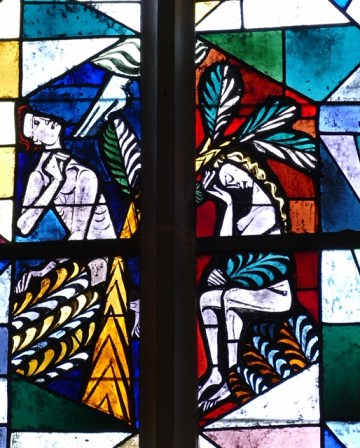
Today, in God’s Lavish Mercy, Paul contrasts the sin of “Adam” with the gift of Jesus, demonstrating the specifics of Christ’s redemptive act.
A key phrase for our prayer might be the following. The concupiscence of human nature will always make the sinful choice a possibility. But we can gain courage and strength from this powerful line from Paul:
Where sin increased, grace overflowed all the more….
Romans 5:15
In our Gospel, Jesus teaches a lesson about perseverance in the spiritual life. He says if we stick with it, God will welcome us the way a generous master thanks and embraces a loyal servant. He adds a comforting thought for those of us of “a certain age”.
And should he come in the second or third watch and find them prepared in this way, blessed are those servants.
Luke 12:38
Speaking personally now, I find that moving into “the second or third watch” can be a little scary. As various physical functions occasionally fail me, and some of my joints are replaced with earth minerals, a line from Yeats’s poem comes to mind – “things fall apart“:
Turning and turning in the widening gyre
The falcon cannot hear the falconer;
Things fall apart; the centre cannot hold;
Mere anarchy is loosed upon the world...
As I look through my reading glasses at the information for my new titanium knee, I remember the young athlete who could drive a basketball down the lane for an explosive layup, often being knocked on her nethers by a powerful opponent. Nevertheless, she would jump up for the next rebound. What happened to that girl?
This Gospel reminds me that she is still inside me, but she is golden now — lifting her spirit, by God’s grace, to deeper challenge.
I am beginning to understand that aging is its own life phase, not just a final comfortable fixity in one’s maturing. Just as every other life phase requires a gradual mastery of its challenges, so does aging. Toddlers must conquer balance and language skills. Teens must gain confidence and self-direction. Young adults work for greater wisdom and meaningful life relationships. Those “post-50” evaluate and may be challenged by the “successes” of their past years. And those in the sometimes not-so-really golden years are still doing all these earlier tasks while meeting the unique challenges of aging. One must be brave!
I hope some of you are Harry Potter fans. The books have powerful little encouragements tucked in their magical dialogue. One of my favorites is this. Harry, encouraging his elderly and fearful teacher to make a courageous choice, says, “Be brave, Professor… Otherwise, the bowl will remain empty… forever.”
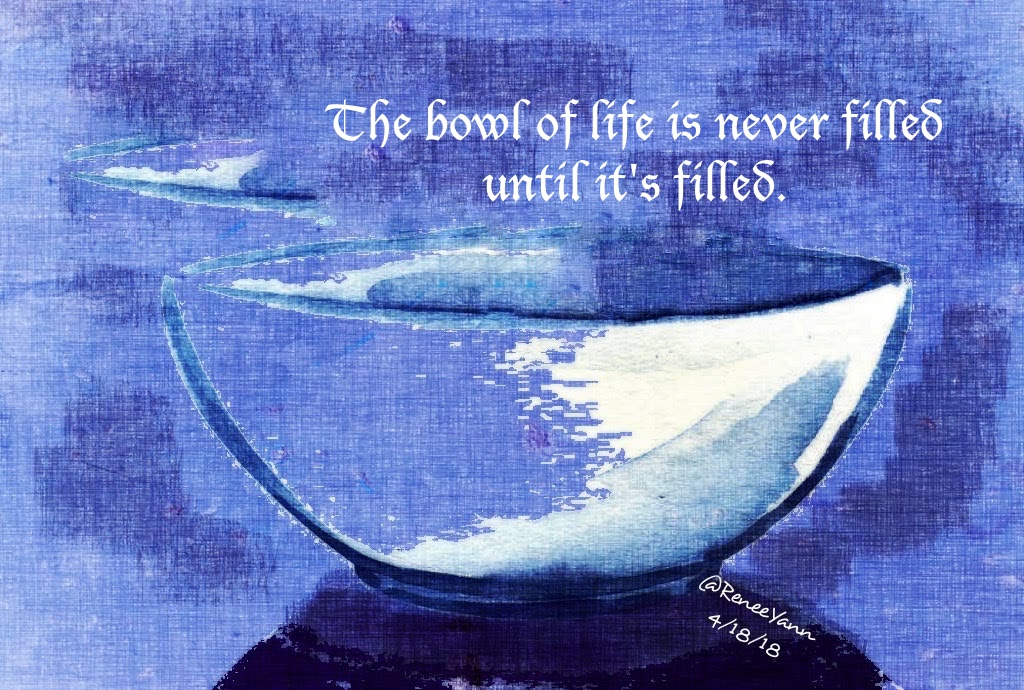
The bowl of our life is never filled until it’s filled. Jesus reminds us that none of us knows when that day of fulfillment will come and we must be vigilant for it until it does.
Blessed are those servants whom the master finds vigilant on his arrival. Amen, I say to you, he will gird himself, have them recline at table, and proceed to wait on them.
Luke 12:37
We draw courage for that vigilance not from Harry Potter of course, but from Christ’s own promise to us that there is a special blessing especially for us 2nd or 3rd watchers:
And should he come in the second or third watch and find them prepared in this way, blessed are those servants.
Luke 12:38
I believe that if we prayerfully listen, we will find that this blessing already suggests itself this side of Christ’s final arrival. As Paul indicates in our first reading, when we remain open to graceful relationship with God, we already live in the peaceable kingdom.
… how much more will those who receive the abundance of grace and the gift of justification come to reign in life through the one Jesus Christ…
Romans 5:17
Poetry: Sailing to Byzantium – William Butler Yeats
I
That is no country for old men. The young In one another’s arms, birds in the trees, —Those dying generations—at their song, The salmon-falls, the mackerel-crowded seas, Fish, flesh, or fowl, commend all summer long Whatever is begotten, born, and dies. Caught in that sensual music all neglect Monuments of unageing intellect.
II
An aged man is but a paltry thing, A tattered coat upon a stick, unless Soul clap its hands and sing, and louder sing For every tatter in its mortal dress, Nor is there singing school but studying Monuments of its own magnificence; And therefore I have sailed the seas and come To the holy city of Byzantium.
III
O sages standing in God’s holy fire As in the gold mosaic of a wall, Come from the holy fire, perne in a gyre, And be the singing-masters of my soul. Consume my heart away; sick with desire And fastened to a dying animal It knows not what it is; and gather me Into the artifice of eternity.
IV
Once out of nature I shall never take My bodily form from any natural thing, But such a form as Grecian goldsmiths make Of hammered gold and gold enamelling To keep a drowsy Emperor awake; Or set upon a golden bough to sing To lords and ladies of Byzantium Of what is past, or passing, or to come.
Music: Candlelight – Ottmar Liebert
Liebert is a German classical guitarist, songwriter and producer best known for his Spanish-influenced music. A five-time Grammy Award nominee, he is also an ordained Zen monk.
Today, in God’s Lavish Mercy, Paul counsels us to be steadfast in our faith. Jesus counsels us to avoid greed. How might the two be connected?
Perhaps like this. Only by faith do we have the courage to repudiate the allurements of greed.
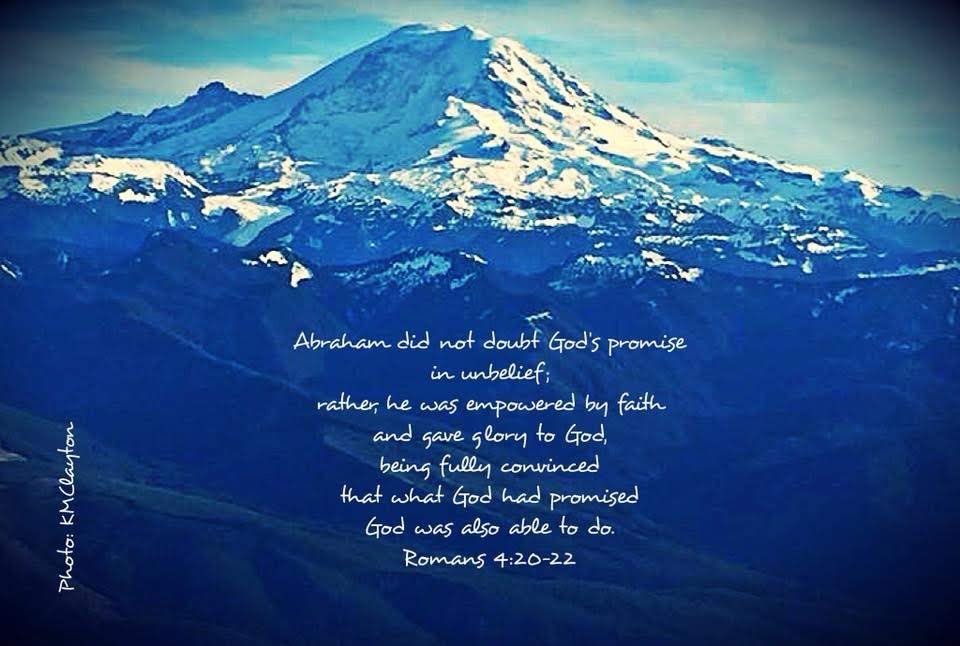
Paul lauds Abraham whose faith convinced him that God’s promise to him would be fulfilled. Jesus promises us eternal life in a realm apart from any earthly treasure. If we believe in Jesus’s promise, we realize the futility of possessiveness, greed and consumerism.
Abraham did not doubt God’s promise in unbelief; rather, he was empowered by faith and gave glory to God and was fully convinced that what God had promised he was also able to do. That is why it was credited to him as righteousness.
Romans 4:20-22
That’s a really hard call in our society which makes it hard to believe in anything including God and ourselves! Every type of media conspires to convince us that we are not enough as we are. We need a better car, house, clothes, haircut, and on and on to make us “acceptable”. Populism and racism ingrained in our politics convince us that we need to be a certain color, nationality, religion, speak a certain language to be worth anything.
Jesus says NO. You are beautiful just as I created you. And you already have everything you need to merit my promise of eternal life. You have only one need in this world — to love yourself and one another so that my promise can be released in you and in all Creation.
Then Jesus said to the crowd, “Take care to guard against all greed, for though one may be rich, one’s life does not consist of possessions.”
Luke 12:15
Poetry: from Rumi
When I am with you, everything is prayer.
I prayed for change,
so, I changed my mind.

I prayed for guidance
and learned to trust myself.

I prayed for happiness
and realized I am not my ego.

I prayed for peace
and learned to accept others unconditionally.

I prayed for abundance
and realized my doubt kept it out.

I prayed for wealth
and realized it is my health.

I prayed for a miracle
and realized I am the miracle.

I prayed for a soul mate
and realized I am with the One.

I prayed for love
and realized it is always knocking,
but I have to allow it in.
Music: How Could Anyone Ever Tell You – Shaina Noll
Today, in God’s Lavish Mercy, we pray with Psalm 96, one of the “royal psalms” praising God as King.
Bow down to the LORD, splendid in holiness. Tremble before God, all the earth; declare among the nations: The LORD is King. The world will surely stand fast, never to be shaken. The Lord rules the peoples with fairness. The Lord rules the peoples with fairness.
Psalm 96: 9-10
Our psalm today forms a link between two readings about two different kinds of human leaders.
In our first reading, we hear about King Cyrus, an “anointed” one:
Thus says the LORD to his anointed, Cyrus, whose right hand I grasp, subduing nations before him …
Isaiah 45:1
In fact, Cyrus the Great respected the customs and religions of the lands he conquered. This became a very successful model for centralized administration and establishing a government working to the advantage and profit of its subjects. Israel thrived under Cyrus and found no barriers to their own religious practices
In our Gospel, however, the Pharisees try to trap Jesus by testing him about their current political leadership, which is not so kindly inclined to the people:
Tell us, then, what is your opinion: Is it lawful to pay the census tax to Caesar or not?
Matthew 22:17
Jesus’s answer simply tells the Pharisees to obey the legitimate law. But that answer is secondary to his real challenge to them:
Why are you testing me, you hypocrites?
Our psalm is the praise song of a people who do not “test” God; who receive both the blessings and trials of life with faith and hope, and seek the path to God within those circumstances.
A “Cyrus-type” leader builds up that holy courage in the people. A “Caesar-type” type leader only builds up only himself.
In his letter to the Thessalonians, Paul shows himself to be such an anointed leader, praying for and encouraging the Church in the journey of faith:
We give thanks to God always for all of you, remembering you in our prayers, unceasingly calling to mind your work of faith and labor of love and endurance in hope of our Lord Jesus Christ, before our God and Father …
1 Thessalonians 1;2-4
Today, there’s a lot of political dust swirling in the wind – a lot of discerning about leadership and our own modern brand of “kings”. The current sufferings of our time cause our hearts to long for “a new song”.
The readings today remind us that the only way our spirits can …
Sing to the LORD a new song; sing to the LORD, all you lands. Tell God’s glory among the nations; among all peoples, God’s wondrous deeds
… is by living Paul’s formula – “to live our lives as a work of faith and labor of love and endurance in hope of our Lord Jesus Christ.”
Poetry: New Day’s Lyric – Amanda Gorman
May this be the day
We come together.
Mourning, we come to mend,
Withered, we come to weather,
Torn, we come to tend,
Battered, we come to better.
Tethered by this year of yearning,
We are learning
That though we weren't ready for this,
We have been readied by it.
We steadily vow that no matter
How we are weighed down,
We must always pave a way forward.
*
This hope is our door, our portal.
Even if we never get back to normal,
Someday we can venture beyond it,
To leave the known and take the first steps.
So let us not return to what was normal,
But reach toward what is next.
*
What was cursed, we will cure.
What was plagued, we will prove pure.
Where we tend to argue, we will try to agree,
Those fortunes we forswore, now the future we foresee,
Where we weren't aware, we're now awake;
Those moments we missed
Are now these moments we make,
The moments we meet,
And our hearts, once altogether beaten,
Now all together beat.
*
Come, look up with kindness yet,
For even solace can be sourced from sorrow.
We remember, not just for the sake of yesterday,
But to take on tomorrow.
*
We heed this old spirit,
In a new day's lyric,
In our hearts, we hear it:
For auld lang syne, my dear,
For auld lang syne.
Be bold, sang Time this year,
Be bold, sang Time,
For when you honor yesterday,
Tomorrow ye will find.
Know what we've fought
Need not be forgot nor for none.
It defines us, binds us as one,
Come over, join this day just begun.
For wherever we come together,
We will forever overcome.
Today, in God’s Lavish Mercy, our scripture readings are a little heavy. I had to dig to get my inspiration. But there are gems in these dense words!
It was not through the law that the promise was made to Abraham and his descendants that he would inherit the world, but through the righteousness that comes from faith.
This is a spiritually freeing passage. It assures us that God is with us through our faith, not through the perfection with which we keep laws and rules.
Our Gospel reinforces the message:
Everyone who speaks a word against the Son of Man will be forgiven, but the one who blasphemes against the Holy Spirit will not be forgiven.
Luke 12:10
The passage is a little scary when first read, because we all hope we haven’t done anything to offend the Holy Spirit. But what Jesus is telling his listeners is this:
If a person criticizes or rejects Christ’s life and teaching, forgiveness is still possible when they come to their senses and repent. It’s like cutting the bad spot out of an otherwise good apple.
But if a person chooses to live a life which blasphemes (mocks, dismisses) the Spirit of life, love, mercy and peace, that person can never be forgiven — because they can never repent. They will be hardened and rotten to the core.
So the advice of Paul and Jesus boils down to this, I think. Befriend the Holy Spirit by your life of faithful choices. Listen to Her inspiration. Help others to do the same. And do not worry when you make a few mistakes. God stands by the promise to be with us always.
Prose: Christmas Address of Pope Francis – 12/22/2022
Much has happened in the course of this year and, before anything else, we want to thank the Lord for all his blessings. Yet we hope that among those blessings is that of our conversion. Conversion is a never-ending story. The worst thing that could happen to us is to think that we are no longer in need of conversion, either as individuals or as a community.
To be converted is to learn ever anew how to take the Gospel message seriously and to put it into practice in our lives. It is not simply about avoiding evil but doing all the good that we can. That is what it means to be converted. Where the Gospel is concerned, we are always like children needing to learn. The illusion that we have learned everything makes us fall into spiritual pride.
Today, in God’s Lavish Mercy, we have a Gospel passage which is both scary and beautiful!
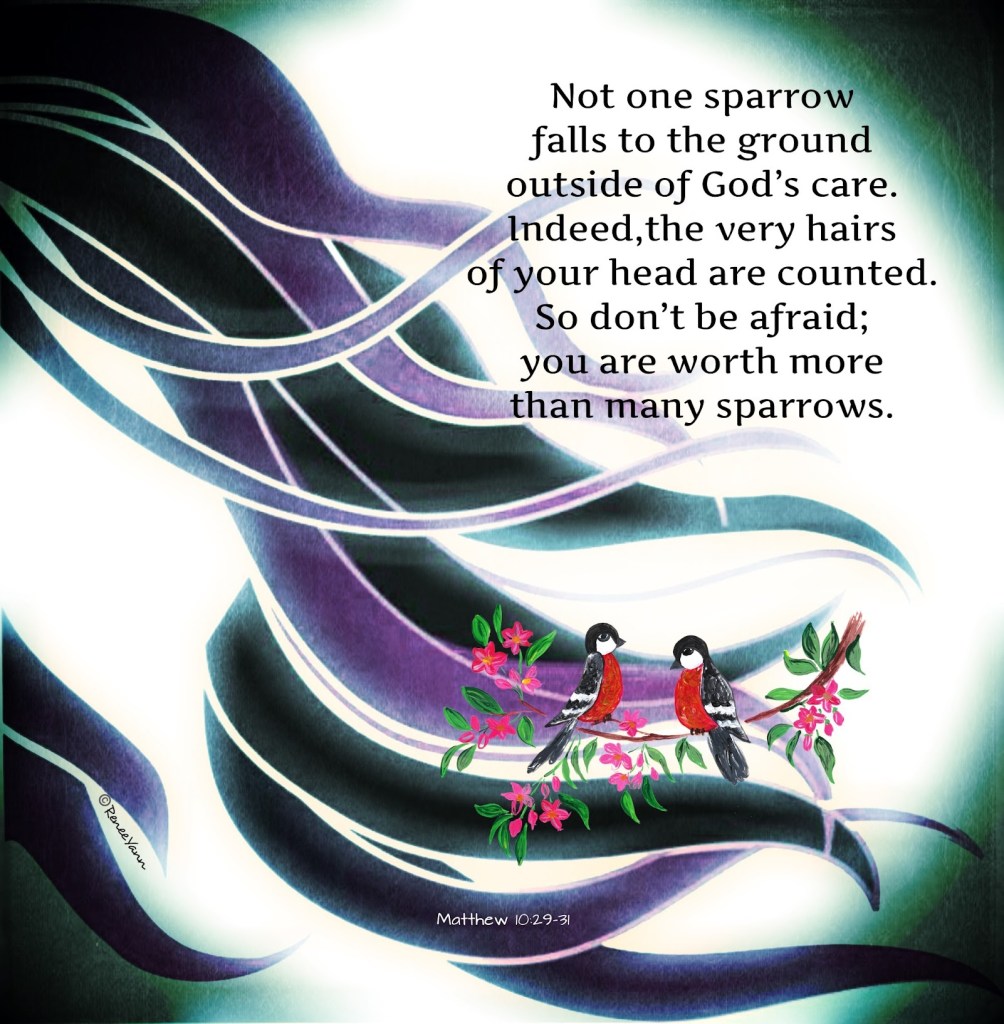
I tell you, my friends, do not be afraid of those who kill the body but after that can do no more. I shall show you whom to fear. Be afraid of the one who after killing has the power to cast into Gehenna; yes, I tell you, be afraid of that one. Are not five sparrows sold for two small coins? Yet not one of them has escaped the notice of God. Even the hairs of your head have all been counted. Do not be afraid. You are worth more than many sparrows.
Luke 12:4-7
Jesus, with radical clarity, tells us that God is both a relentless judge and a tender parent. Who God is toward us depends on our choices in life, because our choices either open or close us to know God.
Jesus says that we will be condemned if we choose to live a hypocritical life like the Pharisees.
There are many images of “Gehenna”, both within and outside of the Gospel. For some of us, that condemnation is represented in hellfire, brimstone, devils, and pitchforks.
But today’s Gospel might incline us to consider that the condemnation is more a personal choice for spiritual alienation from God – in other words, sin. By that choice, we isolate ourselves from God’s tenderness choosing instead selfishness, prevarication, and hard-heartedness. We become less than we were created to be, and that in itself is a tragic self-condemnation.
Jesus says that when that kind of choosing becomes a habitual part of our lives, it is like leaven that permeates our very personhood. It changes us from God’s child to our own biggest fan. Like the Pharisees, we live a lie of who we pretend to be. And, especially from a position of power, we can infect others with our deception. They become “leavenized”: they “drink the kool-aid”.
Ironically, at the end of this tirade, Jesus gives us two of the tenderest images of God: God the Hairdresser and God the Bird Lover. Praying with these images, I remember my mother tenderly fingering my hair as I sat beside her in the evening. I picture my father spreading birdseed on the frozen patio when the winter juncos struggled to find food.
In our prayer today, Jesus invites us to encounter God with this kind of tender familiarity.
Poetry: The Creation of the Birds – Renee Yann, RSM
O, the wonderful mood that seized You
God, as you created birds;
you dancing there, twirling in light,
flinging your crystal arms to infinite music,
flicking your hands like magic fountains,
feathers and colors splashing out from your fingertips,
chattering, rainbowed profusions
of your Boundless Life.
Your depthless, joy-filled soul laughing out
the soaring beings into the still universe,
peals of you infusing them each
to their measure with notes of your inner song.
O, I see your Holy Eyes flash color to them
as they fly, strobing their feathers
with shards of your prismed white light.
This morning, seeing only one,
free and jubilant in a thin sycamore,
I consume it as
part of your Delightful Essence,
this day’s communion with you, grey
and orange wafer filling me with mysteries
of the primal dance from which
we both began.
Today, in God’s Lavish Mercy, “the Law” plays a central role in our readings.
At their best, laws are those commonly agreed-upon markers that guide the human community on its shared journey. Ideally conceived in the context of justice, every law will lead to a balance of well-being for all concerned.
It is in the human administration of law that we meet challenges. Such administration rests in the hands of “superiors” who are, like all of us, subject to prejudice, ignorance, domination, and arrogance. These individuals can regress to an interpretation of law that benefits only themselves and those they favor.
In our Gospel, Jesus vociferously condemns this corruption of the Law by the very people who have been entrusted with its integrity:
Woe to you, scholars of the law! You have taken away the key of knowledge. You yourselves did not enter and you stopped those trying to enter.
Luke 11:52
What is that “key of knowledge” Jesus refers to? I think it is this: that the Law is only peripheral. While it must be respected, it must also be transcended so that we live beyond it and into the Spirit Who generates it.
In our first reading, Paul makes an astounding statement that surely knocked the pharisaical legalists on their pins! Paul says that God’s righteousness is not found in the Law but solely in faith in Jesus Christ.
Now the righteousness of God has been manifested apart from the law, though testified to by the law and the prophets, the righteousness of God through faith in Jesus Christ for all who believe.
Romans 3:21-22
This passage in Romans is critical to the Christian understanding of “righteousness”. No one can achieve righteousness apart from the grace of God which is given to us solely as gift and not reward for our actions. But it is also essential that a person create an inner receptivity to grace, a receptivity achieved through the personal exercise of faith, hope, and love – that is, by the works of mercy.
Since the early 16th century, various Christian denominations have been trying to split the hair of this argument which is dubbed “Sola Fide (faith alone)”. The argument asks, “Are we made right with God by faith alone, or by faith demonstrated in good works?”.
Paul and Jesus addressed the question fifteen hundred years before anybody even thought up the Sola Fide conundrum. They did so in direct and simple language so that their listeners could learn and feel confident in their faith life.
The debate around “sola fide” can devolve into theological hair-splitting, an exercise that seems almost like an intellectual game. Contrary to hair-splitting, our faith life is fostered by a theology deeply rooted in spirituality and evidenced in reverent, grateful, and charitable living. Laws can help us with that pursuit but they can’t accomplish it. Only an active, loving faith, responsive to God’s grace, can unlock that door.
Prose: Excerpt from Lumen Fidei (The Light of Faith), the first encyclical of Pope Francis (June 29, 2013)
(This passage and the encyclical as a whole are so beautiful that I hope you will take time to savor the words, even in small doses. I broke it up into small sections because that’s the way I best prayed with it.)
Since faith is a light, it draws us into itself,
inviting us to explore ever more fully
the horizon which it illumines,
all the better to know the object of our love.

Christian theology is born of this desire.
Clearly, theology is impossible without faith;
it is part of the very process of faith,
which seeks an ever deeper understanding
of God’s self-disclosure culminating in Christ.

It follows that theology is more
than simply an effort of human reason
to analyze and understand,
along the lines of the experimental sciences.
God cannot be reduced to an object.
He is a subject who makes himself known
and perceived in an interpersonal relationship.

Right faith orients reason to open itself
to the light which comes from God,
so that reason, guided by love of the truth,
can come to a deeper knowledge of God.

The great medieval theologians and teachers
rightly held that theology, as a science of faith,
is a participation in God’s own knowledge of himself.
It is not just our discourse about God,
but first and foremost the acceptance and the pursuit
of a deeper understanding
of the word which God speaks to us,
the word which God speaks about himself,
for he is an eternal dialogue of communion,
and he allows us to enter into this dialogue.

Theology thus demands the humility
to be "touched" by God,
admitting its own limitations before the mystery,
while striving to investigate,
with the discipline proper to reason,
the inexhaustible riches of this mystery.











 Lavish Mercy