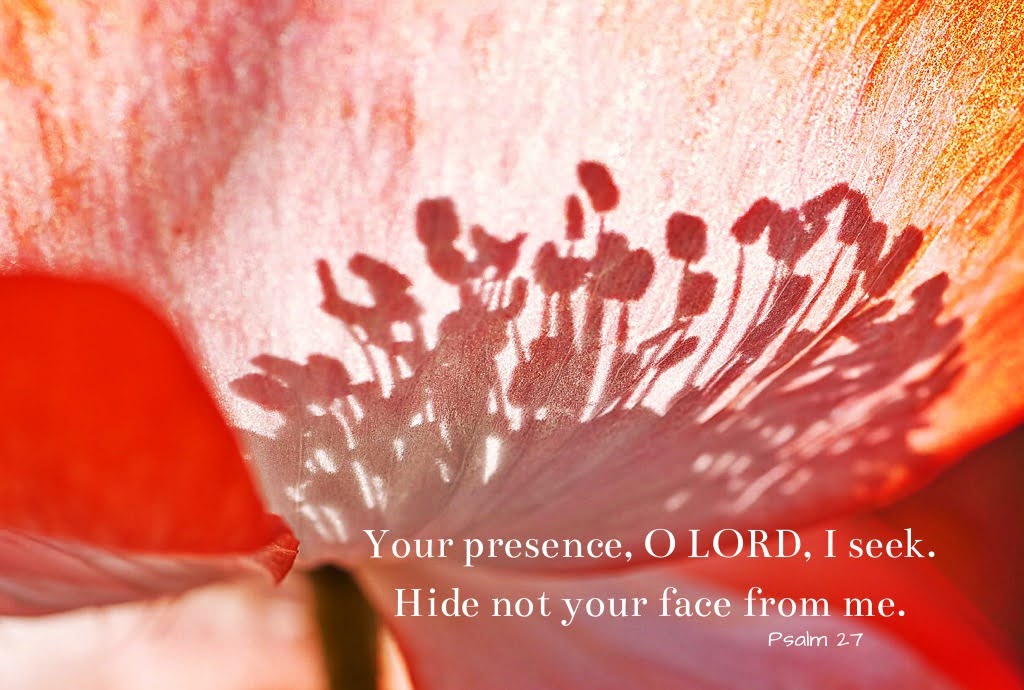
Come now, let us set things right, says the LORD: Though your sins be like scarlet, they may become white as snow; Though they be crimson red, they may become white as wool.
Isaiah 1:18
The greatest among you must be your servant. Whoever exalts himself will be humbled; but whoever humbles himself will be exalted.
Matthew 22:12
Today’s readings are studies in contrasts – white/scarlet; exaltation/humility.
Isaiah promises a transformative grace changing scarlet sins to snow-white goodness. In our Gospel, Jesus teaches the crowds that the way to holiness is in exact contrast to the practices of the Pharisees. The Gospel turns the patterns of the world upside down. Lent is the time to enter that turning.
Today, in God’s Lavish Mercy:
Let’s pray for the humility that will allow us to open ourselves to God’s transforming grace – that wash of insight over our spirits, cleansing us of spiritual confusion.
Humility can be a tricky virtue. Its essence is not a sense of worthlessness or “less-ness”. Humility is instead a profound awareness that all belongs to God, and that we are privileged to share in that Abundant Life. Humility does not concentrate on the Self. It looks at the Other in grateful and expectant obedience.
Poetry: A Woman in Winter – from In Wisdom’s Path: Discovering the Sacred in Every Season by Jan L. Richardson.
A woman in winter is winter: turning inward, deepening, elemental force, time’s reckoning; sudden frost and fire’s warming, depth of loss and edge of storming.
She is avalanche, quiet hungering, utter stillness, snowfall brewing; hollowed, hallowed, shadows casting, field in fallow, wisdom gathering.
Waiting, watching, darkness craving, shedding, touching, reaching, laboring; burning, carrying fire within her, a woman turning, becoming winter.
Jesus said to his disciples: “Be merciful, just as your Father is merciful.
“Stop judging and you will not be judged. Stop condemning and you will not be condemned. Forgive and you will be forgiven. Give and gifts will be given to you; a good measure, packed together, shaken down, and overflowing, will be poured into your lap. For the measure with which you measure will in return be measured out to you.”
Luke 6: 36-38
How many times in our lives have we realized that, in giving or serving, we have received much more than we have given? No material recompense can rival the gift of another’s gratitude and trust. When we are merciful as God is merciful, we know a joy beyond measure.
Today, in God’s Lavish Mercy:
A wise older friend said this to me long ago, challenging me to live my life by the abundance of Divine Measure. You might like to reflect on her phrase as you pray today’s Gospel:
Never resist a generous impulse.
Prose: from Gratitude by David Whyte
Thankfulness finds its full measure in generosity of presence, both through participation and witness. We sit at the table as part of every other person’s world while making our own world without will or effort, this is what is extraordinary and gifted, this is the essence of gratefulness, seeing to the heart of privilege. Thanksgiving happens when our sense of presence meets all other presences. Being unappreciative might mean that we are simply not paying attention.
Tend the flock of God in your midst, overseeing not by constraint but willingly, as God would have it, not for shameful profit but eagerly. Do not lord it over those assigned to you, but be examples to the flock.
1 Peter 5:2-3
The image of Jesus the Good Shepherd has blessed believers throughout the ages. As our weakness is lifted in the tender Divine Embrace, we find peace, hope, release of sorrow, and strength to go on.
Today, in God’s Lavish Mercy:
Our reading from Peter calls us to be like the Good Shepherd. Christ called Peter to this ministry, and he calls us as well. As we accompany and support one another on faith’s journey, let us do so with tender mercy in imitation of Christ.
Poetry: The Good Shepherd – William Denser Littlewood (1831-1886)
Into a desolate land White with the drifted snow, Into a weary land Our truant footsteps go: Yet doth Thy care, O Father, Ever Thy wanderers keep; Still doth Thy love, O Shepherd, Follow Thy sheep.
Over the pathless wild Do I not see Him come? Him who shall bear me back, Him who shall lead me home? Listen! between the storm-gusts Unto the straining ear, Comes not the cheering whisper,— "Jesus is near."
Over me He is bending! Now I can safely rest, Found at the last, and clinging Close to the Shepherd's breast: So let me lie till the fold-bells Sound on the homeward track, And the rejoicing angels Welcome us back!
Jesus said to his disciples: “In praying, do not babble like the pagans, who think that they will be heard because of their many words. Do not be like them. Your Father knows what you need before you ask him.
Matthew 6: 7-8
I enjoy when Jesus is bluntly funny with his followers, as in today’s “Don’t babble!“. But my enjoyment wanes when I realize that he’s talking to me too. What about the quality of my prayer? Where do I fall on the “babble scale”?
Today, in God’s Lavish Mercy:
We might consider the quality of our prayer, just as we might consider the quality of our conversation with anyone we dearly love. Do we talk with them enough? Do we listen to them well? Do we talk about things that matter? Do we say “the important things” to one another? Do we know and love each other well enough that we can communicate without even speaking?
That deep silent dialogue with God is referred to as contemplative prayer. The site below is a great place to enrich our practice of this type of prayer.
One of the most celebrated poets of the American post-war generation, Jorie Graham is the author of numerous collections of poetry, including The Dream of the Unified Field: Selected Poems 1974-1992 (1995) winner of the Pulitzer Prize for Poetry. She has taught for many years at Harvard University as the Boylston Professor of Rhetoric and Oratory, the first woman to be given this position, which was previously held by Seamus Heaney and many other writers dating back to the first Boylston Professor, John Quincy Adams.
Over a dock railing, I watch the minnows, thousands, swirl themselves, each a minuscule muscle, but also, without the way to create current, making of their unison (turning, re- infolding, entering and exiting their own unison in unison) making of themselves a visual current, one that cannot freight or sway by minutest fractions the water’s downdrafts and upswirls, the dockside cycles of finally-arriving boat-wakes, there where they hit deeper resistance, water that seems to burst into itself (it has those layers), a real current though mostly invisible sending into the visible (minnows) arrowing motion that forces change
this is freedom. This is the force of faith. Nobody gets what they want. Never again are you the same. The longing is to be pure. What you get is to be changed. More and more by each glistening minute, through which infinity threads itself, also oblivion, of course, the aftershocks of something at sea. Here, hands full of sand, letting it sift through in the wind, I look in and say take this, this is what I have saved, take this, hurry. And if I listen now? Listen, I was not saying anything. It was only something I did. I could not choose words. I am free to go. I cannot of course come back. Not to this. Never. It is a ghost posed on my lips. Here: never.
Music: The Prayer – written by David Foster, Carole Bayer Sager, Alberto Testa and Tony Renis
Today, in God’s Lavish Mercy, we finish with the Book of Kings. And, as several of my readers have told me, they’ll be glad for it. There may have been points in our journey through Samuel and Kings, when you thought, “WHY am I even reading this! Who cares about Rehoboam, Jeroboam or any other “boams”!
I understand, but here are two of my “WHY”s:
The Hebrew Scriptures show us how human beings deepened, over thousands of years, in their understanding of God. Throughout that extended deepening, God remains unchangingly faithful. Even though the cultural context of some Old Testament stories may upset, befuddle, or offend us, they still express the human attempt to find God in one's experience.
The Hebrew Scriptures inform and underlie the theology of the Christian Scriptures, and the culture in which Jesus lived and taught. Like a butterfly is the fulfillment of the chrysalis, Jesus was the fulfillment of the Promise to Abraham. Without an appreciation of that Promise, and how Israel lived out its long realization, our comprehension of Christ's meaning is limited.
Our Gospel today gives us the familiar story of the feeding of the multitude. Mark describes a large crowd engaged in the search for God. They follow Jesus for three days, listening, learning, and being amazed at his miracles. They are so hungry to find something to believe in that they forget to feed their human hungers!
I love the compassionate way Jesus takes notice of their predicament:
“My heart is moved with pity for the crowd, because they have been with me now for three days and have nothing to eat. If I send them away hungry to their homes, they will collapse on the way, and some of them have come a great distance.”
In this pivotal miracle, Jesus teaches a core lesson of faith.
In Christ, we are given the gift of full and abundant life. Our hearts then must become like his, moved in mercy toward those who are still hungry, both spiritually and physically.
The miracle of the loaves and fishes calls the faithful community to the practice of shared abundance. It invites us to notice the hungers around us and within our world. It moves us to understand the distances people experience from love, inclusion, respect, security, and peace. It convinces us that the need to have more and more will only yield less and less for our spirits.
Our culture works to convince us that we can never work hard enough or accumulate enough. It deludes us to believe that we matter because of what we have, not because of who we are. In this miracle, Jesus models another way to live in relationship with God, ourselves and with Creation:
Trust in and respect for the abundant generosity of God’s Creation
His disciples answered him, “Where can anyone get enough bread to satisfy them here in this deserted place?” Still he asked them, “How many loaves do you have?” They replied, “Seven.” He ordered the crowd to sit down on the ground.
Deep reverence and gratitude for God’s Presence in all life
Then, taking the seven loaves he gave thanks, broke them, and gave them to his disciples to distribute, and they distributed them to the crowd. They also had a few fish. He said the blessing over them and ordered them distributed also. They ate and were satisfied.
Acknowledgement of our need to replenish our spirits in rest and solitude
He dismissed the crowd and got into the boat with his disciples and came to the region of Dalmanutha.
Somewhere in each of our lives, we might find a few loaves or minnows hidden away. Or we might be the famished one with an empty basket after a long journey. Today’s Gospel tells us to invite God’s transformative grace into our needs, hungers, inhibitions, or emptiness. Like this amazed Gospel crowd, we might be wowed at what God can do with our generous hearts!
Poetry: In the Storm – Mary Oliver
Some black ducks were shrugged up on the shore. It was snowing
hard, from the east, and the sea was in disorder. Then some sanderlings,
five inches long with beaks like wire, flew in, snowflakes on their backs,
and settled in a row behind the ducks -- whose backs were also
covered with snow -- so close they were all but touching, they were all but under
the roof of the duck's tails, so the wind, pretty much, blew over them. They stayed that way, motionless,
for maybe an hour, then the sanderlings, each a handful of feathers, shifted, and were blown away
out over the water which was still raging. But, somehow, they came back
and again the ducks, like a feathered hedge, let them crouch there, and live.
If someone you didn't know told you this, as I am telling you this, would you believe it?
Belief isn't always easy. But this much I have learned -- if not enough else -- to live with my eyes open.
I know what everyone wants is a miracle. This wasn't a miracle. Unless, of course, kindness --
as now and again some rare person has suggested -- is a miracle. As surely it is.
Music: Krystian Zimerman – Beethoven: Piano Concerto No. 5 in E Flat Major, Op. 73: II. Adagio un poco moto
A lovely piece to accompany our reflection on faith, miracles, and abundance.
Today, in God’s Lavish Mercy, the Queen of Sheba visits Solomon. It’s another Solomon story worthy of the big screen where, in fact, it has been loosely fictionalized and adulterated many times.
Many trusted scripture scholars question the historicity of the story. Several agree that Solomon never rose to the kind of material glory described in the passage. The two books of Kings were written 500 years after Solomon lived. In many aspects, the writings offer a reflection on the meaning of his reign in Israel’s covenanted life rather than a strict account of his life.
So what might we glean from today’s passage on the mysterious queen. The story demonstrates that Solomon is so accomplished that a revered leader will come to learn from him. Once she arrives, she is overwhelmed by his material successes and strength. Solomon has constructed a dominant, rich and subservient culture.
But wait. Is there a bit of ironic judgement and, perhaps, prophetic reminder woven into the Queen’s accolades? Shifting the focus from an increasingly arrogant Solomon back to Israel’s God, she says:
Blessed be the LORD, your God, whom it has pleased to place you on the throne of Israel. In his enduring love for Israel, the LORD has made you king to carry out judgment and justice
1 Kings 10:9
In fact, the great wealth and power of Solomon’s kingdom was built, not on justice and judgement, but on the backs of the poor and excluded. For example, Walter Brueggemann says this:
(Solomon’s kingdom) … was an economy of extraction that regularly transferred wealth from subsistence farmers to the elite in Jerusalem, who lived off the surplus and the device and the strategy for that extraction was an exploitative tax system.
When the Biblical scribe puts the words judgment and justice into the Queen’s remarks, it may be intended to forecast the miserable end Solomon will meet because he has abandoned his responsibilities to care for all the people according the the Lord’s covenant.
This glorious, shining realm which so impressed the Queen is a kingdom built on corruption, greed, militarism, and manipulation of the poor.
The lessons for our world are obvious.
As Jesus tells us in today’s Gospel, it doesn’t matter whether we’re gilded in gold on the outside and spin our words in glorious promises. What matters are the true intentions of our hearts and the compassionate actions they inspire:
But what comes out of the person, that is what defiles him. From within, from the heart, come evil thoughts, unchastity, theft, murder, adultery, greed, malice, deceit, licentiousness, envy, blasphemy, arrogance, folly.
Mark 7:20-23
Ultimately, the great Solomon misses the boat on this. May his story help us not to do the same.
Poetry: The Queen of Sheba by Hadewijch English version by Mother Columba (Elizabeth) Hart, OSB Original Language Dutch
The Queen of Sheba Came to Solomon; That was in order to gain wisdom. When she had found him, indeed, His wonders streamed upon her so suddenly That she melted in contemplation. She gave him all, And the gift robbed her Of everything she had within -- In both heart and mind, Nothing remained: Everything was engulfed in love.
Memorial of Saint Agatha, Virgin and Martyr Monday of the Fifth week in Ordinary Time February 5, 2024
Today, in God’s Lavish Mercy, both our readings lead us to pray with the mystery of God’s Presence.
In the passage from Kings, Solomon has completed his most memorable task – the rebuilding of the Temple in Jerusalem. Today’s verses describe the transfer of the Ark of the Covenant from its holding place to its permanent home in the Temple.
Upon the completion of that festive transfer, the Divine Presence is manifested by a cloud which fills the Holy of Holies.
When the priests left the holy place, the cloud filled the temple of the LORD so that the priests could no longer minister because of the cloud, since the LORD’s glory had filled the temple of the LORD. Then Solomon said, “The LORD intends to dwell in the dark cloud; I have truly built you a princely house, a dwelling where you may abide forever.”
1 Kings 8:10-11
In Mark’s Gospel today, the townspeople of Gennesaret become aware that Jesus is present in their vicinity. They have heard about his miracles. As Mark puts it, they scurry to gather all their needy friends and relatives into Christ’s healing Presence.
After making the crossing to the other side of the sea, Jesus and his disciples came to land at Gennesaret and tied up there. As they were leaving the boat, people immediately recognized him. They scurried about the surrounding country and began to bring in the sick on mats to wherever they heard he was. Whatever villages or towns or countryside he entered, they laid the sick in the marketplaces and begged him that they might touch only the tassel on his cloak; and as many as touched it were healed.
Mark 6:53-56
As we pray these passages, we might long for the tactile presence of God in the cloudiness of our own lives. Sometimes God seems far away, hidden somewhere beyond the stars – disconnected from the flesh-and-bone challenges of our existence.
But as we pray today we might remind ourselves that we are a Temple. God dwells in us as truly as God dwelt in the Holy of Holies. Any felt distance is not on God’s part, it is on ours and our restrained and anxious faith.
May these readings inspire us to be as sincere in our prayer as were the Gennesarenes – to scurry to the hem of Christ’s garment, to grasp its tassel in the fullness of faith, hope, and love.
Thought:
‘The mystery of God hugs you in its all-encompassing arms.”-
Hildegard von Bingin
Music: Invocation: Hildegard von Bingen ~ Written by Emma Bergen, sung by Anonymous 4
Traditionally the Hebrew term Shekinah שכינה means ‘dwelling’, as a way of describing the Presence of the Divine. As the term is feminine, it also has come to be used to describe the feminine aspect of the divinity: the Divine Feminine.
Emma Bergen writes: “I came to learn about the Shekinah while I was writing about the Gnostic Sophia, and was inspired to write my ‘Invocation’ as a way, both of expressing what such a contact means to me personally, and to reach out in the spirit (and within myself) to what has been described as ‘the feminine face of God’. Oppression has many faces, some serious, and others so subtle that they might remain unnoticed by others. I invite you to join me in this invocation, written for all women everywhere, in whatever circumstances they might find themselves.”
(To see the words more clearly in the video, click on the little white square in the lower right-hand corner of the YouTube screen.)
Today, in God’s Lavish Mercy, we pray with Psalm 147 which invites us to:
Praise the LORD Who is good; sing praise to our God, Who is gracious; the One it is fitting to praise.
It is a psalm for the left-brained who, like Job in our first reading, might need some explanation about just why we should praise when life seems so unpraiseworthy at times!
Job spoke, saying: Is not man’s life on earth a drudgery? Are not his days those of hirelings? He is a slave who longs for the shade, a hireling who waits for his wages. So I have been assigned months of misery, and troubled nights have been allotted to me.
Job 7: 1-4
Job, like many of us when we suffer, feels crushed under life’s burdens. However, an extended reading of the Book of Job reveals that humility and repentance allow Job to “see God”, and to rediscover the richness and flavor of his life.
Calling us to the same kind of awareness, Psalm 147 presents a series of reasons for praising God, including God’s continual attention to the city of Jerusalem, to brokenhearted and injured individuals, to the cosmos, and to nature.
For me, the most moving of these reasons comes in verse 3:
The Lord heals the brokenhearted and binds up their wounds. The Lord tells the number of the stars; calling each by name.
This is a beautiful picture of our infinitely compassionate God who is able to recognize our broken-heartedness.
This loving God, who knows the stars by name, knows us as well. We, like Job, begin to heal within the divine lullaby God patiently sings over our broken hearts.
Jesus is that Healing Song, the Word hummed over the world by the merciful Creator. In today’s Gospel, we see that Melody poured out over the suffering:
When it was evening, after sunset, they brought to him all who were ill or possessed by demons. The whole town was gathered at the door. He cured many who were sick with various diseases, and he drove out many demons, not permitting them to speak because they knew him.
Mark 1: 32-34
As we pray today, let us hear God’s song of mercy being sung over all Creation. Let us rest our own brokenness there in its compassionate chords. Let us bring the world’s pain to our prayer.
Poetry: A Cure Of Souls by Denise Levertov
The pastor of grief and dreams guides his flock towards the next field with all his care. He has heard the bell tolling but the sheep are hungry and need the grass, today and every day. Beautiful his patience, his long shadow, the rippling sound of the flocks moving along the valley.
Music: God Heals My Broken Heart – Patty Felker
If Job were singing his sadness today, it might sound like this song.
Today, in God’s Lavish Mercy, as February’s deep season unrolls, we are just about two weeks away from the beginning of Lent. Our first readings during this time will give a little taste of 1 Kings and then briefly shift to James’s epistle before we pick up the treasured readings of the Lenten Season.
The passage today bears a royal gravity. After preparing his son Solomon for kingship, David solemnly dies.
Keep the mandate of the LORD, your God, following his ways and observing his statutes, commands, ordinances, and decrees as they are written in the law of Moses, that you may succeed in whatever you do, wherever you turn, and the LORD may fulfill the promise he made on my behalf….
… David rested with his ancestors and was buried in the City of David. The length of David’s reign over Israel was forty years: he reigned seven years in Hebron and thirty-three years in Jerusalem.
Solomon was seated on the throne of his father David, with his sovereignty firmly established.
1 Kings 2; 3-4;10-12
David’s advice to Solomon is basically this: there is work to be done for God and God’s People. And now it’s your responsibility. Keep the course!
In our Gospel, Jesus gives the same sort of mandate to this disciples:
Jesus summoned the Twelve and began to send them out two by two and gave them authority over unclean spirits. He instructed them to take nothing for the journey but a walking stick –no food, no sack, no money in their belts.
Mark 6:7-8
The disciples are ready. It is now their turn to spread the Gospel and to continue the ministry that they have learned at Jesus’s side:
So they went off and preached repentance. The Twelve drove out many demons, and they anointed with oil many who were sick and cured them.
Mark 6:12-13
If any of us are wondering what we are supposed to do today for the Reign of God, our answer may be somewhere in these readings as we pray them with an open heart.
Poetry: The Poem of Tecumseh – Tecumseh (1768 –1813) was a Shawnee chief and warrior who promoted resistance to the expansion of the United States onto Native American lands. A persuasive orator, Tecumseh traveled widely, forming a Native American confederacy and promoting intertribal unity. Even though his efforts to unite Native Americans ended with his death in the War of 1812, he became an iconic folk hero in American, Indigenous, and Canadian popular history. (Wikipedia)
Today, in God’s Lavish Mercy, David gets himself in trouble once again.
King David said to Joab and the leaders of the army who were with him, “Tour all the tribes in Israel from Dan to Beer-sheba and register the people, that I may know their number.” Joab then reported to the king the number of people registered: in Israel, eight hundred thousand men fit for military service; in Judah, five hundred thousand.
Afterward, however, David regretted having numbered the people, and said to the LORD: “I have sinned grievously in what I have done. But now, LORD, forgive the guilt of your servant, for I have been very foolish.”
2 Samuel 24: 2;10
In the later years of his kingship, David is pretty impressed with himself. The kingdom has grown exponentially. There is peace and prosperity. David wants a census taken so that he can assess his capacity for new expansion.
So why does God get so mad about this census? The Book of Exodus sets out that a person has the right to number only his own belongings. The People belong to God, not to David. David’s pride and self-satisfaction has taken him over.
However, as usual, David repents. This is probably the best lesson we can learn from him. Then, in a greatly allegorized treatment, God gives David a choice of three punishments.
Passages like this can confuse us if we interpret them literally. Does God really interact and punish like this?
It helps to remember the purpose of these writings — not to relay a factual history, but rather to tell a story that helps us grow in relationship with God.
What I believe happened here is that a pestilence did fall upon the country. At the same time, David realized that his heart had grown selfish and graceless. He took the natural event as a sign to turn back to God. And then the writers told the story in a way that the ancient peoples could relate to – with a metaphorical image of a God that forgives but gets even.
In our Gospel, Jesus preaches a clearer and true vision of God – a vision of Complete Mercy, especially toward the vulnerable, weak, and sinful. That pretty much includes all of us.
Jesus releases the power of this Divine Mercy by his words and miracles. But his own family and neighbors reject him. They are more comfortable with a God who behaves like they do – meting out more judgement and punishment (preferably toward others!😉) than mercy and inclusive benediction.
In this Gospel, we begin to see Jesus as One who asks not only for repentance but for conversion – for a new way of being with God and neighbor, the way of Love.
How might we have responded had we been in that neighborhood synagogue? How are we responding today?
Film Excerpt from The Chosen: Jesus is rejected at Nazareth
These are periled times we live in, trouble everywhere Weary hearts will often give in to this world’s despair But high and over all, our Father knows our every care And in His Book, if you will look, you’ll find His promise there
(Chorus) He who trusts in the Lord Mercy shall surround him He who trusts in the Lord Mercy shall surround him Be glad in the Lord and rejoice You upright in heart, lift up your voice For great is His mercy toward all who trust in the Lord
Soon will be the time when we will see the Holy One Oh how sweet to know that He’ll complete what He’s begun And blessed is the man who stands forgiven in God’s son And blessed are they who in that day will hear Him say, “Well done”
(Chorus)
Gracious is He and slow to anger His loving kindness has no end With love to embrace both friend and stranger Reaching out to one and all, who upon His name will call
(Chorus)
Mercy is His reward For all who trust, for the pure and just Who put their trust in the Lord For all who trust for the pure and just who put their trust in the Lord