Psalm 16: A Night Prayer

Memorial of Saint Anthony of Padua, Priest and Doctor of the Church

Saturday, June 13, 2020

Click here for readings

psalm16 path2

Today, in God’s Lavish Mercy, we pray once again with Psalm 16. Verses 1-10 strike me as a perfect “nighttime” prayer.

In his musical Phantom of the Opera, Andrew Lloyd Weber lyricizes about the “beauty of the night”.  

It’s a soulful song, and in itself could be used for prayer, especially when we pray in times of spiritual darkness or unknowing. In many ways, it reminds me of John of the Cross’s poem, “The Dark Night”. (Verses below for our poetry today).


All of us have times when our prayer seems to echo back to us without a response from God. Our faith may be tested and our trust stretched very thin. God seems so distant that we wonder what happened to cloud the relationship! We linger in a spiritual darkness that is dry and disconcerting.

Dali John of Cross
Christ of St. John of the Cross by Salvador Dali (1951) – Kenmore Art Gallery, Glasgow

These times in the spiritual life were experienced and described by writers like John of the Cross and the author of “The Cloud of Unknowing”. They are times when our experiences and prayer invite us to a new and deeper understanding of God. They ask us to let go of our intellectual certainties and abandon ourselves to God without demands.


Recently, while describing how disappointed he was in God, a friend told me that he had “lost” his faith long ago. Well, obviously, he hadn’t because he still held expectations of the “God” who was disappointing him. I told him that I had lost my faith a few times too, and that every time I got it back, it was new and deeper than the one I had lost. My “septuagenarian God” is very different from the one I came to follow when I was eighteen!


Our minds and souls are so small next to God’s Infinity. But slowly, through a life of prayerful fidelity and loving service, God stretches our capacity to know and return a Love which is beyond reason.

But the stretching times can be dark – times when Psalm 16 is a comforting prayer.

I like to pray with this transliteration by Steven Mitchell – A Book of Psalms

Unnamable God,
I feel you with me at every moment.
You are my food, my drink,
my sunlight, and the air I breathe.
You are the ground I have built on
and the beauty that rejoices my heart. 

I give thanks to you at all times
for lifting me from my confusion,
for teaching me in the dark
and showing me the path of life. 

I have come to the center of the universe;
I rest in your perfect love.
In your presence there is fullness of joy
and blessedness forever and ever.

Music: Path of Life – The Dameans

Poetry: The Dark Night – Stanzas Of The Soul

( Some people find John of the Cross surprising, if not strange or shocking, in his imagery. He was a grace-filled mystic and poet whose images of God expanded beyond the boundaries we might be accustomed to. And that very extravagance is John’s beauty — he invites us to a place we might not otherwise think to go.)

1. One dark night,
fired with love’s urgent longings
— ah, the sheer grace! —
I went out unseen,
my house being now all stilled.

2. In darkness, and secure,
by the secret ladder, disguised,
— ah, the sheer grace! —
in darkness and concealment,
my house being now all stilled.

3. On that glad night,
in secret, for no one saw me,
nor did I look at anything,
with no other light or guide
than the one that burned in my heart.

4. This guided me
more surely than the light of noon
to where he was awaiting me
— him I knew so well —
there in a place where no one appeared.

5. O guiding night!
O night more lovely than the dawn!
O night that has united
the Lover with his beloved,
transforming the beloved in her Lover.

6. Upon my flowering breast
which I kept wholly for him alone,
there he lay sleeping,
and I caressing him
there in a breeze from the fanning cedars.

7. When the breeze blew from the turret,
as I parted his hair,
it wounded my neck
with its gentle hand,
suspending all my senses.

8. I abandoned and forgot myself,
laying my face on my Beloved;
all things ceased; I went out from myself,
leaving my cares
forgotten among the lilies.
Psalm 25: Through the Maze

Thursday of the Ninth Week in Ordinary Time

June 4, 2020

Click here for today’s readings

Today, in God’s Lavish Mercy, we pray with Psalm 25.

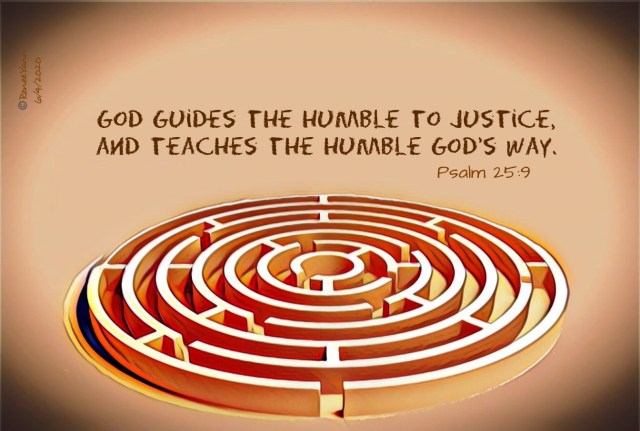
Psalm 25_9JPG

In today’s liturgy, this Psalm clearly ties together our first and second readings where both Timothy and a scribe seek clearer understanding of what faith requires:

  • Paul reminds Timothy that it takes perseverance and fidelity to live our faith
  • Jesus affirms for the scribe that there is no greater commandment than love

In Psalm 25, we find David working through his own faith challenges. He is asking God to show him the way, presumably out of some trouble or dilemma, one of the many faced by David over his lifetime.

Like Paul, Timothy, and the Gospel scribe, David realizes that the pursuit of justice is a circuitous journey, one that requires the accompaniment of God.


In today’s excerpt, we have only a few verses of Psalm 25, but the entire psalm paints David as feeling a bit lost and overwhelmed. Nevertheless, in his prayer, he draws on his long, trusting relationship with God.

Walter Brueggemann calls Psalm 25 a “psalm of candor”, one in which the psalmist honestly lays out his confusion, need, or pain. Praying the psalm today, we might do the same, asking God’s merciful insight and direction for ourselves, our loved ones, our country or our world.

There is certainly enough need for a lot of candor on our part! I know that I am feeling more than a bit overwhelmed by our current realities. Racial injustice, pandemic, economic hurt, and political confusion have all combined to make these very troubling times. 

  • But like David, we can lay down our fears, needs and concerns before a loving God.
  • Like David, we can trust God’s desire to lead us.
  • Like David, we can remember God’s mercies and be confident they will continue.
  • Like David, we can ask for and follow God’s direction to justice and peace.
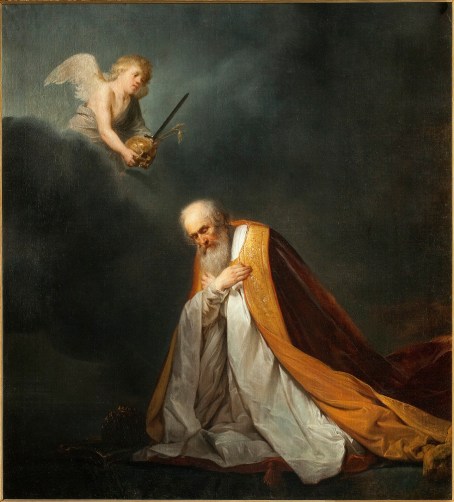
degrebber_david-plagen_grt
King David at Prayer by Pieter deGrabber

swords
Let Us Beat Swords into Plowshares, a sculpture by Evgeniy Vuchetich in the United Nations Art Collection

In our poem today, Rudyard Kipling does much the opposite of what I suggest above. He is deeply angry after WWI has claimed the life of his son John. His poem speaks of “justice” but suggests revenge or retribution. The justice he describes is one that demands the last drop of the opponent’s blood before it is satisfied .

I read the poem to better understand my own feelings.  What fragments of darkness still hide in my longing for light?

Kipling’s poem is available here.


Kipling’s angry passion is completely understandable, rational, and politically powerful. But it is not the justice or “right relationship“ of the Gospel. The pursuit of such Gospel justice is an arduous and winding journey of the heart and soul. It is the trying walk of sacrificial love which Jesus taught us. May we have the courage to walk it for our time. Thus the cry of our Psalm 25:


Your ways, O LORD, make known to me;
teach me your paths,
Guide me in your truth and teach me,
for you are God my savior.

Music: Psalm 25 – Karl Kolhase

Turn and See

Thursday of the Second Week of Lent

March 12, 2020

Click here for readings

Today, in Mercy, our readings offer us studies in dramatic contrasts.

the barren bush in a lava waste
vs.
the tree planted beside the waters

that turns its roots to the stream

Jere17_7barrentree


a rich man who dressed in purple garments and fine linen

vs.
a poor man named Lazarus, covered with sores

Gustave_Dore_Lazarus_and_the_Rich_Man
Lazarus and the Rich Man by Gustave Dore (1891)


What are Jeremiah and Jesus teaching us with these unforgettable images?

Jeremiah summarizes his point in the very first verse:

Cursed is the one who trusts in human beings,
who seeks strength in flesh,
whose heart turns away from the LORD.

In his parable, Jesus has Abraham deliver the point:

You received what was good during your lifetime
while Lazarus likewise received what was bad;
but now he is comforted here, whereas you are tormented.


Praying with these passages, we might determine to make sure we don’t end up like the barren bush or the ultimately tormented rich person. 

But how can we do that?

I think the key lies in Jeremiah’s phrase, “one whose heart turns away from the LORD.” 

In his parable, Jesus shows us what that “turning” looks like. It is any blind indifference in us that allows us to ignore another’s suffering. 

Most of us don’t consciously choose that indifference. We simply fail to turn from our own comfort … plans, needs, agenda … to observe the pain or need around us.

So as we leave our prayer today, perhaps we can do so determined to turn from our self-interests … to see if there is a “Lazarus” right beside us whom we had failed to notice.

Music: Turn My Heart – Lynn DeShazo (Lyrics below)

Turn my heart O Lord
Like rivers of water
Turn my heart O Lord
By Your hand
‘Til my whole life flows
In the river of Your Spirit
And my name
Bring honor to the Lamb

Lord I surrender to
Your work in me
I rest my life within
Your loving hands

(Repeat chorus 3 times)

‘Til my name brings honor
To the Lamb

Beyond Measure

Friday of the First Week of Lent

March 6, 2020

Click here for readings

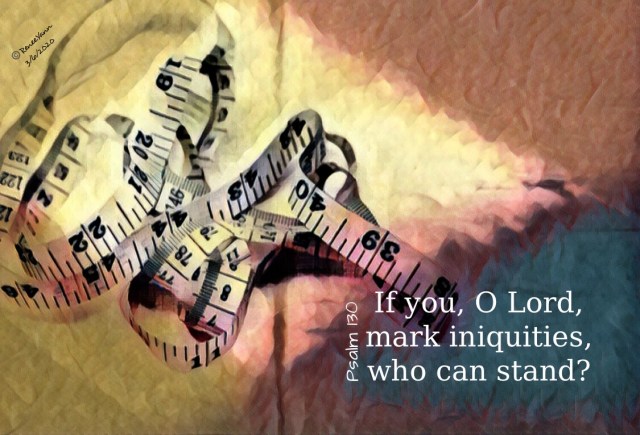
ps130 iniquities

Today, in Mercy, our readings could confuse us with their threads of legalistic logic. We see several examples of “if-then” admonitions that can make us picture God as an accountant measuring every choice we make.

  • If the wicked man turns, … then he shall surely live
  • If the virtuous man turns, … then none of his good deeds shall be remembered.
  • If you, O Lord, Mark iniquities … then who can stand.
  • If you go to the altar unreconciled … then leave and be reconciled.

measure

Sometimes, we can get obsessive about the “if-then” aspects of religion. And IF we do, THEN we probably miss the whole point. Because folded in today’s “if-then” seesaws is the truth of these passages: that the Lord does NOT sit miserly in Heaven to mark our iniquities.

The Lord measures the righteousness of love.


“Thus says the LORD, “Let not a wise man boast of his wisdom, and let not the mighty man boast of his might, let not a rich man boast of his riches; but let him who boasts boast of this, that he understands and knows Me, that I am the LORD who exercises lovingkindness, justice and righteousness on earth; for I delight in these things,” declares the LORD.—Jeremiah 9:23-24


Today’s Responsorial Psalm offers us a beautiful prayer for this morning as we pray in the embrace of God’s Lavish Mercy:

I trust in the LORD;
my soul trusts in his word.
My soul waits for the LORD
more than sentinels wait for the dawn.
Let Israel wait for the LORD.
For with the LORD is kindness
and with him is plenteous redemption;
And he will redeem Israel
from all their iniquities.

Let’s wait for the Lord today to see where God’s Grace invites us to the righteousness of Love.

Music: Everlasting Love – Mark Hendrickson & Family (Lyrics below)

Chorus
With an everlasting love
I love you I love you
With an everlasting love
a love that’ll never end
I love you.

Till the stars lose their way
In the heavens up above
And the oceans all run dry
Till the clouds in the sky
Keep the rain all to themselves
Even longer I’ll love you
This I promise I’ll love you
My word I give it’s true
I love you

Till the morning sun ceases to arise
And the moon forgets to shine
Until heaven’s blue is erased from the sky
Even longer I’ll love you
This I promise I’ll love you
My word I give it’s true
I love you

Sheep or Goat?

Monday of the First Week of Lent

March 2, 2020

Click here for readings

sheep mosaic

Today, in Mercy, we are invited to be like God:

The LORD said to Moses,
“Speak to the whole assembly of the children of Israel
and tell them:
Be holy, for I, the LORD, your God, am holy.

Our first reading goes on to tell us how: be a decent person.

  • Don’t steal, lie, or cheat
  • Pay just wages
  • Respect and help those physically burdened
  • Be impartial and just
  • Defend life
  • Don’t slander, hate, take revenge, or hold a grudge

Basically, the message is about kindness … deep kindness, the type that comes from realizing how infinitely kind God is to us.

Leviticus, after a long list of practical examples, sums it up:

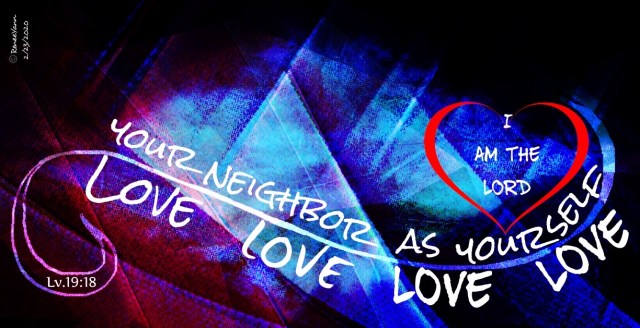
You shall love your neighbor as yourself.
I am the LORD.


Our Gospel tells us what happens when we make the choice to take the Old Testament advice — or not.

little lamb

We are all familiar with the parable of the sheep and the goats. And we all hope our scorecard gets us in the right herd “When the Son of Man comes in his glory, and all the angels with him …”


Basically, in this parable, Jesus puts the advice of Leviticus into practical form for his followers. But he adds one dynamic element that not only invites but impels our wholehearted response:

Amen, I say to you,
what you did not do for one of these least ones,
you did not do for me.

Leviticus invites us to become holy as God is holy. But Jesus reveals the secret that this Holy God lives in the poor, hungry, homeless, imprisoned and sick. By embracing these most beloved of God, we find the pattern of Holiness.

Music: The Least of These – Karl Kohlhase

Creeping Up to Lent?

Tuesday of the Seventh Week of Ordinary Time

February 25, 2020

Click here for readings

Today, in Mercy, we are creeping up to Lent’s doorstep.

Doorstep

Are you beginning to consider your Lenten rituals? Our readings today might help orient us.

They leave this question hanging in the air: Who do I really want to be in my life?

Mk9_34 first last

James says that if we are someone who loves the world, we will find ourselves at enmity with God. James defines “the world” as a place in discord, conflicted by covetousness, envy, frustration, and death-dealing.

James is directly addressing damaging squabbles within the Church itself. Infighting has caused fractures within his believing community. Failures in mutual charity and sincere prayer have generated “wars” among the members.

Why would anybody choose to contribute to such a negative environment? 

James pins it on one thing: jealousy. We are jealous to be, have, control, and possess more than others. We are tempted by power, riches and esteem. We want our opinions to be honored, our needs to be met above and before others.


The reality exists today as well, as we know too well.

  • We see it in the Church from factions who want to bend the Gospel to their own agenda.
  • We see it within and between nations who raise the advantage of some over the welfare of others.
  • We see it in families, businesses, and social circles where individuals volley for position, influence, or control over others.

These conflicts pour out in criticism, judgements, biases, shunning, and all kinds of failures in compassion, respect, and honesty. They blind us to our common creaturehood in God, and to its demand for an equity of love, mercy, and justice.

Otherwise, 

  • How could we ever kill or enslave one another, either by aggression or neglect?
  • How could we separate parents from their children and put babies in cages?
  • How could we participate in a global economic tyranny that leaves some without land, homes, health care, or hope?
  • How could we use other human beings – or their vital resources – only for our own pleasure, power or enrichment?

Most of us do not outrightly choose these sinful behaviors. But we must ask ourselves to what degree we are complicit in them by our failures in just judgement, advocacy, political responsibility, globally sustainable choices, — just plain care and reverence for all human beings, all Creation.


The approach of Lent is a great time to revisit the question James hangs in the air for us:

  • Who do I really want to be in my life? 
  • Do I need to make changes to do that? 
  • How can I prepare for a Lent that helps me make those Grace-filled changes?

We are grown-ups now, and our Lenten repentances demand more than those we learned in grade school. Fasting from candy won’t cut it anymore. 

  • How about we fast from cable news that feeds our biases?
  • Or actually do something for our parish besides critique the Sunday sermon?
  • Maybe give up some of our polluting behaviors requiring plastic and other non-recyclables?
  • How about including a outsider in something where they are otherwise ignored?
  • Or providing for someone’s need who would hesitate to ask for your attention?

I think James would approve of choices like that because he says:

God bestows a greater grace; therefore, it says:
God resists the proud,
but gives grace to the humble.
So submit yourselves to God.

Resist the Devil, and he will flee from you.
Draw near to God, and he will draw near to you.

Music: When It’s All Been Said and Done – Robin Mark

Simple Not Easy

Seventh Sunday in Ordinary Time

February 23, 2020

Click here for readings

Today, in Mercy, our readings focus us on how to live a good,honest, holy life.

Leviticus makes it simple:

Lv19_18 neighbor

But “simple” does not mean easy. Jesus makes that clear in the Gospel. He tells us that we may thinks it’s enough to love our neighbor by:

  • an “eye for an eye” justice
  • accepting that one slap on the cheek
  • giving over some of our possessions
  • serving them for the time they ask

But Jesus says, “No. Not enough!” We must go all in for love:

  • take no “eye”, no legal repayment 
  • turn the other cheek
  • give both shirt AND jacket off your back
  • work twice as long and hard as demanded

kidding


Guess what? He’s not kidding. He goes on to double down on his words:

  • Don’t just love your neighbor as yourself, as Leviticus requires. Love your enemy that way too.
  • Do it because your Creator loves you, and all of us, that way — with Lavish Mercy.
  • Be that Mercy in the world.

Paul gives us an added incentive for living this challenge. He acknowledges that to live in Christian love and mercy seems foolish in the eyes of the world … BUT:

Let no one deceive himself.
If any one among you considers himself wise in this age,
let him become a fool, so as to become wise.
For the wisdom of this world is foolishness in the eyes of God,
for it is written:
God catches the wise in their own ruses,
and again:

The Lord knows the thoughts of the wise,
that they are vain.


As I said at the outset, it’s simple, but it’s not easy. So much in our culture promotes the opposite approach to life – me first, exclude others, win at all costs, money matters over everything, use people and things then discard them, and on and on…..

Using our beautiful Responsorial Psalm, let us pray for the insight to see through to God’s Truth and Love, and for the courage to live them. 

Music: The Lord Is Kind and Merciful – Jean Cotter 

Refrain
The Lord is kind and merciful;
The Lord is kind and merciful.
Slow to anger, rich in kindness,
The Lord is kind and merciful.

Bless the Lord, O my soul;
All my being bless God’s name.
Bless the Lord, O my soul;
Forget not all God’s blessings.

The Lord is gracious and merciful,
Slow to anger, full of kindness.
God is good to all creation,
Full of compassion.

The goodness of God is from age to age,
Blessing those who choose to love.
And justice toward God’s children;
On all who keep the covenant.

A Queenly Message

Wednesday of the Fifth Week in Ordinary Time

February 12, 2020

Click here for readings

Today, in Mercy, the Queen of Sheba visits Solomon. It’s another Solomon story worthy of the big screen where, in fact, it has been loosely fictionalized and adulterated many times.

sheba

Many trusted scripture scholars question the historicity of the story. Several agree that Solomon never rose to the kind of material glory described in the passage. The two books of Kings were written 500 years after Solomon lived. In many aspects, the writings offer a reflection on the meaning of his reign in Israel’s covenanted life rather than a strict account of his life.

So what might we glean from today’s passage on the mysterious queen. The story demonstrates that Solomon is so accomplished that a revered leader will come to learn from him. Once she arrives, she is overwhelmed by his material successes and strength. Solomon has constructed a dominant, rich and subservient culture.

But wait. Is there a bit of ironic judgement and, perhaps, prophetic reminder woven into the Queen’s accolades? Shifting the focus from an increasingly arrogant Solomon back to Israel’s God, she says:

Blessed be the LORD, your God,
whom it has pleased to place you on the throne of Israel.
In his enduring love for Israel,
the LORD has made you king to carry out judgment and justice

In fact, the great wealth and power of Solomon’s kingdom was built, not on justice and judgement, but on the backs of the poor and excluded. For example, Walter Brueggemann says this:

(Solomon’s kingdom) … was an economy of extraction that regularly transferred wealth from subsistence farmers to the elite in Jerusalem, who lived off the surplus and the device and the strategy for that extraction was an exploitative tax system.

When the Biblical scribe puts the words judgment and justice into the Queen’s remarks, it may be intended to forecast the miserable end Solomon will meet because he has abandoned his responsibilities to care for all the people according the the Lord’s covenant.

This glorious, shining realm which so impressed the Queen is a kingdom built on corruption, greed, militarism, and manipulation of the poor.

The lessons for our world are obvious.


As Jesus tells us in today’s Gospel, it doesn’t matter whether we’re gilded in gold on the outside and spin our words in glorious promises. What matters are the true intentions of our hearts and the compassionate actions they inspire:

But what comes out of the person, that is what defiles him.
From within, from the heart,
come evil thoughts, unchastity, theft, murder,
adultery, greed, malice, deceit,
licentiousness, envy, blasphemy, arrogance, folly.

Ultimately, the great Solomon misses the boat on this. May his story help us not to do the same.


Also, as we pray, we may want to remember the devastated people of Yemen, the land identified as the historical Sheba. For some background on the current crisis in Yemen, see this article from Catholic Bishops


Music: La Reine de Saba – Raymond LeFevre

God Won’t Be Boxed!

Tuesday of the Fifth Week in Ordinary Time

February 11, 2020

Click here for readings

Today, in Mercy, our readings talk about how we try to “house” God.

Because God is bigger than BIG, our minds struggle. More than struggle, they actually fail, repeatedly, to define God. Yet we still try, don’t we?

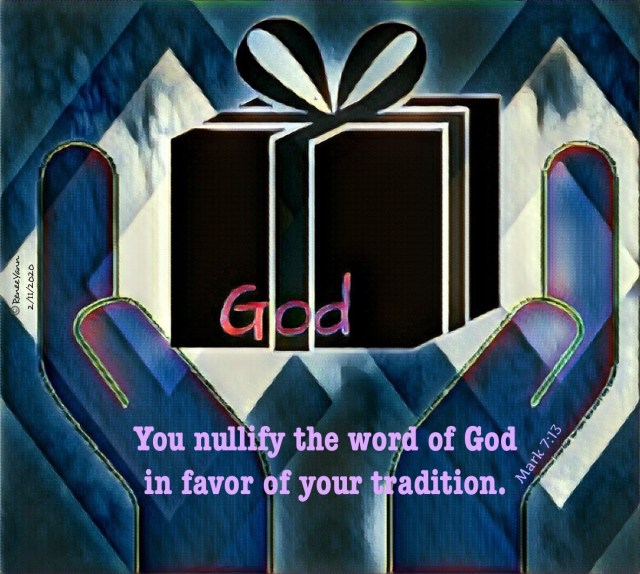
Mk7_13 box god

We try to picture, describe, paint, quote, and interpret God. We even decide what God wants and create laws to insure God gets that.

We dilute Divinity to our human dimensions. We just can’t take it straight. We mix it and bottle it in our laws, and box it in our rituals — because we can’t manage Omnipotence. 

And let’s face it, most of us like to manage things. 😉At least the Pharisees in today’s Gospel liked that kind of control. And Jesus challenges them on it.


Praying with these thoughts today, I think of my Dad. He liked an occasional jigger of really fine bourbon – savored in its unadulterated state, without water or soda – what today’s purists call “sipping whisky”.

When the doctor informed him, unfortunately in my mother’s presence, that whisky was a no-no, Dad didn’t like it. But he acquiesced. At least we thought he did. 

After Dad died, my brother and I found his bottle of Kentucky bourbon wrapped in a towel in the basement dryer. You see, only Dad did the wash. Mom never liked machines.

I think Jesus would have really enjoyed my Dad as one of his original disciples. Dad liked life “straight”. His faith was simple, direct, complete and undiluted. Sitting with Jesus that Gospel day, Dad wouldn’t have washed his hands either. He would have been too busy listening to the pure, unbottled Word pouring over him.

The message I took from today’s prayer: 

  • Be very wary of anyone who thinks they know exactly what God wants.
  • Let God out of the boxes I put Him in.
  • Invite God’s Spirit to run free through my heart.
  • Don’t bottle God up; don’t box God in.
  • Enjoy sipping God’s surprising and infinite grace.

Music:  New Pharisees – Charlie Daniels Band (Lyrics below)

New Pharisees

They go walking into church every Sunday morning
They the self-appointed sin patrol
Well they whisper and they gossip behind the back
Of anybody that they can’t control

See that girl in the choir she’s got evil desires
She must be drinking from the devil’s well
She’s a downright disgrace with that paint on her face
She looks just like a Jezebel

And they’re running around putting everybody down
What are you trying to do?
You need to pick up the Book and take another look
‘Cause brother I’ve got the news for you

You know Jesus was sent with a new covenant
And he even died for you
New pharisees like a fatal disease
Always flapping your jaws trying to live by the law

You see that boy over there with that long shaggy hair
Ought to be ashamed of his self
He wearing hip-hop clothes got a ring in his nose
Don’t he know he going straight to hell

And then yesterday morning me and sister Johnson
Were talkin’ on the party line
She said that Deacon Brown was having dinner downtown
Somebody seen him with a glass of wine

And you act so righteous and you look so pious
You always pay your tithe
But there’s a rock in your heart and a fire on your tongue
And there ain’t no love in your eyes

Bad news is begotten and the devil is smiling
You gossip and you criticize
New pharisees like a fatal disease
Always flapping your jaws trying to live by the law

Well you can’t get by the law so quit flapping your jaws
New pharisees yes, you’re a lot like me

Choices

Friday of the Third Week of Ordinary Time

January 31, 2020

Click here for readings

Today, in Mercy, if this first reading doesn’t smack you right between the eyes, check your political pulse, dear Friends!

David has become King, called to lead his people with a largeness of heart for their good…. but…

power


Power tends to corrupt, and the corruption is hard to resist even for the likes of David. With no checks and balances on him, David commandeers anything he desires – nations, goods, women, human lives! He is convinced that he can do anything he wants to do. His choices lurch him into a spinning culture of death, evil, and selfishness.

This passage from 2 Samuel is threaded with the very same lines woven into this morning’s newspapers: plotting, manipulation, lying, obstruction, projection, irresponsibility, crudeness, disrespect….

Aren’t we just so sick and tired of it all!?

Over the coming days, we will see how David’s corruption affects him – and it’s quite a drama! But for our prayer today, what can we learn?


Perhaps the Gospel offers us a key.

Mk4_30

Jesus talks about “the Kingdom of Heaven”. He uses the symbols of a healthy harvest and a tiny mustard seed. He teaches his listeners that when the things of God are planted deep in us, we too yield a life-giving harvest. We become large-hearted, God-hearted.

Through the gift of free will, God gives us power. We can choose between good and evil, self and others, life and death. In today’s passage, David makes some huge, selfish mistakes in his choices.

Throughout history and even today, people make the same good and bad choices. When leaders make such choices, the whole world feels the impact.

Today, I might want to check how I’m doing, not only in my personal choices, but in my advocacy for a moral and just world for all people.

Music:  A Pure Heart – Rusty Nelson